Loading summary
Transcript50 lines
- [00:00]
Progressive/Redfin Commercial Announcer
All of it is supported by Progressive Insurance. Do you ever think about switching insurance companies to see if you could save some cash? Progressive makes it easy to see if you could save when you bundle your home and auto policies. Try it@progressive.com Progressive Casualty Insurance Company and affiliates. Potential savings will vary. Not available in all states. There's a difference between liking a house and actually getting it. Redfin is built to close that gap. Redfin agents close twice as many deals as other agents, so when you find a home you love, you're not a step behind when it's time to make an offer. That means less watching great homes disappear and more zeroing in on the one you'll actually end up calling home. Redfin helps turn saved listings into real addresses. Get started@redfin.com own the dream Amazon presents
- [00:51]
Amazon Commercial Announcer
jamal versus the shih tzu Descending from the Gray Wolf Shih Tzus live by their own untamed primal code of not giving a single Shih Tzu. But Jamal shopped on Amazon and bought dog treats, chew toys and 32 ounces of carpet cleaner. Hey Jamal, you've been promoted to pack leader. Save the everyday with Amazon.
- [01:29]
Alison Stewart
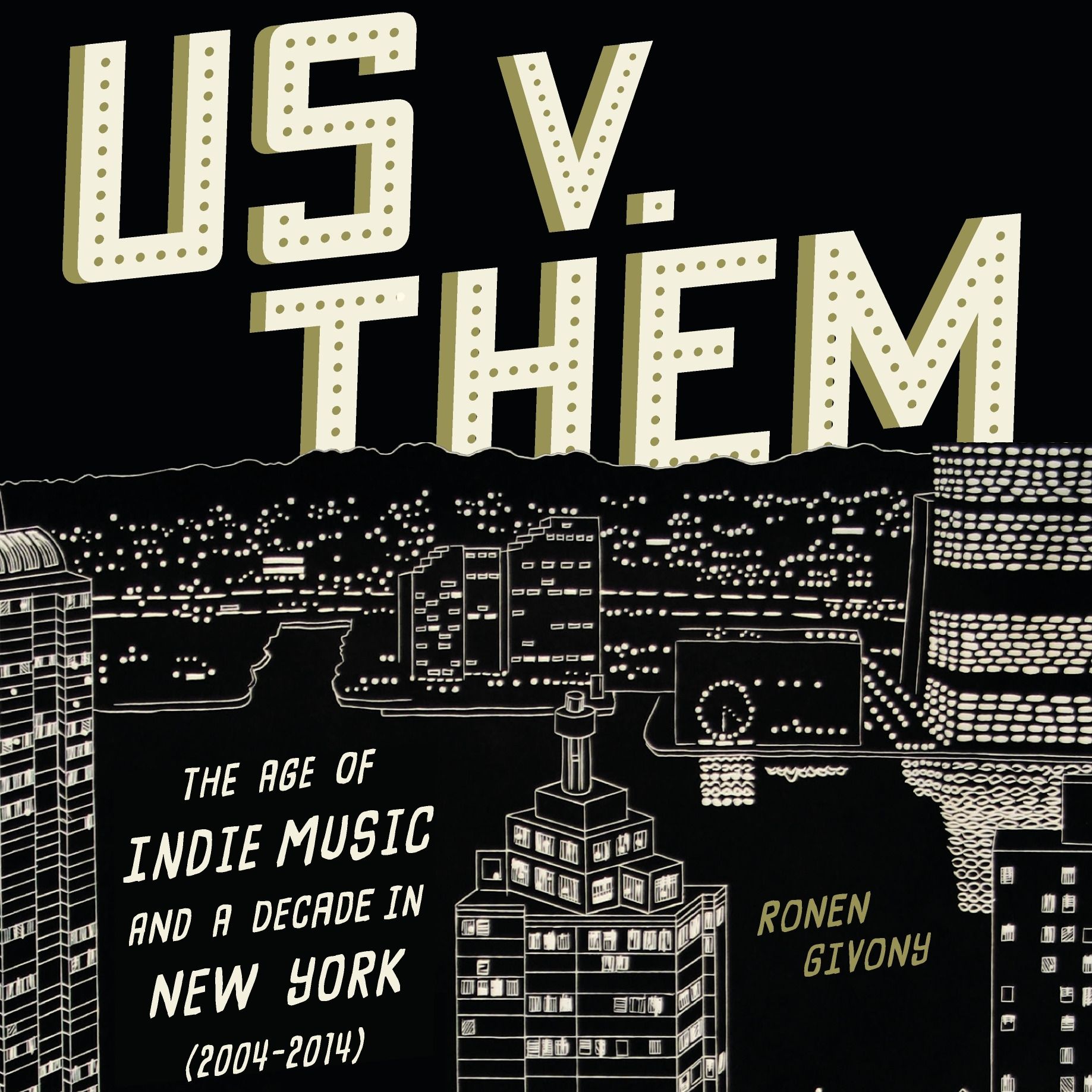
This is all of it on wnyc. I'm Alison Stewart. In the wake of the mainstream success of New York bands like the Strokes or the yeah yeah Yeahs, there arose a new crop of indie musicians hoping to make it in the Big Apple. But this time, the center of the scene was no longer Manhattan. It was in Brooklyn. So says author Ronan Gavoni, who has written a new book about the indie music scene in Brooklyn from 2004 to 2014. It's titled Us versus Them the Age of Indie Music and A Decade in New York. In it, he spotlights indie musicians like Anita Parts and Labor Wise Blood and more musicians who help make the Brooklyn scene something special. He also writes about how music blogging culture, particularly Pitchfork, helped bring Brooklyn indie music to the attention of lovers everywhere. Ronan will be speaking tonight at Greenlight Bookstore in Fort Greene and will include live music, but first he joins me to discuss. Nice to meet you.
- [02:27]
Ronan Gavoni
Thanks for having me. Allison.
- [02:28]
Alison Stewart
Listeners, what do you remember about the indie music scene in Brooklyn from 2004 to 2014? What venues did you love? What musicians did you see? Give us a call at 2124-3396-9221-2433, WNYC. You can join us on the air. What questions were you most interested in answering when you started working on this book?
- [02:52]
Ronan Gavoni
Yeah, you know, this is an era that I think for A lot of people is summed up by some of the bands that you mentioned, the Strokes and Yaya's and Interpol. For me, I was someone who got to New York in about mid 2004, 2005, and a lot of those bands kind of had happened already. And so for me, the venues and the artists that were most exciting were really based in Williamsburg and Greenpoint. There were a lot of DIY unlicensed venues on the Williamsburg waterfront. And I was kind of curious how that came to be. What was behind its kind of rise and fall and where all that stands today?
- [03:32]
Alison Stewart
What was special about that decade 2004 to 2014?
- [03:36]
Ronan Gavoni
There were a number of things. I think, you know, the easiest way to put it is that it was kind of the last analog era. We're talking about a time that was a little bit before when the iPhone started, certainly before social media and streaming. And people really had no alternative except to create community and culture face to face and person to person in these small, sweaty rooms. And it was really contingent on cheap rents and kind of old industrial buildings that had been converted and a lot of, you know, frankly, it being the right time at the right place.
- [04:17]
Alison Stewart
You write that 2009 was a year that really solidified Brooklyn scene. Why was 2009 so special?
- [04:25]
Ronan Gavoni
I would say that there were, you know, musically, there were a handful of records that came out that was the year of really big albums by Animal Collective, Grizzly Bear and Dirty Projectors and the xx, when indie music as a whole was really kind of penetrating the mainstream. But more locally, that summer, that was when Grizzly Bear played a show on the Williamsburg waterfront. They were introduced by Chuck Schumer. And it was when Jay Z and Beyonce, who were, you know, a couple months off of having performed at the Obama inauguration, came and kind of. It was kind of this coronation in a way, and we didn't know it at the time, but that was kind of both the pinnacle and the beginning of the end. In a little bit for this scene,
- [05:09]
Alison Stewart
we are talking about the new book Us vs. The Age of Indie Music and A Decade in New York with author Ronan Givoni. He's speaking tonight at Greenlight Bookstore in Fort Greene at 7:30pm Listeners, we want to get you in on this conversation. You can call or text our number, 212-433-9692. What do you remember about the indie music scene in Brooklyn from 2004 to 2014? What venues did you love? What musicians did you see? We'd love to get you in on this conversation. 2124-339692-21243. WNYC. What neighborhood in Brooklyn are we talking about during this time?
- [05:48]
Ronan Gavoni
I would say that the, you know, the nucleus of this was certainly in Williamsburg. It was kind of on this stretch of Kent Avenue and was this one building that was actually office space for the Domino Sugar Company, and that was kind of taken over in stages. The first venue was called Glasslands. The second one was called Death by Audio, and the third one was called 285kent. But more broadly, you know, this stuff was happening in Greenpoint, in Bushwick, in Gowanus, in Red Hook. I think that Williamsburg is sort of used as a shorthand for this, but it was really, you know, I would say borough wide that this was happening.
- [06:26]
Alison Stewart
At the time, you know, around the 2000s, major labels were facing, like, huge challenges. How did the weakness of record labels influence the indie scene?
- [06:37]
Ronan Gavoni
Yeah, this was definitely, you know, I think an interval you would call sort of post Napster and pre Spotify, when the major labels were essentially staring down the barrel of, you know, being endangered. And somewhat surprisingly, this role was filled in by corporate brands such as Red Bull and Scion, which, you know, were giving millions of dollars to legitimately underground countercultural music at the time. It was something that was looked at a little bit askance, I think rightly so. And now I think a lot of people are feeling its absence.
- [07:18]
Alison Stewart
I'd love for you to read a little bit from your book about what Brooklyn was like. Can you go?
- [07:22]
Go for it.
- [07:23]
Ronan Gavoni
Love to. Thank you. The last place I'd expected to find a counterculture was Michael Bloomberg's Cronut Craze New York. But that's exactly what I found on stage and in the crowd at Union Pool, Galapagos, Southpaw, north six, Zebulon, Monkey Town, Secret Project, Robot Tonic, Roulette, Goodbye, Boo Monday, Studio B, Cake Shop, Pianos, Glasslands, Barbez, Death by Audio, Market Hotel and 285 Kentucky in the unlicensed venues of Williamsburg, Greenpoint and Ridgewood at Lofts in Gowanis, Studios in Bushwick, Discos in Bed Stuy and temples in Fort Greene at Empire Fulton Ferry park among 77 drummers on 7707 at the Mermaid Parade, the Block Parties, the Pool Parties, the North side Festival, the Siren Festival and the night Daft Punk brought a pyramid to Coney Island. The only limitation was your own stamina. On a Tuesday night in Williamsburg, you could choose from six or seven shows within a quarter mile radius. It Never took long to find someone you knew, because no matter where they lived, you always ended up along that singular strip of Kent Avenue where it was both a party and an experiment in self governance every single night. The rooms were muggy and constantly congested. The sound could be dicey. The bathrooms were unspeakable, and everyone stood or found a seat where they could. We were not there for the amenities. We were there for the bands, the company, the alcohol, a chance to meet an interesting stranger. The atmosphere was part of the allure. Beer was from a can and booze a plastic bottle. Compared to Manhattan, the scene in Brooklyn felt more unsupervised and lawless, like the adults had left the kids and gone on vacation. The floor was usually sticky, the bouncers were blase, the smoking band loosely enforced. When the musicians were on stage, the sound would rumble through the walls, out the front door and off the adjacent buildings.
- [09:28]
Alison Stewart
That was Ronan Gavoni reading From his book Us vs. The Age of Indie Music and A Decade in New York, 2004-2014. Let's talk to some listeners. Let's talk to Joe from Long Island. Hi, Joe, thanks for making the time to call all of it.
- [09:45]
Ronan Gavoni
Howdy.
- [09:46]
Alison Stewart
Hi.
- [09:48]
Listener Caller
All right.
- [09:49]
Amazon Commercial Announcer
I was just calling to shout out
- [09:50]
Listener Caller
the World Inferno Friendship Society. They were crushing it in the in Brooklyn at the time.
- [09:57]
Amazon Commercial Announcer
Rip Cloth shows were some of the
- [10:01]
Listener Caller
best I'd ever seen.
- [10:02]
Amazon Commercial Announcer
I grew up on them and I just wanted to get that name out there and hopefully more people find their music.
- [10:07]
Alison Stewart
Thanks so much. You laughed when you said that name.
- [10:10]
Ronan Gavoni
What Joe is reminding me of is that I think if you ask, you know, 10 people what their five biggest, five favorite bands in Manhattan were, you know, everyone's going to say the Strokes. Everyone's going to say the yes in Brooklyn. If you ask the same question, you'll probably get between 30 or 40 different bands just because there was such an amazing wealth of stuff going on.
- [10:31]
Alison Stewart
We got a Texas says Galapagos before it was legit and they still served homemade pot brownies. Let's talk to Brian from Dobbs Ferry. Hi, Brian, thanks for calling, all of it.
- [10:42]
Listener Caller
Oh, thank you for having me. I just wanted to a second World Inferno. That was my youth. And Jack Terracott taught me how to have a misspent youth for sure. So rest in peace to him. But I also wanted to mention Japan and that time he played the Jeffrey Deitch projects at that swoon. Opening in the back of a U Haul truck was phenomenal.
- [11:04]
Alison Stewart
Brian, thanks for calling in. I did want to acknowledge it and you acknowledge in the book that the scene was very skewed towards white men. You write in a long list. You said Sly in the Family, Stone Death and Bad Brains, Prince, Tracy Chapman and Michelle and Living Color, Fishbone, Body Count and Raging against the Machine. The roots of rock are overwhelmingly in black American music. Then why was the age of Indy, the Shins, the National Arcade Fire, Grizzly Bear, Vampire Weekend at all so white?
- [11:35]
Ronan Gavoni
How much time do you have? I. That chapter is. Or excuse me, that. That excerpt is from a chapter about a band called Dragons of Zinth. They were kind of the little brother band of TV on the radio. And. Yeah, you know, I think it would have been very easy to write a book about these 10 years in Brooklyn and center it on 10 white indie bands. I specifically chose not to do that because I felt that the scene was something different and just tried to frame it that way.
- [12:01]
Alison Stewart
But how did you think. How do you think the lack of diversity limited the kind of exposure that people had?
- [12:08]
Ronan Gavoni
I think that there were a lot of blind spots. I think that there was a kind of liberal provincialism a little bit where those people may not have thought that they were excluding anybody. But you could very easily make the case that a first time person would go to death by audio or 285 Kent and maybe not see a ton of people that look like them. That was, I think, a big function of just where the music scene in general was at the time. There was a lot less diversity. There was a lot less artists of color. And I really pointedly ended the book with an artist who represented something different from that strain.
- [12:56]
Alison Stewart
This says, I was one of the two original percussionists and background vocalists in Park Slope for the band Chicha Libre. We played at the amazing venue Barbez every Monday night from about 2005 through 2009. Exciting period in that scene. This one says Chez Buswick, you write a little bit about politics in the book. How do we see the influence of politics given this period of 2004 to 2014?
- [13:23]
Ronan Gavoni
Yeah, this was certainly. You know, the book just came out on Tuesday. And this is one of the unintended ironies of it. You know, to me, you can't really think about this era in America and in art and culture without talking about what was going on at the government level. This is a general that came out of a decade of peace and prosperity. And then essentially within 18 months, you had September 11, you had the invasion of Iraq, and you had really the establishment of the homeland security apparatus. All of that was expressed in different ways in music during the next 10 years, you could have made the case that maybe there could have been more of it. But I tried. I wrote about a band called Parts and Labor that had a record called Mapmaker, really came out at the nadir of the war in Iraq, and the songs are just a little too relevant at the moment.
- [14:23]
Alison Stewart
Let's talk to Gabriella in Washington Heights. Hi, Gabriela. Thank you so much for making the time to call all of it.
- [14:30]
Listener Caller
Oh, hi. I just love this conversation. It's making me nostalgic. I love Galapagos. I love Barbez, But. So I met my husband around 2008, and he lived in Greenpoint. And I'm. I'm a little bit older than him. I'm a Gen Xer. But I remember when I used to go visit him, and the vibe of Greenpoint kind of reminded me of the east village in the 90s. And so the other thing that came up for me was, you know, we went to go see this grizzly bear concert on the park, sort of like Williamsburg Greenpoint. And I remember Beyonce was there, which was just sort of like, kind of great crossover. And I also remember those grizzly bear haircuts that all the men had. The, like, Caesar sort of, like, thing that everybody like. I feel it's just like all the dudes had at the time.
- [15:30]
Alison Stewart
Thanks for calling in. Let's talk to sue from Brooklyn. Sue, you have a point you want to make?
- [15:37]
Listener Caller
Hey, I love your show. Yes. I moved to Williamsburg in 1989, and I lived there for 20 years. So I was there when Bloomberg rezoned. And I feel like this book sounds great, but I feel like there's something that hasn't really been said enough about how Bloomberg ripped the guts out of that neighborhood. It was full of musicians and full of artists, and it kind of continued a little bit like his book goes after the rezoning. But basically, Williamsburg is nothing now. It's a shell. And what he did so transformed culture in New York. I mean, I moved here 50 years ago, and New York was a place where you could afford to live. And part of that was about Williamsburg for the 20 years that we lived there and people who moved in before us, and that's all just been so destroyed, and I don't, you know.
- [16:32]
Alison Stewart
Yeah, you brought me to my last question. Thank you so much. I'm going to dive in. And was going to be my last question. Why doesn't it exist anymore? We've seen.
- [16:41]
Ronan Gavoni
Well, as the caller pointed out, you know, this book always had two things I wanted to start with. One was the Republican Convention in 2004 here in New York. But the second One was in 2005 when Bloomberg and the city rezoned Williamsburg and Greenpoint. And. And that was really the beginning of how all these glass condos went up and everybody being priced out. That, I think is kind of the perception of the Bloomberg era now, I think if much more so than the artists and the musicians, is that this kind of the High Line and Hudson Yards, that's the version of New York that has kind of been stamped from the Bloomberg era. And that's very much why I wanted to write this, because it was happening alongside all of that. You might even say that it was a unintended accelerant of some of that gentrification. But it was absolutely a before and after thing, as you say.
- [17:38]
Alison Stewart
The name of the book is Us versus the Age of Indie Music and A Decade in New York. It's by Ronan Given a wrong right.
- [17:46]
Ronan Gavoni
Gavone, thank you.
- [17:47]
Alison Stewart
Givone, thank you so much. You have an event tonight at Green light Bookstore in Fort Greene at 7:30pm who will the music be by?
- [17:54]
Ronan Gavoni
From Dan Friel of the band Parts and Labor, who I wrote about. And I'll be in conversation with fellow author Nabil Ayers, the president of the beggars group us.
- [18:03]
Alison Stewart
Thanks for joining us.
- [18:04]
Ronan Gavoni
Thanks for having me.
- [18:06]
Progressive/Redfin Commercial Announcer
There's a difference between liking a house and actually getting it. Redfin is built to close that gap. Redfin agents close twice as many deals as other agents. So when you find a home you love, you're not a step behind when it's time to make an offer. That means less watching great homes disappear and more zeroing in on on the one you'll actually end up calling home. Redfin helps turn saved listings into real addresses. Get started@redfin.com own the dream Amazon presents
- [18:38]
Amazon Commercial Announcer
Laura versus fruit flies. Swarming your fruit and terrorizing your kitchen. These little freaks multiply at a rate that would make a rabbit say yo, chill. But Laura shopped on Amazon and saved on cleaning spray, countertop wipes and fly traps. Hey, fruit flies, your baby boom ends here. Save the everyday with Amazon.