Loading summary
Transcript65 lines
- [00:01]
A
WNYC Studios is supported by bilt. Nobody wants to pay rent, but if you have to, BILT makes it more worthwhile. By paying rent. Through Bilt, you can earn flexible points that can be redeemed toward hundreds of hotels and airlines, a future rent payment, your next Lyft ride, and more. But it doesn't stop there. You can dine out at your favorite local restaurants and earn additional points, get VIP treatment at certain fitness studios and enjoy exclusive experiences just for BILT members. Every month, earn points on rent and around your neighborhood, wherever you call home, by going to joinbilt.com WNYC that's J-O-I-N-B-I-L-T.com WNYC For 140 years, MultiCare has been in Washington prioritizing long term solutions, partnering with local communities and expanding access to care. Together, we're building a healthier future. Learn more@mycare.org.
- [01:06]
B
Coming up, we'll head to the American Folk Art Museum where you can see 30 quilts that explore the history of quilts and the textile industry. Plus, if you love making quilts or you have any memories associated with quilting in your childhood, we want to hear from you. That's next after a quick break.
- [01:29]
A
Our Common Nature is a musical journey with Yo Yo Ma and me, Ana Gonzalez through this complicated country. We go into caves, onto boats and up mountain trails to meet people, hear their stories, their poetry and of course, play some music.
- [01:45]
C
All to reconnect to nature and get.
- [01:48]
A
Closer to the things we're missing. Listen to a special one hour broadcast of Arkham and Nature on the radio Saturday afternoon at 2 on WNYC. WNYC supporters include NYU Skirball Greek myths collide on stage in Infamous Offspring. A new dance theater work by ulta Mavez runs November 13th to 15th. More@nyuskirball.org City Harvest who are on the road every day rescuing 77 million pounds of nutritious food a year for New Yorkers in need. Transforming surplus food into sustenance and sustainability. That's how they feed good. More@cityharvest.org RSM working to empower middle market businesses to navigate change with strategies and execution designed to help conquer disruption. RSM Experience the power of being understood.
- [02:48]
B
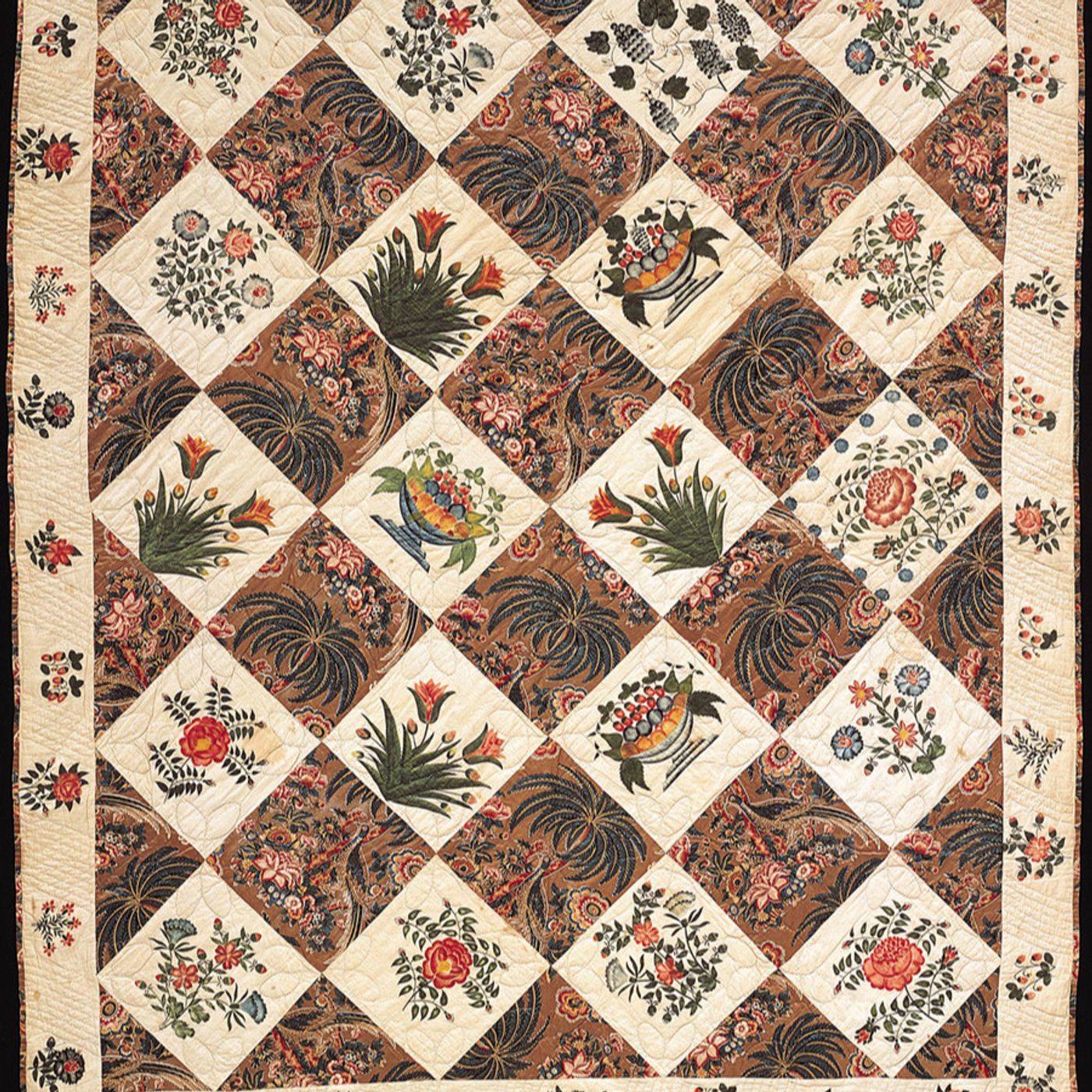
This is all of it on wnyc. I'm Alison Stewart. Quilts have an ancient history for generation. Quilts were used as a way to pass down stories, record information and practically to keep warm chances. Your family has a quilt passed down over time. The American Folk Art Museum sees quilting as an important tradition. And in a new exhibition, it looks at Quilt at Quilting to explore the industrial, environmental, and social context in which quilts were created. The museum displays 30 quilts made between the 18th and 20th centuries, and the show is called An Ecology of Quilts the Natural History of American Textiles. It's on view at the American Folk art Museum at 66th and Columbus through March 1st. Joining me now is Emily Javault. Did I say that right?
- [03:38]
A
You got it.
- [03:39]
B
I got it. She's the museum's deputy director and chief curatorial and program officer. She's with me now to discuss the. Welcome back to wnyc.
- [03:47]
A
Thank you so much, Alison. It's wonderful to be here.
- [03:50]
B
So the show is called the Ecology of Quilts. What does that mean?
- [03:54]
A
Yes, thank you for that question. I actually, the title sort of came to us quite early on in the process and really helped us define the show. We like to think about the term ecology in a broad sense as both an opportunity to engage with the natural history of quilts, to take our visitors back several steps further than usual. We usually start quilt interpretation from the story of the quilter. Right. But of course, it takes much longer to get to that finished moment where a quilter has the materials to work with. And from their very beginning, quilts are naturally derived objects in so many cases. Certainly early American quilts are all derived from the natural world. We have natural fibers, both animal and plant sourced natural dyestuffs, and connections to the botanical world more broadly in terms of floral, floral motifs and other botanical motifs. This is a hugely popular source of design inspiration for quilting. So we thought this would be a really rich way to introduce visitors to a new sort of a new way of thinking about quilts and the quilting story from the very beginning. So the idea of ecology refers not only to these connections to the natural world, but I think also to the idea of patterns, of relationships, interlocking network. So in particular, between living things and their environment, humans and their environment, humans and one another, and all the different networks that need to come together to produce these textiles. Before we even get to the quilter.
- [05:35]
B
I have to ask you a practical question.
- [05:37]
A
Yes.
- [05:37]
B
Is it true that the American folk Museum has 600 quilts?
- [05:42]
A
It is true. We actually have more than 600 quilts. So we have a really rich well of material to draw from when we do a quilt show. And it is honestly one of the most exciting parts of my job and the job of my co curator for this show, Austin Losada. He and I have been working for a while with some other colleagues on a quilts evaluation project where we actually take our quilts out of their storage boxes. Quilts aren't just there, like at the library for you to look at, you know, browse through. They have to be protected. So it's really exciting to get to actually take them out, unfold them, look at them. That served as a source of inspiration for this project, where we really fell in with particular quilts. And then sometimes that's the spark that you need to really think, oh, wow, okay, these two would look really good together. And what stories can we see in that juxtaposition?
- [06:36]
B
I was going to ask. There must have been a criteria to come up with just 30 quilts to include in this exhibition. What were some of the things you were looking for?
- [06:44]
A
Yes, well, one thing I'll say is that actually about 30% of this show consists of new acquisitions, so either gifts or purchases that we made with the show in mind. So that's really thrilling to be able to do that. So once we started with an architecture of the show based on our own collections, we were able to sort of target some potential new inclusions that we sought through acquisition and through purchase and donation. But I really will just say, I think the best way to get started with a project like this is to let your imagination run wild and to just spend some time looking in the collection and thinking what really moves us personally, what do we get excited about, what do we think has lots of layers to it, and then starting to put things next to each other. Quilts are really loud. They make a lot of noise visually, and so they sometimes interact in ways that you don't expect them to. So we. We also do a lot of experimentation with actually getting quilts out of storage and putting them next to one another. Lin them up, seeing how the colors jibe, seeing how the patterns work, saying, oh, gosh, that one needs to be on its own wall, because it's really got a lot of energy. But this one has a beautiful kind of quiet calm to it, and that can help us figure out the layout in the gallery. So it's kind of a. It's a joy, and. But it's also really a puzzle in particular with quilts, because they're so large and they have such a wonderful visual impact.
- [08:22]
B
Aside from the visual impact, why do you think it's important for viewers to consider the. The industrial and the environmental impact behind what goes into quilt making?
- [08:33]
A
Yeah, well, one of the motivations behind the show was really thinking It's, It's. It's not immediately visible when you look at a quilt, what the environmental footprint of a quilt is. I mean, you look at this finished object, it's gorgeous. It looks perfect sometimes. And so we, we wanted to ask that question. How do we bring visitors into a deeper understanding of ecolog histories with our interpretation? I think a great example that we have on view in our introductory gallery is a totally white quilt, a white work quilt. We call these quilts, and they're completely white. They don't have any other colors, but they're very complex because they're embroidered, they have stuffed work. But you might look at it and think, okay, it's white. It didn't take a lot of work for it to get totally white because it's not dyed. But that couldn't be further from the truth. Of course, natural fibers like cotton were not naturally white to begin with, and it required a lot of labor and a lot of different hands to get. To get that white work quilt to that pristine level of whiteness in before the late 18th century. When we get chlorine bleach powder, it's actually this endless process which we illustrate with a historical image in the show, of a bleaching green, where you would actually have to lay out this fabric in the sun multiple times, up to 15 different times after putting the. The fabric in a solution of some pretty nasty stuff like quicklime and potash and all kinds of nasty materials involved in processing fibers. Not, not for bleaching, but other processes involved urine and dung. And we've got, you know, other. Other things like fermented, fermenting processes. And so it's really kind of a chemistry experiment for a lot of this stuff. But I think juxtaposing the complexity of those histories, processes with the finished product can really help people, especially when you have historical illustrations to kind of deepen the story, can help people see, oh, gosh, there were so many resources involved in this. We also brought into the show, and we're very excited to be able to share with visitors some physical samples of those natural fibers in their raw state. So silkworm cocoons, flax before it gets turned into linen, raw wool. And we also have samples of dyestuffs, which. Natural dyestuffs. I mean, everything from berries and dried flowers and leaves to fungi and insects. We have examples of the cochineal insect, which became this incredibly popular source of brilliant red used by indigenous peoples for thousands of years. The Europeans discover, quote, unquote, this source in the 16th century, and it becomes all the rage in Europe to create this bright red. But we have samples of all of these raw materials on view to sort of, again, evoke for our visitors. This is where this is coming from. And to get from here to there, there's a huge amount of work involved. And so many different. So many different laborers, not just the quilter, are involved in those processes.
- [11:52]
B
We're talking with Emily Gevault from the American Folk Museum, Folk Art Museum. We're discussing the exhibition An Ecology of the Natural History of American Textiles. We'd like to get you in on your this conversation. Are you a quilter? Do you like making them and why? Who first taught you to quilt, or did you inherit one from your family? Our number is 212433, WNYC 212433. 9692. We've got a call already. Let's go to Al, who's calling from Brooklyn on line one. Hi, Al. Thank you so much for calling all of it.
- [12:33]
C
Hi.
- [12:34]
A
Hi.
- [12:35]
B
You're on there.
- [12:36]
C
Oh, hi. I got into quilting because my mom is a big quilter, and I grew up very the Brooklyn Quilters Guild. Last year, it felt like the right time to really learn how to quilt myself. What I love about quilting is that there are so many different ways.
- [12:58]
B
Oh, you know what? We're gonna have to cut you off because, unfortunately, you're breaking up. But we heard you joined the.
- [13:04]
A
The Brooklyn Quilters Guild and you learned from your. From your family. I love that. That is such a wonderful and common theme amongst quilters is intergenerational quilting.
- [13:16]
B
Let's go to Sylvia, who's Manhattan. Hi, Sylvia. Thank you for making the time to call. All of it. You're on the air.
- [13:24]
C
Hi. I grew up in a farming community, and my grandmother, who had been a pioneer as a toddler, her parents took her from Missouri out to Kansas and Nebraska in a covered wagon. And I was very lucky to know her. She lived to almost 100, and she quilted dozens, actually perhaps hundreds of quilts. And the unusual thing about her quilts is that she used every tiny scrap of fabric. And if it was even a nine patch, which, of course, your guest will know that that's a very, very small pattern where you use pieces that are about an inch square and even a 9 patch. She would sit at the west window where she could see the pear tree she and her husband, my grandfather, had planted. And there was a smell of sage. The sage bush was around the corner, and sometimes there were hummingbirds and she would sit by that west window in the afternoon, and she would piece the quilts together by hand. And almost no one does that anymore. She probably did that because she did not have. She got a treadle sewing machine at some point, but growing up, she probably didn't have one. And she actually was a trained seamstress and was an enormous help, too, with clothing, with, you know, fitting it and making it perfect.
- [15:02]
B
She sounds like an amazing woman. Thank you so much for. For calling in. It's interesting. When you think about quilts, Emily, why do you think they are art?
- [15:13]
A
Oh, wow. That's such a. That's such a great question. I mean, I think that opens up a lot of historical, structural issues in the art world.
- [15:23]
B
Of course it does.
- [15:24]
A
I think, you know, folk art as a term is a term that's been debated quite a bit because it often gets applied, for instance, to the work of women. And I think there's some who say, well, why can't we just call it art? We absolutely can just call it art. The issue is that historically, the fine art world has excluded the work of women, of people of color, of others who haven't had that kind of academic training, whose creative production doesn't match what the academic art world has historically defined as high art, which is very often painting of one kind or another, so often gendered as male, even though, of course, we do have any women painters now. But it is just this perennial kind of codified idea about painting historically being gendered as male. And so I think, you know, quilting is such an important point of. Has historically been such an important point of access for women who were making use of their everyday creativity to produce objects that I think should be called art and are called art because they exhibit the same level of creative expression and originality and technical skill and every other thing that we would use to define a painting or other work of, quote, fine art. I think. So I think that's something that we. That we need to keep in mind when questions come up about definitions of art.
- [17:15]
B
Made me think of Bisa Butler.
- [17:17]
A
Oh, my gosh, amazing quilt. Bisa Butler. I love her quilts. And she has done something so fantastic with, I think, integrating history into her quilts and looking at individuals, historical photographs, and building those in to really create a set of representations that had been previously left out of the canon of quilting in. Not to say that there aren't, of course, other incredible African American quilters and black representation in the tradition, but I think she's doing something really innovative with her work to bring those historical portraits to life.
- [17:58]
B
We're talking about an ecology of the natural history of American textiles. It's on view through March 1st at the American Folk Art Museum. We'll have more after a quick break. This is all of it. You are listening to all of IT on wnyc. I'm Alison Stewart. My guest is Emily Gevolt. And from the American Folk Art Museum, we're discussing the exhibition An Ecology of the Natural History of American Textiles. The exhibit explains it goes into different colors, into different textures, and it explains the history of the indigo plant in this world. It's both an ugly and a beautiful history. What role did indigo play in the history of textiles?
- [18:54]
A
Yes, great question and exactly the kind of point that we're trying to draw out when we're looking at these quilts from a multi layered historical perspective, not just from the perspective of the quilter. Indigo, of course, has a fraught history in many parts of the world, but in the United States in particular, or what would become the United States, indigo becomes a cash crop worked by enslaved laborers in the Carolinas in the 18th century, sometimes referred to as gold at that time because it was so valuable. But of course, indigo has been produced around the world for thousands of years. There's evidence it was being used in Peru, for instance, 6,000 years ago. When the Spanish colonize areas like Peru, we see them again exploiting the technologies of indigenous peoples to. To bring the use of indigo and new technologies to bear in their own manufacturing processes. So we can look at a beautiful indigo quilt and we have a great example of it, of one on view in our introductory gallery and see it on a most surface level as a beautiful object. But we want to engage our visitors and bring them more deeply into understanding the history of exploitation and enslavement that was often part of the story of actually harvesting and processing the indigo plant.
- [20:37]
B
This text says, I have an anniversary quilt my great grandmother started when my mom was born in 1927. It has a square for each of her parents and grandparents, dates of birth and wedding dates, and significant dates in history, including the Great Depression during my mom's childhood. The the quilt is made entirely of scraps from the clothes my great grandmother sewed for my mom. It's a treasure and it tells us so much about the grandparents and great grandparents we never knew. It's a wonderful memento of my mom's childhood. That's Dana from Jersey City.
- [21:13]
A
I love that. That's amazing. That's such a wonderful representation of the storytelling capacity of Quilts and their capacity to carry heritage. One example that I think will also be touching on that level that's in our show right now is a new acquisition made by a living quilter, a present day textile artist named Tomie Nagano, who in the tradition of her family, uses old antique Japanese textiles inherited in some cases from her family, from her grandparents, to create these dazzlingly contemporary art objects, projects.
- [21:52]
B
Let's take a call. Let's talk to Shannon from Tarrytown. Hi, Shannon, thank you for making the time to call all of it. You're on the air.
- [22:02]
C
My pleasure. Thank you so much for this beautiful program today talking about rural arts and craft. I love that you've spoken about the stories that are infused into these pieces. And similarly, I wanted to share a story. My grandmother, who was a crafter, surprised me on my wedding day with a queen size beautiful quilt, the Cathedral Windows pattern. And she had taken dresses from my childhood and incorporated them into the pattern. And it was just the most special, amazing handing over of stories of our lineage and sort of just a very special threshold for my wedding day. She then went on to make a similar Cathedral Windows quilt for all of my sisters. And it's an amazing momentum that we carry in our family.
- [23:02]
B
Shannon, thank you so much for sharing that part of your life. Let's talk to Charlotte from Jersey City. Hi, Charlotte. Thank you for calling. All of it. You're on the air.
- [23:13]
C
Hi. Thank you. My favorite thing in the world is quilting and fabrics. I learned, I'm 71. I learned in home ec in seventh grade how to sew. And I've been doing it ever since. I did a lot of other things. Textile design, not. But when I retired, I started doing craft fairs and everything I sold at the craft fair was quilted. I do quilted bags. I do quilted makeup bags. I do. And I use all repurposed fabric. And one of the things I love to do is people will come up and I've done about three or four of these things. They want their kids jerseys from all of his sports team turned into a quilt. You know, the fabric's a little gross because it's polyester, but the idea is really sweet.
- [24:03]
B
The idea is really sweet. Thank you so much. Thank you so much for calling.
- [24:07]
A
I think we actually have a quilt in the show that is made partly from synthetic fabrics that could be athletic jerseys.
- [24:13]
B
Yeah. In the show you talk about the difference between synthetic dyes and sort of regular dyes, indigenous dyes. What's the difference?
- [24:23]
A
Well, so natural dyes, natural dyes, the natural dyes that we're talking about are traditional sources of color derived from plants like indigo, as we've been talking about, or all kinds of other things like madder root. We talked about cochineal insects as well. Synthetic dyes in particular. In the 19th century, there's just a whole new industry for developing dyes using different chemical processes that result in, you know, the. The key and the goal is always to find something that's going to be enduring and not fade in the sunlight and not fade in the wash and things like that. So there's, during the Industrial Revolution, a whole suite of new synthetic dyes that get produced.
- [25:08]
B
I wanted to ask you about a quilt by. I hope it's Melissa Pettaway.
- [25:13]
A
Yes.
- [25:14]
B
Mm. Please explain who Melissa Pettaway is and why it was important to include her quilt.
- [25:19]
A
Yes. Melissa Pettaway was a member of a quilting dynasty in Gees Bend, Alabama, which is a community that is well known for its quilts. Many of our of your listeners may be familiar with Gee's Bend as a source of an incredible improvisational African American quilting tradition. And this is also the first time we've had an opportunity to showcase this quilt. It was a donation to us a few years ago. For a number of reasons. We wanted to include it aesthetically. It makes a great pairing with a number of other quilts on view. We also really liked showing the. The use of those contemporary synthetic materials. We don't have many other examples of such late 20th century quilts in the show. And if you look at it closely, you'll see it's made primary. It's made of dark blue and yellow, but the yellows are not all the same. And so it gives us this dynamism to the pinwheel pattern that I think visitors can really engage with. But also wanted to include a quilt from Gee's Bend as the. This really iconic source of quilt making, but also to introduce our visitors that I think there's been a little bit of a sense that Gee's Bend is so well known that people think of it as African American quilting. And in fact, there are many, many African American quilting traditions, just like there are many European American quilting traditions. And so want to give visitors an opportunity to explore all of those different traditions.
- [27:00]
B
Let's see if we can get Nancy in here from Cranford, New Jersey. Hi, Nancy. You're on all of it.
- [27:06]
A
Hi.
- [27:07]
C
So in my past life, I was an English teacher, and one of the projects we did was an intergenerational poetry Quilt where the students paired with a family member, wrote a poem, decorated a square. And one of our teachers, mother was a expert quilter. She put the whole thing together, and it was actually on display at the New York Museum, the Newark Museum, many years ago. But it was an exciting project, and it did continue that African American tradition of quilting, because the community was mostly African American.
- [27:40]
B
So thank you so much for calling in. And let's take Monk. Monk, can you slide in in one minute?
- [27:50]
C
Yes. I just. I just wanted to speak on the beauty that quilting is kind of a global phenomenon that has been happening for millennia. So, you know, I grew up as, like, the only one of two black men in the Appalachian Mountains, and I. And I just saw all this quilting history that was from, like, Scottish, Irish kind of heritage. And then it kind of definitely is the same quilting heritage that is from all around the world. As a black man, I understand the quilting heritage of Africans, and, you know, everybody. So the.
- [28:36]
B
It's really cool to see it all come together in one place. Absolutely.
- [28:38]
A
I think is what Mink was saying.
- [28:39]
C
Yes.
- [28:40]
A
I mean, Americans have claimed it as an iconic American art form, but it's. It is very much a global tradition.
- [28:47]
B
People have been asking. Have been calling in and asking, what should you do if you have an old quilt? Should you donate it? Should you keep it? What should you do?
- [28:55]
A
Oh, my gosh. Well, please. I mean, I will say about once a week, we get an offer of a quilt, which is delightful, and we're always happy to. Even if there's something that isn't a right fit for our collection, we're always happy to look at quilts. So. So reach out to the American Folk Art Museum, by all means, but cherish your quilts and your own family if you have an opportunity, and to keep stewarding them and passing them down because they have so much meaning.
- [29:21]
B
We have been discussing the exhibition An Ecology of the Natural History of American Textiles. It's on view at the American Folk art Museum through March 1, 2026. My guest has been Emily Gevolt. Thank you so much for coming to the studio.
- [29:37]
A
Thank you, Alison. This was a delight, and it was just an honor to be.
- [29:42]
B
Coming up on tomorrow's show, we'll speak with Stefan Fatis. His new book, Unabridged, looks at what words make it into the dictionary and why there are not just static volumes of words, but battlegrounds where culture wars are waged. I'm Alison Stewart. I appreciate you listening, and I appreciate you. I will meet you back here Tomorrow.
- [30:05]
A
NYC now delivers breaking news, top headlines and in depth coverage from WNYC and Gothamist every morning, midnight, day and evening. By sponsoring our programming, you'll reach a community of passionate listeners in an uncluttered audio experience. Visit sponsorship.wnyc.org to learn more.