← All Of It with Alison Stewart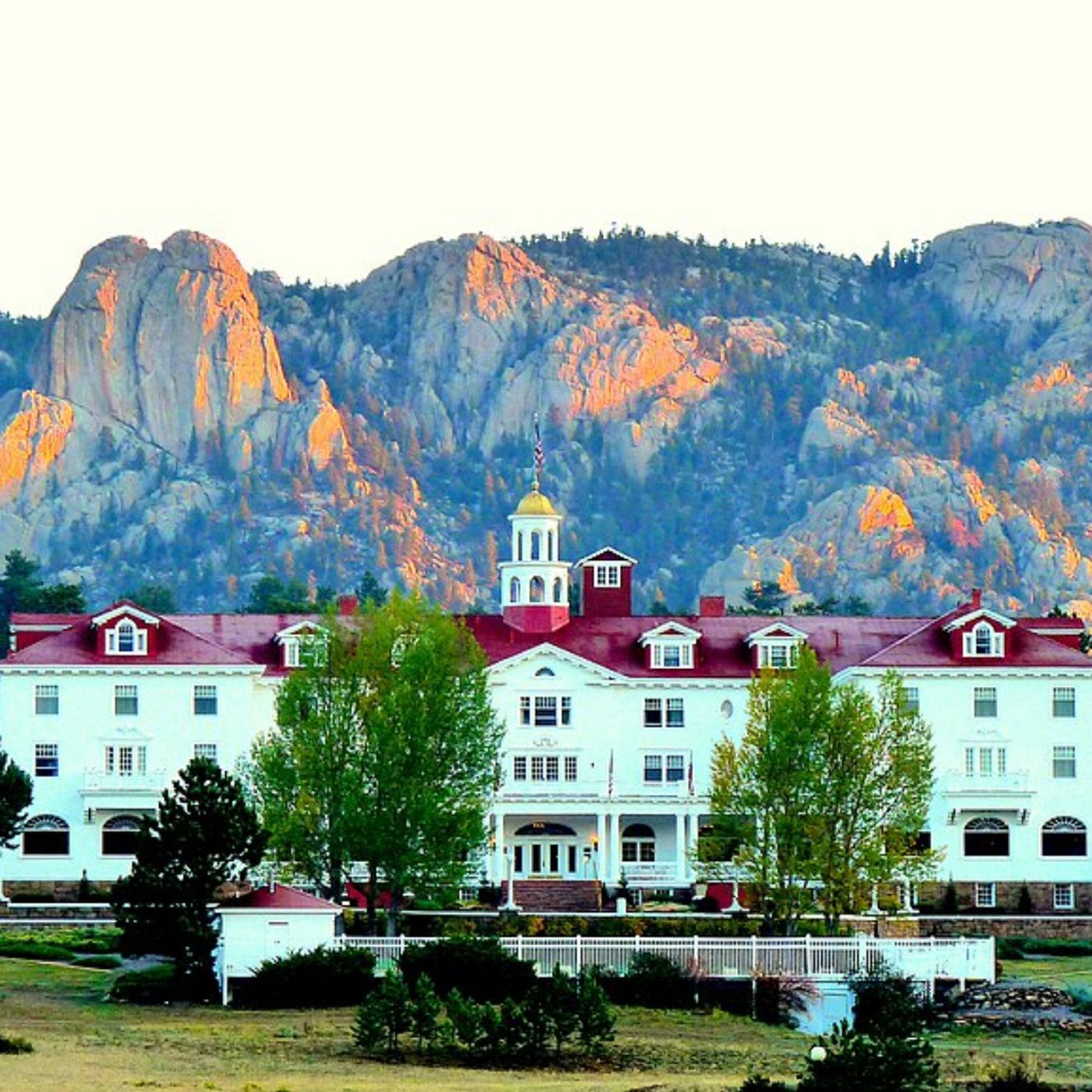
Loading summary
Transcript136 lines
- [00:08]
A
This is all of it from wnyc. I'm Alison Stewart. On tomorrow's show, we're talking staycations because I'm going to be taking one. I'll be out next week and I want you to help me make a plan. We'll take your calls on the best way to be at a stay at home tourists in this city of ours. We'll also have live music from New York's Queer Urban Orchestra. Plus, you'll hear our get lit event with author Susan Choi and musician Sarah Kinsley. That is all happening tomorrow. Now let's get this hour started with the movies.
- [00:48]
For the next hour, we're going to be talking about movies with the curators of two new Criterion collections that you can cozy up to this winter season. First, we're going to be diving into the escapist world of Hotels on Screen. Criterion head of programming Alisa is here to talk to us today about the new collection Hotels on Film.
- [01:09]
B
It's nice to meet you, Alison. Thank you so much for having me.
- [01:12]
A
So where did this idea for a collection of hotel movies come from?
- [01:17]
B
Well, you know, at the Criterion Channel, we like to program seasonally and very intuitively. We often think about what kind of films we're in the mood to watch and what kind of films other people would be in the mood to watch at any given time of the year. For example, in the summertime, we did a really fun swimming pools program and that showcased films like La Piscine and the Swimmer. And of course, these are very thoughtful, deep films, but on the surface, they provided this great lovely watery mood board to take you through the dog days of summer. And the inspiration for Hotels on Film kind of came from just my association with December being a time of travel. Even if you are staying put, there is this sense of wanting to escape, as you said earlier on. So that's sort of where it originated. And then we started thinking about all the great films that do take place inside of hotels or around hotels. And it just seemed like a really fun way to highlight these films at this time.
- [02:25]
A
It seems like it would be really fun to put this list together. Yes. How did you decide if a movie fit the criteria? Did it have take place in a hotel? Was it about a hotel? What was the criteria?
- [02:37]
B
Well, I think it started with just me realizing how many films had the word hotel in the title.
- [02:44]
A
That's funny.
- [02:46]
B
And thinking about why that was. You know, these are.
- [02:50]
Just spaces that are both familiar and foreign. And you have this ritualistic experience of traveling to the hotel Checking in, meeting all the different people around, all sorts of different people. So it's a really interesting calibration of familiarity and exoticism. And I think that gives films a great opportunity to play and be imaginative within their worlds. So just looking at films that provide that atmosphere first and foremost and taking a look at how, throughout the history of film.
- [03:35]
Filmmakers have approached this setting as both a visual motif and a structuring device.
- [03:41]
A
I was gonna ask you about the structuring device. I was gonna say, is the hotel part of the plot or is it just the backdrop?
- [03:48]
B
Well, with a film, or both, maybe. Definitely both. I think, for example, a film like what's Up Dog? By Peter Bogdanovich, it showcases so perfectly the set designer Polly Platt's vision for the film unfolding inside a series of spaces inside a hotel. And it's. You know, the premise is that three people arrive at the same hotel. They're total strangers. They have just happen to have the same bag on them.
- [04:22]
A
Yes.
- [04:23]
B
The bags contain very different things. And so there are people after the different bags. And it gets very confusing. And there's a melee that takes place throughout the different spaces of the hotel. That is spectacular. But I just, you know, when I watch that film, I'm just struck by how much the hotel is just important part of the storytelling device.
- [04:51]
A
All right, we notice that there's no Bates Motel here. There's no Psycho Motels didn't make it.
- [04:56]
B
Well, I think if you open it up to motels, then you have a very different type of program. Maybe Motels on Film will be a different collection on the channel.
- [05:06]
A
Summer, actually. Yeah, that's a much more summer vibe.
- [05:09]
B
Very true. Yeah.
- [05:11]
A
We are talking to Criterion Channel head of programming Aliza Ma about their new collection, Hotels on Film or taking your calls. What's the best hotel movie? What's your favorite example of a movie that features a hotel? Our Phone number is 2124-3396-9221-2433. WNYC. We got a text in this says the stuntman World War I movie being filmed around the fabulous Hotel de Coronado. Peter o' Toole as the director playing mind games on Steve Railsback and Barbara Hershey. That's a good call.
- [05:46]
B
That's a great one.
- [05:47]
A
Yes. All right. We're gonna start with sort of the big one. The Shining. Yes. And the Overlook Hotel. What is the argument for this being sort of the hotel movie?
- [06:00]
B
Well, I think just the set design, you know, the grandiosity of.
- [06:08]
Starts with traveling to the hotel. Right. The Family traveling to the hotel because the father, who's a writer, played by Jack Nicholson, is going to get a job there. And there's a great building of anticipation which is buoyed by the Wendy Carlos soundtrack. And then when they finally get there, very slowly the atmosphere begins to change and there's an existential shift into darkness where.
- [06:40]
The.
- [06:42]
Visions experienced by the characters begin to manifest in the space of the hotel. And so there's a very interesting way in which the architecture of the hotel of the Overlook, you know, plays a role in the horror of the story.
- [07:00]
A
Yeah. Tell me about the architecture. Why that matters so.
- [07:03]
B
Well, I think it's, you know, there are different corridors inside the space that, you know, calibrate the feeling of openness and claustrophobia.
- [07:16]
A
Yes.
- [07:17]
B
I mean, you have that unforgettable scene of the blood filling up the hallway or the twins standing there very creepily staring.
- [07:26]
A
Creepy.
- [07:29]
B
And also you get to look behind the scenes, you know, from people who work at the hotel. You get a very 360 degree view of the hotel, not only in the present tense, but also you get the sense that of the hotel's history through the different hallucinations experienced by the character. You get the sense of the oldness of the space. And that really gets at, you know, the creepiness of hotels too.
- [07:56]
A
Right. And it was a real. It was a real hotel, right?
- [07:59]
B
Yeah, no, I think it was based on.
- [08:02]
A
Based on a real hotel. Yeah, I think it was called the. The Stanley Hotel. The Stanley Hotel.
- [08:07]
B
I think so. And a lot of people here say that the Mohonk Mountain House upstate also inspired some of it.
- [08:15]
A
Let's take a call. Debbie is calling in from New Jersey. Hi, Debbie, thanks for calling, all of it.
- [08:23]
C
Hi. Thank you. Well, I have two suggestions. One is forgetting Sarah Marshall, which starred Jason Siegel and Kristen Bell, and.
- [08:33]
A
I.
- [08:34]
C
Can'T think of her name, Earth Cooney. But it's all about a guy obsessed with his ex girlfriend who is an actress and he, he goes to a resort in Hawaii and of course, as these things go, she turns up there as well. And it's a great comedy. It's very funny. It does have some full frontal nudity.
- [08:54]
Jason Siegel, which he talked about once in an interview, I think on Fresh Air. But the other one I wanted to recommend, technically it's not a hotel, but it's a cruise ship. And it's the classic room service with the Marx Brothers where they're all piling into this one room. And for anyone out there who has never seen it, if you call Yourself a cinephile. You gotta see it. It's one of the funniest bits in all filmdom.
- [09:17]
A
Thank you so much, Debbie. Let's talk to June from Yonkers. Hi, June. Thanks for making the time to call all of it.
- [09:25]
C
Hi, thanks for taking my call. I would just say Grand Hotel, which is a film with Greta Garbo, Lionel Barrymore, John Barrymore, Joan Crawford. If anyone hasn't seen it, you must see it. And the other star of the film is definitely the set design of the hotel. It's one of the most beautiful films ever made.
- [09:49]
B
Yeah, couldn't agree more.
- [09:51]
A
That is on your list.
- [09:52]
B
It is in the program and it's one of my favorites in the program as well. It's a fantastic pre coat film with this really out of this world.
- [10:02]
Ensemble cast. And there's a doctor among the characters in the hotel who. He's very astute and he talks about how the hotel is a place where many doors open onto the same hallway, but nobody knows each other. And then when you leave, somebody else takes your room. And at the end, he comes up again and he's like, there's, you know, the hotel is a place where nothing happens. And of course, it's a moment of great dramatic irony because so much has unfolded in this Grand Hotel between all of these characters who had arrived as total strangers.
- [10:45]
A
Yeah, we're getting another text says Grand Hotel, best picture of 1932. Loaded with MGM stars Garbo, Barrymores, Joan Crawford and Juliana. Look at me. Because it has this classic line, hey. Oh, that's not it. It's gonna go well.
- [11:05]
C
I want to be alone. Where have you been?
- [11:09]
I suppose I can cancel the Vienna contract. I just want to be alone. You're going to be very much alone, my dear madam. This is the end.
- [11:19]
A
I just want to be alone. How many times have you heard that said? How much can this be credited with the idea of putting this many stars into one film?
- [11:29]
B
I mean. Yeah, it's unbelievable how much star power is in this film. There's Wallace Beery also is incredible in it.
- [11:40]
A
Yeah.
- [11:40]
B
I mean. And they all hold equal weight, I would say, you know, every character is given incredible dignity throughout the film.
- [11:49]
A
Let's take some more calls. Pete from Mount Kisco has pulled over to talk to us. Hi, Pete. Thanks for pulling over and for calling wnyc.
- [11:58]
C
Oh, that's horrifying.
- [12:02]
A
Yeah.
- [12:03]
C
Big movie lover, by the way. First time listener, first time caller. And a couple of movies came to mind. One was four rooms. It's a Very lazy grab. And I've never even seen the movie. I've only seen the Tarantino chunk. But obviously all set in a hotel. But the one that really kind of sit in me in this very sort of like, intense way as a hotel setting was Barton Fink, and, you know, a big shining fan, all that stuff. But there was this sort of almost horror movie like treatment of the writing process in terms of these breakthroughs, these intrigues of murder and love and then literally a flaming purgatory all happening inside the hotel. And I thought just in terms of where the hotel experience meets this dark and light creative process was really pretty amazing.
- [12:49]
A
Thanks so much for calling, Pete. You should definitely call again. Four Rooms is something else that you are screening. It's from 1995. It's an anthology piece, right?
- [12:58]
B
It is, yes. And the structure of the hotel provides the sort of basis for the anthology to unfold. Because basically the bellboy at the hotel, played by Tim Robbins, just encounters the weirdest people every time he opens a door onto these new guests. And also, Barton Fink, who this caller had the incredible description of, is in the program. And I think that the hotel room in this case, it's a very rundown hotel in Hollywood. And the Coen brothers wrote it at a time when they had writer's block themselves. And it's about someone who has writer's block. And the hotel becomes this incredible chamber.
- [13:45]
And, you know, an external extension of this feeling of stuckness that he has.
- [13:54]
A
We actually have a clip from Four Rooms. This is Tim Roth. He's playing at Bellhop. He's being paid to babysit the kids of a guest played by Antonio Banderas. This is from four rooms.
- [14:08]
C
You want 500 bucks?
- [14:11]
A
Sure.
- [14:13]
C
How about three? $300? Yeah, three's fine.
- [14:20]
My children are staying here tonight watching TV. I want you to check up on.
- [14:24]
B
Them every 30 minutes.
- [14:27]
C
Check up on them? Yeah, make sure they are all right. Make sure they're fed, make sure they go to bed. You know, these things. Sir, I can send out for a babysitting service. No, I don't trust babysitters. My children are safer alone than with some up pedophile babysitter. I don't know from the money in the morning.
- [14:45]
A
What about him?
- [14:46]
B
What makes you think you can trust him?
- [14:50]
C
Tell me that's not a face you can trust.
- [14:53]
A
Okay, so this is interesting because the bellhop character becomes an important part of films, especially films that Jerry Lewis was in. He played the bellhop. It was a straight up comedy from 1960s. Jerry Lewis wrote, directed, he stars as the bellhop in this hotel. What do you recommend about this film?
- [15:15]
B
I mean, I think, first of all, it might be his directorial debut. And it's just astonishing to see how talented he was that he could write and produce and star and direct, of course, this pretty, you know, big scale film and carry it too.
- [15:38]
A
It's interesting because really, there sort of doesn't seem to be a plot in the Bellhop, but yet he carries it.
- [15:45]
B
Yes. And it's basically a setup for him to display his incredible talent as a slapstick comedian.
- [15:56]
A
We'll have more discussions of Hotels on Film. It's a new collection from the Criterion Channel. That'll happen after a break.
- [16:14]
You're listening to all of it on wnyc. I'm Alison Stewart and I'm speaking with Criterion Channel head of programming, Aliza Ma about their new collection, Hotels on Film. And we are taking your calls. What is the best hotel movie? What's your favorite example of a movie that features a hotel? Call or text us now at 2124-3396-9221-2433. WNYC. Next up, we have a two films by Sofia Coppola, Director Sofia Coppola, Lost in Translation about Americans working in Japan. And somewhere about a famous person recovering at a Chateau Marmont who has taken care of his daughter. That one's sort of like a meta story, a movie about a hotel. Let's hear a clip from Lawson. Translation. This is a scene where Bill Murray and Scarlett Johansson's characters meet at the bar.
- [17:09]
B
Hey, thanks.
- [17:11]
C
What can I get you?
- [17:14]
I'm not sure.
- [17:18]
For relaxing times, making Suntory time.
- [17:25]
I'll have a vodka tonic, thanks.
- [17:34]
B
So what are you doing here?
- [17:38]
C
A couple of things. Taking a break from my wife, forgetting my son's birthday and getting paid $2 million to endorse a whiskey when I could be doing a play somewhere.
- [17:53]
A
Oh.
- [17:55]
C
But the good news is the whiskey works.
- [18:01]
A
What does that scene understand about the hotel experience that people have?
- [18:08]
B
I still love this film, so. I do too. Maybe even more so now than when it first came out. Well, I think there are some very memorable scenes between her and Bill Murray's character in the hotel bar. Right. And for me, the hotel becomes a visual metaphor for the character's state of feeling, like they're sleepwalking emotionally. And there's a sort of midlife drift for Bill Murray's character. And in the case of Scarlett Johansson's character, she's feeling very alienated from her relationship and her world being so Far removed, having traveled to Tokyo with her boyfriend. And also the rest of the hotel kind of gives you the impression of early 2000s globalization and late capitalism. You know, there's a sense that luxury spaces like the hotel could be an index of global sameness, but yet the bar becomes a sanctuary from all of that. And it becomes a sanctuary from the chaos that the characters are trying to escape in their own lives. And from outside.
- [19:21]
A
Someone wrote about Lost in Translation. They texted us the weirdness of being in a foreign faraway place, having jet lag and hang out, maybe finding your people or person in a hotel bar or lounge. Let's talk to Daniel from Astoria. Hi, Daniel, thanks for calling, all of it.
- [19:39]
C
Hi, thank you for having me on. First time caller, long time listener. I wanted to shout out the Grand Budapest Hotel, one of my favorite Wes Anderson movies. But I really like how the hotel is kind of a character. And they also present this like, nostalgic vision of what a hotel maybe used to be, this institution. And I think they kind of exemplify that with the Renaissance man concierge who can do anything, get anything. So that's my, that's my shout out. Thanks for having me on.
- [20:08]
A
Sure. Let's talk to Steve from the Upper west side. Hi, Steve, thanks for calling, all of it.
- [20:14]
C
Well, thanks for having me on. This segment makes me appreciate my membership the Criterion channel even more.
- [20:22]
B
Oh, nice.
- [20:24]
C
Two films that come that immediately came to mind when the segment started. One was north by Northwest, which begins in the plaza, returns to the plaza and then has a critical scene in I guess the Ambassador east in Chicago. So that's a film where the hotels play a critical role. And similarly, I thought of the Graduate.
- [20:53]
The Taft Hotel, manned by Buck Henry, another critical scene and a critical setting for.
- [21:02]
The plot of that film. So those, those were my, my two initial thoughts. Thanks again for, for everything that you guys do at Criterion.
- [21:10]
A
Let's go to examples, both great examples. Let's talk to Ann in Brooklyn. Hi, Anne. What is your suggestion?
- [21:18]
C
Hello. One of my favorite films, Some Like It Hot with Marilyn Monroe, Tony Curtis, Jack Lemmon, set in a hotel down in Florida. And great. Such a superb performance by all the characters. One of the best films I think ever made.
- [21:36]
A
Well, thanks for calling in, Anne. So I want to go to the other Sofia Coppola film. I think it's not as well known. It's called Somewhere. And you describe it as a spiritual successor to Lost in Translation. How so?
- [21:51]
B
I think it also has this distinct sense of the characters being adrift. There's an existential loneliness that pervades the entire film. In this case, Stephen Dorff plays an actor. So there's a sort of meta aspect to the filmmaking. And I've read that it was inspired by Sophia's childhood memories of traveling around and staying at hotels with her father.
- [22:21]
A
Oh, really?
- [22:22]
B
Yes. And they do go to Italy and stay at a very breathtaking hotel there in this film. And Elle Fanning, a very young Elle Fanning plays his daughter. She's very charming in it.
- [22:35]
A
Another film you have listed is Fellini's Eight and a Half. Why is this a great film about hotels?
- [22:41]
B
I think it's just a great way to see how the, you know, at one point in the film, the whole crew relocates hotels. And it's just a wonderful way to see how the mechanism of filmmaking can work in relationship to the structure that they're working within. And it's a great backstage look at the process of filmmaking and in conjunction with the spaces where the film is both set and where the fictional film inside of the film.
- [23:18]
A
Actually, Harvey on Line 7 from Manhattan agrees with you, Harvey. Tell us more about Fellini's Eight and a Half.
- [23:25]
C
I just think it's one of the greatest films ever made, actually, period. Not just hotel films, because in addition to, you know, the visual setup, it's about the mental disintegration and reintegration of the director, Marcello Mastroianni, who was playing, of course, Fellini himself to some extent. Plus you have Anuk? Eme and Sandra Milo and, you know, it's a wonderful cast. Claudia Cardinal, the whole process is just fantastic.
- [23:59]
A
Yeah, thank you so much for calling in. Let's talk to Jose from Bushwick. Hey, Jose, thank you for calling, all of it.
- [24:08]
C
Hey, good afternoon.
- [24:12]
I got a good one for you guys. Well, it was my. I was a teenager when this came out. I'm kind of old, older, but I'm a big Tom Hanks fan. And that's the party.
- [24:25]
Remember? That's the party.
- [24:26]
A
Oh, yes. Oh, yes. That was a good one. Thank you so much for calling. Jose, do you have any kid friendly films on this list?
- [24:39]
It was mostly grown ups.
- [24:42]
B
I think.
- [24:44]
Maybe, let's see, you might not.
- [24:48]
A
I mean, it may be for cinephiles only. I was laughing because one of our texts says Home Alone 2. What kind of idiots are you? The finest in New York City.
- [24:56]
B
Yes, yes, good point, good point.
- [24:59]
A
Let's go to. Is it. I'm gonna ask you to pronounce this.
- [25:02]
B
Animalisa Anomalisa.
- [25:04]
A
Anomalisa Tell me about this film.
- [25:07]
B
Okay. I personally love this film, but it's not exactly a feel good film. I think it makes you feel bad in a very generative way and in a very unforgettable way as well. It's a stop motion animation made by Stanley Kaufman and it has the most unique look to it. And from what I understand, it was incredibly difficult, time consuming and expensive to make this film in this way. And it's about a main character who's again, he has that midlife drift, he has that existential alienation. He's a professional salesperson. He has written a great book that all salespeople read to up their sales. And he's at a hotel, but he has a disorder that leads him to feel that every other person is the same person and it makes him incredibly paranoid. And how that's expressed in the film is that they all have the same voice. It's a very cold, neutral man's voice. So, you know, when he gets a call from his wife, it's just like a very cold man's voice. Again, not a feel good film exactly, but just indelible in the way that this sense of spiritual alienation is portrayed by this stop motion animation style. And then he meets a character in the hotel where he's staying, played by, voiced by Jennifer Jason Leigh. And you know, she. He hears her voice and she has a distinct voice that's not that voice, it's magic. Yes. And so he thinks he falls in love with her and they get really drunk at the hotel bar.
- [27:01]
And you'll have to watch the rest. But I highly recommend this film.
- [27:05]
A
We've got a text. California Suite. Another says Four Weddings and a Funeral. Chris, what's your movie?
- [27:13]
C
The John Wick movies. This incredible hotel that these. When you step into those hotels in those movies, you're in another world with a whole nother Morocco instead of rules and incredible manager and the man at the desk. It's just an alternative universe that you step into when you step into that hotel.
- [27:36]
B
Yeah, that's a great point about hotels being this removed space. You know, the ritual of checking in makes you feel like you've entered into a place with different rules, where life back home and the logic of that just no longer applies. And I think that's what makes it a great place, place of imagination for films to unfold.
- [27:57]
A
All right, I'm not going to ask you for your favorite movie that is in this list, but I'm going to ask you, where should someone start, perhaps?
- [28:07]
B
Well, I think the great thing about exploring a motif like the hotel is that you get to show films across such a different swathes of film history. I would say depending on the mood that you're in, I would try Grand Hotel to see how.
- [28:29]
You know, the pre code approach to this kind of.
- [28:38]
You know. Yeah, I would start at Grand Hotel. Yes, that's where we should start. Yes. And also I would give Anna Melissa a try.
- [28:46]
A
Okay.
- [28:47]
B
Just because it's not one of Stanley Kaufman's most well known films.
- [28:52]
But I think it took a lot of work and I really enjoyed revisiting it this time around. And of course, the Sofia Coppola films.
- [29:01]
A
We've got a lot to watch this December. I have been speaking to Criterion head of programming Aliza Ma. Thank you so much for joining us for your Hotels on Film. We're really excited to watch more.
- [29:12]
B
Thank you so much. Alison NYC now delivers breaking news, top headlines and in depth coverage from WNYC and Gothamist every morning, midday and evening.
- [29:23]
A
By sponsoring our programming, you'll reach a.
- [29:25]
B
Community of passionate listeners in an uncluttered audio experience.
- [29:29]
A
Visit sponsorship.wnyc.org to learn more.