← All Of It with Alison Stewart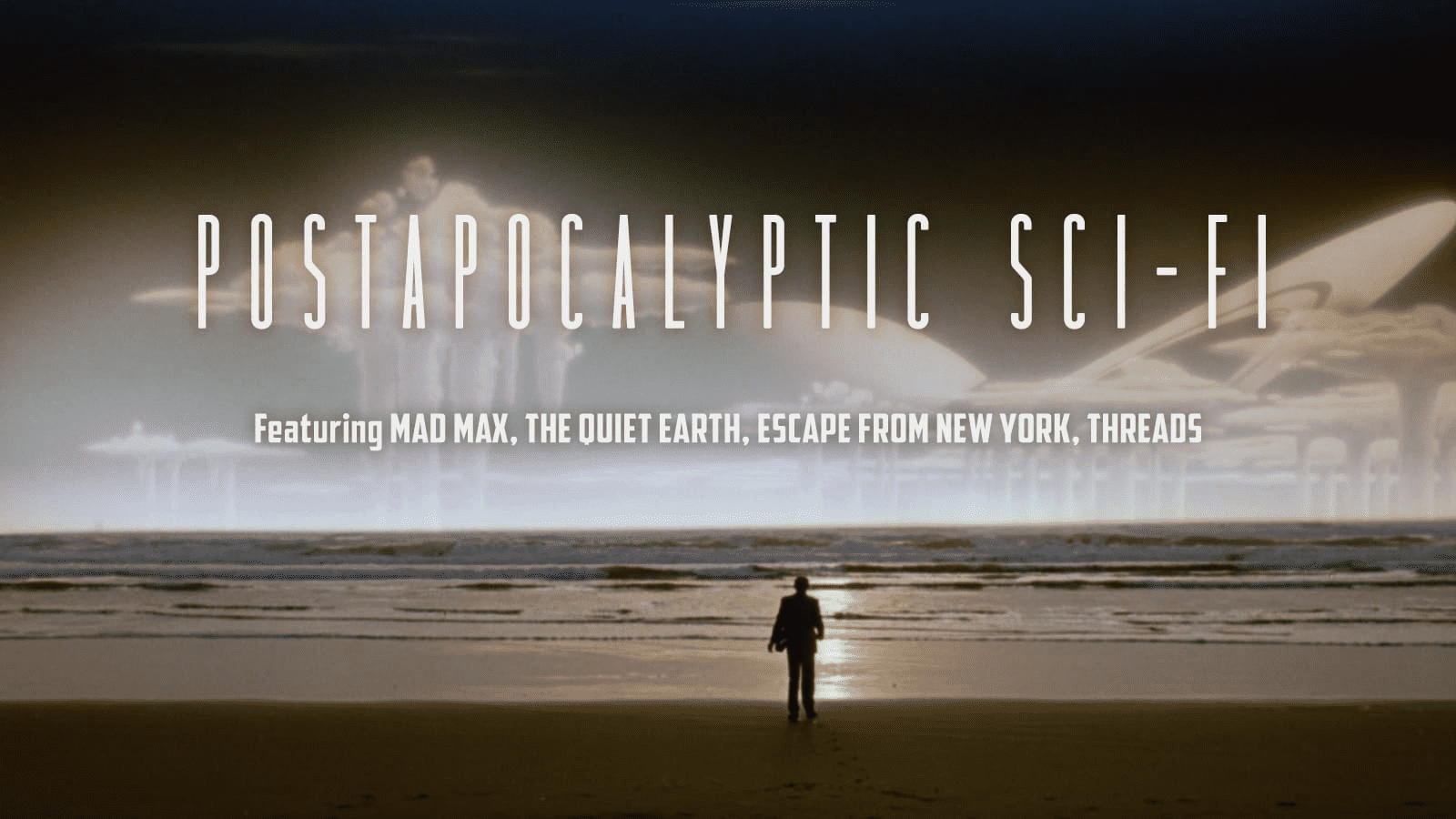
All Of It with Alison Stewart
The Best of Postapocalyptic Sci-Fi
00:20:21
Criterion's new series is all about postapocalytpic sci-fi films.
Loading summary
Transcript81 lines
- [00:02]
Alison Stewart
Surprise beach day. No excuses. I'm in.
- [00:06]
Caller/Listener or Host Assistant
Gimme five.
- [00:06]
Alison Stewart
With Bix Soleil Glide Razor, you'll have.
- [00:08]
Caller/Listener or Host Assistant
Hydrated, smooth skin that's ready to go on the fly. No shave cream needed.
- [00:12]
Alison Stewart
You can prep, shave and hydrate all in one step thanks to moisture bars that hydrate your skin during and after shaving. 5 flexible blades hug your skin for a close shave. Glide into smooth. It's your time to shine with bixsolil. Buy now at Amazon and Walmart.
- [00:26]
Caller/Listener or Host Assistant
Ready?
- [00:27]
Alison Stewart
Your skin looks amazing. So smooth and beach ready.
- [00:29]
Caller/Listener or Host Assistant
Let's go. I' ma put you on, nephew.
- [00:33]
Clyde Foley
All right, unk.
- [00:34]
Caller/Listener or Host Assistant
Welcome to McDonald's.
- [00:35]
Alison Stewart
Can I take your order, miss?
- [00:36]
Caller/Listener or Host Assistant
I've been hitting up McDonald's for years. Now it's back. We need snack wraps. What's a snack wrap? It's the return of something great. Snack wrap is back.
- [00:47]
Alison Stewart
Oh my gosh. Have you been to Marshall's lately? They have all the brand name and designer pieces you love, but without the jaw dropping price tags. Alright, so here's the truth. You should never have to compromise between quality and price. And at Marshall's, you don't have to. Marshalls believes everyone deserves access to the good stuff. And that's why their buyers hustle around the clock to make it happen for you. Visit a Marshalls store near you or shop online@marshalls.com.
- [01:17]
Caller/Listener or Host Assistant
Department of Rejected Dreams.
- [01:18]
Alison Stewart
If you had a dream, rejected IKEA.
- [01:19]
Caller/Listener or Host Assistant
Can make it possible.
- [01:21]
Clyde Foley
So I always dreamed of having a.
- [01:22]
Caller/Listener or Host Assistant
Man cave, but the wife doesn't like it. What if I called it a woman cave?
- [01:27]
Alison Stewart
Okay, so let's not do that. But add some relaxing lighting and a comfy IKEA hofburg ottoman. And now it's a cozy retreat. Nice.
- [01:34]
Caller/Listener or Host Assistant
A cozy retreat, man. Cozy retreat, sir. Okay.
- [01:39]
Alison Stewart
Find your big dreams, small dreams and cozy retreat dreams in store online at IKEA.
- [01:43]
Clyde Foley
U.S. dream the possibilities.
- [01:54]
Alison Stewart
This is all of it on WNYC. I'm Alison Stewart. Post Apocalyptic sci Fi is waiting for you on the Criterion Channel, an independent streaming service that brings you films and curated created collections in a unique and thoughtful way. Our friend Clyde Folly from Criterion has curated a new series that takes viewers on a journey of Cold War cinema from the 60s to the 80s. From the lawless streets of abandoned New York Cities in 1990 Bronx warriors to the blazing deserts of Mad Max. You can watch the imagined ways humans might cope with the end of life as we know it. Like in this classic, the Day the Earth Caught Fire.
- [02:37]
Caller/Listener or Host Assistant
The time is now 10:51. Nine minutes before countdown. Nine minutes. Nine minutes before countdown nine minutes. While the world waits and wonders. Share if you dare, the unbearable suspense of men and women who have never in their lives faced greater peril. The day the earth caught fire will burn itself into your memory. Is it fiction or is it fact?
- [03:03]
Alison Stewart
Clyde Foley joins me now to walk through the list, which is streaming now through the Criterion Channel. Listeners, we want to hear from you. What's your favorite post apocalyptic film? What's a doomsday movie you would like to recommend? 2124-3396-9221-2433. WNYC. You can call in and join us on air or you can text to us. People are texting already, Clyde. 2124-339692-21243. Call in, join us on the air or text to us at that number. So your series begins in the 1960s. Why do we start seeing post apocalyptic movies being made around that time?
- [03:41]
Clyde Foley
I think the answer is pretty simple and it has everything to do with the invention of the atomic bomb. There were sort of a scattering of post apocalyptic films before 1945, but 1945 really sort of changes the game for everything in the most horrifying way imaginable. But the it's like a slow transformation to get to 1960, right? Because in the 1950s the bomb starts manifesting itself through a wave of atomic monster movies, Godzilla being the most prominent example, but there are several others. And then it's not until about 1960 when people start wrestling with the nuclear bomb and trying to navigate the post apocalyptic, a post apocalyptic landscape.
- [04:33]
Alison Stewart
What are some elements that a good post apocalyptic film should have, two or three that are cornerstones?
- [04:40]
Clyde Foley
I don't know. Well, I preface my answer with the fact that there are a couple different strands of the post apocalyptic film where there is sort of like the post apocalyptic action film, which is, you know, best exemplified by Mad Max, the Road Warrior, that sort of thing where it's sort of it's an action film, it's set in the exciting world where anything can happen and the stakes are as high as possible. And then there's the other thread of post apocalyptic film, which is just the most horrifying, bleak warning about what would actually happen if the bomb were used or if society would decline. And these are almost like these are cries to try to prevent these things. So I would say these are the two important threads of this series.
- [05:35]
Alison Stewart
Let's talk about New York movies on your list. One of the most famous, 1981's Escape from New York from John Carpenter, the Director Kurt Russell. Lee Van Cleef. Kurt Russell's on the poster. I remember this poster. Wearing an eye patch, flowing hair, carrying a big gun. What's the setup for Escape from New York?
- [05:54]
Clyde Foley
The setup for Escape from New York is that it takes place in a future where the island of Manhattan has been completely abandoned and turned into a large scale prison. And Air Force One crashes in the Manhattan prison and the President goes missing and they send in Snake Plissken, Kurt Russell and arguably his most iconic role to go in and get the President out.
- [06:25]
Alison Stewart
Let's take a listen to a little bit of the trailer from Escape from New York.
- [06:35]
Caller/Listener or Host Assistant
1988, the crime rate in the United States rises 400%. 1991, the United States Police Force is formed. 1997, New York City is a walled maximum security prison. John Carpenter's Escape From New York.
- [07:00]
Alison Stewart
No question about the New York films, given what we just went through. And every time I see video of April 2020 in the streets, just quiet and desolate, I, you know, I have a physical reaction. Is it. Are these movies going to be hard to watch for people who live through the pandemic or some of this so ridiculous that it's just fun?
- [07:18]
Clyde Foley
Well, I mean, that's a great question. And this is something that I was wrestling with too while putting the series together because I was very conscious of the fact that there are some rough hangs in this series and I was very conscious of the fact that this series can't be all of that. It has to be a mixture. We need some palette cleansers in there. We need, in addition to the bleakest films imaginable, we need the fun stuff too. So I would definitely say that there's a certain order of going through these films that is perhaps the wrong order. You know, I would say mix it up. Don't. Don't frontload it with the most difficult ones. I beg you for your own mental health.
- [08:02]
Alison Stewart
My guest is Clyde Folly, curator of the post apocalyptic Sci Fi series on Criterion Channel. Ed from Manhattan is going to join the conversation. Hi, Ed.
- [08:11]
Caller/Listener or Host Assistant
Hello.
- [08:13]
Alison Stewart
What's your recommendation?
- [08:13]
Caller/Listener or Host Assistant
Can you hear me?
- [08:14]
Alison Stewart
Yeah. What's your recommendation?
- [08:17]
Caller/Listener or Host Assistant
One with Belafonte from 1959. The world, the Flesh and the Devil. That was very good. And again, it's racial overtones. Another Australian one called the Quiet Earth. Another good one where like the last three people on Earth are like one black man, one white woman and one white man. And all of the tension that has to come along with a more Fun 1 from 1984 was Night of the Comet, which I really enjoyed. That was like one back in my youth.
- [08:42]
Alison Stewart
We got three nods from Clyde on that. On that list. This is funny text. 28 days later is my personal favorite. Why shouldn't zombies sprint instead of shuffle?
- [08:53]
Clyde Foley
You know, perhaps I'm not best equipped to answer this. I'm certainly not a doctor or any sort of scientist, but, you know, I'm open to these things. Slow zombies, fast zombies, let's. Whatever. Speed is fine.
- [09:12]
Alison Stewart
I want to finish up with our New York films. A trio of films from Italian director Enzo Castellari. 1990 the Bronx Warriors, 1982, escape from the Bronx, the new Barbarians from 83. Also the first few minutes of 1990. The Bronx warriors have people fighting with machetes on roller skates. That's not a joke, that's true. What is the picture of the Bronx painted in these films?
- [09:35]
Clyde Foley
Well, I'm so glad you brought up these films because these, first of all, these veer towards the, the more fun, less serious end of the spectrum. But they also highlight sort of like another part of this series I was trying to capture, which is in the 80s, post the road Warrior, post Escape from New York, there was this wave of films cashing in on those successes, on those hits. And in the 1980s and 1970s, there are fewer people better at making knockoffs than the Italians. And 1990 Bronx warriors especially is a favorite of mine in this thread where it's basically, you watch it and the movie's basically saying, hey, you've seen Escape from New York, you've seen the Road Warrior. Well, cool. I'm gonna put some football pads on a guy and put some mime makeup on someone and we're just gonna run around the burnt out Bronx in the 1980s. And you know what? It's good cinema.
- [10:44]
Alison Stewart
We're talking about post apocalyptic sci Fi series on Criterion Channel. My guest is Clyde Foley. If you'd like to get in on the conversation. If you have a post apocalyptic film you love, give us a call. 2124-3396-9221-2433. WNYC. We'll roll it back to the 1960s and we'll hear about some Cold War era films after a quick break and we'll take more of your calls and texts. This is all of it. You are listening to all of it on wnyc. I'm Alison Stewart. My guest in studio is Clyde Foley. He has curated the Post Apocalyptic Sci Fi series on Criterion Channel. We're getting a lot of good texts, Clyde. Planet the Apes, the Charlton Heston film was screenplay by Rod Serling. Amazing. Still best movie Children of Men 2006. Underneath the main story, it presents an image of warning of where our fears of immigration are taking us. I wanted to get to the 1962 film Panic in Year Zero. It's on your list. You wrote this atomic age nightmare stands as one of the bleakest and most sobering of the Cold War era disaster thrillers. Why is it particularly bleak?
- [12:04]
Clyde Foley
It's a film about struggling to survive, but also to my knowledge, it might be the first film that is about people trying to survive. Like the scenario of the bomb goes off and everyone is scrambling and they're trying to take shelter and they're trying to find any place that's safe. It is directed by and starring Ray Milland, the actor perhaps best known for films like Lost Weekend. But this is a decidedly more sort of like down market affair. It's on the lower budget spectrum. But I also think that gave him the freedom to make something that is sort of like mean and nasty. And it's about a family getting ready to go for a weekend of fishing with their Airstream trailer outside Los Angeles. And then the bomb goes off and then immediately everything changes. And it's about Ray Milan just trying to keep his family alive as society falls apart.
- [13:08]
Alison Stewart
There's a British flick, the Day the Earth Caught Fire, from director Val Guest. We heard a little bit of the trailer at the top. This one involves the Earth hurtling towards the sun. What happened? Why is the Earth hurtling towards the sun?
- [13:21]
Clyde Foley
Clyde, you know what happened in this movie? There were simultaneous nuclear tests by the U.S. and the Russians where they set off atomic bombs at the same time. And it tilts the Earth's axis and also its orbit and it starts drifting towards the sun. I actually rewatched this film this weekend because I hadn't seen it a long time. It's dynamite. It's really great. It's got wonderful black and white scope photography. But the other thing that is sort of, that's unsettling about this film is that it's really about the post nuclear nightmare. But you know, in the age of global warming, this film has extra horrifying resonances.
- [14:08]
Alison Stewart
Let's talk to Madeline or Madeline calling in from Stamford, Connecticut. Hello, you're on the air.
- [14:14]
Caller/Listener or Host Assistant
Hi there. Hi. I'm calling in because. And I don't normally call into things because when I In the 80s, I was a teacher in Greenwich and we had to show this film called Threads to our students and it was made in England and it was about a small town in England after nuclear war. And what happened. And it was pretty intense. And what was happening was that they sort of didn't prepare, I think the students well enough, but that's besides the point. Anyway, the reason it was called Threads was because the children are given the job of taking scraps of fabric found in the rubble and separating the little pieces of threads in them so that they can remake more fabric or use them and, you know, put lots of different bits together to make bigger pieces of fabric, whatever, because, you know, all manufacturing was destroyed and pretty intense.
- [15:16]
Alison Stewart
Thank you for calling in. Thread is on your list, Clyde.
- [15:18]
Clyde Foley
Threads is on the list. And I'm glad that you called in and to mention it because this is a film that I hadn't seen until I was preparing the series. And this is truly, it's one of the bleakest films I've ever seen. It's horrifying on a scale that is unparalleled.
- [15:36]
Alison Stewart
Let's take a listen to the trailer from Threads by Mick Jackson.
- [15:39]
Caller/Listener or Host Assistant
We are confident that the Soviet Union will take note of our resolve and will desist from its present perilous course of action. There's growing evidence overnight from scientists and observers in many countries that there have been two nuclear explosions in the Middle East. In response to today's news of the outbreak of hostilities between vessels of the United States and Soviet navies, Ministry of Defense has announced it's sending more troops to Europe to reinforce the British commitment to NATO.
- [16:14]
Clyde Foley
This time they are playing with at.
- [16:16]
Caller/Listener or Host Assistant
Best the destruction of life as we know it and at worst, total annihilation. You cannot win a nuclear war.
- [16:28]
Alison Stewart
We're getting a lot of texts about on the beach, another film about aftermath of nuclear war. Testament is on your list. We're getting texts about the film. Testament featured an Oscar nominated performance from Jane Alexander based on a short story by a woman named Carol Amen and a female director. And is the focus different?
- [16:49]
Clyde Foley
It is different. A Testament. I think I've been using a lot of sort of like grand descriptions of a lot of these films in terms of the scale. But truly, and I mean this with all sincerity, Testament is the saddest film I've ever seen because it's small scale. It's entirely about one family and it's a mother trying to take care of her. The aftermath of a nuclear explosion. And it's a film where everyone is just slowly dying of radiation poisoning. And more than any other film that this is a film about loss and mourning. It's about mourning the lives that people had before the bomb. It's about mourning the lives people won't have. I would say that definitely it has not just the woman's touch, but a mother's touch in the filmmaking.
- [17:44]
Alison Stewart
Let's listen to a little bit of the trailer from Testament.
- [17:51]
Caller/Listener or Host Assistant
It was a day like any other. Televisions glowed, radios blared, breakfasts were being served, children were playing. Everything was as it should be. When suddenly it could never be that way again.
- [18:22]
Alison Stewart
So creepy. Let's talk to Serena from Florida. Hi, Serena.
- [18:27]
Caller/Listener or Host Assistant
Hi there. Fast Color. It was filmed from 2019, and it is a post cold environmental apocalypse. There is no rain, and one young woman has this power, this superpower, to be able to take things apart to the atomic level and put them back together again. And she can do this with the atmosphere and with clouds and earthquakes and stuff. And she's learning how to control her power so she can save the world.
- [19:01]
Alison Stewart
Serena, thank you for calling in. This sort of dovetails nicely into the part of the genre which is the Last man on Earth stories. What's a Last man on Earth film people could check out?
- [19:14]
Clyde Foley
The Quiet Earth is the last man on earth film in the series. It's a New Zealand film from the 1980s. It is about a man who wakes up and just realizes that no one is left. It's a movie I've loved for a long time. It's just. It's quietly haunting. I can't recommend that one enough.
- [19:42]
Alison Stewart
We have a question for you from Caroline from Brooklyn. Hi, Caroline. What's your question for Clyde?
- [19:47]
Caller/Listener or Host Assistant
Hey, Clyde. Big fan of your programming on the channel. Been following your series very closely for some time now. My question is, how has going through and programming a series of apocalyptic films or post apocalyptic films changed your existential outlook? Has it been depressing to go through these films or invigorating? Can you tell me a little bit about that process?
- [20:10]
Clyde Foley
Caroline, thank you for calling. I would say that it's a bit of a roller coaster ride. I feel like even being on this show right now is a roller coaster ride. I sat down. I was so amped up by all the clips that Allison had queued up. And then by the end, I was just sort of slowly feeling the weight of what nuclear apocalypse might be. I don't know. I think these films really can put things into perspective. Perhaps it can make you worry. Worry about what might be around the corner turns to disaster. Or it could just make you savor every day. I don't know. I feel like right now I'm gonna go outside and just enjoy the sunshine and maybe hug a stranger. I don't know.
- [20:56]
Alison Stewart
The name of the series is Post Apocalyptic Sci Fi. It's on Criterion Channel. By the way, I do wanna give a shout out to an event you have coming up. Clyde will be co presenting a screening of 90s action film Livewire at Nighthawk Cinema, Prospect park in Brooklyn on January 24th. So you can meet Clyde in person there.
- [21:15]
Clyde Foley
Thank you for plugging that. Thank you for having me on the show. It's always a pleasure being here.
- [21:20]
Alison Stewart
We love your curated list. So we'll have you back.
- [21:23]
Clyde Foley
All right. Thank you. Thank you for my colleagues at Criterion for allowing me to put together a series of this.
- [21:30]
Alison Stewart
Coming up on ALL OF IT tomorrow, actor Jeffrey Wright. He plays an author in the new dramedy American Fiction who finds success elusive until he writes a pandering novel under a pseudonym. That is happening tomorrow. That's on our show tomorrow. And coming up next on FRESH air, you can hear more about this film with actor Sterling K. Brown, who co stars in American Fiction. It's Synergy, everybody. That's all of it for today. I'm Alison Stewart. I appreciate you listening and I appreciate you. I'll meet you back here next time. Oh, Gekko, I just love being able.
- [22:09]
Caller/Listener or Host Assistant
To file a claim in under two minutes with the Geico app. Could you sign it? Sign what? The app. Yeah, sure.
- [22:14]
Alison Stewart
Oh, it rubbed off the screen when I touched it.
- [22:16]
Caller/Listener or Host Assistant
Could you sign it again?
- [22:17]
Alison Stewart
Anything to help, I suppose.
- [22:19]
Caller/Listener or Host Assistant
Get more than just savings. Get more with Geico. I'm gonna put you on, nephew.
- [22:23]
Clyde Foley
All right, unc.
- [22:24]
Caller/Listener or Host Assistant
Welcome to McDonald's.
- [22:25]
Alison Stewart
Can I take your order, miss?
- [22:26]
Caller/Listener or Host Assistant
I've been hitting up McDonald's for years. Now it's back. We need snack wraps. What's a snack wrap? It's the return of something great. Snack wrap is back.