Loading summary
Transcript30 lines
- [00:00]
Mary Boone
Foreign.
- [00:09]
Alison Stewart
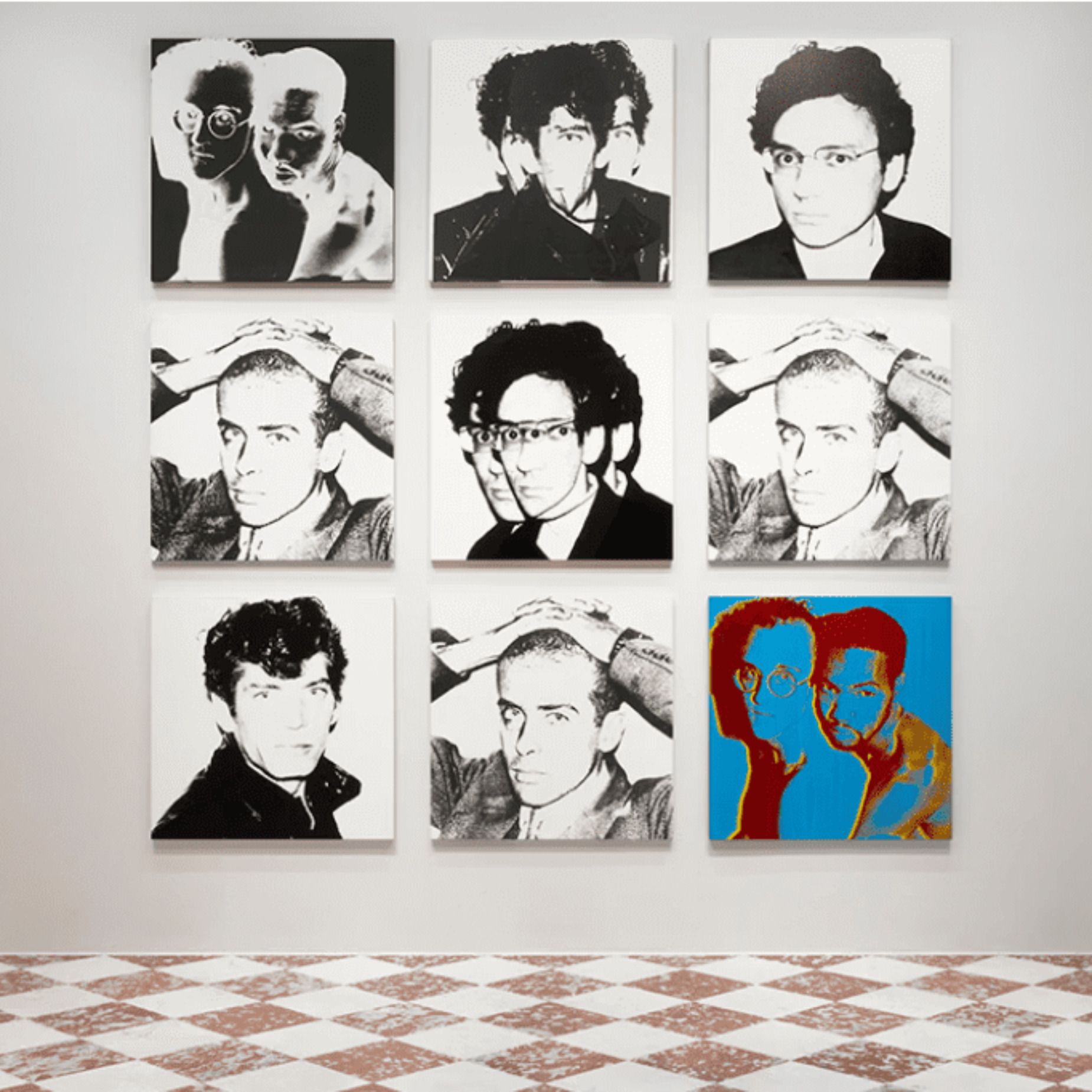
This is all of it on wnyc. I'm Alison Stewart. The two floor Townhouse gallery on the Upper east side takes a fresh look at a defining era in New York's art scene, the 1980s. A decade shaped by artists like Jeff Koons, Barbara Kruger, Jean Michel Basquiat. The exhibition Downtown Uptown New York in the 80s is on view at the Levi Gorvinda Gallery at 19 East 64th Street. With 78 works by 25 artists, the show captures a moment street where street art and pop art were reshaping the cultural conversation and when political critique was front and center. It has become a huge hit with art Instagrammers, most of whom weren't even alive when Mary Boone was one of the best curators and helped define the downtown art scene. Mary Boone and Brett Gorvey, co founder of the gallery, joined us to talk about Downtown Uptown. It's open until December 13th, so you've got about three weeks left to see it. I started by asking Brett what was something about the 1980s that he wanted to highlight in the exhibition.
- [01:19]
Brett Gorvey
For me, as you can hear from my accent, I'm British, but I came to New York in 1983 and as a 19 year old student and was immediately taken in by the energy and really the, the show is really about New York. I mean, I've often referred to this as a love letter to New York. And this was a time where you had young artists downtown basically living off the Bowery, living basically in a very, you know, New York was a, was coming out of bankruptcy. So this was a time ultimately where there was huge possibility. I mean, there was no money, there was, you know, art was, was basically people were, you know, graffiti on the streets. And that excitement is really what we wanted to capture for the show and working with Mary because Mary was basically part of this history. I mean she, she was it, she was the queen of downtown.
- [02:08]
Alison Stewart
Yeah, I came to New York in 88, graduated from school, came with my friend who was an art history major. And like, going to Mary Boone Gallery was a big deal. I just want to say that out loud.
- [02:19]
Mary Boone
Very nice to say that it is. Well, come on.
- [02:22]
Alison Stewart
Legend, Legend. Exactly how would you, Mary, categorize the people involved in the 80s art scene? How, what were they like?
- [02:34]
Mary Boone
I think since it was pre Internet, people were much more given to see things actually. So there was, it was more like what was the routine. And it was on particularly on Saturdays, you had collectors all kind of starting in mass uptown, like in the 70s and 80s, coming downtown to have Lunch at Bellotto's and then going to the Soho Galleries. And it was a great thing because you saw things in person. You had Victor Ganz talking about how this was like going to Picasso Studio, and there was a kind of actuality to it that made it, I think, more relevant. And for the show that Brett and I have done at his gallery, so many people that come in are people that I knew from, like, the late 70s, early 80s that want to remind me of what they bought from me 40 years ago. And they're so happy to have this because so much now is seen on the Internet. And, I mean, various industries grew as a part of the Internet positively. I think the Internet has not been positive for the art world.
- [04:02]
Alison Stewart
Why not?
- [04:04]
Mary Boone
Because people shouldn't see art. They should see it in person. Yeah. I mean, don't you agree?
- [04:09]
Brett Gorvey
Totally. I think. I mean, one of the things which has been amazing about the show, because we've had, you know, this is the biggest response we've had to any show we've ever done. We had more than 800 people on Saturday. And as Mary said, it's been fascinating. Fascinating to see people come, either because they lived it and they survived it, which I think is also part of it. But I think, you know, so they're people who obviously are, you know, who are young in the 80s, but actually it's the younger audience. I think what's been the most interesting for me was to see people in their 20s who don't necessarily realize, you know, what the 80s were. You know, they were basically. They probably weren't even born at that stage, and yet they come in and they see the vitality. And the two words that I've heard the most has been the freshness. You know, we talk about works that were made 40, 50 years ago, and yet people are talking about this feeling very fresh and original. And I think it's the sum of that which people are really seeing. And then I think the other thing is the word emotional, because again, when we put the show together, it was meant to be very sort of a historical survey, and to hear people talking about emotion, and I think it's their connection. I mean, you talked about that sort of actuality of living in this experience. I think the fact that people, these artists were really connecting with the city, they were connecting with the street and bringing the street into the gallery. And I think that's where the excitement is, that people really feel the vitality of this moment through the art.
- [05:29]
Alison Stewart
There is a piece I know you've spoken about It. I'm going to ask you to speak about it again. It is a Jean Michel Basquiat piece with your name on it. You're like, uh huh. And it's like a punching bag and it's got his little crown on the top. Why did he write your name on this piece?
- [05:47]
Mary Boone
Why did he write my name on this piece?
- [05:49]
Alison Stewart
Yeah.
- [05:51]
Mary Boone
Well, I don't know. I mean, we could ask him, but it's not going to happen. Normally, the way Jean Michel worked was.
- [06:01]
Alison Stewart
That.
- [06:03]
Mary Boone
People that were important in his life, like Charlie Parker, he wrote their names on paintings. So I was no different. I mean, he actually did a painting of the Mona Lisa. That kind of look was made to look like me. And this piece, you know, the crown is what he did to kind of guard you or add safety to you. I think I kind of thought it was about, You know, that he felt that I got picked on. And he joined my gallery the same week that Julian Schnabel, who was a very important artist for me, left my gallery. And I was very upset about it. And I cried for several days. And Jean Michel would come into the gallery and hug me and make sure I was okay. And I kind of think that's what the punching bag is about, that a lot of people pick on me. They give me a hard time, but that he's gonna crown me.
- [07:16]
Alison Stewart
And also that maybe you're tough very much.
- [07:19]
Mary Boone
I don't know. I don't feel very tough. I feel like a wimp.
- [07:23]
Alison Stewart
Maybe he thought you were at the time. Maybe he saw that in you.
- [07:26]
Brett Gorvey
Maybe.
- [07:27]
Mary Boone
Or maybe he wanted to bring it out because he was really that kind of a person. He liked to bring out the best in people. And I think his bond with. His bond with Andy was very familiar as well.
- [07:46]
Alison Stewart
The show contrasts the downtown art scene and the uptown art scene. Brett, what was the difference between the two?
- [07:52]
Brett Gorvey
Well, I think downtown was basically where the artists were living, where they were making the work. And it was very much about the street and ultimately the sense of community. But they had aspirations. Their aspirations was uptown, basically. That's where, you know, the, you know, the very established galleries were. That's where ultimately where many of the collectors lived. And Andy Warhol was on 66th Street. So, you know, and Mr. Charles was basically one of their, you know, sort of main gathering points. So the notion of, you know, you'd be working in the studio if you were Jean Michel Basquiat, you're actually on the street finding material literally in the garbage bins. And then basically by night you have traveling uptown and ultimately partying and being part of a scene. So the notion, in a way, you know, we are an uptown gallery. And so in a way, it's a, it's a, it's taking one's hat off at, you know, that incredible creativity that was downtown. But it is, as I said, it's really, it's a story of the city. Because New York was so important really to these artists, both as a place where they met, where they came to New York for real. You know, there was an optimism of possibility, but that sense of community because, you know, in the early period, you know, there wasn't a market, you know, when Mary was down in 77, I mean, what were you doing down in Soho? You were a pioneer.
- [09:09]
Mary Boone
Yes, she was, I guess. But soon after that, like Leo started being down there, Sauna Bend. And it kind of grew pretty quickly. I think Paula Cooper was the first person there. I think she was there in 66.
- [09:25]
Alison Stewart
It's so interesting to hear you talk about, like, oh, Paula Cooper, oh, Leah Costello. I mean, these are huge galleries.
- [09:30]
Brett Gorvey
Yeah.
- [09:31]
Mary Boone
I mean, Leah Costelli and Liana were amazing.
- [09:34]
Brett Gorvey
Yeah. That's why I talk about Mary in the same breath because, you know, we're talking about legends ultimately, you know, these are gallerists who ultimately created what we, what we see today. And I think that's the other thing which is so amazing about the show is Mary's connection to the artists. Because the artists, you know, I would not as a gallerist normally have the buy in of so many amazing talents, but it's really because of their respect and their love of Mary because she was there for them at the beginning.
- [10:00]
Alison Stewart
That was part of my conversation with curators Mary Boone and Brett Gorvey. The exhibition Downtown Uptown New York in the 80s is on display at the Levy Gorven Deyon gallery through Saturday, December 13th.
- [10:13]
Ross Advertiser
VRBO's last minute deals make chasing fresh mountain powder incredibly easy. With thousands of homes close to the slopes, you can get epic pow freshies, first tracks and more. Find last minute deals with the last minute filter on the app. Book a private vacation rental now at verbo. Com, every holiday shopper's got a list. But Ross shoppers, you've got a mission like a gift run that turns into a disco snow globe, throw pillows and pjs for the whole family, dog included. At Ross, holiday magic isn't about spending more. It's about giving more for less. Ross, work your magic.