← All Of It with Alison Stewart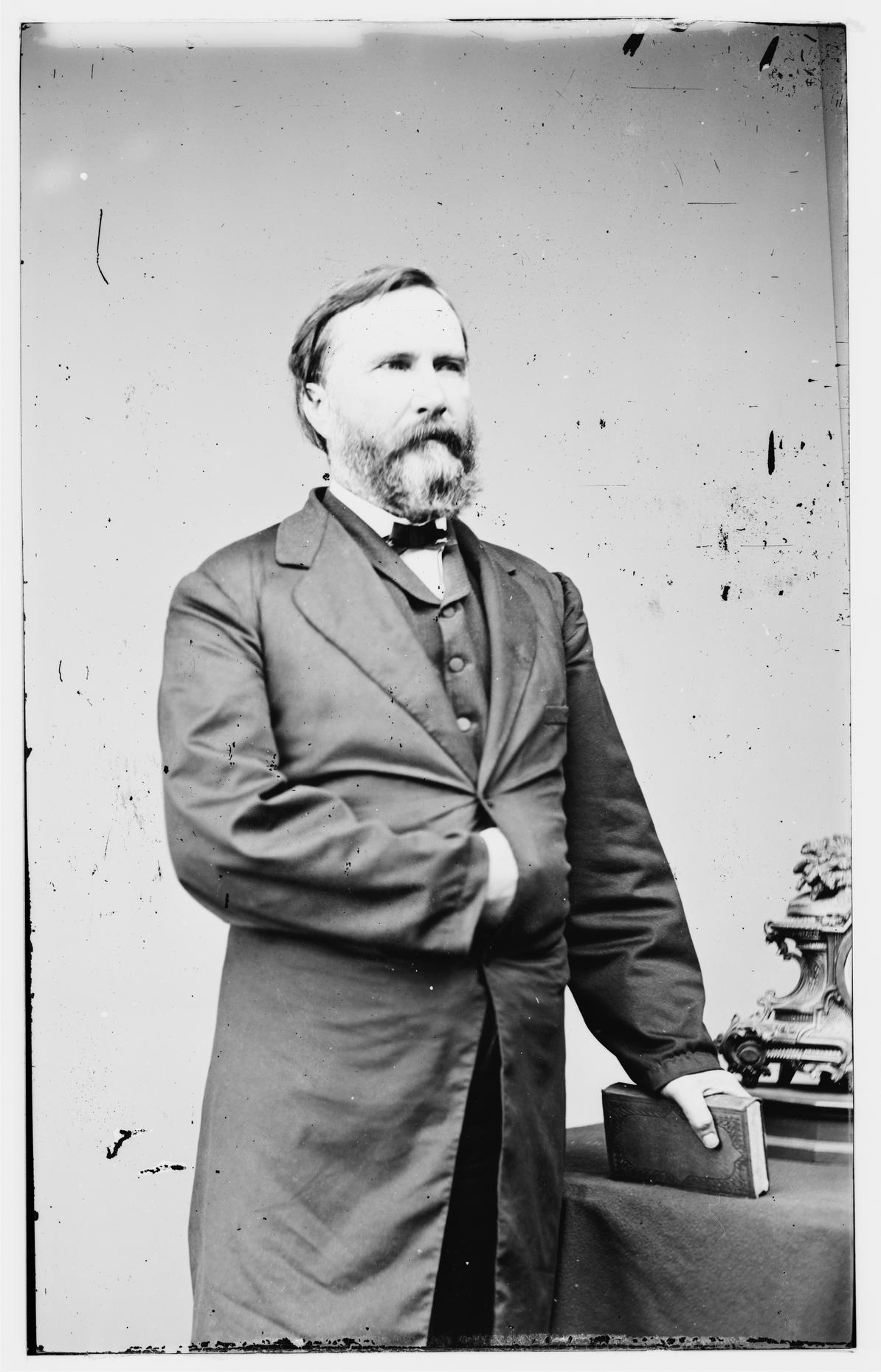
All Of It with Alison Stewart
The Complicated History of Confederate General James Longstreet
00:29:39
A new biography looks at Confederate General James Longstreet, who later supported Black suffrage and Reconstruction.
Loading summary
Transcript43 lines
- [00:02]
A
Does anyone really know what hormones do? Women hear about hormonal health all the time but are left confused and frustrated. Hormone Harmony is a powerful blend of 12 plant based adaptogens designed to support women's well being at every stage of life. Created by a German nutrition scientist and trusted by over 2.4 million women worldwide, it's helped them feel like themselves again. Get 15% off your first order with code harmony15@happymammoth.com.com Are you ready to change your mind about your body? We are flipping the script on fitness making movement that feels good and fits your life. I'm Megan Roop, celebrity trainer and founder of the Sculpt Society. I created this online fitness platform to be uplifting and flexible with sculpt, strength and dance cardio classes. From a 10 minute quickie to a 50 minute sweat, you will find programs for every stage of a woman's life including prenatal, postpartum, bridal and more. Start your two week free trial at thesculptsociety.com podcast@rxbar they believe in simple nutrition without the BS.
- [01:02]
B
That's why they said NO to artificial.
- [01:04]
A
Ingredients and yes to deliver intentional transparent nutrition.
- [01:08]
B
Try their original 12 gram protein bar.
- [01:10]
C
The Nut Butter and Oat bar or Minis RXBar, the proud sponsor of no BS. Use code RXBar on RXBar.com for 25%.
- [01:18]
B
Off, subject to full terms and conditions and to change.
- [01:21]
C
Valid until September 30, 2025 and may not be combined with other offers. See rxbar.com for full details and limitations. Listener Support WNYC Studios.
- [01:45]
B
This is all of it on wnyc. I'm Alison Stewart, live from the WNYC Studios in soho. Thank you so much for sharing part of your day with us. I did wanna give you a look ahead at some of the conversations we'll be having on the show later this week. Coming up, the author of the Wisdom and Wonder of Being Unsure, Maggie Jackson, will be our guest tomorrow. And then later in the week we'll talk with Devorah Heitner, author of Growing up in Coming of Age in a Digital World. And yes, both of the authors will take calls during those segments. That is in the future. But let's get this hour started with one of the most intriguing political and personal turnarounds and in American history. As we enter this presidential election year with a divided electorate, the true story of a Confederate general turned Reconstruction advocate offers some hope that people can change. South Carolinian James Longstreet, who died 120 years ago today, was Robert E. Lee's right hand man leading troops into battle as a great defender of the south and slavery. But after the war, while other Southerners refused to admit defeat and embrace change and push the Lost Cause narrative, Longstreet joined enthusiastically in the process of Reconstruction and believed it would bring about a healthy Union. He helped integrate New Orleans public schools. He supported black suffrage and even helped lead a black militia against armed white supremacist forces disregarded by Confederate supporters. And yet by no means a radical, anti racist, Longstreet occupies a strange place in U.S. history. Should we remember him as a Confederate general in supporter of slavery or as the man who changed his mind and ultimately sought to use his positions of power for good? A new biography explores all of these questions. It's titled Long the Confederate General who Defied the South. It is out now and biographer Elizabeth Varon joins us. She's a history professor at the University of Virginia. Nice to meet you.
- [03:43]
C
So nice to meet you. So thanks, many thanks for the invitation.
- [03:47]
B
So Longstreet was so much a part of Southern leadership, you write. He was one of three leaders who couldn't even apply for citizenship without a pardon from the president after the Civil War. Called Rebel number three. But outside of academic and Civil War buff circles, his name is not particularly well known. Why isn't James Longstreet as commonly known as say, Stonewall Jackson or Braxton Bragg?
- [04:08]
C
Well, that's a great question. And the way you set this up, by saying this is a sort of strange turnaround and a strange life, gets right at the heart of the matter. So Longstreet, as you said, was a major Confederate figure, leader of Lee's most important corps in the army of Northern Virginia, the Confederacy's most important army, and won much acclaim on the battlefield from Confederates and white Southerners during, during the war. And his reputation really even at the end of the war, in their eyes, was intact, a reputation as one of the heroes, as they saw it, of the Confederacy. But as you've explained, and my purpose really is to connect the two stories you flagged the stories of his wartime experience and then of his post war political career. The sort of great change comes when he pivots. He turns on a dime, if you will. He engages in what I label the most remarkable political about face in American history. There may be a more remarkable one. I just couldn't think of it given his past. And in 1867, as congressional reconstruction is getting underway, the centerpiece of which is the enfranchisement of African American men in the south, formerly enslaved men who had been loyal to the Union, of course, and fought for Union victory as soldiers in the Union army. Most notably, he supports congressional Reconstruction in what is a very, very surprising and unusual move. And from that point on, he's a pariah among unreconstructed white Southerners, ex Confederates, and, as I try to explain in the book, a political backlash against him by Lost Cause mavens and advocates who want to romanticize and glorify slavery in the Confederacy and demonize Reconstruction. A campaign by these types against him, a political backlash, causes a relitigation, and endless relitigation that goes down to the present day, if you will, of his wartime record. So having decided that he is a political pariah for promoting Reconstruction and accepting black voting, these Lost Cause types then go on the war path. When Longstreet is at the very height of his own sort of support of radical Reconstruction, they go on the war path and suggest that he is to blame. He. That he bears the primary blame and perhaps even the sole blame for the Confederate defeat at Gettysburg, that Turning Point battle in July of 1863. And they suggest, moreover, that he is to blame for the Confederate's ultimate defeat in the war itself through his disregard of the orders of Robert E. Lee and his general tardiness and. And. And poor performance. And they suggest, moreover, and I'm talking about men like Jubal Early, a former Confederate general who was at the forefront of this lost ca propaganda. They suggest, moreover, that his heart had never been in the Confederate cause and that. And that he was a traitor on every level, including, and most notably a race traitor, for the ways that he supported Reconstruction. So this relitigation, you know, it has the effect of displacing him from the pantheon of Confederate heroes as white Southerners saw it, and making him vulnerable to the charge that he had been an inept military leader. And military historians and Civil War buffs have enjoyed relitigating the issue of his performance at Gettysburg at great length. And so to Civil war buffs and 19th century history buffs, he's rather well known, at least in this one regard. But for the rest of Americans, his story is representative of a series of stories that were pushed aside out of public view by. By the Lost Cause mythology. I was going to mention to you.
- [08:16]
B
Something that made me think about this was my sister lived in Richmond, Virginia, capital, Confederacy. Her daughters both went to school there. And I asked, do you know who Longstreet is. And they said they know. And I explained the story and they go, oh, well, that's why. Because they just about, you know, there's monument. There used to be Monument Avenue there with all the monuments to all. And he was not one of them. And I just thought that was so interesting.
- [08:38]
C
One of them. Exactly. So in a sense, and this has come up a good bit in recent years, for obvious reasons, he's sort of the exception that proves the rule, that proves that those monuments that were put up 10, 20, 30, sometimes 40 years after the war and beyond were monuments to the Lost Cause, to white supremacy, to a romanticization of the Confederacy and of slavery, to, in other words, monuments to a political ideology and a political program, the program of Jim Crow, segregation. And having supported Reconstruction, he was no longer a useful symbol of any of those things. So he's come up again, if you will, as we've rappled with and reckoned with these issues of Civil War memory. Part of the argument of my book is that while the vast majority of ink that's been spilled discussing this man's life has focused on three days, July 1863, at Gettysburg, he had a nearly 40 year career as a political operative. And it's a career in part because he was a, a valuable guy who loved to give an interview, lean into an interview, expound on the issues of the day and so on. It's a, it's a career that's a window into race relations, into Civil War memory, into partisan polarization. All these things that we, we still grapple with today.
- [10:01]
B
Oh, there are parts in this book, reading it that could easily sound like the third graph in a story about something that's happened now, whether it's changing, changing curriculum in schools, armed, disenfranchised white men deciding to march on a government entity. It was really extraordinary reading it. And I'm curious what lessons from this time, from this man's life's time, that you think could be useful to keep in mind this year and really deserve examination?
- [10:32]
C
Yeah, well, you've alluded to a couple of them. First of all, the importance of accountability. As you've explained, Longstreet participates in the defense of the interracial governing coalition that was set up by Congress's Reconstruction plan. A coalition of those who had been loyal to the Union, a Republican Party coalition. Of course, the Republican Party back in the day that we're talking about here was the party of the Union, of Emancipation, of black enlistment and of Reconstruction. And he defended that government in many capacities, including as the leader of an interracial militia which. Which existed to defend the rightfully elected Republican coalition government from white supremacist insurrectionists. He defended them in a series of street battles that culminated in September of 14, 1874. This is, you know, nearly a decade after the Civil War has ended in a pitched battle in the streets of New Orleans in which white supremacist insurgents lead a coup attempt. There's just no other way to put it. And he and an interracial militia that includes Union veterans pitched against former Confederates, some of whom he had led in battle against the Union. Again, the strangeness and improbability of this entire story is quite astounding. You couldn't make this up if you tried. He leads this interracial militia in the defense of the government against a white supremacist coup. The coup is briefly successful. Federal troops are able to restore the Reconstruction government. But this battle, the Battle of Canal street, or Liberty Place, as it was later dubbed by white supremacists, this 1874 battle spelled the beginning of the end of Reconstruction. And one of the reasons it spelled the beginning of the end is because there was no accountability at the time. So to get back to your good question, accountability is a message here. Those insurgents walked away literally, not a single one of them, paying any kind of price or bearing any kind of punishment for. For this violent coup attempt. And so what is, you know, the message for us is you have. You better hold insurrectionists accountable. The result of letting them walk was the collapse of Reconstruction, the removal of federal troops from the south, the imposition of Jim Crow terror and prohibition and prescription disfranchisement and so on, and the imposition of one party rule, a Democrat Southern Democratic rule in the south for generations. So accountability is one hugely important theme. I think ways in which he's a window into Civil War memory is also important. As you noted, he's a complex figure. As we discussed, he does represent a sort of rejection of the Lost Cause, and therefore no statues of him blanketed the South. On the other hand, as you also alluded to, in a way, this really is a story about the enduring power of the Lost Cause, of the campaign of racist misinformation that just blankets America in this period. And Longstreet was, as you put it, he was not a racial egalitarian by the standards of the great abolitionists of the day, a Thaddeus Stevens or a Frederick Douglass. What Longstreet wanted and envisioned was a southern politics in which African Americans would play a Part as constituents and as voters and as sort of junior partners in that Republican coalition in some maybe limited leadership roles in deference to and subordination to peaceable progressive whites. As he saw himself at the time. This was a limited challenge to the racial caste system and to white supremacy. But in a way, the moral of this story is that even that limited challenge was enough to make him a pariah. Because what his opponents wanted, the Lost Cause types, the unreconstructed white supremacists, ex Confederates, was a society in which blacks had no political voice whatsoever, no political presence or participation whatsoever. So even his limited challenge was considered a clear and present threat to the racial orthodoxies of the time. And again, sometimes as the statues were coming down, people would say, oh, you're erasing history. It's the Lost Cause that was erasing history by pushing a history of dissent and division within the south out of view.
- [15:25]
B
My guest is Elizabeth Varron. The name of the book is Longstreet, the Confederate General who Defied the South. Let's talk a little bit about his background because this is important to understand, to understand what a reverse this was. He was born in South Carolina on January 8, 1821. What was it about his upbringing that would lead him to want to, at least for part of his life, fight fiercely for the South? Even though he'd been part of the US army before that, why would he be someone who would fight for the South?
- [15:53]
C
So Longstreet was every bit a product of plantation society, Deep south plantation society from an enslaving family. And the major influence on him as he grew up was his uncle, Augustus Baldwin Longstreet, who became a kind of surrogate father after Longstreet's own father passed away. And Augustus Baldwin Longstreet was what we call a fire eater, a seething, frothing white supremacist and proponent of secession. And you know, this, this defense of slavery that people like Longstreet, Augustus Baldwin Longstreet churned out and the condemnation of abolition and of the emerging anti slavery Republican party and so on. This was the political milieu in which Longstreet grew up. And he rushed to join the secessionist movement and the Confederate army, to resign that commission in the U.S. army. Not every prominent Confederate general did so. Some wavered some, but he wasn't one of the waivers. He rushed into the ranks sort of following the politics of his fire breathing uncle. And then during the war, Longstreet showed in every possible way that he was a True believer in the racial politics, the white supremacist politics of the Confederacy. He ordered the capture of free blacks in Pennsylvania during the Gettysburg campaign, and they're being sent south into slavery. He gave stem winding speeches to his troops decrying emancipation and as he put it, saw it, Yankee barbarism. He punished very cruelly the African American Unionism, the attempts by blacks to help and aid the Union army as spies and in other capacities. So he was all in on the Confederate cause really, until the very end of the war. And for me as a biographer, of course, it would have been interesting if I had found some sign that something in his upbringing or during the war prefigured his later turnaround, but it really didn't. He's an ardent Confederate until Confederate surrender, but at that point, we begin to see things change.
- [18:11]
B
I think there is a moment that you write about, though, which I found I thought, well, maybe this was part of the turning point, is he is so, so much believes in the troops and what they can do, but they're starving. They don't have any food. They don't have. And he asks for very, very rich Southerners to give over some of their riches and their gold to help feed the troops. And they say, yeah, yeah, absolutely.
- [18:36]
C
The way I put it is to say he doesn't lose his belief in the Confederate cause, but he does lose a degree of confidence in it. He believes the war effort is being mismanaged, that people aren't making the requisite sacrifices. He becomes quite disturbed at what he sees as the failings of the Confederate high command and failings of the Confederate people. Logistical woes and infighting and tactical mistakes and so on. And he begins to brood in the later stages of the war about what he considers to be the principal flaw, and that is the flaw of her hubris or arrogance. He believes the Confederates have been arrogant, that they have underestimated their opponents. And this becomes a particularly salient theme for Longstreet. As the Confederates, Lee's army has to face US Grant. US Grant is a huge figure in this story, as you know, Longstreet's great chum, sort of bestie from before the war at West Point. And Longstreet knows that Grant, with all of his skill and courage, will make Confederates pay for their dysfunction in a way no one else could. So it's Grant's generalship that brings the Confederates to heel, that begins Longstreet's new journey. And it's Grant's clemency that really inspires Longstreet to see the world in a.
- [20:02]
B
New way because he was one of those three generals who would not be allowed to citizenship. They couldn't go. They couldn't.
- [20:11]
C
I mean, Long street was. The sort of terms that Grant offers at Appomattox are extremely lenient. He's famously magnanimous. He says Confederates won't be rounded up and tried and hung and deprived of their property and their rights and so on. They're free to go home, provided they don't ever again raise up their arms against the United States government. Longstreet sees those lenient terms of Grants through the lens of their friendship. And he really sort of interprets Grant's magnanimity in the spirit in which Grant intended it. Grant was magnanimous to the Confederates because he wanted to change hearts and minds and affect their repentance and atonement. So that's the spirit which Grant offers his terms. And Longstreet concludes, well, we have lost. You are being gracious in victory, and we now must be gracious in defeat and accept the new order. He belongs to a class of Confederates, the very sort of most prominent leaders that according to Andrew Johnson's Reconstruction sort of proclamations will have to apply directly for. For. For pardon to. To Johnson and, And because of the prominent role that he plays he played in the Confederate Army. Longstreet initially isn't pardoned, but he will. Congress will remove his disabilities. We've talked a lot recently about the 14th Amendment and Trump and all and all the rest. Congress will act in, according to the dictates of the 14th amendment to, to. To rem. You know, remove Longstreet's disability so he can hold office and participate fully in politics so he. That. That clemency does eventually reach him.
- [22:06]
B
I do want to reach back to something you said quickly and I think people said, wait, what? They were best friends, Grant and Longstreet. So Longstreet goes to. Is. Goes to West Point. He's got the introductory letter. He gets to West Point. Not the best student.
- [22:19]
C
No.
- [22:20]
B
He and Grant are friends as young men. What did each see in the other?
- [22:26]
C
So I think Longstreet was a sort of fun loving prankster, jovial, sort of carefree type. His personality will change some during the war. He'll lose three small children, will die in the space of a week in the winter of 1862 in a scarlet fever epidemic. And everyone around him will say that this, this changes Longstreet. It's part of the context of his of his political about face too is he really wants peace and prosperity and serenity after the war, after a brutal war. So Longstreet, anyway, the earlier Longstreet had been a sort of fun loving type Grant, a little bit more serious. What Longstreet admired in Grant, and this becomes such a big part of the story because Longstreet, one of the things he'll do to anger ex confederates is to compare Grant and Robert E. Lee, Lee, and to argue that Lee comes out the worse in the comparison. What Longstreet loved about Grant was he felt that Grant was level headed, cool as a cucumber, you know, brave and magnanimous for sure, but cool under fire. Longstreet would describe Lee as someone who let his emotions get the better of him at times, including at the battle of Gettysburg, less, you know, more passionate and less cool and calm than Grant. So Longstreet admired Grant in so many ways. And it's important to note that Grant himself was no abolitionist. He goes on his own journey, much like Lincoln. He comes to accept emancipation, accept black enlistment, accept black voting, then defend all of those, those important transformations. And so Longstreet, having followed the dictates of his uncle before the war, really Grant becomes his political polestar afterwards. It's like he had one man sitting on each shoulder. And he kind of turns away from the Augustus Longstreet influence towards Grant's influence.
- [24:27]
B
My guest, Elizabeth Barron. The name of the book is Longstreet, the Confederate general who defied the South. You mentioned it. He liked to write, he liked to let his opinions be known. He wrote a memoir. I think it's 600 page plus memoir. So you, as a historian, when you were going through these sources and by the end of it, was he a reliable narrator of his life?
- [24:49]
C
I mean, no one really is, you know, it's a great question. Ultimately, he had an agenda in the way he wrote. And part of my purpose of my book is to say this man left behind a huge body of work. He had an awful lot to say, you know, starting with those letters in which he first declared that he was going to support Reconstruction and in which he explained why he felt it was important. Again, invoking Grant's terms and the, and the obligations that came with the, with the Confederates having accepted those terms, then through his support of the Republican party and all of the many forms that it took, a political career in which he held many patronage posts, his defenses of Grant and of black voting and so on. This is quite an Amazing body of work. After that Liberty Place battle that I described, Longstreet was quite, quite sort of battered psychologically. That was a blow, the end of a very turbulent period, New Orleans. And he sought some refuge by moving back to Georgia, to Gainesville, Georgia, north of Atlanta, where he had some kinfolk. And he turned his focus to battling against those who criticized his war record, trying to set the record struggle rate and refashioning himself somewhat as a kind of herald of reunion between the north and the south to say, I could see before anyone else could that both sides were going to have to make concessions if there was going to be reconciliation. So he sort of reinvents himself as a reconciliationist and a kind of national statesman. Northerners are more welcoming of that message than white Southerners who continue in large numbers to be very critical of him. So his memoir is. He wrote a 690 page memoir. Most of it is very much oriented towards battles and in his eyes trying to set the record straight about them. But the overall sort of project is to try to claw back a measure of his popularity even, and especially in the white South. And so this gets at another very important thing theme of this book, and that is that really should temper the way we take stock of this life. The white Southern Republicans like Longstreet who decided to sign on with Congress's project and join that governing coalition. He wasn't the only one, but he was the most prominent and the most important sort of lightning rod for criticism of these types. White Southern Republicans were a key part of that congressional governing coalition, but they were also the weak link. They were the weak link because they were susceptible to the pressure and the misinformation and, and the, and the, the appeals and the incentives and so on of, of, of white unreconstructed Democratic ex confederates who said, you know, if you want to be free of our, the slings and arrows of our criticism, you want to come back into the fold. The price is to temper and moderate your politics. So Longstreet continues to support black voting until his dying day. He continues to be a sort of patron for some black Georgian office holders. But he steps back from that sort of radical Republican position he'd taken in New Orleans. And this tells us about some of the fault lines in that coalition.
- [28:10]
B
The book is terrific for anybody who is a big old history nerd. It also fun fact features person who was a character in the Gilded Age.
- [28:20]
C
Ah, I have not watched the Gilded Age. I need to, I'm told I should. I'm starting A biography of Clara Barton and she appears in it. But, but who's the character?
- [28:30]
B
Thomas Fortune. Ah.
- [28:32]
C
Oh, yes. Okay. Well, I mean this is. You brought me to, in a way, what I think is the most important theme of the book and the thing that is newest about it. For those who know a little bit about Longstreet, the most remarkable thing about him is that in this phase as a Republican political operative, he forges some remarkable alliances with African American politicians, editors and so on. Real sort of working partnerships. The first key one is with PBS Pinchback, who represents this remarkable class of. Of New Orleans men, veterans of the war, Union. Union veterans, former officers in the Union army, who are a real vanguard demanding suffrage and full political and social rights for African Americans in New Orleans and around and around the country. And he has immense respect for Pinchback. And part of what I argue in the book is that his exposure to men like Pinchback, who really won his respect in New Orleans, which was a sort of unique lab for black politics during the, the Reconstruction period. This is one of the factors in his turnaround. He gets a very warm reception from Republicans after ex Confederates have turned on him so fiercely. So Pinchback's one Fortune, a very important newspaper editor, is another. He wins some praise from the likes of Frederick Douglass. He expresses his admiration for Booker T. Washington. He is a patron to. To. To dozens of black politicians in Louisiana and then in Georgia and, and most remarkably, and I think this more than anything is what angers ex Confederates. He promotes the political ambitions and the militarization of African Americans in New Orleans. He promotes their, Their. Their promotion. He has in his in integrated militia not only black captains and colonels, but black generals. Thomas Morris, Chester Alexander Barber. Remarkable men. These are visionary race leaders who are calling for, again for full equality in uncompromising, very brave terms. And he does all of this in the midst of, and this is, one can't emphasize this enough, a massive campaign of white supremacist terrorism. Yeah. Professor.
- [30:57]
B
Yeah, I need to dive in and I need to thank you for your time. Are there guests is waiting for our next segment? I could talk about history all day long. The book is excellent. It's called Long the Confederate General who Defied the South. Professor Elizabeth Varan, thank you so much for sharing your research with us.
- [31:14]
C
It was my pleasure. Nice to meet you.
- [31:17]
A
So I was just parking my car and then I saw you the gecko.
- [31:21]
C
He huge fan. I'm always honored to meet fans out in the wild.
- [31:24]
A
The honor is mine. I just love being able to file a claim in under two minutes with the Geico app.
- [31:29]
B
Well, the Geico app is top notch.
- [31:31]
A
I know you get asked this all the time, but could you sign it?
- [31:34]
B
Sign what? The app.
- [31:36]
C
Yeah, sure.
- [31:37]
A
Oh, that means so much. Oh, it rubbed off the screen when I touched it. Could you sign it again?
- [31:42]
B
Anything to help, I suppose.
- [31:44]
C
You're the best. Get more than just savings. Get more with Geico. NYC now delivers the most up to date local news from WNYC and Gothamist every morning, midday and evening with three updates a day. Listeners get breaking news, top headlines and in depth coverage from across New York City by sponsoring programming like NYC Now. You'll reach our community of dedicated listeners with premium messaging and an uncluttered audio experience. Visit sponsorship.wnyc.org to get in touch and find out more.