← All Of It with Alison Stewart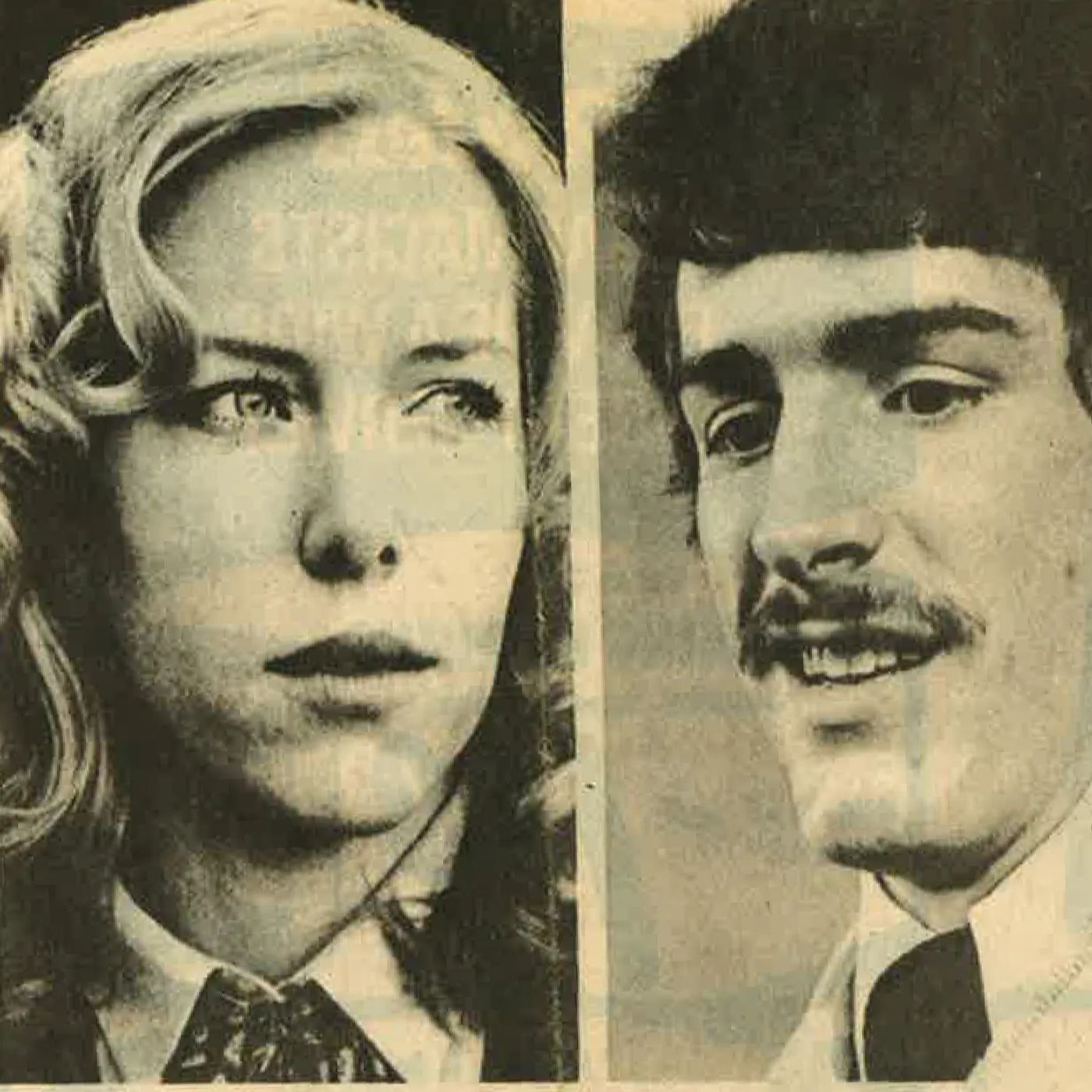
Loading summary
Transcript49 lines
- [00:08]
A
This is all of it on wnyc. I'm Alison Stewart. Coming up on tomorrow's show, it's the Bridge Hour. We'll talk about some history behind some of the city's bridges. And then homonym alert. We'll talk about the role of a bridge in songwriting and why current pop music is doing away with it. And later this hour, we'll continue our Go Local series about shopping in our community with our partner, the local AKA Caroline Weaver. She'll join us in studio. And today we are taking on Manhattan. That is in the future. Now let's get this hour started with a landmark court case. Listeners, the following conversation will deal with sexual assault. If at any time you need Support, please call RAINN's National Sexual Assault Hotline. The number is 1-88-00-656-HOPE In 1978, marital rape was only a crime in four states, Iowa, Nebraska, New Jersey and Oregon. In North Salem, Oregon, Greta Rideout claimed that her husband assaulted her in front of their young daughter and decided to press charges. When the case went to trial, it became national news. It was the first time a woman testified that her husband raped her while they lived together. John Rideout was ultimately acquitted, but thanks to momentum begun by the trial, by 1993, spousal rape was a crime in all 50 states. Greta went on to make a life for herself and John Rideout went on to commit more sexual violence in the future. A new book chronicles the story of this case and the history of marital rape in the US it's titled Without a Landmark Trial and the Decades Long Struggle to Make Spousal Rape a Crime. Author Sarah Wyman is now with me to discuss. It is nice to meet you.
- [02:04]
B
It's good to be here. Thanks so much.
- [02:06]
A
So when did states like Oregon start to reconsider their laws regarding spousal rapes?
- [02:11]
B
Most of the reconsiderations happened around the mid-1970s. It grew out of larger rape reform laws that were happening and other things like Roe v. Wade and the implementation of the Equal Opportunity Credit act, which allowed women to finally get mortgages or get credit cards. There was, of course, landmark cases in the 60s and the early 70s relating to birth control. So things were moving in what seemed to be a very positive direction for women. And so a number of activists looked at why each state seemed to have exceptions related to the rape of a spouse. And it went all the way back to common law in the 16th, 17th century, where once a woman married her husband, she was essentially his property and he had the perpetual right to consent. So she never had the right to say no. And by the 1970s, this just seemed so archaic and weird and strange. So over time, it actually started in South Dakota, but they ended up repealing their law in 1977 and wouldn't put it back on the books until 1990. So that by the time Oregon got around to it in 1977, they were, as you said, the fourth state to make marital rape a crime.
- [03:27]
A
Let's talk about Greta. What was Greta's life like before she met her husband John?
- [03:33]
B
So Greta had moved to Salem. I mean, first to Portland and then to Salem. She had come from the Midwest. Her life was a little bit itinerant. She had dropped out of school. She was kind of looking for a way forward. And she had followed an older sister to the area. But their relationship grew distant and she was looking for work. She was having some trouble. She finally did get a job, and that's where she met John. And I want to keep in mind they were so young when this alleged assault.
- [04:01]
A
They were like 18 and 22. Is that something like that?
- [04:04]
B
She was 23 and he was 21 when the alleged assault happened. And by that point, they had already been together for a couple of years and married for one. But the relationship was really marked by the cyclical nature of intimate partner violence. They would get together, there would be violence and hitting. There would be a lot of arguments. He would demand sex, she would say no or try to get out of it. They got married. They'd had a kid already. It was already not working. She took the kid back to the Midwest, but he sort of cajoled his way back into her good graces. And a lot of it had to do with socioeconomic instability. She had trouble getting jobs, he had trouble keeping jobs. So as a result, it just became this relationship where sometimes it felt better to just go back to what she knew.
- [04:55]
A
What does Greta say claim happened on October 10, 1978?
- [05:02]
B
On October 10, 1978. And this is what she would later press charges about. They had had an argument. He had stayed home. He was supposed to be at school, she was supposed to be at work. He demanded sex, she said no, she had to go to work. And then somehow they ended up outside arguing, then back in the apartment, and there was an alleged assault, according to Greta, in front of their two and a half year old daughter. And so she said that he had raped her. He said that it was consensual. But she knew that there had been a change in the law in Oregon the year before that.
- [05:38]
A
So she knew that it was a.
- [05:40]
C
Possibility that she could.
- [05:43]
B
And she knew that because there had been an earlier incident of intimate partner violence. And Greta had gotten in touch with the Salem women's crisis center, like a domestic violence shelter. And there she learned that the law had been changed. And the night before the alleged assault, she and John had been out with a friend in the apartment complex. And the law came up, and she essentially said, you know, if you do anything or if something happens, you know that there is this law. So as a result, when it came time to press charges, she did know about it, but it also came up and was used against her in court.
- [06:20]
C
One fact of the case that seems important is that Greta and John were living together at the time of the assault. Why is this particularly significant?
- [06:31]
B
It's significant because it was the first case in America where a husband and wife who were still living together, where it led to a trial and an eventual verdict. Before then, there had been cases in states where husbands and wives were either separated or living apart. But the fact that John and Greta were still living together was viewed as very significant, especially when national media coverage got wind of it, and it really kind of snowballed into the spectacle that resulted in the trial.
- [07:04]
C
We're talking about the book without a landmark trial and the decades long struggle to make spousal rape a crime. My guest is author Sarah Weinman. How did Greta's name become public?
- [07:18]
B
Her name became public quite early on. A local reporter for the Oregon Statesman, which later became the Salem Statesman Journal, she made a decision, she was a courts reporter, that publishing Greta's name seemed significant because she already recognized that there had never been a case under this new law in Oregon. And Greta was still married to John. Therefore, if they published his name, it felt like, well, they should publish her name as well. Obviously, in 2025, we would not do that. And even though Greta's name appears in the book, there are other sexual assault survivors that appear in the book. The reason is because I got their consent in advance. But nothing like that happened in 1978. So once Greta's name was out there, it meant that it could just get propagated in every other media report thereafter, including on television.
- [08:12]
C
How would you describe the media coverage?
- [08:14]
B
Pretty sensational. Pretty stacked against Greta. There were a lot of definitely after the trial with op eds that seemed terrible even by 2025 standards. But reading them and trying to situate them in the context of 1978, I mean, people were still wrapping their heads around the idea that marital Rape was a crime, which now we sort of. We accept as a fait accompli. But back then, it was still very new. And certainly John Rideout's lawyer, Charles Burt, made it a pillar of his defense that it wasn't just that he was saying that anything that might have happened was consensual, but that the very idea of marital rape could not be a crime.
- [08:59]
A
How was her sexual history used against her?
- [09:04]
B
This was one of the really significant events leading up to the trial. There was a pretrial hearing a few days before opening arguments where the judge allowed in Greta's sexual history. So that meant there were instances where she had had two abortions, she'd had an extramarital affair, she had made jokes with a good friend of hers, essentially trying to troll her husband into admitting whatever additional sexual desire. So she said that there had been some kind of lesbian relationship, which was not true. But because that was all fair game, it meant that Greta had to talk about it on the stand, particularly under cross examination. Although what was interesting is that Greta would later say that when she was being prepped by the prosecution, she felt that was more traumatic than being cross examined. And in a way that makes sense because you expect to be in an adversarial position with the defense lawyer. You don't expect to get that same barrage from your own side as you.
- [10:04]
A
Were going through the court records and reading through everything with your 20, 25, 2024 brain. What was unusual? What surprised you or something that you thought, wow, they could have used this, and they didn't.
- [10:19]
B
I think what surprised me is how the jury ended up disregarding a preponderance of evidence that the prosecution brought forward. There were 27 witnesses for the prosecution. There were only four witnesses for the defense. Greta testified at the very end, but there had already been evidence showing that forced intercourse, because again, rape is a legal term, not a medical term, but that forced intercourse had happened. There were people to corroborate that the nature of the relationship was very violent, and there was a lot of intimate partner violence. But because Greta's history had been brought in and the jury did not find her testimony to be credible, they believed beyond a reasonable doubt that they should not convict John Rideout of first degree rape. Now, if there had been lesser charges like assault and battery or even second or third degree rape, the jurors might have come to a different conclusion. And that certainly was the case. From what they said at the time and from what one of the jurors I was able to talk to Told.
- [11:20]
C
Me, what else did that juror tell you? That must have been a fascinating conversation.
- [11:24]
B
She said that it was the best jury she had ever served on, that everybody took this matter very, very seriously. But that ultimately, at the time, they really just didn't think that they could convict John Rideout, a first degree rape with a prison sentence at maximum of 20 years. Maybe if there had been lesser charges, they would have gone the other way. But then when I told her about what would later happen to John and the fact that he would end up on trial for unrelated sexual assaults with a different outcome, I did ask her, you know, does this affect how you thought of what happened in 1978? And at the time, when I talked to her initially, she said, well, what's done is done and it's over. But since the book has come out, I've heard from this juror and she read the book and has had a sleepless night thinking about what the 1978 jury was like. But on the other hand, I think if there had been a third option, like not proven, which you can do in Scotland, maybe that would have been a more just verdict. But if you have to choose between guilty and not guilty, and you feel like you don't have reasonable doubt, you can't in your good conscience convict. But the ripple effects were just untold.
- [12:41]
A
Here we're talking to Sarah Wyman. Her book is called Without a Landmark Trial and the Decades Long Struggle to Make Spousal Rape a Crime. You write in your acknowledgments that the book, the most rewarding and the most difficult professional undertaking of my life, writing this book. At times I thought it would break me, and at one point it did. Why was this so difficult for you to write?
- [13:08]
B
I mean, consider the topic. This is about the worst kind of rupture with intimate partnerships. It's not enough to talk about sexual assault. It's the fact that it's a chronic condition. And the fact that I was reading about it and talking to survivors and, you know, sitting with my headphones listening to audio transcripts of rape, of rape trials, you know, if I wasn't affected, I wouldn't be a human being. And I think it's just really important that doing this work to talk about that there is a toll and that it's really important to address your own physical and mental health. And yes, there was a point, particularly after, I'd say late 2022, early 2023, there were definitely points when I thought, am I going to be able to finish it? But I Took comfort in reading works like no Visible Bruises by Rachel Louise Snyder, who wrote this incredibly amazing review of my book for the Times. But that book is about intimate partner violence and what we misunderstand about it. In that book, she talks about how she was trying to get herself ready to watch video of a family that would later be annihilated by the husband. And she said it took her a full year to get herself ready, that she basically had to step away from the project and really get herself right physically and mentally before she could do that. And reading that truly made me feel less alone. And I think it's really important that I hope in talking about this for my own work, that it will make someone else working on similar topics feel less alone.
- [14:44]
C
Why were you interested in it if it's a pro?
- [14:48]
A
It was.
- [14:48]
C
If it was such a traumatic experience.
- [14:51]
B
I think that my work in general tends to dwell on the darkness of human behavior. I've been fascinated this by. I've been fascinated by such behaviors my entire life. And I think it's because that there is that line that is so easy for people to cross. And I want to understand why. Like, why is it that some people don't cross that line and some people do over and over again? In the case of the rideouts, I also wanted to understand how this couple that were just sort of living in obscurity also became this tremendous media spectacle and became avatars for things that were far larger than themselves and that they could ever be.
- [15:32]
C
Yeah. You talk about how there was a television episode of Barney Miller that was a part of this. There was a TV movie that starred Mickey Rourke and Linda Hamilton.
- [15:43]
B
Yes. Before they were stars.
- [15:44]
A
Before they were stars.
- [15:46]
C
How did this movie portray what happened between the couple?
- [15:51]
B
So I went in, watching this movie expecting there to be a great many changes, or what I call the biopic problem, where, yes, it's real names in real life, but everything has been changed tremendously. And on the one hand, structurally, the movie does not really resemble what happened because it's structured like a romance. And in real life, it was the cyclic nature of intimate partner violence, which is not great from a structural standpoint. But watching this film, I could see the care that the producers, two women who had never produced a TV movie before, and the screenwriter who was a veteran, who eventually would, I think, win an Oscar for Children of a Lesser God. They really tried to treat what happened with great sympathy and responsibility, but they also didn't want to tilt it in the direction of It's All About Greta. They Also wanted to present John side to some degree. So as a result, I think the movie is better than it has a right to be, but it still falls into a lot of the tropes of TV movie issues.
- [17:01]
C
How did Greta's case move along the spousal rape laws? How did it help it evolve to the point of La Berta case in Buffalo?
- [17:12]
A
We'll talk about in a minute.
- [17:13]
B
Yeah. So it's interesting to think that an acquittal might have spurred this more quickly than a conviction. And I think just because the outrage about the acquittal. And then there was a brief moment afterwards where John and Greta reunited, mostly because there was a custody issue. And in figuring out what to do with their daughter, it was the path of least resistance to try to get back together and make a go of it, even if the media and the town of Salem itself felt that this was kind of a betrayal of everything that the trial had stood for. But because of activists like a woman named Laura X, who had already been around feminist circles in Berkeley. She was part of the free speech movement. She founded the center for Women's History. And learning about this case galvanized her to found the National Clearinghouse for Marital and Date Rape. And because she was an archivist who was documenting every known instance of spousal rape that went to trial or where there was an arrest and a conviction, she had the data and she also had the. The wherewithal to essentially mount a PR campaign that helped other activists galvanize legislatures in every state. So it took about 15 years, but it went from just four states making spousal rape a crime to all 50 by 1993.
- [18:36]
A
Yeah. In New York, the New York Court of Appeals eventually ruled that married men can be prosecuted for sexually assaulting their wives. The judge said a marriage license should not be viewed as a license for a husband to forcibly rape his wife with impunity. A married woman has the same right to control her own body as does an unmarried woman. What did this decision mean?
- [19:00]
B
This was a landmark decision, too, because it meant that marital rape was a crime under equal protection, which no other state had ruled on before and I believe not since. So the case at the heart of it happened in Buffalo. It was with a young married couple named Mario and Denise Liberta. They had met in high school. They had a son. Some of the details actually eerily track to the rideout case because the alleged assault happened allegedly in front of their child. There was a trial. He was convicted, but he sought to overturn it. Interestingly, on the grounds of that his equal protection rights were violated because the statute, as it was written, did not. It wasn't gender neutral. So interestingly and sort of paradoxically, the various women's organizations and feminist groups were actually filing amicus briefs in his favor because they just wanted the law to be changed so that it fully was an equal law, that any spouse who tried to rape their spouse, regardless of gender, it would be considered a crime. And it took some doing and a lot of fine tuning of the law, a lot of discussion among the judges. I did talk to the chief judge about this, and ultimately they threaded the needle. But it came down to this ruling in December of 1984.
- [20:25]
A
I have two more questions for you. The first is, were you able to.
- [20:29]
C
Be in touch with Greta when you were writing this book?
- [20:31]
B
I was not. And I'm of two minds of this. Of course. I would have loved to speak with her because she is at the heart of this book. And I know that I had questions that only she could answer. But on the other hand, considering what she went through and the terrible scrutiny that she was under and just being under this ferocious media glare for the worst thing that happened to her, that she was retraumatized over and over and over again, who was I to barge in and maybe traumatize her one more time? So I think, to me, the fact that she was able to live out her life in relative obscurity, raise her daughter, live to see grandchildren, and live out her life away from everything, that, to me, is the best ending I could ask for.
- [21:17]
C
You end the book by talking a bit about the work that's still in progress when it comes to spousal rape, including between partners of the same sex. What are advocates hoping to still achieve?
- [21:30]
B
One thing that they're still hoping to achieve is to get rid of every remaining loophole in various state laws. For example, in Virginia, if a man is accused of raping his wife, if he goes to therapy, he can get the charges reduced. There are still a number of states where a spouse who was raped by their spouse, if there's disability or incapacitation involved. Think of like the Giselle Pellico case in France. That's not considered to be a crime. And though I don't get into it too deeply and without consent, it still really bothers me that if a person who's a minor gets married, that's automatically statutory rape. But if a sexual assault happens in that marriage, it's not considered to be a crime. Those are some of the avenues for reforming the laws that exist and making sure that every loophole gets rid of is gotten rid of.
- [22:24]
C
The name of the book is Without a landmark trial and the decades long struggle to make spousal rape a crime. My guest has been author Sarah Weinman. Again, this conversation is dealt with sexual assault if the Rainn National Sexual assault hotline is 1-800-656-4673. It's open 24 hours a day. Sarah, thank you so much for joining us.
- [22:48]
B
Thank you for having me on. I'm so glad for this discussion.
- [22:52]
D
The holidays mean more travel, more shopping, more time online and more personal info in more places that could expose you more to identity theft. But LifeLock monitors millions of data points per second. If your identity is stolen, our US based restoration specialists will fix it, guaranteed or your money back. Don't face drained accounts, fraudulent loans or financial losses alone. Get more holiday fun and less Holiday worry with LifeLock. Save up to 40% your first year. Visit LifeLock.com SpecialOffer Terms Apply Suffering from dry, tired, irritated eyes? Don't let dry eyes win. Use Sustain Pro. It hydrates, restores and protects dry eyes for up to 12 hours. Triple action Dry Eye Relief.