← All Of It with Alison Stewart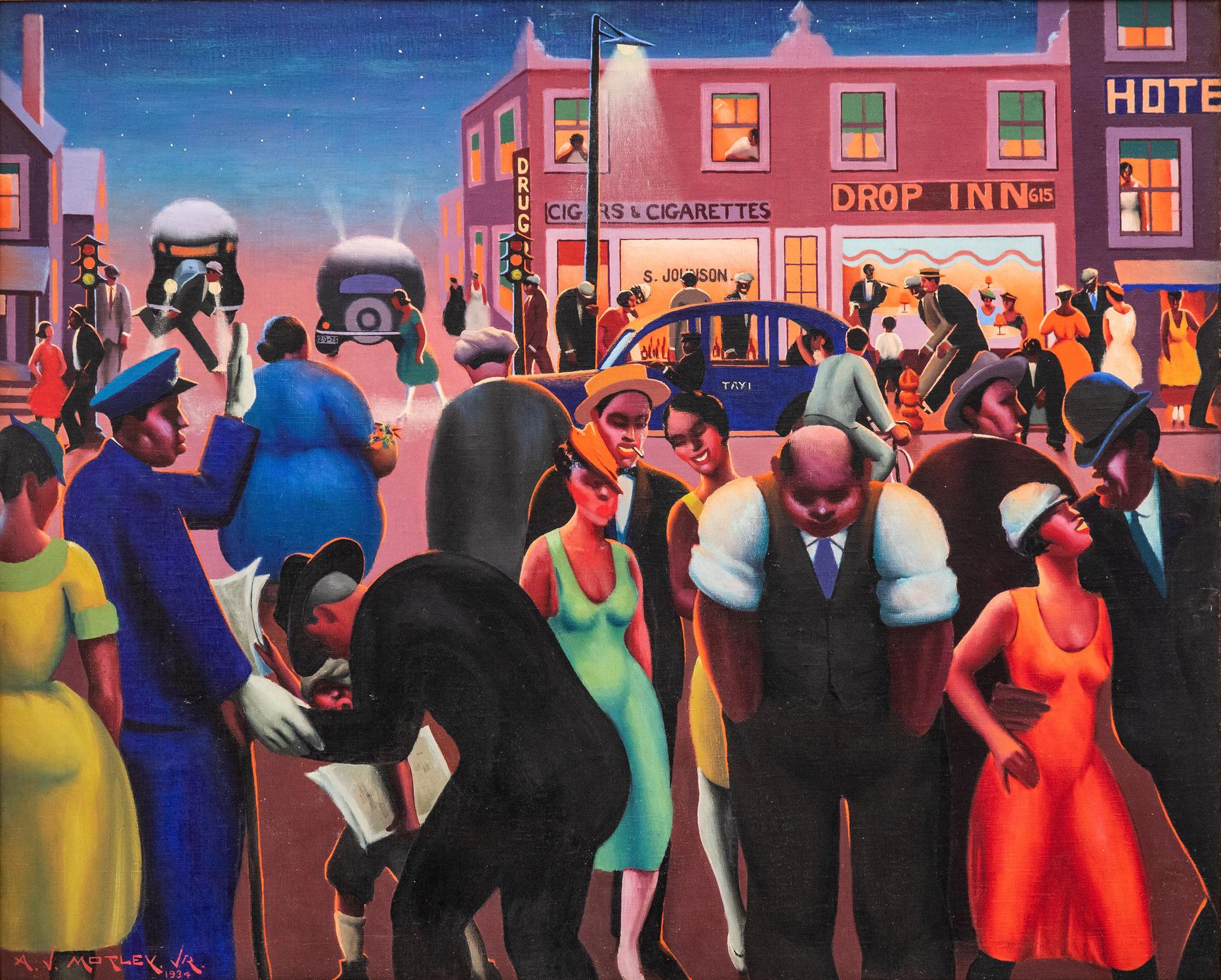
All Of It with Alison Stewart
The Harlem Renaissance Surveyed at The Met
00:17:27
According to The Met, the Harlem Renaissance has not been surveyed in a New York museum since 1987.
Loading summary
Transcript19 lines
- [00:04]
A
Listener supported WNYC Studios this Black History Month, we are having conversations about the contributions of black New Yorkers. And it's fitting that a new exhibition at the Met is taking a comprehensive look at an artistic movement that is often overlooked, the Harlem Renaissance. According to the Met, this new show is the first survey of the Renaissance in, in a New York museum in almost 40 years. The exhibition displays the work of iconic but also lesser known black artists who contributed to the, quote, new Negro movement as it was known in the 1920s. Poets, painters, playwrights and photographers, to name a few. We see works from Langston Hughes, James Van Der Zee and Aaron Douglas. We learn how the Renaissance developed. And in the early 20th century, right here in Harlem, as millions of black Americans came north as part of the great migration to escape the Jim Crow south, the Met sourced some pieces in the show from Black institutions like HBCUs and also Black families. As work from the Harlem Renaissance is less present in the collections of major museums. The Harlem Renaissance and Transatlantic Modernism is opening at the Met on Sunday. With us now to talk about it is curator Denise Murell Murray. Did I say that right, Denise?
- [01:30]
B
That sounds right to me. Okay, good.
- [01:33]
A
So glad you're here, Denise. So first for folks who, you know, most people kind of have a squishy idea about what they think the Harlem Renaissance means and where it exists in time and space. So just give us kind of the nutshell version of what we mean when we talk about Harlem Renaissance.
- [01:52]
B
Well, what we mean when we're talking about the art of the Harlem Renaissance is this kind of explosion of creativity that kicked off in the middle of the 1920s, ran through the 1940s, more or less. And it's essentially, it was the first African American led movement of modern art and the first time that in a broad based way, black American artists were also situated within international modernism. And as you said, it emanated from the new black cities like Harlem that were taking shape during the Great Migration. It was the artists were working very closely with and had had long standing friendships with the writers Langston Hughes, you mentioned also zora Neale Hurston, W.E.B. du Bois and Alain Locke were very major thinkers who were the foundational philosophers, in some ways, of this movement. And then there was jazz. This was the Jazz Age in New York City. And a lot of the Jazz Age was playing out uptown in Harlem.
- [03:12]
A
And as the title of the exhibit indicates, it's not just the United States that experienced this Harlem Renaissance. It is a transatlantic, transatlantic movement.
- [03:25]
B
It is a. It is first a nationwide movement The Harlem Renaissance, as you pointed out, was initially referred to as the New Negro movement. And this was self referential. The artists and writers themselves, based on Alain Locke's 1925 book, the New Negro. And there were always artists. It emanated from a circle very close to Locke in New York City, Aaron Douglas, Charles Olson, Augusta Savage and others. But there were always very major artists from Chicago like Archibald Motley, from Pennsylvania, Lori Wheeler, Waring and others, as well as the coast and points in between. The reason, one reason why the movement should be thought of as within an international context is that almost all of these artists spend extended periods of time living and working in Europe, primarily France, Paris and the south of France, but also the UK and Northern Europe. And they very much saw themselves as part of international modernism. And there were affinities, there were actual collaborations and they knew about and worked with, wanted to be seen as the peers of European modernists like Picasso, Matisse, specifically named by Alain Locke as European artists who were working with African aesthetics and making non stereotyped portraits of the international African diaspora.
- [05:07]
A
So this is not the first we mentioned, you know, in the open here, that it's been 40 years or so since any major museum in the city has taken, excuse me, taken on the Harlem Renaissance. It's not the first time that Met has taken it on or taken on African American culture. Specifically an exhibit in 1969 called Harlem on My Mind, heavily criticized with pickets and protests. I'm just wondering, no need to re litigate all of that, but I'm wondering how that experience, institutional experience, played in your mind as you were pulling this new exhibit together.
- [05:47]
B
Well, it was something that I began to think about once I arrived at the Met in January 2020. But I'd been working on a Harlem Renaissance before I came to the Met. I did an exhibition at Columbia University opposing the Black model for to and MIT's to today in 2018 and 19. And the middle section of that exhibition was the Harlem Renaissance. And I was also showing the new Negro artists in direct juxtaposition with the modernists like Matisse, who were making these wonderful portraits, these portraits that really just moved away from racial stereotyping of black French subjects and black Dutch and British subjects. So it's something that I had been working on. And when I came here, I wanted to do a Harlem Renaissance show. I felt that the Met, one of the things I learned about working on it before is that the Met was the one institution, the one museum that could bring together all the disparate threads where the collections were the nationwide aspect of the movement, but also the international side of it. And so in that context, of course, the Met is very aware of Harlem On My Mind. And the critique of that, the well deserved critique of that exhibition, which was essentially, it wasn't even about the Harlem Renaissance, it was about Harlem, so to speak. But it was totally from the perspective of people from outside the community. There were no. Well, okay, not totally. There were no African American painters or sculptors. I think there were even statements of the fact that there's no fine art, so to speak. But the exhibition did include work by the leading the Harlem Renaissance photographer, James Van Der Zee. It was displayed in ways that were much more aligned with what you see in an ethnographic or a national natural history museum without the careful framing and spotlighting and labels and so forth that we've done with the Van Der Zees that we have in our show. But the Van Der Zees that are in our show are one of the legacies. If there is a silver lining in Harlem On My Mind, it is the fact that it revived Van Der Zee's career. He was very active in the 20s through the 30s. His career began to flag a bit. The controversy brought that career back to some attention. And a couple of years ago we bought 20,000 prints and negatives of Van Der Zee in partnership with the Studio Museum in Harlem. So we are showing some of the Van Der Zee photographs from that archive, newly acquired archive, for the first time, and offering the beginnings of interpretation and research about this body, this incredible body of work.
- [08:56]
A
So going after and acquiring the work of Vandrossee really was a result of that first Harlem On My Mind exhibit.
- [09:06]
B
I'm not going to say, and I was not involved in that. That would be our photography department. But I think that one of the factors that even brought the Van Der Zee archive to the awareness of the Met and probably other museums. The Studio Museum had always been very involved with Van Der Zee, but I think that was one context. There were undoubtedly other factors as well that led to that fantastic acquisition.
- [09:35]
A
I'm curious about the Met's priorities when it comes to collecting works from African American artists. You mentioned the Met had the ability to really go out, and I know you went out personally to some HBCUs to look at artwork and pulled in artwork from black families. I'm curious what that might say about the priorities for the institution up to this point, that, you know, we're looking outside for that work as opposed, as opposed to looking inside for it.
- [10:06]
B
Well, that's True. And that's one of the reasons why there hasn't been a New York City Art museum exhibition about the Harlem Renaissance since the Studio Museum did their exhibition in 1987. A very important exhibition and a major resource for us for this show. But the Met, you know, essentially didn't wasn't very interested in that work until recent decades. There's been some the beginning of what I hope will be an ongoing and expanded effort to to collect this work. We have the exhibition as one way of surfacing, developing an understanding of where the work is and what could fit within the museum's self described mandate to be an encyclopedic museum. My position is that you can't really have a complete collection of American art Pre 1950 or even international modern art if you don't have very significant holdings by the Harlem Renaissance artists.
- [11:17]
A
I mentioned you went to some of the HBCUs. They generally speaking, those colleges don't have a lot of resources to put toward putting their collections online for you. So you had to go actually physically to the university to take a look at some of these artworks, you know, some of these pieces that you brought in.
- [11:37]
B
Yes, yes.
- [11:38]
A
And also you tapped families on the shoulder and said is there something so I'm curious about this the story behind the work of Laura Wheeling, Laura Wheeler Waring. And if you can just tell us a little bit because I find that very fascinating.
- [11:55]
B
It is because Laura Wheeler Waring was one of just a few women artists who were at the center of the Harlem Renaissance movement. She was doing cover illustrations for the NACP's Crisis magazine from the very early 20s. I think even the late teens on at the having been commissioned by the then editor, the highly esteemed W.E.B. du Bois. And just as it those commissions to be on to do cover illustrations for the Crisis for Opportunity and so forth helped to fuel the advance the careers of other art. Aaron Douglas Laura Willow Waring gained visibility profile even though she wasn't living in New York. She was based. She was from Philadelphia. She was teaching at Historically Black in HBCU in Pittsburgh. But she has a body of work from the late forties or the mid forties. Is quite well known when she was commissioned by the National Portrait Gallery together with another artist to do a series of portraits of African American luminaries. James Weldon Johnson. The one that we are just incredibly thrilled to have in our show is larger than life. A magnificent portrait of Marian Anderson and a beautiful red performance gown that commemorates the fact that she was in 1939 she was rejected her contract to give a concert at the Daughters of the American Revolution in Washington. They had apparently engaged her based on an incredible reputation she had in Europe. But when they found out she was black, they canceled. So Eleanor Roosevelt, the then first lady, arranged for her to give a concert on the steps of Lincoln Memorial. And that was an historic event on all levels. So she did have that body of work. But she had also made literally dozens of portraits of African American women from all walks of life. And those remained in the families collections. The great. She has two great nieces. Well, one is of the husband and the other is her own direct great niece. And I met them when they. When Roberta Graves, who's who one of the nieces, Roberta Graves, came to see a Laura Willow Waring I'd borrowed from the smithsonian in my 2018 show in at Columbia. And that began this multi year period of periodically meeting, looking at photos of her collection, visiting her home and seeing these dozens of paintings. It's kind of like what we, who, you know, become art historians want to do in art history. Seeing all these magnificent paintings that have never been published in many cases before, and in some cases even helping to date them, going back and doing the archival research and so forth. And then her niece in Chicago, Roberta Graves here, who's New York based, introduced me to Madeline Murphy Raab, the niece in Chicago. And then the three of us, just over the next two to three years just worked together to. They gave me complete access to see the works. We went back with conservation with a conservation team from the MET to look at some of the conservation that we needed to do. Not a whole lot. They had done a great job of keeping these works in excellent condition. But we did bring several of them into our conservation studios. And so we're just really happy. We're going to have, I think, five portraits in total from the family's collections. And I've been elated. We chose to place one of them on the COVID of the catalog. And I've just been really elated to see how other observers, the press and marketing people and so forth, have picked up on both of these portraits from a checklist of 160 works total. And they tend to be in the top 10 works that anybody's looking at. So to the extent we want to make new icons, this has been a great story. We think that these works are being embraced very widely by the public.
- [16:37]
A
So the exhibit is going on now, right? Yes, and goes through.
- [16:44]
B
July 28th. It has an unusually long run. Five months. Yes. And we want to do a lot of public programming and make sure that we are reaching every nook and cranny of New York City and inviting the broadest possible public to come and see this show. It's a show that is about. I mean, it's this part of the history and the art history of African Americans, but also just American history. In the same way, we wouldn't think about American music without thinking about jazz. It's a gaping hole to not be thinking about the art of these artists as we're thinking about Hopper and Stieglitz and the other better known names.
- [17:30]
A
Denise, we're gonna have to leave it there, and you're gonna have to just go see the exhibit. Denise Morrell, curator at the Met.