← All Of It with Alison Stewart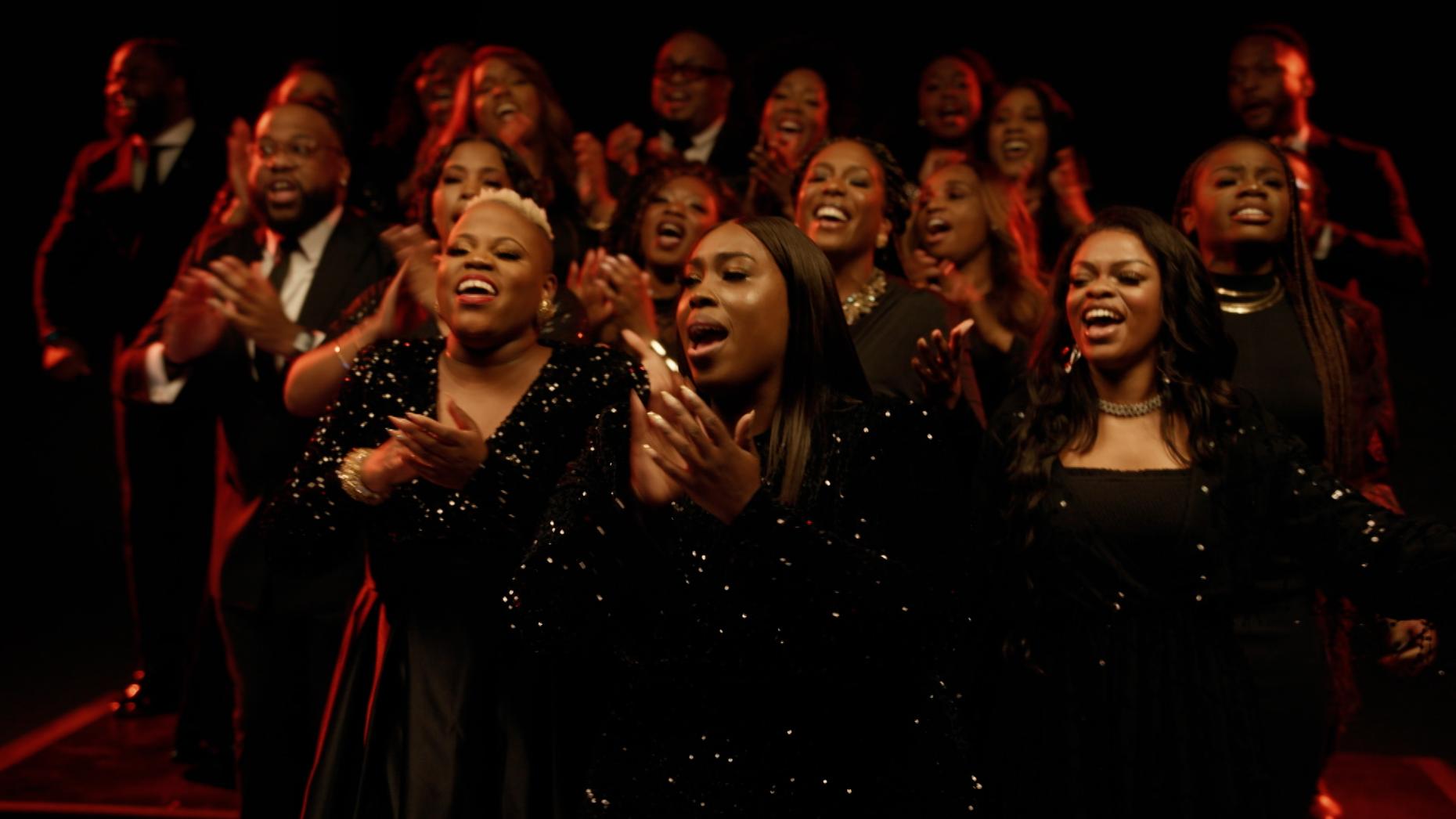
All Of It with Alison Stewart
The History of Gospel Music on PBS
00:30:16
'Gospel' is a new four-part docuseries airing now on PBS.
Loading summary
Transcript63 lines
- [00:04]
Alison Stewart
Listener support WNYC Studios.
- [00:16]
Interviewer / Host (likely Alison Stewart continuing)
This is all of it. I'm Alison Stewart live from the WNYC studios in soho. Thank you for spending your day with us. I'm really grateful you're here. And no, this isn't some weird audio filter. I, I do have a cold. On today's show, R and B singer songwriter Umi joins us for a listening party. Some warm beats for a snowy day. We'll hear another song created especially for us as part of our public song project. Wait until you hear Low cut Connie spin on Blind Lemon Jefferson. We'll also hear some history of the blues. And we'll speak with the Oscar nominated editor of Oppenheimer. Her name is Jennifer Lame. She'll be our guest. That's our plan. So let's get this started with some gospel music. That is Aretha Franklin singing Climbing Higher Mountains from her gospel album Amazing Grace. And like many of America's greatest musicians, Aretha grew up in the church. And we hear from Aretha Franklin and many others in a new PBS documentary about the history and culture of gospel. It premiered last night and continues tonight. Hosted by Henry Louis Gates Jr. We learn about gospel's origins in Chicago in the early 20th century. The film follows the lives of icons like Mahalia Jackson and James Cleveland. It also documents how gospel was crucial in the fight for civil rights. And of course there's the development of the genre sound from the golden age to our present day. And the tensions that can come from trying to meet a new generation where they are while not alienating those who are skeptical of quote unquote secular sounding church music. The first two parts of Gospel aired last night and the final two parts premiere tonight at 9pm on PBS. Joining me now are directors and producers Stacey Holman. Hi, Stacey.
- [02:31]
Stacey Holman
Hi Alison. Thank you for having us.
- [02:33]
Interviewer / Host (likely Alison Stewart continuing)
And Shayla Harris. Hey Shayla.
- [02:35]
Shayla Harris
Hi Alison.
- [02:36]
Interviewer / Host (likely Alison Stewart continuing)
I'm so interested, I wanna do a little bit of filmmaking questions first and then we'll get into some of the content. I was so interested about the way you went around this, about this because we have well known gospel artists. We have Tweenie Clark and Diane Warwick. Corey Henry's on the organ. But then you also have interviews with some serious heavy hitting academics from Baylor and Princeton and Harvard, UT Austin. I'll ask you, Shayla, to start. Why did you all want to go in this direction with this academic angle as well as the musical angle?
- [03:08]
Shayla Harris
Well, this series is a family reunion of sorts between Stacy and I and Professor Gates. The three of us worked together on the original black church series and felt like that there was a lot on the cutting room floor that we weren't able to include in that series. And so particularly the Sound of Black Spirituality was something. And this cultural and artistic expression that comes out of this really iconic institution was something that we wanted to tease out in a little more detail, both in the form of gospel music as well as preaching, and certainly the fact that Henry Louis Gates, or Skip, as we call him, is a renowned scholar. We could not have done approached this series without these scholars and incredible musicologists, like you said, from Yale and Juilliard and Baylor to help us contextualize this and break down homiletics and break down the tone and cadence of some of the music to help our audience really understand the craft behind these incredible art forms.
- [04:18]
Interviewer / Host (likely Alison Stewart continuing)
Stacy, anything else you wanted to add?
- [04:20]
Stacey Holman
No. Shayla did it perfectly.
- [04:22]
Interviewer / Host (likely Alison Stewart continuing)
All right, then I have a question for you. So when we think of the black church, specifically Baptist and Pentecostal denominations, when we want to understand the intersection between music and faith, broadly speaking, why was music such an important aspect of Baptist and Pentecostal services?
- [04:39]
Stacey Holman
Well, as people will see in the series, there's. Music is important because it's a conversation on many levels. Conversation with the congregation, conversation that the musicians are having with the preacher. And one feeds off of the other. And many of these spaces have been laboratories for just the creation of music and worship. Music is a key form of worship, and with those denominations, you see just a lot of incredible talent coming out of it, a lot of incredible songs, and you see even a greater importance of it as time goes on and how it's really key to just the worship experience. You go and you hear the song. It starts the sermon over. The sermon gets the congregation and the spirit, and then you go to the preacher and you have the closer, which is the music. And those denominations are key in creating that.
- [05:39]
Interviewer / Host (likely Alison Stewart continuing)
Stacy, what were the social conditions that contributed to the founding of gospel?
- [05:45]
Stacey Holman
Well, we start in the 1920s, 1930s, and a lot of people are migrants. We start with Tom Dorsey, Mahalia Jackson, and Rosetta Tharp says some of the key in Sally Martin, and they're going to Chicago. And Chicago had its own certain kind of understanding of just worship music, and that was hymns and very much of this politics of respectability. And when you have Mahalia and you have Dorsey, they're bringing their sense of blues and jazz and their own kind of gumbo into Chicago to create just the sound and incorporate, infuse these musical genres together. That becomes gospel as we know it. So it's based on space. It's based on what people grew up with, what people understood, and they bring that with them. And those are familiar sounds that people cling to and that they lean onto, especially other migrants.
- [06:47]
Interviewer / Host (likely Alison Stewart continuing)
Sheila, I wanted to ask. Chicago, we learn, is the place where gospel music really grew and was born. But of all the great migration destinations, why Chicago?
- [07:01]
Shayla Harris
Well, Chicago was really a crossroads where a lot of people were coming from the south, coming from other areas. It is certainly a massive black population that centers there on the south side of Chicago that helped contribute to the support of Barack Obama, that continued, that legacy continues to this day. And so the fact that there were so many churches and so many black institutions and so many places and spaces for this mix of migrants and the folks who had been already there in Chicago to kind of create this sort of big bang that creates gospel, makes it sort of this incredible laboratory for all of these things to happen. And then it starts to spread to other cities like Detroit and certainly out in California, which we end up exploring in detail.
- [07:53]
Interviewer / Host (likely Alison Stewart continuing)
In the series, we're discussing the new docu series Gospel. It premiered on PBS. The first two parts aired yesterday. The final two parts air tonight at 9pm I'm speaking with its directors and producers, Stacy Holman and Shayla Harris. So we mentioned Thomas Dorsey. I want to dig in there a little bit more. Founder of Gospel music in Chicago. He goes on a journey. Stacy, when we first meet him. Tell us about Thomas Dorsey when we first meet him in the series.
- [08:22]
Stacey Holman
Well, he's not Thomas Dorsey. He is Georgia. Tom he is migrant from Atlanta or from, I should say, Georgia. He made his way to Atlanta and like many people, wanted a better, better lifestyle. So he traveled up north and he was actually one of the pianists for Ma Rainey. So he was deep into the blues, deep into the jazz. And he also recorded his own record, Tight like that. So he was, as a blues musician, he was recognizable in his own right. And in the 1920s, he had a religious conversion and he went to the Baptist Convention and from there tried to put his, you know, his spin being led by the spirit, on what he thought music should be. And unfortunately, he was kind of frowned upon, you know, that politics of respectability. But he continued to try his hand on it, at the same time continuing to do the blues music because that was what was really paying the bills. Until one day he just fully committed himself and unfortunately, to the loss of his wife and his child. That was a true conversion. And also, just many people may consider when gospel became gospel, and he wrote, I would say, a theme song for many black people, Precious Lord, Take My Hand.
- [09:51]
Interviewer / Host (likely Alison Stewart continuing)
Dorsey. You know, it didn't really obviously do this alone. You point out that he had this partner in this. Sally Martin, the mother of gospel music, Shaila. Why was she instrumental in the success of the spread of Dorsey's compositions?
- [10:08]
Shayla Harris
Well, one of the important things that we wanted to include in this series was the role of women, which I think was pretty surprising to us when we started exploring the series. But Sally Martin was a pretty savvy businesswoman who herself was a migrant from Georgia. She originally started out as a song plugger for Thomas Dorsey. You know, she would go around giving samples of the sheet music that he would write, but she sensed that he wasn't doing enough to make this little enterprise that he had profitable. And so she started to sell and market his sheet music. And her salesmanship and organizational skills eventually turned Dorsey's publishing company into this extremely profitable blueprint for how this emerging set of gospel musicians could be successful. She eventually parted ways with Thomas Dorsey and partnered with Kenneth Morris, who at the time was the musical director for the First Church of Deliverance, which ends up creating or being the first place to introduce the Hammond B3 organ to gospel music, which creates the sound that we all come to know. And the two of them create this incredible music studio, Martin and Morris, that becomes the largest African American owned gospel music publishing enterprise. So she really built the engine that all of gospel's rising stars would start to play off of.
- [11:41]
Interviewer / Host (likely Alison Stewart continuing)
Stacy, let's play a little bit of Precious. Lord, take My hand. You mentioned it earlier. This is one of Thomas Dorsey's probably most famous songs performed by Mahalia Jackson in this particular rendition.
- [11:55]
Stacey Holman
Precious Take My hand.
- [12:11]
Shayla Harris
Lead.
- [12:14]
Stacey Holman
Me on Let me stand I am tired I.
- [12:38]
Alison Stewart
Am we I.
- [12:47]
Stacey Holman
Am woe.
- [12:53]
Alison Stewart
Through the storm through.
- [13:10]
Stacey Holman
The light.
- [13:16]
Shayla Harris
Lead.
- [13:18]
Stacey Holman
Me on.
- [13:24]
Interviewer / Host (likely Alison Stewart continuing)
So hard to know where to come in it doesn't feel right. There's Maia Jackson singing Precious Lord. My guests are Stacy Holman and Shayla Harris. They are the directors and producers of the docu series gospel. The first two parts aired yesterday on PBS. The final two parts air tonight at 9pm I did want to, you know, the conventions were really interesting to me. Stacy, this idea of that as being a way to disseminate gospel music and the way it spread. Would you share a little bit more what those conventions were like? That was really interesting.
- [13:56]
Stacey Holman
Yeah. I mean, Thomas Dorsey, as I said, he attended the National Baptist Convention. And in. During those conventions, they did have a music element where people would Present their songs, they would try out their songs. Some would be successful with it, others would not. And that whole idea of the convention really is kind of the idea behind the national convention of Choirs and Choruses. It's like a tongue twister to see that sometimes. And what he really was key for him for people to understand gospel. I mean, there were people who. They were selling the sheet music, but people didn't really know how to present and how gospel should sound. So this is where you had choirs from across the country that would travel to Chicago. It would be like a laboratory, a learning exercise of how gospel should be sung, how it should be executed. And you would have also an opportunity to try out your song. So it was where you had the conventions, where the music is secondary to the sermons. You have a space where artists are able to test their wares in exclusively in front of their peers, and obviously get feedback from Mr. Dorsey himself in some instances.
- [15:16]
Interviewer / Host (likely Alison Stewart continuing)
I want to talk about. Oh, continue. I'm sorry.
- [15:18]
Stacey Holman
Then you fast forward to James Cleveland an hour, too, with the Gospel Music Workshop of America.
- [15:26]
Interviewer / Host (likely Alison Stewart continuing)
I did want to. Since you were talking about presentation, I wanted to bring in the subject of whooping, the intersection of preaching and singing. Sheila, do you want to take this one? How would you describe what whooping is and why? It's important to understand that when we're talking about gospel music.
- [15:46]
Shayla Harris
Hooping is this really exhilarating preaching style, which is a combination of both storytelling and performance and celebration at the close of the sermon. And it's where the sermon becomes the song. And, you know, it dates back to earlier traditions of slave exhorters who they feel like when the spirit is moving them, the sermon gets transformed. And that's the way that they can convey that sonically to the congregation. And certainly one of the most prolific and well known practitioners of hooping is the Reverend C.L. franklin, who was a popular pastor at New Bethel Baptist in Detroit, who's also famously known as the father of Aretha Franklin. But he had this lyrical style that was, you know, built similarly like all the folks that we've already been talking about, who brought their understanding of the blues and their deep understanding of the Bible together into this new kind of form. It's an amalgam of both sinner and saint, blues man and preacher man. And, you know, he starts to record these incredible albums that get disseminated and circulated widely. And so he becomes one of the most imitated pastors that we know of, because so many people heard his records and heard his style. As they say, you know, great preachers borrow. Oh, wait, sorry. Good preachers borrow. Great preachers steal. And so they all steal this style from Reverend C.L. franklin.
- [17:25]
Interviewer / Host (likely Alison Stewart continuing)
We actually have a clip of Reverend C.L. franklin from one of his albums. He's delivering a sermon called Dry Bones in the Valley so people can hear what we've been talking about. Let's take a listen.
- [17:37]
Alison Stewart
Well, Lord, it looks like a helpless thing. It looks like an unprofitable thing for me to go out and preach to Dry Bones. Some of the living soul that I preach to don't respond to me. And what could I expect? Spectre from Dry Bones. But the Lord urged them to go on out and preach anyhow. You know, God's ways, you know, are above man's ways. And you can't always understand why he orders you to do certain things.
- [18:23]
Interviewer / Host (likely Alison Stewart continuing)
Reverend C.L. franklin, of course, is synonymous with Detroit's national influence around gospel. What was Detroit's reputation as a gospel city? What made its culture unique?
- [18:35]
Shayla Harris
SHAYLA so Detroit becomes the centerpiece of gospel when a lot of folks certainly move out of Chicago and start coming in that direction. Most notably folks like James Cleveland, who grew up in Chicago going to Pilgrim Baptist, becoming a protege of Thomas A. Dorsey. He becomes the music minister at C.L. franklin's Church, New Bethel Baptist, where he mentors Aretha Franklin in the piano and sort of becomes a mentor to her musically. And so the Chicago sound goes to Detroit and Detroit becomes this sort of hub where family centered gospel starts to emerge. We can think of groups like the Clarkson Sisters, the Winans, all emerge out of Detroit, which is bringing its own unique style, certainly the influence of Motown and the sort of musicality and this centrality of music to the culture of Detroit becomes, you start to see that infusing the gospel music that emerges in the 60s and in the 70s and heading into the 80s.
- [19:47]
Interviewer / Host (likely Alison Stewart continuing)
We're discussing the new docu series Gospel. The first two parts aired yesterday on PBS. The final two parts air tonight at 9pm My guests are directors and producers Stacey Holman and Shayla Harris. After a quick break, we'll talk about the importance of the Hammond organ, the radio and of course, Mahalia Jackson. That's up after a quick break. You are listening to all of it on wnyc. Alison stewart, we're discussing the new docu series Gospel. It premiered on PBS last night. The first two parts, the second two parts air tonight at 9pm I'm speaking with its producers and directors, Stacey Holman and Shayla Harris. I teased before the break we were gonna talk about the Hammond Organ. STACY it seems like now people think, of course, Hammond organ and gospel, they go hand in hand. But it was really considered a big innovation. What was the story of how the Hammond organ began being used in the church?
- [20:48]
Stacey Holman
Shayla mentioned his name, Kenneth Morris. We have him to thank. Introducing the Hammond B3 organ. We also have to say thank you to Reverend Clarence Cobbs of the First Church of Deliverance for just being open to that and excited about receiving just this new kind of instrumentation. And Kenneth Morris, like a lot of people have seen in the first two hours. And we'll see there are a lot of people who are coming from different backgrounds and Kenneth Morris had a jazz background, had a group that he played with in New York and made his way to Chicago and he introduced organ and they had midnight services and that was the first radio broadcast services. And that was the first introduction of the Hammond B3 organ and how it just played with the voice, how it imitated the voice. It was a new sound. So much so that might not have had the warmest reception, but it was so unique that a lot of churches from that point on started raising money so they could also have Hammond B3 organ as part of their service. So it's, you know, that was 1935, and you cannot go through a church today, a black church, and not see a Hammond B3 organ and just hear a Hammond B3 organ. And it continues to be a staple and always will, I feel like, will be a staple.
- [22:17]
Interviewer / Host (likely Alison Stewart continuing)
And we get to hear Corey Henry go for it in the series.
- [22:19]
Stacey Holman
Oh my God. That was, that was, I mean, I mean, just to see how he works, to draw bar. I mean, that was, that was artistry and coordination I've never seen before. We all were just like, oh my gosh. And just incredible.
- [22:34]
Interviewer / Host (likely Alison Stewart continuing)
SHEILA Another revolutionary aspect of gospel music was the business side of the industry. How did gospel provide an opportunity for black owned businesses in the early 20th, 20th century?
- [22:45]
Shayla Harris
Well, we see, and we have already mentioned, you know, Martin and Morris, which was the preeminent publishing company. But you also see things like record store owners who are innovating and recording sermons and distributing them and building their own sort of national networks. One that we feature in the series is Jovan Battle, who ended up owning a record shop in the Black Bottom area of Detroit, which was down the street from New Bethel Baptist. And he recorded all of C.L. franklin's sermons and created this incredible repository and collection of sermons in, in more than 70 albums that, you know, created this style that we all came to know and love. Um, and, yeah, that just the innovation in terms of distribution and marketing and making what was before gospel became sort of commercialized, just church music and making it popular music that was accessible by people beyond the four walls of the church. And that's something that we. That's a through line that we really developed throughout the series is this idea of creating new audiences for this music and this message to get to folks who may not even go to Chur, but who really appreciate the sound, who appreciate the message that's coming out of the music and finding that connection.
- [24:18]
Interviewer / Host (likely Alison Stewart continuing)
We got a really great, great tweet. Someone who's listening to the segment says gospel contributed to our survival on my black Brooklyn sheet music experience with my family. So thanks to whoever tweeted that. Who's listening in. In the film, Stacy, you look at how central gospel music was in the civil rights movement, and without giving too much away, I don't think we'll give it away because you have to see it to kind of really experience it. This relationship between Mahalia Jackson and Dr. Martin Luther King Jr. And the way that she was incredibly supportive of him and was able to use her instrument and her energy to help uplift him in difficult times. Stacey, would you share a little bit about that relationship and what we see in the film?
- [25:06]
Stacey Holman
Yeah, definitely. You know, earlier I said, you know, there's a conversation that the preachers always have with the. The musician, and this is in the church. And it was no different than Mahalia's relationship with Martin Luther King. She was there with him in Detroit where he first gave the I have a Dream speech. And we can only imagine a weight that he was under for, you know, from a very young age until his assassination. And she was that bombing Gilead for him. Her voice was soothing. Her voice encouraged him. Voice was something that he listened to and reached out to in those times where it was very challenging. And there is a clip. It's one of my favorite clips, and where you see that. And for Dara, one of our scholars, and just she sets it up so beautifully and so eloquently in terms of what might be going through King's mind and exactly what Mahalia does and what she says and how she sings, that just steals him and just speaks to what gospel does. It was. It encouraged him, it sued him, it comforted him. And that relationship, I mean, we continues on, and we see even how she supports him up into the march in Washington. So I won't do any spoiler alerts at that point right there. And also her pocketbook she was a top. I mean, she was an incredibly top grossing Gossel artist, if not the only one at that time. And she definitely supported the movement that way as well.
- [26:43]
Interviewer / Host (likely Alison Stewart continuing)
Sheila, Something we get from the series is as gospel evolves and it goes through the golden age and the Platinum Age, that there's a tension between generations, between different philosophies about people who are purists and then people who think that gospel music should not have a secular sound. Sheila, do you think there'll always be this sort of. This tension within gospel?
- [27:08]
Shayla Harris
Yeah, there's certainly a tension not just within the church itself, but certainly within the black community about this sort of secular and sacred divide and the gap and chasm between those two things, that Saturday night and Sunday morning are two very distinct cultures. And I think what we came to understand in this exploration is that you can have Sunday morning without Saturday night and vice versa. This expression on Saturday night and the penance of Sunday morning are necessary for both to be relevant and consistent. That they're kind of two sides of the same coin. And you know, what we've discovered is that at every generation, at every innovation, someone is calling that new style devil's music. That that music isn't true to the spirit of gospel because it didn't sound like what came before. And then eventually that new art form is embraced and then the next thing that comes along is itself called devil's music. So I think that's just a generational developmental thing that that happens in gospel and certainly happens in, in a lot of art forms that we see, particularly music. But I think the really beautiful thing about gospel is how elastic and innovative it is to be able to embrace all of these new forms and new musical styles and yet at its heart, maintain that central message of being the word of God and helping people connect to this like community, spirit and energy.
- [28:47]
Interviewer / Host (likely Alison Stewart continuing)
The series is called Gospel. Last night the first two parts aired and final two parts will air tonight at 9pm on PBS. I've been speaking with its producers and directors, Stacey Holman and Shayla Harris. Thank you so much for your time today.
- [29:01]
Stacey Holman
Thank you for having us.
- [29:02]
Shayla Harris
Thank you for having us.
- [29:02]
Interviewer / Host (likely Alison Stewart continuing)
And thank you for giving me an excuse to play one of my favorite gospel songs. Let's go out on some Kirk Franklin.
- [29:09]
Alison Stewart
To all my people in the struggle, you think God's forgotten about you. Here's some pain medicine. Let's go. You in your car, you at the house, on your job. Be encouraged. Boo. Come on.
- [29:37]
Shayla Harris
There were times I thought I never.
- [29:39]
Alison Stewart
Will see the break. Don't take it. Father. Let's go. Nothing for you. Come on. I realize nothing else will satisfy me. Nothing.
- [30:16]
Interviewer / Host (likely Alison Stewart continuing)
Change.
- [30:17]
Alison Stewart
No one can keep me away from you. You've been so good to us. You brought us from a mighty long way.
- [30:26]
Interviewer / Host (likely Alison Stewart continuing)
For 140 years, MultiCare has been in.
- [30:28]
Shayla Harris
Washington, prioritizing long term solutions, partnering with.
- [30:32]
Interviewer / Host (likely Alison Stewart continuing)
Local communities and expanding access to care.
- [30:36]
Shayla Harris
Together, we're building a healthier future.
- [30:39]
Interviewer / Host (likely Alison Stewart continuing)
Learn more@ multicare.org I'm Ira Flato, host of Science Friday. For over 30 years, our team has been reporting high quality news about science, technology and medicine. News you won't get anywhere else. And now that political news is 24 7, our audience is turning to us to know about the really important stuff in their lives. Cancer, climate change, genetic engineering, childhood diseases. Our sponsors know the value of science and health news. For more sponsorship information, visit sponsorship.wnyc.org.