Loading summary
Transcript52 lines
- [00:01]
A
There's an SUV that turns the unthinkable into the unforgettable. The new Nissan Pathfinder, built for big adventures in all that family chaos. It's powered by a strong V6 engine with a nine speed automatic transmission. Inside. It's rugged and capable, but still premium and tech forward with room for up to eight passengers. It's also available with seven passenger seating and second row captain's chairs with massive hauling capability. Now you can bring all the gear you and your family need for unforgettable Adventures. The new V6 Nissan Pathfinder. Power your adventure.
- [00:38]
B
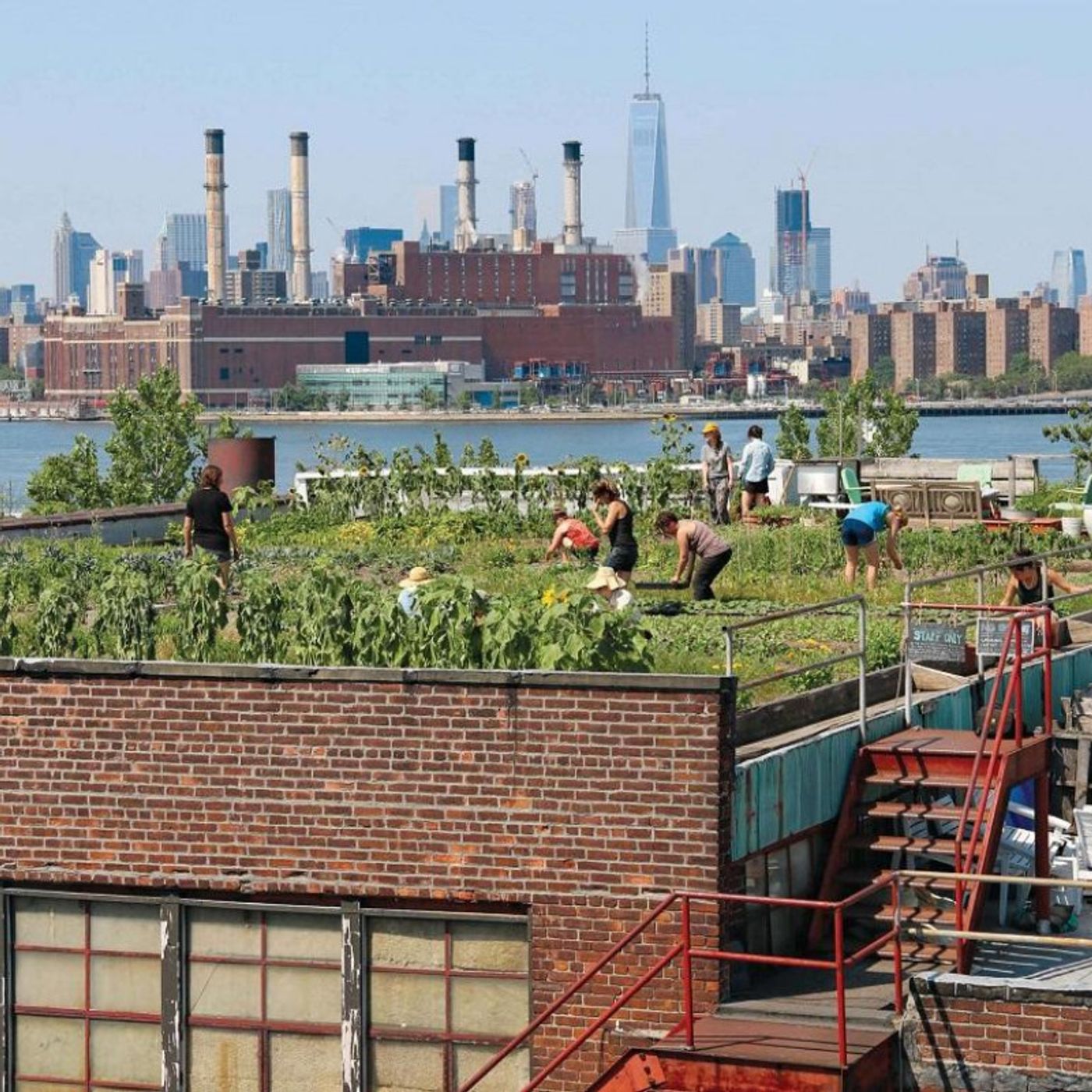
This is all of it on wnyc. I'm David Fuerst in for Alison Stewart. If you're wondering where she is, Alison is hosting a conversation at the Green Space tonight that uses the HBO series the Gilded Age to talk about the world of Black Women in 19th Century New York. She'll be joined by Danae Benton, who plays Peggy in the Gilded Age, as well as historian Leslie Harris and the Tenement Museum's Marquis Taylor. The event is called Peggy Scott's New York. It's happening tonight at 6:30 and it is sold out. But you can watch the livestream. Head to wnyc.org events for more information. So now let's get this hour started with Tiny Gardens Everywhere. We focus now on the power of gardening. Urban gardens can provide more than nutritious food. They can help beautify urban landscapes and can help build community. They have been used to fight poverty and food deserts and to reclaim land and can even represent political resistance. A new book presents a global history of urban gardening. It is called To Tiny Gardens Everywhere the Past, Present and Future of the Self Provisioning City. And the author Kate Brown, a professor in the history of science at mit, joins us now. Kate, welcome to all of it.
- [02:07]
C
Hi David, thank you for having me on your show.
- [02:10]
B
And listeners, we would love to hear from you during this conversation as well. Are you an urban gardening? What an urban gardener? What are the challenges? Are you a member of a community garden? Perhaps. Where is it and what are you growing? How has gardening improved your life in the city? Give us a call, 212-433-9692. That's 212-433-WNYC. And Kate, what got you interested in urban gardening?
- [02:42]
C
Well, you know, half the world's population lives in cities and by 2050 2/3 of us will be in cities. And I so thinking about like, what will cities of the future be like? I did what historians do. I, I went back to the moment when Cities first blew up and became these big dense conglomerations that we know today. And I wanted to know, like, no, what were people doing in those cities? How were they using green space? How were they, were they growing food? What were they doing? And what I found was pretty amazing. This book starts in enclosure era, 19th century England. It moves on to Berlin just as Berlin became an industrial city in the 1870s, goes on to Washington D.C. some Soviet cities. And then it talks about two contemporary cases in Amsterdam, super populated, densely populated, and Mansfield, Ohio, a lot like Detroit, a de industrialized city full of vacant lots. I think I could have done this research almost anywhere that once you start looking, you find these tiny gardens almost.
- [03:51]
B
Everywhere, as the title suggests.
- [03:53]
C
As the title suggests. Right. And so, you know, what was happening is that we've missed this story because this is very much a working class movement. People were coming, they were pushed off of their, out of their villages through various acts of enclosure. And these enclosures continue to this day. If you went to Brazil, you'd be finding people who've been enclosed from their land. And they were rural people. They were people who were used to sharing property in common. And they. So they had common forests that they use, common pastures. They work their fields together collectively. And they, they did actually, they fared very well until enclosure came. They end up becoming, you know, landless proletariat. Basically. We would call today homeless people wandering around looking for jobs. And they go to cities and they get jobs in factories and live in miserable tenements. And then they do something really interesting because they have this notion of commons and because they. A notion of wastes, that nothing should go to waste. They go to the edge of the cities, they find some vacant land. They might do some guerrilla gardening or they might as a group, 30, 40 households, rent some land out, divide it up into almost equal allotments, put a tiny house on it, and then start growing food all around and having small animals all around the edges. And why this is important in cities is because cities draw all kinds of organic materials to their shores. So, you know, take Berlin, they've got sugar beets from Ukraine, wheat coming from North America, beef coming from Argentina. All of these materials that are great sort of composting potential gather from all over the world. Showing up, you could, you could treat this stuff as garbage and throw it in the, in the canals, in the rivers and make a stinking mess. But the working people were like, I'll.
- [05:42]
B
Take that, I'll take that and I'll put it to use.
- [05:45]
C
Yeah, yeah. They build these, you know, human engineered soils that are absolutely prolifically fertile. The most, the highest yields in recorded human history are coming out of these urban gardens.
- [05:59]
B
Let's talk about, you know, tiny gardens Everywhere is the title of the book. So Tiny Gardens. What is the range of what we're talking about here? What is a tiny garden?
- [06:09]
C
Well, you know, if it could be anything from a couple of dining room tables to an allotment, which might be about, you know, 60 square meters, something like that, kind of a, A medium sized apartment and, or, or a large apartment and. And what? So it really depends on who was guarding and where this is and when. You know, I think the interesting thing is people often do these in communities. Not. There aren't like many lone wolves that I find that emerge from the picture. And when they do do this, they start to think, you know, okay, we've got this. We've solved a lot of our problems of our immediate working class existence. We have food that helps us with our grocery bills. It helps us when we go on strike or when we get laid off. Periodically, we can get by, we can squeak by. But, you know, then there are other things come up, like, oh, we need some. A water source. Let's all get together and dig a well over here and then maybe over there. And, you know, the kids in the summer, they, they don't have anything to do, so let's start a children's summer camp together. And then some people are showing up with tb and so they build a shack over there as a kind of sanatorium to help people heal. Some people's shacks burn down, so they take up a collection for fire insurance and then another collection for workman's compensation. When somebody's injured or out of work for a while, neighbors have disputes, so they set up an arbitration court, which is, you know, over there under the oak tree on Saturday afternoons. So what I found was that these working class gardeners solved a lot of their problems and created what we would today recognize as the first sinews of the Social Security state. But they're doing it informally, spontaneously, in these tiny communities.
- [08:07]
B
Well, what happens in an urban environment when. When sort of a network of tiny gardens exists in backyards and rooftops? How does that change the urban landscape, perhaps even change the biodiversity of a city?
- [08:23]
C
Oh, it's amazing. We now recognize cities to be hotspots of biodiversity. That's because the countryside is so impoverished in terms of habitat for all kinds of creatures, and that's due to monocrop agriculture. Lots of use of chemical fertilizers and chemical pesticides, insecticides. So cities today are places where, you know, even coyotes and bears are taking refuge in addition to birds and insects. So what, what this kind of these little networks of tiny gardens do is solve a lot of problems that we have. Problems with food affordability and good fresh food and nutrition, but also problems that have to do with heat islands, flash floods, droughts. If you have a neighborhood that has less pavement and more soil and the soil is cared for, meaning it has living beings in it, microbes and worms and black soldier flies and fungi, then that soil is going to soak up water and hold it, and so are the trees and the perennials that are in there. Those trees are going to work like a big straw attached to a pump and they're going to send that water up from the roots out in a hot day transpire or basically a nice little fog cloud, they'll send off cooling the environment around them. That's why we're drawn to green spaces. They make us feel better.
- [10:03]
B
We're speaking with Kate Brown. The new book is Tiny Gardens the Past, Present and Future of the Self Provisioning City. This is all of it here on wnyc. And we're going to take some of your calls right now if you want to join this conversation. Are you an urban gardener? What are the challenges? What are you growing? 212-433-9692. That's 212433, WNYC. And let's hear from John on the lower. Welcome to all of it.
- [10:36]
D
I'm glad to be here.
- [10:39]
C
I'm glad to be here.
- [10:40]
B
Are you gardening in the city?
- [10:42]
D
I am. I garden and have begun with a garden at 6th street and Avenue B. People should come. It's almost a full city block between 5th and 6th streets and it's just a really wonderfully engaged site of family, community and of course, people who care enough to grow and take advantage of the food, the fun, the community.
- [11:13]
B
So it's what are you growing, by the way? John.
- [11:17]
D
I'm currently the gardener emeritus. There's a group of us who began the garden back in 83, 84. And I was engaged back then for about 20 years. I now have a key so I can go anytime I like. But I'm still in the neighborhood. I still support them. We do a plant sale every May. And it's just about the engagement and about I've watched three generations of gardeners and community come through that garden.
- [11:52]
B
John, thank you so much for sharing that Story. It sounds like you are still cultivating that community. Oh, I think we. Maybe we lost John. But is that a story that resonates for you, Kate?
- [12:05]
D
Yeah.
- [12:06]
C
Yes, most definitely. And I especially find the intergenerational story really interesting. There's a story I tell about Washington, D.C. in the 1910s to the 1950s, when people were coming up from the south through the great immigration. And at a time when the city leaders were mostly congressmen, Dixie Democrats were trying to segregate the city that had been integrated and push black residents to the margins of the city. And there was one margin east of the Anacostia river where it was safe for black people to buy lots. And they could buy, on former farmland, a 10th acre lot. What we found is people bought not one lot, but from two to six. And then they would put a tiny house on it, and they'd start gardening all around it. And they get some chickens and they get some hogs. Both kinds of animals are banned in the city, but there's tens of thousands of them that the USDA is counting in their census. And the city leaders ignored this neighborhood. There was no infrastructure, no running water, no sewers, paved services, no garbage collection. Structural racism at work. But this is what people made of that. They were like, okay, no paved surfaces. That's great for our fruit and nut trees and our berry bushes. Photographs from 1949 of this neighborhood looks like a village in Ukraine. You know, fences up to keep the chickens in places for the hogs. All kinds of gardens. And so what they're doing is they are using the hogs and the chickens as biodigesters to take the garbage, turn it into fertilizer. They had toilets outside, privies. They would use the night soil, compost it, turn it into fertilizer. And they built these incredible gardens. So that when historians went and asked in the 1970s, hey, how did you get through the Depression? Did you have jobs? Oh, no, we didn't have jobs. You couldn't buy a job during the Depression. But we did have our gardens, and we ate from them, and we sold off some of the extra, and we could pay our mortgages. So what we found was, when you looked in the Recorder of Deeds, is that these poor black neighborhoods east of the river had the highest rates of homeowner occupancy in the city, matching those where the fancy diplomats lived. And so that's pretty amazing. Millions of white Americans who enjoyed federal subsidies were losing their houses while these black residents maintain theirs with what I would call a vegetable powered wealth. That was multi generational. It really only fell apart when the city decided to put public housing there in the late 1950 and basically condemned the existing housing that was there.
- [14:54]
B
I want to get to another call in just a moment. But Kate, is it surprising how much you can grow in a tiny garden?
- [15:03]
C
Incredible, right? You know what farmers out in the fields always have problems with is fertilizers. How do you have enough inputs, how do you keep your soil healthy so that it feeds the plants? Unfortunately, industrial farmers dump a lot of chemical fertilizers on the soil and that basically makes the plants kind of independent. It kills off all the other life in the soil. And so. But gardeners don't do that. They just take what cities serve up in abundance, which is kitchen scraps and beer mash and pulp from a sugar wheat factory. They compost it, they throw it on top of their soils a couple of times a year. And so with, you know, I have a space about the size of two dining room tables and we pretty much eat our vegetables out of there nine months out of the year. You know, I do a little bit of, I make some kimchi, I make some pickles and we eat that in these off season months. But it's incredible how productive. You know, there was 5,000 urban farmers in Paris in 1900 and they, they fertilized their gardens with horse manure, which there was mountains of this stuff. They could buy it for pennies on the pound. And they fed 2mil fruits and vegetables to 2,2 million Parisians with a surplus to go over to London. Just incredible. They had the 300 km of orchards lined up against hot south facing walls. They called them wall orchards. They always had their gardens inside the interiors of courtyards, bricked interiors so that they're using the heat island effect to grow series of crops, like six to nine crops a year. And they could beat the farmers in the Mediterranean south of France there in Paris in the north of France by just using the city and its hot heat island.
- [16:54]
B
Wow. Well, you're taking us all over the world here today. The book is Tiny gardens Everywhere. Kate Brown is our guest here on all of it. The subtitle of the book the Past, Present and future of the Self Provisioning City. And we're going to take some more of your calls. The number 212-433-9692. Let's hear from Jack in Kearney, New Jersey.
- [17:20]
E
Yeah, hello, welcome. Yeah, hi. I'd like to add to that, you know, I believed in French biodynamic intensive gardening and I had a, as a Carnegie firefighter, we had a garden behind our firehouse that we were giving produce out to the neighbors. And also I grew up gardening and was mentored by people that survived the Depression. I've been gardening since I was in the fifth grade. And what always amazed me is the Italians, immigrants from the iron bound section of Newark that were formerly farmers became urban farmers in Newark, supplementing their factory wages by gardening and farming. It's the first time I ever saw strawberries grown. They taught me how to grow strawberries and peppers and tomatoes and how to use compost.
- [18:21]
B
Jack, do you still grow all those things today?
- [18:25]
E
I still grow everything I have. I have a neighbor that lets me use his bigger piece of property, and my payment to him is I mowed a lawn and I shovel the snow in the winter.
- [18:35]
B
What a wonderful exchange.
- [18:37]
E
Yeah, I have about a quarter now I have about a quarter of an acre of ground to, to. To grow everything on. Chad, I, I think that the organic gardening I've been reading, I used to read Organic Gardening when it still existed, Rodale's Press, and I've been to the Rodale Institute. I think it's a great thing.
- [18:59]
B
Jack, thank you so much for that comment. And Kate, what about that creative way of sharing space?
- [19:06]
C
Yeah, well, that's what I think what gardeners do is since they're working with the environment as opposed to farmers who wage war on the environment using the tools of war, they take tractors that are repurposed tanks and they take nitrates and turn them into chemical fertilizers, nitrites, and they take, you know, DDT and turn it into pesticides. But gardeners are working with the environment and they, they understand that something down in the soil is sharing the, you know, the microbes and the fungi and the plants, roots are all exchanging minerals for sugars and everybody's getting along just fine. And, and so there's a bounty. And with that bounty, you know, I'm always like, please take my kale, please take my zucchini. You know, it's easy to be a neighbor when you have this. As our fireman friend here just testified, you have so much food, it's fun to give it away. It's fun to share it. And we did a YouGov survey of Americans across the country just last November, and we found that 16% of Americans use their front yards to grow food. And they like to use their front yards, they said, as opposed to growing a lawn which you can't eat. And, you know, it doesn't do much for the birds or the bees either. They like to grow on their front lawns, they said, because then their neighbors come by and compliment them, and they ask them for help, hey, can. Can you help me start my own garden? And they like to hand out their extra tomatoes and zucchinis. So I think we've learned historically, those of us who are close to plants, is to emulate the. The generosity of the botanical world in our own patterns between people. And I also think it's interesting about that story is that that's exactly what you see are migrants moving to new places. And they long for home. And part of home is the food that they ate at home. And Italians couldn't really get strawberries or eggplants or even Garlic in the 1930s and 40s in the United States, so they had to grow it themselves. And the same thing with Mexican Americans. They needed to grow their own hot peppers, and Chinese Americans had to grow their bok choy. And so you find all around. And African Americans wanted their, you know, greens and the special kind of beans that they had from the South. And so you find all over the country these pockets of migrant gardeners who've moved in and found their place and made themselves feel more at home and by putting a shovel to the ground.
- [21:48]
B
Well, that was a great call. Thanks so much for calling in. If you would like to join this conversation, the number is 212-433-9692. Excuse me. That's 212-433-WNYC. We have a text, someone saying they're a member of a community garden in Jersey City. And yes, the air is different in the garden, so that's great. Thanks for joining in with that, William. Let's hear from Will Brooklyn. Welcome to all of it.
- [22:18]
F
Hi, thanks for taking my call. I'm loving the show. I want to talk about my deceased partner, John. When I met him, he was living in a cooperative house on 6th Avenue in Brooklyn and spent a lot of time in the tiny little square of soil in front of the house. And he gardened because when he was out there, people walking by on the street would stop and talk. And that's how he met our neighbors and how he learned about what was going on in the neighborhood, like why the police were always stopping at that house around the corner and that sort of thing. I have one of our friends gave him a gift which I have near me here. It's a pillow that says gardeners have the best dirt.
- [23:11]
B
The best gossip.
- [23:12]
C
That's great.
- [23:15]
F
Thing, too, that he would always tell people, because he was quite good and maintained a lot of plants, it was decorative rather than sustainable food. But people would say, oh, you have a green thumb. And he would always say to them, the green of my thumb is from the money I spend to replace the plant that died. He would say that to encourage people who felt they really couldn't deal with plants that they didn't understand or didn't know. And that was his way of saying, go ahead, do it.
- [23:47]
B
Anyway, William, thank you for sharing that story about your partner. That was beautiful to add to our discussion right now. Kate, you want to talk about that?
- [23:58]
C
Yeah. I mean, one of the reasons, as I said when we opened, why I wrote this book, is I wanted to think about the cities of the future. And just as gardeners in the past recreated commons and mutual aid societies, we have a lot of commons today. 60% of many of American cities are devoted to common space where we used to move and park automobiles. I think there are two automobiles, two parking spaces for every registered car in New York City. So, you know, the cars have more private cars have more public space and room to spread out than most New Yorkers who are crammed in their small apartments. So what if as we get move more and more to carless cities with our electric people movers and our better public transport. What if we asked our city leaders rather than working as real estate developers and selling off our public land, and we have that trend of the privatization of public lands throughout our cities, if we asked if we could have that public land in the form of green space. So instead of curbside parking, we had curbside allotments. Instead of four lane arteries along the river, we had these beautiful rolling edible boulevards filled with nut trees and fruit trees and berry bushes and maybe strawberries down in the understory.
- [25:20]
B
I like the way that sounds. Edible boulevards.
- [25:23]
C
Edible boulevards, right. And then you know, like, say, Dave, you don't really like to garden, but I do. So I say, dave, I'll take your curbside plot and I'll share with you whatever I grow. And so now I'm out in the front yard like this gentleman's partner all the time, and neighbors walk by and you know, I give them this or that. You know, you want some basil? You always have too much basil. And then you come out and you, you see those really orange carrots I've just picked and you want one, you want, you want to eat it right away. So you take a bite and now you've just imbibed the Microbes from my hand, the microbes from that soil, which I also have a part of in my. And we start to sync up microbially. Our gut and our skin microbiome start to match a little bit more. And scientists have found that people whose microbes are matching get along better. They can come to agreement better. And you think about how humans have evolved to give each other a kiss, shake hands, hug one another, share a common meal and dip their hands, break bread and dip their hands in a common bowl. We have learned that by sharing microbes, we can create communities and we make friends.
- [26:39]
B
We're talking about gardens, but we're talking a lot about community and connections. And we have a text here following up on what we've just been hearing about someone saying, I took care of our tree pits and planters in front of our building on the Upper west side for years. And the best part was the connections it fostered with neighbors and passersby and oh, boy. Let's take one more call. Let's hear from Chris in Brooklyn. Welcome to all of it.
- [27:08]
G
Hi. Yeah, thank you so much for talking about the microbes in the soil. I've been a gardener here in Brooklyn now for 30 years and we have a garden over on Hart street and Heaven's Gate Garden. We do a lot of outreach programs with the children at Psych 23 and local businesses. We grow a lot of vegetables and fruit. We have pear, apple, peach, all the berries you can imagine. But we do a lot of work with the soil. And I really like how she was talking about that community connection that the soil brings. And we just, it has transformed this neighborhood. It was started about 30 years ago, this garden, and then I took it over, became the garden rep about 14 years ago. And it just, you know, really, it's my go to place and it's just, it's amazing compost. We have solar powered irrigation. We got a big workshop benefit for, with the bike plant to benefit and give away bikes to, you know, immigrants who don't have and can't afford a bike.
- [28:21]
F
Wow.
- [28:21]
G
So that's in April.
- [28:24]
B
Chris, you're busy. Thank you so much for joining the discussion today. And just to wrap up here, Kate, if you're going to give someone a quick, you know, maybe you don't want to get involved at a huge degree. You're not sure how to start. What's a very quick and easy way to get started with an urban garden?
- [28:43]
C
I think the first thing once you do is find a gardening friend to join you. That gives you one courage and then just find a spot of land. It might not be yours. It might be public land. It might be some little edge. Maybe it's a neighbor and your neighbor isn't using it. Maybe it's a community garden. And then off you go. As I say, you just need the space of a size of a dining room table. It could be some containers on your back deck, but once you get going, it's very addictive because it feels so good.
- [29:15]
B
And Juliana Fonda, our engineer, has sent an image in here. Looks like it's a container on the fire escape. Is that right? So there you go. There's a quick way to get involved. The new book is Tiny Gardens Everywhere. And we mean the past, present and future of the self Provisioning City. Kate Brown, thank you for joining us on all of it.
- [29:35]
C
Thanks, David, for having me on your show.
- [29:37]
A
There's an SUV that turns the unthinkable into the unforgettable. The new Nissan Pathfinder. Built for big adventures and all that family chaos. It's powered by a strong V6 engine with a nine speed automatic transmission. Inside, it's rugged and capable, but still premium and tech forward with room for up to eight passengers. It's also available with seven passenger seating and second row captain's chairs with massive hauling capability. Now you can bring all the gear you and your family need for unforgettable adventures. The new V6 Nissan Pathfinder power your adventure.
- [30:07]
H
A cancer diagnosis can turn life upside down. If you or a loved one drank alcohol and was later diagnosed with cancer, you may have legal options and could be eligible for compensation. Get a free confidential claim review today. It only takes a few minutes. Visit cancerclaims.info again cancerclaims.info prefer to call. Dial 866-986-2429 again 866-986-2429. Attorney Advertising.