Loading summary
Transcript69 lines
- [00:00]
A
Foreign.
- [00:09]
B
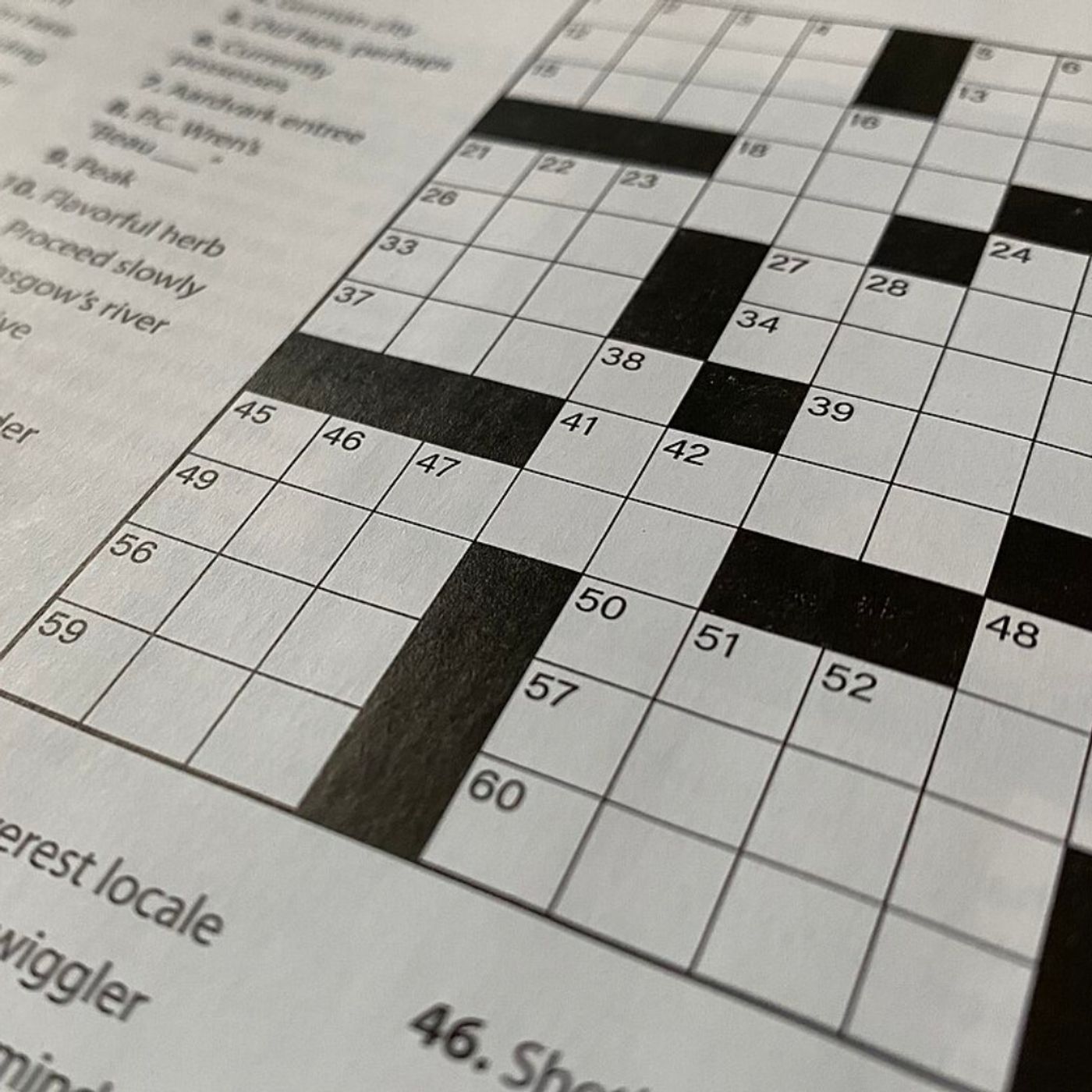
This is all of it on wnyc. I'm David Fuerst in for Alison Stewart. And okay, listeners, we are looking for a ten letter word. Here is your clue. Mystery boxes for word Sherlocks. If you guessed or better yet, deduced crosswords, you know what we're talking about to close out the show today. Crossword puzzles and other word games have gotten immensely popular in recent years thanks to innovations like wordle or the New York Times Connections. But these combination trivia and language puzzles have been around for over a century. A new book from Latan Last, who interned with the famous puzzle master Will Schwartz and now designs crosswords himself, has written a book that explores the history and cultural impact of the crossword. It's called across the the Past, Present and Future of the Crossword Puzzle. And Natan Last joins us now to talk about it. Welcome.
- [01:12]
A
Thank you so much for having me.
- [01:13]
B
So that's a lot to get to there. And I want to ask you about the cultural impact just ahead. But first, you know, what gave you the idea to take this in depth look at humanity's relationship to crosswords?
- [01:27]
A
I mean, I think my own with language, with life has been always refracted through the puzzle. The first time I solved a Saturday New York Times puzzle, I was at the beach with a high school girlfriend, could only do maybe half the clues, put it down, came back and found that, you know, in my consciousness had materialized all of the answers and, and that kind of acquaintance with the neurological backburner, something we've all experienced. My first experience was through the crossword.
- [01:56]
B
That's amazing. You can remember that moment.
- [01:58]
A
I remember the sensation of I didn't know the answers, you know, five minutes ago, but now I do. And a lot of us, you know, we wake up and our, you know, dreams or just the night's sleep has helped us solve a problem. For me, it was, you know, going for a swim and eating some barbecue.
- [02:12]
B
I'm waiting for that five minutes to happen. When it comes to solving crossword puzzles, I'm definitely crossword challenged. So you're going to have to help us out here today.
- [02:22]
A
I'll do my best.
- [02:23]
B
How long have crosswords been around and how were they first received when they first appeared?
- [02:30]
A
Yeah, the crosswords have been around for about a century. So they begin in 1913 at the New York World. This is the era of Joseph Pulitzer's big newspaper. And Arthur Wynne, an immigrant from Liverpool, had a Christmas deadline and some column inches to fill. And new printing technology made it so he could print the grid right there on the newspaper page. And they were a sensation overnight. And there was effectively an immediate backlash.
- [02:57]
B
Backlash.
- [02:58]
A
There was an enormous sense that puzzles were a waste of time, that they distracted young intellectuals or intellectuals to be for more respectable matters. And so librarians blotted them out when they were filed in the library. There was.
- [03:14]
B
If they're a waste of a waste of time, blotting them out seems to be like an extra incredible waste of time.
- [03:21]
A
Yeah, exactly. Yeah. Two wrongs don't make a right. Absolutely. It wasn't, it wasn't really working. I mean, people named this disease Crossroaditis. They were, they were so aghast at how people were using their newfound leisure time. This is, you know, at the beginning of and the aftermath of World War I. The concept of leisure is a new thing. After the World War, Americans are doing things like yo yo contests, dance marathons, seeing who could sit atop a flagpole for longest. And so this is a moment of aiming competitiveness that had been sort of cast first in the war, but now at frivolous stuff.
- [03:56]
B
That you shouldn't be wasting your time this way.
- [03:58]
A
Exactly.
- [03:59]
B
Interesting. Well, you note in the book that a lot of the so called pop cultural, pop culture references in crosswords are really things that are not very up to date. Right. A lot of times it's things that have been popular decades ago. But some of these references have become very ubiquitous over the years. They've entered the crosswordes lexicon. What is interesting to you about that in terms of the social impact of crosswords?
- [04:30]
A
I just think one of the things that happens with crossword ease, these are the often vowel heavy words that we have to memorize if we become longtime solvers is that there's been a long history of reimagining them. So before Will Schwartz took over at the New York Times in 1993, the four letter word Oreo was clued as a Greek prefix meaning mountain in a combined form, which of course we all knew. It's not until 1993 that we can finally call a cookie a cookie. And crossword constructors, especially younger ones, are interested in, you know, sort of reformulating little morsels of language. So ont the, you know, province Ontario in an abbreviated form. In the hands of Eric, a gard can become the phrase on T. So someone taking testosterone and you know, unk. I'm waiting for unk to unc to be clued as the new slang term as opposed to the school. Right. Words are constantly evolving and the crossword can kind of Both track it, but also have a hand in shaping it.
- [05:31]
B
How much does working on crossword puzzles really sharpen your mind and your skills to solve other puzzles, to deal with other questions in life?
- [05:43]
A
Yeah, that's a good question. I think it's given me a really misshapen vocabulary. So when I was younger, I knew Shakespeare quotes because you could only clue tis one of seven ways or I knew words like ambit or inure, high register words that appear in the crossword, but not really much in real life. And so I use them at terrible times. I think it can broaden your vocabulary. Really high caliber solvers tend to say that when you get better, you start to solve the grid more than you solve the clues. That it's a bit of pattern recognition. Everything from plurals end with s and superlatives end with Est. To 80% of words in English, because of the Germanic origins, begin with consonants. And so you start to understand the skeletal structure of language in a way that I imagine has no use anywhere else.
- [06:34]
B
No use anywhere else. But it really helps if you're trying to solve the grid.
- [06:38]
A
Yeah, exactly.
- [06:39]
B
In the book's first chapter. The book is called across the the Past, Present and Future of the Crossword Puzzle. Nathan Last is our guest today here on all of it on WNYC and looking at the, I guess, future of crossword puzzles. In the book's first chapter, you write about the introduction of software tools in the puzzle maker's arsenal. What were the challenges involved in designing crossword creation programs and how did they change the product?
- [07:11]
A
Yeah, so crosswords have three really dissimilar tasks for the crossword maker. You're thinking up a theme, and that's like planning a scavenger hunt. You're noticing some correspondence among words and following the logic. Building a grid is constructing the raw material is the letter. But one of my favorite writers, Georges Parek, called it letter based arithmetic. All that matters is that words are this or that length and that their letters play nicely with the words next door. Writing clues is, of course, a very literary thing to do. And that middle process, building the grid, has always been amenable to computer assistance. It's really nice to know if I need a 10 letter word with x in the third slot, I want to know all the possibilities. And, you know, it's useful to kind of construct by cortex. But constructing with a computer alongside you can really help with that. So building the grid has become much easier with computer assistance. And sometimes coming up with a good theme can be useful if you've got a little script. So one of my favorite crossword themes, the constructor noticed that the word sore loser repeats every single letter except for the L. The L is the leftover letter. And it's really hard for a brain to think up other examples like that. A small computer script will unearth phrases like Hippocratic Oath in which every single letter except for the R is duplicated. And not only that, but in this puzzle, because there were software assistants, the constructor was able to use the extra letters to, in order, spell out leftovers. So it's an example of computer systems actually making a theme more interesting.
- [08:46]
B
Are you afraid, though, that the AI Natan last is going to push Natan Last out of the way?
- [08:53]
A
There's. I am. But as always, I think this is more of a sort of collective action and labor problem than a technical thing. I mean, lots of the aspects of crossword making that are amenable to computer assistance. We already have good tools. For now, it's a matter of not letting you know, big publishers and other sort of organizations use past puzzles in order to generate AI puzzles. That's the battle.
- [09:16]
B
Because that's stealing.
- [09:17]
A
That's stealing.
- [09:17]
B
That's stealing. We are talking about puzzles with Natan Last if you want to join this conversation. But by the way, give us a call, 212-433-9692. That's 212-433-9692. If you have questions or observations about the history of crossword puzzles, what they mean to you, what you think they mean to humanity, give us a call. 212-433-9692. And I have to ask you about Will Schwartz, right? I mean, that's mandatory. You write about being an intern to New York Times crossword editor Will Schwartz, NPR puzzle master back in 2009. You describe his legacy in this world as immense. So how has Will Schwartz changed the puzzling world?
- [10:08]
A
Yeah, I mean, when Will Schwartz took over at the New York Times in 1993, he was kind of an avant gardeist. He'd come from Games magazine. He made the puzzle a lot more Technicolor. He introduced brand names, pop culture, a lot more music. And the puzzle was all of a sudden brimming with the sort of things that all of us encounter in real life. It also started to be a lot funnier. And so, you know, one of the funny things is right before Will Shorts, the Times editor was a former Latin teacher in New York City and a superintendent who treated the puzzle with a sort of knuckle wrapping Rigor, right? This was about whether you remembered your Latin. And if you didn't, you sort of got detention, right? You didn't. You didn't solve the puzzle. But now Will Schwartz, of course, I mean, he's been doing this since 1993. And puzzle has not just expanded, but totally changed. The Times Games app is an entirely different thing. It's made entirely differently than me. And Will Shorts with a clipboard in hand in his attic in his Pleasantville home. And so the legacy is immense. It's also the case that he has given birth to a huge number of imitators and people who are interested in taking that legacy even further.
- [11:19]
B
Well, who else from the longer history of these puzzles should we be crediting with the development of this medium?
- [11:26]
A
Margaret Farrar is a really important figure. So she's the New York Times first puzzle editor, and she's the person who actually suggests that the Times add a puzzle. For a long time, the New York Times was the last daily metropolitan paper that did not have a crossword puzzle. Everyone else had gotten.
- [11:43]
B
It seems incredible now.
- [11:45]
A
It's wild to see the sort of rhythm of acceptance and rejection. But the Times held out. And it wasn't until Pearl harbor that Margaret Farrar suggested people might need a distraction at the home front. There were going to be blackout hours. It was a bleak moment. You can't think of your troubles, she said, while solving a crossword. Of course, those early puzzles then went on to be pretty much constantly in conversation with the war. So you'd have a answer like graveyard for Nazi subs. And the answer would be the Atlantic Ocean. And it's like, all right, we got him. But Farrar really was an immense figure in standardizing and conventionalizing the puzzle. This was maybe 10 years earlier. She helped change the convention so that grids are symmetric so that there's no two letter words, so that obscurities are discouraged. She really helped the crossword become what we understand it to be.
- [12:40]
B
Today we are speaking with Nathan Last. The new book is called across the the Past, Present and Future of the Crossword Puzzle. If you'd like to join this conversation, just give us a call. If you have a question about crossword puzzles or the history of puzzles. 212-433-9692. And we have someone texting here sending in an observation. When I was a kid, it was a brag that your mom could do a crossword puzzle in pen as opposed to pencil. Now it's all digital. I miss those days when you can brag. I Do the puzzle in pen.
- [13:18]
A
I feel the same. I actually am an old school solver and prefer to solve on paper. I mean, there's something tactile about it. Same way I like reading books more than I like reading on my phone. Solving in pen is amazing.
- [13:28]
B
Let's take a call. This is Steven in Montclair, New Jersey. Welcome to all of it. Do you have a question or observation about crosswords?
- [13:38]
C
Yeah, I have an observation. It's a great topic. You know, I took up crosswords several years ago and even have taken a stab at constructing them. But what spurred me to do it was I had a very difficult battle with Lyme disease where it had crossed the blood brain barrier and caused a whole bunch of neurological symptoms. And doing crosswords was a really important part of kind of rebuilding my neural pathways. It's just extremely effective for taking on that kind of challenge. So I feel indebted to crosswords.
- [14:13]
B
Wow. What a great comment. What about that, Natan?
- [14:17]
A
It's wonderful. I mean, first of all, there's a lot of stories in the book that are just like that amazing tale where crosswords are not only this engine of intellectualism and sort of facts, but also help people get through really tough moments and breed a kind of new intimacy with your own mind. And so I'm really happy to hear that crosswords could play a small role.
- [14:36]
B
Have you heard that from other people that working on puzzles was really an important part of their rebuilding Rehabilitation?
- [14:44]
A
Definitely. I have a lot of stories in the book about people whose attention felt totally truncated during COVID and for whom solving the puzzle every single day helped them rebuild not just a focus, but a motor to increase their abilities over time and be able to see that they had change for the better.
- [15:00]
B
So many people encountering puzzles in a big way during lockdown, right?
- [15:04]
A
Oh, 100%. I mean, that's when a lot of the Times offerings begin to expand. It's also when you get the sort of half joke repeated internally at the times that the New York Times is a gaming company that just happens to offer news. Right.
- [15:16]
B
Isn't that right?
- [15:16]
A
Yeah.
- [15:17]
B
Okay.
- [15:18]
A
If you.
- [15:19]
B
If you want to join the conversation, it's 212-433-9692. And you write in your introduction to this book across the Universe that it's written in part for people who earnestly ask if the crossword itself might be a tool for progress. What do you mean by that?
- [15:39]
A
Yeah. So it's always important to start that conversation by saying, you know, I work in politics by day. I work in policy, you know, these sort of moral pursuits are very important to me. I think revolution happens on the streets, not at the desk. But there's a really key way in which puzzles can correct the record. Right? People come to CR words expecting an encyclopedic one to one relationship between clue and answer. This is the part of the newspaper that even more so than the reportage, prints facts. But in fact, there are all these ways that the puzzle keeps the bias and skew of the editors who oversee it. And there are ways in which the puzzle just reflects the world in ways that we've changed. So one of the stories I tell in the book is about the Kenyan decolonial freedom fighters, the MAU MAU. MAU MAU. Great letters for a crossword puzzle maker, right? Mostly vowels. And in the 50s, when that organization begins and when that revolt happens, the clues in the New York Times puzzle read something like African terrorist or Kenyan menace. Right. That sort of othering basically racist view of an event that was perpetrated in the or perpetuated in the international reporting desk at that same moment. It's not until 2013 that that same six letters gets a clue. Like freedom fighters for Kenyan independence. Right. Same six letters, same event. But the crossword can play a small role in correcting the record.
- [17:04]
B
Let's see. I'm getting a text right here. I'm doing the super huge New York Times crossword with my son who lives in Atlanta. We solve together over the phone. I love this time with him. That is such a great thing to add to this discussion. Thank you for that. And let's take another call. Emmy in Maplewood, New Jersey, welcome.
- [17:25]
C
Hi, thank you.
- [17:27]
B
Do you have an observation you want to share?
- [17:30]
C
Yes, I do. Well, I have an observation and sort of a question. So I do the New York Times every day on the app. And one thing I started to do is each puzzle on the New York Times now has an associated article, which of course inevitably means that there are comments sections for every puzzle. And I've noticed that there is a trend of deeply held personal beliefs about what a puzzle should or should not do. I'm wondering if that's a trend that you've noticed and what do you feel underlies the sort of deep emotions that solvers feel about their puzzles.
- [18:15]
A
Absolutely. Something I've noticed. When I first started making puzzles, I was a New York City high school student and there weren't a lot of online fora where you could discuss the puzzle. There was Rex Parker, and because he was one of the Few people reviewing the times puzzle every day. I sort of, at the beginning, wanted to impress him or wanted to impress my friends. Wanted to make a puzzle with Simpsons references and Naboko references, because that's what I thought was cool. Now I think there just are all these moments in fora in which people can rabble about the puzzle. I think they probably always had strong opinions about it. It's just much more in our face. And as a constructor, it's nice to know, actually, that you make something that people react strongly to. Right. There's a reason, you know, it's a little bit satisfying to make a bad pun and hear someone groan. Right. That bodily reaction makes sense.
- [19:04]
B
It's no fun without the groan.
- [19:05]
A
It's no fun without the groan.
- [19:06]
B
Yeah. Let's take another quick call. Jillian in Sanford, New Jersey. Welcome.
- [19:12]
C
Hi.
- [19:13]
D
Thanks for taking my call.
- [19:14]
B
Yeah. Do you have a question?
- [19:17]
D
Well, actually, just wanted to say my husband and I met working on a cruise ship together, and we would always do the printed out New York Times crossword together. And he would read a clue one way and I would read it a totally different way. And between the two of our brains, we would solve every puzzle because we were always looking at it from our own mind's perspectives, which were very different. And I just loved that insight into our personalities and how his brain works in a totally different way than mine. But together we could solve this puzzle. It was just so cool.
- [19:51]
A
Yeah, that's wonderful. I love stories like that. I mean, the puzzle is thought of as this individual, you know, solitary pursuit. But of course, it's bringing people together all the time. And because the clue writers are having the same kind of free associative dance that you're talking about, it's really beautiful to see solvers have that same thing. And when I first started solving puzzles, I was a high school student, and we would get the times delivered and crowd around the Tuesday and have to collectivize our knowledge just to solve one of the easier puzzles. So you're always drawing on so many different worlds to be able to solve.
- [20:24]
B
And I love these stories of people working on puzzles together. I'll read one more text here. Hello. I am blind, so I can play crossword puzzles with my wife. It's a wonderful way to still do something together, but it doesn't take physical vision. Together, we are speaking to each other and learning about each other. Thank you, crossword makers.
- [20:43]
A
That's beautiful.
- [20:44]
B
The new book is across the the Past, Present, and future of the Crossword Puzzle. Natan last. Thanks for joining us today.
- [20:51]
A
Thank you so much for having me.
- [20:54]
E
With stays under $250 a night, VRVO makes it easy to celebrate sweater weather. Book a cabin with leaf views or a home with a fire pit. For nights with friends. With stays under $250 a night, find a home for your exact needs. Book now@vrbo.com skipping cold and flu season is Plan A, but if you do get sick, be prepared for Plan B with Kleenex lotion tissues. Kleenex lotion tissues moisturize skin, helping prevent the added discomfort of red, irritated skin on top of your cold and flu symptoms. So this cold and flu season, grab Kleenex lotion tissues. Visit kleenex.com to learn more and buy now. For whatever happens next, grab Kleenex.