← All Of It with Alison Stewart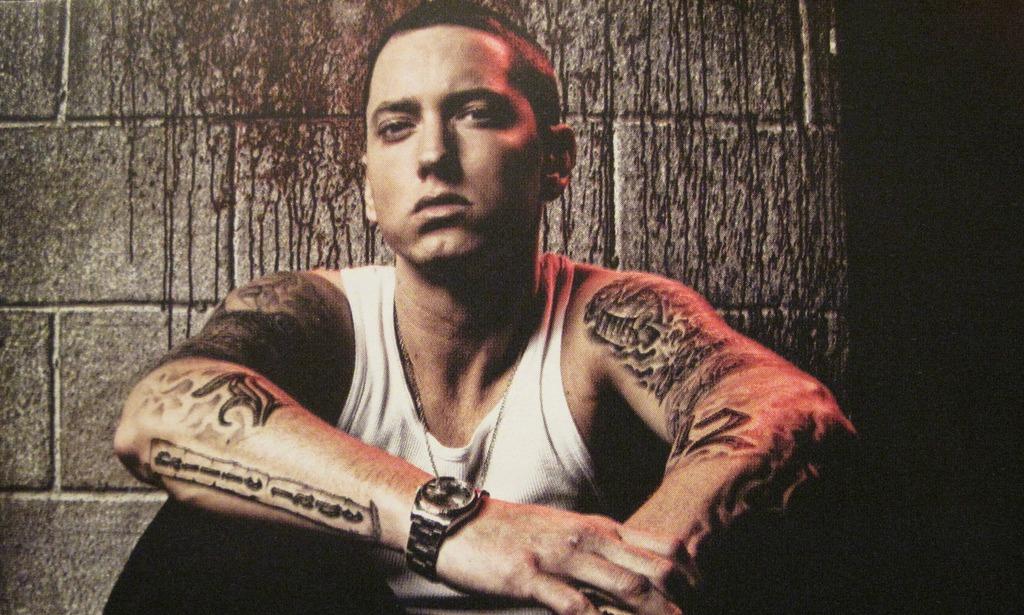
All Of It with Alison Stewart
The Slim Shady LP at 25 (Silver Liner Notes)
00:34:09
On February 23, 1999, Eminem released his second full-length album, The Slim Shady LP.
Loading summary
Transcript63 lines
- [00:04]
WNYC Studios Announcer
Listener support WNYC Studios.
- [00:16]
Tiffany Hansen
This is all of it. I'm Tiffany Hansen in for Alison Stewart. Thanks so much for spending part of your day with us. On today's show, we'll delve into the Harlem Renaissance, which is the subject of a major new exhibition at the Metropolitan Museum of Art. And we'll talk about taking a walking tour of some important sites in Harlem. We'll also hear from Todd Haynes, who is nominated in the best director category of this weekend's Independent Spirit Awards for his film May December. That's the plan. So let's get started.
- [00:48]
Eminem (song clips)
Hi. My name is what? My name is. My name is. My name is. Huh. My name is what? My name is, My name is what Excuse.
- [01:03]
Tiffany Hansen
Today marks exactly 25 years since Eminem released the Slim Shady LP. It was the rapper's second full length album, but really his mainstream debut. It hit the album charts at number two, right behind another classic released 25 years ago today, TLC's Fan Mail. The following year, Slim Shady went up against another legendary February 23 release for the Grammy for best Rap album. Things Fall Apart by the Roots.
- [01:58]
Eminem (song clips)
Somebody told me that this planet was spread small.
- [02:00]
Noah Callahan Bever
We used to live in this.
- [02:01]
Tiffany Hansen
Eminem came out on top in that Grammy category. It was a streak that he'd keep up for his next two albums as well. By the end of the year 2000, the Slim Shady LP had gone quadruple platinum, launching Eminem as a major force in rap and pop music. In 2002, he starred in the autobiographical drama 8 Mile. In 2009, 10 years after the release of the Slim Shady LP, Billboard named him artist of the Decade. Joining me now to talk about the legacy of the Slim Shady LP is Noah Callahan Bever, former editor in chief at Complex magazine, former executive vice president at Def Jam, and current co CEO of the multimedia company Idea Generation. Hi, Noah.
- [02:43]
Noah Callahan Bever
Hi there. How are you doing?
- [02:45]
Tiffany Hansen
Great, thanks. All right, listeners, we would also love for you to join this conversation. Where were you when the Slim Shady LP came out in 1999? Do you remember listening to it? Where were you? How did it sound to you? How did you connect with it? What was your favorite track and has that held up? How do you rank it among Eminem's albums? You can call us, you can text us. 212-433-WNYC. That's 212-433-9692. And you can reach out, reach out to us on all the socials at all of it. Wnyc. Noah, Just to get into a little bit of the Background on the lp. So. So it was Eminem's major debut, as I said, but it was actually his second album. He released the album Infinite in 1996. So just kind of lay a picture for us of where he was on the trajectory of his career when Slim Shady came out.
- [03:37]
Noah Callahan Bever
Well, in 1996, he put out the Infinite album. And I mean, that is a record that there maybe are like 2000 units pressed of in total. It went absolutely nowhere. And unless you lived in the Detroit metro area, you were completely unaware of his existence. The following year, 1997, he put out the Slim Shady EP, right, which got him a write up in the Source in the unsigned hype column. And his now manager, Paul Rosenberg, brought vinyl of the single Just Don't Give an F to fat beats. And that is where his like, real discovery from the hip hop audience started. And then around the same time, he started coming to New York and doing underground records with people like the Outsiders, Scam, Shabam, Sadiq, et cetera. And once he started sort of working that underground circuit, he very, very quickly became kind of, you know, one of the sort of fan favorites.
- [04:43]
Tiffany Hansen
I think I read that was the only EP he's ever put out. Is that right?
- [04:47]
Noah Callahan Bever
Yes, it is.
- [04:50]
Tiffany Hansen
So it was also the introduction of Slim Shady, his basically alter ego. Is that how you would describe that?
- [04:58]
Noah Callahan Bever
Yeah, I mean, if you listen to Infinite, he is rapping very similar to AZ and Nas in his style, and he is very chipper and upbeat for most of the record and having just had a daughter and looking at life's endless possibilities as a burgeoning rap star. And things did not go as planned. And by the spring of 1997, he found himself, you know, with his back quite against the wall financially, professionally, and in a moment of real duress, he sort of conjured this, you know, character, Slim Shady, who, you know, had absolutely nothing to lose and was ready to, you know, say the sort of most unhinged things that are, you know, antisocial. And most people would keep bottled in there some part of their. Their head. And that struck a chord. And the sort of outlandishness and the shockingness and the scandalousness of those rhymes combined with a real technical proficiency just resonated with the audience. And I, you know, he went again from being a virtual unknown even regionally, to one of the, you know, up there with most deaf as probably the hottest underground prospect in 1998.
- [06:33]
Tiffany Hansen
I do want to get into more how it sort of captured the attention not only of, you know, us the public, but also, you know, people in the business in a second. But I do want to just for a second, go back to that Infinite album that you said very few people outside of Detroit have heard just to kind of understand how that album was so different from Slim Shady. Obviously, there was this character and. But thematically also. Right. The lyrics and the themes he was touching on were quite different.
- [07:09]
Noah Callahan Bever
Yes. I mean, that. That record is, you know, the work of a person in their early twenties who really feels like, you know, they have an unusual gift and it is going to take them to incredible places. And again, he. He's, you know, was a new father. His relationship with his baby's mother at the time was in a good place, and I think he was really feeling quite optimistic about how this all would play out. And, you know, of course, you know, the. It's hard for people to understand when you talk about it in 2024, but in 1996, the likelihood of a white rapper succeeding, first of all, credibly, but even commercially at that point was quite improbable. And I think he very quickly found that there was very little appetite for what he was cooking up and, you know, found himself dejected and frustrated and, you know, in a part of the country that has very little connections within the music industry.
- [08:23]
Tiffany Hansen
Yeah.
- [08:24]
Noah Callahan Bever
So very hard to network or, you know, sort of make inroads with people. And, you know, obviously, if you listen to the record, he also was doing quite a bit of a cornucopia of drugs at that point in his life, arguably, to cope with this sort of spectrum of emotion.
- [08:45]
Tiffany Hansen
Yeah, no, I want to bring our listeners into the conversation. Richard in Brooklyn. Good morning, Richard.
- [08:52]
Listeners (Richard, Tony)
Hi, good morning. Thank you for having me. Longtime listener, first time caller.
- [08:57]
Tiffany Hansen
Welcome.
- [08:57]
Listeners (Richard, Tony)
Noah, what's up? This is Richard Treats. What's good?
- [09:00]
Noah Callahan Bever
Oh, Treats. What's up, man?
- [09:02]
Listeners (Richard, Tony)
All right, all right. Great to hear you on the. On the show. Just to answer the question, My first experience with, from hearing Eminem was through Stretch and Bobbito show on kcr and hearing his voice as a high schooler going to school in the city. Young black male, just thirsty appetite for hip hop. I just never heard anything like Eminem at the time. And I never really even questioned the content at the time. It was just kind of like, this is rap. This is edgy, this is crazy lyric I'd never heard before. And yes, I was somewhat exposed to Infinite. But also his name wrongdoes through the rap Olympics, you know, coming in, I guess. Second place, I guess, if I'm correct. And you know, just kind of followed his career through the ages. But I also matured as, you know, matured and then immature as, you know, music and youth does, you know, to us as listeners and fans of hip hop. But, yeah, Eminem was definitely an influential person, and I definitely went to the first signing at Fat Beats.
- [10:17]
Tiffany Hansen
No, I. You know, in preparation for this, of course, I went poking around the Internet and I heard. I saw a lot of comments very much like Richard's. It meant so much to me at such a critical time in my life. How did you. How do you do. How do you respond when you see those comments when you hear that kind of thing from somebody like Richard?
- [10:41]
Noah Callahan Bever
Well, I mean, I. I think that the interesting thing about Eminem as an artist is, you know, he sort of kicked open the door with, you know, the. The sort of technical virtuosity that he brings to the table with this. You know, he. Any. And then he rode. And I think to. To Richard's point, a sort of a precedent of sort of shocking rap. Right. If you think about Big L, Devil Son, or Nas, I Went To Hell For Snuffing Jesus, there was a sort of precedent of young upstart rappers saying, you know, sort of titillating and edgy things in order to capture the attention. And I think he came in with that. But then I would say that, you know, the. The. And was able to establish an emotional connection with the audience through songs like Rock Bottom and I'm trying to remember what the. The slower record that's on the Low down and not Low down, there's a third song on the first single that's a little bit more introspective as well. And, you know, he was candid about his own insecurities and frankly, about the turmoil within his life in a way that not a lot of artists in the genre, at least, were in that moment. Obviously, Tupac, who is among Marshall's biggest influences, was very straightforward about that. But in the more lyrical sort of canon of hip hop, it's been always much more about bravado and chest beating and, again, technical proficiency. And so the fact that he was able to marry those things, I think, you know, sort of grabbed listeners by the teeth with this visceral esthetic and then humanized the story in a way that people like myself and Treats could really connect with in a human way where we felt personally invested in his narrative. And we know his mom is Debbie, and we know Kim is his baby's mother, and we know Haley is the daughter, and Elena is The stepdaughter that he's adopted and, you know, he really opened up emotionally about this world and painted, I think, a very coherent picture of the trials and tribulations he was going through. And, you know, that kind of candor just connects with people in a very palpable and visceral way.
- [13:31]
Tiffany Hansen
We are talking with Noah Callahan Bever about the anniversary of the release of the Slim Shady LP by Eminem. And listeners, we would like to invite you into this conversation. Where were you when you heard the Slim Shady lp? Do you remember listening to it? How did it res. How did it resonate with you at that time? And does it still resonate that Same way today, 25 years later? 212-433-WNYC. That's 212-433-9692. You can call us at that number, you can text us at that number, and of course, you can find us on all of the socials at all of it. Wnyc. I want to hear you mentioned rock bottom, so I just want to hear just a little bit of that.
- [14:17]
Noah Callahan Bever
Hey, yo.
- [14:19]
Eminem (song clips)
This song is dedicated to all the happy people. All the happy people who have real nice lives and have no idea what it's like to be broken. So far I feel like I'm walking a tightrope without a circus net popping Pinnacle vet. I'm a nerve to.
- [14:41]
Tiffany Hansen
Noah. When you hear that now, it's easy to understand why it will resonate with some folks. There's a real storytelling that we hear in his work, especially in that song. I think I want your reaction as well.
- [14:58]
Noah Callahan Bever
No, I mean, I. Again, I. I think that, you know, the bravado and machismo that is so sort of foundational in hip hop is obviously one of the major selling points and probably why the music resonates and over indexes with young men. But again, I think that the real sleight of hand that Eminem brought to the audience was mixing that sort of hyperbolic, you know, hyper masculinity with this absolute candor around his own insecurities and his own self loathing. And, you know, again, if you think about what rap was popular in 1998, very little of it was sort of centered, that kind of insecurity or that sort of, you know, lack of confidence. And I think that he, you know, that he was willing to sort of explore those ideas and those themes and those feelings, again, just really sort of surprised listeners and demonstrated that there was much more there than this sort of cartoony, you know, hyper, violent, you know, ironic sort of humorous character that he had, you know, sort of brought to the world with, you know, My Name Is, for example.
- [16:41]
Tiffany Hansen
Right. Let's listen to My Name Is when we get back, but we're going to take a quick break. You're listening to all of it here on wnyc. I'm Tiffany Hansen in for Alison Stewart. Foreign this is all of it on wnyc. I'm in Tiffany Hansen in for Alison Stewart. We're talking about Eminem's Slim Shady lp, The anniversary of that, of course. Today we're talking with Noah Callahan Bever about that. Noah, let's just hear that little clip again. I mentioned we would hear a little bit of My Name is just. Again, one, two, just tiny bit.
- [17:19]
Eminem (song clips)
Hi, My name is. My name is. My name is.
- [17:29]
Tiffany Hansen
There's an introduction, pretty great introduction to him. Right. For a lot of people who hadn't heard him and to the character, his alter ego, Slim Shady. Before we talk a little bit more about that. No, I want to bring in a listener. Here we have Eileen and Weehawken. Hi, Eileen. Good morning.
- [17:51]
Noah Callahan Bever
Hi.
- [17:53]
Listener Eileen
More and more is flooding back as I hear the conversation. But the first thing that came to my mind, I was one of the clowns in residence at the Hole in the Wall Gang camp. We used to be there through the Big Apple Circus clown car unit, now still a presence through Healthy Humor Inc. Which are pediatric clowns. Anyway, at the beginning of each session, each department and area would give an introduction to the campers for that week and that and often there was a song, you know, in the Zeitgeist. And so we used, of course, you know, by way of introduction, My name is My name and whatever the name A, it was very modular. But the first memory that came is a tribute to the founding medical director who co founded the camp with Paul Newman. Some people know the camp Paul Newman, but Howard Pearson, who was very game to participate with the clowns and stuff. One of our introductions, maybe a staff closing or staff opening. The venerable major pediatric doctor tons of research and elevation of awareness of sickle cell and work on that. Anyway, Doc Pearson was working Slim Shady with us. So we were all my name is. And he, you know, stiffly, my name is. My name is Doc Pearson. You know. Anyway, that's the first thing. And I also remembered I had the single and I must have bought it at sounds on St. Mark's Place, either the CD or tape single. Anyway, this is a great recaller. And Scrubs was also a song of the summer. That summer, of course, played that of Course, Yeah.
- [19:33]
Tiffany Hansen
Eileen, thanks so much for the call. I can imagine, Noah, that that's an album outcome that Eminem never predicted for that song.
- [19:43]
Noah Callahan Bever
Absolutely. I. I'm sure that he would be tickled hearing that. Yes. I. I think when recording that, I don't think he had any sense of how ubiquitous it would ultimately, ultimately become. And, yes, the various. The various moments it would play in people's lives.
- [20:02]
Tiffany Hansen
Well, you can never really know as an artist how your art is going to connect with every individual, I suppose. Right.
- [20:11]
Noah Callahan Bever
Certainly. I think that song, though, is so interesting and honestly such a testament to, of course, Eminem's genius as a lyricist, but also to Dr. Dre's genius as a producer. You know, oftentimes, and particularly in that moment in the late 90s there, as hip hop was sort of blossoming commercially, there was a real challenge in how to take people who are excellent rappers, which is inherently a very complicated, dense format of songwriting, and translate that into huge commercial smashes. And I've always found Dre's choice of slowing down the BPM so that Eminem could clearly articulate all of his jokes and all of his punchlines in a digestible way that not only could rap fans hear and understand and appreciate, but also any random person listening to pop radio as well. And to be able to do that on a song that is completely uncompromised in any other sort of commercial, you know, sensibility. There's no R B chorus. There's nothing about it that is not roots hip hop. It is a sample. It is a loop. He just added drums. But again, he took what Eminem was so great at, which was telling these absurdist jokes, and slowed it down and created a forum for him to really shine at exactly what he did, which, again, was totally antithetical to everything that was moving the needle at urban radio during the time, and also very not obvious as. As a sort of vehicle for a super lyrical rapper.
- [22:15]
Tiffany Hansen
Well, Eminem really idolized Dre and listened to NWA like, you know, a lot of his peers were at the time. So I can imagine that having his attention was really transformative just for him as an artist and career wise and in terms of his own musicality.
- [22:38]
Noah Callahan Bever
But, yeah, I mean, to. To speak to that. I mean, the. The. The. The story, as it goes, is that the two of them got into the studio and in 24 hours recorded my Name Is Guilty Conscience and Role Model in essentially one and a half sessions that EM was just so primed and ready to go that every track that Dre Threw on. He just went and was. Went to work.
- [23:14]
Tiffany Hansen
When we think about their collaboration, we can't help but think about the track Guilty Conscience. So let's hear a little bit of that.
- [23:21]
Noah Callahan Bever
All right, stop now. Before you walk in the door to.
- [23:24]
Eminem (song clips)
Slick a store and try to get money out the drawer, you better think of the consequence. Who are you? I'm your monkey over the conscience. That's nonsense. Go in, gaff all the money in front of one of your aunt scripts, and borrow a damn dress to run a blonde wig.
- [23:38]
Tiffany Hansen
Dre Eminem. Two sides of the coin. Devil Angel. So talk us through that track a little bit again.
- [23:46]
Noah Callahan Bever
I think, you know, this is the genius of Dre looking at I have a super rapping talent here. How do I commodify this and lean into the things about Eminem songwriting that make him special? And that is his ability to do voices, his ability to sort of write in linear narratives. And so, you know, and again, there's this irony, because here's Dr. Dre, who is coming from NWA has, you know, is not necessarily known as the friendliest guy in hip hop, but we're going to position him as the angel on the shoulder of these three different characters while Marshall is playing the devil. And. And then, you know, he gets to craft three very edgy, antisocial scenarios and then have these two different voices sort of coaching the protagonist as they move through these narratives. And, you know, I. Again, it's sort of like, very meta because, you know, obviously Slim Shady as a character is sort of the devil in your brain, thinking the antisocial thoughts that we all don't say out loud. But then on top of that, now Dr. Dre, the guy that made the Chronic, who has said some of the most randy things committed to 2 inch reel, is now actually the one who is the voice of reason.
- [25:23]
Tiffany Hansen
So it's been compared to that track specifically. But also, you know, some of his other tracks on the Slim Shady LP have been called, like, skits, Right? So they're like little vignettes, little skits. We have a text here that says Eminem's music videos were a huge part of his popularity for me as a millennial. They were almost skits, more like what we see online now. He was definitely ahead of his time. Would you classify him as being ahead of his time?
- [25:52]
Noah Callahan Bever
Absolutely. I think that em really opened, you know, a door for extremely popular hip hop that did not fit sort of the prototypical urban and crossover radio format. I mean, if you think about the songs that were working for Artists like Jay Z and Nas, in that moment, in the late, you know, 90s, they were all sort of engineered towards the radio and towards the club. And then, of course, they would have, you know, street records to bolster, you know, to be sort of like the credible play and to sort of appeal to their core fans. And, you know, Eminem came and had completely avant garde, straight strange style production that was unique that no one else could rap over and again, these high concept records, but figured out with Dre how to, you know, both from a songwriting standpoint, but also from a marketing standpoint, you know, turn these into extraordinary commercial hits. And. And I think that really that opened doors that allowed people like Kanye west and even Tyler, the creator, years later, you know, or even Drake, frankly, in. In sort of very tangentially related ways to, you know, exist, you know, in a sort of multi lane highway that is commercial rat.
- [27:39]
Tiffany Hansen
Before we leave Dre too far behind here, I want to take a call from Tony and Windsor Terrace. Hi, Tony.
- [27:46]
Listeners (Richard, Tony)
Hey, quick question. That story about that initial collaboration was so inspiring. I'd just love to hear more about that relationship and how the two work together and specifically leading up to the Amazing Dr. Dre Album 2001 Chronic 2. I just want to hear a little bit more about that collab and how those two developed is kind of a duo.
- [28:09]
Tiffany Hansen
Yeah. Yeah. Thank you, Tony. Yeah. No, to hear you describe it, it was pretty magical.
- [28:15]
Noah Callahan Bever
Yeah. I mean, so the story goes that there was a young man that worked at Interscope Records, Dean Geitzlinger, who was either an intern or a very low level, like A and R Admin. And he had gotten a copy of the Slim Shady EP and passed it on to Jimmy Iovine and said, hey, this kid can just. He's incredibly gifted as a rapper. I don't know what we do with him, but he's incredible. And Jimmy Iovine had the sort of brilliant idea of, hey, let me call up Dre and see if he digs this. And they sent the cassette to Dream. And it happened that Eminem was in LA that weekend recording on the Wake Up Show, Sway Calloway's radio show. And he did a freestyle over, I Believe, a I came, maybe a Biggie beat on the radio and then got a call that Dr. Dre was listening to you on the radio and would love to get in the studio with you. And within a couple days, they got together and ended up knocking out those three records in, you know, basically like a weekend. And Andre signed him to Aftermath, and that ultimately, you know, really was sort of the beginning of Dre's second act in music, because once, you know, M was a success that set up the 2001. A lot of those sessions from 2001 were recorded either sort of like during the Slim Shady LP sessions or slightly thereafter. I can remember meeting up with M a few weeks before the Slim Shady LP came out, and he played me, forgot about Dre. And what's the difference from 2001 to with him doing all of the parts, of course, and explaining, oh, we're making the chronic to dre's coming back, etc. Etc. And yeah, and then, you know, their success sort of just piggybacked one another. And of course, coming to a pro, a Zenith in 2003 with signing of 50 Cent and the 2M and Dre collaborating to sort of elevate 50 to, you know, the pole position.
- [30:43]
Tiffany Hansen
Noah, before we let you go, I want to get your reaction on one last track here. This is called as the World Turns.
- [31:02]
Eminem (song clips)
Yes, man, as the world turns. We all experience things in life, trials and tribulations that we all must go through when someone wants to test us, when someone tries our patience. I hang with a bunch of hippies and wacky tobacco planters who swallow lit roaches and light up like Jack o'. Lanterns.
- [31:26]
Tiffany Hansen
What do we learn about him in this track?
- [31:28]
Noah Callahan Bever
Well, so it's funny. This record is particularly memorable to me. I. I was sent to Burbank in the spring of 1990 to interview Eminem for Blaze magazine. At the time, he was recording to some shady lp. And I remember pulling up at the little strip mall studio that he was recording in and seeing a parked rental car like Lincoln Continental with music blasting out of it. And as I approach the car, I see that Eminem and Royce are sitting in the car and they see me recognize that I'm clearly, you know, the rap guy from Blaze that they were looking to meet up with, invite me in. And they're playing the rough mix of this song, and I was just. I. The narrative in this is a hyper violent, cartoonish, but incredibly grotesque and edgy story of a guy and a girl getting into this epic fight. And I was so unsettled by the nature of the content and the jokes. It reminded me of being nine years old and getting nasty as they Want to be the 2 Live Crew album, and listening to the nursery rhymes song and feeling both completely, like, enchanted and also disgusted and just thinking like this. The visceralness with which I am physically reacting to this music is so unlike most things that you will hear. And also I was, you know, at the time, I thought of Eminem as an underground rapper because all of his stuff had been very dirty and, you know, anti commercial. And here he is with this melodic chorus and these very sort of lush production and the combination of it just. I exited that car thinking, this guy is going to sell a million records. There's no way that people are not going to talk about this. Like this is what he just played me is insane. Literally insane.
- [33:59]
Tiffany Hansen
That's a good place to leave it, no? Callahan Bever is the former editor in chief at Complex magazine, former executive Vice president at Def Jam, and the current co CEO of the multimedia company Idea Generation. Noah, thanks so much for your time today. We appreciate it.
- [34:17]
Noah Callahan Bever
Absolutely. Thank you. Thank you for having me.
- [34:18]
WNYC Studios Announcer
Sometimes an identity threat is a ring of professional hackers. And sometimes it's an overworked accountant who forgot to encrypt their connection while sending bank details.
- [34:27]
Noah Callahan Bever
I need a coffee.
- [34:28]
WNYC Studios Announcer
And you need Lifelock. Because your info is in endless places. It only takes one mistake to expose you to identity theft. Lifelock monitors hundreds of millions of data points a second. If your identity is stolen, we'll fix it, guaranteed, or your money back. Save up to 40% your first year@lifelock.com specialoffer terms apply.
- [34:48]
Ira Flatow
I'm Ira Flato, host of Science Friday. For over 30 years, our team has been reporting high quality news about science, technology and medicine. News you won't get anywhere else. And now that political news is 24 7, our audience is turning to us to know about the really important stuff in their lives. Cancer, climate change, genetic engineering, childhood diseases. Our sponsors know the value of science and health news. For more sponsorship information, visit sponsorship. Wnyc. Org.