← All Of It with Alison Stewart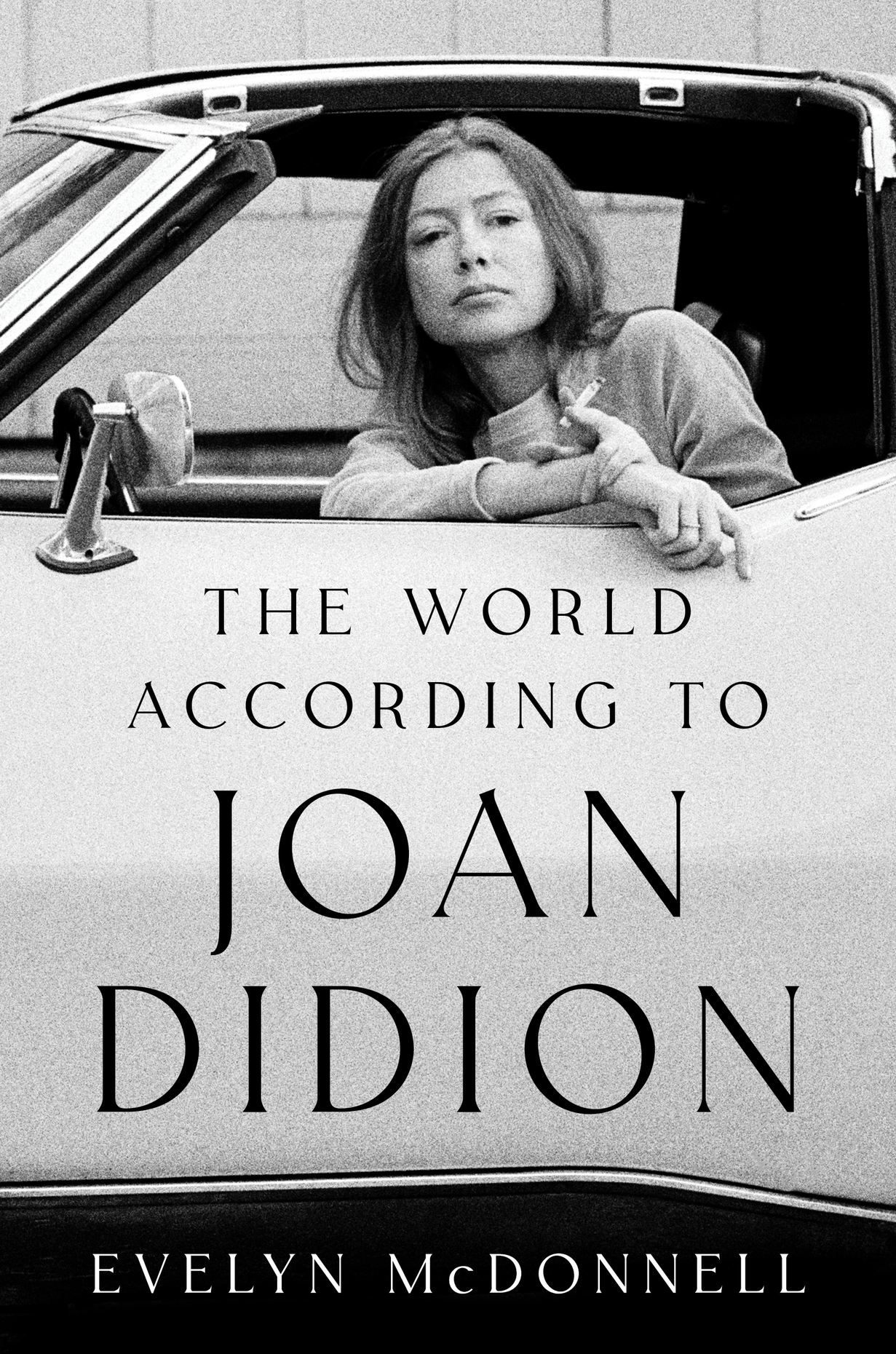
All Of It with Alison Stewart
The World According to Joan Didion
00:28:49
In a new biography, author Evelyn McDonnell assesses Joan Didion's importance as a writer and paints a full portrait of her as a human being.
Loading summary
Transcript71 lines
- [00:00]
Liberty Mutual Announcer
Limu Emu and Doug, here we have.
- [00:04]
Evelyn McDonnell
The Limu Emu in its natural habitat, helping people customize their car insurance and save hundreds with Liberty Mutual. Fascinating. It's accompanied by his natural ally, Doug.
- [00:18]
Host/Interviewer
Limu is that guy with the binoculars watching us?
- [00:21]
Liberty Mutual Announcer
Cut the camera.
- [00:21]
Evelyn McDonnell
They see us.
- [00:22]
Liberty Mutual Announcer
Only pay for what you need@libertymutual.com Liberty.
- [00:25]
Evelyn McDonnell
Liberty Liberty Liberty Savings Very unwritten by.
- [00:28]
Liberty Mutual Announcer
Liberty Mutual Insurance Company and affiliates. Excludes Massachusetts.
- [00:30]
Tide Commercial Announcer
Did you know Tide has been upgraded to provide an even better clean in cold water. Tide is specifically designed to fight any stain you throw at it. Even in cold butter. Yep. Chocolate ice cream. Sure thing. Barbecue sauce. Tide's got you covered. You don't need to use warm water. Additionally, Tide pods let you confidently fight tough stains with new coldzyme technology. Just remember, if it's gotta be clean, it's gotta be Tide.
- [00:58]
Liberty Mutual Announcer
So, suffering from dry, tired, irritated eyes? Don't let dry eyes win. Use Sustain Pro. It hydrates, restores and protects dry eyes for up to 12 hours. Sustain Pro Triple Action Dry Eye Relief Listener Support WNYC Studios.
- [01:27]
Alison Stewart
This is all of it. I'm Alison Stewart live from the WNY NYC studios in soho. Thank you for sharing part of your day with us. Hey, quick programming note. Book lovers, come to the green space today. WNYC's green space for the Mashup American Book Fair. It features storytelling and discussions with great writers and artists like Jacqueline Woodson and Jeff Chang and others. Please bring the kids for a special early Hanukkah reading. All of it starts There's a pop up bookstar. It starts at 4pm Goes until 8:30pm tonight. Tickets and details can be found at wnyc.org thegreen that is in the future. But now let's get this hour started with a book about a singular writer. It is called the World According to Joan Didion. December is a significant month for admirers of writer Joan Didion. Her birthday was yesterday and she would have turned 89 years old if she hadn't passed away two years ago. On December 23, she left behind a distinctive body of work that is considered in a new book titled the World According to Joan Didion by Professor Evelyn McDonald. It is not a traditional biography. It's not even really a biography. MacDonald writes that she wanted to quote, Trace Didion's legacy in the wake of her death and map the narrative of her life by visiting the places she lived and wrote about. Those places include Sacramento, Berkeley, Hawaii and of course, Manhattan. It's a theme based work with chapters titled Snake Typewriter, Orchid, Stingray, and Jogger. The latter about Didion's bold writing in 1991 that questioned the way police and the press handled the Central park jogger case. Evelyn McDonald is a journalism professor at Loyola Marymount and the incoming faculty Director of Media Arts and a Just Society. She is the author of several books, and if the name sounds familiar, she was in fact a senior editor at the Village Voice. Rest in peace, Evelyn. Welcome back to New York.
- [03:19]
Evelyn McDonnell
Thank you, Alison. It's really fun to be back. I loved listening to that last segment, all the reasons to love New York, because I've been remembering them, been here in town for a few days, and yeah, the overheard conversations is the big one for me. Oh, my gosh, the best. Yeah. You don't get that in la.
- [03:33]
Alison Stewart
Not so much. Listener. If you would like to join our conversation, we are open to take calls from people who. For whom Joan Didion meant something. Maybe a piece of writing of hers. Maybe you knew Joan or you worked with her. Our phone lines are open if you'd like to join us. Our phone number is 2124-3396-9221-2433, WNYC or you can reach out via social media. So this project actually began when Joe Gideon was still alive. What was the original project plan? And then how did it change when she passed?
- [04:05]
Evelyn McDonnell
Right. So, you know, it was. It was an idea that we were batting around a few years ago now of trying to understand why she had this incredible staying power that actually seemed to be growing and that I was seeing with my students that people were seeing in TikTok and BookTok on Tumblr, partly because she's so quotable. So people would post these quotes or the iconic photos and. But it was hard to know how to handle it when she was still alive. Right. Because the story's still ongoing. Then when she passed, we said, okay, now it's a narrative arc. Right. We can try to really understand it. And also. And then there was such, again, growing interest in her work after she died. So many tributes from magazine covers to Olivia Rodrigo songs. Which, of course, happened after the book was out. Yeah. So it became doable or understandable after she passed, unfortunately.
- [05:14]
Alison Stewart
What was your entry point to Joan Didion?
- [05:17]
Evelyn McDonnell
It was in college, where we know each other from at Brown University. It was a journalism class, and we read Joan Didion. She was one of two women in the New Journalism Anthology of Tom Wolf, which was our textbook, essentially, for the class, and we read her classics, A story about a murderer in The Inland Empire. But it was not a classic crime story by any means. And I was blown away by that. And funnily, the teacher of that class emailed me last week, oh, wow. I know. She saw the book in a bookstore.
- [05:53]
Alison Stewart
So wild. What has changed the most, what your.
- [06:00]
Host/Interviewer
View has changed the Most about her.
- [06:02]
Alison Stewart
30 years down the road, now that.
- [06:03]
Host/Interviewer
You teach her, now that you teach journalism, now that you've been a professional writer, as opposed to Evelyn sitting and college and just being blown away.
- [06:11]
Evelyn McDonnell
Right, right. And of course, you know, Joan was much older than us, and so she was. You know, those were already classic pieces by the time I was reading them. So I think one of the things that I really discovered in researching and writing this book was that narrative arc and the transformational journey that she made in her own writing from that new journalism, that literary journalism, those pieces about being in the Royal Hawaiian Hotel in lieu filing a divorce or of hanging out in Ashbury, slouching towards Bethlehem and finding the toddlers on acid. That very observational and sometimes very personal kind of writing style. And also from her more conservative political upbringing in Sacramento, Goldwater Republican family of conservatives, fifth generation California daughter of pioneers, AKA colonizers. I mean, fifth generation. Yeah. So. And how she did become that writer living on the Upper east side, writing for the New York Review of Books about the Central park jogger case and being one of the first mainstream journalists to really say, this is a terrible injustice that is happening to these young people, and it's endemic of everything that's wrong with class and race in New York City, in America, in the media. Right. So understanding how she had some reckonings in her own life and how she transformed and how her writing transformed, and then it actually went back to the more personal style after the deaths of her husband and daughter.
- [07:53]
Alison Stewart
My guest, Evelyn McDonald, the name of the book is the World According to Joan Didion. Where did you start? How did you start?
- [08:00]
Evelyn McDonnell
By just reading, reading, reading and rereading and, you know, reading everything I could find. You know, obviously all the published works, but also, you know, going into digital archives and finding the Saturday Evening Post stories that she and her husband, John Gregory Dunn, wrote in the 1960s that haven't been anthologized like a piece she wrote about why she hates cops. Right. Things that people maybe didn't know about her, as well as traveling. Berkeley and Sacramento were the first places I went to. Where she was born, where she was raised, and where she went to college and also where there was a lot of archival materials, her early work her early papers, manuscripts, notebooks are at the Bancroft Library in Berkeley. So going through those, reading her notes, reading her editor's notes to her, reading John's notes to her, the revisions of the manuscripts, and that was very early and very transformational and just also just awesome.
- [09:01]
Alison Stewart
Well, you got to see that she hand wrote a lot of her notes before she ever typed them up. What is something you noticed about her handwriting that was interesting or the way she took notes?
- [09:11]
Evelyn McDonnell
Right. I mean, some of it is just so classic to me as a writer because I, you know, I'm that generation too, I guess, where you type it and she was typing them out at this point and then handwriting and then retyping. So just watching that process, that feels so classic and was reassuring to see her handwriting is not always very legible. So that was a challenge, as it often is. But also seeing one of the things I really loved find were letters and notes back and forth, some of which were very kind and thoughtful and showed, you know, a personal side of her that she didn't always reveal in public. Right. But then also like, you know, the fights she would have with editors and particularly again over the Central park the Sentimental Journeys story. She and Robert Silver went back and forth, back and forth on lots of that.
- [10:13]
Host/Interviewer
When you were looking through all of her papers, when you were sitting and reading her notes, what were you looking for? Were there certain questions you wanted answered?
- [10:22]
Evelyn McDonnell
I did, I wanted a sense of how much revision she did because her writing is so nigh unto perfect. Right. So crisp, you know, every word is so thoughtfully chosen and you know, and that's hard in journalism because even though she was writing long magazine pieces, there were still deadlines. And so I wanted to see did that burst fully formed from her head. And it did not. She really did go through and just refine, refine, refine, cross out, change a word, move things around. There was a lot of editing. You know, one of the things that, that I think is really compelling about her and why writers like her, because she modeled a kind of writing life. She just was so dedicated to being a writer. Of course, she was kind of a star too, and an icon. But it was ultimately about the writing and seeing that it's a job and it's work and you keep doing it.
- [11:29]
Host/Interviewer
Got a text here, it says, as a lifelong reader and writer myself, I admit I was never a didion head until I was older and read her books about grief. Blue Night and the Year of Magical Thinking are necessary for anyone who's experienced loss. I also highly Recommend the doc about her. The center will not hold. That's Cindy texting in from the West Village.
- [11:49]
Evelyn McDonnell
Yes, Griffin Dunn's documentary was really important. So well timed, you know, her nephew through her husband. And I should also say that I did interview three dozen people for the book, including Griffin. Griffin was fantastic help to me in understanding things about her and John and great Col. Also you mentioned in the.
- [12:12]
Host/Interviewer
Book early on that she's a writer who frequently wrote about writing. What seemed to interest her about writing.
- [12:21]
Evelyn McDonnell
I think it was how she understood the world. I mean, that's what she said and why I write. I write in order to understand what I think. Which, you know, when I read that, I was like, yes, exactly right. And so she really wanted to understand that for herself. Like that was her thought process, was putting it down on paper. I also think that she really wanted to make it transparent to others, like she was not. There's a kind of sentiment about her that maybe she was elite because she certainly was famous and well off and lived a very privileged life and did sometimes write from a place of high society. But I think that she really wanted to pass on her wisdom to people. She did a lot of speeches at universities and again, talking about writing. She mentored writers. I think she, you know, she started writing in a notebook when she was five. She was a voracious reader. That was the world as she knew it. She also loved photography and arts and she also wrote movies and novels and, and, you know, wrote about the Doors and Joan Baez. But, you know, literature was her. That was her tablet.
- [13:42]
Alison Stewart
We're discussing the book the World According to Joan Didion. My guest is Evelyn McDonnell. I'm going to ask you to read a little bit. I'll do the call out while you get your book ready. If Joan Didion admires this is for you. You can call and let us know what about her work, what meaning it had in your life. Or maybe you knew Joan Didion or worked with her or around in her orbit. Our phone lines are open. 2124-3396-9221-2433 wnyc. You can call in and join us on air or text to us at that number. Social media is available as well at Olive nyc. Okay, what are you going to read for us?
- [14:14]
Evelyn McDonnell
Okay, so I'm going to read from the first chapter, which is called Gold, which of course the Golden Land, the Golden State was from California, you know, named because it was. People settled it because of Gold, but also for the sunset. And this says some of the things that we've talked about about her transformation and her influence. We live in an age of reckonings over who gets to tell stories and how and why. Didion faced this abyss as a young woman, beginning her career and her family, and her transparency about this dissolution was her and our saving grace. I've had to struggle all my life against my own apprehensions, my own false ideas, my own distorted perceptions, she said in a commencement address at the University of California, Riverside, in 1975. I've had to work very hard, make myself unhappy, give up ideas that made me comfortable, trying to apprehend social reality. I've spent my entire adult life, it seems to me, in a state of profound culture shock. I wish I were unique in this, but I'm not. Didion expressed many of her foundational concepts first in speeches like these, mostly at universities, to younger audiences. This is part of what has made her legacy so transformative for multiple generations. She was literally speaking to us, passing on what she had learned. It takes an act of will to live in the world, which is what I'm talking about today, she said at Riverside. By living in the world, I mean really trying to see it, look at it, trying to make connections, and that's not easy. It takes work. You have to keep stripping yourself down, examining everything you see, getting rid of whatever is blinding you. Then she offered this. Throw yourself into the convulsion of the world.
- [16:10]
Alison Stewart
That's from the book the World According to Joan Didion. My guest is Evelyn MacDonald, as you mentioned there and later in the book, that she was a keen observer. What's an example of something that she observed that you think is unique, is unique, and she used uniquely in her writing?
- [16:29]
Evelyn McDonnell
Well, you know, one thing she wrote a lot about, smells, which I think is something that writers sometimes forget to do, especially nowadays. We live in such a visual or audio world. And she, you know, she could name the precise perfume that, you know, someone who's wearing in a cab in El Salvador in the middle of a war zone. So those kind of, you know, they called them status details, right? Tom Wolfe called them that in the New Journalism anthology that, you know, just tell a little piece of information that in its precision, you know, conveys worlds. She, you know, famously, in Slouching Towards Bethlehem, the essay Being in the co ops and communes of Haight Ashbury, being a fly on the wall, watching the interactions between the men and the women, the women and the children, the men and the children, and I think having a women's perspective on that, that maybe some of the men that were primarily chronicling that scene didn't have, you know, from noting the language that men used about women and then, you know, also the discovery of young children being given LSD and some effort of some terribly misguided effort of enlightenment. So, yeah, she said that she could just, you know, be the fly on the wall because she was small and she was quiet. And then people would say the things that they wouldn't say if they, if she was asking a direct question.
- [18:07]
Alison Stewart
We're talking about the book the World According to Joan Didion. My guest is Evelyn McDonnell. We'll have more after a quick break. This is all of it. You're listening to all of it on WNYC. I'm Alison Stewart. My guest is Evelyn McDonald. Her book is called the World According to Joan Didion. Evelyn's in town for an event at the Algonquin tomorrow night, Remembering Joan Didion. It is sold out. There could be a wait list with.
- [18:38]
Evelyn McDonnell
You can check the eventbrite and, you know, people might cancel. It's free. And people also will probably not show up, but happens occasionally.
- [18:46]
Alison Stewart
So, as I mentioned, the book is not a traditional biography, but obviously there are some facts that are woven in and that you felt were important to include. What's some of the biographical information that you felt was really necessary in order for people to understand more about her writing and what she brought, what of herself she brought to her writing.
- [19:07]
Evelyn McDonnell
Right. So one of the things that I wanted to do was really place her in Sacramento and from California because I thought that, you know, that is her, that was her base. And she always said that that shaped everything there was about her. Now, you know, she moved, she famously moved to New York, worked in the magazine industry and then moved back to California and then moved back here. Again, I do follow broadly the chronology of her life. And you know, obviously talking about her family is really important. Both her parents relationship to her parents, particularly her mother, was a huge influence on her. And I also think a big part of why Joan didn't say certain things about her relationship to her upbringing and her identity until her mother passed. And it's really the book remember or where I was from after her mother died that she really talks about her California upbringing. But then of course, also her relationship to her husband, John Gregory Dunn, and then her daughter, Quintana Rue Dunn. I mean, she wrote about those powerfully and beautifully, the great tragedies of her life. But then I also really wanted to acknowledge that she lived for two decades after those tragic events and had a Kind of third act as a woman alone in New York, not alone with friends, with some family, but on her own, you know, as. And had her greatest success, you know, as a post menopausal single woman in New York City, which is very, I think, exciting for some of us to think about.
- [20:54]
Host/Interviewer
Let's talk to Tracy calling in from Staten Island. Hi, Tracy, thanks for calling, all of it.
- [20:59]
Caller Tracy
Hi. I just have kind of a silly anecdote. It was December of 2001, and my family and I were having a fancy for us dinner at Balthazar. And we were crammed into this table, and the booth behind us was Tom Dunn and Joan Didion. And they were the tiniest, sweetest people in this enormous, enormous booth. And it was very clear that they were the A listers and we were the D listers at Balthazar that night, but we were completely, utterly starstruck. That's all.
- [21:31]
Host/Interviewer
Tracey, what a good story. That's my segue into Joan Didion and John Donne. You know what made them an effective professional couple? Because they did write together.
- [21:42]
Evelyn McDonnell
Yeah, absolutely. And that seeing them in a restaurant, that's so classic. They loved to eat out. They loved to be seen and see and be seen. And Balthazar was one of their spots for sure. So, yeah, their collaboration is pretty amazing because that doesn't happen very often between writers, frankly. It's such a difficult profession to succeed in. And, you know, the competition between a partnership is really tough. But they, they made it work. They read each other's manuscripts and edited each other and they wrote screenplays together. They did a lot of doctoring of other people's screenpl. Griffin Dunn told me this great story that they would drive around, you know, if they. She famously wrote about driving around Los Angeles because that's what you do, and that they would drive around and write dialogue, you know, as they were driving, she would take notes. You know, kudos to John Gregory Dunn because obviously, you know, she did outshine him overall and he seemed to glory in her refracted fame. I mean, he also was extremely successful in True Confessions and other books, but not every man could put up with that.
- [23:05]
Host/Interviewer
I wanted to ask about the chapter called Jogger, because there's all these really. Some of the chapters take us through different places. There's one about Hawaii called Hotel. There's one on Stingray about love of cars. And Jogger, obviously, for people in New York, is. Is a particular interest. It comes near the end of the book. She was an already an established writer and reporter at this time. Why did Robert Silver's the New York Review of Books want her to write about this case, this trial of black and brown boys accused of raping this woman in Central Park.
- [23:36]
Evelyn McDonnell
Well, you know, this was a case that had been tried in the media even before it was tried in the courts. Right. And, you know, I think. I think both Joan and Bob wanted her to write about it. She was not dragged kicking and screaming to that. I think she really wanted to do it. She had pretty recently moved back to New York. So it's kind of interesting because she basically comes back to New York from LA and sort of writes a pretty condemning piece about her new return. You know, she saw it as not. She saw it as typical of social injustice in America before. Maybe that was the big catchphrase that it is now. But that is essentially. And, you know, the way she think.
- [24:24]
Alison Stewart
About the year 91.
- [24:26]
Evelyn McDonnell
I know it's interesting, right? And, you know, I quote, there's, you know, a Nieman Harvard Nieman Lab piece about how this was a very transformative piece of writing for crime reporting to. To not just take what the police are saying, what the courts are saying, but to really look at the sociology behind a case. And, you know, she said, this is. We've named these underage young people of color. We've named them, and we won't name the victim who, you know, is privileged and white. And of course she's a victim, and there's a whole reason for that. But she said this is. This was just one of the examples. And she really dove into the difference between how rapes are covered for people of color and in different parts of the city.
- [25:15]
Alison Stewart
Yeah, there's this great. Very simply, she said at one point there were early on certain aspects of this case that seemed not well handled by the police and prosecutors and others that seemed not well handled by the press. She was very clear about it. How was this piece received?
- [25:30]
Evelyn McDonnell
Well, not particularly well. I mean, and actually mostly silence. Right. It did not have a huge effect. It took years for the, you know, the youths to be exonerated, for someone else to confess to the killings, for, you know, documentaries and doc and TV series to be made. But all of that she laid out at the time, as it happened. And I think, you know, in retrospect, and, you know, within the black community, black media, I think she's kind of a hero for having done that and was at the time. But she didn't change the world of white media and the courts.
- [26:18]
Alison Stewart
We're talking about the world according to Joan Didion. My guest is Evelyn MacDonald. The New York Public Library announced earlier this year the acquisition of the archives.
- [26:25]
Host/Interviewer
Of Joan Didion and John Gregory Dunn.
- [26:28]
Alison Stewart
And between them there were, I think it's 30 books of fiction, nonfiction, essays. There's just so much. If someone had time and had the inkling to go to the library and start reading, where would you suggest they go? Or where would you suggest they start? Maybe somebody's feeling inspired from this conversation.
- [26:46]
Evelyn McDonnell
Well, I mean, they haven't. It's not public yet. They're still archiving it. So. Yeah, so I don't know what's all there yet. I mean, I've heard some things, you know, from her menus. What would you like to be able.
- [27:02]
Host/Interviewer
To get access to?
- [27:03]
Evelyn McDonnell
I mean, you know, if there were journals and notebooks, which I understand there are some. So, yeah, I think getting that there are things that she did not talk about and that I had trouble confirming in my research, so I did not use, and I would search for those and I can't say them because I can't verify them yet.
- [27:25]
Alison Stewart
Well, maybe you will when the archives become available.
- [27:28]
Evelyn McDonnell
Absolutely, I'll be there.
- [27:31]
Host/Interviewer
Of course, what comes to mind when we talk about Didion and Dunn is his death and the death of their daughter and the work the Year of Magical Thinking.
- [27:39]
Alison Stewart
How did you know you wanted to.
- [27:40]
Host/Interviewer
Handle these events given the structure of the book and the kind of book you were writing?
- [27:45]
Evelyn McDonnell
Right, Yeah, I mean, of course, particularly the death of her daughter. You know, her husband did have heart trouble and they had a long, beautiful life together. And, you know, obviously it was a tremendous tragedy. But, you know, my grandmother said to me that losing a child was the worst thing that ever happened to her. And, you know, I just. I can't even really imagine it. And. And she was our age, right? I mean, I feel like I was at parties with her. I don't remember ever meeting her. So I felt very empathetic. And it's truly a tragic story. And I think there's aspects of that I was also not able to fully understand and reveal and that maybe there will be more information about that. But I did, you know, I did talk to family members and people that knew them, and I tried to, you know, and obviously, I mean, Joan was so, you know, pretty self lacerating about both of, you know, these deaths. So I tried to write with compassion and empathy, but, you know, I mean, people would ask me, was she a good mother? You know, that's just. I don't know how you answer the question. Nobody asks, was John a good father? Is My usual answer what is a.
- [29:09]
Host/Interviewer
Joan Didion anecdote that you'd like to leave our listeners with? Something that you just really think gets to the essence of who she was and who she was as a writer?
- [29:18]
Evelyn McDonnell
Oh, there's so many. But I guess I do have this image of Joan later in life after the deaths, sitting in a diner on the Upper east side eating her soft eggs. That a waiter at the diner, the Three Guys diner that she used to go, she went there with John and then she went there Al and reading the New York Times and drinking her coffee and being, you know, a woman alone. Andrew Bird wrote a song called Lone Didion. Basically he also was told this kind of anecdote and I don't know, there's something about that moment that's just really compelling to me.
- [30:00]
Host/Interviewer
The name of the book is the World According to Joan Didion. My guest has been Evelyn MacDonald.
- [30:04]
Alison Stewart
Thank you for coming to the studio.
- [30:06]
Host/Interviewer
And have a great event tomorrow night.
- [30:07]
Evelyn McDonnell
Thank you, Alison.
- [30:09]
Liberty Mutual Announcer
Sometimes an identity threat is a ring of professional hackers. And sometimes it's an overworked accountant who forgot to encrypt their connection while sending bank details.
- [30:18]
Evelyn McDonnell
I need a coffee and you need.
- [30:20]
Liberty Mutual Announcer
Lifelock because your info is in endless places. It only takes one mistake to expose you to identity theft. LifeLock monitors hundreds of millions of data points a second. If your identity is stolen, we'll fix it, guaranteed, or your money back. Save up to 40% your first year@lifelock.com terms apply.
- [30:39]
Evelyn McDonnell
NYC now delivers breaking news, top headlines and in depth coverage from WNYC and Gothamist every morning, midday and evening. By sponsoring our programming, you'll reach a community of passionate listeners in an uncluttered audio experience. Visit sponsorship.wnyc.org to learn more.