← All Of It with Alison Stewart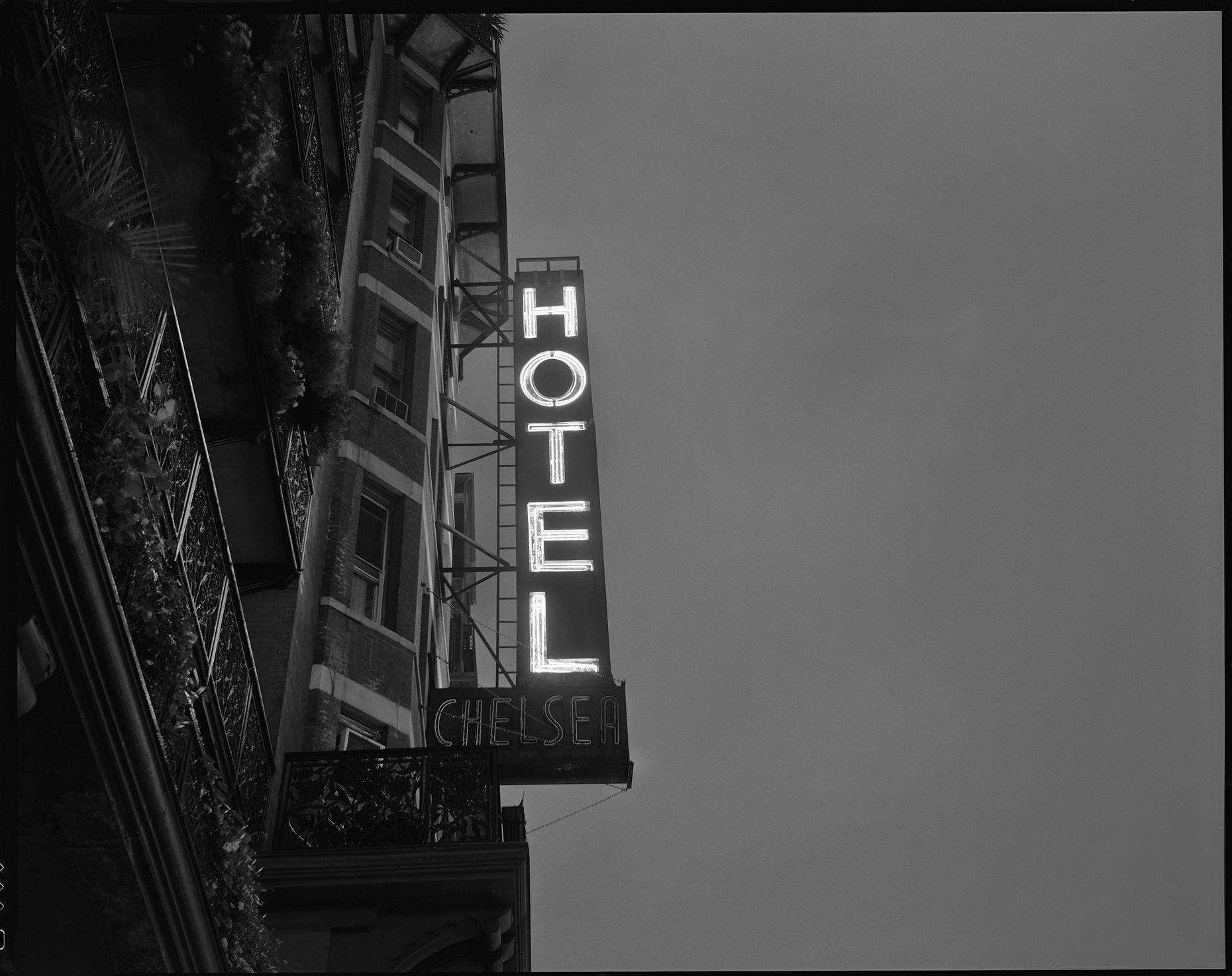
All Of It with Alison Stewart
Tony Notarberardino's Chelsea Hotel Portraits
00:22:50
Tony Notarberardino's Chelsea Hotel Portraits
Loading summary
Transcript68 lines
- [00:00]
Michaels Party Shop Announcer
Attention party people. You're officially invited to the party Shop at Michael's where you'll find hundreds of new items starting at $0.99 with an expanded selection of party wear, balloons with helium included on select styles, decorations and more. Michaels is your one stop shop for celebrating everything from birthdays to bachelorette parties and baby showers to golden anniversaries. Visit Michaels store or michaels.com today to supply your next party.
- [00:28]
Multicare/WNYC Sponsorship Announcer
Our state has changed a lot in the last 140 years. We know because Multicare has been here guided by a single making our communities healthier that comes from making courageous decisions, partnering with local communities to grow programs and services, and expanding healthcare access to those who need it most. Together, we're building a healthier future. Learn more@mycare.org.
- [01:02]
Tony Notar Berardino
Listener support WNYC Studios this.
- [01:16]
Koosha Navadar
Is all of It from WNYC. I'm Koosha Navadar in for Alison Stewart. If you're in Manhattan and you're walking along West 23rd, you might walk right by one of the cities these iconic buildings, the Chelsea Hotel. Mark Twain, Janis Joplin, Mick Jagger, Jack Kerouac and Patti Smith are all artists who have either stayed briefly or lived in Chelsea Hotel at one point in their lives. Bob Dylan wrote songs there, Joni Mitchell and Jon Bon Jovi wrote songs about it. And it's where Andy Warhol filmed the movie Chelsea Girls. And now a new solo exhibition featuring some of Tony Notar Berradino's iconic black and white portraits of individuals drawn to the hotel are on display display at aca Galleries on 10th Avenue. It opens with a large framed photograph of the front doors of the historic hotel and it invites us to see a cast of characters. They include performance artists, nightlife legends, vagabonds, activists, hotel staff, and a few pop culture icons the photographer encountered after moving to New York city in his mid-30s. Here's what New Yorker magazine says about the exhibit. There is an anthropological quality to these images not unlike that of August Sanders photographic series of Weimar Germans, though Notar Berridino's project is more particular in its aims, seeking to document not an imagined idea of the universal, but rather participants in a specific era of New York City that was on the verge of ending. Wow. Tony Notar Berardino the Chelsea Hotel Portraits is now on view at ACA galleries through Sunday, April 13, and we're thrilled to have him with us right now here in the studio. Tony, welcome to all of it.
- [03:01]
Tony Notar Berardino
Thanks Kuja. Thanks for having me on air.
- [03:03]
Koosha Navadar
Absolutely. When was the first time you picked up a camera and decided to start photographing people at Chelsea Hotel?
- [03:12]
Tony Notar Berardino
Well, I moved into the hotel in 1994. By then I'd already been shooting for quite a few years. After moving in, I just came across this incredible cast of characters that would come through the doors daily. So I felt compound, compelled to document them. I almost. There was a reaction to the situation I found myself in. So I set up my 8x10 camera in the hallway of my apartment and began photographing this series probably in 1996.
- [03:48]
Koosha Navadar
And what was the first moment where you thought, oh, I gotta take a picture of this person. Is there a story there?
- [03:54]
Tony Notar Berardino
I'd thought about it for a long time and kind of just worked up the courage to actually start the project. When I first moved in, I kind of felt like people just wanted to be left alone at the hotel. But then starting the project kind of opened the whole world to me in the hotel. And I started meeting people that lived there and realizing that it was a fantastic artistic community of people that would like to share ideas and that made it easier to start the project.
- [04:25]
Koosha Navadar
How often did people refuse to have their photos taken?
- [04:28]
Tony Notar Berardino
Oh, a lot. I mean, you know, there's almost a project of the people who wouldn't. There's a whole other book on people that didn't want to get their photos taken. But generally people were pretty receptive to the idea. The hard part, I guess, was shooting in my room. I mean, telling people to come up to your hotel room at 2 o', clock, 3 o' clock in the morning, it's like, it's got that weird connotation about it.
- [04:53]
Koosha Navadar
So you've got what's happening here.
- [04:54]
Tony Notar Berardino
I mean, not everyone's going to jump on it, but you know, if you explained yourself and I didn't, I wouldn't like to show people my work because I wanted to get a fresh sense from them or a fresh reaction. I think if you, if I would show them my work, it would influence the way they would behave in the picture. So I was trying to get something completely unexpected, run away from them, a reaction.
- [05:20]
Koosha Navadar
What were you looking for when you were considering, oh, I'll want to take a picture of this person.
- [05:27]
Tony Notar Berardino
Probably just some reality, like who they were, how I found them, some, some essence of like what they did with their life and pretty much tried to be as authentic as possible, I guess.
- [05:45]
Koosha Navadar
So this is the first public presentation of these portraits of individuals inside the Chelsea Hotel. Why right now?
- [05:53]
Tony Notar Berardino
Good question. Well, I have been trying to have this exhibition for A long time. It's not easy to get a show in New York City as a photographer or as an artist. So I guess it just was a magical series of events that led to now, which is a perfect timing because the hotel reopened about a year and a half ago after being closed. Closed for 10 years, and we endured, like, 10 years of construction. So now there's a whole new sense of energy around the hotel, and it's kind of perfect timing. An ACA could see the vision in these pictures and support me with it. So I'm really grateful for that, and I guess it's just the right time now.
- [06:39]
Koosha Navadar
How did that partnership come about with aca?
- [06:42]
Tony Notar Berardino
We've been talking about the exhibition with them for a few years. A great friend of mine, an artist, Ricky Labrizzi, was living at the hotel, and he had connections with the gallery, and he loved my work. He was an artist in his own right. And he would say to them, look, you've got to see this body of work, because he would really push that to them. So that got them interested, and then they saw the work and we started talking about it, and we were meant to have it in 2020, and we all know what happened. And so that got postponed thankfully, because the hotel was still closed then. And so the date was set for this year, and that's how that came about.
- [07:25]
Koosha Navadar
And his photo is in the show?
- [07:26]
Tony Notar Berardino
His photo is in the show. He's holding his grandson. Yeah. Falano in the picture. Yeah. It's one of my favorite pictures, too.
- [07:33]
Koosha Navadar
That's actually a perfect picture to bring up, because he's holding his grandson. This project, I mean, generations. It's been a long time coming that you've been taking these photos. Did you start thinking this will be something? When did you decide that it was cool, going to be something?
- [07:49]
Tony Notar Berardino
I mean, like I said, I mean, I just shot it because, you know, I found myself in this incredible place with all these incredible people. I kind of think I realized I was onto something when I was. When I shot people like Didi Ramone and then Arthur C. Clarke. And, you know, it was never my intention to really do anything at the time I just started shooting. But, yeah, like, I realized eventually that there was some real power. And these would be like a documentation of the hotel over the last 20 or 30 years.
- [08:28]
Koosha Navadar
When you're capturing a photo you mentioned, come up to my room, let me take a picture of you. How do you think through your atmosphere and environment? And let me break down the question a little bit, because obviously we could dive into terms like exposure and f stop. But I'm thinking more conceptually here. What are some of the conditions you need as an artist to be able to capture an image that would arrest you?
- [08:55]
Tony Notar Berardino
Well, with the process, 8x10, it's a large format camera, so we don't shoot that many sheets of film. So I find it's really important to actually pre visualize the picture before I actually take it. So when I see someone, for example, I already have a vision in mind of how that's going to look because the camera's already set up in front of my wall and it kind of would stay there 24, 7. I would bring the people in and photograph them. But I would always have in mind the kind of image I'd like. And when I was shooting, I'd also see the image when it was. I would know when I'd photograph, when the photograph would work. And then because I processed the film myself while processing the film, I could then find the exact shot. It was just a process of bringing them in and then seeing what developed, really, you know, seeing what worked.
- [09:53]
Koosha Navadar
That was a good photographer pun. See what developed, you see what developed. Why shoot it in black and white?
- [10:00]
Tony Notar Berardino
I always loved black and white. I actually studied black and white photography back in Melbourne, Australia. It was always my love. When we were school, we would study the chemistry, we would study large format and making our own wet plates and like. And so it was a natural progression for me to shoot this on large format and to shoot it in black and white. I just find black and white adds a whole different, like, value to the picture.
- [10:30]
Koosha Navadar
Talk to me about that value. What is it? Because it is really arresting and it's.
- [10:33]
Tony Notar Berardino
I just love black and white. Yeah, I just think I've loved the history of photography and the black and white pictures have always been my favorites. And I always worked in the medium, so it was just a natural thing for me to do, I guess.
- [10:51]
Koosha Navadar
And what was it about your space that really did it? The backdrop of the wall in your room? What was it that drew you? Where you thought, this is where I want to take those photos?
- [11:01]
Tony Notar Berardino
Because it was always going to be about the people, not the environment. I wanted to isolate the people. I'd seen some books about the hotel where they would be photographed in their. In the hallways. And that's great. But for this project, I really wanted to make it about the people and more about the people than the actual hotel. And so by isolating them in that environment against the war, I found that people give you more focus on who these people were.
- [11:34]
Koosha Navadar
Absolutely. We're talking to Tony notarberradino about his exhibit titled Tony notarbaradino Chelsea Hotel Portraits. We will be right back through this.
- [11:46]
Fresh Air Promo Announcer
On the next FRESH air. Comic and actor Jenny Slate talks about pregnancy, childbirth and motherhood, the subjects of her new comedy special. She'll do the voices of some of her animated characters, including Marcel the Shell, the lead character in her Oscar nominated film. And she'll describe growing up in a house her family believed was haunted. Join us weekdays at 2 on WNYC or livestream it at wnyc.org WNYC supporters.
- [12:18]
WNYC Community Announcer
Include Calvary Hospital, where life continues celebrating 125 years of expert palliative and hospice care throughout greater New York that extends to the whole family. Learn more@calvaryhospital.org suffs a new musical coming to Broadway this March about the radical suffragists who fought for women's right to vote and changed the course of history. Produced by Hillary Clinton and Malala yousafzai. More@suphsmusical.com the Joyce Theatre presenting the Return of Hubbard Street Dance Chicago with contemporary dance works by Lar Lubovitch, Azure Barton, Rennie Harris and more now through March 24th.
- [12:55]
Tony Notar Berardino
Tickets@joyce.org if you believe democracy requires a free press, Your station is WNYC, 93.9 FM and AM820NPR news. And the New York Conversation.
- [13:23]
Koosha Navadar
This is all of it from wnyc. I'm Kusha Navadar in for Alison Stewart, and we're talking to Tony Notar Berradino about his Chelsea Hotel portraits that are on view through April. Earl 13th. Sorry, we have a caller who is interested in knowing if you photograph somebody specifically during your time at the Chelsea Hotel. We have Barnaby from Brooklyn. Hi, Barnaby.
- [13:46]
Barnaby from Brooklyn
Hi. How are you?
- [13:47]
Koosha Navadar
Wonderful, thanks.
- [13:49]
Barnaby from Brooklyn
Thank you so much for the show. And Tony, I'm so excited that you've done this. And I am wondering if the Irish playwright and activist Brendan Behan, who once lived at the Chelsea many years ago, but a great figure. I'm wondering if he's in your show and or Abdullah Ibrahim, the great South African jazz composer and pianist, if they live there or if they're in the show as well.
- [14:21]
Tony Notar Berardino
They certainly live there, but I'm not that old enough. They were there many years before I started the project. I wish I had taken place a portrait of Brendan Bean, but unfortunately, no.
- [14:34]
Koosha Navadar
Well, first, Barnaby, thank you so much for that call. The Chelsea Hotel had so many Luminaries come through. Wonderful thing about your exhibit is that it is luminaries, but it is also people from all different walks of life, right?
- [14:45]
Tony Notar Berardino
Absolutely. Yeah. To me, it was always about like cross section of people, not so much about celebrity because there's so many stories, the obvious stories, you know, about the Chelsea Hotel, but there's so much more to it than what people often talk about.
- [15:01]
Koosha Navadar
Yeah. You arrived in New York City in 1994, correct? Right. After living in places like Paris and London. What drew you to New York City?
- [15:10]
Tony Notar Berardino
Oh, you know, I mean, it was an instant love affair. I always dreamed of leaving New York. I didn't specifically go there to shoot this project. I just found myself there and then I started the project, but I just always wanted to live in New York.
- [15:25]
Koosha Navadar
So how did you end up at the Chelsea Hotel? What was your first impression of the hotel?
- [15:29]
Tony Notar Berardino
A friend of mine was staying there at the time and so I went to stay with him when I first arrived. And then I met Stanley Bard, who was the manager of the hotel, and he, back then you could stay. They had long term rooms or overnight rooms. So he offered me a room and it was of kind. So I ended up staying there. I thought I was only going to be there for a few months and he actually said to me, turned to me and he said, you'll probably never leave here, you know, and I didn't quite understand it then, but as I lived there during the years, I realized that, yeah, it was really hard to leave that place because it was such a great, like, community of artists and, you know, writers and musicians that you wouldn't want to leave there.
- [16:15]
Koosha Navadar
Well, it's funny you bring that up because you had spoken about folks talking to each other or maybe not talking to each other. What kind of relationship did long term residents have with one another?
- [16:27]
Tony Notar Berardino
It depends. Everyone was different. I mean, some people would like to keep to themselves and, you know, there were certainly some great people that I wanted to photograph, which actually took me a long time to get to know them and shoot them. So, you know, the only way this project could really come about was living it and living there. So, you know, the portrait of Stormy, for example, you know that the legendary LGBTQ activist, she. I met her when I first moved in. It took me probably 10 years to photograph her and to find the right time and get to know her and get her confidence in order to get the picture I wanted.
- [17:06]
Koosha Navadar
Somebody else that you photographed was Rose Wood. Sorry, the performance artist and self proclaimed transgender terrorist. In this photo, she's posing somewhat Nude. She's wearing part of a shirt and stopped Nicely nude. Nicely nude. Her chest and crotch area is exposed, and she's wearing white makeup on her face and lipstick. What was the context behind this photo, and what was she like as a neighbor?
- [17:30]
Tony Notar Berardino
Oh, amazing. Rose still lives there. Rose is one of the most amazing performance artists in New York. So, you know, I was honored to photograph them. And they still work at the Box, which is a club in New York City. And often when they were debuting a new act, Rose would call me and say, look, would you want to come down and have a see it? And then I'd always be inspired to photograph it. And because they lived at the hotel, it was easy to go back to the hotel after the show and take pictures, which would often be like 5am in the morning. So that was part of a performance piece that they had developed, which was, I think, Queen Victoria. So the whole outfit was a lot more elaborate than what they were wearing in that picture. But we deconstructed it just to get the whole look of the trans look, which, to me, I wanted to portray because it was so powerful and such an important part of Rose's transition and journey.
- [18:29]
Koosha Navadar
It is a powerful photo, for sure.
- [18:31]
Tony Notar Berardino
It's one of my favorite photos.
- [18:32]
Koosha Navadar
Yeah. We have another caller, Amanda from Manhattan. Hi, Amanda.
- [18:38]
Amanda from Manhattan
Hi. Thanks for taking my call. Tony. It's so great to hear about your show, and I'm really, really excited about it and looking forward to seeing it. We worked together a number of years ago now. I modeled for you, actually, for a project in the Chelsea Hotel with a vintage designer, George. His name is escaping me right now because I'm kind of nervous. Yeah. Hi.
- [19:10]
Tony Notar Berardino
How you doing?
- [19:11]
Amanda from Manhattan
Yeah, I'm well, thank you. Yeah, it's great to reconnect with you, and I'm so excited about your show. I love working with you. Yeah, that's really. I just. I wanted to come on and say hello and congratulations, and I hope we connect in person.
- [19:32]
Tony Notar Berardino
I hope you see the show and enjoy it.
- [19:35]
Koosha Navadar
Amanda, thank you so much for that call. Missed connections on all of it today. How does it feel to hear folks resonate not just with your work, but with the community that you've kind of created through your work?
- [19:47]
Tony Notar Berardino
Oh, you know, it's so great. You know, we had such a great turnout for the opening, and all my friends came and they're so supportive of this. And, you know, I can only be so thankful that I've got a great group of friends and creative, amazing people, a lot of who I photographed. And you Know, we become friends over the years through my portraits and it's just great to have that support. Yeah.
- [20:13]
Koosha Navadar
Another photo is off to the side near the entrance of the gallery. There's this photograph of Grace Jones, the singer, songwriter, model, actress, in an all white dress with her head tilted, clasping her hands. This photo is titled Grace Jones. Wednesday, October 10, 2007, 4:45am Gotta ask, what was Grace Jones's response when you asked to take a photograph of her at 4:45 in the morning?
- [20:40]
Tony Notar Berardino
Well, I guess you need to know the context of how that happened. So 2008, Abel Ferrara moved into the hotel for the second time to work on a documentary called Chelsea Hotel on the Rocks, which I think you can still find on Netflix. At that period, the hotel was being sold and transitioning. And so he probably thought it was a great chance to get in there and document the drama of what was happening. He'd been in and out of the hotel for many years and actually shot there before. So the documentary involved interviews of tenants and management, but also he had reenactments of famous Chelsea Hotel myth and legends. And one of them was the Sid and Nancy story. So Grace was brought in to play the nurse that actually went and with the paramedics, I guess, when Nancy was found dead, to try and either. I'm not sure if they found her dead or what this exact story. But Rose was the nurse playing in that scene. So Abel introduced me to Grace and I had to wait like hours before they shot the scene until she agreed to come and do the portrait. And of course, I was so happy to see her as a nurse, because you never see Grace Jones like that. Right. And so I thought that would be perfect to document her. And that kind of captures the authenticity of the project because this is how I photographed the people as I found them in whatever thing they were doing at the hotel at the time, because people were drawn there for so many different reasons. So if you ask me, how did that happen? Would that. Because that's what she was doing at the moment, at that moment in time. So that's why it was shot at 4:45am and thankfully she was so generous to come down and Fantastic. And you know, it's so great to see her like that because we know Grace Jones as the crazy icon, bald like, but you never see her like that. So it was a great moment to document her like that.
- [22:53]
Koosha Navadar
Wes, we have about a minute left. How do you want people to engage, engage with this show and the work you've put out?
- [23:01]
Tony Notar Berardino
Well, you know, it's so, to me, it's like really stark portraiture. It's, it's direct and honest and I just think because the prints, a lot of the prints are life size standing in front of them, you're going to get this experience. I just hope people just appreciate it and enjoy it, I guess. And take away what is a documentation of the end of an era of New York and the Chelsea Hotel as we knew it then.
- [23:31]
Koosha Navadar
Tony Notar Berardino is a New York based photographer. His iconic black and white portraits taken inside Chelsea Hotel are on display at ACA Galleries on 10th Avenue through April 13th. Tony, thanks so much for coming to the studio.
- [23:46]
Tony Notar Berardino
Thank you very much.
- [23:49]
Koosha Navadar
Coming up on tomorrow's show, we'll talk about why IUDs are so painful to insert and why it seems like the medical profession doesn't take women's pain seriously.
- [23:58]
Michaels Party Shop Announcer
Attention party people. You're officially invited to the Party Shop at Michaels where you'll find hundreds of new Items starting at 99 cents with an expanded selection of party wear, balloons with helium included on select styles, decorations and more. Michaels is your one stop shop for celebrating everything from birthdays to bachelorette parties and baby showers to golden anniversaries. Visit Michaels in store or michaels.com today to supply your next party.
- [24:25]
Multicare/WNYC Sponsorship Announcer
Since WNYC's first broadcast in 1924, we've been dedicated to creating the kind of content we know the world needs. In addition to this award winning reporting, your sponsorship also supports inspiring storytelling and extraordinary music that is free and accessible to all. To get in touch and find out more, visit sponsorship.wnyc.org.