← All Of It with Alison Stewart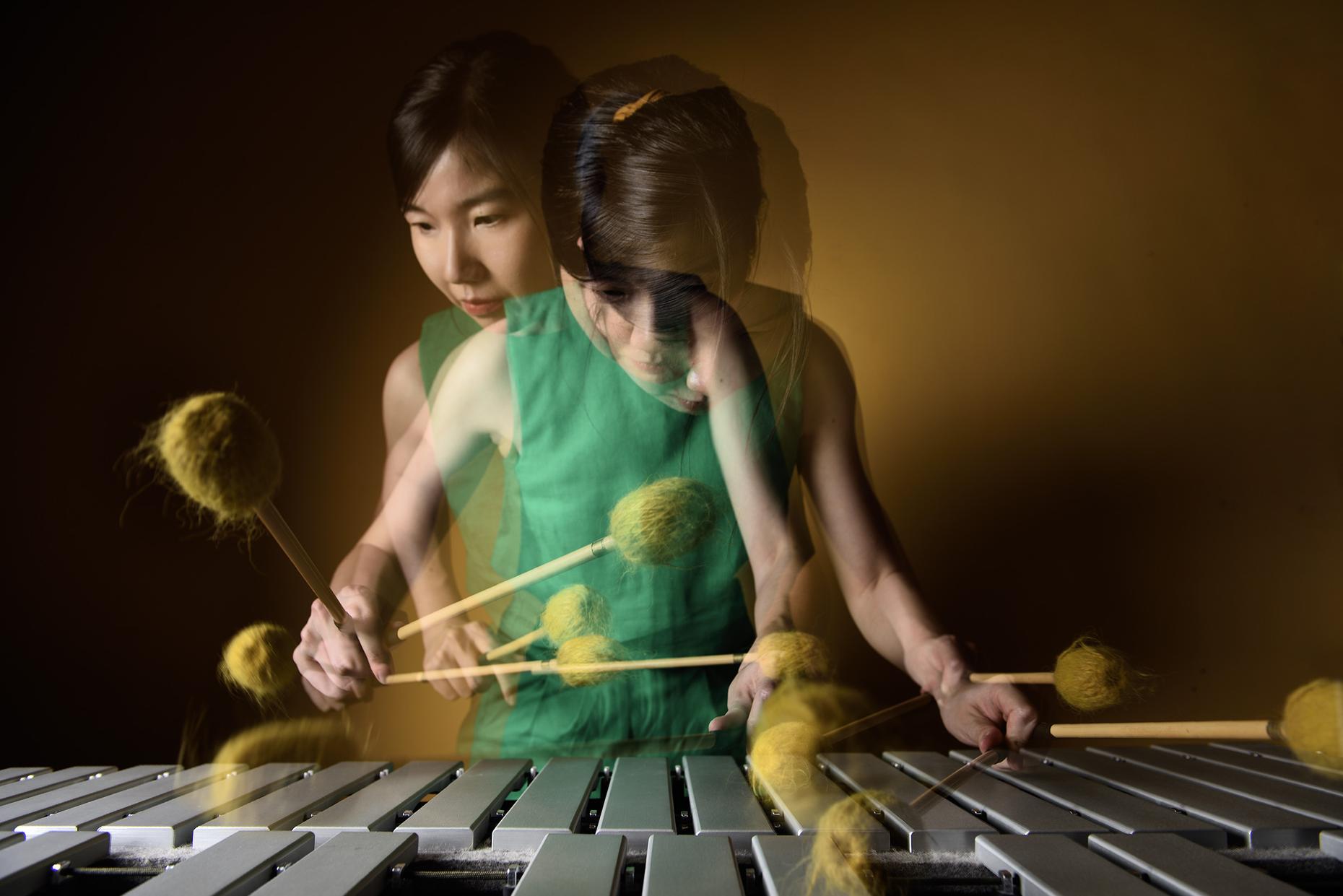
All Of It with Alison Stewart
Vibraphonist Yuhan Su Performs Live
00:23:36
Last month, New York-based vibraphonist Yuhan Su released a new album with her band, Liberated Gesture.
Loading summary
Transcript63 lines
- [00:00]
Uncle
Hey, Fidelity, how can I remember to invest every month?
- [00:05]
Interviewer
With the Fidelity app, you can choose a schedule and set up recurring investments in stocks and ETFs.
- [00:12]
Yuhan Su
Huh, that sounds easier than I thought.
- [00:14]
Interviewer
You got this? Yeah, I do. Now, where did I put my keys? You will find them where you left them.
- [00:23]
Uncle
Investing involves risk, including risk of loss. Fidelity Brokerage Services, llc Member NYSE SIPC.
- [00:31]
Michaels Advertiser
Attention party people. You're officially invited to the party. Shop at Michaels where you'll find hundreds of new Items starting at 99 cents with an expanded selection of party wear, balloons with helium included on select styles, decorations and more. Michaels is your one stop shop for celebrating everything from birthdays to bachelorette parties and baby showers to golden anniversaries. Visit Michaels store or michaels.com today to supply your next party.
- [00:58]
Nephew
I'm going to put you on nephew.
- [01:00]
Uncle
All right, unc.
- [01:01]
Yuhan Su
Welcome to McDonald's.
- [01:02]
Alison Stewart
Can I take your order, miss?
- [01:03]
Nephew
I've been hitting up McDonald's for years now. It's back. We need snack wraps. What's a snack wrap? It's the return of something great. Snack wrap is back.
- [01:14]
Uncle
Suffering from dry, tired, irritated eyes. Don't let dry eyes win. Use Sustain Pro. It hydrates, restores and protects dry eyes for up to 12 hours. Sustain Pro Triple action Dry eye Relief.
- [01:30]
Nephew
Listener supported WNYC Studios.
- [01:44]
Alison Stewart
This is all of it. I'm Alison Stewart and I'm about five feet from a vibraphone. Yuhan Su's musical career began in her native Taiwan, followed by a degree at Berklee College of Music in 2008, and eventually brought her to New York City, where she's become a leading player on her chosen instrument, the vibraphone. Her last album, 2018's City Animals, drew inspiration from the sounds and heartbeat of New York City. Her latest album is Liberated Gestures, a collection of songs that celebrate freedom from constraints, whose centerpiece suite was inspired by the mid 20th century abstractionist Hans Hartung. Yuhan Su will be at the Jazz gallery this Saturday, December 16th, but first she joins me here in WNYC's Studio 5. Welcome to the studio. Thank you for coming in with it with joining her is pianist Matt Mitchell. Matt, thank you for being here as well. And you're going to begin with a performance, right? All right, let's hear.
- [06:20]
Yuhan Su
That.
- [06:20]
Alison Stewart
Was Yuhan Su with Matt Mitchell on piano.
- [06:24]
Interviewer
The name of the piece is she.
- [06:25]
Alison Stewart
Goes to a Silent War. So while you were playing Johan, I took a little video and I put it on our Instagram at all of it WNYC and the Story. So people want to see what the vibraphone looks like so we have a sense of it. And if you wouldn't mind sharing, I know it sounds like a very basic question, but what is the difference between a xylophone and a vibraphone? What's. Can you explain the. Or mamba. Can you. Marimba. Can you explain the difference?
- [06:49]
Yuhan Su
Yeah, I mean, the vibraphone is made by the metal, so you can hear. It's a metal sound. And the special part is the. There is a electric. It trigger the. There's a fan below the keys, so it will, like, create, like, an interesting sound. Yeah. And then, like, marimba and xylophone, all, like, wooden keys.
- [07:15]
Interviewer
Wooden keys, yeah.
- [07:16]
Yuhan Su
And xylophone. The register is higher. Marimba has, like, a lower register. Yeah.
- [07:21]
Alison Stewart
How did you first discover and begin to play the vibraphone?
- [07:25]
Yuhan Su
Oh, I mean, because I studied percussion since I was a kid and piano as well. And then. So I. So I played in, like. Like, orchestra and classical percussion a lot. And until, like, I was in college, I got into jazz, and then so Gary Vernon and Chick Corea was on tour in Taiwan at the time. So I was like, wow, vibraphone. Like, I also want to learn how to improvise everything. So I started to get into more, like, a vibraphone playing.
- [08:01]
Alison Stewart
You said in an interview a couple years ago, this is a beautiful quote. Vibraphone is an instrument full of possibilities. It can be used in different positions.
- [08:09]
Interviewer
Of a band and create diverse effects for the music. What are some of the different roles a vibraphone can play in a band?
- [08:16]
Yuhan Su
Yeah, I mean, for example, like, in a jazz ensemble, it can kind of function like a home instrument. Play melody, and you can also join the rhythm section, play chords. Like, I, for example, like, I hold four mallets, so I can actually play the harmony. Yeah. So. And then at the same time, you know, it's a percussion instrument, so you also has a rhythm to it. So. Yeah.
- [08:42]
Interviewer
Do you compose on the vibraphone or do you compose on the piano? When you're creating a piece, where do you go to make it?
- [08:48]
Yuhan Su
Both, actually. So, I mean, a lot of time on piano just because there's more. More things I can cover on the piano. But sometimes I write on the vibraphone just to feature certain technique, like, so I can try out on the vibraphone first.
- [09:06]
Interviewer
Are you able to use anything you learned from those early days of studying percussion? Classical percussion?
- [09:14]
Yuhan Su
Yes. Like, a lot, actually. Because for the classical percussion study, there's a lot of, like, I play a lot of 20th century composers, new music. So it's a lot about, like dissonant sound and complicated rhythm. And then I think this kind of sound is always, like inside of my brain. And then that really like, applied to my composition, I think my guess is Yuhun Su.
- [09:40]
Interviewer
The name of her album is Liberated Gestures. What is a Liberated Gesture? Where did you get the name of the album from?
- [09:49]
Yuhan Su
So the title is actually coming from the exhibition I saw in Paris of the painter Hansa Tong. Yeah. So his works, it's well known with like very dramatic lines, very bold color, intuitive decision. So, yeah. And then also he overcome, like, a lot of difficulties in his life, and then he transformed that into his art. There's different period of time. He was creating different things because of, like, some limits that he has. So. So, yeah, so I was very inspired. And then I. I started to create the music. And then this whole album, like, around this idea.
- [10:32]
Interviewer
You're gonna play another piece for us, a song called Character. And you wrote on the liner notes of the album that character has no backstory. How does it fit into the rest of the work? Or is it just its own thing?
- [10:46]
Yuhan Su
I mean, for example, this song you will hear there's a lot of very interesting meters, rhythm. And then like, you have to like, for example, we, as an improviser, we have to try to find the freedom inside of that. So how to improvise in certain limitations and then to find freedom inside of it. Yeah.
- [11:09]
Alison Stewart
This is Yuhon Su, this character, Matt Mitchell on piano.
- [13:00]
Yuhan Su
Sa.
- [15:33]
Interviewer
That was Yuhan Su on vibraphone and Matt Mitchell on piano. Joohan Su has a show at jazz gallery on December 16th. Johan, this is a really basic question. What brought you to the United States to play jazz?
- [15:50]
Yuhan Su
I mean, I came here for studying jazz. Yeah. Because I mean, back the time in Taiwan, there was not enough education of jazz. I mean, nowadays it's much better. And then the jazz is in the college. There's department for that. But I mean, my time, I really need to come here to learn jazz, also to learn the culture and everything.
- [16:14]
Interviewer
And then how did you get to New York?
- [16:16]
Yuhan Su
Oh, so after I graduated from Berkeley, actually, I didn't think so much. I just feel like New York is the. Everybody knows it's a city of jazz. So I was like, yeah, I'm gonna try out that.
- [16:31]
Interviewer
Hey, Matt, can I bring you into the conversation?
- [16:33]
Uncle
Sure.
- [16:33]
Interviewer
All right. For you, as a pianist, what's interesting about collaborating with someone playing the vibraphone?
- [16:41]
Uncle
Oh, I actually have always loved the vibes. I got into Playing jazz when I was sort of a young teenager and I. One of my favorite albums was Eric Dolphy's out to Lunch, which is. Has Bobby Hutcherson playing vibes on it. And I've kind of always just loved the sound and probably because of its sort of. It's kind of a cousin of the piano and its ability to play chords. It's sort of percussion nature. And I just like the way its ability to sustain too. You can kind of get a nice wash of sound going, but you can also play, you know, kind of short, kind of. You can kind of get some sharp textures going too. It's just. I like the sound. I like playing with people who have interest, do interesting things with it, which is definitely. Johan is definitely one of those people.
- [17:27]
Interviewer
I was gonna ask what does Johan do that's unique? We're gonna talk about you like you're not.
- [17:31]
Yuhan Su
I think.
- [17:31]
Uncle
Yeah. So we. We had been in touch for several years and then it only in about three, four years ago, we started playing. I just. Our schedules never quite lined up. I was always just kind of super busy. But she had been hitting me up to play. And then we finally did and I was like, oh, well, I'm kind of felt stupid for having taken that long to actually make. Help make it happen. Because I think she's a really. To me, she's actually. She's a really interesting improviser. I always feel like what she plays is the right. For me, the right combination of like, surprising, but also something. Something familiar that kind of hits a familiar spot for me that I want to always hear. When I hear people improvise, there's just. It's very. It's kind of like. It's kind of like hits the perfect sort of ratio of things that I value in an improvising musician.
- [18:24]
Interviewer
Johan, what is going through your. Your mind when you're improvising? What's going through your mind? Or is nothing? Is it just a feel? A feeling?
- [18:32]
Yuhan Su
What? Let me see. I think, I mean, in a more like abstract way. It's like combining with memories and the present. Like the moment, like I feel at the time. Yeah.
- [18:50]
Interviewer
There's a song that tells us that high tech pros and cons was inspired by a premature death of an iPhone. One of your songs.
- [18:59]
Yuhan Su
That actually was the first song we played.
- [19:02]
Interviewer
That was the first song you played. How did that experience turn into a song, though? That's so interesting.
- [19:10]
Yuhan Su
It's like a funny story. Like, I always feel like a lot of my song. It's about me losing money. So this one is because, you know, like now stay. We all need a phone iPhone. And then I figure like, for example, like iPhone, they have like certain amount of years it stay alive. So anyway, there's a period of time I was still paying monthly for this old phone and it already died, so I need to get a new one. And then I was paying like for the dead phone and the new new phone like at the same time. So I was like, this is really ridiculous. Like, I have to write a song about that.
- [19:51]
Interviewer
Inspiration comes from unusual places. You're going to perform one more song for us as we end the show today. What are we going to hear?
- [19:58]
Yuhan Su
Yes. So we're going to play she goes to a silent war.
- [20:02]
Interviewer
This is Yuhan Soon.
- [25:09]
Alison Stewart
Thank you so much.
- [25:12]
Michaels Advertiser
Attention, party people. You're officially invited to the party shop at Michael's where you'll find hundreds of new Items starting at 99 cents with an expanded selection of party wear balloons with helium included on select styles, decorations and more. Michaels is your one stop shop for celebrating everything from birthdays to bachelorette parties and baby showers to golden anniversaries. Visit Michaels store or michaels.com today to supply your next party.
- [25:39]
Nephew
I'm gonna put you on nephew.
- [25:40]
Uncle
All right, unc.
- [25:41]
Yuhan Su
Welcome to McDonald's.
- [25:42]
Alison Stewart
Can I take your order, miss?
- [25:43]
Nephew
I've been hitting up McDonald's for years. Now it's back. We need snack wraps. What's a snack wrap? It's the return of something great. Snack wrap is back.