← All Of It with Alison Stewart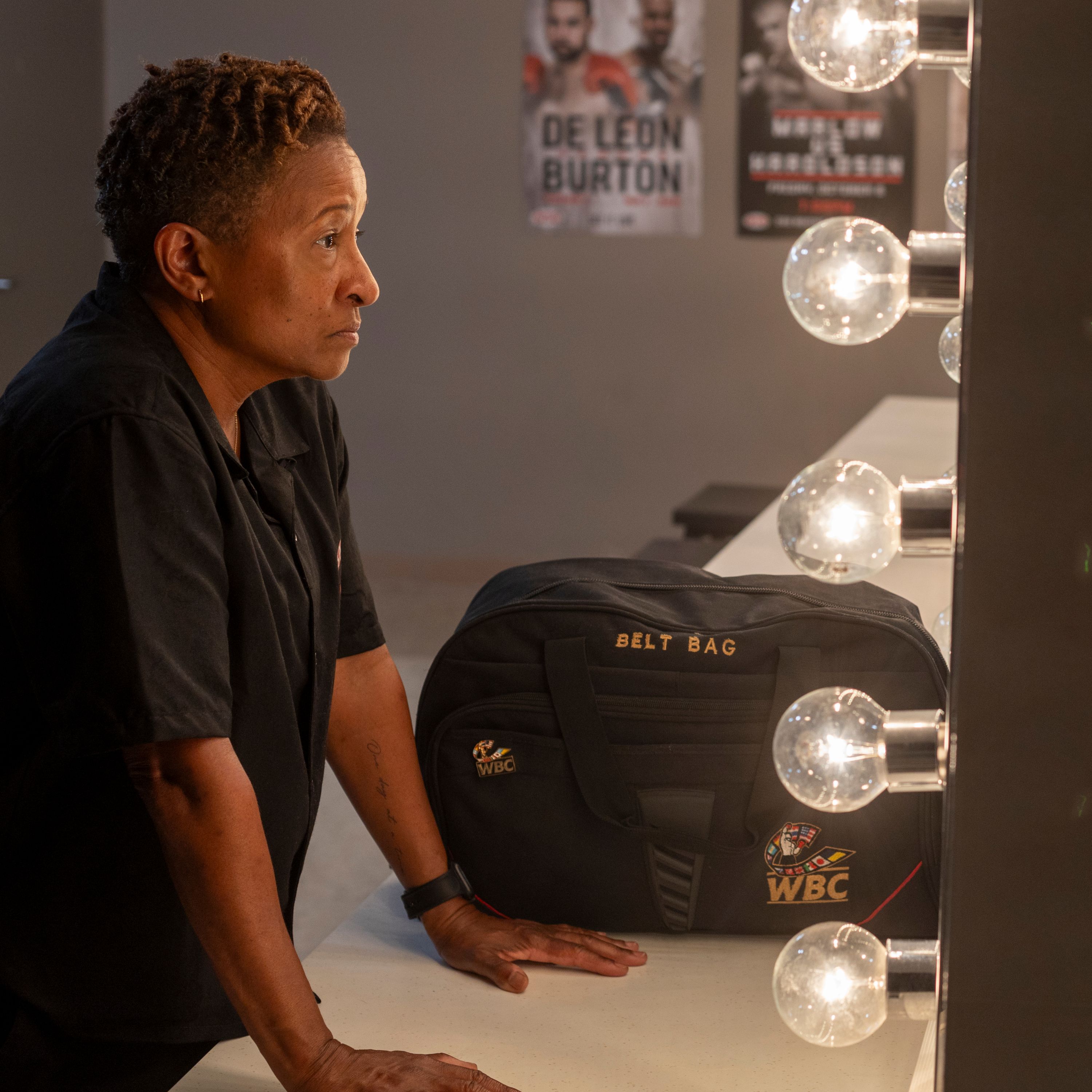
Loading summary
Transcript78 lines
- [00:08]
A
This is all of it. I'm Alison Stewart live from the WNYC studios in soho. Thank you for sharing part of your day with us. I'm really grateful that you're here. On today's show, Sam Tutty and Christiani Pitts are the stars of the Broadway musical Two Strangers Carry a Cake Across New York. And they will perform live in WNYC Studio 5 +. We'll continue our conversation with Oscar nominated creatives who work behind the camera. Today we'll speak with Autumn Duralt Arkapaw, the cinematographer from Sinners. That's our plan. So let's get this started with the new film Undercard. Actor and comedian Wanda Sykes makes her dramatic debut in a new film called Undercard. She plays Cheryl no Mercy Stewart, a former boxing champion and recovering alcoholic who is seeking redemption by training the son she once abandoned. Set in the historic northwest Miami neighborhood Liberty City, Cheryl coaches at Baba Tea's Boxing Gym. And she does her best to care for her young daughter. She's struggling though, to make ends meet. And after an eviction sets her back, she faces difficult choices in order to keep her daughter out of the foster care system. That includes coaching her 22 year old son, Keith, a fighter with a promising career, but who still resents her and her past life. Undercard has been on the festival circuit and won several awards including best narrative feature. It is now being released in theaters this Friday. Actor and comedian Wanda Sykes is here with me to discuss. Hey, Wanda.
- [02:03]
B
Hello.
- [02:03]
A
Hello. How are you?
- [02:04]
B
Allison?
- [02:04]
A
I'm doing well. And also joining us is co screenwriter and filmmaker Tamika Miller. Tameka, it's nice to meet you as well.
- [02:11]
C
Nice to meet you. Thank you for having us.
- [02:12]
A
So, Tamika, you've described working on this film, Undercard as a labor of love for over a decade.
- [02:19]
C
Yes.
- [02:20]
A
Let's roll back 10 years. What was the original idea?
- [02:24]
C
Well, we have what we produce is the original idea. Oh, great. But Wanda said yes from the beginning, all those years ago. And I'm grateful for that. And you know, it was, I'd always had Wanda in mind for this role, you know, and, and even though she had not done drama before, I'd been a fan of Wanda for, for many years as a comedian, but I also was drawn to the fact that Wanda was a woman in the male dominated field of comedy and she had been slaying it for, you know, two decades at that point. And it was that kind of vulnerability and fearlessness that I wanted in this role of Cheryl.
- [03:15]
A
Yeah. Wanda, what caught you in the script what caught your attention and made you say yes to this project?
- [03:23]
B
It was, it was well written. I loved the story. And, you know, it was a bit daunting because like Tamika said, I, you know, I never played, you know, a drama before, and then to be, you know, number one on the call sheet doing it, I'm like, oh, boy. You know, there was some hesitation. I even asked Tamika if Queen Latifah turned her down, and that's why came to me. But, you know, after meeting Tameka and having several conversations about it, I felt like that I would be taken care of, you know, I, I was like, you know what? She's not gonna put me out there and, you know, make me look bad or whatever, you know. So I, I, yeah, it was just the comfortability and, and her, you know, her being so tenacious with, you know, come on, you, you can do it. And it just made me go, you know what? Let's, let's, let's, let's go for it. But then, you know, it took us 10 years to get it done.
- [04:27]
A
You know, Tamika, this could be called, like, it could be called a sports movie, it could be called a boxing movie, it could be a family drama. Why did you feel like a sports drama? We'll call it a sports drama. Felt like the right vehicle to tell the story, this more subtle story about an estranged mother and son.
- [04:46]
C
Well, as a, as a writer, you know, I'm a director writer. As a writer, I, I love to tell stories where women, particularly women of color are at the center of those stories as multidimensional and multi layered characters. And there was a time in my life where I was a little obsessed with boxing as a workout. And it was really spending a lot of time in a boxing joint, if you will, that this story was born. I had not seen yet on film this particular story, which, you know, about a woman boxing trainer training a man. And so boxing is the backdrop. But what's most important to me are these relationships and the idiosyncrasies that we tend to have and share in these one on one personal relationships. And so it was important to me that this mother son themes, mother daughter theme, you know, this trainer fighter theme sort of rang true and was really sort of at the forefront. And I just thought, you know, use boxing as the backdrop.
- [06:03]
A
Wanda, what's going on when we meet Cheryl? No mercy. Stewart, what's going on in her life?
- [06:08]
B
Oh, wow. She's trying to be a good mom. She's trying to, you know, provide for not Just herself, but for her daughter. And she's trying to stay sober and she's working on this. She's doing the steps and, you know, a lot of the steps is part of it is making amends. So she's also trying to do that with her son, Keith.
- [06:37]
A
Yeah, it's kind of interesting what, Tamiki, what you saying earlier is about moms and their kids. They're sort of like you're training your kids for the fight of their life. Even though you love them, but you are trying to train them, right?
- [06:49]
C
Of course, of course. And we see in Undercard, you know, Cheryl has this sort of second chance with her daughter Mika that she didn't have fully with her son Keith. And she's really trying to reclaim her family and she really wants a second chance with her son. And boxing is something Cheryl knows in and out, having been a former champion, and it's a way in, if you will, to her son.
- [07:23]
A
We're talking to actor and comedian Wanda Sykes about starring as a former boxing champion and recovering alcoholic who helps her estranged son get his boxing career back on track. Sykes joins me alongside director Tamika Miller. They are here with me now to discuss their new film, Undercard, which enters theaters this Friday Festival, February 22nd. 7th. Wanda, how much did you know about boxing?
- [07:48]
B
I've been a fan of boxing, you know, since I was a kid. I remember, you know, listening to. Back there was Cash's Clay, you know, Muhammad Ali fights on the radio, you know, so I've always loved boxing and, you know, then I grew up in the DMV area, so, you know, everything was about Sugar Ray Leonard and, you know, from the Olympics, all, you know, so I just love the sport. So when after meeting with Tamika and I said, okay, I'm gonna do it, the first thing she said was, okay, meet me at Wild Card. She, you know, I had to go meet her at the. At a very popular boxing gym in la. So she threw me in the ring. Yeah, Day one. I mean, girl, get in the ring.
- [08:39]
A
We're going.
- [08:40]
B
There was no deal. There was nothing, you know.
- [08:44]
C
Yeah.
- [08:45]
B
So I, I just had to get comfortable being in that space and I, I stayed with it and, you know, I found a trainer, Cameron, and we, you know, worked out. I had to learn how to hold the mitts, I think, because a big part of it is I. I had to be comfortable in that space. I didn't want to, you know, think about lines and acting and not, not, you know, not be. I have to be also thinking about the environment and the environment had to be like a second skin for me. So. Yeah, and I loved it so much that I'm still doing it. I mean, I'm still working out. And, you know, boxing, that's my workout now.
- [09:25]
A
Tamika, what is a technical element about the sport that surprised you that maybe you wouldn't have known before making this movie?
- [09:35]
C
Well, you know, I. I had a lot of experience because I was working out. I was. I was boxing. I mean, I wasn't getting hit, but I. I had my own trainer at Wild Card Boxing Gym. And so I would go and, you know, several times a week and. And do 10 rounds of a mid workout. And so I like Wanda. I also, you know, watch boxing, you know, and so I understood the sport. Sport. I was able to write the boxing sequences because I know boxing so well. I know the combinations. So I didn't come to the script or I didn't write the script with boxing being foreign to me. It was something that I knew something about and. But again, more importantly, it was really about these characters and these themes that was really at the forefront for me. And boxing was really sort of secondary. Secondary, but a powerful secondary, you know, powerful character in itself that I could, you know, tell this story through.
- [10:38]
A
There's also some Liberty City history included in the film.
- [10:44]
C
Yes.
- [10:44]
A
For example, when she takes her son to the train near the ruins of an old hotel. Let's take a listen. This is from Undercard.
- [10:53]
B
I mean, yeah, it's a ruin now, but back then this was the best black hotel in all of Florida. Ali was good enough to fight Miami beach, but he wasn't good enough to stay there at night. So he and Aretha Franklin, Etta James, Sammy Davis Jr. Stayed here. Joe Louis, too. Damn. All them legends, boxing royalty, been through Liberty City, right? Where you standing, Tameka?
- [11:22]
A
Why was it important to include aspects of the history of the location in this film?
- [11:28]
C
It was very important. What many people don't know is what that setting was. What that location was really about is the historic Hampton House. And back in the 1950s and 60s, when there was Jim Crow and segregation, black celebrities and activists and icons from Martin Luther King Jr. To Muhammad Ali to Nat King Cole, you know, they could go and speak and perform on Miami beach, but they couldn't actually stay there. So they would venture back to Liberty City, predominantly black neighborhood, and stay at the famous Hampton House. So that was sort of my homage to that historic place.
- [12:18]
A
Wanda, how long did the shoot take?
- [12:24]
B
Was it 20 days?
- [12:25]
C
Less than 30 days?
- [12:26]
B
Yeah, yeah, less than 30 days. I mean, we. We worked, we were moving, and our crew was incredible. I mean, you know, it was. I think it was like after the first day and they. They kind of like, saw like, oh, okay, we're. See. Okay, we're. We're really doing this. You know, everybody was just, like, moving. It was great.
- [12:47]
C
Yeah.
- [12:48]
A
Wanda, what did you like about independent filmmaking? Making films quickly.
- [12:56]
B
It wasn't a lot of sitting around waiting. You know, when, you know, you're on a tight schedule and a tight budget, there's no room for, you know, being divas or attitudes or anything. Everybody was just, just really, I think, complementary to each other and just. Just getting it done. I love all the female energy on set, you know, with Tamika at the lead and. And our cinematographer, Anna. Anna, who just set up just some incredibly beautiful shots and. And the rest of the cast, everyone was so supportive, and I felt like they were, you know, just cheering me on, you know, whatever I needed for a scene or whatever. Everybody just. We all wanted this. We knew we had something special and we all wanted it to be the best it could be.
- [13:53]
A
Yeah. Tamika, what do you get creatively about shooting in the independent style?
- [14:00]
C
Well, you know, shooting in an independent film, you know, you don't have major studio monies, but, you know, this is a story that I co wrote my writing partner, Anita Kao, and I really worked hard on writing a story, a script that was authentic. And, you know, the process of independent filmmaking is you. You get down and dirty, you know, you. It's really a labor of love. This film has been and is, and I was very passionate about it. And I knew and know that it would resonate with people. I think everyone can see themselves somewhere in this film. Everyone. And that's motivation, that's determination. And I also love being able to empower people. You know, Wanda mentioned our cinematographer, Ana Amortegui, who is brilliant. She is a Latina woman. And having all these incredibly talented women, my production designer woman, my costume designer woman, my producers women, is very, very powerful. And it definitely, I think, makes a difference in how a set is run, particularly on an independent film.
- [15:32]
A
I'm speaking with actor Wanda Sykes and director Tamika Miller about their new film Undercard. We'll have more after a quick break. This is all of It. You are listening to all of it on wnyc. I'm Alison Stewart. We're talking to actor and comedian Wanda Sykes. It's her dramatic debut, starring as a former boxing champion and recovering alcoholic who helps her estranged son Son get his boxing Career back on track. Sykes has joining me alongside Tamika Miller. They are here with me now to discuss their new film, Undercard, which enters theaters this Friday, February 27th. Okay, Wanda. There is not a person who will not say, wanda Sykes isn't funny. You are so funny. You drop some truth bombs when you're funny. When you're thinking about drama and comedy, what do they have in common and what differentiates them?
- [16:35]
B
I think comedy. Well, the comedy that I enjoy doing and the comedy, I think that resonates is when it's grounded in some reality. And I think the comedy part is the joke is the twist, you know, so that. So comedy is drama, but with the twist, you know, so. Yeah, so I felt like, yeah, first reading the script, I was like, oh, I got a twist. You know, it's like, no, we're not doing that. We're not making this a comedy. It's a drama. So it was just really. Just staying in the. The. The. The straight lines, I guess. You know, the setup. Yeah, that's what it is. Drama is set up when the comedy is the punchline.
- [17:27]
A
Tamika, Cheryl's ring Persona is Cheryl no Mercy Stewart. Where does no Mercy come from?
- [17:34]
C
No Mercy was when Cheryl was a champion. That was her nickname. You know, she was really trying to come up out of her circumstances in Liberty City, and she was. She was merciless. You know, she was really determined. And so she got the nickname no Mercy because she was so dominant in the ring as a boxer. And. And that's. That's where it sprang from on the page. And then. And then, Wanda, you. You have a. Something to add to that as well, correct?
- [18:11]
B
Well, as far as, like, the. The no Mercy.
- [18:13]
C
Yeah, yeah.
- [18:16]
B
The women. Okay. The. I totally forgot that you were talking.
- [18:21]
C
The eloquent. Yeah, you. Well, but to answer your question, that. That's really where it was born from. Just. Just who Cheryl was as a character, as a boxer, as a boxer. Just relentless and determined to win and to fight. And she had many battles she was sort of facing in her life and outside the ring as well as inside the ring.
- [18:43]
A
She has that big old tattoo on her shoulder, says, no Mercy Cheryl. She experiences historic making career Wanda. It earns her a certain level of respect in the neighborhood, yet she's estranged from her son Keith. What finally makes her willing to try again?
- [19:02]
B
I think it's. It's just necessity, you know, and it's also part of her character. You know, she's. She's relentless, and that's what. That's what you have to be as a. As a boxer. And I think that's a trait that just stayed with her. She doesn't, she doesn't give up now. She might slip in the sobriety part, I think that's. That's how she. She, you know, she falls, but she gets up and. And goes right back at it.
- [19:36]
A
To me, it was so hard. It's so hard at the beginning when she gets the joint. You're like, throw it away.
- [19:42]
B
Don't keep it. No, don't keep it.
- [19:47]
C
Yeah, that was, I think, most people's reaction.
- [19:50]
A
Yeah. Making amends is also a big part of Cheryl's recovery, and she has to own her own mistakes. Wanda, can you talk about the decisions you made as an actor, how to respond to Keith as he confronted Cheryl about her own shortcomings?
- [20:09]
B
I think it was like she didn't. She didn't feel like that, that she didn't deserve it. I put that way. Like, everything he said, she just had to accept. And like, you know what? I have no defense, and I don't have any comeback, and I'm not going to make it. Make any excuses for it. You know, I think in our nature that's.
- [20:35]
C
That's.
- [20:36]
B
It's hard to be, you know, accountable and just say, yeah, I. I did that it. Because I know deep down we're always. We're always thinking, well, you know, it's because of. This is why I did that. You know, there's always an excuse. But I think this. That was a moment where she just had to say, nope, there's no excuses. Let him have his peace. Let him say what he needs to say. Try to absorb it.
- [21:05]
A
Yeah. To me, it's interesting, and I think it's well, well done in the film that Cheryl's recovery isn't shown as just simple, straightforward process. How intentional was this on your part, and how did it show how others are affected directly by her actions?
- [21:23]
C
Well, it was. It was very intentional. You know, I spoke to several people who are, you know, sober, who are in recovery, who are alcoholics, but who've been sober for 20 years and still go to AA meetings and, you know, and still are present and there for other people who are maybe sort of new to, newer to sobriety.
- [21:51]
A
And.
- [21:51]
C
And so what is true is that, you know, life happens. Things happen, things that are beyond our control. And so when someone who is sober suddenly finds themselves in a place that has them slip, that is the worst. What I learned from my research was that that is the worst possible feeling someone can have. Just the slipping, you know, is a betrayal to themselves. And so it was important to me that in the storytelling that I stay true to what's. To a lot of people's experience, you know, And I think it really hit home for a lot of people.
- [22:43]
A
As a result, we're talking to actor Wanda Sykes and director Tamika Miller. Their new film Undercard, enters theaters this Friday, February 27th. Okay, I want to talk about acting and directing. Wanda, tell me something that Tameka did as a director that helped you on the set every day.
- [23:03]
C
Ooh.
- [23:04]
B
Well, I'll just say before we even got to set, I had shows in Palm Springs. I think it was Palm Desert. And Tamika was like, I'm going to. I'm going to come to the show, but I also want you to. We're going to. We're going to have rehearsals as she brought in Bentley Green, who plays Keith. And we just, like, did, like, little workshops. You know, she just got us in a. In a room together, and we did these exercises and not even bothering with the. With the script much, just how to. How we move, you know, together, how we, you know, interact. And. And I thought that was, like, the most helpful thing that she could have done, because leaving that. Those two days that we worked together, we all had a sense of, okay, this is going to be good. Like, we. We can get this done. And then on set every day, she. She always checks in. She checks in. She let us know what's, you know, what's going on and how we're feeling. Because when she says, okay, we got it, we have to trust that, you know, it's. It's good. And she's happy because as actors, we're always like, maybe we should try it again, or, are you sure? Are you sure? But she was so confident and with. With what we were doing and. And what she wanted, that it just helped, you know, move the process along and. And helped us, like, with no, you know, not having doubt.
- [24:43]
A
Tameka. Every director I've ever talked to has said being a director means making tough choices. You have to constantly make choices. That's what you do all day long. What was a tough choice you had to make on this film?
- [24:57]
C
Well, you know, I mean, the process of making a film, an independent film is, you know, I think as Wanda said earlier, it's like, you're. We're moving, right? You're. There's. There's no. There's no 10 takes. You know, as a director, though, historically, I am the kind of director. Director. If I. If I got It. I got it. I don't need to do multiple, you know, too many takes, you know, and there are moments, there are times when, you know, my actor might want to try it again, and I. And that's fine. That's fine. Well, let's do another take, you know, but. But if I. If I know I have it, then I'm going to move on. And for me, that's about moving the set along, you know, and just sort of keeping the momentum of. Of our day. You know, we had a lot to. To shoot and cover in making this film, and it was important to me that we were able to move. Move quickly at times. But also, I wanted my actors to feel that they were safe and that I had their back. And, you know, in. My hat's off to Wanda, you know. Yes. She's number one on the call sheet, which also means Wanda is in every other scene, you know, she's in. She is working nonstop, you know, long days. And Wanda showed up incredibly, day after day after day. And it was such an honor to work with her. And I would do it any day of the week. Just such a pleasure to work with. And Wanda's very easy and really trusted the process, trust me. And that's all a director can ever hope for.
- [26:46]
B
That's what they called me in high school, too, by the way.
- [26:49]
A
What?
- [26:49]
C
Easy, easy.
- [26:53]
A
Well, this answers my next question. Wanda, it's your dramatic debut. Would you do it again? Do you think you'll do it again?
- [27:01]
B
Yeah, of course. The right project comes along and, you know, it speaks to me. Of course.
- [27:08]
A
And comedy still in the picture, please.
- [27:10]
B
Oh, comedy is always here. That's number one for me.
- [27:14]
A
Thank the dear Lord. The name of the film is Undercard, which enters theaters this Friday, February 27th. My guests have been actor Wanda Sykes and director Tamika Miller. Congratulations on your film.
- [27:27]
C
Thank you. Thank you.
- [27:29]
D
Finding ways to be financially savvy is a smart move. And knowing you could be saving money for the things you really want, like that dream home or new ride, is a great feeling. That's why the State Farm personal price plan can help you save when you choose to bundle home and auto bundling. Just another way to save with the personal price plan. Prices are based on rating plans that vary by state. Coverage options are selected by the customer. Availability, amount of discounts and savings and eligibility vary by state.
- [27:59]
B
You've made it on time for the McDonald's breakfast menu. You think to yourself, finally, I can start my day. But what if breakfast could be even more perfect with the hot Honey sausage, egg biscuit. It finally is. Go to McDonald'. Get it while you can.