Loading summary
Transcript40 lines
- [00:00]
Progressive Insurance Announcer
All of it is supported by Progressive Insurance. Do you ever find yourself playing the budgeting game? Well, with the Name youe Price tool from Progressive, you can find options that fit your budget and potentially lower your bills. Try it@progressive.com Progressive Casualty Insurance Company and affiliates Price and coverage match Limited by state law not available in all states. WNYC Studios is supported by Odoo. When you buy business software from lots of vendors, the costs add up and it gets complicated and confusing. Odoo solves this. It's a single company that sells a suite of enterprise apps that handles everything from accounting to inventory to sales. Odoo is all connected on a single platform in a simple and affordable way. You can save money without missing out on the features you need. Check out Odoo at o d o o.com that's o d o o.com how
- [00:51]
Chase Freedom Unlimited Announcer
do you cash back with Chase Freedom Unlimited? Four decks of cards, three pairs of dice and two very different friend groups. Cash back on game night earn 3% cash back at drug with Chase Freedom Unlimited. Restrictions and limitations apply. Cards are issued by JP Morgan Chase Bank NA member fdic.
- [01:14]
Interviewer
This is all of it.
- [01:15]
Alison Stewart
I'm Alison Stewart live from the WNYC Studios in soho. Thank you for sharing part of your day with us. I'm really grateful that you're here and thanks to everyone who came out last night for our get lit with all of it book club event. We had a packed house for Megha Majumdar and Musical Guest Pure by Bayan Chatterjee and Vivek Pandya. They were awesome. Wait till you hear them On Friday. We also announced our April's book. We are reading Lake Effect by Cynthia Dupree Sweeney. It tells the story of one woman's affair and how her decision reverberates throughout the rest of her life. To find info on how to borrow your E Copy, thanks to our partners at the New York Public Library. And to grab tickets to the April 27 event, head to wnyc.org etc.
- [02:03]
Dorothy Roberts
Get lit.
- [02:04]
Alison Stewart
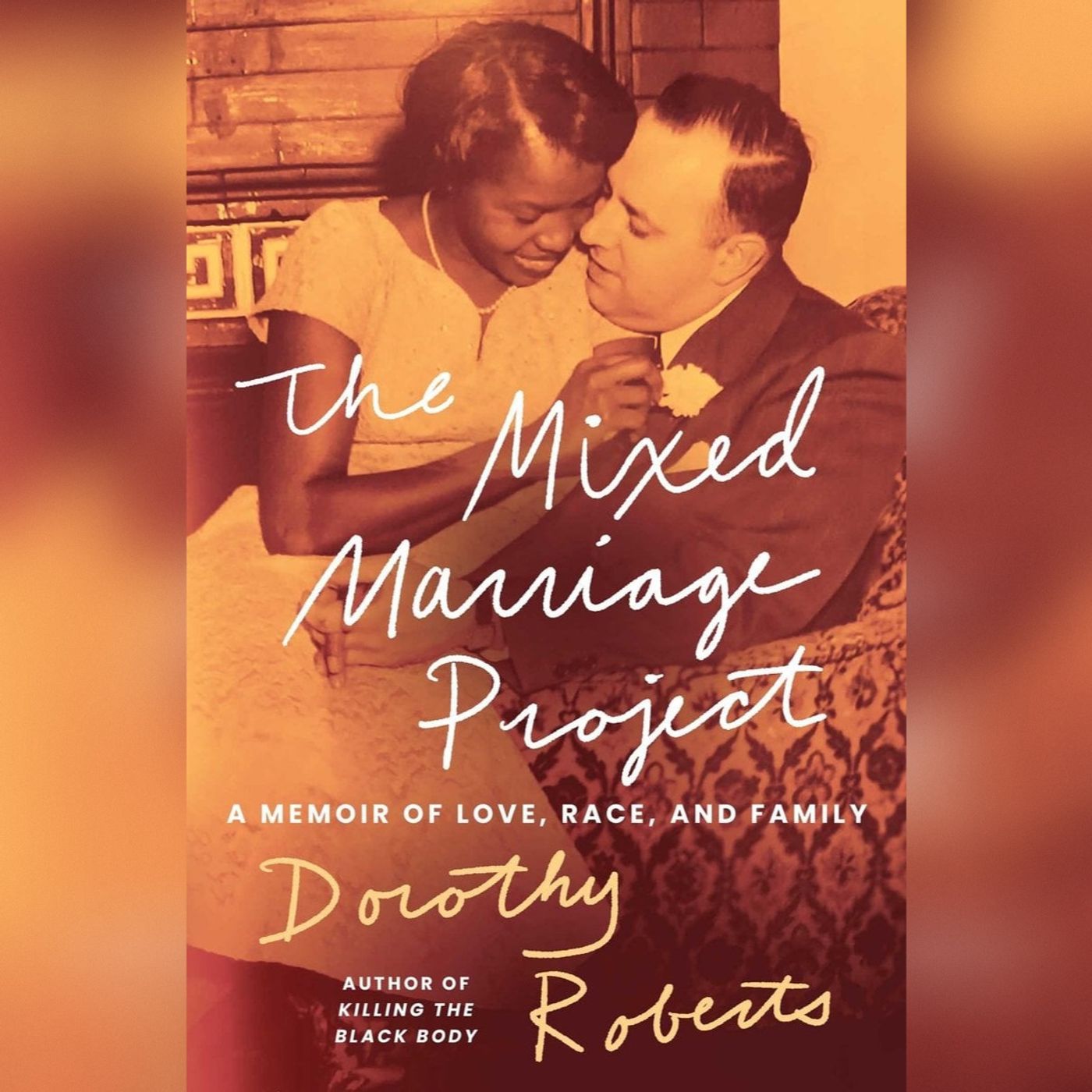
That's in the future. Coming up on today's show, we'll hear a live performance from the stars of the musical Mexodus. And we'll learn about what it was like in the Gilded Age for Black women in New York. That's our plan. So let's get this started with the Mixed Marriage Project. Professor Dorothy Roberts came from a family that asked questions, hard questions about race, children and marriage. Her father was a white anthropologist who over the course of 50 years, interviewed 500 couples who were involved in Interracial marriages. He was married to a Jamaican born woman who helped with his research. The results of those interviews were not revealed in a book written by him, and he didn't go on a lecture circuit. Mostly they sat in boxes until Dorothy went through them. She realized she had this wealth of information, having 50 years of interviews. And she also had to wrestle with the fact that she was part of the story, too. She found a file labeled Participant224, and it was about her. She writes in her new book, quote, was I born entirely from his love of my mother, or was I in some way an extension of his mission to document and popularize mixed marriage? Dorothy Roberts new book is called the Mixed Marriage A Memoir of Love, Race and family. Roberts was MacArthur fellow and is a professor at the University of Pennsylvania where she directs the Penn Program on Race, Science and Society. Welcome, Dorothy.
- [03:42]
Dorothy Roberts
Oh, thank you so much, Alison. It's great to be on your show.
- [03:45]
Alison Stewart
When you were a young adult, how did you view your father's work?
- [03:51]
Dorothy Roberts
Ah, as a young adult? Well, does that mean around college age? After I'd spent the whole childhood dominated by his research in the 1960s, my entire childhood was just permeated with his research on mixed marriages. By the time I got to college, I was questioning my father's promotion of interracial marriage as the answer to racism in America. He not only studied mixed marriages, but he also thought that black people and white people marrying each other would be the best path to ending what he called the racial caste system in America. And I also, at that point, had left behind my view of myself as an embodiment of racial harmony. When I was really little, I was very proud to walk down the street with my father on one side, my mother on the other side as an emblem of the possibility for black and white people to live peaceably together in America. And in fact, I began to hide the fact that my father was white. I, by that point, identified solely as black, and I didn't want anyone to know, especially my new black friends and classmates at college, to know that he was white. So my views changed a lot over the course of my childhood and into my early adulthood. But I always thought, until I read the interviews that my father's interest in interracial marriage stemmed from his meeting my mother in the 1950s and falling in love with her. And that was completely changed by my reading of his interviews when I was already quite almost an elderly adult as I am now.
- [05:55]
Interviewer
Yeah. How did you discover 500 different interviews from the 1930s through the 1980s.
- [06:02]
Dorothy Roberts
Yeah. So my sister had acquired all my father's papers when he passed away. And she sent me 25 boxes because she had a small apartment. And I had a big house in Evanston, Illinois, and a big basement to put them. And I kept them there for about a decade until I moved to University of Pennsylvania and had the papers shipped to my sociology office. And then I felt I finally needed to go through them. And I was shocked when I pulled out the first interview. And it was dated February 19, 1937, almost two decades before my parents got married and. And more than a decade before they met. And I realized that he'd been studying mixed marriages and interviewing black white couples from when he was 21 years old as a master's student at University of Chicago. And that's how I became aware of the breadth and scope of his project, but also found out that my mother was involved in the interviews of the 1950s. And also this really just upended the way I thought that his research was related to my parents marriage.
- [07:24]
Interviewer
What was your father trying to figure out?
- [07:27]
Dorothy Roberts
Yeah, well, this all started from a major sociological and anthropological study of black urban life. In fact, the Kate and Warner project in the 1930s and 40s in University of Chicago was the first major study of black life in a northern city. And it led to St. Clair Drake's book Black Metropolis, which is a classic about black life in the north, especially in Chicago. And for some reason, my father wanted to study interracial marriage. I'm not sure if it was his inspiration or if he was assigned to do it, but he began studying at that point again just at 21 years old. But as he began studying these couples, he became interested in interracial marriage as a way of ending racism in Chicago. He was very influenced by Lloyd Warner, who was one of the principal investigators of the study, who looked at racism in America as a racial caste system. He used those terms. And that's how my father described the racial hierarchy in Chicago and all over the United States. And he became obsessed with interracial marriage and wanted to promote it and to proselytize others and share this idea that if only more black people and white people would get married, they would. They would increase people's awareness of racism, especially white people's and white people's interest in ending racism. And they would produce children who didn't belong to one race or the other and therefore would also be part of a movement to end racism. So he not only was interested in studying it, but also in promoting it as an end to racial caste. And also as being part of his personal life. He started dating black women, I discovered, in his 20s. And he ended up marrying my mother, a black woman, and having three daughters.
- [09:55]
Interviewer
We're discussing the book the Mixed Marriage Project with Professor Dorothy Roberts. It's about her father's work as an anthropologist studying mixed couples from the 1930s to the 1980s. I believe in your book there were 138 interviews from the 1930s. 30s.
- [10:11]
Dorothy Roberts
That's right.
- [10:12]
Interviewer
What did interviews. What did those interviews reveal to you about interracial couples in the 30s?
- [10:18]
Dorothy Roberts
Well, that was my first really in depth knowledge about interracial couples in the 1930s. Also, it reveals a lot about racial segregation in Chicago and other forms of racial discrimination in Chicago because these couples lived within the Black Belt. That was something I discovered. I'd always thought that the black belt in Chicago, which I was aware of, this narrow strip of segregated black neighborhoods where black migrants were forced to live as a result of racially restrictive covenants and other real estate practices and just sheer mob violence by white people against black people who wanted to live in white neighborhoods. And I always thought of that as a really impermeable boundary between white and black life in Chicago. But in fact, the white spouses of those 138 couples all lived in the Black belt. And so there were these white people living there as well, whose lives were very much constrained, as were the lives of their black spouses, by residential segregation. I also learned multiple ways that their lives were regulated, policed, punished. Even though interracial marriage was legal in Chicago, unlike the south, where most southern states were still banning it. And of course, it wasn't held unconstitutional until 1967 by the U.S. supreme Court in Loving vs. Virginia. But in Chicago was legal nevertheless. There were extreme punishments of all sorts against couples that married interracially. Many of the white women described being fired when their bosses found out they were married to a black man. Their husbands couldn't visit them in hospitals because they were afraid they'd get terrible treatment or they'd be found out and fired. Police raided their homes. There was a vice branch of the municipal court that considered. Some judges considered interracial marriage a form of vice, that it was inherently illicit regardless of the law. And there were even black men who were jailed when it was found out they were having sex with their wives, white wives. It was considered fornication, even though it was a legal marriage. Some marriage clerks refused to give licenses to mixed couples. So there was just a mountain of testimony they gave about all of the hardships they faced as a result of intermarrying in Chicago.
- [13:24]
Interviewer
What changed the most in the interviews as they progressed decade by decade?
- [13:30]
Dorothy Roberts
Well, first let me point out that in the 1930s, many of the couples said the situation was worse for them than when they married in prior decades. And 25 of the couples were married in the 1880s. And they said that at that point, prior to the Great Migration, where they were living in white neighborhoods, there weren't segregated black neighborhoods. At the time, there was less mass opposition to interracial merit. So it wasn't a steady line of progress, as we know that when it comes to racial politics, there's never a steady line. There is always backlash and setbacks. But what changed the most dramatically was after the loving vs. Virginia decision, when we see in the United States a steady increase in interracial marriages. And by the time of the Civil Rights movement in the 1960s, there were integrated neighborhoods being formed in Chicago, like the neighborhood I grew up in, High Park, Kenwood. And so there were places where interracial couples could live and be more welcomed. That was a major change in the living experiences of interracial couples between the 1930s and the 1960s.
- [14:59]
Interviewer
Your father made a point that he said that marriage was a ladder to social mobility. What did he mean by that?
- [15:10]
Dorothy Roberts
I'm so sorry. Okay.
- [15:11]
Interviewer
Oh, I think we.
- [15:12]
Dorothy Roberts
Okay.
- [15:15]
Interviewer
We're discussing the book, the Mixed Marriage Project.
- [15:18]
Dorothy Roberts
I'm here.
- [15:19]
Interviewer
Oh, she can hear us. I don't know if she can hear me. We're discussing the book, the Mixed Marriage Project, a Memoir of Love, Race, and Family. My guest is Dorothy Roberts. Dorothy, can you hear me?
- [15:34]
Dorothy Roberts
Yeah, I can. I just turned off my video.
- [15:36]
Interviewer
Oh, okay.
- [15:37]
Dorothy Roberts
Save bandwidth.
- [15:38]
Interviewer
Okay, that's smart. Let's get back to where we were talking about. Your father made a point that keeping people from marriage was a form of keeping people down because he said marriage was a ladder to social mobility. What did he mean by that?
- [16:00]
Dorothy Roberts
Well, this relates in part to the fact that many of the white wives married to black men were European immigrants. And they believed that by marrying a US Citizen, they would increase their status. It would be a path to assimilation in the United States, which is generally true. And in fact, there is a sociological theory about marital assimilation that by marrying a U.S. citizen, immigrants are better able to become part of U.S. society. But that did not work for the white European women who married black men. Their status was decreased, and they experienced hardships after marrying a US Citizen that other immigrants from Europe who married white citizens didn't experience even who married other white immigrants. This was something that these European wives were astounded by. They couldn't believe they married a U.S. citizen. And they were worse off than other Europeans who married European immigrants. So I think there my father was recognizing the way in which racism in America violated this theory and this experience of most European immigrants that they could find a path to greater status, greater equality, if they married a US Citizen. To him, intermarriage could be a way both of challenging that racial hierarchy that that oppressed U.S. citizens who were black, but also a way of. If intermarriage could move toward ending the racial caste system, it would also allow everyone to be more equal in society. That was his idea, that interracial marriage could be a path to greater equality, but also it would be a way of challenging the racial caste system that made marriage to a black person demotion of the status of European immigrants.
- [18:38]
Interviewer
Where did your father find these people to talk to? And how willing were they to talk?
- [18:44]
Dorothy Roberts
Yeah, well, this is a real marvel of this project, is that my father could even find so many hundreds of black white couples in the black belt at a time when interracial marriage was taboo and was penalized. And also that he got them to reveal so much about their lives. And he had this method where he would learn about one couple, and then he would go to them and ask them about any other interracial couples they knew. And then he'd go and knock on their doors and ask them questions and find out more. Another method he used was to track down the members of a club called the Manasseh Club, which was a club for interracial couples. And so he knew that if he could find that membership list, which he was able to do, finally, he could interview all the members, and that would increase the numbers of black white couples he found. And then ask all of them about all the couples that they knew. He would go to hotels or cafes or other meeting places where he had heard they were open to interracial couples and just stay there and find out who was there and go up to them and ask if he could interview them. He would go to blocks where he heard there was an interracial couple and just stand on the street until he encountered them or found out from the mailman who was an interracial couple. So he had all these methods, and he was just a very gregarious, warm type of person who made people open up to him from his personality and. And even people who were reluctant at first to talk to him. He finally won them over. Not that everyone talked to him. There were some people who just said, I love my husband, or I love my wife. I have nothing to say to you. Some confessed they were afraid at first. One said, I thought you were from the Klan. But then he won them over, and he just was persistent at it until he was able to find at least 100 couples. That was his goal in the 1930s, and then he expanded that over the course of five decades.
- [21:26]
Interviewer
In the book, you write about children, and we come to the chapter about Participant 224, which you found out was you, and you write. And in the moment you write, it unsettles me to think that my sister and I may have been unwittingly guinea pigs in a social experiment to prove the viability, perhaps the superiority of interracial unions. How did you wrestle with that question? And how did you decide that you wanted to write about it? Because the book, in many ways, is a memoir as well.
- [21:59]
Dorothy Roberts
Yeah. Yeah, it is. I. I think of it as a memoir because I weave together these stories of the couples my parents interviewed with my memories of my childhood and my reflections on what the stories are saying about my own family and my own life, especially as a child. And so when I found this file within the hundreds of interviews my father conducted with the children of mixed marriages, my first reaction was shock. And that question you read well, was I a research subject of his? But as I thought about it, the love that my father had for me, the care he showed, the long discussions we would have about his research, even debates about it, that really overwhelmed my. Any feeling I had that he was thinking of me as a research subject. In fact, I thought more and more how fortunate I was to have a father and mother who considered me to be part of their work lives as well as their family lives. My father really considered me to be on his level in the sense of listening to my perspectives and telling me his in a way that didn't try to impose them on me, but helped me to think critically about the role of race and racism in US Society. And I think he was very proud of me, maybe both, because it helped to prove his theory that the children of mixed marriages weren't tragic mulattoes and that we wouldn't fit anywhere. You know, he wanted to prove that, too, but I think also because he genuinely loved me very deeply and was happy about how well I did in school and that I was able to and wanted to discuss these issues with him. So that's how I ended up, you know, despite the fact that I had this period in college where I didn't want anyone to know he was white. In the end I came to a reconciliation that I do think of myself as a black woman. I really don't recognize myself as having any white identity at all. But I don't feel I need to hide the fact that my father was white because I'm grateful. I appreciate the name of the yeah.
- [24:58]
Interviewer
The book is called the Mixed Marriage A Memoir of Love, Race and Family. It is by Dorothy Roberts. Thank you for your time, Dorothy.
- [25:06]
Dorothy Roberts
Oh, thank you so much, Alison. I enjoyed speaking with you.
- [25:10]
Home Depot Announcer
Spring starts at the Home Depot and we are bringing the heat to your backyard this season. Fire up the flavor with our wide variety of grills for under $300. Like the next grill 4 burner gas grill that's perfect for hosting your spring cookout. Then set the scene and turn your outdoor space into the go to spot the patio sets for every budget. Bring it this season with grills that deliver flavor and patios that set the vibe from the Home Depot. Start your spring with low prices guaranteed at the Home Depot exclusion supply. See homedepot.com Pricematch for details.
- [25:40]
Dorothy Roberts
Momento se no frecido porriquea encuentre en su pas interior.
- [25:46]
Alison Stewart
Ferdinando Surro, painter que organizar cada cajon se a como una.