← All Of It with Alison Stewart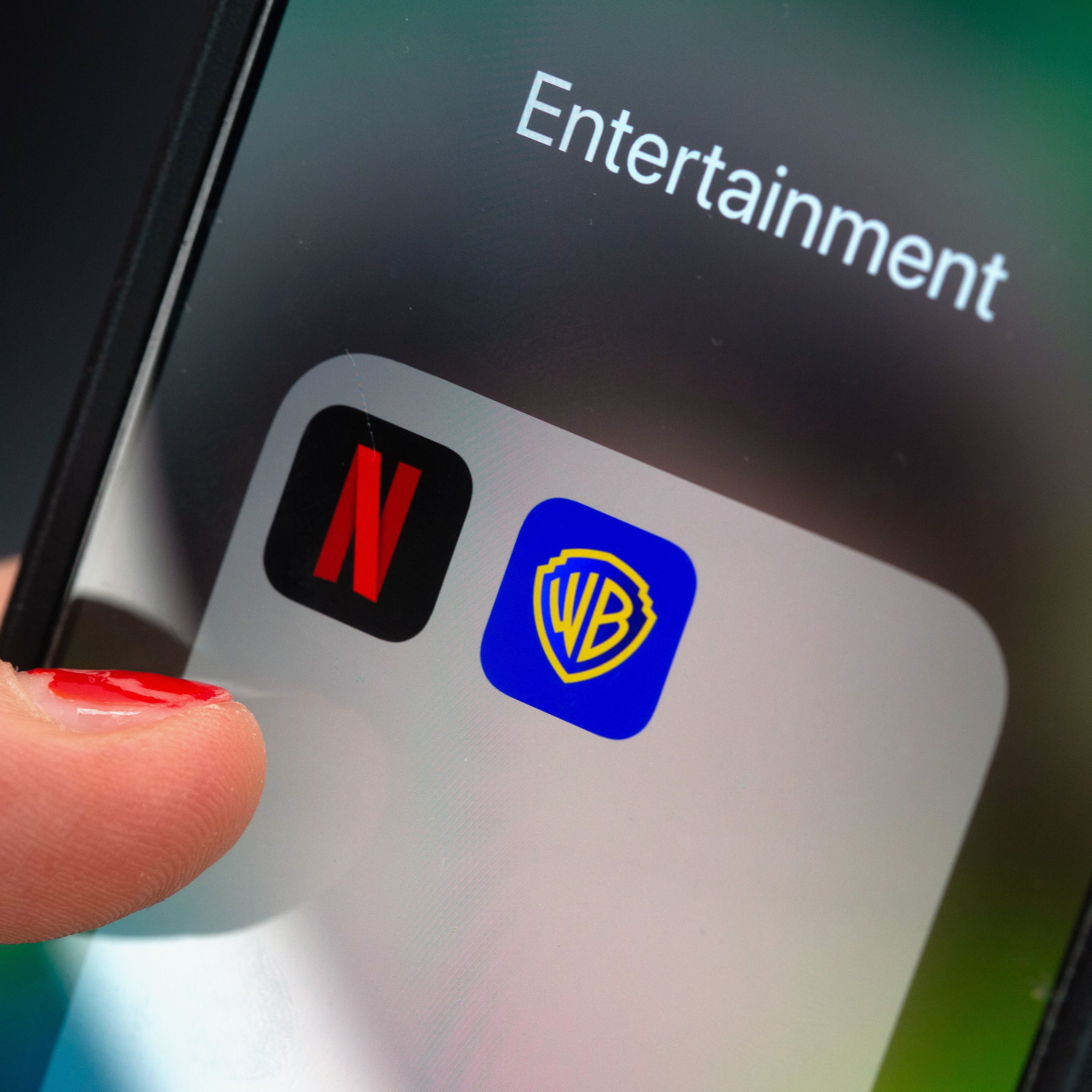
All Of It with Alison Stewart
What Does the Netflix/Warner Bros. Deal Mean for the Entertainment Industry?
00:29:00
Loading summary
Transcript76 lines
- [00:08]
A
This is all of it. I'm Alison Stewart live from the WNYC studios in soho. Thank you for spending part of your day with us. I am grateful that you're here. I'm also really grateful to those of you who have donated blood as part of our partnership with New York Blood Center. It's happening right now downstairs in the green space. I just donated and I was rewarded with a bag of pretty pretzels. And when I left, they said thank you very much and thank you for saving a life which meant so much for me and my family and for other families out there in our area. The blood drive continues until 2pm Come on by. Here's what you can listen to on the show while you're donating blood or eating lunch or doing whatever you're doing. Actor and comedian Leslie Jones will be here in studio to talk about her new comedy special. And we will speak with writer Amanda Fortini about her article. Is Gen X actually the Greatest Generation? And yes, we will take your calls and we will hear from actors Keanu Reeves and Alex Winter who are currently starring in Broadway's Waiting for Gadot. That's the plan. So let's get this hour started with some big media news.
- [01:28]
The iconic Warner Bros. Logo with the shield and the big initials WB now stands for who? Who's buying. On Friday, we learned that Netflix and Warner Brothers had struck a deal for the streaming giant to acquire the stalwart Hollywood media company. Netflix would pay $83 billion to own the movie studio, its streaming service, HBO Max, and all the intellectual properties therein like Harry Potter and Lord of the Rings. But then some drama yesterday, Paramount, AKA Paramount Skydance, we'll get to that, mounted a hostile takeover. B, offering a bit more money and throwing Warner's cable channels into the mix, which includes cnn. Warner Brothers is one of the big five film studios alongside Universal, Disney, Sony and Paramount. Whoever manages to seal a deal, it will have major consequences for the future of Hollywood. And here to explain how this all got started at Hollywood reporters global business editor George Salai. Hi, George.
- [02:34]
B
Hello, Alison.
- [02:36]
A
Listeners, we want to take your calls as well. If you work in the film industry, how are you thinking about this news? What could it mean for the work that you do? Help us report this story. Our number is 212-433-WNYC 212-433-9692. You can call in and join us on air or you can text to us at that number as well. 212-433-WNYC 212-433-9692 Last Friday, George, article with this headline, it's official Netflix to acquire Warner Brothers in deal valued at 82.7 billion. All right, what was your original story that you wrote and then how did it shift yesterday?
- [03:19]
B
Well, there have been a lot of moving, moving pieces. You know, it was kind of an earthquake. We, we knew that Warner Brothers Discovery was in the final stages of assessing a few bits they received, but we didn't expect things to come to a, you know, to a halt this quickly and Netflix to come out on top. And then kind of quiet for a moment and everybody's just taking a deep breath in Hollywood, feeling that earthquake and thinking, what is this going to mean for me and for the rest of the industry? And then a lot of activity happened. And I think we had 10 follow up stories in the first two hours, everybody reacting to it. And then Paramount yesterday coming out and saying, hey, we have more to offer. Our offer is better. Shareholders go with us rather than with Netflix. So it's really turned into a big kind of rumble, not in the Bronx, but in Hollywood, kind of a Game of Thrones, which is ironic because Game of Thrones is one of the big franchises that HBO Max also controls.
- [04:16]
A
When was the last time we saw.
- [04:18]
C
Something like this Paramount bid in the media industry, this hostile takeover bid?
- [04:24]
B
Well, there were a few bits years ago before Fox got acquired by Disney, which was like the last big unification of two big studio players in Hollywood. There were some friendly bits, some hostile bits. Comcast was angling to get that some other players were considering it. But usually what they tried to do in Hollywood, because there's a lot of egos, as you can imagine in Hollywood, a lot of creatives, but also executives who don't like to look bad. So everybody's trying to do this in a friendly way. So the fact that Paramount felt the need to come out and pound the table and pound the chest and go, hey, go with us. Tells you just how valuable and venerable the Warner Brothers studios.
- [05:11]
C
Yeah, let's hit the scene. Warner Brothers is considered to be one of the big five movie studios. It's really an institution in Hollywood. But listeners will also remember the recent Discovery merger, the various names of its new hbo, Max, Max, whatever it's called. How did we get here and why is Warner Brothers up for sale?
- [05:31]
B
Well, the interesting thing is, I don't know if you remember, before the current owners at and T he the telecom company owned the Warner Brothers studio. And the idea at the time was, oh, if we combine telecom with content Maybe we can get content out to people in all these new ways. The traditional pay tv, but also in mobile, and who knows what other technologies might be around the corner. Of course, that worked out a little bit like the AOL Time Warner merger, which people still think is one of the worst mergers in history. And basically what AT&T had to do is unloaded. And the acquirer was Discovery, run by David Zasloff, who's the current CEO of Warner Brothers Discovery. The idea was Discovery owned all this factual content, all these reality shows and other things, and they said, oh, maybe we can combine that with the factual and the scripted and imagined stuff to create a new powerhouse. But things haven't quite worked out as well. They took on a lot of debt in that deal. That didn't help. You know, there have been some other changes in user behavior after the pandemic. And so Netflix has been widening its lead. And so in the end, a lot of players started thinking, oh, we need to catch up with Netflix. So that's why Paramount, but also Comcast, started making bids for Warner Brothers. Only for Netflix then to come in and say, we already have a lead in this. Why don't we buy this?
- [07:02]
A
Yeah. So when we talk about Warner Brothers like it's one big entity, what are we talking about exactly? What companies and brands encompasses Warner Brothers?
- [07:11]
B
Yeah, so they are one of the big producers of TV and film content, and some of that gets released by Warner Brothers, Discovery Networks and streaming services and studios, you know, like some of the big ones, you know, Barbie. I think most people have either heard of it or seen that film. You know, the Sopranos, still one of the big HBO Max hit franchises, even though it's fairly old by now. People still watch this a lot. You know, Big Bang Theory, you know, wizard of Oz. And so the idea was that Netflix could maybe get some of those franchises, add them to their service. Say, hey, now, you don't only get Stranger Things and Bridgerton and Wednesday, but also all these historic franchises. And maybe we'll create new shows, new films based on those characters, and you'll get more of what you like. And basically a way for Netflix to stay with us. You don't even need to look elsewhere. There's so many streaming and other services. Just stay with us, watch our stuff until you fall asleep.
- [08:14]
A
We've learned that Netflix has struck an $83 billion deal to acquire Warner Brothers.
- [08:18]
C
As happened last week, to acquire its.
- [08:21]
A
Studios and all its intellectual properties. This week, Paramount complicated that plan. We're talking about the implications and ramifications with George Sly, business editor at the Hollywood Reporter. And we are taking your calls. If you work in this industry, how are you thinking about this news?
- [08:38]
C
What could it mean for you at work?
- [08:41]
A
Our number is 212-433. WNYC 212-433-969-2212,3333. WNYC 212-433/9692.
- [08:53]
C
How did Netflix's bid emerge as the winner last week?
- [08:59]
B
That's been widely debated on Wall Street. Yesterday I spent a few hours talking to people about this. Basically, the Warner Brothers Discovery board looked at all the offers and Netflix is offering to buy everything but the TV networks business of Warner Brothers Discovery. Paramount is offering to buy that as well. So Paramount says, well, our deal is superior because first of all, we're buying everything. And taking things like CNN off your hands, which we'll talk about in a minute, is always a big talking point.
- [09:30]
And you even hear the president obviously taking shots at that network sometimes. So they said, we're buying everything and we're offering everything in cash. Netflix, on the other hand, wants to leave the networks behind, pay cash in stock. But they are saying, oh, you have a better outlook if we buy it because we have all this tech infrastructure, there's more upside, and the networks division can be run separately and maybe create value. Shareholders can continue to own a piece of that, and their suggestion is they can do better. And so there's more value in it. Paramount says, well, cable networks are struggling. They used to be the profit engine of Hollywood. They're not anymore in the streaming age. So the value there will just keep declining. Why would you not want to get rid of that? So it's, it's a little bit of like, who, who, who do you believe? What narrative do you believe in more? So there's a lot of chest pumping right now and saying, you should believe us rather than the other guys.
- [10:27]
A
Yeah.
- [10:27]
C
Netflix's CEO said of himself, I know some of you are surprised that we're making this acquisition, and I certainly understand why. Over the years, we have been known to be builders, not buyers. So why would Netflix want this deal?
- [10:43]
D
They.
- [10:44]
B
That is actually also one of the questions that some people on Wall street and investors have been worried about. You saw the stock of Netflix taking quite a big hit after this deal was announced.
- [10:56]
Like Ted Sarandos, the co CEO, said the biggest deal they ever made was basically worth less than $700 million. They bought the Roald Dahl estates rights to the Roald Dahl stories, and buying something this big was never on tap for Netflix, but the management says, oh, this is just a once in a lifetime opportunity. You know, if you can buy all these crown jewels of Hollywood history and kind of offer them to consumers rather than having to license them, you know, maybe, or never being able to show them, you know. So they say it's a once in lifetime opportunity. Some critics are saying. Is this maybe a sign that Netflix worries about all the rising competition from TikTok, you know, from Instagram X, all the short form video, you know, a lot of young, I'm in my early 50s now. I don't even, you know, know that, you know, I, I use those platforms, but I know younger people who use them first thing in the morning, last thing at night, and did TikTok through the night, through the day and through the night. And so maybe this is a sign that Netflix worries we need to get bigger with all the premium content, we have to compete with those people.
- [12:05]
C
Let's take a couple of calls. Sam is calling in from Brooklyn. Hey, Sam, thanks for calling, all of it.
- [12:12]
D
Thank you. So my question is, I believe the Trump administration has the final approval of whatever sale happens and how is it complicated that Jared Kushner's hedge fund is part of the hostile bid?
- [12:29]
B
Yeah, Allison, do you want to take this?
- [12:31]
C
No, I'll let you take that.
- [12:33]
B
Yeah, Sam.
- [12:37]
That'S the kind of million dollar question right now. Donald Trump has said, I will obviously have a say in this. The FCC antitrust regulators will look at these deals. Netflix is widely considered to have the rougher ride to the regulatory review process. Management has even said, we think this might take up to 18 months because there's the concern that they not only combine two big streaming services, but also the production and creation of network shows of films. So there's vertical and horizontal concerns. So, you know, it probably will come down to who can make the better argument what to compare the market power the new company will have to. So Netflix has been early on saying, we compete with all these people and all these companies out there that are emerging as power players like YouTube, TikTok, you know, those are all, you know, getting all this engagement. Engagement is kind of a big new buzzword in Hollywood that everybody's looking at, how time of the day do you spend with something? And they are arguing, wait, people spend more time with YouTube, TikTok and those guys than with most of the other platforms. So we need to own more. But, you know, critics of Netflix will say, oh, let's just compare to the traditional movie theater and TV Content business. So I think it will depend on who can make the better arguments and, you know, that will decide who will win out.
- [14:03]
A
Let's talk to Beth, who's calling in from Brooklyn. Hey, Beth, thanks for calling all of it.
- [14:09]
Oh, hi. How are you doing? Okay.
- [14:12]
You're on the air.
- [14:13]
E
Yeah, I work in the. I'm good. Although I work in the television industry as a producer. I've done it for about 25 years. And we're asking for input from people who work in the industry and how these mergers have affected us. And I don't think it's any secret, but it's been pretty disastrous, like catastrophic for people who work in the industry. There's just so much, so much less work. I've been pretty fortunate, but I know people who've had to, like, you know, decimate their savings, move in with their families. People haven't worked in a year. There's, I mean, along with general downturn, the mergers have cut in half or even by 75% the amount of shows they're commissioning. So people have made living in this industry for a long time, really aren't able to anymore. Been pretty brutal.
- [15:03]
A
Thank you so much for calling in, Beth. What about people who work in the industry?
- [15:08]
B
Yeah, that Allison is. I think I've been getting a lot of questions in the last couple of days from people I have not heard from in maybe six months or a year for exactly that reason. Everybody after the announcement merger always says, oh, you know what, we're going to try and keep things as they are as much as possible. But then you do know that part of the benefit of any merger is the cost reduction. And so, yeah, in general, the expectation is that a Paramount deal would probably mean more layoffs because Paramount has more of the overlapping infrastructure of TV networks and.
- [15:47]
Film studio than Netflix. And Netflix will probably retain some more. But you would expect there to be quite a lot of jobs being cut either way. And that's one of the things that they always mention as one of the benefits, so to speak, of a merger. Reduce the cost and then create new opportunities for creating new, new shows and new films.
- [16:08]
A
We're going to talk more about Netflix's big deal. It struck $83 billion to acquire Warner Brothers, but Paramount has entered the building. We'll talk about it after.
- [16:31]
You're listening to all of it on wnyc. I'm Alison Stewart. My guest is George Salai, global business editor at the Hollywood Reporter. We're talking about nextflix's deal to acquire Warner Brothers until Yesterday, when Paramount announced a hostile takeover. This is a really general question. What makes the takeover a hostile takeover?
- [16:54]
B
No, it's a great question, basically, how bidding works in businesses. That a company says, we're up for sale, send us your offers. And then the board of a company reviews those offers and says, hey, we think this is the best offer. We're going to recommend this to shareholders. This is what Warner Brothers Discovery did with the Netflix bit. Then Paramount came out and said, well, hang on a second, we think our offer is actually superior to that of Netflix and here's why. And so they went hostile, meaning they're talking directly to shareholders, Warner Brothers, and saying, sell us your shares. Here's what we're offering. And we think our deal is better. The argument is mostly, there's more cash immediately. The review process would probably be faster. And so just go with us. And I expect shareholders to sit back and wait because there's always the hope that there's a lot of a big war of words. There's hope that maybe one of the two companies will have to come out and sweeten the bit. Paramount might come back in a few weeks, maybe in the new year and say, you know what, Actually, we're going to offer you even more because we really want you to go with us.
- [18:10]
A
They might come back with a different offer.
- [18:12]
B
Yeah, that would be called a sweetened offer. Sweetened bit. If not enough shareholders are convinced by the current offer, they might be like, you know what? We throw in a little bit more.
- [18:23]
A
What makes. What about the Paramount bid? What do you think of it? Is it competitive? Is it a strong bid?
- [18:29]
B
Well, you know, interestingly enough, people on Wall street can't even seem to agree. I've had a couple of people say we think the Netflix one is superior. The other people have said Paramount is superior. It depends a little bit on the financial side. It depends a little bit on whether you include potential timing delays of a merger close and whether you include other kind of risk fact. But overall, they all seem to think that financially it's more or less comparative. And then it's just down to what do you believe creates more value in the end? And so it's kind of a flip a coin kind of case right now.
- [19:12]
A
Let's talk to Eliza from Brooklyn or Elisa, Are you there?
- [19:20]
F
Yes, I am. Can you hear me?
- [19:21]
D
Okay?
- [19:21]
A
I hear you.
- [19:22]
C
Great, great.
- [19:24]
F
Hi, thank you so much for having me. I'm a second generation IATSE local 52 union worker here in New York City. You know the industry over the last few Years has shown between contract issues. And that's for like any of the union chapters across the nation with, you know, snakes. And we've even seen, you know, deaths that it seems that, you know, the entire industry is like going off the rails with no conductor at the controls. And unfortunately, the people that will be hurt the most by all of these changes are the below the line workers like my family, you know, my husband, my father, my brother, his family, all of our friends. And These individuals work 14, 15 hours a days in winter in strange, you know, in dangerous locations sometimes. And we're just nickel and dime from things ranging from, you know, how many meal penalties they'll avoid, how they'll manage our insurance and pensions. And unfortunately, it also gets dropped, you know, as far as safety goes on set. And these huge mergers don't really tend to offer us any more artistic expression, any better benefits, quality of life, or good content for people that's going to be watching it. It's, you know, really only to line the producers of these, you know, other rich billionaire people, and they're able to use all of banked footage that they now even have and plug it in so that they can reuse the same skyline shot but use it for any Marvel universe they want without needing to hire any actual stagehands or camera operators.
- [20:55]
C
Yeah, when you. Thank you so much for calling in. I mean, when you think about it, Netflix is a streaming giant. Paramount is one of the five big studios in Hollywood. When you think about a merger with Warner Brothers, how would it reshape the way pictures are being made?
- [21:15]
B
Yeah, it's, you know, one of the things that Paramount did in its hostile bit was appeal to people in Hollywood directly, including to maybe people working below the line saying, hey, we want to put out more films on a combined basis. And, you know, Netflix will probably, you know, kind of keep things the way they are, maybe not even bring as many films into movie theaters. So there is some concern there that Paramount has been trying to kind of. Its argument was basically, we're better for Hollywood and people working in Hollywood. But I think the big concern is in general, like Alcala said, that the people who often get forgotten, you know, everybody always remembers Brad Pitt as the star of the film. But then people forget that there were woodworkers behind the scenes creating the wonderful, you know, scenery and, you know, stages and all the sound people and other other technicians you need. And so I think those people will have the biggest, biggest worries because players getting bigger always means that their leverage declines even further.
- [22:23]
C
Yeah, I think it was Darren Aronofsky said there are fewer people to bid to.
- [22:28]
B
Yes. Yeah, yeah. Even Darren Aronofsky is somebody who's a well established, well known creator. You would think, oh, a guy like that probably doesn't need to worry about this. But even he worries that if he has few people to talk to, he might not get his next movie idea made.
- [22:45]
C
Let's talk to Edith calling in from Manhattan. Hi, Edith, thanks for calling, all of it.
- [22:52]
D
Thanks. Great show. I love it. Well, I have to say that I'm one of the last few remaining dinosaurs that has not cut the cord. And in fact, I mostly watch it. And it seems to me that you had mentioned this before, but that Netflix and Paramount Skydance have different ideas in terms of what they're going to do with the cable channels, where Netflix is saying for now that they're going to keep most of them, they're going to take a few of them.
- [23:28]
And Paramount is kind of saying they're going to take the whole shebang. And does that mean that that means cable's already, you know, you know, in struggling. Will that be the death of cable? And also, you know, every show is going to be sent to streaming now, which they've already started doing, but I won't be able to see the things I like on cable all in one place, which, from one to the other without having to pay for every single streaming service. And yeah, it's already happened to some extent. They used to have only murders in the building, you know, and then they switched that to streaming and, you know, so I'm just kind of wondering, do we have any idea? I know we're mostly focusing on the movies and stuff, but I happen to really watch cable tv.
- [24:14]
C
Do we have any idea about cable TV where this fits into the, into the merger? George?
- [24:20]
B
Yeah, so, so I, I think if Netflix walks away with this, they will leave the networks to be run separately by basically part of the management team of Warner Brothers Discovery right now. And they would probably look for their own way of cutting costs, maybe merging their networks with other network groups and then maybe reducing the number of networks and figuring out how to maybe use the same content across multiple networks, because we don't want to spend too much on all these different brands. So I think there will be a further kind of reduction in the number of networks and shows over time. But one of the things that we've seen has been quite successful in different parts of the world, including in the US is when you show, you know, AMC Networks, for example, has done this quite a bit where they show a show on their network, on the cable network, also on the streaming service, and then they maybe license it to another TV network holder and they get it later. So you can maybe watch some kind of Walking Dead spin off on amc, the cable network, and then you can watch it on the AMC plus streaming service. And then maybe somewhere down the line, you can watch it on another network to basically turn on more people to that and reach more people and say, hey, look at this. But usually that's done to get you to sign up to the existing streaming services or the original cable home. So, you know, you would, you know, I think our caller would hope more that she would get more just, you know, because she likes to watch things and she enjoys sampling stuff.
- [25:56]
A
I have two more questions for you. The first is about cnn. If CNN becomes a part of this merger, who runs it?
- [26:10]
B
Well, so if Paramount wins out.
- [26:15]
In this bidding.
- [26:18]
It'S going to be interesting because David Ellison, the CEO, and his father, Larry Allison, him from Oracle, probably.
- [26:28]
They understood to have a good relationship with the White House, with Donald Trump. So.
- [26:36]
In the industry, a lot of people saying, oh, if they bought it, they would probably look to completely change the management structure, make it different so that it doesn't constantly play the role of a punching bag in politics. So that would be the one way you see change. And I know Netflix wins out. It just stays on its own and we'll have to see what happens to it.
- [26:58]
A
And ever since I've been in the news forever and a day, there was always sort of rumors that CBS and CNN would combine and that could happen under that.
- [27:06]
B
Well, if Paramount gets it, Paramount already owns cbs. That would happen. And then.
- [27:14]
The question is like, do you know, some people have long said they should merge or at least they would at least cooperate very closely on the news side. So that is a whole new Pandora's box that people are wondering about.
- [27:30]
A
If this Big 5 studio can be taken over by a streaming giant, by one or more direct competitors. Could there be another one? Should we expect Universal Pictures or Disney or Sony to, like, be cannibalizing each other? Is that possible in the future?
- [27:48]
B
I. I totally expect if, you know, whoever wins, you know, this, this asset in Warner Brothers Discovery, it will set off all sorts of talks, especially if Netflix wins it. Because then people in Hollywood will be a big Game of Thrones, like, who's going to be lining up behind Netflix? Because right now you have Netflix as widely considered a big leader in entertainment. You have Disney, which is considered big and stable. And then below that, everybody else has been seen as moving parts, moving pieces that could be part of various deals. Somebody said to me last night, you know, George, we might have not thought this a few years ago, but there might only end up being two or three huge entertainment conglomerates at the end of the day. And don't say that, you know, like, you know, we have to see if regulators would allow that. But, you know, like, that would obviously be something. Yeah. That would cause all sorts of further headaches for people in the industry and fans of entertainment.
- [28:52]
A
George Salai is the global business editor.
- [28:54]
C
At the Hollywood Reporter.
- [28:55]
A
Thanks for sharing your reporting with us.
- [28:57]
B
Thank you for the time.
- [29:00]
G
I'm Ira Flato, host of Science Friday. For over 30 years, our team has been reporting high quality news about science, technology and medicine, news you won't get anywhere else. And now that political news is 24 7, our audience is turning to us to know about the really important stuff in their lives. Cancer, climate change, genetic engineering, childhood diseases. Our sponsors know the value of science and health news. For more sponsorship information, visit sponsorship.wnyc.org.