← All Of It with Alison Stewart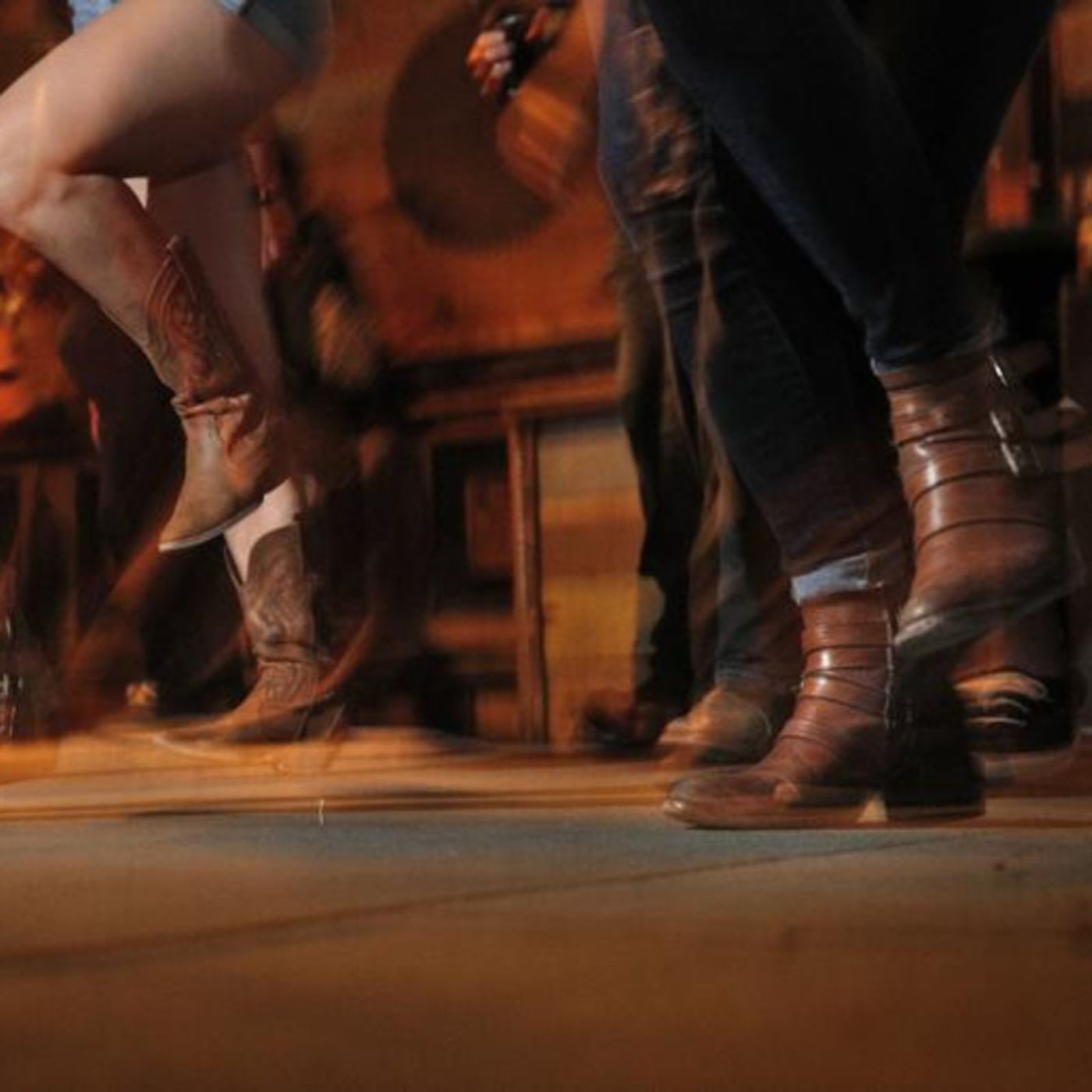
All Of It with Alison Stewart
Whether It's Two Stepping or Line Dancing, Americans Love Honky Tonk
00:24:39
Loading summary
Transcript76 lines
- [00:00]
Dr. Horton Advertiser
Your new home is now ready. Dr. Horton, America's Builder has new homes that are ready today with new construction communities in Ellensburg and throughout the Greater Seattle area. Dr. Horton has the right home for you. At Dr. Horton, we're still building with flexible living spaces, smart home technology and two and three car garages. More communities and more homes available every day. Find your new home in Ellensburg now ready at Dr. Horton.com Dr. Horton America's builder and equal housing opportunity builder. One second you're enjoying your day off. The next your phone buzzes, a window's been broken at home, you're miles away. In one second, everything can change. That's why ADT's professionally installed security systems monitor your home 24 7. They're backed by the most company operated monitoring centers in the industry. So you're always supported during an emergency. When every second Counts, count on ADT. Visit ADT.com to learn more. Y nada. Son puras vueltas. Pero ahoro un experto de turbotax. Te preparatus impuestos. Puedes contactara un experto y dar le todala informacion tributaria directamente dese la app? A si en lugarida divine experto de TurboTax. Se cargara de todo ahora los nasi intuit TurboTax. Visit at TurboTax. Punto com para mas informacion solo disponible con TurboTax experts actualizaciones en tiempo real solo en applicacion mobil para iOS Foreign.
- [01:36]
Tiffany Hansen
This is all of it on wnyc. I'm Tiffany Hansen in for Alison Stewart. American nightlife has gone full honky tonk. Whether it's karaoke, two stepping, line dancing, or even mechanical bull riding, cities across the country, including here in New York, have seen a surge in honky tonk themed bars, in part fueled by social media, of course, and also the desire to dance. This comes as country music's popularity has risen on the charts, with artists like Beyonce, Chapel Rowan, and Sabrina Carpenter leaning into the genre alongside popular country artists, of course, like Casey Musgraves, Luke Combs, and Morgan Wallen. Will Groff is a New York based freelance journalist. He recently reported on the rise of honky tonk bars for an article in the Wall Street Journal called How American Nightlife Went Honky Tonk. And he joins us now to talk about what he found. Hi, Will.
- [02:28]
Will Groff
Hey. Thanks for having me.
- [02:29]
Tiffany Hansen
You got it. Okay, so when we say honky tonk for people know, what do we mean? We mean kind of like twangy.
- [02:35]
Will Groff
Yeah. So there's actually kind of two definitions that are really important here. The first is, of course, a honky tonk is a bar, historically, you know, kind of a dive, a place of low repute, a place where working people could go to kind of blow off some steam, often sort of on the outskirts of town. Now, of course, with like Nashville and lower Broadway, you have like three story honky tonks that are, you know, spotlessly clean and it's a totally different beast. And then the second definition is it's a style of music. So it's a style of country music that was very popular, especially in the 40s and 50s, and it had that twang sound to kind of cut through the din of the bar room where it was being played.
- [03:16]
Tiffany Hansen
Name a good 40s, 50s honky tonk musician.
- [03:19]
Will Groff
So Hank Williams, Hillbilly Shakespeare, kind of one of the forefathers of country music, would definitely be the. The most famous.
- [03:28]
Tiffany Hansen
I wonder when you talk about these bars, these honky tonk bars, the new ones that are spotlessly clean, is, are they really honky tonk then?
- [03:41]
Will Groff
That's such a good question. And I do think that honky tonk is kind of in the eye of the beholder. You know, who am I to say what's a honky tonk? What isn't? I do think in our current parlance, like honky tonk sort of means a country themed bar. And I think there's a lot of people who would say that's not a honky tonk. You know, I grew up honky tonkin in, you know, Amarillo, and that does. That doesn't look like the honky tonks back home. But, you know, I think it's a little bit. You decide what a honky tonk is and isn't.
- [04:06]
Tiffany Hansen
You know, so it's been around, as you mentioned, for a long time. It's also involves music and as we mentioned, line dancing. But when we talk about honky tonk culture, I'm using air quotes here. What do we mean when we say the honky tonk culture? Culture?
- [04:22]
Will Groff
Yeah, that's such a good question because I think that it's like in a New York setting. It's not at all what you would necessarily imagine if you were not in New York. I really think, I mean, my mind goes straight to the dancing. There are sort of different factions in New York.
- [04:37]
Tiffany Hansen
They're clothing like, I've got my boots on.
- [04:40]
Will Groff
Yeah. Oh, definitely. Yeah. I would say honky tonkin is definitely about having fun Revelry. But I think that the dance part, especially in New York, where people are obsessed with dancing right now, the line dancers are out in full force. The two steppers, smaller community, I would say, equally passionate. They're showing up in sort of, you know, Wranglers, Levi's, pearl snapshirts, the whole, the whole shebang.
- [05:05]
Tiffany Hansen
All right, listeners, are you somebody who loves a honky tonk bar? Have you gone out line dancing or two? Stepping in New York or elsewhere? What do you like about it? How much fun did you have? We'd love to hear from you. 212-433-9692. You can call us, you can text us at that number. And of course, if you have a favorite honky tonk bar, absolutely love to chime in on that. When you think of honky tonk, as you mentioned, we're we. Most people think of Texas, Nashville, but this is now becoming popular not just here in New York, but also Portland, Chicago. These are roots, as you allude, that have the. The honky tonk roots are really blue collar, small town America. So I'm wondering what is left behind in this transfer, if anything, into the larger urban setting.
- [05:58]
Will Groff
Yeah, I think there's always an anxiety whenever country music sort of crosses over into the mainstream. You'll certainly always see sort of two sides of country music. There's the side that is pushing forward and modernizing, and then there's always sort of the other side that is retrenching themselves in more traditional sounds, more traditional sort of signifiers. I think that for me, it's not for me to say if something is lost or not. There are so many people who are so passionate on either side. Like, God forbid, I, you know, alienate the sort of saving country music people. But to answer your question, there are definitely a lot of folks who are very loudly sort of concerned that the honky tonk may be getting a little too far from its raisin, as they say in Nashville.
- [06:44]
Tiffany Hansen
We have a couple texts here. Not sure if this counts, but. But Skinny Dennis in Williamsburg is a great country dive bar with music every day. Love going there. I wonder if part of the reason that it has become so popular in these urban areas, like New York, like Chicago, is because of the community building of it all.
- [07:04]
Will Groff
Yeah, I think that people are really looking, especially post pandemic or in this current moment, like there is a sense that people want sort of like third spaces. It's constantly a conversation with young people on social media. Where are our third spaces? And especially movement and being around like minded people, you know, you see the queer line dancing has been huge. There was always gay line dancing in the history of line dance, that was always a strong portion. But queer line dance has, like, exploded in this way that I think really speaks to young people and specifically Gen Z. They want, like, authentic experiences being around other people. And it is a great place to meet people.
- [07:43]
Tiffany Hansen
All right, well, let's bring another caller into the conversation here or a caller into the conversation. Emma in Kensington. Hi, Emma.
- [07:51]
Caller (Emma, Alex, Hannah)
Hey, guys. I am sorry to everyone I'm about to blow up their spots, but I want to share the joy with other people when. When I was brought into the fold at like DJ Moonshine's monthly honky tonk. Go to your hall in Ridgewood. That place is so fun. They need to expand. We need more honky tonk halls. It's just like a queer friendly vibe. Like my generation, Gen Z doesn't even drink, but like, it's fun to like, share a picture of beer. And there's something that feels, I don't know, something that like the PE corporate entities like, can't, you know, totally ruin like the rest of raving.
- [08:32]
Tiffany Hansen
So, Emma, thanks so much.
- [08:33]
Caller (Emma, Alex, Hannah)
I want to share my opinion.
- [08:35]
Tiffany Hansen
Yeah, yeah. Love it. Thank you, Emma. I appreciate that. Following on that, we have a good text here that says, can you talk about the social dances that aren't focused, as Emma said, on drinking and bar life? Like Big Apple Ranch. Do you know Big Apple Ranch?
- [08:48]
Will Groff
I do, yeah. So that one is definitely kind of an OG in the New York scene. It pre exists this current wave of the queer line dance which is popping up everywhere. I think that's a really good point. And especially young people, I'm sure you've noticed, are drinking less. And so it was an interesting time for this story to come out because you have this sort of crisis of younger people are going out and spending less. And then you also have this country thing. So you actually have a lot of sober honky tonkers. So even when they're at the bars themselves, they will be like at the water cooler all night because they don't really necessarily want to be too inebriated because then it gets in the way of their, you know, steps and all of that.
- [09:27]
Tiffany Hansen
Let's bring in another caller from Nashville, Hannah. Hi.
- [09:32]
Caller (Emma, Alex, Hannah)
Hey, Allison, I love someone just mentioned Dr. Hall were there this weekend. It is one of my favorite honky tonks I've ever played and it is in Queens, which is incredible that they are hungry for authentic honky tonk music.
- [09:47]
Tiffany Hansen
And what, what's the name? What's the name again?
- [09:51]
Caller (Emma, Alex, Hannah)
Got Shear hall in Honky Talking in Queens. They've been doing it for a couple of years. We. We played it last year. My band is Hannah Dasher, and we packed it out and we're doing it again this, this Friday. And anyway, it's the most unsuspecting, most badass time that you'll have. It's incredible.
- [10:10]
Tiffany Hansen
Love it. All right, thank you, Hannah. Speaking of Honky Tonkin in Queens, another texter here says, honky Tonkin in Queens, exclamation point, exclamation point. Originally from Texas here, but I've been in New York City for 17 years. I went for the first time and it ignited something in me that I had forgotten. When I left Texas for New York City, my dad brought me to this huge tech, brought me this huge Texas belt buckle. So I always wear that to the party. Is Queens the spot?
- [10:38]
Will Groff
Ridgewood is very much the spot. There is absolutely a cowboy thing happening in Ridgewood. I mean, Bushwick, I would say, is sort of the epicenter of the queer line dance thing. But in terms of the Honky Tonkin and Queens, which is really more two step focused, they play sort of more traditional country music. It's a live band. Ridgewood is absolutely the place to be. And it's so funny that this caller mentioned Texas because Skinny Dennis and Honky Tonkin and Queens are both very much in the Austin tradition, which is entirely different from the Nashville thing. And so the Nashville thing you would see at a place like Common country in the city. It's in Kips Bay, they play Yee dm. That's Yee dm. It's like Yee Haw electronic dance music. And so they're a little friendlier to the pop stuff. And there's always that divide, Right? So Nashville sort of signifies pop. It's glossy. And then on the other hand, you have the Texas thing, which is always going to be, you know, they're outlaws. It's a little more rooted. It's more traditional.
- [11:41]
Tiffany Hansen
We're talking with Will Groff, who's a freelance journalist, wrote an article for the Wall Street Journal called How American Nightlife Went Honky Tonk, specifically for our conversation about how New York went honky Tonk. Before we take a quick break here, Will, let's bring in Bob in Rockland county into the conversation. Hi, Bob. Howdy, howdy.
- [12:02]
Caller (Bob, Glenn, Richard, Andrew)
Hello.
- [12:03]
Tiffany Hansen
Yes. Have you got a recommendation for us or.
- [12:08]
Caller (Bob, Glenn, Richard, Andrew)
Oh, yeah, for sure. Lucinda Williams opened this great little place on Avenue A in the East Village, you know, and she's a legend. And she's not there, of course, all the time, but they're just been having great music. I also go down there on Sundays. They have a an open mic for original songwriters only, Nashville style. And it's amazing because, you know, you get like a nice mix of, like, people from the neighborhood or from anywhere around Manhattan or Brooklyn who come in to do country music. But also they get songwriters coming up all the way from Nashville just to play at the open mic there. And the energy is just fabulous. And it's very friendly. You know, it's, it's a very warm, safe place. It's a great place on Avenue A. LUCINDA all right.
- [13:03]
Tiffany Hansen
Hey, thanks so much, Bob, for the recommendation. Appreciate that. Listeners. We're going to get to more of your recommendations here. Coming up after a quick break. We are talking about how American nightlife win Honky Tonk with writer Will Groff. And we want to hear from you here on the other out of this break. 212-433-9692. Do you have a favorite honky tonk bar? Do you like line? Line dancing? Two stepping. Call us, text us. 212-433-9692. This is all of it. I'm Tiffany Hansen in for Ellison Stewart. Stay with us. This is all of it. I'm Tiffany Hansen in for Allison Stewart. And we're talking honky ton, specifically an article in the Wall Street Journal called How American Nightlife Went Honky Tonk with writer Will Groff and listeners. Yes, we want you in the conversation, 212-433-9692. Call us, text us, let us know your favorite honky tonk joint. I'm going to say joint. That's accurate, right?
- [14:07]
Will Groff
Well, actually, Lucinda's, which was mentioned, which is in the East Village. So it's a honky tonk and a juke joint.
- [14:13]
Tiffany Hansen
Okay. All right. So I'm not completely out of line there. All right. Glenn in Brooklyn. Glenn, you have a bike, Long island, you're particularly interested in?
- [14:24]
Caller (Bob, Glenn, Richard, Andrew)
Well, this goes back to the late 80s. I was in a band then called into the Sunset, and I was the pedal steel player for the band. I've been playing music, country music, since the 70s. And we played at this biker bar and the stage was basically a dais that was about 8 inches off the ground. And the stage didn't hold enough room for me to play on it with my pedal steel. So I was in front of the stage with the rest of the band on the stage behind me. And this night, a biker decided to ride his motorcycle into the bar. And he rode right up to within an inch of my pedal steel and stopped. And I was just, like, freaking out, you know? I mean, Christ, I mean, he was right there. And, you know, it's a biker bar. I couldn't even say anything to him.
- [15:24]
Tiffany Hansen
Glenn, that sounds crazy. Okay. Lots of crazy experiences happening at these juke joints slash honky tonk bars around the city. Let's bring in Alex in Greenwich Village. Hi, Alex.
- [15:36]
Caller (Emma, Alex, Hannah)
Hi. Thank you. Thanks for mentioning the Big Apple Ranch. It's a great place to dance. I like that it's friendly and welcoming, and I also like that they blend. They have three types of dancer. They have line dancing, two step dancing, and west coast swing. And I enjoy all those kinds of dancing. Scuff. Queer country dancing is a group that has both parties and classes. And the classes don't have alcohol, whereas the parties do. So if you want to learn, like, in a class setting, line dancing, that's a good place to go. And I also contra dance with a group called Country Dance New York. And because of our name, we often get dancers that come in expecting, oh, line dancing. Because they look up country dancing, and then they come to us. And contra dancing is in lines, but it is not line dancing. But it's still fun. And there's always live music.
- [16:25]
Tiffany Hansen
All right, and you were talking. You were talking, Alex, about Big Apple Ranch, right?
- [16:30]
Caller (Emma, Alex, Hannah)
Yeah, yeah, yeah. It's in a midtown dance studio. You go upstairs, it, like, is in a big office building, except then there's a nift studio on, like, the second floor or the fourth floor or something.
- [16:42]
Tiffany Hansen
So. Thank you so much, Alex. Appreciate the call. Will, that's a couple we've had here for Big Apple Ranch. Have you been there?
- [16:50]
Will Groff
That is one that I haven't been to. I was gonna say put it on your list. Absolutely on my list. And I was gonna say there is so much country stuff happening in this city at any one time. You cannot possibly do it all. There's line dancing every week in Crown Heights, in Bushwick, as I mentioned, in the city at a couple different places. You can go to Hill country barbecue. You can go to Common Country. If you're in Williamsburg, you can go to Desert 5. There is so much happening, you kind of have to just, like, pick your own adventure. I don't think you can go wrong, though.
- [17:20]
Tiffany Hansen
Texter here says, I'm a New York City transplant in Sullivan County. I've been going to line dancing once, once a month at A local bar, Not a place I ever imagined myself. But I'm enjoying dancing in community as a 60 something person, appreciating that, keeping my mind body coordination challenged. So this leads to my question, Will, which is we've heard a lot from young folks, we've heard a lot from Gen Z, but now we have a 60 something year old person. So there is no crowd that you're going to find. Right. I mean, it's sort of all over the map. Is that what you're, what you're seeing when you're out there? Like pretty much anybody, everybody?
- [17:56]
Will Groff
Yeah. That's super fair. It's something that I have definitely noticed. Honky Tonkin and Queens is really good about that. Specifically, there is always a table for the kind of veteran dancers right towards the front and they sort of hold court there. They are all amazing dancers and they've obviously been doing it for decades. I should also say that country music's listenership for a long time skewed much older because it was a listenership also that was listening to country music on terrestrial radio. But now with streaming, it's kind of anyone's game. A lot of younger people have gotten in the door, but a lot of older people listen on streaming too.
- [18:31]
Tiffany Hansen
Texter says long before the current honky tonk culture, there was a Rodeo Bar on 27th street and 3rd Avenue that many country musicians played. Played at. Sadly, it closed in 2014. Well, let's bring Richard in Sparta, New Jersey into the conversation. Hi, Richard.
- [18:48]
Caller (Bob, Glenn, Richard, Andrew)
Hi. How are you doing?
- [18:49]
Tiffany Hansen
All right.
- [18:52]
Caller (Bob, Glenn, Richard, Andrew)
At the Colony Bar up in Woodstock. It's a great. They do it. Last Sunday of the month is Honky Tonk Sunday last Sunday and the Hudson Valley Flyers are playing there and they are amazing and they have, they have dancers. It's just, it's a hoot. It's a great time.
- [19:10]
Tiffany Hansen
All right, Richard, thanks. Yeah, thanks for that. The Colony up in Woodstock. Okay, so we hear a lot about dancing here, Will, for somebody who doesn't dance, doesn't know the difference between line dancing two stepping, there obviously are classes around the city that you can sign up for. Can you go though like the night, like let's say just like the mood strikes you, can you just walk in and maybe blend in?
- [19:35]
Will Groff
Oh, 100.
- [19:35]
Tiffany Hansen
Okay.
- [19:36]
Will Groff
It's. I'm so glad that you mentioned that too, because I am not a dancer. As loath as I am to admit that publicly, I think it's important that I do so because I love, for example, the Krioki nights that Lucinda's it is so much fun. It is like the most welcoming crowd ever. It is, you know, it's a Friday night in the East Village, so you have, you know, the finance bros are out, the West Village girls are out. Everyone is so encouraging. That is definitely an event where you can go. There's like no dancing. There's one of the sort of regulars will always do a little two step in between his songs. But that's a great example of, like, you absolutely do not need to dance to have a good time at a honky tonk. And even if you go on a night where everyone's dancing, a lot of people really like going and just watching the dancers because they're so much fun. I think there's an element of novelty, specifically in New York. Like you can just go and like, I honestly could watch the two steppers just kind of twirl around for hours. And I have done so.
- [20:31]
Tiffany Hansen
Do you think a lot of this has to do with social media with TikTok and all of these dancers?
- [20:36]
Will Groff
Oh, definitely. If you think about the earliest days of the pandemic, when TikTok was really blowing up, what were the most popular videos? It was like Addison rae and Charli D' Amelio dancing. TikTok dances were a whole thing that you can see pretty clearly why that would lead to this line dance moment when not only does it come on your feed, you like, you like one video of a person wearing cowboy boots and all of a sudden your entire for you page is just like country, country everything. But also you can learn how to dance on TikTok. Like the barrier to entry is so much lower.
- [21:06]
Tiffany Hansen
Sure. So I wonder too about, you know, we're talking about these entry points, whether it's social media. We did briefly mention, you know, Beyonce Chapel, Ron, Lil Nas X, how much of that. How much of this is attributed to that, to them?
- [21:26]
Will Groff
Yeah, I think Lil Nas X has an influence that cannot be overstated because Old Town road was in 2018. So it precipitated this entire moment. And especially with something like Beyonce, another one with Cowboy Carter. It was sort of two phases, right. You had the album dropping and that was huge. And then a year later you had the tour. So you saw this explosion in western wear and it was sort of phased out in this way that I think was really brilliant. And you see this throughout country music history. Like in the 1980s, you of course had the urban cowboy trend fad, as some would say, and that was inspired entirely by the movie. So you have this cultural touchstone. And then there's sort of a long tail after it.
- [22:08]
Tiffany Hansen
We got just a couple minutes here. So let's bring in Andrew in Brooklyn into the conversation. Hi, Andrew.
- [22:14]
Caller (Bob, Glenn, Richard, Andrew)
How to do. I love this show. I don't want to forget the children.
- [22:19]
Tiffany Hansen
Let's not.
- [22:21]
Caller (Bob, Glenn, Richard, Andrew)
No, no. You know, you got to start them young. And I've been playing. I've been playing cowboy music in New York for about 15 years. And like you all are saying with these songs that are coming out that Beyonce, Nas X Chapel, Ron. There's just more and more excitement. And I like working those songs into my show. But the parents are just. They're just. Everyone's hungry for connection, really. And so the children and the parents who are coming. Amazing nannies. It's just a real sweet vibe, and I think it's enhanced by the scene that's happening citywide at Gotshire or Jalopy Theater, Brooklyn Folk Fest. You know, bands like the Slide Stops. We've been doing it for years. It's just like there's a real moment of connection happening, and it's available to families, too, so. And that's kind of what I do. And I just love it. I love the whole scene.
- [23:21]
Tiffany Hansen
And you are Hopalong Andrew, if I'm not mistaken.
- [23:25]
Caller (Bob, Glenn, Richard, Andrew)
That's right.
- [23:27]
Tiffany Hansen
We got you here. All right. Thank you so much for the call. We appreciate it. So how much of this is. Do you think we talk about the influence of social media? Does that mean it's all going to just kind of float away here soon, or do you think it's here to stay?
- [23:42]
Will Groff
Another question that's a little bit hard to answer, but I think we've seen remarkable staying power with this country boom. I mean, it's sort of up for anyone to say when it really started, because again, you have. Covid was huge for bringing people in with streaming, but you also had Old Town Road, which is now tied still for the number one longest running song of all time on the Hot 100. And it's tied now with Shaboozies, a bar song. Tipsy. So that happened a few years apart. So I think it's sort of like full steam ahead. I think it's. It's anyone's guess as to where it goes from here.
- [24:16]
Tiffany Hansen
Do you think some of this is kind of post pandemic? You know, we all just need to get together and have some fun with each other and dance and hang out.
- [24:25]
Will Groff
Oh, definitely.
- [24:25]
Tiffany Hansen
To music.
- [24:27]
Will Groff
Yeah. I mean, country music is so great for that. And it's funny because country music was for a very Long time not really thought of as dance music. I don't think it's necessarily what come to mind for most people. When you think dance music, you probably think, like, electronic dance music, right? But now, especially with line dance and TikTok and everything, I think it's changed the whole game. And country music right now really is, I think, the pop music of our day. And it's the music that you put on for kind of a million different scenarios. You're hanging out with a few friends, you're out at a bar with a bunch of people, you're by yourself. It sort of suits every mood, and it's amazing in that way.
- [25:00]
Tiffany Hansen
Put you on the spot. Will, favorite spot in the city?
- [25:04]
Will Groff
Oh, I don't know if I can answer that.
- [25:06]
Tiffany Hansen
I will say that you could go burrow by burrow.
- [25:09]
Will Groff
No, I will say one that didn't make it into the story that I would be remiss if I didn't mention is Flaming Saddles in Hell's Kitchen. It's been around for a little bit. It is like a gay man's answer to Coyote Ugly. So you have the bartenders will dance up on the bar, and it is so much fun. I will say if you go there, I have to caution you, do not rock the jukebox. Do not be putting Katy Perry or Lady Gaga on the jukebox. We're keeping it country. And it is literally so much fun, unfortunately, to not make it into the story. But I. Yeah, I love it.
- [25:42]
Tiffany Hansen
Okay. And the name of it again is Flaming Saddles. And you have been warned, listeners, about the jukebox. Okay. We've been talking with how American nightlife went honky tonk, specifically how New York City is going honky tonk with Will Groff. He is a freelance journalist who reported for the Wall Street Journal on this phenomenon. Will, thanks so much for your time. We appreciate it.
- [26:06]
Caller (Bob, Glenn, Richard, Andrew)
Thank you.
- [26:08]
Dr. Horton Advertiser
Your new home is now ready. Dr. Horton, America's builder, has new homes that are ready today with new construction in Ellensburg and throughout the Greater Seattle area. Dr. Horton has the right home for you. At Dr. Horton, we're still building with flexible living spaces, smart home technology, and two and three car garages. More communities and more homes available every day. Find your new home in Ellensburg now ready@drhorton.com Dr. Horton, America's builder and equal housing opportunity builder. Hace enviedo muchisimos correios a tu preparador de impuestos y nada son puras vueltas. Pero ahoro un experto de turbotax te preparatus impuestos. Puedes contactara un experto y darl todala informacion Tributaria directamente dese labora los impuestos se ha senasi intuit turbotax. Visit turbotax Punto com paramas informacion solo desponible con turbotax experts.