← All Of It with Alison Stewart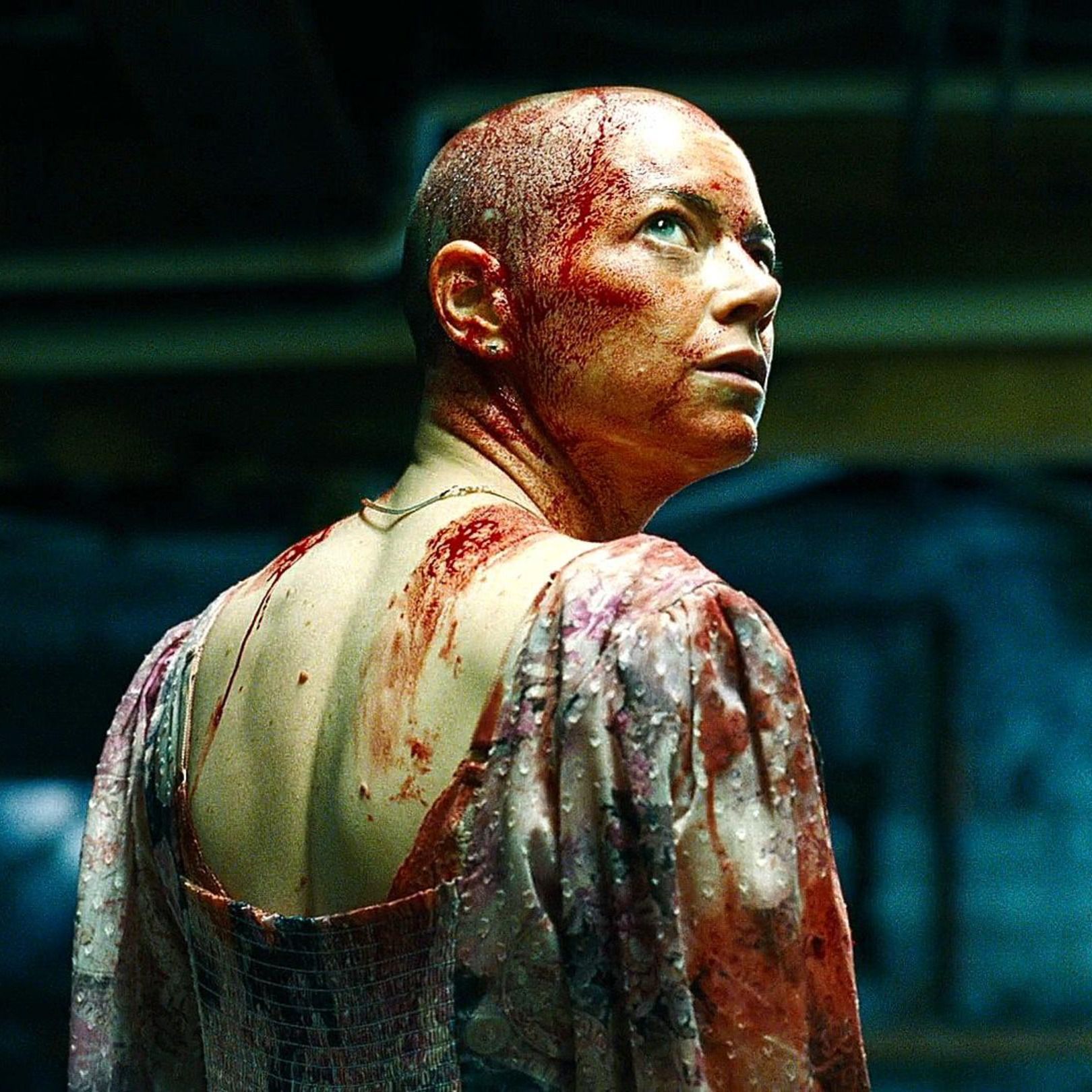
All Of It with Alison Stewart
Will Tracy Tackles Paranoia, Conspiracy, and Aliens in 'Bugonia'
00:12:32
Loading summary
Transcript27 lines
- [00:00]
A
The new LinkedIn hiring pro can't undo your last hire, the lone wolf who you thought was a good collaborator because you didn't have the right candidate insights. But once you hired them, it was all hoarding info, declining meetings, and howling at the full moon. But LinkedIn hiring pro can go deeper than just the resume to find you a perfect fit by using insights from the LinkedIn network to give you a short list of best fit candidates. Hire right the first time with LinkedIn Hiring Pro. Post your first job today and get $100 off@LinkedIn.com PandoraOffer terms and conditions apply.
- [00:30]
B
One second you're cleaning the gutters, the next the fire alarm's blaring. Smoke billows out the window. In one second, everything can change. That's why ADT offers DIY security systems that let you monitor everything from the ADT plus app. Their technology helps first responders find you in an emergency. So tackle your to do list. Your home's protected when every second Counts, count on ADT. Visit ADT.com to learn more. Amazon presents Jeff vs Taco Truck Salsa Whether it's verde roja or the orange one, for Jeff, trying any salsa is like playing Russian roulette with a flamethrower. Luckily, Jeff saved with Amazon and stocked up on antacids, ginger tea and milk. Habanero. More like habanero. Yes. Save the everyday with Amazon.
- [01:36]
C
This is all of it on wnyc. I'm Alison Stewart. In the film Begonia, screenwriter Will Tracy had to keep audiences guessing about one central question. Is a high powered CEO played by Emma Stone, actually an alien? That's what Teddy thinks. He's played by Jesse Plemons. Teddy has managed to convince his cousin Don that this CEO, a woman named Michelle, is actually an alien sent to Earth to destroy humanity. Teddy and Don kidnap Michelle and then hold her captive for questioning. Michelle insists they have it wrong, but Will's script leaves you wondering whether these men are delusional or whether they might actually be onto something. Begonia was directed by Yorgos Lanthimos and is nominated for an Oscar for Best Picture. Will also nominated for Best Adapted Screenplay. The story is based on a 2003 Korean film, Save the Green Planet. You can stream Begonia now on Peacock and screenwriter Will Tracy joins me now as part of our ongoing Oscar series, the Big Picture, focusing on Oscar nominees who work behind the camera. Hey, Will.
- [02:41]
D
Hey. How are you?
- [02:42]
C
I'm fine. I read that you started working on this in 2020. It seems like so long ago. It was during the lockdown and so many of us were struggling during that time. How do you think you channeled some of those experiences into the script?
- [02:59]
D
Well, I mean, I don't think I could have written the same script at all had it been a different time. I mean, first of all, I just had finally, for the first time in a while, you know, a moment to write where I didn't have a day job. I had been working on in series television, which is sort of nonstop. And suddenly I had just some time to write. And then, yeah, as I think, as you suggested, I was just in a moment there where I think, like a lot of us was feeling quite isolated and qu. Confused and afraid and no one quite sure what story to believe, the official story or the unofficial story. And. And also just feeling a little bit like what was already kind of happening and then fully got broken during maybe those early months of COVID That feeling of, I guess that there was a kind of a mass disassociation from reality that we were seeing in front of our eyes and a feeling that. Yeah. That civic institutions didn't really feel as robust or as trustworthy as they used to feel. And so maybe like Teddy a little bit, I had some of those feelings of looking for answers. I didn't resort to the same methods that Teddy resorts to, but I have a lot of time for him. He's not entirely wrong.
- [04:14]
C
Yeah. You know, there are so many conspiracy theories from Pizzagate to QAnon after Covid especially. Why do you think conspiratorial thinking has become so prevalent in recent years?
- [04:28]
D
Yeah, I mean, a lot of it is just, you know, not to reiterate what probably your listeners have heard a thousand times, but obviously a kind of, you know, the. I guess what's happening to mainstream media and sort of distrusted media is part of it. I also think there's been quite a lot of cynical co opting of conspiratorial thinking by our current administration. And so I think for those reasons there's a natural feeling that anyone who's a conspiracy theorist, that they're crazy or stupid or right wing or extremely left wing or in some way politically captured by some group and not kind of thinking clearly. And it was important to me, writing the script, to approach Teddy with a certain degree of empathy, that to not to feel like he's this sort of toxic incel. Male boogeyman that you read about in, you know, the Atlantic or whatever, that this is like this is a guy who has been properly abused by, you know, big pharma, big Tech, the police, capitalism generally, and that his community and his family and his own psyche have suffered. And he's, again, not entirely wrong about the way our society has become atomized, the way our democracy has become less effective. And he. Yeah, he goes looking for answers.
- [05:56]
E
Yeah. Jesse Plemons plays Teddy in a way where he is sometimes scary, sometimes he seems pathetic, sometimes he seems prescient. When you talk to him, what did you admire about his performance as Teddy, his approach to character?
- [06:12]
D
Yeah, I mean, I was really worried about that part. When I'm. When I write a script, I try not to think about any actors while I'm writing as to kind of guard yourself from the disappointment when you send it to them and you find out that they're booked for the next two years straight. So I just kind of picture faceless people when I'm writing it, or I make up a face. And so. But I. When I finished the script, I thought, well, this is going to be a really juicy part for a lot of young actors. And then when I tried to make a list of people who had those qualities that you needed, were someone who could be menacing and scary, but could also be quite sweet in a way, and could kind of become a little boy on the turn of a dime if you need them to. It's hard to find someone who hid all of that stuff and felt just authentically real and desperate and American. And so the list was short. And then it wasn't until Yorgos came on the project and suggested Jesse, who he had just worked with in kinds of Kindness. You know, not a lot of other directors could make that move because Jesse's not known for being a lead actor. He's known for being this amazing kind of character actor who does supporting roles. I always thought he could be a great lead actor, and Yorgos did, too. And I think this movie, hopefully, is proof that he can absolutely carry a movie. I mean, he's. I think he's just phenomenal.
- [07:27]
E
Here's a clip of Jesse Plemons as Teddy talking to Michelle after he's kidnapped her. She's been chained in the basement, and by the way, her hair has been shaven off. This is from Begonia.
- [07:38]
D
Where is my hair? Your hair has been destroyed. You shaved off my hair? Yes, we have shaved off your hair. Why have you shaved off my hair? To prevent you from contacting your ship. My ship? Your ship? What ship? Your mother ship.
- [08:00]
E
So we are left with this idea that she's an alien. And I don't want to give too much away, but Somebody, somebody in that entire cast may be an alien. When you were writing it, did you think about people who would watch it the second time?
- [08:16]
D
Yeah. And in fact, I remember even on set and she said this a few times since Emma Stone saying that it was the first time for her as an actor that she had to think about her performance while in a scene, what an audience on the second viewing would be thinking. Because, yeah, there's quite a bit that's revealed in the movie. And you know, my, my worry writing the script is that any movie that's built around a kind of big question that needs to be answered, a big reveal, that my worry is that once, you know, that reveal, I don't want the movie to be like this toy, this wind up toy that does a reveal or does a surprise or does a twist and then once, you know it, there's no reason to see it again. So I actually kind of put the big, you know, whatever revelations the movie has a little bit out of my head, knowing that they would serve me when I needed them to, and tried to concentrate really on the rest of the movie, especially these kind of long conversations between the characters and making those as emotionally and even politically rich as I could.
- [09:20]
E
I am speaking with Oscar nominated screenwriter for Begonia, Will Tracy as part of her ongoing series the Big Picture, where we celebrate the talent behind the lens. Begonia, by the way, is available to screen on Peacock. Now. Yorgos came onto the film after you wrote it. Why do you think he ended up being a good director for this particular story? Because he's known for a particular kind of work?
- [09:44]
D
Yeah, I mean, yeah, I think I wrote it about a year before he came onto the project. And I mean, the kind of glib but sort of true answer is that I think I unintentionally wrote a very Yorgasian Orthamosian script. I mean, it just. I think we ended up being very sympath. And I could tell on the very first, very first time we talked. And most of our talk was not notes or even talking about the movie. It was just sort of getting to know each other, which I think is very important to Yorgos that he wants to work with people who are. He can get along with. So I could just tell from that first talk that we were simpatico. And so that really, I think that very much helped. But I think also a lot of it has to do with may a similar sensibility around. Around humor that I think we both write. I think everything that both of us have done is comedic in Some way. But I think we both know that the key to, you know, good drama and good comedy really is sort of, even when the situations are extreme and absurd and inherently funny, to have the actors and the dialogue and even the. In the kind of the staging, to play it straight, right. To play it like these people really believe it, they really mean it. It's life or death for them. It's not a joke to them. And the situations can never be funny, but they can't. You know, we're not trying to go for punchlines in that way. And there's a way that you can go the opposite with it and it becomes quite arch and unserious and it doesn't really have a whole lot of emotional reality to it. And I think we wanted to be really careful with that balance.
- [11:27]
E
I wanted to ask about Teddy's cousin Dom, who Don. He sort of feels like the emotional heart of the movie in some ways. He's also neurodivergent. He's played by Aiden. I think it's Delbis. Was that character always neurodiver divergent?
- [11:42]
D
Yeah, it was. I mean, it's not specified as such in the script. You know, I try not to when I'm writing the script be too programmatic about what type of actor to cast or, you know, even kind of physical details of the character. You know, I like to leave some of that open for the director and obviously the cast. You don't feel boxed into one type. Obviously. I wrote the character though, without using the word neurodivergent. That was sort of there, latent maybe in the character. And then of course, once, once Aiden, who's a first time actor and terrific actor, I mean, he spends the whole movie with these two heavyweight actors basically in a basement. And never once do you feel like he's out of place, he's so compell. And once he came on board. Yeah, I kind of did a pass on the script for Aidan, but not to change the essence of the character at all, but if anything, just to make it easier for him not as a neurodivergent actor, but just as a first time actor to make the dialogue a little bit more in his natural speaking cadence, which is very particular. And. Yeah. And just maybe to simplify the dialogue a bit.
- [12:57]
C
This is your first Oscar nomination. Where were you when you found out?
- [13:01]
D
I had. I'm on the East Coast, I'm in New Jersey, so I had just gotten the kids out the door. My wife was driving them to school. I had made them breakfast and was cleaning up and they had literally had just the car just pulled out and it was so 8:30am So I didn't even get to sort of celebrate with my family. They were sort of gone. So I called him in the car and said, yeah, you know what happened?
- [13:25]
C
Were you like loading the dishwasher?
- [13:26]
E
What were you doing?
- [13:27]
D
That was pretty much it. It's basically, it's not, I would say it's all together. It's not a life changing event. It's sort of a day changing event for about an hour. And then I remember kind of later that night being like kind of in a bad mood because I overcooked the rice at dinner time. It's like, you know, you kind of did you kind of very quickly snap right back into all your usual stuff, which I think is good.
- [13:49]
C
Well, I'm speaking, I have been speaking with Oscar nominated screenwriter. You always get to say that. Will. Tracy, thanks for being with us. Will.
- [13:57]
D
Thanks a lot. I appreciate it.
- [13:59]
A
The new LinkedIn Hiring Pro can't undo your last hire. The lone wolf who you thought was a good collaborator because you didn't have the right candidate insights. But once you hire them, it was all hoarding info, declining meetings and howling at the full moon. But LinkedIn hiring pro can go deeper than just the resume to find you a perfect fit by using insights from the LinkedIn network to give you a shortlist of of best fit candidates. Hire right the first time with LinkedIn Hiring Pro. Post your first job today and get $100 off@LinkedIn.com PandoraOffer terms and conditions apply.
- [14:30]
B
Amazon presents One vs Baby Drunk on milk and power. This bundle of sheer chaos only comes with three settings. Crying, pooping and crying while pooping. But Juan shopped on Amazon and saved on pacifiers, diaper cream and a colossal bag of coffee. Be hear that baby? Juan just rocked you to sleep. Save the everyday with Amazon.