Loading summary
Transcript49 lines
- [00:01]
Announcer
Support for NPR comes from TaskRabbit, your trusted partner for home projects. TaskRabbit connects you with skilled local taskers for furniture assembly, mounting and repairs. You can browse profiles and book help today@taskrabbit.com or on the TaskRabbit app.
- [00:25]
Felix Contreras
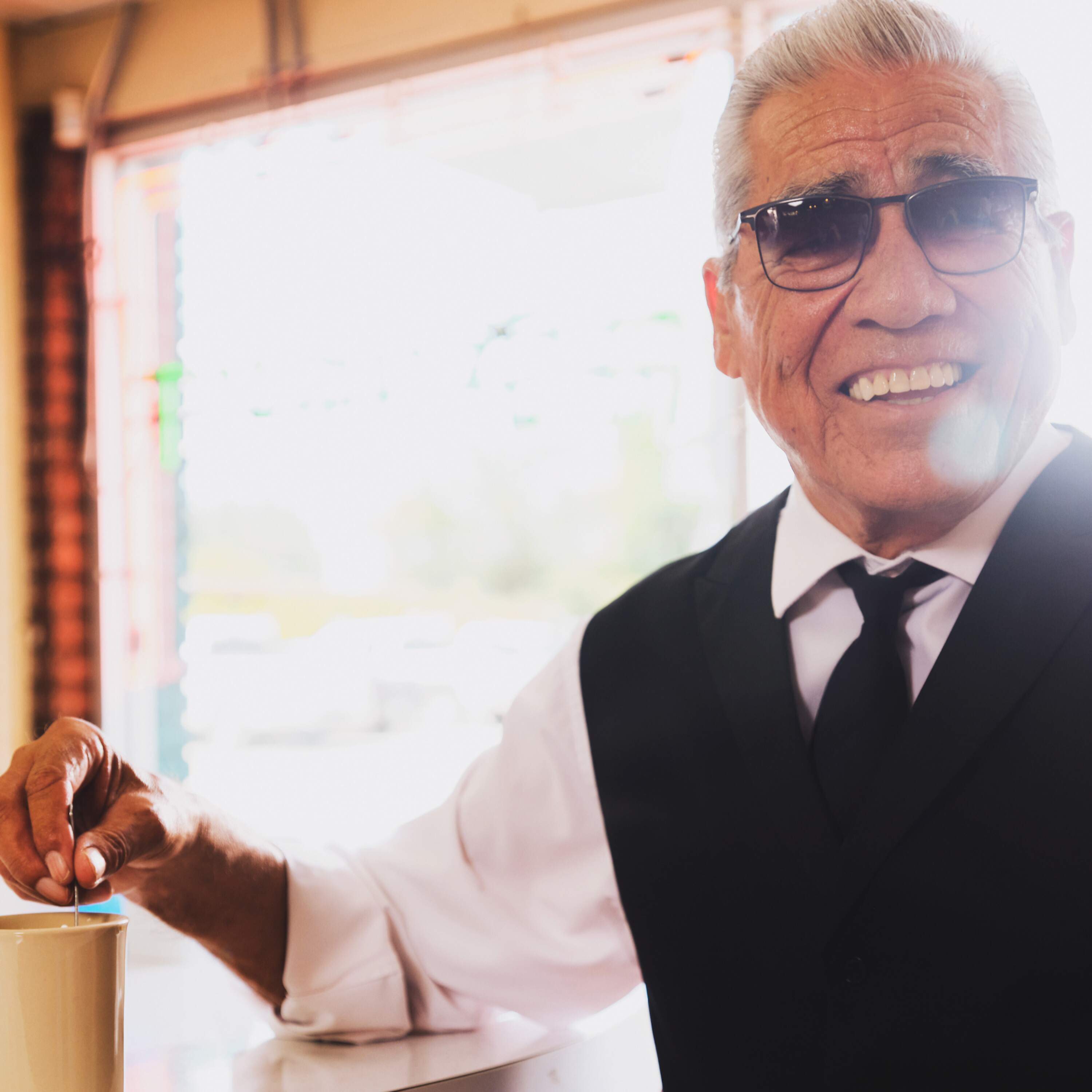
From npr music, this is all latino. I'm felix contreras. Ana maria serra is away. So this week we're going to spend time with tejano music legend ruben ramos. When I say legend, I don't use that lightly. He has been playing big band fuel Tejano since 1960. But get this, his family's connection to music in Texas goes back over 100 years to 1918. I talked to him about the release of a tribute album that just came out called Los Dias de Calor. And as you'll hear from our conversation, his life story is basically the history of what we know as Tejano music, a reflection of the bicultural existence along the border and throughout Texas and in the entire Southwest. And as we started talking, he told me about how he started in music and what life was like for Mexicans and Mexican Americans in Texas in the 1940s and 50s.
- [01:32]
Ruben Ramos
First of all, I was introduced to music out in the cotton fields in the country. We used to live in the country out in between two prisons out there in between Sugar Land and Richmond. And my first introduction to music was my mama playing guitar, my dad playing fiddle and a neighbor playing accordion at somebody at the Hernandez house, or not our house, because we didn't we just lived in a shack. So it had to be somebody else's house where they take out all the furniture out of the living room. And my dad, my mama and Basilio in the corner, three chairs and people dancing in a circle in the living room. So that was my first introduction. I was about four or five years old, you know. But after that, we were basically migrant cotton pickers living off the land, picking cotton, picking cotton wherever. So I was introduced to the big band. It was a like 13 piece orchestra in the living room, you know.
- [02:58]
Felix Contreras
Now eventually, his uncles would bring young Reuben to gigs along the bars in 6th street in Austin. And if you know Austin, you know that 6th street is still a musically active street. But back then the bars had slightly different names.
- [03:10]
Ruben Ramos
So they were playing down 6th street at La Di Oro, whatever, 609 Bar, and I would tag along. You know, I played one song, drums with them, you know.
- [03:23]
Felix Contreras
Right.
- [03:23]
Ruben Ramos
One of my uncle said, play drums. Come on, play drums. I don't know how to Play drums. This is a easy one. This a so La Solas, like. I said, I think I can do that, you know, the bass drum. So I basically played drums with them. So that was my introduction to the big band. And to me, this was like the era that was born. To me, tejano is another label that I'm not crazy about, because when I started singing with my brothers, it was Chicano. We were Chicano, you know.
- [04:08]
Felix Contreras
Now this is the point in the timeline when Tejano or Chicano music in Texas became an authentic bicultural phenomenon. As Ruben Ramos explains, the big band
- [04:19]
Ruben Ramos
era is, you know, in the 20s, 30s, 40s, you know, and they had a 13 piece orchestra. Tommy Dorsey, Jimmy Dorsey, Glenn Miller, Count Basie. So they were emulating those big bands, which was the Charleston, the digital bug, the swing, you know, and they were, they were. That's what they would play.
- [04:42]
Felix Contreras
So this was the Mexican American community or the Tejano or Chicano community that was absorbing the influences from the mainstream community, from the white community, and then mixing it with Mexican music.
- [04:55]
Ruben Ramos
Yeah.
- [04:56]
Felix Contreras
What about outside of music? Did the Tejano community, the Latino community, did it mix? Did it integrate with the mainstream community, with the white community, or were they separated?
- [05:09]
Ruben Ramos
It was separated, you know, I mean, as far as I know, because I was a kid, but like I said, my uncles were playing for dances for Mexicanos, you know, and playing polkas and whatever, you know. But in the beginning, at very beginning, in the 20s and 30s, in the early 40s, they were playing, emulating, like I said, the big bands that were popular then, Glenn Miller and stuff. But after a while they started. Their fan base was Mexicanos.
- [05:39]
Felix Contreras
You know, what was heard on the radio back then for people who were speaking Spanish, what was being played on the radio versus what was being played for the English speakers on the radio
- [05:49]
Ruben Ramos
back then, most of the instrumentation was the accordion, whatever, you know. And right about that time, you know, Benovia, you could start here in Bedovilla, Juan Colorado, you know, Cristian de Waal. Those bands were just born. So they came in to play and they were playing. They're Mexican. Tejano was not Tejano then.
- [06:33]
Felix Contreras
Right, right.
- [06:33]
Ruben Ramos
Tejano was born in 1985, something like that.
- [06:39]
Felix Contreras
I'm very fascinated about, like, there's not a lot of history written about that era of, like you said, the 20s, 30s and 40s, about how the, the Latino community, the Tejano community absorbed the mainstream culture. But it didn't go the other way around. Like, it's almost like the mainstream culture, the gringo or the white community didn't know much about the Mexican community that were separate, you know, with some segregation going on in Texas.
- [07:09]
Ruben Ramos
A whole bunch, a whole bunch of that. Yes.
- [07:12]
Felix Contreras
But it, it, but it, it didn't stop the Latino musicians from just absorbing all this stuff and incorporating it into, into their own sounds.
- [07:21]
Ruben Ramos
Exactly, exactly. But in the early, in those days, you know, you heard a lot of the accordion, the V6 and stuff. There was nothing, a lot of orchestras, Mexicanos orchestras. My uncle's to me was my first introduction to that. You know, where did they play?
- [07:54]
Felix Contreras
Were they in bars, cantinas, family parties? Like where were they playing A lot
- [07:59]
Ruben Ramos
of parties, like weddings, you know, you know, in salones, early style salones, whatever, you know. But at the end, at the end of the era, like in the 50s when I was a kid, you know, they were playing. Yeah. At the cantinas, you know. Yeah. It wasn't all that big ass band like you used to. So they cut down to maybe three saxophones or whatever. Down because it was hard to carry, commute, say go play in juego. 13 piece orchestra and three cars, three or four cars or whatever, you know, to carry all those instruments and stuff. So it was a time at the end of the era where, you know. Yeah, yeah, there were you at the end of your, your career kind of speaking where you wind up playing in bars and stuff, you know, just like my brother, like my brother Alfonso. He passed away, may he rest in peace, you know, at the end. Yeah, he didn't have the big old orchestra had him and another trumpet and the bass, guitar and bass and drums, you know, and that's it. He was kind of playing, you know, parties, small cafes, you know, and that's kind of the track or the, the way that my uncles were playing at the, at the end of the 50s.
- [09:39]
Felix Contreras
A very condensed history of Tejano or Chicano music from the perspective of Texas musician Ruben Ramos. And after we take a break, his own history and how he became a well known part of Texas music.
- [10:02]
Sponsor/Advertisement Voice
This message comes from Progressive Insurance. Insurance isn't one size fits all. That's why drivers have enjoyed Progressive's Name youe Price Tool for years. Now with the Name youe Price Tool, you tell them what you want to pay and they'll show you options that fit your budget. So whether you're picking out your first policy or just looking for something that works better for you and your family, they make it easy to see your options. Visit progressive.com, progressive Casualty Insurance Company and affiliates price and coverage match limited by state law.
- [10:32]
Announcer
This message comes from Prolon. Want to look and feel your best this spring? Prolon's five Day Fasting Mimicking Diet is a clinically developed nutrition program with the goal of promoting fat loss while protecting lean body mass. Developed at USC's Longevity Institute, it aims to assist the body in entering a fasting like state that helps reset metabolism, target visceral fat and support healthy metabolic markers. Get 15% off plus a bonus gift when you subscribe@prolonlife.com NPR this message comes from BetterHelp. Summer can feel like a sprint. Kids home, trips to plan, routines flipped upside down. It's easy to slip into survival mode just trying to get through it. Then suddenly it's over and you're wishing you enjoyed the days just a little bit more. Therapy can help you slow down and actually be present for the moments that matter. With BetterHelp, you can connect with a licensed therapist from anywhere on on your schedule. Don't just survive the summer thrive. Visit betterhelp.com NPR and we're back with
- [11:38]
Felix Contreras
Ruben Ramos as he moves from Tejano history to his own history.
- [11:42]
Ruben Ramos
Music saved my life. Let's put it that way. Music saved my life. So I was in about 13, 14, I was going the wrong way. I was hanging around with the wrong crowd. My brothers were trying to convince me to go with them to play at a wedding, play wherever, get me away from from where I was going, you know. And finally they succeeded in convincing me to go with them. And I went. And the scenery and the environment over there was a lot prettier than where I was going. Pretty girls and man, it was a whole different scene. So I didn't go back to where I was over here, you know, I started playing and my brother said, come on, man. When they convinced come on, what do I do, play maracas, you know. So I started playing maracas, you know, boleros and mambos and whatever. And as it went on, the drummer would want to go dance with a pretty girl or maybe want to go get a beer. And he would say, come on, play this drum. And it was like the same speed, same type of rhythm, like a waltz, you know. And I would start playing the drum like a waltz. And that's where I started playing drums, maybe a polka later on, whatever. And the drummer was muy perusquia, always kind of late getting there. And there was no roadies then, you know, you carry your own equipment, you carry your own drums and you get there whenever, you know, when you need to get there, you know. So there was one big wedding that I was, I went to Maracas and one o' clock would start in the afternoon, you know, and the drummer wasn't there, so said, well, let's play without the drums. So we played the first set without the drums. Finally the drummer gets there after intermission. So two, two weeks later I'm working here in my job as a surface grinder for lenses and stuff. And my brother comes on a Saturday morning about 10 o' clock in the morning, like, hey, can you come outside? You know, I want to show you something. So I asked my boss, yeah, go ahead. So I went outside and on the station wagon in the back, he has a brand new Gretsch set of drums. I said, wow, John has got some brand new drums, man. Wow. No, those are your drums, brother. I said, my drums? Yeah. You're going to play drums tonight. Just like that. From playing polka and waltz, whatever to jumping in the ring and utterly, wow, just you start playing. And incidentally, we were playing in Lockhart, it was a two band thing at the Lockhart is Cedar Lopez and Alfonso Ramos. And I was a drummer for Alfonso Ramos and Isidro Lopez was a big orchestra and big popular orchestra. So I was thrown in the ring like that. And, and I've learned to play drums just by playing the next gig, playing the next gig and listening to, listening to, you know, Mexicano drummers or whatever, you know, and, and that's the way I learned, that's the way we all learn, you know, all of us brothers, my sister, we were just jumped in and, and threw us in the ring and vamonos.
- [15:37]
Felix Contreras
So when you started playing in the 50s and then you started contributing more to the, to the sound, did you start suggesting to play more R and B music and different types of music?
- [15:48]
Ruben Ramos
When I, I started playing drums, I was still in high school, So I was 19, so I was 19 years old, 11th grade and, and now he made friends and stuff and I was playing drums with my brother and we were playing for the sock hops and I always ask my friends, come, why don't you come over here, man. We listen to the band, you know, and, and because I thought I would have, I thought I was a badass drummer, you know, in my mind, I'm telling you right now. And as I wanted them to come hear me play drums basically, you know, but said, well, we'd like to go, but your brother only sings in Spanish and we don't understand him. I said, wow, okay. So I went to my brother, you know, next day or whatever, next week. I told my brother, fonsion, why don't you learn a couple of English songs, man, so my friends can come and hear us? So he puts a finger on my chest, you want English, you sing it. So I said, how am I going to sing and keep a beat, you know? You know, with the drums, you know, so seokudio again the thing and stole it, saying, you want English, you sing it. So damn. I said, well, okay. Little later on, Fez Domino came out with Blueberry Hill. I found my thrill On Blueberry Hill On Blueberry Hill When I found you I found my thrill I practiced that thing for about two months and brought it to my brother. That was my first song in English live on stage, you know, blueberry Hill. And from there I picked up. I started Garreco, Rentilla, Ray Charles, Little Richard. I could emulate all those. Because I was young and I had my voice, I could emulate their voice, you know. So I was a singer for the next nine years. English singer.
- [18:09]
Felix Contreras
What was the situation with the segregation back then? Were the. Were the black and Tejano communities, were they close? Did they get separated even amongst themselves, apart from the white community? Like, what was it? What was your relationship with other black musicians?
- [18:28]
Ruben Ramos
I was like, how can I say this? We were more close, real close to the black community. I was, like. I say I was emulating and singing all this soul music, rhythm and blues music. So I was. We were playing at Charlie's Playhouse. We were playing at the Doris Miller Auditorium, and we were playing at the Chicken Shack, you know, which all was black clubs, but, yeah, and Doris Miller is an auditorium, you know, and it was all for black people. We were playing for. For the black community. Also, because I sang in English, I was. We were playing for the University of Texas, you know, fraternities, you know, during the week, you know, because I was singing in English, you know, Woolly Bully and whatever. Whatever was popular then, you know, I would go get it and learn it. And, man, we were popular as far as the white over here, you know, me singing English, you know, so we were singing for the black, we were singing for the whites and the fraternities. We were singing for our Mexicanos, you know, so the band was really popular then.
- [20:19]
Felix Contreras
Ruben Ramos counted on that multicultural appeal as he took over the lead vocal duties full time in 1969, continuing his family's legacy in Texas music and to reflect the Chicano power movement happening in the Southwest back Then they called their band the Mexican Revolution, a cultural reference that echoed other bands like Azteca Malo and El Chicano. It's important to note here that while the names may have been similar, the music was very different. Now, while Santana and the other California bands all had Mexican, American or Chicano members, the music relied heavily on the Afro Caribbean rhythms being used by the Fania Records label. Texas Chicano music was fueled by big band horns, accordions, mariachi strings, and the German and Austrian waltzes and polkas heard in music from the Texas Mexico border. The only problem was all of that music was written and performed in Spanish. Reuben Ramos was from a generation that was raised mostly speaking English. So he had to learn the songs by listening to them on records, sometimes with unexpected results.
- [21:25]
Ruben Ramos
So consequently, a murdered a few Mexicano songs, you know, because, you know, comprendi El Espanol, because I wasn't speaking Spanish at all, period. I was out here in school, in my everyday life. I was talking in English, singing in English, and then to jump from English to La Demonio Colorado, I was singing La Demonio Colorado, which, I mean, I sang that for. Sang for I don't know how many years. My father.
- [22:06]
Felix Contreras
Wait, what is. Explain how that translates.
- [22:09]
Ruben Ramos
Okay, I didn't know that. I didn't know then I knew Demon Demonio is Demon Colorado. So they kind of rhyme. So that's why, said my father, No, no, mijo es mono. What is that? I said, mono is a nice, beautiful bow. And the girls here, you know, La del mono, Conor, El metre a todo Mario, makes sense, but I was murdering that song for I don't know how long, you know, because I didn't. I didn't know Spanish. But unbeknownst to me, that was murdering the song like another song was. You know what red is?
- [23:03]
Felix Contreras
It's like a. Like a network, like a. Like.
- [23:06]
Ruben Ramos
Yeah, it's like a net, right?
- [23:08]
Felix Contreras
Yeah.
- [23:10]
Ruben Ramos
What is res. Meat. Right?
- [23:12]
Felix Contreras
Yeah.
- [23:13]
Ruben Ramos
Cow. Whatever. I was. That's what I was singing. No, no would. Because. No, no comprene dia the words, you know, so I'm not. I'm not popular telling you that that was murdering song. But I was, you know, till. Till now. Even now, if I'm singing a ranchero, whatever, I don't know the word, I look it up. See what. See what I'm.
- [24:07]
Felix Contreras
Let's talk about the album, the tribute albums produced by Kerry Rodriguez and Sergio Mendoza. We've talked a lot about the history of Tejano music in this conversation, going back many, many years. And this album seems to be not just a reflection of your history, but also a reflection of Tejano music because there's mariachi, there's polka, there's waltz, there's cumbia, there's even a country tune that Ray Charles did. How do you feel about this record bringing all of this together and one
- [24:38]
Ruben Ramos
spot, it was done by Carrie and Sero. It was like, you know, bring disco. Okay. So some of the songs I wrote, some of the songs I already recorded, most of the songs I already recorded in my prior years with my band, da da da, you know, and we recorded this in a different subtle way. But Sergio and Kerry, in other words, kind of bring bring the music that can relate to my upbringing, my childhood cotton picking, you know, Los Diaz de Calor, you know, they're the ones I put in a couple of lines. They're the ones that wrote that song to fit my life,
- [26:06]
Felix Contreras
You know. The album is not only a look back on Ruben Ramos's career, but it's also a musical lesson on the styles and sub genres that eventually became known collectively as Tejano. So with where you are now with the record and the surprise performances with Carrie, like, what's next? What's next on the horizon for you?
- [26:59]
Ruben Ramos
Man, music has been a journey. What's next? Wherever it takes me, you know, am I going to change? Whatever? No. I'm going to keep playing, recording with my band, whatever. I'm going to support this CD as far as I can and start performing it. You know, I'm gonna go forward with it and I embrace it and go with it.
- [27:52]
Felix Contreras
That new tribute album from Ruben Ramos is called Los Diaz de Calor and it's out right now. Thanks a ton to Reuben for taking the time to tell his story and the story of Tejano music. You have been listening to Alt Latino from NPR Music. Our audio editor is Noah Caldwell, executive producer Surya Muhammad, and Sonali Mehta is executive director of NPR Music. And as always, we love hearing from you guys. If you enjoyed this episode, leave us a review on Apple or Spotify or wherever you're listening and send us an email. Let us know what you're listening to these days. Alt latinopr.org I'm Felix Contreras. Thank you so much for listening.
- [28:44]
Ruben Ramos
Foreign.
- [28:50]
Sponsor/Advertisement Voice
This message comes from Grainger. For the ones who get it done, Grainger offers the professional grade products you need to get the job done with fast delivery and access to technical product experts ready to help you meet any challenge, call, click grainger.com or just stop by this message comes from Schwab. With the new Schwab Teen Investor Account, teens can gain hands on investing experience. It's co owned by you and your teen, so you can monitor the account while your teen learns how to invest and manage money. Learn more@schwab.com this message comes from Designer Shoe Warehouse. You know that feeling when you find shoes you love at a great price and want to tell everyone about it? Find something to brag about at Designer Shoe Warehouse like the latest styles from brands you love, the trends everyone's obsessing over, and shoes that make you feel like you. Head to a DSW store or dsw.com today for shoes that get you at prices that get your budget dsw. Let us surprise you.