Loading summary
Transcript77 lines
- [00:00]
Announcer
This message comes from Progressive Insurance and the name your price tool. It helps you find car insurance options in your budget. Try it today@progressive.com, progressive Casualty Insurance Company and affiliates. Price and coverage match, limited by state law. Not available in all states.
- [00:16]
Ana Maria Sayer
Felix. Ana, I miss you. I haven't seen you in a week.
- [00:20]
Felix Contreras
Where are you these days?
- [00:22]
Ana Maria Sayer
Oh, you know the great city of Mexico. That works, right? Yeah, it's always, you know, it's like I get here and then I hear 5,000 new things that I'm like, wow. It's just the city musically is, like, evolving every 0.5 seconds, truly.
- [00:38]
Felix Contreras
Well, tell all my friends that I said hello.
- [00:40]
Ana Maria Sayer
I will. All your friends, all of them.
- [00:47]
Felix Contreras
From NPR Music, this is all Latino. I'm Felix Contreras.
- [00:50]
Ana Maria Sayer
And I'm Ana Maria Sayer. Let the chisme begin. Felix, obviously, I'm in Mexico, so I have a lot of chisme. I can't say any of it on the show. So let's just get into music. We miss this year.
- [01:03]
Felix Contreras
It's impossible to, like, to catch everything that comes out and then.
- [01:07]
Ana Maria Sayer
Absolutely.
- [01:07]
Felix Contreras
Yeah, absolutely. One of the things I do at the end of the year is just, like, look back. Like, oh, my God, I forgot about this one. Forgot about that one. So that's what we're gonna do this week.
- [01:14]
Ana Maria Sayer
It's actually one of the most thrilling things to me, Felix. Like, one of my favorite parts of the year is not going back and remembering all the things I love, but really doing the digging of, like, but what are all the things that I didn'? It's like this explosion of all this amazing music that I just somehow missed or never had time to listen to. And it's like, oh, wow. It's like a whole new. I get to relive the year again, but with a whole new lens. It's amazing.
- [01:35]
Felix Contreras
And even then, we're still missing a lot of stuff. But anyway, we do the best we could, and we're gonna start out. I get to start this week.
- [01:42]
Ana Maria Sayer
What? Why?
- [01:44]
Felix Contreras
I put the songs in the order.
- [01:45]
Ana Maria Sayer
You made the Google Doc.
- [01:47]
Felix Contreras
Yes, I did.
- [01:48]
Ana Maria Sayer
Yeah. Okay.
- [01:48]
Felix Contreras
Okay. So, you know, one of our favorites, Alex Cuba, released a record, and it was just in November, but it was one of those records where there was, I think it was during a time when there were so many other things happening and we were looking at a lot of different things. It may have been around Latin Grammy time, too, where we're doing the coverage and all that. This is his 11th album, believe it or not. It was released In November. The album's called Indole. This is a thing called Espiritu Temba, featuring the Great Roberto Biscaino Jr. Check it out. You know, the music that Alex Cooper has made in the past is, like, relied heavily on acoustic guitar, very melodic, and he hasn't really, like, spent a lot of time digging into the Afro Latino part of his heritage. And this record is pointedly leaning into all the rhythm, all the traditions, all the stuff that. That come from that part of the world and from that island specifically.
- [03:44]
Ana Maria Sayer
No, that's exactly what I noted right off the bat. Is like. It feels so deeply. I mean, the Caribbean part of the Afro Caribbean is really key. Like, it is that form of percussion that has evolved for the set of islands that exist in this place. I mean, you can hear that across Puerto Rico. The doctor. I mean, it sounds like a lot of things I've heard in these different places, but it runs a really strong current in this song. I haven't heard the record, which now I'm very motivated to, but it's really present and at the forefront of what he's making here.
- [04:19]
Felix Contreras
And he has a couple of special guests on the record. In this particular cut, I mentioned Roberto Vizcaino Jr. Who is a percussionist vocalist, most notably. I met him, and I've seen him a number of times with the great Chuchu Valdes in his quartet. Amazing percussion as conga player, timbale player, all the stuff. He's one of those kind of guys that can play different things with each limb and everything's going at once. And then when he's just soloing on a conga, it's just amazing. He's one of these musicians who are moving that art and that craft forward into the future, well beyond. He's an amazing percussionist. He also has a trio that he performs with with two of his friends on the island. And it's more of a percussion vocal thing and a little bit of music, you know, it's. It's a whole different thing. He's incredibly talented, and he's the son of Roberto Viscaino senior, who was again, another amazing percussionist, probably from, like, the 70s. The 80s was when I first heard him on some of these recordings. So digging deep into that well of percussive knowledge on the island in a lot of different ways. And on sprinkled on top of all that is Alex Cuba's wonderful songs. Very melodic, great guitar playing, Just a very, very nice combo. I really like this record a lot. It's called Indole and it's one of the ones that we missed, but we're catching up on.
- [05:43]
Ana Maria Sayer
Okay, Felix, so given what I just heard, I'm. What do they say? Is it pulling an audible? Is that what they say?
- [05:51]
Felix Contreras
Yeah, calling an audible.
- [05:54]
Ana Maria Sayer
Calling an audible and switching it up, because I have something that I really want to follow with what you just played that might not at first listen feel like it's compatible, but I swear it is. This is Puerto Rican artist Enel Se and this is the track Nuevo Caribe off his album Nuevo Caribe.
- [06:20]
Sponsor Voice
Ocean.
- [06:47]
Felix Contreras
I hear so much on this one.
- [06:49]
Ana Maria Sayer
So much. There's so much. Yeah. Like I said, Puerto Rican artist and producer Agnel Se. I actually don't know why I didn't bring this on the show, because I did listen to it this year, and I was hearing about it, and I can't believe I'm just now bringing it. But yeah, Felix, I mean, I'm curious to hear what you're thinking about it, but one. I mean, the whole record is deeply Puerto Rican to me. I mean, the slang, the sound, all of it, in a lot of different ways. It also feels very Caribbean to me. I think that there's kind of in the vein of what you were talking about. Like, with reggaeton, we often love to talk about certain parts of the roots, the raices, kind of like the different sonic landscapes that people are drawing from more on, like, the Dembo side, the Panamanian side. But we don't talk as much about those reggae roots. Talking about reggae dance hall, thinking of. Of the Caribbean, you know, thinking of Jamaica, thinking of. Of where it sits in that sense. And I thought that this record did that in this really fun but, like, sonically easy kind of way.
- [07:54]
Felix Contreras
It caught my attention, especially when they break it down and you can hear that whole school reggae beat sound with a lot of reverb and all that. And it, you know, it reminds me of during the. I guess it was the early 90s, during the whole rockin Espanol thing, where there were a handful of bands coming out of Mexico that were just straight ahead, like, deeply into reggae and ska. And then they used this exact same beat and flow in their music. And it's that part where, you know, again, like I said, it just. There's a lot of echo and it just sort of floats out there, man. This is what it remind me of. I really like this.
- [08:32]
Ana Maria Sayer
Well, and, you know, that undercurrent, too, Felix, as a sidebar in Mexico City is still very present. Like, one of my favorite bars, clubs in the city is this Kind of really weird old dinky, like, four story, all reggae, all the time bar in El Centro. It's called Cultural Roots. And it's like, totally. I mean, it's nothing pretty to see, but it has this really, like. It's one of these core kind of city side scenes. And so I think that that pops up in different parts of Latin America, actually, in a really interesting way. Something about the beats and the rhythm that. That people are still attracted to. And this artist in particular, I mean, again, I come back to this idea of his easiness. Like, it's an easy listening experience, but it's also, in that same sense, he makes some significant statements too, in this very palatable way. I think a great example of this is this song on the record I love. It's called Palo Delimon.
- [09:57]
Guest Speaker
Yes.
- [10:11]
Felix Contreras
I'm so there for this. Man.
- [10:13]
Ana Maria Sayer
This is amazing, right? Amazing. And these lyrics, I mean, it's like, so silly, but so clear. The statement, he says there, if I'm reincarnated, I want to be a shark. To eat a few gringos on the shore of Boqueron, which. Boqueron is the. Basically the bay around Cabo Rojo, which. I don't know if you remember this, Felix, but when we talked about Chuy earlier in the year, when we talked about PJ Consuela. This is a zone on the west side of Puerto Rico that both these artists, many artists have spoken about, because it's the site of this really contentious debate right now around this really big development of condominiums and resorts on the west side of the island that a lot of local people are opposed to. So it's this very clear thing from him where he later goes on to say, they say they want to take over my island. And I don't know, come here and tell me, where's your grandma? And it's this very clear click. Like, really? Are you sure? So he just. Everything about what he does is really, really compelling to me. Honestly, it's really quite well done. That was a couple songs from the album Nuevo Caribe by Enyel Se.
- [11:26]
Felix Contreras
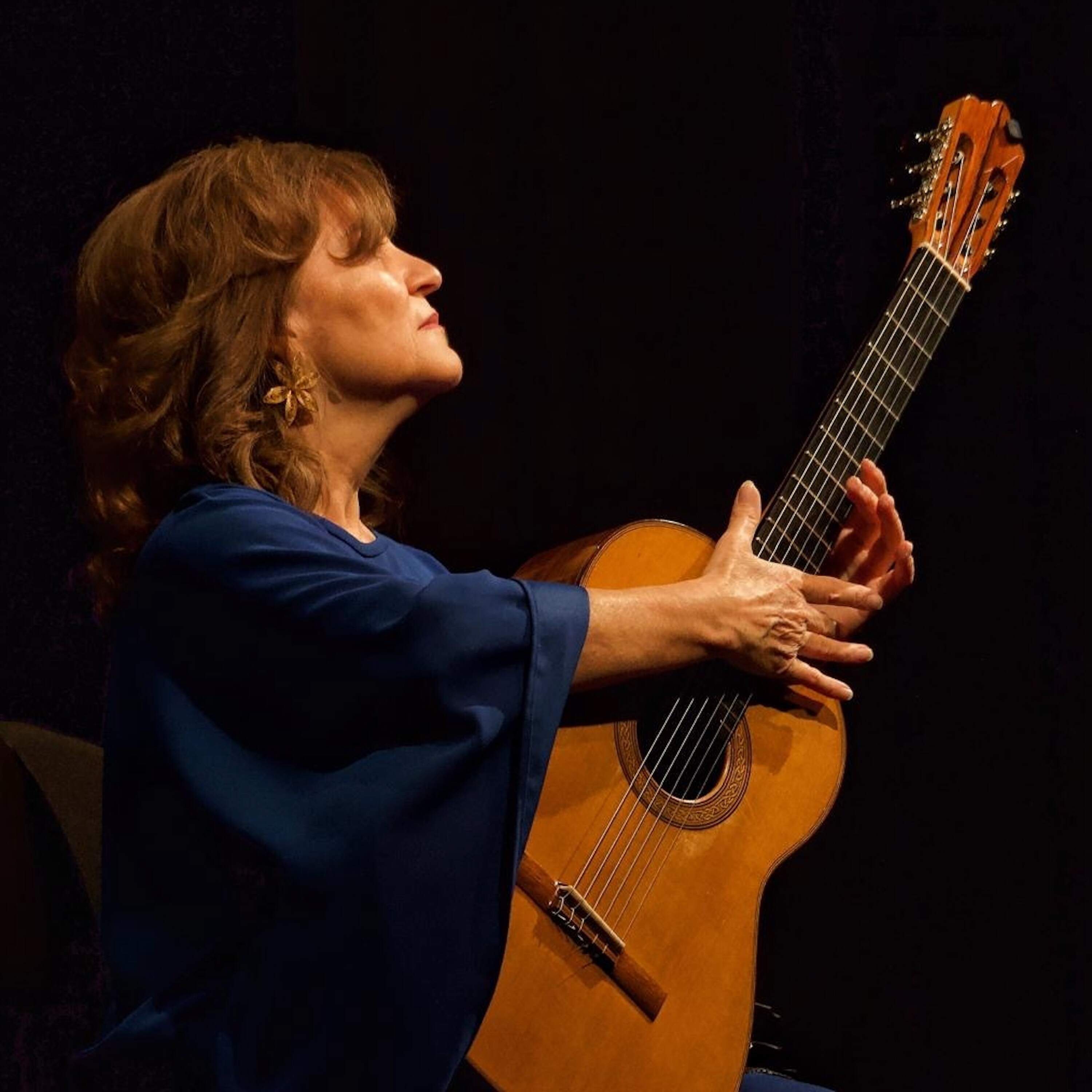
Okay, I'm taking a deep breath because I'm excited about all the music, but this one here really caught my attention. Okay, there is a guitar. She is a classical guitarist. Really one of the leading classical guitarists in the world. Her name is Berta Rojas. She's from Paraguay, and she has, you know, released a bunch of records, been in the business for a long time, done a lot of different things. She took on this project. It was two years in the making. It's called Las Cuerdas, like the Journey of the strings. And it's the history of stringed instruments in the new world. It's multi platform. There's a bunch of guest artists. I've written a track called Sara and it's written by a Puerto Rican composer, actually, Angel Mislan. And it features Berto Rojas on the guitar and our friend Fabiola Mendez on the Puerto Rican cuatro. Check this one out, Sam. You know, it's not something we normally play on the show, but, you know, I just had to bring it in because I just really admired her taking on this project. Like I said, over two years in the making, she went to 10 different Latin American countries. There's 17 musicians performing on various native strings instruments from wherever they happen to be from. In fact, one of them includes Gustavo Santo Olaya. All 11 tracks can be seen on the YouTube channel because when they recorded the album, they also recorded a video so you can see them actually making the record. Each track has its own song, its own video. The final package, it's a box set. It comes with the booklet with narrative notes and history. You know, I'm a history freak, so I really, like dug into that. It's really spectacular. And check this out. There's a QR code in the book and it. And it brings up an AI image where you can like run your finger, you know, digitally across the strings of different instruments and hear what they sound like. It's really immersive and it's a really beautiful project. Again, Berta Rojas, she's from Paraguay. She's done a lot of different stuff, classical music. And just the idea of her taking on this 500 years of history, you know, it's like you think we have problems trying to remember what came across in the last year. I'm sure she must have had a very difficult time trying to decide which track she was going to include on the record.
- [14:49]
Ana Maria Sayer
It is cool to think too, how close to the person, to the human, the stringed instruments across Latin America are. Thinking of the quattro, thinking of even the guitar, I guess, thinking of all these variants of what that is. It's like it's almost the voice, but not quite. It's like the second best thing. It's the second best version of communicating a story of an emotion, of a history. And so it is so closely held in so many places, and then it's so, so varied. This is really interesting.
- [15:18]
Felix Contreras
Yeah. And as part of, you know, when we talk about the history with Spain and colonization, all that stuff. There's certainly a lot of stuff to think about. But you know, the other thing that came out of this was just amazing music and art and, and sculpture and like visual arts, writing, all this stuff, but in particular the music and the way it was interpreted and reinterpreted and reimagined once it got here and just creates everything that we cover. Right? Like we wouldn't be here if it wasn't for all of that history.
- [15:48]
Ana Maria Sayer
100%.
- [15:49]
Felix Contreras
There you go.
- [15:50]
Ana Maria Sayer
So cool.
- [15:50]
Felix Contreras
Berta Rojas is her name. The name of the record is La Jolla de las Cuerdas. And, and that particular track was called Sara. I think we need to take a break.
- [16:00]
Ana Maria Sayer
All right, let's do it.
- [16:01]
Felix Contreras
Let's take a break so I can look at this booklet again.
- [16:11]
Announcer
This message comes from BetterHelp. The holidays are a time of traditions, like making your grandmother's pudding recipe or watching that movie you've seen a thousand times. Incorporating therapy into your life can help you take time for yourself during what can be a joyful but sometimes tough time of year. And by caring for yourself, you can show up more for the important moments. This December, start a new tradition by taking care of you. Visit betterhelp.com NPR for 10% off. This message comes from Charles Schwab. When it comes to managing your wealth, Schwab gives you more choices like full service, wealth management and advice when you need it. You can also invest on your own and trade on thinkorswim. Visit schwab.com to learn more.
- [16:56]
Sponsor Voice
This message comes from NPR sponsor HBO Max presenting the HBO original series Task for your consideration. In the working class suburbs of Philadelphia, an FBI agent played by Mark Ruffalo heads a task force to put an end to a string of violent robberies led by an unsuspected family man played by Tom Pelfrey. Don't miss the series. The Atlantic is riveting and revelatory. Now streaming on HBO Max.
- [17:24]
Announcer
This message comes from Saatva, the official mattress and restorative sleep provider for the U.S. olympic and Paralympic teams. U.S. olympic cross country skiing athlete and Saatva brand ambassador Jesse Diggins talks about how sleep affects performance.
- [17:38]
Ana Maria Sayer
When it comes to my athletic performance, sleep is everything. It is the most important factor in getting the most out of my training and being ready to race as fast as possible.
- [17:49]
Announcer
SATVA believes you deserve that kind of restorative sleep, too. Visit saatva.com NPR to save $200 on $1,000 or more. This message comes from Progressive Insurance Progressive Makes it easy to see if you could save when you bundle your home and auto policies. Try it@progressive.com, progressive Casualty Insurance Company and affiliates. Potential savings will vary. Not available in all states.
- [18:14]
Felix Contreras
And we're back. And to remind people we are listening to stuff that kind of slipped by us this year. Anna, you're next.
- [18:20]
Ana Maria Sayer
All right, Felix, here we go. Argentine Kazu came out with a new album this year called Latina J. She is known in much of the world as basically this huge force in urban music. I mean, she's. If you haven't heard of her, she's one of these artists that is like up there in the ranks of kind of some of the biggest, I guess, pop, but really, yeah, like urban sounding musicians. She's from Argentina. She released an album this year that again I listened to and I loved and I don't know what was going on, but here it is. The album is called Latinaje and this track is called Malasuerte. Felix, if you don't know her project, this is a pretty sharp pivot for her. I mean, it's usually like she's a rapper effectively, is really what her sound has been. And so this album had like cumbia, more pop sounds, funk, corridos, tumbados, which was very shocking for me to hear from an Argentine artist. So a lot for her in terms of the exploration of a very different sound. Obviously on trend with this whole, you know, exploring more integral, folkier, longer standing, let's say, sounds from different parts of Latin America. There was a lot of attention on this record because she did have this very high profile relationship, dramatic Cristiano Dal. And then it kind of devolved into this whole chisme of why not? It's a whole thing. You can look it up on TikTok, Felix. But the point is, is that I think a lot of people were really looking towards this record to get some of the details on that relationship, which, yes, she did talk pretty personally about him in some ways you can kind of hear it in the Letra. But really my focus more is just her exploration of the different sounds. There's different songs on here where you can kind of hear some crowd ambience. It feels like it was recorded in more of a live space. I think she was really going for that. And I think to me, really, Argentina as a whole is really supportive. I've found you can look at the Milo Jota album of people exploring kind of off kilter popular sounds. Not just the straight ahead, you know, reggaeton, the straight ahead urban rap. They. They really have been, especially in the last few years, I think, really respectful of the idea of incorporating traditional sounds into a pop. And so I think that that's where a lot of that is happening. And it's been exciting to see happen over and over and over again.
- [21:49]
Felix Contreras
This particular track reminds me of just how easily the Afro Caribbean. In this case, it's an Afro Cuban beat that she's playing underneath, like a median tempo, like, almost like a fast boletto, but a median tempo. Cha cha cha. Like, it fits so perfectly with like Dembo. With hip hop, it's just. It's so adaptable and you don't even have to change it. Yeah, just like it superimposes over this stuff. I mean, I rem reminded of the first time I heard this. God, it was like 98 or so in 99, when the Cuban artist Eki Selfonso did an album where he sampled Old Benny More and then put in hip hop beats underneath. And it just fit like a glove. And it still does. That's what this reminds me of.
- [22:33]
Ana Maria Sayer
That was the song Mala Suerte from Casu's album Latinaje. Okay, Felix, last song.
- [22:39]
Felix Contreras
Okay, my last song. All right, so this is an album called Reflections Facing south, and it's by a trombone player named Conrad Herwig, and he is a veteran of the Afro Caribbean music scene in New York. Latin jazz, salsa, jazz stuff. He's played with the biggest names. He has his own series of albums. The Latin side of Wayne Shore, the Latin side of Herbie Hancock, stuff like that, with all the top cats in New York playing. This one is a trio record, if you couldn't believe it, with Conrad Herwig on trombone, Lucas Curtis on bass, and the great Eddie Palmetti on piano. It was released just after Eddie passed in August at 88 years old. This is the title track, Reflections Facing south. And you can hear the interplay. And I'll. I'll explain a little bit more, but let's hear a little bit of the music. Sa. You know, throughout his career, we've run out of ways to talk about just how important Eddie Famieri was to Afro Caribbean music. And in this particular case, you know, this album reminds me of this moment that we had at the DC Jazz Festival in Labor Day weekend. Eddie Palmieri and his band were scheduled to close the festival out. They were the headliners of the last night of a weekend, two days worth of music on multiple stages. And it's always the headliners, always the one that blows everybody away. And Eddie and his band were Supposed to. To play. And he passed before the gig. And the band decided, and the D.C. jazz Festival organizers decided, you know what? Let's just do this as a tribute to Eddie Palmieri. I was fortunate to be able to do, like, a panel discussion with the musicians, some of the musicians of the in the band in the afternoon to talk about his legacy and talk about his impact. Ana emotions were still so raw because these were all young guys and a couple of guys who'd been playing with him probably since, like, the 80s. They. And he was. He was the chief. He was the guy. He was, you know, he was their surrogate father. He was their, you know, uncle. He was everything. He was their band leader. He was their friend. He was all of that during the session. It was just. It was very emotional. And everybody was talking about, you know, they were. How they joined the band and they were reacting to him. Lucas Curtis, who was bass player Eddie, called Lucas his left hand. Because, you know, when you're playing the piano, the left hand on the piano plays all the bass notes. So he didn't have to play a lot of stuff because Lucas had figured out a way with his own talent to play this part that fit perfectly with Eddie. And when he was explaining to that he got very emotional on the stage. Ana when they played that night, Eddie's band was theirs. The guy Curtis was actually filling in for Eddie on piano. It was the most emotional thing I'd ever seen. They were practically playing through tears on that stage, killing. I mean, like, uptempo. Not just ballad stuff, just, like, uptempo Eddie stuff. And to know that they recorded this record, you know, probably earlier in the year, and then it came out just as he passed. You know, it's reflective. It shows everything about Eddie, what he was, you know, his melodicism, his emotion, the rhythm, the playfulness, everything about it. Listening to this record is kind of hard, but it's also, you know, this is what we need after losing him this year. The album's called Reflections Facing South. The artist is Conrad Herwig, Eddie Famietti and Lucas Curtis. Okay, your turn.
- [26:58]
Ana Maria Sayer
Me?
- [26:58]
Felix Contreras
Yes.
- [27:02]
Ana Maria Sayer
Juana Molina Felix. You know the name?
- [27:05]
Felix Contreras
Oh, my God. Yes, I do.
- [27:06]
Ana Maria Sayer
Did you hear this record? Because I somehow missed it. She released an album this year. It's her first original music album in eight years. And we didn't think to listen to it or play it on the show.
- [27:18]
Felix Contreras
You know, man, I'm like, we're losing our minds. Yeah, she's probably giving us pow, pow right now, wherever she is. Cause we're not for overlooking this. I'm completely embarrassed that we missed this one.
- [27:29]
Ana Maria Sayer
Well, I'm doing the good deed as our last piece of music. I think that will play on the show this year. Felix, it feels only appropriate to close out with the incredible Argentine. How do you even describe her? She's like, spent so many years making really interesting alternative sounding music, always pushing the edge, the boundary, doing the new thing, doing a different thing, exploring her own kind of space and sound. And so this is the album, it's called Doga and this track is called La Paradoja.
- [29:00]
Felix Contreras
Yeah, yeah, we should, we should be ashamed of ourselves.
- [29:03]
Ana Maria Sayer
We should be ashamed of ourselves. And to run it back on Juana Molina and her story, I mean, she's been doing this since the 90s. This is her eighth album that she's released and she actually started. And I don't know if you know this, Felix, she started as a comedian and that was kind of how she first got acclaim. People in Argentina weren't as interested in her music early on and it actually took her kind of getting some recognition outside of the country for people within it to start paying attention to her. But she really has always done things that are interesting, things that feel distinct. This is a song that I really loved off the record. It's called Siestas A. I think it's also worth noting, Felix. We talk about Argentina a lot on this, this show. I mean, the way that we're constantly impressed by this, this new young wave of artists, of A Catriel Ipaco Amoroso, of Amilo Jota. And it's really, I think, important to always remember that Argentina has always had a really healthy alternative scene. And if it weren't for artists like Juana Molina, you know, they could not exist in the way that they do today. And there really is this consistent again, like I said earlier, this. This respect for the place that music adds as an art form, but more as a boundary pusher, I think exists in the country. Like I was having this conversation yesterday that in Argentina it has existed on the same plane as politics in the past. It has existed on the same plane as actual, you know, concrete public discourse. And so I think there's always this look towards music as a place to really kind of have conversation with yourself, with each other, and do things that feel. Feel a bit revolutionary in a way. So Juana's always been that to me.
- [31:26]
Felix Contreras
I had Juana Molina on the show maybe 2011 or so. And the reason why I had her on the show, because I saw her CD sitting around somewhere. It was a brand new record. It was laying on a shelf somewhere and I listened to it and it opened up a completely new sonic world for me and I was completely enraptured. And so I had her on the show. I knew that she was a comedian and had done this stuff on tv. So if you find the show, I asked her to, I think she signed off on the show with the voice of the character that she did in the TV show. And I also need to remind people that we had her on the tiny desk in 2014. So, yeah, we're big fans here at All Latino of Guanamolina and which is why I'm embarrassed that I miss. I completely missed the record, man.
- [32:09]
Ana Maria Sayer
It's okay. That's what I'm here for. That was a few songs off of the new Juana Molina album, Doga. Okay, Felix, that's it. We did it. The year, it's over.
- [32:21]
Felix Contreras
Oh my gosh.
- [32:22]
Ana Maria Sayer
Yay.
- [32:25]
Felix Contreras
Just to remind listeners, we are going to take a couple weeks off to for the holidays and go out and do our respective things. But we will be back in the beginning of the year. But yeah, looking back, I mean, we talked about this last week. I think it was a show where we look back at the year, you know, what Latin music was like, all that other stuff, but just in general, I mean, it was action packed. There was a lot of amazing, amazing music. And again, it's like a lot of stuff slips by. And I'm glad we were able to catch up to it this week. Kay, Anna, I'll see you next year.
- [32:59]
Ana Maria Sayer
Yeah, right. You're gonna text me tomorrow. Today.
- [33:04]
Felix Contreras
You have been listening to Latino from NPR Music. Our audio editor is Noah Caldwell. And today in the booth, Danica Pineda.
- [33:11]
Ana Maria Sayer
Executive producer of NPR Music, is Saraya.
- [33:14]
Felix Contreras
Muhammad, executive director of NPR Music is Sonali Mehta. I'm Felix Contreras, I think.
- [33:19]
Ana Maria Sayer
And I'm Ana Maria Sayer. Okay. You know, mamas, we really are. At the end of the day, I'm forgetting names, man.
- [33:25]
Felix Contreras
Oh my gosh. Thank you for listening. I think I need a break. I think I need a couple weeks off.
- [33:47]
Announcer
This message comes from the Council for Interior Design Qualification. Interior designer and CIDQ president Siyavash Madani discusses why certified professionals know that good design is more than just how something looks.
- [34:00]
Guest Speaker
Being NCIDQ certified means you've qualified to protect the health, safety and welfare of the public in the spaces that you design. Good design is never just about aesthetics. It's about intention, safety and impact. So an NCIDQ certified Interior Designer must complete a minimum of six years of specialized education and work experience and pass the three part NCIDQ exam. All three exams emphasize and focus on health, safety and welfare of the occupants. Being NCIDQ certified means that you've proven your knowledge and skills through rigorous exams and are recognized as a qualified interior design professional.
- [34:42]
Announcer
Learn more@cidq.org NPR this message is sponsored.
- [34:48]
Sponsor Voice
By DSW, the birthplace of the humble brag. Full of all kinds of shoes that get you at prices that get your budget. And when there are never ending options for every style, mood, occasion and budget, there is unlimited freedom to play. And that's something to brag about.
- [35:04]
Felix Contreras
So go ahead.
- [35:05]
Sponsor Voice
Stock up on fresh sneakers from your favorite brands or try those boots you always secretly knew you could pull off. Find the shoes that get you at prices that get your budget. Dsw. Let them surprise you.