Loading summary
Transcript57 lines
- [00:00]
Narrator/Announcer
This message comes from Capella University. That spark you feel, that's your drive for more. Capella University's flexpath learning format lets you earn your degree at your pace without putting life on pause. Learn more at capella Edu.
- [00:15]
Host (Bob Boilen)
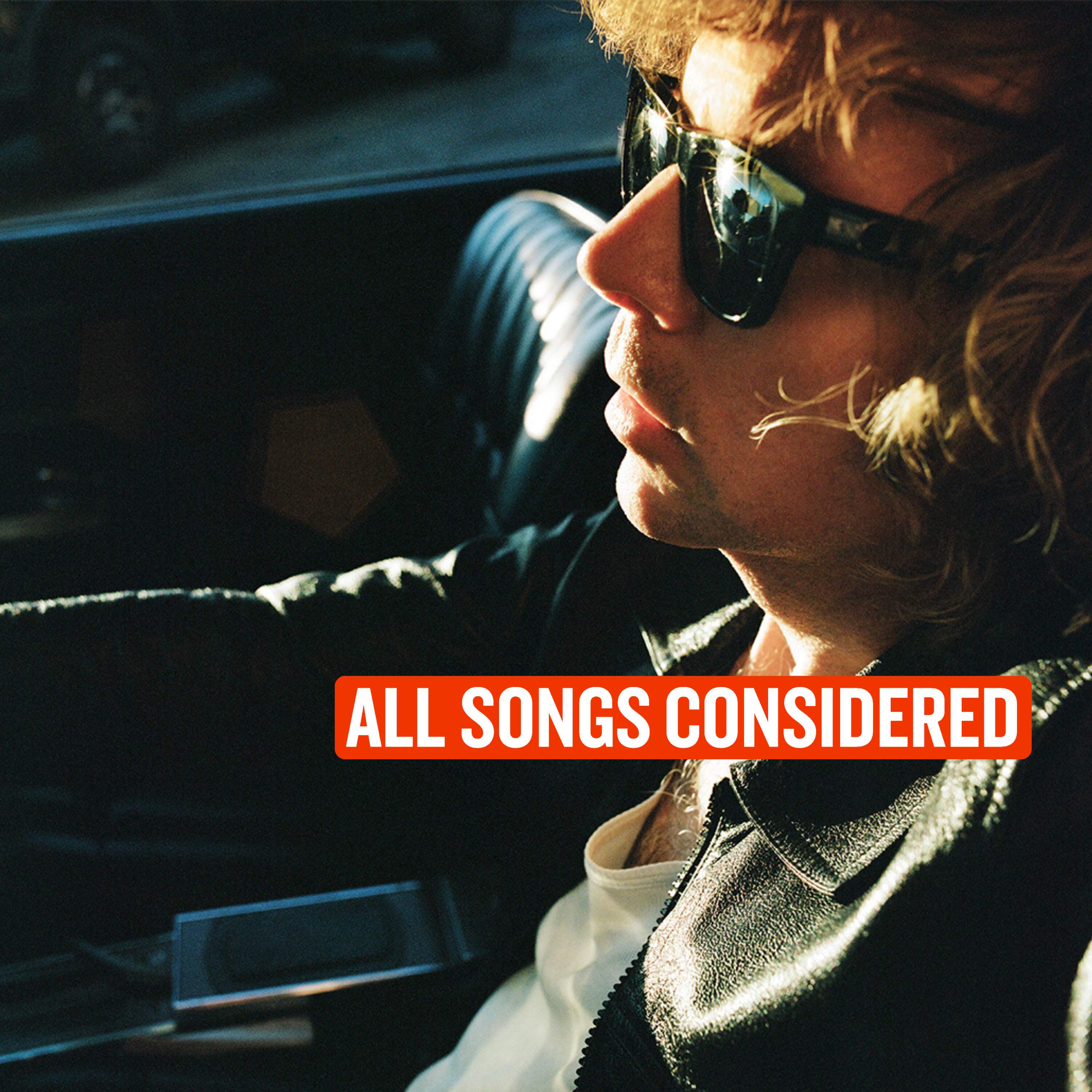
This special episode of All Songs Considered comes to you from the NPR Music podcast, where if you have been listening to us much for the past 25 plus years we've been doing the show, you know that we are pretty big fans of band. I've actually been on Beck watch for a minute now because it's been a long time since he put a new album out. It's been about seven years, which is the longest that he's ever gone between albums. And that's notable because he's someone who's been so prolific in the past putting out so much stuff. So in January, when he kind of out of the blue released this new EP of some rarities and cover songs, we featured it on the show back then. Everybody's got to learn sometime. When you released that, I started thinking maybe he's got something in the works here. Maybe we're going to start hearing more from him this year. And sure enough, Beck is back. He's just released a brand new song. It's called Ride Lonesome. If you're a Beck fan, you know, he's someone who's played around with all kinds of sounds and genres and styles and everything in a career that stretches back more than 30 years. This new cut, we're going to play it here. It's very much like something if you know his album Sea Change or the album Morning Phase, it's very much like those very introspective, kind of quieter. It's very gauzy and reflective. He's doing a lot of soul searching. We're actually going to talk with Beck all about this new song, how he came to write it, and also a little bit about what he's been up to since his last album. But first, let's hear the song Ride Lonesome. We'll play the whole cut here and then we'll hear from Beck.
- [02:00]
Song Lyrics
Yesterday, paper roses they forgot to move so walk away hang up head pole you got to ride. You got to try to find the moon you got to cry. Follow all the way. She is gone. You could put your arms while a memory you know it's wrong Turn your heart into you got to lie, You got to turn the, you got to cry. What are you gonna say to the Met. When it's shining down on you? When it comes back to My w. When your days are running wide. Oh, You say so long until the world is still a part of you there's no song to tell your part what it already do? You've got to write. Got the time to find the road. You got to cry. Sam. Yeah.
- [06:10]
Host (Bob Boilen)
So right away, I'm getting sea change, I'm getting morning phase, that kind of sound. Is that fair to say?
- [06:19]
Beck
Yeah, exactly. You know, I assembled the whole troupe of musicians who did those records with me. And you got Nigel Godrich, who produced sea change. He's mixing the song.
- [06:31]
Host (Bob Boilen)
So, you know, your last couple of projects were very. The albums, they were very beat and synthesis driven albums. And when we talked about colors after that was released, you talked about how the guitar just isn't the center of popular music as much, which I think is true. But this song and another single you released a few years ago, thinking about you. There's a lot of guitar more. It's very guitar forward. Is that something you've been getting back to?
- [06:55]
Beck
I've never gone away from the acoustic guitar. It's kind of where I started. And, you know, I really thought that I would be some sort of folk musician or country singer or something like that. I don't think the term Americana had really been born yet, but I was always drawn to that kind of sound and the idea of the one man, the man with a guitar and a song and a couple of melodies, and there's something. I wouldn't say pure or basic. There's just something very direct about it, and it doesn't really need anything else.
- [07:35]
Host (Bob Boilen)
Is that where you start? When you're. When you're writing, do you tend to pick up a guitar?
- [07:39]
Beck
No, I do all kinds of approaches. It depends on the project. I did a record with Pharrell, and he had his laptop with all his. The sounds that come with the computer. So it was very. It felt very modern in that way. It was just all electronic, and so it's just kind of whatever's at hand. But at the end of the day, there's a certain comfort with an acoustic guitar or piano, and that's what I always go to. And I think if the song can just live with you singing and a single guitar on it, then it's a real song. I mean, there's all kinds of songs, but those kind of songs just can sort of stand the test of time.
- [08:19]
Host (Bob Boilen)
Well, take me back to when you were writing ride lonesome, like, just like what was going on in your life at the time.
- [08:26]
Beck
I think it was a bit of A lonely time. It was a lot of. One of those. Those times in your life when you're taking things in where you've been and where you're going. Yeah. You know, when you're going through difficult things, often it comes down to you. You kind of have to get through it yourself, you know, you have to. Yeah, you just have to move forward through whatever landscape of your life and circumstances you find yourself in. And I think it's sort of that sort of dark comfort of pushing through the parts of life that are maybe not as comfortable or easy and having some distant faith that it'll pull you through to the other side.
- [09:06]
Host (Bob Boilen)
I know Studs Terkel said hope dies last.
- [09:11]
Beck
Exactly. Yeah. We were just shooting a little video for the song, and I didn't realize there were all these windmills behind us. And I was thinking of Don Quixote and the sort of chasing windmills aspect of music. You know, I think you're always trying to find that unattainable. And, you know, I think I'm just. And I think this is something that will follow you through your life. You just always feel like you're just figuring it out. It's sort of like the kind of gambling instinct, you know, the people who do the claw machine to try to get the prize. Yeah, you know.
- [09:52]
Host (Bob Boilen)
Yeah, totally.
- [09:53]
Beck
That. That's music for me.
- [09:55]
Host (Bob Boilen)
Yeah.
- [09:55]
Beck
You know, I'm just. I just think. And I get it in the claw and I'm gonna drop it and get the prize. And, you know, it's just always one. One prize away, you know, and you never quite get it. But
- [10:10]
Host (Bob Boilen)
do you really feel like, with your songs, when you get something like, you know, ride Lonesome or any of your work, do you really feel like, ah. Just. Just slipped away at the last minute? I just didn't get it. Do you really think that?
- [10:22]
Beck
I think it's like a lot of things in life, you know, it's like the vacation that you plan or it's the. The thing you had imagined, and it's never quite what you thought it would be. Yeah, it's always something different. Maybe sometimes it's disappointing, sometimes it exceeds your expectations. And, yeah, the songs are. They're never quite what I imagined in my mind. Somehow in the translation from, you know, the brain to your fingers to the pen on the page, it becomes something somehow. The process has a mind of its own and the muse has plans of its own. And so, yeah, you're kind of chasing this elusive ultimate that you never quite reach. And I think that is the beauty of it. I think that's what keeps pushing us forward and striving and trying to articulate that ineffable well.
- [11:17]
Host (Bob Boilen)
To go back to ride lonesome what do you hear then when you hear it played back to you?
- [11:22]
Beck
This feels like just the most simple kind of just sitting out of time. I grew up when I was learning to play music and write songs. I listened to a lot of Hank Williams, a lot of Woody Guthrie, a lot of cowboy music, a lot of, you know, some Bob Dylan, some of that 70s singer songwriter stuff. It's all sort of cowboy influenced. It all sort of has that kind of country western thing about it. And so to me, it just sort of feels like part of that thread of songs.
- [11:56]
Host (Bob Boilen)
But, I mean, do you feel like the claw dropped it into the little compartment for you to pull it out and you got what you were?
- [12:02]
Beck
Yeah. Well, that song. Yeah, just came out really fast. This one just came really quick.
- [12:07]
Host (Bob Boilen)
That's a good sign for you.
- [12:08]
Beck
Yeah. I think when I think of songs that I've done that people like or they connect to immediately, they're songs that were made really quickly. There wasn't a lot of thought. And I have to say, most of my songwriting, there's a lot of thought going on.
- [12:25]
Host (Bob Boilen)
Too much, you think?
- [12:26]
Beck
Yeah, sometimes too much. Sometimes they're just a little too clever. I think the ultimate is just writing something simple in the universal. That doesn't take a lot of trying to decipher simplicity as the ultimate. And it's something that I've always. I didn't always reach, but, you know, it is the ultimate goal. It's. It's the kind of beautiful musical balance. Something just comes out balanced. And there's. There's a lot of songs like that that have given me comfort. And, you know, every once in a while you write one for yourself. And it's not even particular to an even particular moment in life. It's something. We hit those points constantly through life. We're always moving up the mountain. And just when you think you figured it out or you got to the top, there's more and more to climb.
- [13:24]
Host (Bob Boilen)
When we talked a number of years ago after Colors came out, you did say something about just like, the healing power of music. Do you turn to music to work through your feelings or to even find what your feelings are?
- [13:37]
Beck
Yeah, I think it's a bit of both, and I think it's a bit of a divining rod. Sometimes you feel like the guy on the beach with the metal detector trying to find a few nuggets buried in the sand. Sometimes it's just for your own comfort or your own benefit. And sometimes you're trying to figure something out. You're trying to articulate something you don't quite understand. Sometimes I'll write a song. I have no idea why I wrote it, where it came from, until years later I'll hear it and go, oh, it's obvious what that was.
- [14:11]
Host (Bob Boilen)
Well, as you were combing the beach with that metal detector, what did you find this time around?
- [14:16]
Beck
I think I found a couple old cans, a couple of pretty shells, and, well, I live in Southern California, so I probably found a little bit of oil spill debris. There's got to be a little something apocalyptic in it.
- [14:36]
Narrator/Announcer
This message comes from Capella University. That spark you feel, that's your drive for more. Capella University's flexpath Learning format lets you earn your degree at your pace without putting life on pause. Learn more@capella.edu support for this podcast and the following message come from Strawberry Me. Be honest. Are you happy with your job? Are you stuck in a job you've outgrown or never wanted in the first place? Are your reasons for staying really just excuses for not leaving? Let a career coach from Strawberry Me help you get unstuck. Discover the benefits of having a dedicated career coach in your Corner and get 50% off your first coaching session at Strawberry Me.
- [15:21]
Sponsor/Advertisement Voice
This message comes from NPR sponsor Carvana Making buying a car 100% online with real transparent pricing and customizable financing that fits your budget. Browse thousands of cars and get yours delivered. Visit Carvana.com today. Delivery fees and terms may apply.
- [15:39]
Host (Bob Boilen)
Well, tell me what brought you back to working with Nigel? I mean, you guys have obviously worked together a lot over the years, but by my math it's been like 20 years, I think. Was it the information in like 2006? What brought you back together?
- [15:52]
Beck
Well, I was in London playing a couple of nights at the Royal Albert Hall. I was doing some symphony shows and he came down and I was just starting to finish these songs and I think I played him a few things and I asked him if he would consider mixing it because he had this big, beautiful studio and he really is the best. He's pulling back a bit of my rampant spacey reverb that I would put all over everything, drench it in tons of reverberant echoey drenched sound that kind of makes it a bit murky and mysterious and he kind of brings it back to earth a little bit.
- [16:33]
Host (Bob Boilen)
So it's been seven years since your last album, which is the longest stretch you've gone, I'm just wondering what you've been up to. I know you've been doing some collabs and singles, but.
- [16:43]
Beck
Yeah, I had to wait a couple of years to get back to work.
- [16:47]
Host (Bob Boilen)
After Covid, you mean?
- [16:49]
Beck
Yeah. Meanwhile, I did a song with Gorillaz and I did one with Paul McCartney and we did a fun video together. I helped write a Black Keys album called Ohio Players. I think I wrote like 10 or 12, worked on 10 or 12 of those songs. And then I'd just been working on my music pretty constantly. I'd been working on this record year and a half, two years, probably two years and a bunch of other things. So I built a recording studio. What else I've been doing. I've been, you know, living life.
- [17:19]
Host (Bob Boilen)
Yeah, I just wondered if you were maybe enjoying being out of the album cycle for a while. You know, like, just enjoying, like, being a dad or.
- [17:27]
Beck
Yeah, I do try to find that balance, but I think I'm writing a lot of songs. Has been a very prolific time for me.
- [17:34]
Song Lyrics
Yeah.
- [17:34]
Host (Bob Boilen)
Are you writing every day?
- [17:36]
Beck
I wish, but, yeah. No, I definitely been digging into the writing and there's a certain amount of process of experimenting, I guess what they would call research and discovery, where you're in the laboratory trying to come up with what the next thing is, and a lot of trial and error. So I probably have made multiple albums worth of music that probably no one will hear, but hopefully it leads to something that you will hear.
- [18:07]
Host (Bob Boilen)
Well, yeah. I mean, can you say what you've got cooking next since we're starting to get more beck this year?
- [18:14]
Beck
Yeah, I got lots of things cooking. There's all kinds of music. I've been in the studio a lot on and off the last, say, four years with my. With my band. There's a group of musicians I came up with that were my touring band for a lot of my early records. And everybody's gone off to bigger and better things, but we still get together and we'll find a couple of days here and there and make some music. And. Yeah, I have a lot of different projects I want to do, so hopefully there's time to get to all of them.
- [18:43]
Host (Bob Boilen)
Yeah. You know, when I imagine you getting together with your old friends like that, your old touring group, and getting in the studio and making music, it makes me think of how, like, you had this period. It's been. I mean, gosh, it's been like 15 years or so ago where you were just doing so much. You were like, you were dropping albums and you were touring, but you were also doing these other things, like record Club, where you and your friends were covering whole albums, or you did Song Reader, where you released an album as sheet music. I remember thinking, like, this guy just really loves this.
- [19:16]
Song Lyrics
Like you.
- [19:17]
Host (Bob Boilen)
There's no other motivation other than it's kind of like McCartney. Like, McCartney just keeps going. Like, you seem like he just loves it. He just loves doing it. There's literally no other motivation other than he loves that.
- [19:30]
Beck
Yeah, it's not the easiest thing to do in the world. It definitely has its rewards. It's a lot of just digging through the coal mine, just trying to get one little something. But the whole process is. It's something you have to love. You have to be compelled to do it. I think of it as a calling and. And it's not always for the faint of heart, but yeah, it really is something that you wake up and you want to work on a song. You want to try to pull a piece of music apart and see what a song can do. And, you know, I don't even think of it as a. It's not even something that you're trying to do to build a career or anything. I think of it as kind of that concept of like, I'm on the 405 freeway of songs. I'm just like one car on a freeway of millions of cars and we're all pushing towards something. I don't know. And maybe you come up with a song that reminds somebody else of another idea that gets them to write a song, and then it's just kind of this chain reaction. And, yeah, I just see myself kind of in this sort of music making flow or river of so much going on. And so you're just kind of contributing to this sort of unruly big mess. And yeah, I like to get into those waters and let it carry me downstream and see where it goes.
- [20:56]
Host (Bob Boilen)
It gives you just as much life.
- [20:57]
Beck
And. Yeah, honestly, I mean, the last few years, I just. If I think about making music, I feel like I'm just getting started. And I don't know if other musicians have that look. I mean, if I was Paul McCartney and had written the best songs ever by the time I was 30, maybe I would feel a little different. But, you know, look at him. Even he doesn't. I think he still feels he's got just as good music in him. And I think I honestly look to my music and I think this is. I haven't even really done what I want to do. I'm just flailing around a bit, and maybe you never get there, maybe it just never happens, but the possibility always feels there.
- [21:43]
Host (Bob Boilen)
That's Speck talking about his new song Ride Lonesome. You know, I tried to get him to tell us whether there was a new album on the way. We kind of were dancing around it a little bit and you heard him allude to lots of things in the works. He's been writing a bunch that was great to hear. So I'm hopeful, you know, even if there's no official word yet on a new full length or when it might happen. But always good to reconnect with him and of course, get this new music. He's one of those artists for me who he just never seems to miss. And if Ride Lonesome is any indication of what Beck's got coming next, I am there for it. We're going to have a whole new All Songs Considered for you on Tuesday. Sheldon Pierce will be back to talk about our picks for the best new songs of the week. I totally would have included this Beck song, Ride Lonesome, on it if we hadn't had a chance to talk about it here. Also, Alt Latino on Wednesday. We have a plus episode of the show every other Thursday, and that's what's happening this week. Ann Powers and Dawoud Tyler Amin, they're going to do a deep dive on Blitzkrieg Bop by the Ramones. And of course, we'll close out the week with new music Friday. Until then, thanks so much for listening. It's All Songs Considered from NPR Music.
- [23:02]
Song Lyrics
You know it's wrong Turn your heart into your Got to write, You got to turn.
- [23:28]
Narrator/Announcer
This message comes from Midi Health introducing agewell Longevity Care, designed by women for women. Whether you're looking to prevent future health issues or just feel more like yourself, learn more@joinmidi.com that's joinmidi.com this message comes
- [23:45]
Sponsor/Advertisement Voice
from Thumbtack Avoiding your unfinished home projects because you're not sure where to start. Thumbtack knows homes, so you don't have to don't know the difference between matte, paint, finish and satin or what that clunking sound from your dryer is. With thumbtack, you don't have to be a home pro, you just have to hire one. You can hire top rated pros, see price estimates and read reviews all on the app Download today.
- [24:10]
Narrator/Announcer
If the brain is like a computer, then Kyla Madonna Kenney's was crashing, the room was spinning and I was shaking, but only on one side. Doctors couldn't see anything physically wrong with Kyla's brain with the. The hardware, so to speak. The problem was with the software. And the condition she was eventually diagnosed with is called functional neurological disorder. To learn about this invisible illness, listen to Short Wave on the NPR app or wherever you get your podcasts.