Loading summary
Transcript129 lines
- [00:01]
A
This message comes from Carvana, who makes buying and financing your next car easy. Thousands of vehicles terms up front and 100% online. Even get it delivered to your door. Buy your car the easy way with Carvana. Delivery fee may apply.
- [00:20]
B
We have just watched another Grammy Awards telecast and it was full of lavish performances, occasional chaos and historic wins for Bad Bunny and Kendrick Lamar. And and it was a night of speeches that reflected this moment in America. I'm Stephen Thompson. It is 1:11am and we are recapping this year's Grammys on pop culture Happy hour from npr.
- [00:47]
A
Valentine's Day is coming up and the perfect gift for the NPR lover in your life is waiting at the NPR shop. From cozy sweaters and mugs made for slow mornings to our tiny desk hoodie, there's something for every NPR fan. Each purchase supports public media and the journalism you love. Find something meaningful@shopnpr.org.
- [01:09]
B
Joining me is NPR music editor Hazel Sills. Welcome, Hazel.
- [01:12]
C
Hey.
- [01:13]
B
Also joining us is freelance music and culture journalist Rhianna Cruz. Hey, Rhianna.
- [01:17]
D
Happy to be here. Hey, Stephen.
- [01:19]
B
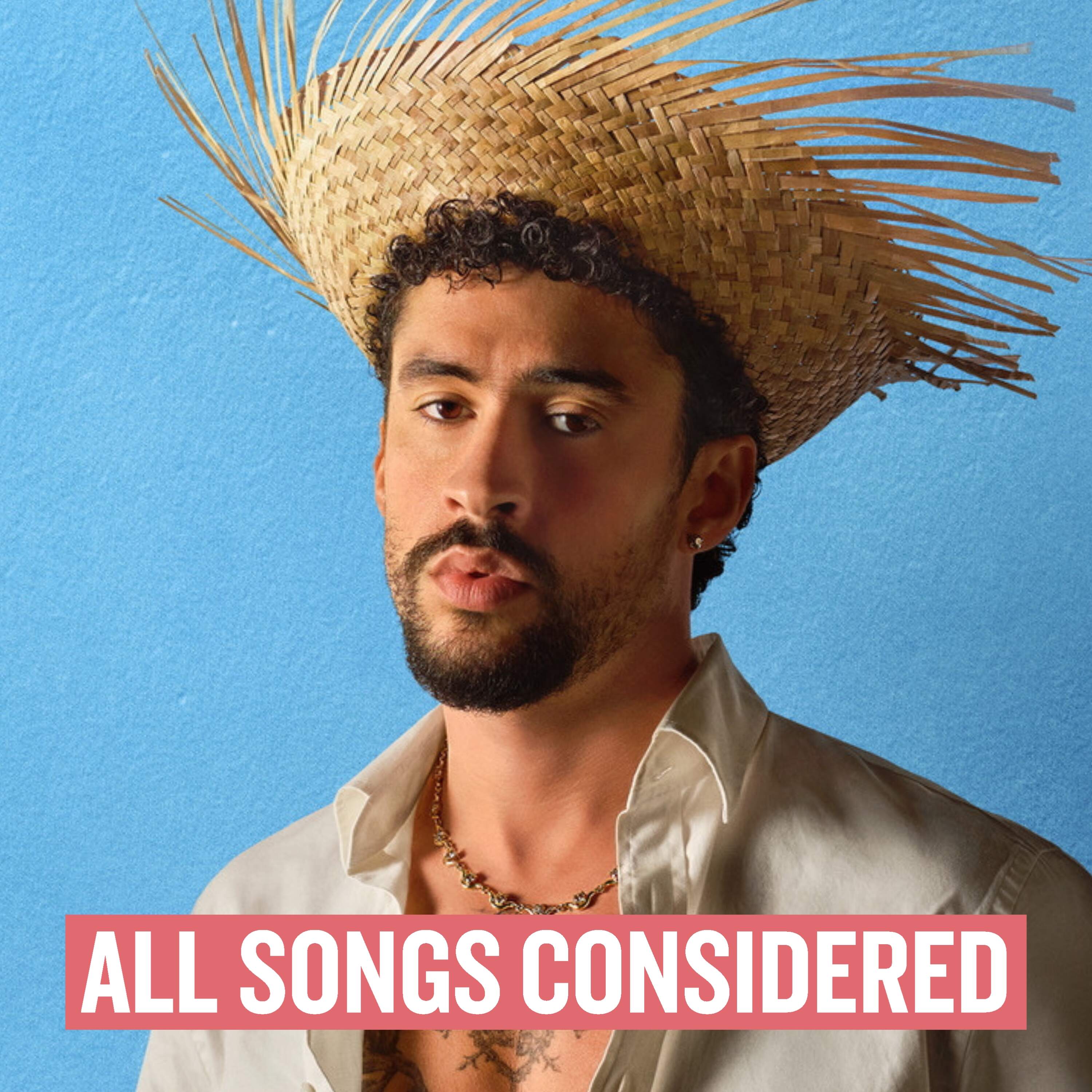
It is a pleasure to have you both on this late night. We have to start with Bad Bunny. His album Deb to be Tirarmas photos took home Album of the year. It is the first ever Spanish language album to do so. He also won for best Global music performance and best Musica Urbana album, where he made a striking speech that directly addressed ice.
- [01:42]
E
Before I say thanks to God, I'm gonna say ice out.
- [01:50]
B
He was met with resounding applause from the audience and went on to say this.
- [01:56]
E
We're not savage, we're not animals. We're not aliens. We are humans and we are Americans.
- [02:03]
B
Bad Bunny notably didn't perform. He is performing at the super bowl halftime show this Sunday. So he's having a big February, to say the least, after a very, very big year. What do y' all make of these wins for Bad Bunny?
- [02:16]
D
I mean, I called it the day the album came out last year. I said, this will be the next album of the year. And I'm happy to be proven right. Caught up emotionally watching him, you know, break down in tears when the award was announced and him accepting the award for album of the year and dedicating it to people that have had to immigrate and the Puerto Rican community, like, it made me really emotional. And I think this is such an important moment in his career for him to win for an album that is so singular and pointed in its messaging and its sound. I was really taken aback. There was a moment there where I didn't think he was gonna win. I was like, gnx is gonna win album of the year. You know, I'm happy it was Bad Bunny. My money was on him.
- [03:05]
C
You know, I wasn't as sure as you were that he was gonna take this, because I think. I mean, unless you've sort of been living under a rock for the last few years, like, I mean, Bad Bunny has become one of the greatest pop stars, like, in the world, like, superstars. And I feel like his win is a really big deal for his career, personally. Like you said Rihanna. But it's also a really big deal for the music industry because I feel like it is a testament to how much Latin music is just pop music. Like, gone are the days of, like, you know, Shakira having to record in English, Latin artists having to record in English, having to do these crossover moments. Like, something that I've always really loved and respected about Bad Bunny is that he's never tried to cross over into the American market. He sings in Spanish. He sings about Puerto Rico so intimately and personally. So it feels like, oh, this is a moment where Latin music is not just this, like, segregated genre in the music industry at large. Like, it is just simply American music, pop music.
- [04:16]
B
I think it's also. This is a big moment for the Grammys. You know, one year ago, we kind of convened this podcast late at night to talk about the Grammys and how they had finally given Album of the Year to Beyonce and how the Grammys had this long history of lavishing Beyonce with awards, but mostly shutting her out in the general categories in ways that made her music feel like it was viewed by Grammy voters as somehow niche or less than or. That's this market over there. But when it came time for the general categories, it's like, no, here it's Harry Styles or Beck or, you know, don't remind me. Or any number of people who have beaten Beyonce for Album of the Year. Latin music has kind of been somewhat in the same boat. It has these categories. It has a huge audience. Un Verano Sinti was nominated for Album of the Year. You know, Bad Bunny has been represented in this category before, but to suddenly have a Spanish language album win Album of the Year at the Grammys, that is a major, major breakthrough.
- [05:21]
D
Totally. And I think in the context of the Grammys, I think of, like, when Ricky perform La Copa de la Vida at the Grammys in 1999, right? And that was seen as like, a watershed moment for Latin music. But when you watch the performance there's this element of, like, fetishization towards Latin music and culture in that performance. And to look at that and look, you know, at Bad Bunny winning for a Spanish language record, like, that's really remarkable. And it makes me excited, quite frankly for the direction the academy is going with their album of the year picks between California Carter last year and Debit this year.
- [06:01]
B
So as we mentioned, Bad Bunny is performing at the super bowl halftime show next weekend. The big super bowl halftime show performer of last year also had a big night at the Grammys this year. Kendrick Lamar surpasses Jay Z to become the Grammy winningest rapper of all time. Kendrick Lamar won five Grammys tonight, bringing his total to 27, including Record of the Year for Luther with SZA. What'd you all think? Kendrick Lamar's night.
- [06:31]
C
I mean, I'm thrilled for him. I have to say. I'm still a little surprised by how popular Luther is or has become. I just didn't.
- [06:40]
D
I agree with you.
- [06:41]
B
Oh, are you surprised that song is so great?
- [06:43]
C
I'm not saying it's not great. I'm just saying that of all the songs on that album, like, there's just something about Luther that it feels like one of the poppier songs on that album. And maybe actually now that I'm saying this, I'm like, maybe that's why.
- [06:57]
B
That speaks to why I thought it was interesting when Kendrick was accepting the Grammy and he thanked the estate of Luther Vandross, he had to clear that sample to do the song and basically was told, you can use the song, you can't swear in the song. And I think that's part of what makes that song so enormously radio friendly, that that restriction ended up kind of increasing the enormous kind of commercial success and obviously now awards success of that song.
- [07:28]
D
I was never a fan of Luther as a song, so I love it. It's the fact that I live in Los Angeles and I turn on the radio and I hear every other track from that album.
- [07:39]
B
Sure.
- [07:39]
D
And then Luther comes on and I go, okay, this is the least inventive song of what we got cooking. You know, like, I'm a big squabble up fan.
- [07:47]
B
Sure. I mean, I love that song too.
- [07:49]
D
Right. Like, him winning best rap album was solely for squabble up to me shout out Debbie Deb on that sample.
- [07:57]
B
But anyway, I I TV off won best rap song.
- [08:00]
D
Yeah. And when Lefty Gunplay went up to accept the. I heard the strongest LA accent I've ever heard in my life. And I was very happy to hear that. I'm happy he picked up awards tonight. Him meaning Kendrick Lamar. I think of when Drake was trying to diss him and said, kendrick just opened his mouth. Somebody give him a Grammy right now. Very prophetic. A prophetic line also.
- [08:22]
C
Not that big of a burn.
- [08:23]
D
Like.
- [08:24]
B
No, not at all.
- [08:25]
C
I'm like, what are you saying there?
- [08:26]
D
I put diss in quotes. You know, Drake intended it to be a diss, but it really was, like, history in the making. Yeah.
- [08:33]
B
Certainly not the meanest thing that was said between those two men.
- [08:36]
D
No, not at all.
- [08:37]
B
Speaking of Luther Vandross and Kendrick Lamar, when record of the year was handed out, we should note that the award was handed out by Cher. So Cher was winning a lifetime achievement award, but they also wanted her to hand out the record of the year trophy. So she kind of gives her speech about her lifetime in music and then sort of wanders off stage and they have to kind of call her back on stage to give out record of the year. And when she opens the envelope, this happens. Oh, the garment goes to Luther Grandros.
- [09:07]
D
God bless Cher.
- [09:08]
C
She kind of mumbled it in a way where I was like, is that what she said? I was like, what are you saying? But yes, she definitely said that.
- [09:14]
D
She said it with such surprise that I felt like she was like, oh, Luther's alive.
- [09:19]
B
It seems like he died a while ago. Right.
- [09:21]
D
Like, she was actually caught off guard when she was saying it. It was very charming. I love Cher.
- [09:27]
B
I think it spoke to the kind of general sense of chaos that permeated a lot of the night. It permeated some of which we'll get to in a moment. It permeated some of the speeches, which were often very passionate in a lot of different ways. Did you have a favorite chaotic moment on the night?
- [09:45]
C
I think my favorite chaotic moment of the night was when Alex Warren kind of slipped up during his.
- [09:54]
B
I think his in ear monitor kind of failed him.
- [09:56]
C
Yeah, kind of failed him. And this is coming from a very petty place because, you know, Steven, I edit your charts column every week. We are very well acquainted with the song Ordinary by Alex Warren, former TikToker. Yes. Yeah, we've heard it. We've heard it once or twice. And I just. Out of all the artists in that best new artist medley, who performed, Alex Warren was the one that I was least looking forward to. And so, you know, and I think also when we have these artists who kind of start out their careers online or sort of become very famous through TikTok, the biggest question in my Mind is like, well, how well can they perform in these settings? And so when he slipped up a bit. This is so mean of me. Even as a guy, that is so mean.
- [10:44]
B
I'm sorry.
- [10:44]
C
He picked it up, but I was just like, I don't know. I don't like that song. And how long is he gonna be staying around?
- [10:50]
D
I don't know. I don't like that song for what it did to, like, weddings and Love is Blind. Like, it really, like, it changed the culture in a negative way.
- [10:59]
C
Cause Love is Blind is such a pure cultural phenomenon that it can't be tainted.
- [11:04]
B
He sullied it.
- [11:06]
D
Y. I do want to say my favorite chaotic moment was also in the best new artist medley, which personally was the highlight of the night for me. I got to say, I think it was an incredible crop of nominees. Quite frankly. I was really wowed by most of them. Even the people that I didn't really like, like, somber. Like, I was watching his performance and I was like, oh, okay, I get it.
- [11:25]
B
Oh, there was great energy in that. I like that kid in a room full of people.
- [11:30]
D
I look for when he came down in the, like, disco ball suit and everybody in the room was like, you know what he's kind of wearing that. I was exactly. I understood. But my favorite chaotic moment was the transition from Addison Rae into Cat's Eye.
- [11:45]
C
Oh, God.
- [11:46]
D
Where everybody in the room that I was in started screaming because everybody was so gagged.
- [11:58]
B
I mean, those were two very dance forward performances.
- [12:02]
D
Totally. Lots of choreo. And I love Cat's Eye. Do I think they're very good? No. But can they do no wrong? Absolutely. Yeah.
- [12:10]
B
Their songs are very catchy.
- [12:11]
D
Right. And I was really enthralled by them and I love their performance. And I thought it was just quite remarkable to see artists like Addison Rae and Cat's Eye have the Grammy stage. Cause it felt so surreal to watch that, you know, to watch Addison Rae perform Fame as a Gun. I was like, wow, this feels like it can't be real, you know, And I think that, like, surreal Chaos was my favorite moment of the night.
- [12:42]
B
Well, I'm glad that you guys both kind of ended up picking something from the best new artist medley. Cause I did want to mention the winner of best new Artist. I mean, this was a crop of very, very successful, kind of current charting artists. They really managed to pick, as you kind of indicated, Rhianna, a real cross section of strong talent. Leon Thomas was in there. I mean, Lola Young was in there. She ended up winning best pop solo performance for Messi later in the night. But the winner of best new artist, which I think we all saw coming, right?
- [13:14]
D
Yeah, totally.
- [13:14]
B
Was Olivia Dean. And Olivia Dean performed Man I Need, which is one of the biggest hits in the world right now. You're gonna see Olivia Dean at the Grammys a lot more. And one thing that I said to Hazel over slack as she was performing was this song would have won a boatload of Grammys in 1976-1986-1996-2006. That song is Grammys bait. That could have come from any of the last 50 years.
- [13:49]
D
It's a kind of timeless hit. Like, you don't really get those very often.
- [13:53]
C
Yeah, I'm not even, like, the biggest Olivia fan, but I know that she can perform. And seeing her perform especially stacked up against all those other artists, like, as soon as she came on the screen, I was like, it's just. It's her, like, the energy that she's bringing aside from the kind of, like, retro soul sound, like, she's just kind of like a ray of sunshine. And you know what? Whatever I feel about her music, she's a great performer, and it's very well deserved.
- [14:21]
B
She's magnetic. She's magnetic and. And again, not surprising that she took this category at all. Now, Rihanna. When I think of Rihanna. Cruz.
- [14:31]
D
Oh, no. What's coming, Steven?
- [14:33]
B
The word cloud that forms around my dear friend Rihanna Cruz. Probably the biggest word that pops up is like, either it's Lady Gaga or Little monster.
- [14:44]
D
Absolutely. I'm wearing a Lady Gaga shirt right now.
- [14:47]
B
Steven, you are one of my favorite little monsters.
- [14:49]
D
Thank you. That's an honor.
- [14:50]
B
She had a big night. She won best pop vocal album for Mayhem. She won best dance pop recording for Abercadow, which also won a best remixed recording. And she performed a rock version of Abracadabra that felt like one of the big, brash live highlights of the night.
- [15:14]
D
Yeah, I really enjoyed that performance. No surprise there. She kind of always is morphing along with the music. It's a living creature that is constantly changing shape. And that's what I really enjoyed about this performance is that Gaga is very clearly comfortable in the rock avenue. The performance was great. I was enthralled. I loved it. And it felt very paired back, you know, comparatively to other Gaga performances.
- [15:38]
C
I was gonna say I didn't get paired.
- [15:39]
B
I was gonna say to other Gaga.
- [15:41]
D
Performances, it's not spare. No. I think when she came in in the egg, you know, you remember the egg Gaga performance, things like that. It was Paired back comparatively true.
- [15:52]
C
I actually think Lady Gaga's performance was my favorite performance of the night. Her performance was the one that I was looking forward to the most because I actually do think Lady Gaga has been too pared back, like most of the times I've seen her, especially at the Grammys, like don't even get me started on that Die with a Smile version that she did with Bruno last year. And you know, she's been working on her film career and she's been doing her work with the late Tony Bennett. And I really missed, like the Gaga, you know, that I grew up with the like glam goth, like dancey Gaga. And I feel like we really got her in this performance. And I loved mayhem. I honestly could have done with more mayhem. I wanted like a medley. I wanted like full old school. But I think that what she gave us was just so dramatic and rock opera y and I loved.
- [16:46]
B
Well, and it was part of a larger theme I felt on the night when it comes to the performances is I felt like there were big, like Rock is Back vibes that kind of came up quite a few times over the course of the night. The entire telecast opened with speaking of Bruno Mars. Bruno Mars and from Blackpink, they had that song A Pate, which was like a massive, massive hit. It was nominated for song and record of the year, but they like turned it into a strobe lit rock spectacle. Right? Even like Justin Bieber playing UConn. It's like him and his boxers shirtless with an electric guitar and he's got a loop pedal, but then he loops one riff and usually you kind of layer those riffs. But okay, throughout the night there was a lot of rock energy. We'll talk about the In Memoriam in a moment, but the In Memoriam segment, the tribute to Ozzy Osbourne, kind of presided over by Post Malone that had kind of that big guitar smashing energy. It felt like there were more rock moments in these performances and than there were rock records nominated for major Grammys.
- [17:53]
C
Yeah, it's like part of me is like, oh, you know, were there really rock moments or was it just like the aesthetics of rock? Right. Because it's, you know, the Grammys has a really weird relationship to rock music. I feel like every year I look at the rock categories, the alternative music categories, and they so out of step with the great rock music, especially like indie rock music that's out these days. And, you know, the rock categories haven't been televised, you know, during the official production broadcast in, you know, years. Which really speaks to, you know, rock's status in popular music these days. But yeah, there was something really fascinating to me about, you know, all those moments that you mentioned, Steven, of, you know, people sort of taking on these like, rock star archetypes. I think Bieber was the most fascinating to me where, you know, Swag was an album that obviously sort of took Justin Bieber's sound and gave it this kind of folky indie rock sound. He worked with all these great producers like dj, but then he just chose to go solo, like get up on stage and just sort of do this weird kind of bedroom reenactment.
- [19:02]
B
Who needs all these brilliant collaborators like McGee when you can just have the same.
- [19:07]
C
When you can pretend to be McGee, right?
- [19:09]
B
Yeah, exactly.
- [19:10]
C
But yeah, it's like, you know, what is it about this year that we have all of these artists who are kind of play acting, being rock stars in a way?
- [19:20]
A
I don't know.
- [19:21]
B
So in Song of the Year, it ended up being a little bit of a surprise. Billie Eilish ended up winning for Wildflower. She co wrote that. And then when it came time to give her speech, she ended up touching on immigration.
- [19:36]
D
No one is illegal on stolen land.
- [19:39]
B
And it was such an interesting mix, right, of like the surprise of that song winning. That song is a very tender, very quiet, very kind of contemplative song. But then the speech ended up giving that moment this kind of explosive feel.
- [19:56]
C
Yeah, explosive feel. And I also think, you know, Billie is an artist who has won so many times.
- [20:02]
B
So many times.
- [20:03]
C
Yeah, she's 24, Grammy darling, Academy Award darling at this point, like an awards darling. And, you know, I felt in that moment when she got up there and she made that speech. Artists, do we want them to make political statements when they give speeches? Like, how much do we expect of artists? But I think, you know, for her, I just felt this moment of like, okay, she's been here so many times, like, what new thing is she gonna say about getting an award? And I saw her, you know, use her platform to express these political opinions. And I feel like that is, you know, a privilege that can come with being this person who is so lauded by the Academy and, you know, is so used to coming up on stage so many times to accept these awards. So that was. That was interesting to me that she took that moment to say those things.
- [20:51]
D
And I also think Wildflower is objectively a good song. You know, I'm not mad that it won. I don't really, you know, enjoy Billie Eilish. I wouldn't consider myself a fan, but, like, that is a song that I think is really well crafted and in terms of songwriting is kind of infallible. So I'm not super surprised that it won. I think it went to one of the best songs in that category. And I don't know, I feel like maybe the Grammys also, like, engineers categories so Billie Eilish could win. You know, there's a conspiracy afoot.
- [21:23]
B
We started the Song of the year category decades before Billy was like, no.
- [21:27]
D
I'm saying, like, why is Wildflower in this category even though it was on Hit Me Hard and Soft, which was in last year's cycle. Riddle me that Grammys. I demand answers that what you got.
- [21:40]
B
There is a good question.
- [21:41]
D
Exactly.
- [21:42]
B
I wanted to run through a few kind of milestone moments. Not necessarily the headlining record of the year album of the year moments, but they are fairly significant in their own right. Y' all can shout your reactions if you want, but I just wanted to. Steven Spielberg was one of like umpteen people who ended up winning a Grammy for a John Williams documentary. You know, he was one of the producers on. Steven Spielberg now has an egot. So we've got an EGOT to check off.
- [22:08]
C
I'm thrilled for him.
- [22:09]
D
Let's go, Big Steve.
- [22:10]
B
Finally that kid catches a break.
- [22:12]
C
He really needed it. He really needed recognition.
- [22:15]
B
He did. We now have the youngest individually named Grammy winner, Fuch and Aura V. Aura V is 8 years old and she beats out a great grizzled industry veteran by the name of Blue Ivy Cold. So there was an eight year old Grammy winner.
- [22:32]
D
Awesome.
- [22:32]
B
Also, they were involved, this was during the day, in one of the most charming speeches you'll ever see. Look it up. The Tiny Desk. The NPR Tiny Desk made a showing at the Grammys. Catriel y Paco Amoroso won for best Latin rock or alternative album. And a big chunk of that album, Popota is their Tiny desk performance. So that's a little milestone for our colleagues.
- [22:56]
A
Crazy.
- [22:56]
B
For the first time they gave out an award for best contemporary country album, they kind of split country into contemporary and traditional. The award for best contemporary country album was won by Beautifully Broken by the artist Jelly Roll, who gave a very impassioned speech. Jesus is for everybody. Jesus is not owned by one political party. One other thing I wanted to touch on briefly was the In Memoriam segment where they had, unfortunately, as always, a lot of ground to cover. You had Reba McIntyre, Brandi Clark and Lucas Nelson kind of kicking it off with kind of a sur of a Lot of the people who had died. Then you had these tributes to. First it was Ozzy Osbourne, which we kind of already mentioned. Then you had a really lavish D' Angelo tribute that Ms. Lauryn Hill kind of presided over with a bunch of guests that segued complete with Ms. Lauryn Hill into Roberta Flack. As it went along, it felt like it got more chaotic, but there were so many kind of legends on stage at the same time. It was. You couldn't turn up your nose at all. That spectacle. Yeah.
- [24:00]
C
John Legend and Chaka Khan especially, which came at the kind of tail end of that enormous performance. Yeah.
- [24:07]
B
At one point they're like, here's Chaka Khan. And you're like, what?
- [24:09]
D
Wait? Yeah.
- [24:10]
C
I was thrilled that Lauryn Hill made it. I was being really snarky. I was being really snarky. And I was like, that's a lot of performance to hinge on Lauren. But you know what? I take it all back. She showed up and was incredible.
- [24:23]
D
I thought it was really great how she brought out Wyclefjohn to end with Killing me softly Killing me softly Killing me softly. Like, it was a moment that I didn't necessarily foresee, but as soon as it happened, I was like, oh, of course. This is the end point. Right. This is where we're ending up.
- [24:42]
B
Yeah. And I mean, those were just some of the kind of standout performances over the course of the night. But we haven't even mentioned Sabrina Carpenter, who just has really come to put on these enormously high production, high concept stage shows. She's so theatrical and so funny. She did Man Child with, like an airplane and then. And Bruno Mars.
- [25:04]
D
He performed twice.
- [25:05]
B
He performed twice.
- [25:06]
D
Nobody else gets to perform twice.
- [25:07]
C
He can do whatever he wants. He'll probably be hosting next year. Like, who can do whatever he wants?
- [25:12]
D
I'm here for it.
- [25:12]
B
You can't host and win eight Grammys. Okay.
- [25:15]
C
But if anyone can, that's what's gonna happen. Don't you think it would be Bruno Mars?
- [25:19]
D
That's real.
- [25:20]
C
If anyone tonight could have done it, actually, Sabrina wouldn't be a bad host and performer.
- [25:24]
B
I would love that. And of course, we're talking about who's gonna host next year because Trevor Noah has said this is his last year hosting. He manages to stay kind of under the radar as. But I think his work keeping this show on rails is really underrated.
- [25:39]
D
I thought this was his best hosting job in years, quite frankly. I think, like, in past years, I feel like he has a tendency to let jokes go on a little bit too long. I think he has a tendency for things to fall flat. You know, he's kind of like a groaner when you watch it and you're like, ugh, okay. You know, this year I think he was really on track. He was funny, he was keeping up the banter. And I think because it was his last year, there was an air of ease that came over the telecast, you know, like he didn't really care. I'm sure he cared. But you know, there was this air of like, whatever, this is my last year. I'm gonna say whatever I want. I'm gonna do whatever I want. And it felt very easygoing.
- [26:17]
C
Yeah. Musicians are, I don't know, compared to like the Academy Awards or the Globes, musicians are very self serious. And I feel like Trevor Noah, like Steven, to your point about like controlling the ceremony. I think like also just making and making it fun is also kind of hard. And I, I don't know. Trevor's bit with Bad Bunny the whole night about trying to get him to sing but she legally could not perform because of the super bowl duties next weekend was really funny. Really funny to me.
- [26:45]
B
I agree. I thought he did a very nice job and I have appreciated his efforts. Hosting awards shows is really hard.
- [26:53]
C
Yeah.
- [26:54]
B
And I think he has done a very nice job. Well, we could not possibly get to everything that happened over the course of this umpteen hour telecast, but we want to know what you think about this year's Grammys. Find us on facebook@facebook.com PCHH One last thing before we go. We are pulling back the curtain and letting pop culture happy hour plus supporters sit in virtually on a live episode taping. They'll get to see how the show is made and experience this episode before everyone else. We're going to be talking about something Oscars related, one of our favorite topics. This is gonna happen over Zoom on Friday, February 13th at 3pm Eastern Noon Pacific. If you are not a plus supporter yet, go to plus.npr.org Happy again. That's plus.npr.org Happy if you're already a plus supporter, thank you so much. Scroll back in your feed to January 22nd to learn how to register for the taping. That brings us to the end of our show. Rhianna Cruz, Hazel Sills, the thank you so much for staying late and being here.
- [28:02]
C
Thank you.
- [28:02]
D
Thanks for having us, Stephen.
- [28:04]
B
Such a pleasure to have you both. This episode was produced by Carly Rubin and Mike Katseff and edited by our showrunner, Jessica Reedy. Hello. Come in. Provides our theme music. Thank you for listening to Pop Culture Happy Hour from npr. I'm Stephen Thompson and we will see you all tomorrow.