← All the Buried Women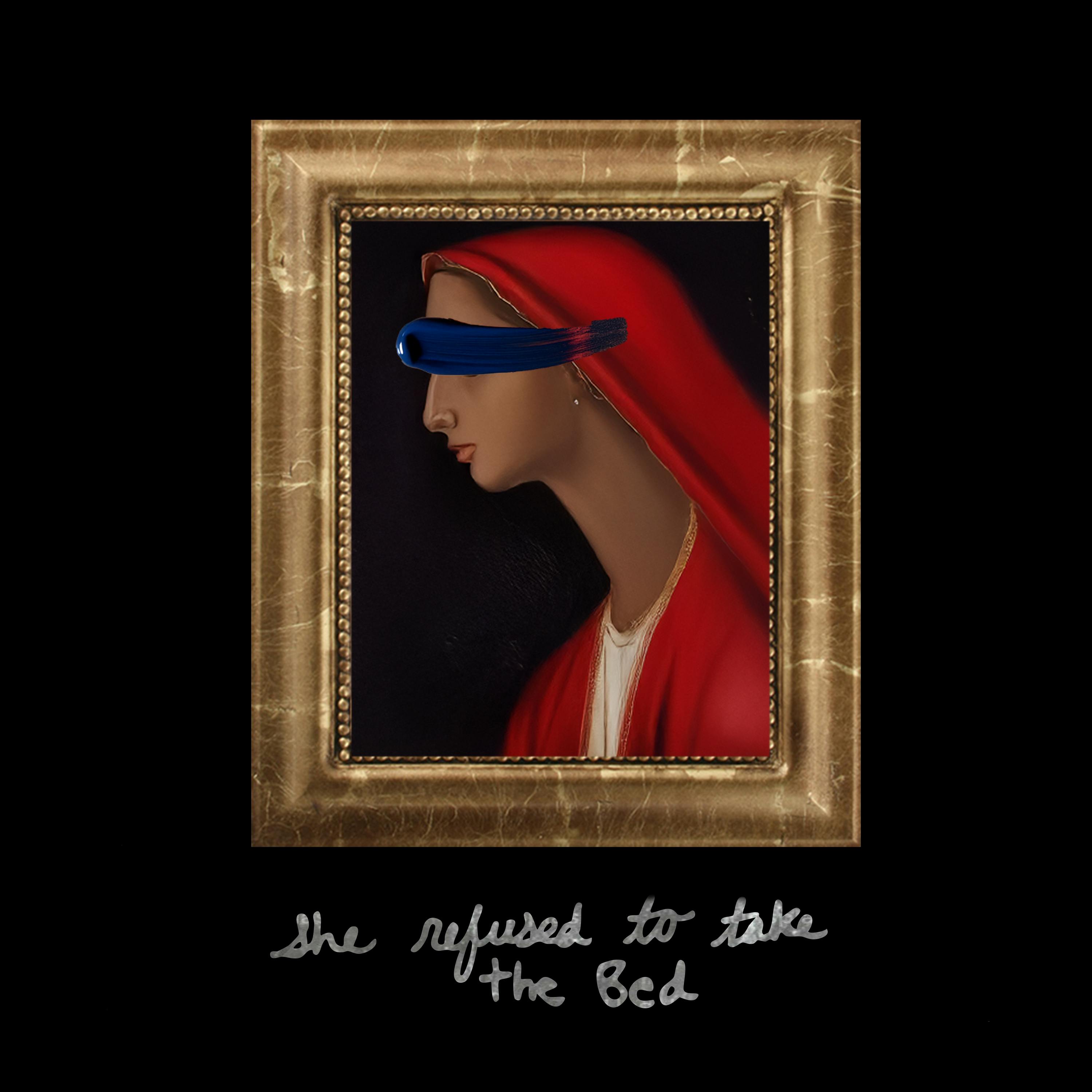
Loading summary
Transcript37 lines
- [00:01]
Savannah Locke
Two notes for today's episode. First, Beth is the primary interviewee, so that means this episode will be narrated by me, Savannah. Second, we want to make sure that you, the listener, have a trigger warning for this episode as it does talk about sex abuse. If you've ever spent time digging through the archives, you know how tedious it can be. If you haven't, you'll just have to take our word for it. The archives are like a massive thrift store where most items are accurately priced at a few dollars. But on rare occasions, you might stumble across a designer bag with a $15 price tag and wonder, wait, is this real? The SBC's archives are overflowing with hundreds of thousands of documents, and most of them, to be honest, are pretty dull to the naked eye. We're talking thank you letters, vendor contracts, meeting minutes, copies of sermons, newspaper clippings, and lots of pictures. But every once in a while, something will catch your eye, like a burning bush flickering in your periphery. That's how it felt when Beth Allison Barr came across a letter in Jimmy Draper's files from a man named H.P. wu. As a reminder, Draper was a well known pastor and president of the SBC from 1982 to 1984. He's the one who limited the debate on the women's ordination resolution to a strict eight minutes. While Beth was searching through his files for something entirely unrelated, she stumbled upon a letter with the word confidential bolded and underlined at the top. Little did she know she was about to uncover an untold story of sexual abuse, spousal abuse, and an SBC cover up that would come to focus on one woman, a pastor's wife named Maria.
- [01:55]
Beth Allison Barr
I told my pastor, listen, it would be easier to be a prostitute in this church than it is to be an ordained woman. The Spirit of the Lord is upon.
- [02:06]
Rick Warren
Him because God has anointed me to.
- [02:09]
Beth Allison Barr
Preach good news to the poor. Women deserve to know that there are.
- [02:13]
Leanne Friesen
Places where their gifts and their ministry is valued.
- [02:16]
Beth Allison Barr
I looked at him and said, Dr. Guy, you have every right to be completely wrong.
- [02:22]
Savannah Locke
Created in partnership with the Bible for normal people, this is all the Buried Women, a miniseries on uncovering women's stories hidden in the Southern Baptist Convention's archives.
- [02:33]
Beth Allison Barr
Hosted by me, Beth Allison Barr and me, Savannah Locke.
- [02:40]
Savannah Locke
Episode 5 she refused to take the bed On June 13, 2023, almost 19,000 people gathered in New Orleans, Louisiana for the Southern Baptist Convention's annual meeting. Their theme that year was Serving the Lord, Serving Others. On the docket was a proposed amendment to the SBC's constitution that would restrict affiliation to churches with exclusively male pastors. For context, there are only five other standards for a church to be in friendly cooperation with the SBC as described in their constitution. First, they have to believe and practice in a way that aligns with the Convention's statement of faith. The one example they list here is that affirming, approving, or endorsing homosexual behavior would oust a church from the Convention. Second, the church has to formally approve its intention to be part of the sbc, meaning if you want to be in the club, you have to do club things, fill out paperwork, file an annual report, and participate in meetings. Third, the church has to financially contribute to the SBC's Cooperative Program or executive committee or any SBC entity, sort of like a tithe to the denomination. Fourth, the church can't act in a manner inconsistent with the Convention's belief regarding sexual abuse. From our observations, the bar for this inconsistent manner is very low, by the way. Last, a church cannot act to affirm, approve, or endorse discriminatory behavior on the basis of ethnicity. The new proposed amendment would add a sixth qualifier to the list, which would restrict affiliation to churches with exclusively male pastors and elders. Not just senior pastors, but any pastoral position, including children's pastor, youth pastor, or family pastor, could only be held by a man. If adopted, this would represent the SBC's most explicit prohibition of women in leadership positions, resulting in the disaffiliation of any congregation that did not comply. During the same convention, messengers were also set to vote on whether to expel two churches that had ordained women pastors, echoing the tensions of the 1984 annual meeting. The atmosphere in 2023 was charged with all eyes on New Orleans as the gathering began and the future of Southern Baptist women hung in the balance. But just a week before it commenced and about 500 miles away, Beth Allison Barr was quietly working through the Southern Baptist Archives in downtown Nashville. She was doing research for her new book focusing on collections related to pastors, wives and women's ordination, with some of.
- [05:32]
Beth Allison Barr
The files that were pulled for me by the archivist Taffy hall, who was really fantastic and helpful. And one of the files that she had pulled for me was from the records of Jimmy Draper, who was the president of the SBC in the early 1980s, and he was the president over the now infamous 1984 resolution. Leading up to that 1984 resolution, Jimmy Draper was involved in some conversations about women's ordination, especially ordained women already in the church. So I was following those letters when I stumbled across a set of completely different letters that in some ways changed the course the direction of my book.
- [06:22]
Savannah Locke
Research, Beth found a burning bush in the cave of an old cardboard banker's box. It was a letter with the word confidential on the top right corner, addressed to Reverend James T. Draper, President of the Southern Baptist Convention. Glancing down, she looked at the first sentence.
- [06:41]
Beth Allison Barr
Dear Reverend Draper, in appreciating your high view of the Scripture, I appeal to you a Watergate case of serious moral turpitude within your sbc.
- [06:53]
Savannah Locke
This was not your run of the mill letter in the archives. Beth read on. For the purpose of this podcast, we are choosing to redact some names, but here's the gist of what it says the author, who used the pseudonym H.P. wu, accused a Baptist pastor named Mario Acacia of repeatedly committing sexual acts against a woman in his care at Dufferin Street Baptist Church in Toronto. Wu said this resulted in substantial injury to her and her family, yet the SBC still hired him as a special minister to Embassy personnel in Washington, D.C. wu claimed that Mario's self proclaimed repentance distorted the facts and blamed and intimidated his victim. Wu also claimed that Mario's SBC supervisor, Dr. Oscar Romo, director of the Language Missions Division for the Home Mission Board, was informed of these egregious acts, but lied, saying he didn't know anything about it. And even when he did change his tune, Romo emphasized God's forgiveness as a way to dismiss the severity of Mario's actions. Wu strongly rejected what he saw from Romo as a weaponization of God's forgiveness. This is what he wrote in response.
- [08:08]
Beth Allison Barr
He says, yes, it could be forgiven, but not forgotten. Christian forgiveness has been manipulated so loosely for the similar offenses without subsequent complications. A New York psychiatrist loses his license with the Board and so does a marriage and family counselor. As a logical consequence, we respectfully request for the renouncement of the Acacia ordination for his diminished impulse control and passive aggressive personality traits and the investigation into the administration, the SBC administration, for not meeting the challenge of change by rationalizing weakness and faults as virtues or necessities while undermining the fundamental American family values and the Christian accountability end. And then he says, we are looking forward to your prompt response.
- [09:02]
Savannah Locke
HP Wu made two urgent requests in his that Mario's ordination would be revoked and that the SBC would conduct a full investigation for the Watergate case of serious moral turpitude. Neither request would ever be fulfilled and we have documents from the archives explaining why. Staple to the confidential letter from Wu is a collection of correspondence among SBC bigwigs, SBC President Jimmy Draper, Home Mission Board President Bill Tanner, and Director of the Language Missions Division of the Home Mission Board, Oscar Romo. In their correspondence, they were deliberating how to handle the accusations from Wu. In one letter, Bill Tanner admitted the SBC had been aware of Wu and his concerns since 1978, meaning Wu had been writing them for five years about this issue. But Tanner said he personally didn't know the details except that the issue happened a while ago in Canada. He ended with this encouragement to President Draper. I'm sorry you have to deal with these kinds of things, but as you know, this goes with the territory. Take care of yourself. The next letter, written by Mario's supervisor, Oscar Romo, detailed Mario's journey to employment with the sba. Mario, who was born in Italy but graduated from the Southern Baptist Seminary in Louisville, Kentucky, and was an ordained SBC minister, had reached out to the SBC asking for a job. Romo explained that Mario was hired as a missionary associate to serve among internationals in Washington, D.C. and it wasn't until the moving van had departed that Mr. Wu made his accusations. Romo referenced an investigation the SBC conducted, but said that after prayer and dialogue, it was agreed by the group to forgive and forget and to place the entire matter in the hands of God. So the Language Division of the SBC Home Mission Board moved forward with Mario Acacia's hire. The last letter in this mini collection was from Jimmy Draper. He celebrated Romo's response and affirmed that the SBC had done its due diligence and did not disagree with Romo's decision allowing Mario to remain ordained and employed. As Draper explained, quote, we must be a redemptive community. Certainly there are many problems relating to each of us, and we all stand under the grace of God.
- [11:38]
Beth Allison Barr
You know, you have to think about the context in which I'm reading this. I'm in the Nashville SBC headquarters. It's on the eve of the 2023 convention where on the table at the SBC. 2023 convention. First of all, is there continued delayed to the sex abuse crisis, as well as the issue of if churches that have ordained female pastors are going to be allowed to remain in friendly cooperation with the sbc. All of this is in the back of my head when I'm reading this letter that is written to the SBC about a pastor employed by the SBC who the letter writer claims was involved in what we would consider to be clergy sex abuse. So someone underneath his pastoral authority. Here is exactly what the sex abuse crisis in the SBC is about. About these pastors who have committed clergy sex abuse and have been allowed to stay in office. And not only that, but then the SBC has been accused of covering up for these pastors of ignor information and even some of the allegations that they have destroyed evidence. And this is exactly what I see in this letter, is that the SBC officers who were contacted about this man claimed that they had no knowledge of what had happened. Destroyed evidence is one of the accusations that's made here and essentially have been dismissing the claims. So everything that was happening in the 2023 SBC right now was sitting staring at me from this letter written in.
- [13:28]
Savannah Locke
1983, as Virginia Woolf wrote so accurately, does history repeat itself? Here's what we know about how and why the SBC hired Mario Acacia. Shortly after he resigned from Dufferin Baptist Church while he and his family were still living in the Toronto area, Mario reached out to the SBC asking for a job. He did not seem to say why he was recently out of a job or why he was no longer going to be a pastor at Dufferin Street Baptist. The SBC interviewed and hired him to be a sort of missionary to ambassadors in DC. In a letter from February 1979, Mario wrote regarding his abrupt departure from Toronto and consequent abdication of a committee role for the Ontario Quebec Baptist Convention, now known as Canadian Baptists of Ontario and Quebec, or cboq. It sheds light on the significant influence of Mario's new SBC role. This is what he we have been in D.C. only about a month, but the prospects seem to be quite good. I have already been able to get in touch with a few VIPs in the US government, people who have contacts in embassies, one former ambassador, and in a few days I should meet a couple of ambassadors. These, of course, are in addition to our own Baptist leaders. Mario's role in D.C. was important and public facing. He was in rooms with extremely influential people. It is true, as already stated, that the SBC conducted an investigation of sorts into Mario after Wu made his initial claims in 1978. We know the SBC Home Mission Board had reached out to CBOQ who confirmed that problems had existed. We know CBOQ had documentation confirming the truth of wu's allegations, although it had been sealed as confidential. We know this because Beth flew to Toronto to look for the evidence herself and, working alongside the current CBOQ Executive Board, found it. Here is Leanne Friesen, Executive Minister of CBOQ describing the evidence. She and Beth found two pieces of.
- [15:51]
Leanne Friesen
Paper in the sealed envelope. One was just typed minutes of a meeting of the decision that had been made stating that this man had confessed to this, what he called affair for two years with a new immigrant who has come to him for counseling, marriage counseling, who is younger than him, whose English is a second language, who was his receptionist and organist, and who he claims in his notes was the instigator and perpetually seduced him. He was, you know, for two years. It was one page, less than a page. It was very, very short. And that was so we. That was what Beth was looking for, the evidence that this had happened, because the letter she had was someone claiming this had happened. And now we had the evidence that this had happened. The second was very difficult to read. Handwritten notes by the then executive minister with the husband of the victim likely.
- [16:48]
Savannah Locke
Ann said the first document they found included Mario Acacia's confession. As he gave it to the executive minister of CBOQ on February 9, 1978, it confirmed that Mario had committed what we define today as clergy sexual abuse. The second envelope contained notes from a conversation between a guidance counselor and the husband of the victim, confirming the details of of Mario's confession. Those letters verified the truth of wu's allegations. Mario had been engaged in a long term sexual relationship with a much younger married congregant who was not only on the church staff, but had come to Mario for counseling. The documents questioned whether it was rape or adultery, stating that the young woman resisted some, but not over much. The documents confirmed the abusive relationship had continued for more than two years and when it came to light, the victim was blamed by Mario, just as Wu claimed. Mario was credibly accused of clergy sexual abuse and there was documentation for it. After Mario confessed, a leader from CBOQ advised him to take time off from ministry but allowed him to keep his license. While Mario quickly resigned from his job as pastor, he did not listen to their advice on taking time off. Instead, he wrote to Oscar Romo and asked for a job in the sbc. And he got it. When Mario was hired, HP Wu wrote letters to the SBC to tell them what happened. Maybe he, like Christa Brown, thought if they only knew, they wouldn't let it happen. But that wasn't the case. While it seems unlikely that the SBC in 1978 was given direct access to the confidential CBOQ documents containing Mario's confession, they did receive confirmation from CBOQ that problems had existed with Mario. They also had reasons to believe from wu's allegations that these problems included committing sexual acts repeatedly for a considerable length of time with a person for whom he was rendering his service. Despite being presented with this evidence of clergy sexual abuse, SBC leaders not only hired Mario, but continued to employ him even after they were repeatedly confronted about his misconduct. It seems to us that instead of taking the allegations against Mario seriously, SBC leaders exchanged apologies among themselves for having to deal with these kinds of things. Not once do we see in the letters an apology to the victim or an expression of remorse for hiring a note abuser. The only letter we have back to Wu is from Jimmy Draper, who wrote, I assure you that every attempt will be made to investigate and take the proper action. But from the evidence available, it does not seem that much of an attempt was made. Instead, Oscar Romo defended his hire by saying Mario's sins were in the past in reminding him that the members of Dufferin Street Baptist Church and the CBOQ representative had agreed to forgive and forget. Draper accepted Romo's account and said it was an adequate response because of God's grace, because forgiveness, because history belongs in the rear view mirror. We reached out to Jimmy Draper to ask for comment, but he said he didn't remember any of this. He also said the SBC only exists two days a year when it meets an annual convention. The rest of the year, the executive committee acts ad interim on behalf of the convention, with restrictions on the actions that it can take without approval of the annual convention meeting. Later, he said, thank you for trying to deal with this difficult challenge. God bless you. This response tracks. When we look at the correspondence in the archives, we see no communication between them about the details of the allegations against Mario Acacia. Jimmy Draper never asked. Bill Tanner never asked. Oscar Romo never shared. Instead, wu's pleas for accountability to vindicate the sexual abuse victim were shrugged off by the very same leaders who would soon draft a resolution to tell women their place in the sbc. The same men who ended the correspondence about Mario would just one year later mute the microphones of those advocating for women in leadership. The same men who would strip away funding from the hoppies because Kathy was ordained would protect the ordination of Mario even though he was a credibly accused abuser. What if these aren't isolated failures but interconnected threads? What if this isn't a bug but a feature of the Southern Baptist Convention? To borrow a churchy phrase, what if the root really does determine the fruit and the men who architected the SBC designed it to only serve and protect people like themselves. Mario Acacia continued to work for the SBC until his retirement, while his victim was left to navigate the aftermath. Wu's letter was printed, filed away and forgotten, buried in the archives until Beth uncovered it 40 years later. Little did she know, this group of letters still had a spark of life inside, carrying the story of yet another victim of Mario Acacia's abuse. This story had been glossed over by Jimmy Draper, Oscar Romo, Bill Tanner and others, but it was aching to be told. Now here's a quick advertisement from our sponsor, Brazos Press. In her new book, Becoming the Pastor's How Marriage Replaced Ordination as a Woman's Path to Ministry, Beth Allison Barr explores the complex history of the role of the pastor's wife from ancient times to the modern church. Barr reveals how this role has both empowered and constrained women through personal stories from her 25 years of experience as a pastor's wife as well as her expertise as a historian, she examines the connection between the decline of female ordination and the rise of the pastor's pastor's wife role. She explores the phenomenon of two for the price of one, the history of women's leadership in the church, and the truth about how long women have actually been pastoring and preaching. The book is endorsed by the Bible for Normal People's Own Petun saying Becoming the Pastor's Wife is eye opening, informative, comforting, and pastoral. Published by Brazos Press. You can order Becoming the Pastor's Wife now wherever button books, ebooks or audiobooks are sold. As a thanks for listening to the podcast, we've got a promo code for you. Use the code PODCAST40 to get 40% off of becoming the pastor's wife. This is valid once the book releases until April 30th. You can check out our show notes for more information. Maria Arcangeli was born in 1924 in Rome, just one year before Mussolini consolidated power and established himself as Italy's dictator. Her father, Luigi, a Protestant pastor, married her mother, Elvira, in 1923. During Mussolini's regime, their home became a clandestine meeting place for Protestants, providing a refuge for worship and fellowship during a time of religious persecution. Maria was a brilliant and dedicated student. By her early 20s. She was fluent in several languages and translated for the Allies at their headquarters in Rome. During World War II. She was also an athlete and was actually chosen to represent Italy at the Olympics as a rower, but did not have the chance to compete as they were canceled due to the war. She got a scholarship to Northwest Bible Institute in Seattle, attended another school in Michigan, and graduated with honors before moving to Louisville, Kentucky, to continue her education. This is where her path would cross with Mario Acacia. They knew each other in Rome, but reconnected in the States while training for ministry. We don't know much about the early parts of their relationship, but in 1951, Mario married Maria in Louisville. Two years later, Mario got ordained as a Southern Baptist minister. So they packed up for his first job at a Baptist church in Italy. They moved around a lot over the next decade, from the US To Italy, to Switzerland, and eventually to Canada in the early 60s. By the time they landed at Dufferin Street Baptist Church in Toronto, Maria had given birth to three children, and Mario had worked at three different churches. Their family would grow from five to eight in the following years. While Mario was technically the only one employed by Dufferin, Maria was extremely active in the church and loved by the community.
- [26:13]
Beth Allison Barr
She was a very talented and educated woman. She spoke several different languages. She was a talented artist. She taught art lessons, and she served at the church. She served in a variety of capacities, including teaching children, as well as serving as the backup organist and in the church choir. And she also put together the pageants, the Christmas pageants, including making the costumes and painting. She was in charge of VBS in the summers. So did all of these things that were so vital to the success of the church.
- [26:53]
Savannah Locke
Maria's story resonated deeply with Beth, who was also a pastor's wife. Beth was worried about what happened to Maria, particularly after Mario was forced to resign from Dufferin. What was it like to be married to Mario? Did Maria understand the reality of the sexual abuse he committed as a pastor at Dufferin, which was probably framed to her as adultery? Maria had passed away in 2021. But CBOQ was able to connect Beth with some former members of Dufferin Street Baptist Church who were willing to share their memories.
- [27:28]
Beth Allison Barr
What I learned from talking with people who had known her was that her home life was not a happy place and that she would come to church with evidence of domestic abuse on her body, that people who knew her saw evidence of domestic abuse on her body. She also, her husband had exercised a lot of control over her and over her behavior, over what she was allowed to do. It seems to have been from hearing this from the people who knew her. And, you know, I was just wanting to know what the pastor's wife who had lived through this, maybe what she knew or what she was like. And the only evidence we have from the documents is there's this one line that says, Maria knew and has been reconciled to her husband.
- [28:24]
Savannah Locke
While understandably none of these former members wanted to speak publicly for the podcast, we got permission to share their testimonies about Maria. Through them, we learned that Maria's body often showed visible signs of domestic abuse that started early in her marriage. As one of the interviewees said, the marriage was always bad. We learned the abuse Maria endured was no secret. Many congregants were aware. At least two times she was hospitalized for serious incidents in their home. Once, her neighbors called the police because they heard screaming from the Acacia's home. We learned that several people left Dufferin Street Baptist Church because Mario made them feel uncomfortable. We know Mario abruptly left other churches he pastored too. And while this was happening, Maria raised six children, taught art lessons, sewed costumes for the Christmas pageants, studied the Bible, painted paintings for church members, performed pastoral care duties for her husband, like visiting nursing homes, ransomer vacation Bible schools that brought in 100 to 150 children, and as far as we know, never spoke ill of her husband. When Mario forcibly resigned from Dufferin Street Baptist, Maria packed up their stuff, got in the moving van and drove with him to Washington D.C. to start over again like they had done so many times before. We have no evidence that the CBOQ or SBC interviewed Maria in depth. No evidence suggests that they asked her if Mario had abused others. No evidence suggests that they asked her if this was a pattern. No evidence suggests that they asked if she needed support. The only sentence we have about her says that she knew and that she had been reconciled to her husband. Maria continued to love her family and community throughout her life. Who knows what was happening behind closed doors, but her shocking decision in 1997 points to it being an unbearable reality. At the age of 73, Maria found herself in a hospital bed for months with third degree burns from her head to her waist after being scalded in a bath. Bathtub. The doctors told her she couldn't go home. If she did, they said she would die. Finally, with the help of those close to her, she said enough is enough.
- [31:00]
Beth Allison Barr
At the end of that time, she divorced him. And I just really want people to think about this woman who had been married to this man for 40 years by this point and think about what it took for her as she's in a hospital bed with third degree burns where she could have lost her life. And it is at that moment that she initiates divorce proceedings against her husband. And she went to live with one of her family members for the remainder, remainder of her life. But in the divorce proceedings, Mario left her, told her she could have all of the furniture, and she took it. Except for the bed. She refused to take the bed.
- [31:59]
Savannah Locke
Sometimes the most profound statement isn't in what you take, but in what you choose to leave behind. After five decades, Maria took her books, her dishes, her chairs, her clothes and her art supplies. She received all the furniture in the divorce settlement, but she didn't take the bed. Imagine what she felt like when she saw the home they had shared for the last time, perhaps in the rearview mirror as she was driven away with packed bags. Do you think she felt grieved as memories of early days with Mario flashed through her mind, chasing their young kids in Lugano and Rome and Toronto? Did she think about putting on Christmas pageants as snow fell outside? Or praying with families in need after church? Do you think she touched her body and thought of the bruises that used to mark them? Do you think she felt angry at Mario, at the church, at God, at herself? Do you think she felt empowered because at the age of 73, she chose to protect herself and leave behind the man who abused her? From the evidence we have, Maria never voiced anger or bitterness. She just continued to love her family, to give them everything she could, including the strain of her faith. Maria, like so many survivors, lived and died in relative silence about her abuse. For those who were paying attention, the signs were there. Bruises, offhand comments, subtle hints. But they went unnoticed or unaddressed. And before you ask, well, why didn't she say something? It's important to consider the system she was part of. Think about David Pooler's research showing that less than 10% of survivors say their churches were helpful when they reported their abuse, that 66% of survivors were not believed by their churches. Think about how HP wu's allegations were handled. Think about the one sentence we have in Mario's file that mentions her name, saying, Maria knows and has been reconciled to her husband. Why would Maria think that she would be treated any differently if she dared to speak out against her husband? Why would she use her voice when her husband and the religious system in which she lived had already shown her the cost of speaking up? Why would women like her, who have witnessed how the SBC has treated survivors like Krista Brown, speak up? Why would they even try?
- [34:48]
Rick Warren
I want to tell you that after he gives you instructions for casting your ballots, and as we are collecting the ballots, he's going to announce the results of the ballot elections that were cast last night. I do not know the results of those elections. I will find out what they are when you find out what they are. I believe in the sanctity of marriage, but I know sometimes in our churches, people wind up in biblical divorce. But we don't throw divorce parties at our church. Okay. And whatever these results are, I'm asking you, behave like Christians. Okay? Thank you, God.
- [35:45]
Savannah Locke
You're listening to the 2023 annual meeting in New Orleans when SBC President Bart Barber addressed a room packed with messengers preparing them to hear the results of a pivotal vote on whether the convention would sever ties with two churches that had women pastors. The first was Fern Creek Baptist Church in Kentucky, where Linda Barnes Popham had served as a Southern Baptist pastor since 1983. The second was Saddleback Church in California, founded by renowned pastor and author Rick Warren, who ordained three women in 2021. Warren spoke earlier during the convention to appeal to his fellow messengers to not expel Saddleback. We want you to hear his speech until the end because how it ends is important.
- [36:34]
Al Mohler
For 178 years, the SBC has been a blend of at least a dozen different tribes of Baptists. If you think every Baptist thinks like you, you're mistaken. What we share in common is a mutual commitment to the inerrancy and the infallibility of God's Word and to the Great Commission of Jesus Christ. No one is asking any Southern Baptist to change their theology. I'm not asking you to agree with my church. I am asking you to act like a Southern Baptist who have historically agreed to disagree on dozens of doctrines in order to share a common mission. Since Southern Baptists have always allowed disagreement on doctrines, including the essential doctrines of salvation, why should this one issue cancel our fellowship? In 2013, when the Calvinists were under fire, Baptists agreed to disagree and the split was averted. Now, 10 years later, will we treat egalitarian Baptists with the same grace we showed the Calvinists? We should remove churches for all kinds of sexual sin, racial sin, financial sin, leadership sin, sins that harm the testimony of our Convention. But the 1,928 churches with women on pastoral staff have not sinned. If doctrinal disagreements between Baptists are considered sin, we all get kicked out. You'll never get 100% of Baptists to agree 100% on 100% of doctrine. That's why our Constitution says that churches must closely identify, not completely identify, with our confession. Now, the Baptist faith and message is 4,032 words. Saddleback disagrees with one word. That's 99.9999-9999 in agreement. Isn't that close enough? Al Mohler, who for some reason gets to speak twice and do the rebuttals, claims the phrase the office of the pastor is limited to men. That that also includes every staff position, too, and somehow it also prevents any woman from teaching. But I was able to contact about half, over half of the original drafting committee of the Baptist and faith message 2000 and seven of them told me Al was wrong. In fact, before the vote on the 2000 Baptist Faith and Message, even Al in his hometown newspaper said it didn't limit women from being assistant pastors. Go read it in the Courier Journal. If this precedent is set, Southern Seminary will have to change the name of the Billy Graham School, since Billy Graham trained women pastors at our global training events and he endorsed the preaching ministry of his daughter, saying Ann is the best preacher in the Graham family. Vote no. If this precedent is set, that we'll have to rename our two.
- [39:48]
Savannah Locke
No. There wasn't a glitch in the recording or a mistake in editing. Rick Warren's microphone was cut off mid sentence as he spoke. Next, Al Mohler was invited to rebut. We haven't spoken much about Al Mohler, but he is an extremely influential leader in the SBC nowadays. He is currently the president of Southern Baptist Theological Seminary in Louisville, where Mario Acacia graduated from, and has become a conservative political figurehead who rubbed shoulders with politicians and pastors alike. While in his younger years, he actually advocated for women's ordination, he changed his mind and has been one of the most outspoken advocates against it ever since. As you're about to hear, he is also an extremely convincing speaker.
- [40:36]
Bart Barber
Mr. Chairman, I just want to say that my position was there misrepresented. But nonetheless, it is important to stay for the record that Albert Mohler does not say what the Baptist faith and message means. The Southern Baptist Convention says what the Baptist faith in message means and is quite competent to accomplish that task. In the year 2000, the words the office of pastor is limited to men as qualified by scripture was inserted because 30 years ago this issue threatened to tear this denomination apart. The. The definition of friendly cooperation came down to the fact that that was an issue that would endanger the cooperative cohesion and faithfulness of the church of the Southern Baptist Convention. And in particular, we look to this issue because Southern Baptists decided this is not just a matter of church polity. It is not just a matter of hermeneutics. It's a matter of biblical commitment, a commitment to the scripture that unequivocally, we believe, limits the office of pastor to men. It is an issue of biblical authority. It is one that has actually led to the unity of the Southern Baptist Convention as Southern Baptists have gone forward with an issue of clarity here which has greatly made our doctrine and order a matter of unity and harmony. It is the unity and harmony of the Southern Baptist Convention that is now at stake. And we're in an unusual situation once again. This is not a convention responsibility to offer a comprehensive verdict on the ministry of Rick Warren or Saddleback Community Church. We can thank God for every good gospel thing that is represented by that church and its ministry. It is a question about the Southern Baptist Convention and what it means for a church to be in friendly cooperation, in doctrine and in order with this convention. And here we face the unusual situation in which Dr. Warren himself has made repeated statements and the church has taken repeated actions that make very clear that it rejects the confessional understanding of the Southern Baptist Convention on this issue. This isn't a question of misunderstanding. The credentials committee and the Executive Committee took action, action based upon this actions of Saddleback Community Church in establishing a woman as a campus pastor and having women with the title of pastor to teach in the teaching role on Sunday morning. And then Pastor Warren going on to say more expansively that the church basically, and he endorses and calls for a more comprehensive egalitarianism. I'm confident that's not where the Southern Baptist Convention is going to go. I believe that it is a statement without rancor and without personal attack, without making a comprehensive verdict on a congregation that is no longer among us. We simply say that our credentials committee and Executive Committee have done the right thing. We need to do that.
- [43:42]
Savannah Locke
Notice how Mohler claimed the issue of women's ordination was an issue of biblical commitment and authority. Like, if you disagree about this issue, you're disagreeing with the Bible or you're disagreeing with God. Notice how he said the unity and harmony of the Southern Baptist Convention was at stake. A good question to ask when bold claims like this are made is for whom. Like when Mueller says harmony is at stake. For whom is harmony at stake? When he says unity is at stake? Well, for whom is unity at stake? Surely he doesn't mean the entire Southern Baptist Convention, because the SBC still includes women like Kathy Hoppy, Rosalie Beck, Meredith Stone, and Linda Barnes Popham, along with thousands of others who are ordained or aspire to be, and countless more men and women who support their right to do so. No Mohler is not talking about that SVC. He is talking about his SBC, Paige Patterson's SBC, Paul Pressler's SBC, Jimmy Draper's SBCThe SBC that looks, acts and conforms to a narrow set of standards designed to keep them in power. The more truthful statement Mueller could have made is if churches that ordain women are allowed to remain in the sbc, it's not unity or harmony that's at stake. It's uniformity, uniformity about male power. But the applause at the end of Mueller's speech was a sign of things to come. Here are the results of the vote.
- [45:21]
Rick Warren
So on the question of sustaining the Executive Committee's decision regarding Fern Creek, there were 9,700 votes in favor for 91.85%, 800106 votes against for 7.63%. 55 disallowed ballots of 52%. The messengers from Fern Creek are not added to the official role of voting members of this convention. And the Fern Creek Church is not in friendly cooperation with the Southern Baptist Convention. On the question of Saddleback Church, 9,437 votes in favor, 1,212 votes against 19 disallowed ballots. The messengers from Saddleback Church are not added to the official role of voting members of this convention. And Saddleback Church is not in friendly cooperation with the Southern Baptist Convention. All right, now we've got them all. Polls are closed. I know James Cheeseman like the back of my hand. Are you going to want him? Stand up. Stand up. Let's sing.
- [46:27]
Savannah Locke
As we know, the SBC has long upheld restrictions on women in their churches, but this marks the convention overriding local church autonomy and formally expelling congregations for ordaining women and having women pastors. Fern Creek Baptist and Saddleback Church were no longer in friendly cooperation with the convention. And remember that amendment we talked about earlier in the episode, the one that would restrict any pastoral position and title of elder to men only? That amendment was preliminarily approved at the same convention and went to a formal vote in 2024. Kicking out both churches from the convention and preliminarily approving the amendment was a colossal move for the sbc, solidifying its direction for years to come, a direction that continues to bury women like Maria. The conservative resurgence that started with Paige Patterson and Paul Pressler came full circle 45 years later with the expulsion of these congregations from the sbc. By the way, this vote happened at a convention center just 1.4 miles down the road from the same Cafe Du Monde where Pressler and Patterson met in 79? How many pastors do you think went to that cafe after after the conference and shared beignets and coffee and talked about how good it was that the SBC was finally on the right path again? Did they sit at the same table Patterson and Pressler shared? Do you think someone like Al Mohler met a young up and coming seminarian over coffee to share his vision for the next 45 years? And what about the pastor's wives at the convention? Did they get a vote? What about the white who put extra concealer on her face to hide a bruise? What about the young woman sitting in the back row who feels a fire in her soul to preach? What about the teenage girl who for the first time is sensing God's call to teach the Bible? What about the woman who glanced six rows away and saw a pastor who abused her as a young child, newly promoted to a bigger and better church states away? What about the newlywed couple, fresh out of seminary, who want to plant a church but as a team? Where do these women fit into the next 45 years of the Southern Baptist Convention? Who will listen to their voices? Or will they join the buried hidden away in archives until someone is lucky enough to stumble upon a confidential letter? When Beth Allison Barr was wrapping up an interview about Maria Acacia, the interviewee who knew Maria well, asked if she could show Beth something on her phone.
- [49:23]
Beth Allison Barr
She pulled out her phone and she showed me a picture of a early Christian saint. She said, do you know who this is? And I said, no, I don't know who this is. She said, this was Maria's favorite thing to paint. She painted it over and over again and she gave it away to people, to friends, to family. She hung it in her house. She said, it wasn't until after she died that I looked up, up to see who this woman was in the painting. She said, this is what I found. And she pulled up a website. And what I read from that website was that this was an image of an early Christian saint named Saint Fabiola. And the story of Saint Fabiola is that she had had lived with a man in her first marriage who was so abusive so many different ways that St. Jerome says that he's not going to even recount them. But she lived and was so abusive that she did divorce him. But St. Jerome praised her that she never gossiped about the abuse that she had endured. So for throughout the 40 years of Maria's life, married to this pastor, she painted the image of this Saint who was the patron saint of not just nurses, but of abused spouses and he people who were divorced, who was praised for keeping her mouth shut about the abuse that she suffered.
- [51:25]
Savannah Locke
It seems that Maria Acacia hadn't been so silent after all. For decades, she painted the same image of Fabiola and gave it away, maybe hoping someone would notice. Or maybe it was for herself an act of quiet defiance against the abuse she was enduring at the hands of her husband. Maybe this is how she spoke up in a religious system that glorified women's silence. And maybe she isn't the only one. Maybe other women in the SBC have spoken up in different ways without using words, sending signals of life and resistance and perhaps even hope. But we just don't have eyes to see them. 19th century artist Jean Jacques Henner's portrait of Saint Fabiola is a masterpiece of simplicity and emotional depth. It shows Fabiola's profile facing left, with her features framed by a deep red veil. Her gaze is soft, looking straight ahead. Her mouth is closed. It became Henner's most famous work of art, but it mysteriously disappeared in 1912. Nobody knows exactly what happened to it. Some theories suggest it may have been destroyed in a fire, while others speculate it was lost during the war or simply misplaced over time, tons of paintings have disappeared or been destroyed before. But something unique happened with Henner's Saint Fabiola. Thousands of people reproduced it. These reproductions, created by both amateur and professional artists, vary in style, skill and medium, but remain remarkably faithful to Henner's composition. The red Veiled Fabiola. Her profile facing left, has become an enduring image, replicated thousands of times from oil paintings to needlework. Her likeness has been recreated on canvas, wood, ceramic and even glass, each echoing the lost masterpiece in a beautiful and haunting way. Losing the original painting gave Saint Fabiola back to the people, back to anyone who needed her. Her image can be endlessly interpreted and reinterpreted. Her story is like a scarlet thread, connecting to women and men through generations who have been abused, divorced, misunderstood, ostracized by their churches and celebrated for their silence. Fabiola's story connects to thousands of women in the sbc, serving as a reminder that this fight is nothing new, but that there is a cloud of witnesses, with Rahab and Esther and Mary and Junia and Fabiola and Josephine Bakhita and Drusiller Fordham and Addie Davis and Maria Acacia reminding us that there is a God who sees every buried woman, that the Southern Baptist Convention is not the God ordained arbiter of a woman's place. That women can, should, and will continue to resist the voices that seek to control them. That women deserve to be safe in their churches. That women deserve to be believed by their churches. That women deserve to lead in their churches. We've had the privilege of seeing photographs of Maria in her later years. She looked genuinely happy being surrounded by loved ones until her death in 2021. As we scrolled through each image in silence, studying her face and smile and brooches and pearl necklaces and floral blouses, Beth gasped and said, do you see that? I said, no, no. What are you talking about? It was a picture of Maria in her living room with snow white hair and a patterned turtleneck. Beth zoomed in. Right there in the back right corner, just above a chair, a painting of Saint Fabiola hung in a gold frame, quietly looking over Maria as she smiled.
- [56:09]
Rick Warren
I don't want to be sh.
- [56:23]
Savannah Locke
All the Buried Women is hosted and written by Beth, Allison Barr and Savannah Locke. It was edited by Savannah Locke and the music music was done by Todd Locke. The song you hear in the intro and outro is called Jaded by, you guessed it, Savannah Locke. And for more detailed credits, be sure to check out the show notes. We're so thankful to everyone who worked behind the scenes to make this possible. We reached out to the sbc, Paige Patterson, Darrell Gilliard, Tommy Gilmore, and the Council for National Policy for comment and did not hear back. I.