Loading summary
Transcript77 lines
- [00:00]
Host
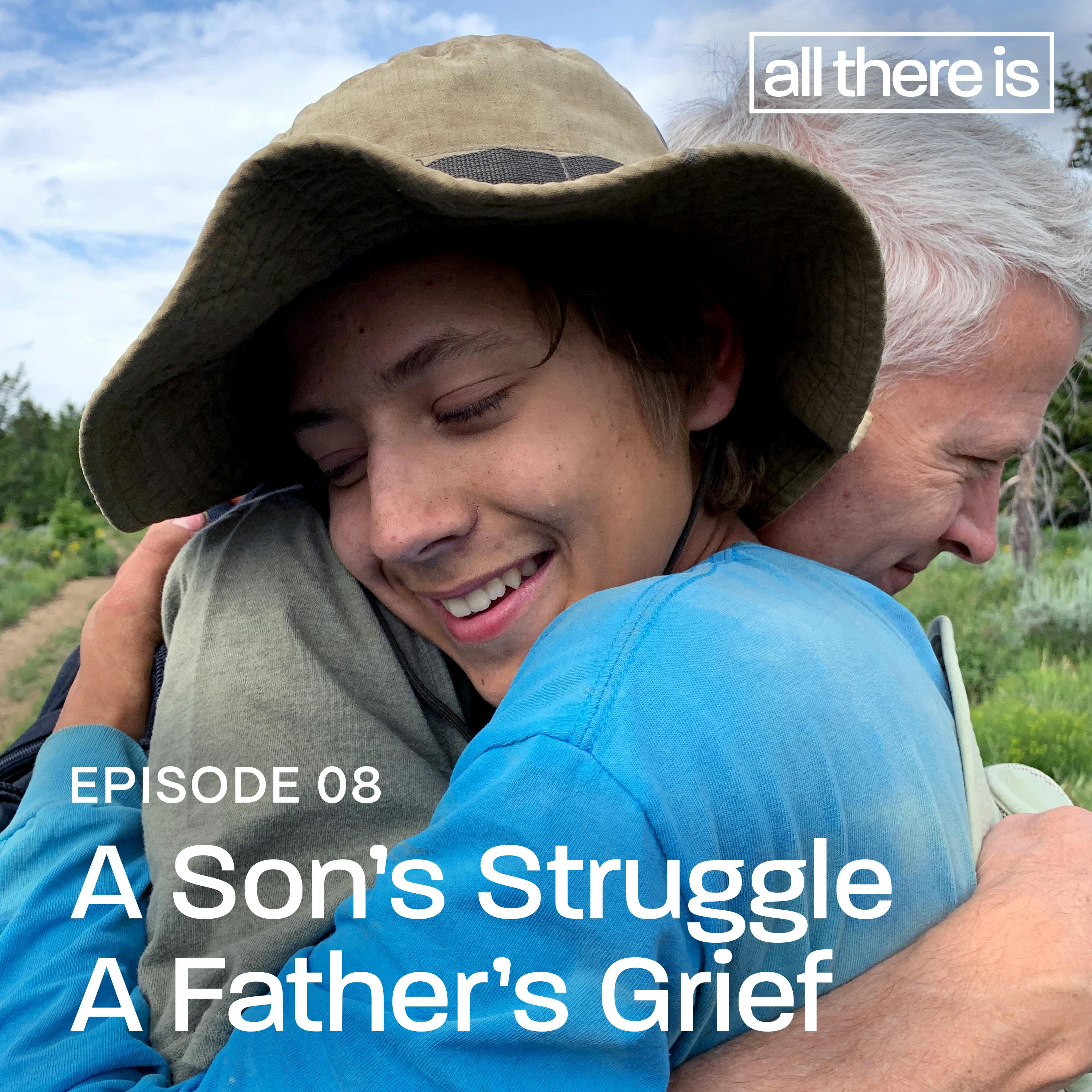
Want to Shop Walmart Black Friday Deals First Walmart plus members get early access to our hottest deals. Join now and get 50% off a one year annual membership. Shop Black Friday deals first with Walmart plus see terms@walmartplus.com welcome to All There Is this will be the second to last episode this season. I'll likely do another season down the road, but I'm going to be taking a break for a bit. I've already started to listen to some of the many voicemails that you've left, and they're incredibly moving. And I'm really grateful for all of you who've taken the time to call and leave such thoughtful and personal messages. If there's something you've learned in your grief that you think might help others, feel free to call and leave a message about it. I can't promise I'll use it in next week's episode, but I do promise I will listen to all of your messages eventually. The number you can call is 917-727-6818. That's 917-727-6818. I'll leave it again at the end of the podcast. When I was listening to your messages, I kept thinking that I wish I could put all of you who are listening in touch with one another. Because hearing your messages, it really became so clear to me that all of us are part of a community. A community of grievers, a community of people who know and feel loss. It's a community, though, that's too often hidden, but it's actually all around us. I've talked about this before, but I've felt so alone in my grief for so long. But hearing all of your voices, it's just a reminder to me yet again that none of us is alone in our grief. In today's episode, you're going to hear from Randy Shaleen. He's a radiologist who spent much of his career as a flight surgeon in the Navy. I met Randy several years ago by chance. It's actually kind of a funny story. Randy looks a lot like me, so much so that he often gets mistaken for me. Randy lives in Las Vegas with his wife Jill and daughter Chelsea. Randy's son Charlie died in August 2022. He was 18 years old. Charlie struggled with mental health issues for a long time, and it took a big toll on Randy and the whole family. In this interview, you're going to hear some recordings of Charlie as well, and there are mentions of suicide. If you or someone you love is struggling Help is available in the US you can call or text the National Suicide and Crisis Lifeline at 988. We'll be right back. With a son's struggles, a father's grief.
- [02:40]
Advertiser
The holiday season officially starts when you get that first card in the mail. Shutterfly makes it easy to add more meaning to the everyday with hundreds of holiday card designs that can be personalized in seconds with your favorite photos from this year. Select your greeting, customize the color, and even add little extras like personalized foil to make a holiday card that really shines. Enjoy 40% off with code smile40@shutterfly.com and send something meaningful this year. See site for more details.
- [03:09]
Randy Shaleen
Hey everybody, it's Rob Lowe here. If you haven't heard, I have a podcast that's called Literally with Rob Lowe, and basically it's conversations I've had that really make you feel like you're pulling up a chair at an intimate dinner between myself and people that I admire, like Aaron Sorkin or Tiffany Haddish, Demi Moore, Chris Pratt, Michael J.
- [03:36]
Host
Fox.
- [03:37]
Randy Shaleen
There are new episodes out every Thursday, so subscribe, please, and listen wherever you get your podcasts.
- [03:49]
Host
Welcome back. Charlie Shaleen made this recording on August 26, 2018, when he was 14 years old. His father, Randy, didn't find it until several months ago.
- [04:02]
Charlie Shaleen
This is Charlie. Starting tonight, I am setting a challenge for myself for one week. Getting all your homework done, studying, showers every day, brushing my teeth, hygiene, exercise. If I am unable to complete the challenge, then I must pretty much confess everything to my parents. I just need to have control of my life and what I'm doing.
- [04:33]
Host
I don't want to go down the rabbit hole.
- [04:36]
Interviewer
What do you think when you hear that now?
- [04:39]
Randy Shaleen
Well, now I know and understand the pain he's going through back then because at the time, frankly, had no idea. We didn't realize how serious things were getting at that point. Everything that he communicated to us was, everything's okay. I've got it under control. I'm doing what I need to do to get things done.
- [04:54]
Interviewer
Tell me about Charlie.
- [04:57]
Randy Shaleen
Charlie, he was just a great kid. You couldn't ask for a better child. He was very bright. He was getting all A's in school. He was doing well in the Boy Scouts. He didn't talk back to us. He didn't yell at his parents or cuss at us and which probably made it more difficult for us to understand how challenged he was. Going into elementary school. He was having trouble just trying to stay focused, getting homework done, projects, et cetera. He did Test positive for adhd. In the past, I've been somewhat skeptical of that diagnosis of adhd. But having Charlie, I'm not a skeptic anymore. We found a good medication that helped tremendously until we got to middle school. And that's where things went a bit sideways. There's something called twice exceptional.
- [05:42]
Interviewer
Twice exceptional, yes.
- [05:43]
Randy Shaleen
Or 2E. And that's where a child is highly intelligent, but they also have a learning disability. And because those two together can be a very difficult combination, their brain tends to function in a different way. That can be very challenging for them, and they have difficulty socializing. So what was happening for Charlie is that he could learn the material very quickly, but because of his adhd, he couldn't actually complete assignments and get things done. And what he started entering was a pattern of procrastination and avoidance. He'd be so frustrated that he'd say, well, I'm just going to put my homework off until the last minute. And then literally at the 11th hour, sometimes late at night, he would just this amazing amount of work and get all A's. We recognized that he was becoming more withdrawn and we found a, a therapist for him in middle school who is frankly not, not particularly helpful. But at least we're doing all the things we can because it's also difficult to find effective therapies for kids. I mean, right now we're having a mental health really crisis in our country and there's just not a lot of resources out there. Charlie was so frustrated. He was developing, unbeknownst to us, an incredible sense of self loathing. And it really played in his psyche.
- [06:57]
Interviewer
What began to change that made you think, wait a minute, there's, there's something really seriously going on here.
- [07:03]
Randy Shaleen
We didn't reach that point until he started high school and he started taking AP classes. He's taking advanced physics, and you simply can't wait until the 11th hour to get the work done. And he was doing a lot of video games, excessive video games. And we weren't really aware of how much time he was spending online cruising the web and how much he was actually getting his work done. We could see that he just was definitely struggling. He knew what he needed to do, but he'd always fail and he couldn't get it done.
- [07:33]
Host
It's around this time that Charlie left that voicemail we played earlier talking about challenging himself for one week. That message that Randy didn't find until just recently.
- [07:43]
Randy Shaleen
So here's where our worlds fell apart. Basically, he got to the point where he procrastinated so much that you couldn't catch up. And what happened was Charlie said, dad, I can't face my teachers, I can't go to school. And then as we were trying to convince him, it just got worse because we're butting heads because, Gerald, you've got to go. And he just shut down. He just fell apart. He would isolate in his bedroom, he would not interact with the family. He stopped showering. He would just spend time on the Internet playing games. And he really didn't want to talk with mom and dad. And we're not sure what to do. So we got him to see a child psychiatrist. We actually found one that was highly regarded. And the day we went to go see her, Charlie's in the car and says, no, I'm not going to go in. I won't go see her. And she's like, no, if he can't come here, I can't see him. And this is a person that was supposed to be really good. And we received nothing other than the bill. And as parents were like, time's running out. We're watching our son disintegrate at home and we're desperate to find resources to help us. He was very protective about his laptop. And one time I looked on his laptop and discovered that he had gone to a suicide chat line to try to seek some help because he's having some suicidal thoughts. And of course, that was a big wake up call for us, clearly. And we are just beside ourselves.
- [09:13]
Interviewer
It's a very unique kind of grief, of the grief of a parent who has is struggling to figure out how to help their child in a mental health crisis.
- [09:22]
Randy Shaleen
Absolutely. But the frustration is that you don't know what to do to help them. You're trying to do all the right things and you're afraid of making a mistake.
- [09:28]
Interviewer
You end up deciding to send Charlie to a wilderness therapy program.
- [09:33]
Randy Shaleen
We did, because at this point we just felt we couldn't keep him at home and be safe. And we also thought, well, he's spending so much time online and by himself and isolating. How do you break this? And effectively what wilderness therapy is. And it's a very frightening thing for a parent to choose. Your child is basically sent to this facility, this is in Utah, and given a backpack and some very basic essentials for being in the outdoors. And they spend the entire three months with no technology, hiking, backpacking and doing therapy, group therapy, individual therapy, journaling and different readings to help them. And it's harsh. I know some people have been critical of These programs. But I can say this with complete conviction that Wilderness Therapy is what saved our son's life. I think we have lost him to suicide at some point if that had not taken place. He was journaling while at Wilderness and had access to his phone and his laptop. And I found out he had gone to all sorts of inappropriate websites. Not just pornography, but also websites that actually had violent Images that no 14 year old which should look at or ever see because they don't know how to process it. And you can't unsee this. So he had developed a friendship or a relationship with this person on Instagram who initially was portraying themselves as a woman. And Charlie discovered that he was a guy and this person claimed to have stabbed someone to death. And Charlie maintained this relationship and sort of embraced this person, which just emphasizes for us how. How he was so desperate for social connection and he was just living this world by himself. He really lost concepts of reality and lost touch of what we consider to be anything that would be healthy.
- [11:24]
Interviewer
You said you read his writings. What did you learn in his writings?
- [11:29]
Randy Shaleen
He was writing things that were extremely dark. One of the things that I discovered was a journal he had been writing in. And one of the things he wrote was, I think of all the ways I can injure or kill myself. Mainly kill myself using objects or environments around me. Sometimes, not often, though, I think of objects that I can't see in the room. Like a game. And again, as a parent, to read something he's journaling, can you imagine reading this and discovering that this is what.
- [11:59]
Interviewer
Your child's writing and he's 14.
- [12:01]
Randy Shaleen
When he's writing this and he's 14, he writes other things that they're all just. Just very dark and very frightening things of a child who's clearly struggling profoundly having these thoughts of suicide, potential harm to mom and dad, or harming others. But it was terrifying. And you just realize that this is a child who really needs help.
- [12:26]
Interviewer
He'd written about harming his parents.
- [12:29]
Randy Shaleen
Yes, he had said that.
- [12:31]
Interviewer
That's terrifying for you to read.
- [12:33]
Randy Shaleen
It was beyond terrifying. But he did write some of those things. And they are dramatically, profoundly, difficult to read as a parent and even to share. And it's so painful because you know, this is not your son, this is his illness. And we're just thinking, like, how can he write this? How could he be so mad at himself and mad at the world that he feels the need to write such lines of hatred and potential violence? And over the course of three months, he actually started to significantly Improve. I remember one time we were given the opportunity to go visit him. While there, he ran over and grabbed mom and lift her off the ground. And it was just. It was just so wonderful to see him experience joy and to be happy to see us. It was a very rare moment.
- [13:34]
Interviewer
When Charlie's at wilderness therapy, he's 14, but you find a recording that he had made when he was 12 years old that you didn't know about.
- [13:44]
Randy Shaleen
That's correct. It was.
- [13:45]
Interviewer
And it had been sitting there for two years.
- [13:47]
Randy Shaleen
For two years it sat there. Charlie made no mention of it. We had no idea it existed on mom's phone.
- [13:52]
Interviewer
And you played it?
- [13:54]
Randy Shaleen
Oh, yes. It was so profound, we could actually call it the revelation. That recording was the key for us to understand what we'd been missing for the last two years of how much our son was truly suffering. But had we found it, that we maybe could have done some interventions at a much earlier time that we didn't know were necessary.
- [14:14]
Host
Charlie made this recording on his mom's phone in her voice memos, an app she never used and never checked. While you listen to it, remember this is a 12 year old boy speaking to his mom's phone in their home while his sister practices piano in another room.
- [14:32]
Charlie Shaleen
This recording is about my thoughts and feelings in the darkness that I go into. For example, today during tennis, from the first hit to the last, I missed balls. Almost every single one of them. I was missing the balls. And I just started getting discouraged because my friend, he was just hitting the ball so well. And I started murmuring to myself, I'm a nothing. The entire world hates me. I hate who I am. I believe that with everything that I do, I will fail. And I couldn't get out of it, you know? And with every passing thought, I thought, make it end faster. Bring the doom to me. And I just felt. Felt nothing. Blank. A nobody, an outcast. I really was thinking about suicide. I mean, not that I actually like, really wanted suicide, but it's hard to. It's like a demon possessing you. He just comes out of nowhere and starts putting the words into your mouth. He starts saying into your head, commit suicide, commit suicide, commit suicide, commit suicide. And really in your mind, you're just thinking, no, I don't want to. I still have a whole life. And he just keeps on going, relentless. It just takes over. It never stops. Although we're doing a lot to try and fix this, the thing is, in my heart, I believe that I can't. Darkness is inevitable.
- [16:16]
Host
He was 12 years old.
- [16:18]
Randy Shaleen
12 it's devastating. Yeah, sorry. We had no idea. We had no idea. And I mean you go through life and you have all the sort of the coulda, woulda, shouldas, but have you just slid that phone next to mom, say hey, listen to this. Anything, just something that would have just let us know that existed. And to hear that recording at that age, at that time, I can't even tell you how, how much it hurts us as parents because like I said, it's the revelation, it just suddenly someone turned on the lights because all the struggles he had with procrastination and frustrations and the social isolation, we just had no idea how deep it went.
- [17:13]
Interviewer
When you know a 12 year old boy who has that voice in his head saying those terrible things to him, of course he's going to procrastinate on work and not be able to focus. And it's just.
- [17:26]
Randy Shaleen
Yeah. And of course as us, we're thinking, okay, all the times we're like, Charlie, you've got to do this. You got to get your homework done. You got to. And you're just thinking to yourself, oh my God, I had no idea what he was struggling with. And I'm just. And you love your child. You love your child so intensely you don't know what to do. And you feel very alone because there's very few people you can discuss it with. It weighs very heavy on the entire family. And with these mental health issues, it's not just the patient, it's the entire family. As a patient. Everyone suffers profoundly and deeply. And it's a very, very difficult, isolating journey.
- [18:12]
Host
After discovering that recording and Charlie's writings, they decided that when the wilderness therapy program ended, Charlie needed to be in a safe environment where he could go to school and get treatment. They eventually sent him to a therapeutic boarding school called the Grove School.
- [18:28]
Randy Shaleen
I guess the first thing that saved Charlie's life was wildness therapy. And the second thing that actually brought him to being healthy was the Grove School. He was there from 10th grade through graduating from high school. And in this process, slowly and incrementally he got better. They've got advisors that are watching over them. They have different levels of how controlled they are or how tight the container may be where the child is. And they have very intimate classroom settings. There might be four students or five students with a teacher. And for someone like Charlie, who tends to procrastinate, you can't hide.
- [19:06]
Interviewer
Was there a moment when he was at the school that you could breathe a sigh of relief or was it constantly? Was Every day holding your breath?
- [19:17]
Randy Shaleen
No, actually, after the first year, we actually became much more confident in his path. He was doing exceptionally well in his studies, and he basically was becoming healthy.
- [19:29]
Interviewer
He got like a. Was it a 1500 on the SATs or something?
- [19:33]
Randy Shaleen
1550.
- [19:34]
Interviewer
1550 with the top is a 1600. So that's. I mean, that's extraordinary.
- [19:38]
Randy Shaleen
And on the ACT, which the top score is 36, he got a 35. Unfortunately, he was rejected from a lot of schools, which was, for him, very disheartening. But he took responsibility for it. He says, dad, this is on me. I'm going to make the best of this. And it came down between engineering at NYU or UC Davis to study aerospace engineering. And we talked about the pros and cons, and we chose UC Davis.
- [20:02]
Host
At his high school graduation ceremony, Charlie made an impromptu speech. For Randy, it was a sign of just how far his son had come. This is part of Charlie's speech.
- [20:15]
Advertiser
About four years ago, I wasn't even sure I had a reason to live. Yet standing here today, I think I might know my reason. It really is just to live. It's simple as that. But really, this advice extends to all of you beautiful people in the audience. Parents, faculty, students. My hope for us all is that we leave today knowing that we may have many tomorrows and that we may live life knowing that no matter what happens, we will be okay.
- [20:44]
Randy Shaleen
Love you, Charlie.
- [20:45]
Interviewer
It's nice to hear everybody shouting out, I love you, Charlie.
- [20:51]
Randy Shaleen
Yeah, Mom. Mom's a big cheerleader. What a great moment.
- [20:59]
Interviewer
He came home after that.
- [21:01]
Randy Shaleen
Yes, after that week, he came home and I just was so happy for him. And everything was good. Everything was good. After years of just such horrible pain and suffering and isolation, we're like, wow, okay, we're going to turn a new chapter and let's bring it on. And things weren't going to turn out that way because on Thursday night, this is now August 25th of 2022, I went to go up and say goodnight to him. I knocked on his door, and the way his bedroom's configured, when I look in, his desk is around the corner. I can't see him. And I open the door and I can hear him on his computer with headphones and a microphone talking to his friends. And he's just joking around saying, oh, people, they say Nevada, but you're supposed to pronounce it Nevada. And he's just having a casual conversation with someone. So I said to myself, I'll let him talk. We'll. We'll talk tomorrow. And I closed the door and I didn't know that'd be the last time I'd ever hear my son speak again. The next day he had left a note outside the door saying I was up late playing and let me sleep in. So we just go through our morning routine. His sister goes to high school, I go to work. I'm at a medical school. And the phone rings and it's my wife. She was just screaming his name, Charlie. And trying to explain how she found him. The sound of her voice was just pure pain and anguish, like her soul was being ripped in two. And immediately before she could even say anything else, I knew. I knew and I ran for the door. I told my colleague, I think my son is dead. And I ran into the car and I'm just trying to get home as fast as I can. And we're on a three way call with the 911 dispatcher. He's not responding. And as it turns out, when I was driving to our community, I was driving in with the fire truck and the ambulance. We were getting to the house at the same time and of course there's nothing they could do. Charlie had been gone for probably for several hours by that time. He's just lying there and your mind is just racing like what happened. How can this be? Because the past several years you'd open the bedroom door, you're afraid of what you'd find. But not now. Not now. I mean, Charlie made it. We all made it. After all, this just defies belief. Your world just ends and you just don't know how you're gonna go on. You just don't know.
- [24:06]
Interviewer
That was August 26, 2022?
- [24:11]
Randy Shaleen
Yes.
- [24:13]
Interviewer
Have you learned what happened?
- [24:16]
Randy Shaleen
Well, I mean, for my wife, Jill and I, we felt confident, very confident this was not suicide. And it took about eight weeks to hear back. And the coroner called me personally and said, randy, your son died from alcohol toxicity from just too much alcohol in his system. And also he said that he had a cardiac condition that was undiagnosed. It's a type of arrhythmia, which he said may have played a part in his passing as well. And it was an accident. In the bathroom next to his bedroom, there was these two cans of, it's like cocktails in a can. There's two of those, they were empty on the counter. Our speculation is that he decided to drink and drank a lot in a very short period of time on an empty stomach that would run his blood alcohol to the point where he couldn't survive.
- [25:15]
Interviewer
And it was just those two drinks that you found?
- [25:18]
Randy Shaleen
That's all we found. And although there's maybe like two cocktails per, that'd be four drinks. Perhaps he'd gone downstairs and drank something else. I mean, we had a liquor cabinet that was in a pantry, and he may have had more there and then went upstairs. I don't know.
- [25:31]
Interviewer
You're still discovering things about Charlie. Is part of the grief a feeling of, did I know him or I'm just getting to know him now?
- [25:41]
Randy Shaleen
Well, that was one of the profound frustrations we had because we just lost those years of having our son with us and getting to know him, and we really don't know who he is. And we're just desperate to learn about our son. And we're doing everything we can to find these scraps of information, to try to build more about who he was. And this past year, I'd avoided looking at discord because that's where he primarily communicated with a lot of his friends, because I wasn't sure what I'd find.
- [26:13]
Interviewer
You were worried about what he might find?
- [26:15]
Randy Shaleen
Yes. And finally, as the one year anniversary came on us, then I said, well, I've got to do this. And I went in, looking at the posts that he made, and I found nothing that was disconcerting, those last moments. In fact, the night he passed was just. His last posting was around 12:30 in the morning on the 26th. And it was just the usual teenage banter going back and forth. But I did come across one thing that he posted four days before, and this was actually very moving. So it was at a conversation with one of his friends online. Charlie was trying to offer words of comfort and support. And this is what he typed. Always watch the sunrise as if you were a child, as a child watches it as if it were his first. A Taoist quote. If you know everything, you don't have wonderment or curiosity. Sometimes it's just nice knowing that existence itself is beautiful. Sorry for the monologue. It's a subject I feel quite passionate about. Life, I mean.
- [27:30]
Interviewer
And that was four days before he died.
- [27:32]
Randy Shaleen
Four days before he died. I am so proud of my son. Charlie's taught me more about grit and inner strength of character that I learned in 20 years in the Navy. He's taught me more about compassion and the value of life than I've learned in a lifetime of practicing medicine. And for the families out there that are struggling with kids that are having mental health challenges, I understand their isolation and their fear and their grief and their sorrow. And what they're going through. And it's a very lonely, isolating journey that I want them to know that others out there have been through this and support them and want to give them strength. I just want to encourage them to never give up.
- [28:19]
Interviewer
When people ask you, how do you survive? What do you say?
- [28:25]
Randy Shaleen
Well, you have to rebuild your life. You spend your life putting together this very complex puzzle that has all the pieces of your life. And this event comes along, and basically the table gets kicked over and the pieces go flying, and you realize those pieces will never fit back together again the way they were. One of my colleagues had lost his child about 16 years ago in an accident, and he uses this expression, you no longer get to live in the ordinary world where everyone else is living, because once you've experienced such a profound sense of loss and grief, things that used to bother you before no longer matter. You have to sort of find new purpose in your life and new ways to experience joy. In the week Charlie was home before he passed, he talked for a long time about dead. I love this Star wars program called the Mandalorian. Please let me show you the Mandalorian. And eventually I said, okay, fine. And as we watched this, he was telling me about the characters and the backstory and how he really enjoyed this, and I thought it was okay. And after that, if you ask me on my own, would I go watch an hour of the next season of the Mandalorian? Maybe, maybe not. But would I watch the Mandalorian with my son on the couch next to me, watching tv, talking to me about the characters and how much he loved it? I would do anything on Earth, dude, to be able to do that again. Just enjoy the small moments with the people you love. You think you have control in your life, and you don't. You don't know what's going to happen in any given moment. And finding joy in those everyday moments is how I get through my grief. I'm much more tolerant of listen to people in their trials and tribulations of just what's happening in their lives, because I just appreciate the frailty of life and how fragile it is and how fleeting it is. I have a new appreciation on what's important.
- [30:39]
Interviewer
Randy, thank you so much. Thank you so much for sharing with.
- [30:42]
Randy Shaleen
Us with me and Anderson. I want to thank you for giving Charlie a voice because you gave him the opportunity to help others, and I know that's what he wants.
- [30:59]
Host
If you or someone you love is struggling, help is available in the US you can call or text the National Suicide and Crisis Lifeline at 988. Next week's episode will largely be made up of your voicemail messages. If there's something you've learned in your grief that might help others, feel free to leave a message. I can't promise we'll use it, but I do promise I'll listen to all the messages. Feel free to leave your name and phone number as well, but you don't have to. The number to call is 917-727-6818. That's 917-727-6818. Wherever you are in your grief, I hope you know you're not alone. All there is is a production of CNN Audio.
- [31:49]
Interviewer
The show is produced by Grace Walker and Dan Bloom. Our senior producers are Hayley Thomas and Felicia Patinkin.
- [31:55]
Host
Dan Dzulla is our technical director and Steve Lichtai is the executive producer of CNN Audio. Support from Charlie Moore, Carrie Rubin, Shimreet Sheetrit, Ronnie Bettis, Alex Manaseri, Robert Mathers, John Deonora, Lainey Steinhardt, Jamis Andres, Nicole Pesaru and Lisa Namro. Special thanks to Katie Hinman.
- [32:32]
Advertiser
There's a reason the Sleep Number Smart Bed is the number one best bed for couples. It's because you can each choose what's right for you whenever you like. Firmer or softer on either side. Sleep Number does that one side cooler and the other side warmer. Sleep Number does that too. You have to feel it to believe it. Sleep better together. And now, during Sleep Number's Black Friday sale, save 50% on the Sleep Number Limited Edition Smart Bed plus special financing for a limited time. Find Sleep Number Smart Beds at every price point only at a Sleep number store or sleepnumber.com.