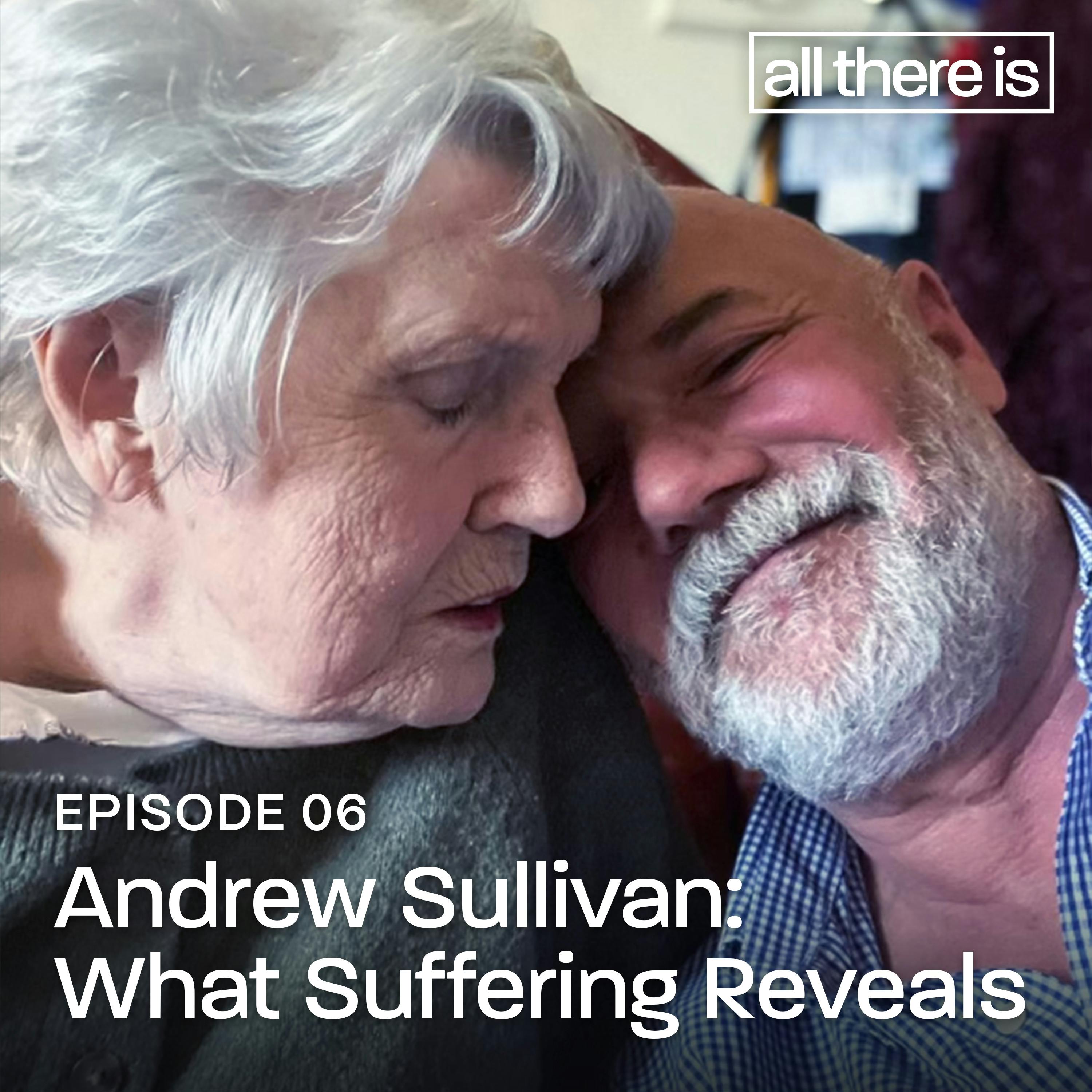
Loading summary
Transcript99 lines
- [00:00]
Walmart Advertisement
Want to shop Walmart Black Friday Deals First Walmart plus members get early access to our hottest deals. Join now and get 50% off a one year annual membership. Shop Black Friday deals first with Walmart plus see terms@walmartplus.com wherever you are in.
- [00:16]
Cooper
The world and in your grief, I'm glad you're here. Welcome to all there is.
- [00:24]
Listener
Hi, I have never shared anything like this before.
- [00:29]
Cooper
I'm still going through the thousands of voicemails left by podcast listeners last season.
- [00:34]
Listener
And it's about when a parent or loved one dies and you've had a very, very contentious relationship.
- [00:40]
Cooper
Hearing your stories, I'm struck by the complexity of grief. There are so many different emotions involved, so many different kinds of grief, particularly when you've had a difficult relationship with a person you've lost.
- [00:53]
Listener
My dad was extremely emotionally abusive to me pretty much every day of my life. But he was also a beloved and well respected doctor. There were times I hoped for him to be dead. I remember breathing a cry of relief.
- [01:09]
Cooper
Our relationship was tough.
- [01:11]
Andrew Sullivan
There was a lot of verbal abuse. I love my father and my life is easier without him in it, and I've never heard anyone say that and I hope that is helpful for someone.
- [01:26]
Cooper
Grief is complicated and my guest today learned that early on. Andrew Sullivan is a writer and podcaster with a big following on Substack at the Weekly Dish. When I first met him in the early 1990s, he was the editor of the New Republic magazine. This summer I saw a picture on his Instagram. It was his hand holding his elderly mother's hand. It was clear she was nearing the end of her life. The photo reminded me of one I took holding my mom's hand as she lay dying. I reached out to Andrew and he began to tell me a little bit about how difficult their relationship had always been. I never heard Andrew talk about his mom before she died not long after. As you'll hear in this interview we recorded a few weeks ago, Andrew is no stranger to death. He came of age as a gay man, as I did in the shadow of aids.
- [02:18]
Andrew Sullivan
There were four guys that I knew and became really fond of who died and my best friend died. He was like me, a kind of young intellectual Catholic. His name was Patrick May. Patrick died at 31. He was from the Panhandle of Florida, big southern family, of course wasn't even out to his family as a gay person when he found out he had aids and we found out roughly within a few weeks of each other.
- [02:46]
Cooper
What year did you find out that.
- [02:47]
Andrew Sullivan
You were HIV positive.93. So it was in the middle of doing the New Republic, the COVID of.
- [02:53]
Interviewer
The New Republic in 1990 that you wrote, which I just reread.
- [02:58]
Andrew Sullivan
Gay life, Gay Deaths.
- [02:59]
Interviewer
Yeah, it stunned me. Can I read you just the opening?
- [03:02]
Andrew Sullivan
Sure.
- [03:03]
Interviewer
From your article you wrote.
- [03:05]
Cooper
In the living room of her friend of mine, there's a coffee table crammed with photographs. One stands out. The four young men in tuxes taken three years ago. They're all grinning in classic college buddy group shot mode. Of the four, two are now dead. One died two years ago. The second in early November when Kaposi's sarcoma, ks, the cancerous lesions common to people with aids, entered his lungs. Tom, the third of the tuxes, was diagnosed with the AIDS virus hiv five years ago. He found out his status soon after burying his lover of four years, who also died of AIDS three years ago. Despite treatment with the antiviral drug azt, Tom came down with his first major AIDS related infection. His skin is now covered with ks. His lover of the past five years, Steve, the fourth tux, is HIV negative and is preparing for a new life on his own. Five of their close circle of friends have died in the past month alone.
- [04:07]
Andrew Sullivan
It's important to remember that those people were in their early 30s or late 20s. These were not old people. And I think the other thing that we easily forget is that it was a form of medieval torture. This disease, it was not something you just, oh, I feel bad and you die. I mean, I remember all the names. Cryptosporidium, which is something that we drink all the time. It's a little organism in our water that will eat your own food for you if you can't get it out of your system. So that's how you starve. That's how you get the slimming disease toxoplasmosis. A friend of mine woke up one morning and just realized he couldn't tie his shoelaces. Didn't know how to do it anymore. His brain had got this weird parasite that had disabled his ability to think. And within about a month, he was completely gone. Tom, I knew because I volunteered. There was a system called buddies where you'd be assigned to someone who was dying and your job was to be there for them for everything they needed. I will never forget with Tom, because this is my big regret with Tom, is one night he called me at four in the morning. It was in January. I remember it was freezing out. He said, I'm scared. I need you to be here. I'm like, Tom, it's 4:00. Can I just wait till I get up in the morning, I go to work and I'll come by on the way. Can you come now?
- [05:27]
Interviewer
Yeah.
- [05:27]
Andrew Sullivan
Tom, look, we're told that you can't, you know, you have to have some boundary. He was dead by the time I got there in the morning. So not being there with him, it really hurt. The grief that you felt. You kind of at that point, put it off because you had too much to do. You had to be there for people. When Patrick died, it was worse. He was in such pain, such terrible agony. He took his ashes down to the south, to this little extremely conservative Southern town, and we poured them into the bay where he used to swim. He had three brothers. And we put the ashes in. One of his brothers said, I'm going in. And then all of us jumped into the water. And as I was in the water, I could see his ashes in the water around me. Uh, that was helpful. It was beautiful, that. It was a beautiful afternoon. It looks just like a religious postcard, is what his mom said. This looks just like a religious postcard. His mom, now his mom, who was a huge figure in his life, she lasted a year and she died of cancer, just massive cancer. What it did to our mothers and what it did to the families, too. And especially those families that didn't know the grief they had that mixed up with this unbelievable disbelief and sadness and shame. I'll tell you another story. Another friend of mine, Joe, I went to see him towards the end. He was in an AIDS ward, and he was now £90. There was a bed next to him with the curtain drawn around. And I heard this guy singing this little pop song. And I said to Joe, someone's not miserable. Someone's keeping their spirits up. And he said to me, oh, no, he died this morning. That's his lover. He's been kicked out of the apartment. He is not being allowed to the funeral. And this is the last place they have in common, this bed. And that was the song that they had when they first met. And the nurses don't have the heart right now to tell him to leave. So you had not only this grief, but this. My friend Brad, who I dated for a while and died. His parents didn't come to the funeral. People didn't come to the funerals of their sons. That creates a whole other level of grief.
- [08:17]
Interviewer
Did you think you would die?
- [08:18]
Andrew Sullivan
I thought I wouldn't live past 35 because no one did. And then I started the regimen the new regimen of drugs, which was insane. It was 32 pills a day, and it made you unbelievably sick. And then I had to quit my job, the New Republic. And then I discovered that my viral load was zero and I was going to live. You found that out when 90, late 96. And in my case, and I think this does happen with grief sometimes, is that as soon as I found out I was going to live, I fell into a clinical depression. I went to a therapy. I was like, why can I not get out of bed anymore? I should be. I got this new lease of life. And she said to me, you know, that is grief. You're mourning all these people you lost. And it's not rational, really. I just felt I wanted to sleep and I wanted to just disappear for a while. I think other people in my generation got into meth, got into all sorts of things. The victory was a really tainted one. We were so messed up by the end of it.
- [09:26]
Interviewer
It's shocking to me how even now, among young gay people, nobody seems to have any acknowledgement that this occurred. It's just not. It's just not a thing.
- [09:36]
Andrew Sullivan
They have no idea what happened.
- [09:38]
Cooper
And no interest, though.
- [09:39]
Andrew Sullivan
And absolutely no interest. No. It gets really hard sometimes because you feel like an old soldier, that no one cares about the war anymore. I mean, 10 times as many young men died of this as died in Vietnam, but concentrated in this 2% of the population.
- [09:58]
Interviewer
You actually quoted an author, Mark Helpring.
- [10:01]
Andrew Sullivan
Oh, yeah.
- [10:01]
Interviewer
And I want to read it. For soldiers who have been blooded are soldiers forever. That they cannot forget, that they do not forget, that they will never allow themselves to heal completely, is their way of expressing their love for friends who have perished. And they will not change because they have become what they have become. To keep the fallen alive. That's how it feels to you?
- [10:22]
Andrew Sullivan
Yes. And I still feel an intense solidarity with all those people who died. And to some extent, you know, I got really upset about younger generations because they really don't give a damn. But I was part of it was like, well, that's what we were fighting for, right? We were fighting for them not to have to worry about any of this stuff. I think what happened also is that I decided in my head, well, how do I. What am I going to do with this? And I was like, you know, I'd already written that piece about marriage, gay marriage in 89. And I written another, which in 1989.
- [10:55]
Interviewer
To be talking about gay marriage, I mean, was like, what is he talking about?
- [10:58]
Andrew Sullivan
Yes, I was laughed at. Literally laughed at. You can go back and see CNN Crossfire.
- [11:02]
Cooper
Right?
- [11:02]
Interviewer
Like a lot of the gay organizations were not promoting gay marriage.
- [11:06]
Andrew Sullivan
No, they didn't want. Because they thought, first of all, it doesn't poll at all. It was horribly polled. Horribly. And secondly, it's too ambitious, you know. But my view is that our humanity demanded it, and so you make the demand. And all that grief I channeled into that campaign. I wrote, I spoke, I accepted any speaking invitation anywhere. I went to churches. I went to Boston College, I went to Notre Dame. I went to fundamentalist Protestant churches out in the West. I went to anyone who had me. And I felt that I was trying to. Trying to. I was doing it for them. I was doing it for them. I was doing it for that guy in that hospital bed. No one was ever going to do that to someone again. No one was ever going to treat people like that ever again. And we were going to make that impossible. And we did, you know, took another decade and a half, but we did. We succeeded. We succeeded.
- [12:08]
Interviewer
And that helped you in your grief?
- [12:10]
Andrew Sullivan
Very much so. I think it helps to find some purpose in it. I remember listening to your interview with Stephen Colbert and the gift of this. I remember at the time, I mean, Patrick once said to me, you know, sometimes I kind of glad that I. And he stopped himself. No, I'm not. Because it did completely remind you that only one thing matters. It got rid of everything else. Career, money, status.
- [12:41]
Interviewer
And that one thing that mattered was.
- [12:43]
Andrew Sullivan
Being with other people and loving them. It's Christ's core message. I have one. Just one. Just. I have one thing to tell you. Love one another as I've loved you. That's it. That's the one commandment. So being with them and loving them and helping them and then trying to do something to help them retroactively in a way, and for future generations. And I think the other thing that I took from that is that we should not become obsessed with what we've lost, because you gotta live, and life is right there in front of you. And the whole point of surviving this was to live. And they would not want you to sit around moping forever. They wouldn't. They really wouldn't.
- [13:20]
Cooper
We're gonna take a short break. When we come back, Andrew's complicated relationship with his mom and why he says he felt relief after she died.
- [13:37]
Colgate Advertisement
Thank you. I couldn't have completed this project without a little extra coffee. And since I brush with Colgate's Pro Series toothpaste with an expert level Whitening for a vibrant glow. I could show up to set each day, camera ready and smiling wide.
- [13:51]
Andrew Sullivan
Well, Kaylee, looks like a little Colgate gave you a lot of confidence.
- [13:56]
Colgate Advertisement
Colgate objects white. Find it at all major retailers.
- [14:02]
Rob Lowe
Hey, everybody, it's Rob Lowe here. If you haven't heard, I have a podcast that's called Literally with Rob Lowe. And basically it's conversations I've had that really make you feel like you're pulling up a chair at an intimate dinner between myself and people that I admire, like Aaron Sorkin or Tiffany Haddish, Demi Moore, Chris Pratt, Michael J. Fox. There are new episodes out every Thursday, so subscribe, please and listen wherever you get your podcasts.
- [14:39]
Cooper
Welcome back to all there is and more of my conversation with author Andrew Sullivan.
- [14:45]
Andrew Sullivan
It is an extraordinary ordeal to be a conscious and know that you will disappear, die, leave, and that other people around you will leave and you will never get them back. Suffering reveals the way things really are. This is how suffering works. It sometimes takes trauma to get there. Like, we keep this at the margins. Always. We even put old people away. This is all a part of the denial of death that our culture has incredibly successfully achieved. And we've developed healthcare and comforts and wealth in ways that insulate us completely from all of this. It's not healthy. It is not healthy to keep death and loss at bay in this kind of happy, upbeat, consumerist everyone. You've got to look as beautiful and as young as possible. You've got to earn as much money as you can. You've got to be as famous as you want to be, blah, blah, blah. And that will make you happy. And then, you know, and then. That's why I think in our culture, when grief happens to you, you're so sideswiped. Isn't supposed to happen, right? My faith always taught me the suffering was everywhere. I saw the suffering of my mother through mental illness. It was completely traumatizing. But again, all that early stuff, I mean, really intense early stuff, made me better able to deal with what I've just dealt with, which is the loss of my parents in rather horrible ways.
- [16:14]
Cooper
Your dad died when?
- [16:15]
Andrew Sullivan
Just the beginning of COVID February 2020.
- [16:18]
Cooper
And your mom?
- [16:19]
Andrew Sullivan
She died three in August.
- [16:23]
Interviewer
Were they together?
- [16:24]
Andrew Sullivan
No, they weren't. Thank God. They had split up. Finally, they divorced after 49 and a half years of marriage. And my father just bloomed in ways that he never bloomed before. He painted. He became a whole different person. He reached out to me. He suddenly. He'd never. He'd never Gone to a single play I'd been in. He'd never gone to a single speech I ever gave. He never went to anything I ever did. And suddenly he gets an iPad and he starts watching me.
- [16:53]
Interviewer
Wow.
- [16:54]
Andrew Sullivan
From 20, 30 years ago.
- [16:58]
Interviewer
That's incredible.
- [16:59]
Andrew Sullivan
And then talked to me about it. And so this relationship repaired and built and I loved him and I spent one day with him not long before he died. And I was really glad. But he died. Horrib. He tripped on the top of the stairs and fell backwards, breaking his neck, and was completely paralyzed instantly. Can't get to a phone, can't do anything. It's like 11 o'clock at night. And I think about the 15 hours he spent paralyzed there and what must have gone through his head. What do you. I don't. I mean, I can't imagine anything worse. He tried to hold his breath. So he would die. Stopped breathing. He died two days later after my sister and brother and nephew found him. Thank God, that morning. And my mother died this summer. She had developed vascular dementia. She's not Alzheimer's, just. She couldn't remember stuff. She never forgot me. But talking to her on the phone was just agony because she was no longer there. And so she would try and come up with stock phrases to keep the conversation going, which just ripped me apart. And so I think for two years, really, I grieved her, losing her because we had such a potent connection. She was bipolar. She was also a borderline personality, so she'd say all sorts of inappropriate things.
- [18:27]
Interviewer
So she was bipolar and had borderline personality disorder. Wow.
- [18:30]
Andrew Sullivan
Yes, it's a lot. It was a lot. But when I was 4, she just went away for a while to the mental hospital. I can still remember she did it on Christmas Day. She walked out of the Christmas dinner in her nightie into the snow. She just had my brother she couldn't handle. Three kids with no support, almost no money, and she just lost it. She was in and out of mental hospitals my whole childhood and adolescence and rest of life. There'd be moments when she would go under and then there would be these manic periods. I haven't talked about her. I've never written about her or my father because I couldn't write anything true about them without hurting their feelings, I think, or without them feeling violated. But now I'm going to start on a memoir, which is really a memoir of my faith, which, of course, requires her. Mary, her name was. She loved Our lady, the Virgin Mary was talked about as if she might come over for tea. One day, and it was so familiar. We put her in nursing home for the last two years because with dementia, she couldn't be by herself. But she chose to die. Clearly didn't tell us.
- [19:43]
Interviewer
What do you mean, she chose to die?
- [19:45]
Andrew Sullivan
She stopped taking her meds and stopped eating and stopped drinking the day after her 89th birthday. So it was a choice, I think. But the dementia also addled the final days. So she started yelling, screaming, ah, ah, ah. Like as if she was in acute distress every 45 seconds or so. So loud you could hear it from the parking lot outside. It went on for five days, and.
- [20:20]
Interviewer
She couldn't stop it or wouldn't stop it.
- [20:23]
Andrew Sullivan
I was like, put more payments in, for Christ's sake. Put more. Put whatever you've got. They said, we're at the max. We're not allowed to give her any more. And I said. So I said, mom, why are you crying? I don't know. I don't know. She was also. She was still manipulating us. Don't leave me, Andrew. Don't leave me. So she was there, but she was not there. And this noise and this screaming was just. It was just. You can't see your mom suffer like that in front of you. You can't. You wanted. You just. There was nothing I could do. And then one night she died. And all I can say is I feel relief. What. It is my faith that what she is now is so much better than anything that happened here on earth. I don't know anybody who suffered the way she did. And so the grief with her, I don't know whether I've kind of just pushed it away because I can't. She was so important to me. She made my whole life. She gave me the thought that I could be somebody. She played the news all the day and talked to me when I was 3, 4, 5. She listened to me as I. All my history prep and all my revision and everything. She would go, walk with her and talk to her about it, and she would test me. And no one had been to college before in my family, and she was a brilliant woman and had to leave home at 16 to work, but she really believed I could be the person who could fulfill what she didn't really do, couldn't do. The sheer purity and power of her love was overwhelming. As I said, sometimes so much I had to get out. I needed to get away from her because it was psychologically absolutely crippling to be with her when she would be. You know, she'd be on her knees grabbing your Shirt, weeping, sobbing, I can't go on. I can't go on. I can't. I was like 12. She would stop the car before she got back home to sit there and say, I can't go back into that place. She would say everything to us. There was no filter at all. The full scale war between her and my father never relented. And it was war. And it went on for 49 and a half years. And I realized in my teen years, I remember I have to put a boundary. I have to get away. And of course, that was accompanied by this intense sense of guilt. And when I went to Oxford, then I went to Harvard and got to America, she went right into a mental institution as soon as I left the country and wrote me letters saying, I'm here because you've left me. Wow. Yeah, she didn't. She never. She never held anything back. So there's a lot of guilt.
- [23:16]
Interviewer
I've listened to several thousand voicemails from listeners to the podcast over the last many months, and about 3,000 or 4,000.
- [23:25]
Cooper
Wow.
- [23:25]
Interviewer
And so many people have written in about complex or complicated grief, which I think it's fair to say you've experienced some. And the different sort of ripple effects of that in the picture postcard world of grief with somebody you loved and you miss them and. But there's so many different complexities, and.
- [23:41]
Andrew Sullivan
Part of you is relieved this person is not in your life anymore.
- [23:44]
Interviewer
Well, yeah. When one woman called in last season, she was talking about her father who struggled with alcoholism, saying, I miss him. But the thing that nobody ever says is that my life is better off without him.
- [23:54]
Andrew Sullivan
I cannot tell you how glad I am that my mother is dead. Just because they're dying doesn't mean they can't be an asshole.
- [23:59]
Interviewer
You're relieved she's gone?
- [24:00]
Andrew Sullivan
Oh, I am. Because it was such. The guilt, the sense of responsibility for this person, because she never took it off you never. She never told me I'm going to be all right, ever. So the need that she had was this incredible drain on everyone. My sister was the one that took the brunt. She's the one that sacrificed so much for her. But it was agony to watch her go disappear inside herself. So I felt relief. Relief, not grief. I remember a year ago, I lost my dog and I felt more overwhelming grief at that. I cried more than I did with my mom and dad, which makes me feel ashamed in a way. She died of a heart attack in front of me. Another horrible thing.
- [24:49]
Interviewer
What was her name?
- [24:50]
Andrew Sullivan
Bowie. Like David Bowie. She was a three legged beagle. She was an unbelievably lovely, lovely dog. And what I did was I went to the farthest distant beach I could find where no one could see me or hear me. And I wailed. I wailed, I groaned. I literally cried out to heaven for the pain of losing this little creature who had loved me and I'd loved and was with me every minute of the day for 12 years. And I just let it out. And I did that one more time, but with a friend of mine, I just broke down and just sobbed. Sob solved for an hour and then I was okay. So I do think venting the grief, railing at the world and the universe is completely good for you and legitimate.
- [25:45]
Interviewer
Do you still cry?
- [25:46]
Andrew Sullivan
Yeah, I'm like. I'm. Well, I cry occasionally. I'm not a non. Crier. Yeah, I'm a crier. Are you?
- [25:56]
Interviewer
For most of my life, I have not been. The last year. Yeah, I've begun.
- [26:01]
Andrew Sullivan
It's amazing, isn't it? You've been kind of liberated by this.
- [26:05]
Cooper
Yeah.
- [26:05]
Interviewer
I still don't know what direction it's going. I literally do not know how to take these steps, but it's been incredible. Yeah.
- [26:15]
Andrew Sullivan
You feel different to me.
- [26:17]
Interviewer
Yeah, I'm much better.
- [26:19]
Andrew Sullivan
No, I'm seeing you when I see you on tv. Of course, it's just this person, this thing, but. And I think it must be rough for you because you're so public, isn't.
- [26:28]
Interviewer
That it's added to the isolation feeling and it's played into all of the voice in my head which is telling me to be wary. It's given me reason to be wary and like suspicious and stuff. So in that way it's not been helpful. But it's also led me to this, which has been extraordinary to be able to talk with people about it. It's the only thing that helps and to hear from other people, you know, it is throughout my life the reason work has been so important to me. Not only because it was something that kept all this at bay, but it did allow me to connect with people that I otherwise would never have been able to do. It allowed me to go to a place where people are suffering and step into their lives and talk to them. And that's been, you know, it's been the work of my life that I've cared about.
- [27:23]
Andrew Sullivan
It's also the best work of your life because you're fully in it.
- [27:26]
Interviewer
Yeah.
- [27:26]
Andrew Sullivan
Your grief is particularly interesting because it can be. It shows you that grief can be.
- [27:33]
Interviewer
Transformative, a listener to this podcast named Cynthia, who Lost a child, sent me this book by Francis Weller, who's a psychotherapist. And I've interviewed him on the podcast. He talked about when you're entering into grief, you're in the commons of the soul. And he talks about developing a companionship with grief. And that idea has been life changing for me. And this idea that I can still have a relationship with my father and my brother and. Yeah, that I've come to know my dad in a different way because I have kids and I feel him in a way that I've never allowed myself to. And I'm very grateful for that.
- [28:28]
Andrew Sullivan
I've been praying to my mom. I ask her for help. I think of her with her brother who has recently died, and her beloved parents, and I feel so glad for her. It is liberating. For example, I think I can now write this book, which I couldn't have written before. It unsettles stuff enough that you can see it again, rethink it again, examine it again. My therapy is writing that little kid.
- [29:09]
Interviewer
That you were with, the mom grabbing your shirt and playing Please don't Leave me. When you're 12 years old, is that little kid still inside you?
- [29:20]
Andrew Sullivan
Yeah.
- [29:21]
Interviewer
Like do you feel. Cause that's something I've woken up to this little kid who, you know, I buried.
- [29:30]
Andrew Sullivan
I did a retreat, a meditation retreat for 10 days. Silence. Vipassana. Yeah. The fifth day I was doing a meditative walk in the forest around the place where we were doing the 247 meditation. And suddenly I was that boy again. I felt intense suffering is what I felt because I. Not only did I experience my mother, I bonded with. I felt what she was feeling. Borderline personality disorder can do that. You can really evolve. And a child who has no defenses whatsoever. And I remember being totally overwhelmed by being that age again. Actually roughly around 7. My mom not there when I was 4. My mother tells me I had to be formed out to my grandparents for a while. When I got back, I'd written. She told me I'd written on my forearm, my mommy loves me. And she did. Complicated, difficult person. But she's with God now, I believe that. And she's good now, at last. So that's where I was, in the forest. And then I felt the presence of my grandmother. My grandmother was Irish or 7th of 13 kids, servant cleaning lady for priests in England when she moved there. And she had a hymn that she used to sing all the time. The lyrics go, lord, for tomorrow and its needs. I do not pray, just keep me, love me, guide me Lord, just for today. She had this extraordinarily advanced spirituality for someone who'd never had any training or schooling or anything. And she loved me too. And I loved her. And she came to me at that moment to say, it's going to be all right. And I heard that hymn in my head and we sung that hymn at my mother's funeral.
- [32:17]
Interviewer
Andrew Sullivan, thank you so much.
- [32:19]
Andrew Sullivan
You're so welcome. And Cooper.
- [32:24]
Cooper
You can hear more of Andrew on his podcast called the Dish Cast with Andrew Sullivan. You can also find him on substack at the Weekly Dish. And his latest book is out on a limb selected writing 1989-2021. You can also watch a video version of this podcast on CNN's channel, on YouTube or@cnn.com all there is online. That's our new online grief community. You can also hear voicemails there from others experiencing grief and leave comments of your own. That's cnan.com all there is online. We have some great new guests coming up in future episodes of the podcast. Next week we're re releasing an earlier podcast with Ashley Judd. Then the following week there'll be an all new episode. I hope wherever you are in your grief, you know that you're not alone.
- [33:20]
Interviewer
All There is is a production of CNN Audio. The show is produced by Grace Walker and Dan Bloom. Our senior producer is Hayley Thomas, Dan Dzulla is our technical director and Steve Lichtai is our executive producer. Support from Nick Godsell, Ben Evans, Chuck Haddad, Charlie Moore, Carrie Rubin, Carrie Pritchard, Shimree Chitrit, Ronald Bettis, Alex Manaseri, Robert Mathers, John Deonora, Lainey Steinhardt, Jamis Andrest, Nicole Pesaru and Lisa Namurow. Special thanks to Wendy Brundage.
- [33:58]
Sleep Number Advertisement
There's a reason the Sleep Number Smart bed is the number one best bed for couples. It's because you can each choose what's right for you whenever you like. Firmer or softer on either side. Sleep Number does that one side cooler and the other side warmer. Sleep Number does that too. You have to feel it to believe it. Sleep better together. And now during Sleep Number's Black Friday sale, save 50% on the Sleep Number Limited Edition Smart Bed plus special financing for a limited time. Find Sleep Number Smart Beds at every price point only at a Sleep Number store or sleepnumber.
- [34:32]
Andrew Sullivan
Com.