Loading summary
Transcript137 lines
- [00:00]
Apollo Advertiser
Tired of juggling sales tools or spending hours on prospecting just to book a few meetings? Meet Apollo, the go to market platform for finding leads, connecting with buyers and closing deals all in one place. Apollo gives you access to over 210 million contacts and AI that handles all your busy work finding leads, drafting emails, and even prioritizing your day. So stop paying for five different sales tools when one does it all. Visit Apollo I.O. and sign up free today.
- [00:30]
Anderson Cooper
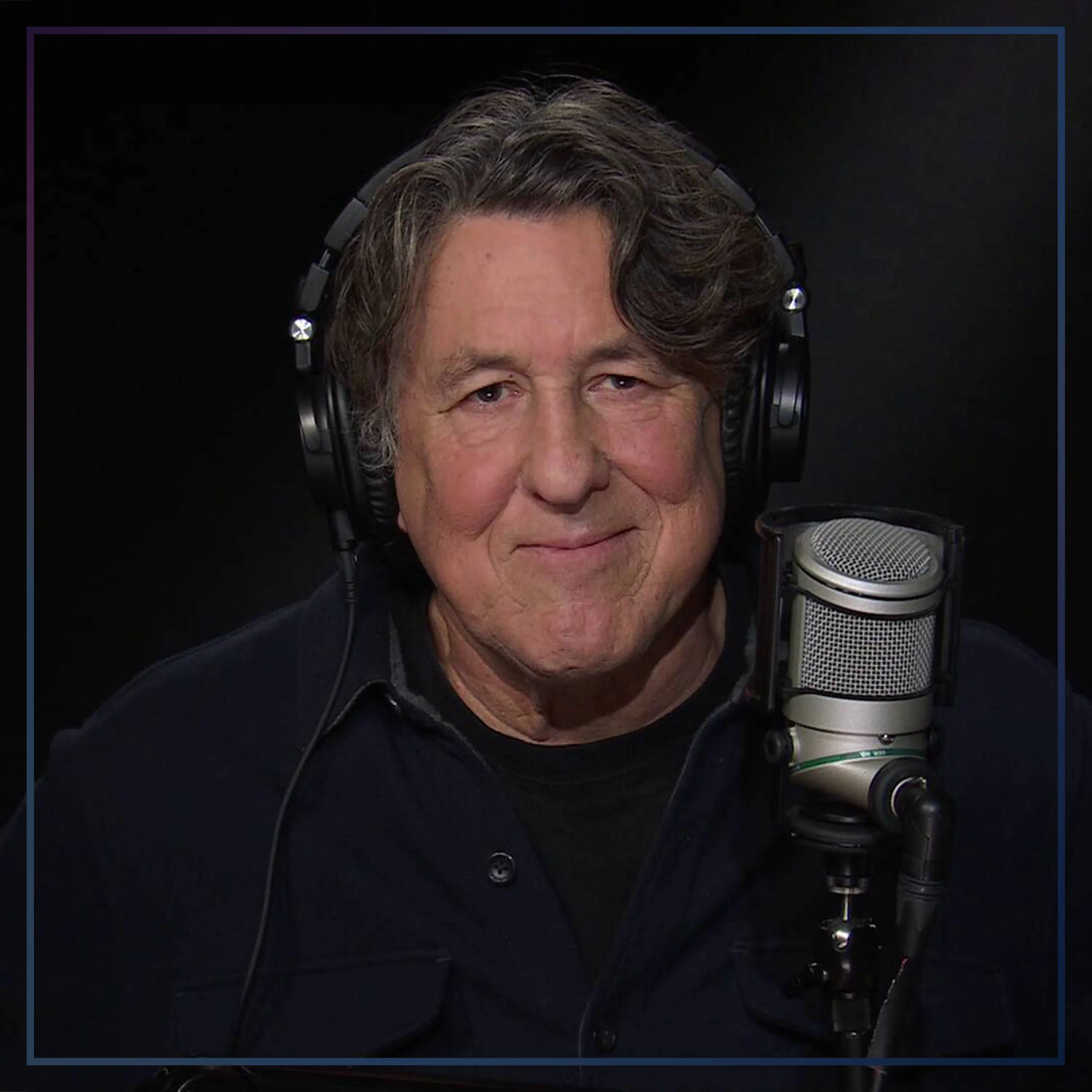
Welcome to all there is. Wherever you are in the world and in your grief, I'm glad you're here. You're not alone. My guest is Cameron Crowe. He wrote and directed amazing movies like say Anything, Jerry Maguire, Vanilla Sky. He wrote the screenplay for Fast Times at Ridgemont High and also wrote and directed Almost Famous. He got an Academy Award for the screenplay for that film, which is based on his experiences as the youngest contributor ever for Rolling Stone magazine. It's an amazing story. Cameron graduated high school at 15 and started writing for Rolling Stone, interviewing rock legends like Bob Dylan, David Bowie, Joni Mitchell, the who, and a lot of others. He's now written a memoir about his childhood called the Uncool. It's a great read and as soon as I finished it, I knew I wanted to speak with him for this podcast. Cameron experienced loss early on. He was just 10 when one of his two sisters, Kathy, died by suicide. She was 19. That's where we began our conversation.
- [01:32]
Cameron Crowe
When you were growing up, after your sister Kathy's suicide in your family, was it talked about?
- [01:40]
Guest (likely Cameron Crowe)
Anderson? It was aggressively avoided. It was more than not talked about. It was a hairpin turn whenever the subject got close.
- [01:50]
Cameron Crowe
At one point you did have a conversation with your mom. You tried.
- [01:53]
Guest (likely Cameron Crowe)
I tried. I would try often and sometimes I'd get like 30 or 40 seconds in before the emergency break got pulled by her throwing her hands up and saying, I can't talk about this. I don't want to. Don't make me talk about. Don't make me talk about it. And then you just feel like you're this wicked person for delving deeper. A lot of the stuff that's been talked about in your amazing interviews, it's the things we bury and how they fester and how they never go away. You think they're gone. You think you've outlived them and they're there. When you open yourself up to all the questions, then you've got a shot at getting them answered. But what was amazing is that Kathy and even my dad, who died at a pretty young age, 65, there were so many conversations that we had never had had. And what I found was. And I don't know if you found this to be the case, but people leave clues behind sometimes, often on purpose. They leave clues behind. The songs they loved, the books they loved, the photos they loved. Usually it's not a diary, it's the little things. And so I found that I was collecting all these little crumbs that had been left behind by Kathy and my dad. My dad left behind a box of slides, and he was in the Korean War, but I never talked to him about where he was in the Korean War and did he ever kill anybody? We never talked about it, but he left these slides behind. And using the Internet, I was able to find out where these pictures of him at war were taken. The front line. He was on the front lines of
- [03:38]
Cameron Crowe
the Korean War, which were very brutal. It was a very, very difficult fighting.
- [03:42]
Guest (likely Cameron Crowe)
Brutal. And I knew him as a real estate man, but I met him as a soldier writing the book, which was amazing.
- [03:50]
Cameron Crowe
And you said that in writing the book, you found yourself in conversation with Kathy.
- [03:55]
Guest (likely Cameron Crowe)
I did. I had a really wonderful conversation with Kathy because, again, if you dig, if you look for these crumbs, I found a piece in a small local newspaper from Palm Springs, where she had been part of, like, a weekly book club. And she came in with this book. It said, this is the best book I've ever read, and was effusive about how it spoke to her. So the book was called the Fairy Doll. And I couldn't go fast enough to find this book. And I read the book, and it was a thinly veiled account of her own feeling like she was not a part of most of the lives of the people who judged her because she was bipolar and painfully so at a time when people really didn't have room in their hearts or minds for that kind of situation. So she had found a book where the salvation for that feeling of being left out and pushed away from crowds and friendship was music. That was the theme of this book. There was a sound that delivered this young girl who was ridiculed by all the people around her. There was a sound that gave her a transcendent feeling. And I read this, I'm like, well, this fits exactly with the way Kathy was with me. Her key to salvation was music.
- [05:15]
Cameron Crowe
You write in the book about Kathy. You said there were periods when she was just gone from us, even when she was sitting right there at the table. It was confusing and scary for a kid. The house felt different, like something fragile. Had cracked and we were all tiptoeing around it. When Kathy was institutionalized, it changed the energy of the house completely. There was a silence that hadn't been there before. My parents were worried in a way that felt permanent. I didn't really understand what was happening. I just knew something was broken and nobody could explain it in a way that made sense to me.
- [05:43]
Guest (likely Cameron Crowe)
Yeah, yeah.
- [05:45]
Cameron Crowe
What was Kathy like?
- [05:46]
Guest (likely Cameron Crowe)
Kathy was a deep feeling, romantic, and so am I. And so much of what I learned about her underlined the things that made me kind of who I am and the choices that I made. And so that was an example of an older sister coming through the mists of time. Loss, grief, being expelled from huge parts of her life when she walked the earth, coming back to speak so clearly and so eloquently to me about music.
- [06:25]
Cameron Crowe
You write that somewhere around first grade, Kathy came home and you said it with the words that changed everything. The kids are teasing me about not being normal, she said. My parents lives had become a quest for Kathy's diagnosis. Her emotions could swing wildly from sweetness to sadness. What's wrong with Kathy? I asked. My parents, who were probably as confused about her condition as I was, would struggle to explain it to me. They used the phrase emotionally disturbed. It was a kind explanation for the doctors in Los Angeles had also diagnosed as schizophrenic.
- [06:57]
Guest (likely Cameron Crowe)
I remember going through the hallways of these spotless hospitals and doctors buildings in la. They were searching for a diagnosis on my sister. And I just remember the drives home. Anderson, everybody was so distraught. And there was nobody that kind of bent down and said, look, I know what you're going through. Look, to find some kind of comfort for this young girl. I don't think they ever heard a kind voice like that. And a lot of it was the time and place.
- [07:33]
Cameron Crowe
I think there was a lot of shame involved.
- [07:36]
Guest (likely Cameron Crowe)
So much shame. And she left us without getting that kind of a helping hand from a doctor or a program.
- [07:46]
Cameron Crowe
She had attempted suicide once.
- [07:49]
Guest (likely Cameron Crowe)
She did once before. You know, she tried to kill herself.
- [07:52]
Cameron Crowe
You knew she had tried?
- [07:54]
Guest (likely Cameron Crowe)
Yes. There was a conversation around the house that I kind of overheard, which was epic and scary to overhear for sure. I remember the doctors were like, well, it can't be real. It wasn't a serious effort. Even as a kid I remember thinking, not a serious effort, that's a serious effort. But I just. I couldn't have imagined how comforting it was to really write the book and kind of have a little get together with the people I loved so much and wanted to know better. And they were right there. I mean, even my mom used to say, when I leave this plane of existence, I'll still be here. It's just a thin wall, and I'll just be on the other side.
- [08:41]
Cameron Crowe
Do you feel that? Do you feel she is?
- [08:42]
Guest (likely Cameron Crowe)
I do. I feel her voice. I definitely feel her many notes, faxes, letters.
- [08:50]
Anderson Cooper
She's still giving you.
- [08:51]
Guest (likely Cameron Crowe)
Not. They're still arriving. I open a box, and they're just freshly there. There's like an existential or a magical way of thinking about it. And then there's also a practical way. I toggle between all of them. The practical way is she really loved me and she wanted to keep timely reminders coming my way about lessons she had learned or that the family had learned. So it's both. I still feel her. I definitely feel her on, you know, just on the other side, whenever I'm open to it, for sure. Do you feel that?
- [09:28]
Cameron Crowe
I do. I feel that now with my dad, and it's an incredible feeling. And I talk to him now, and I feel that with. I had a nanny who was like my mom to me and very important in my life, and I feel her, especially when I'm, like, holding my kids.
- [09:43]
Guest (likely Cameron Crowe)
Oh, wow.
- [09:43]
Cameron Crowe
I don't feel my brother and his death, which was by suicide. It's so deep even now, difficult for me to think about without, you know, this weird crack in my voice. And it makes me wonder if I ever really knew who he was. And I asked the question about, did you know about Kathy's attempt? Because I had no idea my brother was struggling in this way. And. And I wonder if he had attempted and survived, how I would have. How any of us would have dealt with that if we would have been even able to deal with and face that.
- [10:19]
Guest (likely Cameron Crowe)
Did he confide in anybody?
- [10:20]
Cameron Crowe
He didn't. He didn't.
- [10:22]
Guest (likely Cameron Crowe)
Wow.
- [10:23]
Cameron Crowe
I think there's more for me to learn there, and I'm just now, like, literally taking it on as a project. And I think he may have to. Individual friends kind of shown up in their lives in odd times in the final weeks, but nobody put pieces together. We thought he was talking to a therapist, and that allowed me certainly, to not give it as much attention as I now obviously wish I had. But the way Kathy's life ended, does it impact the way you think of her?
- [10:52]
Guest (likely Cameron Crowe)
Well, it's an amazing question. It does. It does. There's a letter that she wrote not too long before she killed herself that was a very eloquent and helpless cry for help. And she didn't know what she didn't know, except she knew there was something there in a life that wasn't happening for her. And one of those things was empathy from the world around her. And it was so heartbreaking to see how helpless that she felt. I do think about her as so helpless at the end.
- [11:37]
Cameron Crowe
Was that a letter you found later?
- [11:39]
Guest (likely Cameron Crowe)
My sister Cindy shared it with me. It was a letter home. She had tried living in another city and state with other parts of the family, and Anderson had gone really poorly. So she kind of came home with her hopes and dreams tail between her legs, and didn't stick around much long after that. So what I think about a lot is that in the time of need, when you look to the world for empathy, how do you handle the fact that nobody's taking time to show you any empathy? And I just wished I was older and was able to spot that in Kathy, but I wasn't. And my memory for a long time was that she used to tousel my hair and mess my hair up and that she really got a kick out of me. And I was grateful for that and
- [12:34]
Cameron Crowe
used to purr like a kitten to you.
- [12:36]
Guest (likely Cameron Crowe)
Yeah, all true. And I loved her little cat's eye glasses. And I just thought, she's so pretty, especially when she takes the glasses off. That was a big thing for me. I remember thinking, when I get a little older, I'm going to figure out a way to tell her how beautiful she looks without the glasses. That was my dream of where our relationship was gonna go.
- [13:00]
Cameron Crowe
It's interesting you say that I said this in my brother's eulogy. I imagined he and I would become friends one day as adults, and they would kind of meet on the other sides of our childhood, which I think we both felt like we needed to just get through. And I felt like we had a secret pact, like we would be friends as adults. And then I. Yeah, I think I imagined that.
- [13:27]
Guest (likely Cameron Crowe)
Wow. The adult to adult thing is a little bit of a trap because you think down the line it's all going to be equal. We're going to be kicking back, we're going to talk about all this stuff. And sometimes the time to do all that is right in the moment. This was one of the things that I was thinking about, knowing we were going to have a. This conversation, which is so valuable. These conversations you've had with deeply soulful feeling people. What can I bring to the table of grief and feeling these things and being able to talk about it. The one thing I kept coming back to is don't waste the moments that arrive where you have that little voice that says, forget adult to adult. You're here now. Talk to them now. Tell them you love them now. Because this is the moment where the little voice inside is telling you to do it and do it now. That really became a thing. Like, I wish every time that little voice inside had said, this could be the last time you ever see this person tell them you love him. If I mostly listen to it. But with my dad, the last time I talked to him, I didn't listen to it. So it was the one time I never told him I loved him in a million conversations. And of course it was the last time. So say it.
- [14:52]
Cameron Crowe
When you talk about feeling Kathy now, is it a good feeling? It's not tainted.
- [14:59]
Guest (likely Cameron Crowe)
It's another great question. It's a beautiful, close feeling. Like I picked up a cue from her and got it just the way she wanted me to get it. Just that sparkle between people when you made a great connection and. And I felt that before as a. Just as a little kid to an older sister. But it's the adult to adult connection that I feel. We finally got to make through music, through emotion, through being able to write about it. Just listening to you read some of the stuff right there. I go right back to the searching. I wanted to meet her. I wanted to know her better.
- [15:36]
Cameron Crowe
And she gave you the gift of music. She introduced you to the magic of it.
- [15:42]
Guest (likely Cameron Crowe)
She did. She said that thing that nobody had said to me before in her own deeply personal way that when words fail, you ride music. It'll take you a long way. And it has. It's taken me everywhere I've been able to go. Making movies is a musical experience most of the time for me. And I can go back to music as a diary and as a souvenir for the way I felt in a certain time. And music was what allowed her to introduce herself to me as an adult. And I go back to what you and Patti Smith were talking about. The sacred wounds are not painful necessarily. The sacred wounds can be treasures. And these sacred wounds I have for my sister and my dad and my mom and friends beyond my family. It keeps the conversation alive with people that understood you and vice versa. And I think you do that in these conversations, Anderson. You keep the lines of communication open without emotional censorship. It's really important.
- [17:00]
Anderson Cooper
We're gonna take a quick break, but before we do, I just wanna play what Patti Smith said to me about sacred wounds in an earlier podcast that Cameron just spoke About.
- [17:09]
Patti Smith
It's not a thing where time heals all wounds. It's just in time. You learn to navigate it more. Cause nothing really heals. They're sacred wounds. They're not gonna heal.
- [17:19]
Anderson Cooper
They're sacred wounds.
- [17:21]
Patti Smith
Yeah. You just learn to live with them. Don't look to be healed. You have a sacred wound. Take care of it. Don't let it get infected.
- [17:32]
Anderson Cooper
Welcome back to my conversation with Cameron Crow.
- [17:36]
Cameron Crowe
Kathy died in your home. You were 10 years old. She was 19. You write they had removed her body from the house while I was asleep. It happened on a Wednesday night, less than two weeks after her 19th birthday. My mom found her. We were now living in the house where it happened.
- [17:54]
Guest (likely Cameron Crowe)
Yeah, I couldn't shake that feeling. The house where it happened. I'm always surprised when people stay in a house where there was extreme sadness or even tragedy. A lot of people do. I just feel like the spirits of things that happen in a house or a place or even a city sometimes linger in such a powerful way. And I wouldn't want it any other way. I think it's important that things don't just disappear. Feeling songs, a legendary event, falling in love. I would go back to places where important things happened. Even the San Diego Sports Arena. That's a scene in Almost Famous. That's my favorite scene in the movie. Kate Hudson as Penny Lane. This amazing concert is over, and she's in the full throes of her love affair with Billy Crudup's character. But the band is gone. Everybody's gone. And she's dancing in the trash of the concert hall where this great event has happened. I feel like so much of my life I've done that. I've gone back and danced among the trash of the empty concert hall because it's just. It's a place where deep feeling resides. The people that we love and care so much about who made such an impression on us are still there. And if we open up to them, they're so often there to meet us at that crossroads.
- [19:27]
Cameron Crowe
She had taken you to a record store. Prior to her death.
- [19:32]
Guest (likely Cameron Crowe)
We lived in the desert. We lived in Indio. And Indio was a windswept town where nothing happened except the date festival once a year.
- [19:43]
Cameron Crowe
Like dates.
- [19:44]
Guest (likely Cameron Crowe)
Like dates.
- [19:46]
Cameron Crowe
Which, as you point out in the book, are the color of cockroaches.
- [19:48]
Guest (likely Cameron Crowe)
The color of cockroaches. And thank you for picking that out. You tend to pick out my favorite lines in this book.
- [19:55]
Cameron Crowe
Yes.
- [19:56]
Guest (likely Cameron Crowe)
But, yes. They had a festival for dates. And the way you got records was to go to this place called Custom Classics that was both a music store and also records, if you ordered them. So she took me to my first record store and showed me that it was a portal to so much and so much feeling.
- [20:16]
Cameron Crowe
She took you because you wanted to impress a girl, and she suggested buying some music for this girl, and you bought Silence Is Golden.
- [20:24]
Guest (likely Cameron Crowe)
The Tremolos. Yeah, yeah, yeah, the silence is golden. But when I did give the record, the girl was so impressed, she called over her boyfriend, who would pat me on the head and thank me for being their little mascot, and invited me to come along on the date that I'd suggested. But I can tell you, this is the power of music. Whenever I hear that Tremolo's record, I Ache, Baby.
- [20:51]
Cameron Crowe
Let's play a little bit of that.
- [21:10]
Singer (performing song)
Oh, don't it pain to see someone cry? Especially when someone is.
- [21:32]
Guest (likely Cameron Crowe)
It's so painful.
- [21:35]
Cameron Crowe
Do you find it painful?
- [21:37]
Guest (likely Cameron Crowe)
I find it beautiful and painful. It's. It's. It's happy, sad. It's my favorite kind of music. It aches. But the fact that there's somebody that aches like you makes you feel like you're not alone, which makes it joyful. So you get both. It's the happy, sad music. She had another favorite song called Rhythm of the Rain by the Cascades, and it was similarly achy and beautiful. Listen to the rhythm of the falling rain. And this was Kathy. This was her shining a flashlight towards a place that really resonated with me. And I wonder if she created it or if it was always there. That's a question I don't know the answer to.
- [22:20]
Cameron Crowe
I at times wished my brother had left some sort of a note, and he didn't. And Kathy didn't leave a message for you either. But something happened after she died that you felt was like a message from her.
- [22:32]
Guest (likely Cameron Crowe)
The deeply poetic thing was, after she died, we still were getting the records that she'd ordered, and they were diaries, really, of her and her personality and her life. They were Beach Boys records. They were beautiful pop that some people might have discarded as fluff. But it wasn't to her, and it isn't to me.
- [22:55]
Cameron Crowe
It was California Girl and Don't worry, baby I just want to play don't
- [23:00]
Singer (performing song)
worry, baby I don't know why But I keep thinking Something's bound to go wrong but she looks in my eyes and makes me realize that she's so Baby, don't worry, baby don't worry, baby Will turn out all right don't worry, baby Don't Worry, baby.
- [23:32]
Cameron Crowe
What a message for her to leave you with.
- [23:34]
Guest (likely Cameron Crowe)
I know, I know it'll stay with me always. And I just listening to that, it never ceases to be powerful. And take me to that place where you're just kind of up above seeing, seeing the beautiful kind of landscape of your life. I go to that place with that record. Forgive me for being a rock journalist here for a second. Brian Wilson was not quote unquote cool when he made that record. It was thought to be like disposable pop. And he just religiously stayed with making these records about feeling and ache and the quick passing of a joyful moment that we hold on to a lot of the stuff we've been talking about. He would put it in a two minute pop song and wasn't cool for many years. And look at what's happened. Pet Sounds is considered to be maybe the greatest record ever made along with Joni Mitchell Blue. And if you're feeling alone and you're feeling some of that stuff, that music will meet you wherever you choose to meet it. And it found Kathy. And Kathy passed it to me and I've passed it to many others and put it in movies too.
- [24:51]
Cameron Crowe
And you write in the book. I wondered why Kathy hadn't left me a message of some kind, not even a suicide note. And then I remembered the record she'd ordered. My California girl sister was telling me not to worry, baby.
- [25:04]
Guest (likely Cameron Crowe)
Yeah. And I think that was exactly right. She wanted to continue giving me that message. And it kept coming to me too, again and again and again. That to be a warrior for optimism in your life means that you have to kind of travel through many a buzz saw. And so many of the lessons from grieving her came in the form of like, go get through it. Even though she was unable to. With the pain is joy and the ache there is that she gave up on the joy for one day. And I feel this a lot about people that have committed suicide that they might have been one day away because moods are so up and down. There's a good chance that terrible day might be followed by a day where you laugh at yourself for how seriously you took it all the day before. And I wish I'd been old enough to have that conversation with Kathy. But time was not Kathy's friend. Had she been born later, there would have been a diagnosis, there would have been a path for her. But if you subscribe to that idea, there's a paper thin wall between you and the person that you lost. Our relationship has never been better.
- [26:34]
Cameron Crowe
You still have a relationship with her. You feel?
- [26:37]
Guest (likely Cameron Crowe)
I really feel it. I really feel it. And I feel like my mom had to exit the stage for it to truly happen. I wish I'd been able to talk to my mom about it, but I don't think that ever was gonna happen. That was how much that loss remained unmet with her.
- [27:00]
Cameron Crowe
That idea that you can still have a relationship with someone who's died was revolutionary to me. And I learned it from a documentary filmmaker named Kristen Johnson, who made a film about her dad who recently died from Alzheimer's. She brought up that idea, and I literally did not understand the word she was talking about. That's how, like, deeply buried I was. But I now understand that. And I have a deeper relationship with my dad now than I did before. And I know him in ways I never did before.
- [27:28]
Guest (likely Cameron Crowe)
No doubt. The other thing is when you become the age of the parent who you've lost. Like when I became the age of my dad when he died. Oh, did the gates open to some other stuff? Because it's a really basic feeling when you're a kid. It's like you pass into a whole other kingdom where you're anointed as an adult and you lose the feelings that cripple you as a kid. You become an adult, then you get to be the age of your parent, and you're like, oh, man, there's no more answers than there used to be. There's just different questions. This is amazing. My dad was just a guy trying to make.
- [28:13]
Cameron Crowe
Just struggling along like everybody else and
- [28:16]
Guest (likely Cameron Crowe)
trying to appear like he had more answers than he did to the kid who was me. So then that secret gets passed along that there's no secret.
- [28:25]
Cameron Crowe
There is no Oz behind the curtain.
- [28:28]
Guest (likely Cameron Crowe)
There is no Oz, and there's no
- [28:29]
Cameron Crowe
champagne in the champagne room and no Oz behind the curtain.
- [28:33]
Guest (likely Cameron Crowe)
But there is your dad going, welcome, brother. I love that.
- [28:42]
Cameron Crowe
That's great.
- [28:43]
Guest (likely Cameron Crowe)
That is great. You're no longer the child. You're a brother. It's a little of what happened, but viva all of it, because the happy, sad of life, it's riveting.
- [28:55]
Cameron Crowe
I did an interview with Megan Fowley, whose spouse, Andrea Gibson, was a spoken word poet who recently died. And they wrote a poem from the afterlife, and it talks about death is only a portal to here. I'm more present now than I've ever been before, and I'm so close to you. And Megan uses the term allegedly when talking about Andrea's death.
- [29:13]
Guest (likely Cameron Crowe)
Oh, that's true.
- [29:14]
Cameron Crowe
And Megan's point is, we have no idea what happens when somebody dies. So allegedly they're dead. But they could be right here. Like as you said, it could be a veil right here.
- [29:23]
Guest (likely Cameron Crowe)
Allegedly.
- [29:23]
Cameron Crowe
They're all around.
- [29:24]
Guest (likely Cameron Crowe)
It's alleged. It's alleged. Oh, that's great. That's just great.
- [29:28]
Cameron Crowe
After Kathy died, you say her turquoise chair, the one where Kathy used to sit, was still on the kitchen table.
- [29:34]
Anderson Cooper
Her room had been cleaned out.
- [29:36]
Cameron Crowe
Some of her clothes had been given away. Removing that turquoise chair from the kitchen felt like injustice. And so it remained there, the empty chair. Nobody wanted to be the one to remove it. How long did it stay there?
- [29:48]
Guest (likely Cameron Crowe)
It stayed there for about a year and then it went to the garage and I used to go sit in it in the garage. But the empty chair was her.
- [29:57]
Cameron Crowe
So you guys couldn't talk about her. But the chair remained and nobody talked about the chair.
- [30:02]
Guest (likely Cameron Crowe)
That's why there's an empty chair at the table and almost famous. It's kind of a little message to those of us who were at the table that somebody can have exited but still be there so clearly and passionately still there in your life. Yeah, the empty chair was her. Is her still. But feel like I filled it and did the work to find all the clues she left behind. So the chair is not as empty to me now. And that's really the first time I've realized it is just sitting here talking about it right now that the fact that you and I can even talk about Kathy, she is a real person to us both. For this glorious reason that you read the book Anderson. She lives and we get to talk about her and her message resonates through the decades. It's amazing. So that chair is no longer empty for me. Thank you.
- [31:02]
Cameron Crowe
One of the other things that you wrote which really hit me, you're talking about Kathy. You said lately I've become obsessed with something that had come to me. When I last visited. Her ashes tucked into the wall of the mausoleum courtyard in Riverside. I realized that I still thought of her from the perspective of a 10 year old to a 10 year old. Kathy was a full grown adult. These days I saw things with more perspective. Kathy was still a teenager when she died. She was. She was a kid.
- [31:26]
Guest (likely Cameron Crowe)
Yeah, she was a kid. She was a teenager.
- [31:32]
Cameron Crowe
That realization that your vantage point has been the 10 year old child you were when she died. I have, I mean God, it resonates so much. I have. It's taken a long time for me to not view everything through the eyes of the 10 year old boy that I was like frozen in time.
- [31:51]
Guest (likely Cameron Crowe)
Same here. Same here. There's a comfort in that, in a way, to get out of that frozen moment and try and live in the
- [31:59]
Cameron Crowe
feeling and to see it through the eyes of an adult. To hold the grief in the hands of an adult rather than the hands of a 10 year old boy, it's
- [32:07]
Guest (likely Cameron Crowe)
powerful and it's necessary. And to take that jump, I think is heroic for both of you. It's listening to them and taking their hand across time. And I mean, that's, that's a gift. And a lot of people don't make it to that stage of having the adult to adult feeling about somebody you've lost and felt so much for. But to do it is huge. And they're there waiting for us. I'm sure of it.
- [32:45]
Cameron Crowe
You believe that?
- [32:47]
Guest (likely Cameron Crowe)
I know it.
- [32:47]
Cameron Crowe
I believe that too. I don't want to give your mom short shrift here because your mom is such a life force that I'm obsessed with.
- [32:57]
Guest (likely Cameron Crowe)
And she you, my friend, when I saw you in New York and we were talking about our moms, boy could I feel her.
- [33:05]
Cameron Crowe
I have started to quote your mom in my own life.
- [33:08]
Anderson Cooper
Doubt is the devil. This one still blows my mind. Mind is in every cell of the body.
- [33:13]
Cameron Crowe
What you say will make it so. I mean that sort of life changing for me.
- [33:20]
Anderson Cooper
Opportunity favors the prepared mind.
- [33:23]
Guest (likely Cameron Crowe)
Anderson, you don't know hearing these words come out of your mouth. She's gonna appear in about 20 seconds.
- [33:28]
Anderson Cooper
I want her in my life.
- [33:29]
Guest (likely Cameron Crowe)
That's too much for her to leave behind. I want her in my life. She is in your life.
- [33:36]
Anderson Cooper
Oh, and you dropped another one in an interview.
- [33:38]
Cameron Crowe
Wait, I wrote it down.
- [33:39]
Anderson Cooper
Cause I was like, there's another one.
- [33:40]
Cameron Crowe
It was in a note you found. My notes are so disorganized.
- [33:45]
Anderson Cooper
Oh, you. Oh, no, no, no.
- [33:46]
Cameron Crowe
Sorry. You never know.
- [33:47]
Anderson Cooper
Good luck or bad.
- [33:49]
Guest (likely Cameron Crowe)
You're amazing. I was just gonna. I was just gonna say that one. You never know. Good luck or bad is such a winner.
- [33:57]
Cameron Crowe
And what you think is bad luck
- [33:59]
Anderson Cooper
now turns out two months from now or 20 years from now to be
- [34:03]
Cameron Crowe
the best decision you ever made. The best thing that ever happened.
- [34:07]
Guest (likely Cameron Crowe)
It's like one door closes, another door opens. I love that you never know. Good luck or bad landed in your life. This is. There's celebration up and down.
- [34:14]
Cameron Crowe
But given the force that she was and is. She died in 2019. My mom died in 2019 as well. How was her death for you?
- [34:23]
Guest (likely Cameron Crowe)
I wasn't prepared for it. Even though she had left behind files, books, notebooks, thick Notebooks, thinner notebooks, notebooks in every city where we were. If I die here, here's what you do. The guy that ran the mortuary looked at my mom's materials. He said, I've never met anyone or just missed meeting anyone who was this prepared. She was. And still I wasn't prepared for it. But there was a great sense of humor that she leaves behind in all of it because it's just hilarious how detailed she was. I miss her. She knew I was gonna miss her. But as she said, you're gonna miss me a lot. I wanna make it easier for you. I wanna make you laugh a little. And she did. She makes me laugh now. Hearing you quote her, I could talk
- [35:12]
Cameron Crowe
to you for hours. But I know you gotta go. I so admire you and I so love this book. It's the Uncool A Memoir. Obviously you are like the coolest person on the planet, but the fact that you feel uncool just speaks to your good character. I have a live grief show on Thursday nights and people leave the names of their loved one for me to say out loud. And I like this idea that everybody listening to the podcast will say the names of these people whose names are now often not spoken. So if you just end by saying your dad's name and your mom's name and your sister's name.
- [35:43]
Guest (likely Cameron Crowe)
James Albert Crow. Alice Marie Crow, Kathleen Janice Crow.
- [35:50]
Cameron Crowe
Cameron Crowe, thank you so much.
- [35:51]
Guest (likely Cameron Crowe)
Thank you, Anderson.
- [35:52]
Cameron Crowe
Thank you.
- [35:54]
Anderson Cooper
Cameron Crowe's memoir the Uncool is out now, and if you haven't watched Almost Famous, it's worth seeing, as are, frankly, all of his films. Thursday, May 7 I hope you join me at 9:15pm for my streaming show, All There Is Live. You can watch it on our grief community page, cnn.com allthereis it streams live there for free. It'll also be free to stream on our community page for a week. All the older episodes of the show are available on demand for CNN subscribers. On the next episode of All There Is, we'll have a conversation with Today show co host Chanel Jones, whose husband Uche died last May. Here's some of what we talked about.
- [36:31]
Chanel Jones
I feel like I have been able to get a special key, and the key comes at a cost. And when you have this grief key, it unlocks the door to a club that you're in and that I'm in and others are in. And it allows us to be in this special matrix of I think, understanding and clarity, or at least the recognition that we're in a search for it it's just really a beautiful way to live life because it's almost like you have another sense that's built into it
- [37:04]
Anderson Cooper
that's on the next episode of All There Is. If there's something you've learned in your grief that you think would be helpful for others, leave us a voicemail at 404-827-1805. Thanks for listening.