← All There Is with Anderson Cooper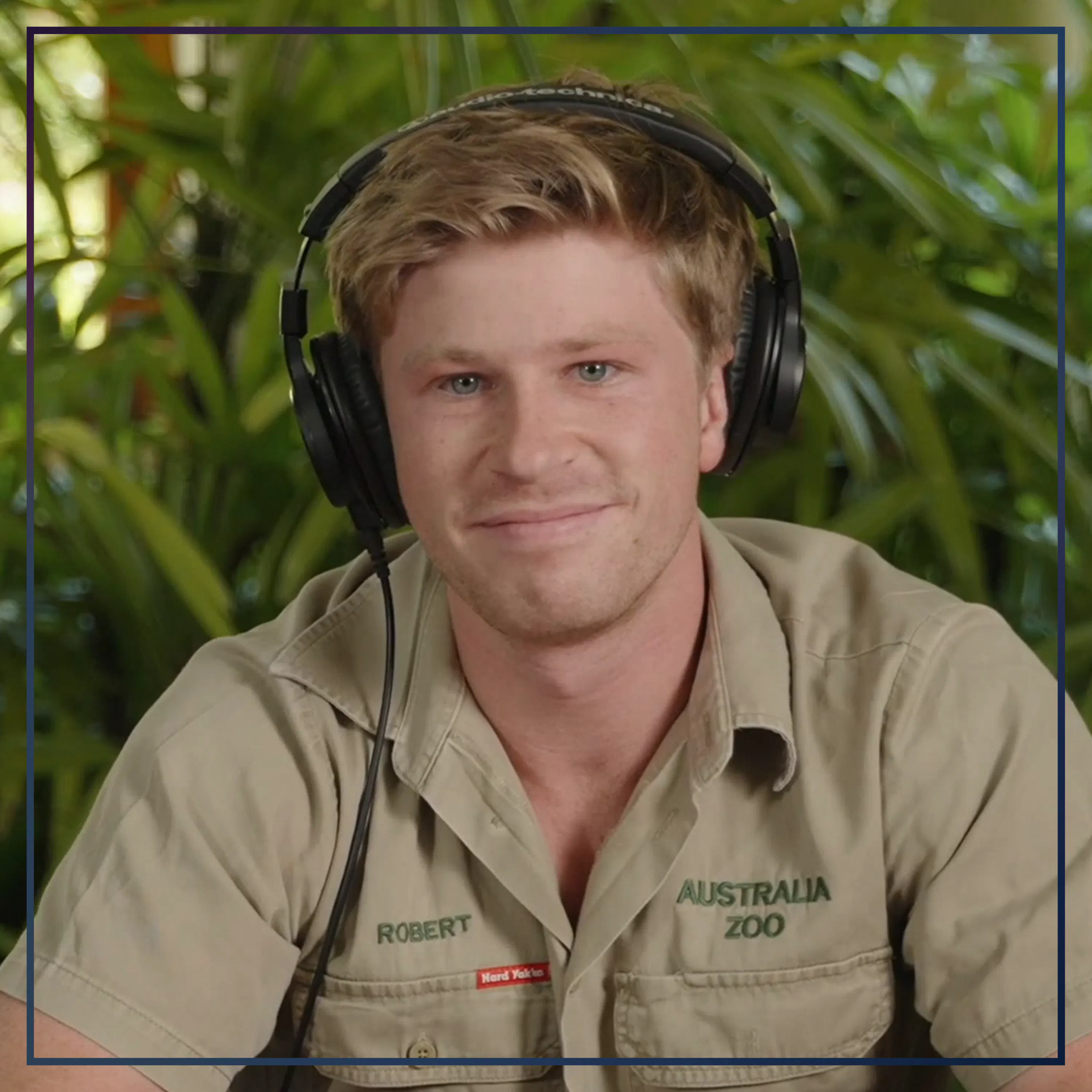
All There Is with Anderson Cooper
Robert Irwin: Finding Strength in the Vulnerability of Grief
00:49:21
Loading summary
Transcript100 lines
- [00:01]
Host (possibly Anderson Cooper)
Welcome to all there is, wherever you are in the world or in your grief. I'm glad you're here, glad we're together today. My guest is Robert Irwin. You may remember him from Dancing with the Stars last year or remember his dad, Steve Irwin, the Crocodile Hunter. Robert was just two when Steve was killed by a stingray while diving. I've been thinking a lot about kids and loss and how the death of a parent early on can completely change the trajectory of one's life. It certainly did with me. And I worry at times about not making it to see my two little boys grow up to be men. I think I will, but I like to talk to them a lot. About how even though my dad died when I was 10, I feel him in my heart now and how I believe he's with me and with them and happy to see them growing up. I was really moved by an Instagram post I saw this week from James Van Der Beek's daughter, amelia. She's just nine years old and her dad died last month on February 11th.
- [01:02]
Robert Irwin
Today is my dad's birthday. And the number one thing for somebody's passing is to talk to them and let your emotions out. If you miss them, you can cry, you can talk to them. I talk to my dad every day and I start with a sentence and I say, hi, Dad. I miss you and I love you so much and I'll never stop loving you. And I just tell him about my day, how I'm feeling, and I tell my family how I'm feeling. And I know he can hear me, but I can't hear him. My mom can. And you just. You have to feel them in your heart because they're in your heart. They're watching over you.
- [02:01]
Host (possibly Anderson Cooper)
There's no way when I was that age I could have said something like that so soon after my dad's death. Years before, my childhood nanny, Mae McLindon died after suffering from Alzheimer's. She told me about something I said to her just days after my dad's funeral when I was 10. I was hugging her and I said, don't worry, May. Everything will be all right. She started to cry when she was telling me this story. You didn't understand. She told me it wouldn't be all right. Nothing would be ever again. And she was right.
- [02:33]
Interviewer/Host
In a moment.
- [02:34]
Host (possibly Anderson Cooper)
My conversation with Robert Irwin. My conversation today is with Robert Irwin. He's a conservationist, a photographer, and he helps his family manage the Australia Zoo, which is where he lives in Queensland. He's 22 years old. And is probably best known in the US for winning dancing with the Stars last year. Robert grew up in the public eye. His dad, Steve Irwin, was known around the world as the Crocodile Hunter. He was killed in 2006 by a stingray while diving for a documentary. I spoke with Robert a couple of weeks ago.
- [03:09]
Interviewer/Host
You were two years old when your dad died. I assume you don't have. Or do you. Do you have any kind of sense, memories of him?
- [03:19]
Robert Irwin
It's an interesting thing to me. My dad is almost more of a feeling than a memory, if that makes sense. Like, the memories that I have of him are so incredibly vague, but they're there. And I think one of the greatest gifts in my life is the fact that my entire existence and my childhood growing up with dad was all captured on camera. I mean, it is all there. And, I mean, you watch dad for two seconds and you get a pretty good picture of the sort of passionate individual that he was. And my mum tells the story of when she was in labor, like, getting ready to give birth to me, right? And my dad was filming a documentary at the time, gets the call, absolutely races over there with the entire camera crew and. And films in the room, like, while I'm being born. So I literally have that footage.
- [04:15]
Host (possibly Anderson Cooper)
I watched that.
- [04:16]
Interviewer/Host
Yeah, I actually watched it online. And what a blessing to have video of the moment your dad first lays eyes on you.
- [04:26]
Robert Irwin
Isn't it an amazing thing how that can just spark that? I mean, for me, it'll be certain moments that I will see on. On. On camera. There's footage of my dad putting a coat on me, right? Putting, like, an overcoat that had a picture of a moose on it. And I don't know what it was, but I'm watching this video. I was about 2 years old in the video, and I just see the picture of the moose and him putting the jacket on, and it still just hits me. I'm just like, whoa. I remember that. I don't know what it is. It's that little moose jacket. For some reason, that moment in time just all of a sudden comes flooding back and I'm just hit with this. Like, that's what he felt like. I remember feeling warm. I remember feeling protected. And I remember just feeling like that's what he felt like to me. I just saw a piece of footage of him when he was around my age. He was in his kind of mid-20s, and that was very surreal to me, seeing him speaking at my age and going, wow, I'm sort of stepping through life now in A similar way that he did. And it's. Yeah, it's powerful. It really is.
- [05:32]
Interviewer/Host
One of the early discoveries I had from somebody on this podcast was that you can still have a relationship with somebody who has died and that relationship can change over time.
- [05:41]
Robert Irwin
Do you feel that? I do feel that. And that was like, for me growing up, my greatest fear, and it still is my greatest fear is forgetting what he feels like or what he felt like. And that was something that would, for a long time, really, really keep me up at night. But I think one of the greatest sort of saving graces in keeping him alive, I guess, in my life is my mum. I mean, she is, I think the reason why I have such a clear picture of the person that he was. I have all of that footage, all of these photos that I can pull from which I'm so grateful to have that resource, but also my mum to tell stories and to spark those memories and to keep him alive. Like when we were young, growing up, you know, my, my mum and dad created this, this legacy of conservation. I mean, my dad was the most passionate human being on the planet and it's, it's hard not to. I mean, you remember someone who is living life at 110%. He was so devoted as a father that you can't not remember that. I mean, that's just sort of inbuilt. I feel like that's his passion is factory settings. But it was my mum that not only carried on this legacy that he created that then fell apart the instant that he passed away, she picked up all the pieces and carried on his work, all of the conservation work that we do, but also she kept him alive in our household. I remember one thing that we would do almost every morning and I would wake up and I'd go, I want to see a daddy doco. So mum would put on documentary of my dad, you know, in some far flung wild region of the world doing what he did best. And almost every morning from the age of about three to maybe, maybe eight or nine, I would just sit there and I'd watch him. And dad was and is my hero. Absolutely. I feel closest to him when I'm continuing what he loved. When I'm talking about wildlife, when I'm in there, you know, feeding the same crocodiles that he rescued from the wild that were going to be poached or hunted and he would save them and give them a second chance at Australia Zoo. And now I get to go in there and feed them and it's, it's that is what keeps me closest to him, is when I'm keeping his work going.
- [08:00]
Interviewer/Host
It's interesting because he actually spoke about that in a video and he talks about the idea of you and your citric continuing on his work.
- [08:09]
Robert Irwin
Is there anything in this world that would want to make me give away what I'm doing now? Yes. Yes, there is. When my children can take the football that I call wildlife conservation and run it up, when they're ready to run up our mission, I will gladly step aside and I guarantee you it'll be the proudest moment of my life and my job will be done. Then and only then will I know that I have achieved my ultimate goal, to be able to stand aside and let them run up my mission. I remember the first time I saw that video. I still. Yeah, it's still heavy to watch that, but I remember the first time I saw it and I went, wow. Like, my dad created this roadmap that I feel like I kind of get to follow. And every year I feel like I understand him more. And when I watch that, I just go, wow. That's why I'm here. That's the honor of my lifetime, is to continue that work. But it's hard to put that into words when you watch something like that, when you're literally watching someone who you've lost, like, looking at you through the screen saying, I believe in you to keep this going. I believe in you to keep this message alive. And I saw that video a few years ago for the first time and I was like, wow, okay, I'm. I'm on the right track, you know, this is what I'm meant to be doing.
- [09:51]
Interviewer/Host
You were growing up without a dad. He was obviously a very big presence in everything around you, the videos you watch. But did you feel the absence of him?
- [10:04]
Robert Irwin
Completely and totally? I absolutely did. I feel like growing up without that father figure is very hard. And growing up, I never really. There was nobody really that took that role. You know, I know a lot of people that have lost, you know, that sort of figure very early on and. And kind of family members and whatnot can kind of fill that sort of role. But I feel like that was my mum to me, like, she kept our family together 100% for my sister and I. But growing up, you know, it was comforting, the fact that I had his presence around, that I could. That I could see him in. In videos and pictures and I could. When I walk around, you know, our place here at Australia Zoo, when I'm in the place that he built I mean, some of my early memories were of a morning. We would go around and do the park checks, and I would go around on his motorbike. I'd sit on the front of the handlebars. We'd go and get an ice cream, and we'd go and do the morning park checks. So being here in the place that he built, it's like I feel him so completely, but it's impossible not to feel that. That equal sense of emptiness of him not being here. I remember my. My sister got married here. And, you know, her grief journey is very different to mine because I don't have many memories of dad. My. My struggle is the fear of kind of losing those memories of him. My sister has so many memories with him, and that's hard because she had more time. And it's almost like that grief is processed differently because, you know, my dad and my sister were so incredibly tight.
- [11:50]
Interviewer/Host
Is it more tinged with sadness for
- [11:52]
Host (possibly Anderson Cooper)
her, do you think?
- [11:53]
Robert Irwin
I think so. I think it stings more because she
- [11:56]
Interviewer/Host
knows what she's missing.
- [11:58]
Robert Irwin
Yes, I think it almost stings more. I think it's. For me, it's like a blanket that's suffocating me. For her, it's more of a stab. Do you know what I mean? It's like. It's kind of a crazy way of putting it, but, you know, I think it's processed differently.
- [12:12]
Interviewer/Host
Was there a time as a kid, my mom had difficulties talking about my dad and sort of. My mom didn't have much experience being a parent. She didn't have much of a childhood herself and parents. But with the time she would occasionally try to talk about my dad, it hurt me so much that he wasn't there. And I felt the loss so keenly. I could not even speak about him. I would just try to. I would shut down. She would try to tell a story. I would kind of politely listen, but I just wanted her to stop.
- [12:46]
Robert Irwin
Were you able to.
- [12:47]
Interviewer/Host
Obviously, you're watching videos as a kid. Were you able to talk about him, ask about him, without a hitch in your voice?
- [12:55]
Robert Irwin
I kind of wanted to know everything about my dad. I remember being really, really young. I remember, like, kind of the first. First, I guess, link for me realizing that he wasn't around was his motorbike. He would always get around on his motorcycle, right? All the time. And I remember every day I would. Wherever I was, you know, in the zoo or whatever I was doing, I would hear the motorbike and I'd be like, that's him. And I remember like, when that all stopped, you know, I remember you didn't hear the ring of the motorbike around Australia Zoo anymore. And I remember being so confused. When I was about 3, 3 to 4, I spent almost a year having no idea how to fix a motorcycle. Every day with Dad's tools, at his motorbike, trying to fix his motorbike, going, I need to get this thing running again so that he can come and start riding it again. Like, what's going on? You know? And that, I think, was. I remember my mum, how she would explain things very delicately as to. As to why fixing that motorbike wasn't gonna change anything, but she did so in a way with such care that. That. That meant a lot to me. And I never realized, you know, you don't get it until you're older, that she's going obviously through her own incredibly powerful grief journey. But she was always very open and. And would share stories, and I needed that. I think, as a kid, I needed to feel that closeness with him because I felt like that was missing. And for me, I craved every new story I got about him. I craved just more and more of an understanding of who he was as I grew up. And then, you know, there were those sort of times when you're a teenager, when you're a young boy and you're kind of becoming a man, and that. That's very difficult to navigate without dad around. And my mum was unbelievable in that. In that period of time. Unbelievable. Some of the stories that she would share, it was very hard for her to share and very hard for her to talk about, but I always loved that she embraced that. And she would always tell me, growing up, there is so much power and so much strength in vulnerability, and there is so much strength in letting yourself feel it and sit in it. It's not just okay to sit in it. I believe it's necessary to sit in it. And she certainly showed me that. What was your transition between internalizing all of this, if you don't mind me asking? Because a friend of mine described it as like, grief will never go away. It's a shadow that's. That lives in your soul. But eventually it can walk beside you, which is basically saying it won't consume you anymore. Eventually you can live with it, acknowledge it, and have it as part of your life, walking beside you instead of within you. How did you make that transition to embracing it and taking it on board and feeling it and processing it? Because it sounds like that was hard to do as a kid. Yeah.
- [16:06]
Interviewer/Host
I mean, I'm 58, and I only started doing it about five years ago, so I'm literally kind of taking baby steps into it and learning as I go. But I've recently been going through letters my dad wrote that friends and family members of his sent to me over the years that.
- [16:23]
Robert Irwin
Isn't it amazing how far after you're still discovering things? Isn't that incredible?
- [16:28]
Host (possibly Anderson Cooper)
Yeah.
- [16:28]
Interviewer/Host
Isn't that incredible?
- [16:29]
Robert Irwin
Yeah.
- [16:30]
Interviewer/Host
I know him. I'm learning all these things about him still, and it's great. And to me, what has happened is Andrew Garfield, the actor, was on the podcast, and he used a phrase which I'd never heard before, which is, the wound is the only route to the gift. And the wound is the grief. The wound is the pain of it. If you avoid that, you don't get the gift. And the gift is feeling them alive inside you again. Feeling them again. And so I've only recently started to get the gift of feeling my dad.
- [17:02]
Robert Irwin
And.
- [17:03]
Interviewer/Host
And it's a beautiful. It's an incredible feeling.
- [17:06]
Robert Irwin
Isn't it crazy to how. How that pain can feel? It sounds so weird, but it can feel so good when you're actually embracing it, when you're letting it kind of hit you. Not detrimentally, but you're letting it in and you're feeling it. And there have been times in my life where there's, like, certain moments that. That just. It just hits you, and you're just like, boof. And I know for me, like, one of those moments was when I. When my sister got married. Cause she always planned on my dad obviously walking her down the aisle. And she. She got married, what, four, five years ago now, and I walked her down the aisle. And I remember feeling like, this isn't my job. This isn't. This isn't my job. Like that. And there's this weird sort of imposter syndrome. But I was like, this is. This is. What's. What's going on? But I kind of went, no, no, it's. That's. I kind of get to. I almost felt a responsibility. I was like, this is what dad was supposed to be doing. So I got to make the most of it. I got to do this for him. I need to enjoy this for him. I remember walking her down the aisle, and that night just being like. Like I downloaded. Like, I dumped so much emotion. I was just sitting in my backyard on the ground, just, like, dumping so much emotion, I think, because, yeah, there are. There are these little moments that you just go, woof. I'm a Very sentimental person. And my dad was like, he was kind of like Indiana Jones. Right? When you walked into his office, it was like a museum. I mean, he's got like Masai spears on the wall and he's got like swords from blood. Like he, like, it's exactly what you
- [18:50]
Interviewer/Host
would imagine his office to be.
- [18:51]
Robert Irwin
Like, literally, his office was like Indiana Jones. And I remember I would often. And my mum was great about this. It was kind of locked up the other side of it, you know. But she would go, no, go in there. It was a big office and I would sometimes, you know, just walk in and everything was left pristine. Exactly the same, right? Nothing was touched. And sometimes I would just walk in and I felt like I was in like, I don't know, like sacred ground. Don't touch anything, don't breathe on anything. And I would kind of just look just, just on my own to just sort of get, I don't know, feel him again. And then one day I went, you know what? I don't think he's going to mind. So I started taking stuff, I went in and there's all of his shirts on the, you know, on the, on a rack that he used to wear, all his car key shirts. I looked at that and I went, I wonder if that fits me. So I popped it in the wash, I put it on and I'm like, yep, that fits. And I'm like, great, I'm gonna start wearing his shirts. He's got a, he had a, he had a watch on the, on the table that was sitting there, always told the same time. And I went, I'm gonna get that thing working again. And got it working and started wearing it. And I went, you know what? Like, what's stopping me from doing that? And now it's like this really powerful thing. It's like almost like that was, that was like this stepping off point to be like he's this almost like untouchable part of my life that is like held stale in time. But then I kind of went, no, no, no, no. I can embrace that. I can bring that into my world. So that was kind of really, that was really powerful.
- [20:24]
Interviewer/Host
That's really awesome. It was, yeah, I understand that.
- [20:26]
Robert Irwin
Do you know what I'm, you know what I mean?
- [20:27]
Interviewer/Host
Yeah. And it also gives new life to these, these things which become, you know, draped in memory and maybe sadness and, you know, are frozen in time, as you say. And it brings them alive again.
- [20:43]
Robert Irwin
Brings them alive again.
- [20:43]
Interviewer/Host
Brings them alive in a way.
- [20:45]
Robert Irwin
His, his, his watch was actually a very Interesting story. When my dad passed, he was on a shoot with a man by the name of Philippe Cousteau. Cousteau is, of course, an incredible. An incredible family, an incredible conservation legacy. Their own. Right? And when he was on that shoot and, you know, everything happened, Philippe got Dad's watch and through various channels, managed to get that watch back to us. And I think that was important for him because I think there was a certain connection that he had to his dad through. Through a watch that. That he wore. And so he had sort of a similar kind of story. And he thought, well, this is important that something of his ends up back with. With the family. And that was just sort of locked away in a safe for a long time and in his office. And I dug the watch out. I cleaned it up, I fully restored it, and I started wearing it again. And it was. It was wonderful. Right. Well, a couple of months later, I was in LA for an annual gala. I just turned 18, I think. And I went. I want to kind of symbolize this moment. I'm going to go out and I'm going to get my own watch. I'm going to go and I'm Get a diving watch. That's really nice. I'd saved up for a long time. And I'm going to. I'm going to get this. I went and I bought that watch. I walked out of the store and I felt so proud. And I went into the grocery store to just, I don't know, get a glass. Get. Get a bottle of water or something. And in the line is Philippe. He's in the line at the grocery store.
- [22:27]
Host (possibly Anderson Cooper)
What?
- [22:28]
Robert Irwin
Wow. The day I bought this watch, by
- [22:32]
Interviewer/Host
the way, in la, you don't meet other humans, you know, in the grocery. You don't meet humans, people in cars.
- [22:37]
Robert Irwin
You don't exactly. And I'm in the line, and I look up and he looks at me and he just goes, woof. And. Cause I hadn't seen. I don't think he'd seen any of our family since that had happened. And I just. I looked like I'd seen a ghost. And I'm like, whoa. And we just got to talking after that about. About everything. And I think he was wearing what I think was his. His dad's watch. And I'm. I'm wearing this watch that I just got, and I sort of tell him that story, and. And it was a powerful thing. Like. But that's just so dad. I mean, my dad is just so, like, you know, he lived such a full and incredible life that like, there are still all of these amazing things I'm discovering and these. These epiphanies that I'm having because of him. You don't want to get too caught up in material possessions, but all of a sudden, when you lose someone, material possessions become really important. Like, really important. Not for what they are, but what they represent.
- [23:38]
Interviewer/Host
There's actually a video from TikTok, I think, that you made, about one of your dad's shirts.
- [23:43]
Robert Irwin
And. Yeah, g'. Day. It's Robert. Every show day on Dancing with the Stars. I have two good luck charms that I bring with me, and I wanted to share it with you. These two things are a way to keep me close to home and to what's most important to me. This ring and this shirt. So I wanted to start with the shirt. This is my dad's shirt. I was going through his stuff and I found this shirt. It's absolutely tattered and had holes and all sorts in it and missing buttons. So I went and got it all fixed up, new buttons attached, everything all patched back up again and all the holes repaired and kind of got it back up to scratch. And I like that it still looks and feels like him. I mean, each one of the tears and the holes and the missing buttons tells another story.
- [24:28]
Interviewer/Host
I love that you found this shirt and you basically had it patched back up and. And was that the shirt you were talking about?
- [24:35]
Robert Irwin
Yeah, that. That was it. I had it all completely. It was in ruins, you know, But I love that everything told a story. When I took it in, they were like, oh, we can patch it up so it looks brand new. I'm like, no, no, no, no. I want it to look how it did. Just stitch it all back up again because each tear was, like, legit. That was a crocodile. That was saving a koala. That was, you know, when he was in East Timor film, you know, like, it was all.
- [24:57]
Interviewer/Host
And, you know, the stories of the tears.
- [24:59]
Robert Irwin
Exactly, exactly. And I was like, okay, this is like I'm putting on a piece of heritage. But. But it was funny because I actually found that right before I went to do Dancing with the Stars, which was an absolute leap out of anything close to what I had done. I mean, it's a far cry from being out in the Australian bush, you know, And I wanted something that kept me.
- [25:19]
Interviewer/Host
You pretty much kicked ass on it, as I recall.
- [25:21]
Robert Irwin
Oh, thank you, mate. Thank you very much. Well, it was the lucky shirt. I was like, I need something that keeps me close to home. So there were two things. It was that shirt that I would wear to every show day, every rehearsal. The other thing I had was a ring that I wore that was. I found the keys to my original childhood home that we all lived in. My dad's set of keys. I got them melted down and put them into a ring with 1638 etched on it. 1638. Is that 1638 Steve Irwin Way? That's where we live. That's the zoo. And so I had that etched on my finger, on my ring. And like, those were just two ways to kind of keep me close. But I find that very important, those little things that keep you close to him.
- [26:03]
Host (possibly Anderson Cooper)
We're going to take a break. We'll have more of Robert Irwin in a moment. Welcome back to more of my conversation with Robert Irwin.
- [26:13]
Interviewer/Host
It's nice to me that you can speak about him kind of without really a hitch in your voice. He seems to be, for you, this energy source, as opposed to something which is hobbling you.
- [26:27]
Robert Irwin
He's a good feeling. He's a feeling I want to have around. I. And to. Honestly, I think the journey that I went on, on Dancing with the Stars, which sounds so completely weird, that that would be the journey that does it. But that was sort of the first time I'd ever properly sing, sat in it and really embraced grief and ended up kind of going through a bit of a grief journey quite publicly on the show. And it was very strange. But that was like this catalyst to, you know, we did a couple of dances that were sort of paying homage to dad and to a story of grief and a story of gratitude to my mum for how she helped me navigate this. And it was the first time I'd ever like, properly kind of bared my soul to everybody. And it gave me this new sense of confidence because I was willing to be really vulnerable about it. I kind of allowed myself to really sit in it. I cried a lot during that period. And it's like now, really, only in the last few months, I can. I can talk with this sense of. There's like, there's no fear. Because I'm like, I know that if I talk about it a lot and I, you know, I get done with this chat and I'm like, oh, feeling low. It's like, you know what? It's okay. I can. I can cry it out, I can acknowledge it, I can talk to people about it. It's fine, it's okay. That's. And everybody's going through that. So it's almost. It gives you this newfound sense of confidence to talk about it and this ability to talk about it and, yeah, dad to me, feels like he feels warm. When I think about him, it's warm. It didn't used to be, but it feels good. It feels something that I. That I want to be there. And I feel like I've kind of repaired a lot of the pieces that were. That were bringing me down, figuratively and literally. I just restored his motorbike. You know, the one that I was talking about when I was a little kid that I was just sort of obsessed with.
- [28:29]
Interviewer/Host
You just restored it.
- [28:31]
Robert Irwin
It sat in the shed for ages, a long, long, long time. And one day I just woke up and went, screw it. I'm going to. I'm going to get it running again. And it was a big restoration process, and now it's running again. And now that's how I get around Australia Zoo, how he did on his motorbike. And I just went, you know what? I'm going to embrace it. Instead of going. Every time I looked at that motorcycle, it was just like. It was horrible. I just looked at it, and I almost had, like, disdain for this inanimate object, because that was like. That was my. As a young toddler, that was like my conduit to him. That was my connection to him. Cause I remember I'd always hear the motorcycle first, and then I would see him. It was like. So I'd look at that motorbike and I'd just go, screw you. You know what I mean? Like, I don't know. There was, like, this animosity. And then I fixed it up and started riding it. I ride it every single day. And now it's. When I get on that motorbike, I'm like, hell, yeah. I'm like, yep. Sweet. Hell, yeah. I hear that engine running, and I'm like, send it. I put it in the Top Gear, and I'm like. And it's almost like this way to be like, screw you. It's fine. I got this, man. I got this.
- [29:40]
Interviewer/Host
Is there something you've learned in your grief that would be helpful for others?
- [29:45]
Robert Irwin
I think the strength in vulnerability is so important, and that's like this epiphany that I've had in. In the last kind of six months. And it's. And it's so. It's so simple, and I think it's what everybody says, but. But when you really actually feel it and allow yourself to feel that, it's different. Like, I remember my whole life, I kept my dad alive in my life, thanks to my family. I Had this footage I had. I talked about him a lot. I felt like I'm doing all right. But last year, I sort of addressed the fact of, like, am I doing all right? Or am I just convincing myself so hard that I'm doing all right? Is that what's happening? And I didn't realize until I really drilled down into it that there was an extra little chamber in there that hadn't been unlocked yet that I had to unlock, and I'd never really let myself fully sit in it. And I sort of had this epiphany that I'd never really properly said thank you to my mum for how she had gotten us through this time. And so I started, like, looking at grief through the lens of gratitude for the people around me that helped me through and also sort of acknowledging within myself that it was okay. I'd never really processed it, and I'd never really drilled into it. And when I started looking at it through that lens, I Of, wow. Like, thanks. Thanks, Mom. And I'm really sorry what you had to go through. And we had some conversations last year that were really, really hard, that were really raw and were really very emotional, and that helped a lot. And I think we don't always have someone to lean on in grief. We don't. Sometimes we have to be that person, you know, And I. I think the most important thing is to really have kindness in. In yourself. To first and foremost, realize your grief journey is completely incomparable. You cannot compare it to anybody else, as long as it's not harming yourself or anyone around you that is the right grief journey. And allow yourself to sit in it. Allow yourself to. To. To be there. And, yeah, you have to fully and 100 embrace it. But for me, completely embracing grief was actually, yeah, really trying to. To say thank you to my mum and I. It's. It's such a weird thing. I. I don't know why this was such a pivotal, pivotal moment, but it's the truth. The moment that kind of like, shifted things for me was on Dancing with the Stars. I did this dance that was a contemporary routine to a song by Phil Collins that was basically like, the physical representation of how my mum pulled me out of some pretty dark spots. And it was a dance that I did with my dance partner, Whitney.
- [32:58]
I may not be with you, but
- [33:00]
you've got to hold on. They'll see in time. And then at the end, my mum came in and we had, like, this, you know, really, really nice moment there at the end. And it was the Hardest dance we did. It was so completely physically exhausting. I had an injury at the time. It was. Oh, it was a hell of an effort to get through. And then that moment of mum coming out on stage, we sort of had this hug. And then that night, it was my sister, my mum and I were all sitting around the dining room table and we just sort of like. We just grief dumped. And that was like this pivotal moment where it was like, okay, the bit that I was missing was saying thank you to the person that got me through grief. That was the bit that was missing. So my message would be, don't expect to have it figured out. Don't expect to know. Sometimes you don't even know yourself what you need to fully process it. But you really owe it to yourself to. To think about it, to not let it consume you, but to sit in it, to acknowledge it, to let in the people around you that want to help, but to realize that this is an individual journey that only you can take.
- [34:12]
Host (possibly Anderson Cooper)
Do you talk to your dad?
- [34:16]
Robert Irwin
Yeah. There are. There are moments where if it's too personal, it's.
- [34:27]
Host (possibly Anderson Cooper)
It's fine.
- [34:28]
Robert Irwin
It's fine. It's really not. There are moments where I'll. I'll sit and it's. I'm always closest to dad when I'm in. In the middle of nowhere, you know, when I'm out in the bush. And there are absolutely moments where I'll be hit with this sense of. It's. It's warmth. It's like something kind of wraps around me, and I will absolutely sit and just. And just say, how do I.
- [35:01]
Interviewer/Host
How do I.
- [35:02]
Robert Irwin
How do I go forward? You know, how do you move forward? Particularly for me as a. As a young guy and in the public eye, going through all of the motions that we go through, being scrutinized so much, and my dad always being this constant thread in my life and people always talking about him. Sometimes one of the nicest things is to just sit it. For me, it's in nature. And I just kind of let. I kind of just let it all go. I let it all sort of pour out. And it feels like I'm kind of letting him in. And sometimes I sit and just go, what's next? How do I put one foot in front of the other? And there's no answer, but it almost feels like there's a resolution that comes out of that. Do you know what I mean? And it's like you need to check in every now and again. There are these checkpoints, I find, like, through Life where you're kind of going through the motions, and then sometimes something will just hit you and you need to just step away. You. You need to kind of just download and you need to let loose, and you need to go, okay, I need to refocus. And, you know, on what. What is my grief journey? I don't know. It's. It's. There. There are moments that I found that feel like he's trying to say something. This is a moment that is very. It was one of the most beautiful things, and it was really special. It's a. It's a. I'll try and make a long story short. We do a crocodile research expedition in Northern Australia, right? Where we catch, tag and release crocodiles, which is all in the name of crocodile conservation to figure out their movements, their behaviors, and how we can better protect them. And this is something that my dad started about 20, 25 years ago. There's about 30 people involved to capture a crocodile. When you're talking about a crocodile that's 16ft long, it is an absolute military precision exercise to catch and release a crocodile, right? This thing is a dinosaur. And it was my first time doing what's called the team lead of a capture. And to be team leader on a research expedition is a very, very, very big deal. It's like a rite of passage. I'm nervous, my heart is pounding. We do the capture, and this bloke put me through it. He's death rolling, head shaking. A couple of really close calls on my behalf. We go to attach all of the satellite trackers, right? This. This satellite tracker that just sits here. And Toby goes to my mum. He's like, terry, this crocodile's gotten a tracking device before. And we're like, that's. That's impossible. We've never. We've never caught this crochet. You know, we put a little. A little microchip in them so that we can see if we've caught them before. No microchip. We've never caught this crocodile. He's not in any of the records. And while I'm sitting there laying on this crocodile, there's this very distinct marking in one of his scales. And I just had this, like, little epiphany. I went, hang on a minute, let me check this photo. And there was this old, old photo that I remember of my dad was with a giant crocodile that he'd caught, like, 20 years ago. And I look at the scale and this pattern, and then I look at this, and then I look at where the tracker had Used to be. And I'm like, yep, that is exactly how he attached it. It was a crocodile that my dad had caught 20 years ago. And the craziest bit is we managed to use like satellite technology to figure it out. And we caught him in the exact same spot that he did on, on an expedition completely randomly, 20 years back. And I'm sitting, I'm laying on this croc and I feel his breath on my face. And I'm looking at this guy and he's looking at me and he's probably thinking, these bloody Irwins. And he's like. And I'm like, whoa. I'm one on one with this dinosaur that my dad first experienced. And I remember that being like. It felt like that was dad being like, this is your first time leading the team, like you're on the right track. Here's a little sign. I don't know, it felt like that to me.
- [39:24]
Host (possibly Anderson Cooper)
That's awesome. I love that.
- [39:26]
Robert Irwin
It was cool. It was cool, man. It was really cool.
- [39:28]
Interviewer/Host
I was thinking, I have a four and a little almost six year old.
- [39:33]
Robert Irwin
That's so cool, man.
- [39:34]
Interviewer/Host
The thing that I'm excited for you to experience is that when you have kids, I think you will experience what I experience, which is looking at, at my kids. I came to understand what my dad saw when he looked at my brother and I. And I can't help but think that when you have kids, you will see them through your dad's eyes, just the way your dad looked at you. And you will come to under. Not only will you have the joy of the kids, but you will come to understand your dad in a whole new way because you will have seen what he saw when he looked at you.
- [40:11]
Robert Irwin
Gosh, that must be powerful, man.
- [40:14]
Interviewer/Host
It's awesome.
- [40:16]
Robert Irwin
What does that feel like? How do you even put that into words?
- [40:19]
Interviewer/Host
It's another way of feeling your dad and it's another way of understanding him. Because the way you imagine your dad is that you see him through the eyes of a child. Essentially you see him through the eyes. You have watched him on television all growing up, but suddenly to see your own children through your eyes, eyes he gave you and your mom gave you, is to see him through the eyes of an adult in a different way. So it's something to look forward to.
- [40:48]
Robert Irwin
I think about that footage of my dad in the room when I was born and you were saying, I think that you'd watched it and I watched that only recently for the first time. And my dad was such a tough bloke, but Also the most emotional guy in the world. And I remember, like, that's. That's what really hits me is when I see my dad emotional and in that footage, like, he picked me up and he. And he. And he looked at me and he goes, like, I think he said, I realized this is what life is. This is what life is about. Like, this is. This is why I'm here, is what he said. And I look forward to that greatly because that's all we've got, is the people that we love. And that's why I feel so deeply that grief is okay to be felt, because it's just the continuation of that love. And, yeah, I look at that, and I just. I feel so lucky that I know and I can quantify the love that he felt for me and for my family. And I really, really, really look forward to that moment. And I think that it's so healing to talk about it, and it's so, so, so wonderful. I just feel so blessed that I am in a position where that journey. And I feel like it's the same for you, the grief journey that we're taking, like, nobody's an expert, but that we're kind of figuring out as we go that we can share that with people. And I just. Yeah, I feel like that's kind of our job, is we. We have experienced this. We have a platform, and how lucky is it that we get to take people on this journey and that hopefully we can. We can help unify people through that, because it is so unifying. I always say it's like, it's a crappy club to be in, but there are so many. There are a lot of bonds I have in my life that have kind of been made through grief, through shared grief experiences. To be like, yeah, that sucks. I feel that, you know, I've been there. You know what I mean? And that is often it. Often it binds us. It really does.
- [43:16]
Interviewer/Host
I mean, I say that all the time, which is. It is the most universal of human experiences. And it feels so lonely. And yet it is and should be a bond.
- [43:27]
Robert Irwin
Exactly.
- [43:28]
Interviewer/Host
It's a bond that everybody, every person
- [43:30]
Host (possibly Anderson Cooper)
on the planet shares or will share
- [43:33]
Interviewer/Host
at some point in their life and connects us with every person that has ever lived, because every person who's ever lived has experienced loss and experienced grief. Robert, it's really a pleasure to talk to you. I wish you well.
- [43:47]
Robert Irwin
Been a great pleasure. Thank you.
- [43:50]
Host (possibly Anderson Cooper)
Talking with Robert, I was really impressed with his ability to speak about his dad and how he's learned to live with his dad's memory, but not in his shadow. At 22, there's no way I could have spoken about grief in the way that he does. And I'm really happy that he's so willing to talk about his experiences in a way that I think can really help others. Coming up on the podcast, we're gonna bring you a conversation with the Grammy winning singer and songwriter and actress Sara Bareilles. She's been working on all new music that she says is inspired by grief, including a song that she wrote, inspired by a conversation that Stephen Colbert and I had on this podcast.
- [44:26]
Interviewer/Host
You wrote a song based on a
- [44:29]
Host (possibly Anderson Cooper)
particular episode with Stephen Colbert?
- [44:30]
Robert Irwin
Yes.
- [44:31]
Claire Duffy
I was walking around. I live in Brooklyn. I was walking around listening to the podcast and I was so moved by the story Stephen shared about losing father and his brother.
- [44:42]
Interviewer/Host
Yeah, Stephen's father and his two brothers,
- [44:44]
Host (possibly Anderson Cooper)
Peter and Paul, were killed in an Eastern Airlines plane crash when Stephen was 10 years old.
- [44:49]
Claire Duffy
Your connection in that conversation was just. I found it to be really, just really inspiring. And I came home and started writing a song about it. And then I was on a television show at the time called Girls5Eva. And our creator, showrunner is Meredith Scardino, who was the head writer at Steven's show. And so I sent it to Meredith and I was like, is this weird? I wrote a song kind of about Stephen Colbert's experience as a child. Is it weird to send it to him? I have no idea. And she did and she sent it to him and we had this really beautiful exchange. And now I get to share that with you and it's your story woven in there as well. And just this idea that, you know, you share your stories. If we just can continue to be brave enough to share the stories that we've lived through, the connection is a part of the medicine.
- [45:38]
Interviewer/Host
I do think it's the only thing that really helps.
- [45:42]
Host (possibly Anderson Cooper)
At least for me, it's the only thing that's really helped. The podcast episode with Sara Bareilles will be out soon, later this week on Thursday, March 12th. I hope you join me at 9:15pm for my live streaming show, All There is live. You can join. You can chat with others who are watching on our grief community page during the program. One of my guests on the program this week is a podcast listener, Jamie Wuden. He was a writer on the TV show Golden Girls and he talks about the sudden death of his husband Nick, and also witnessing the physician assisted death of one of his closest friends.
- [46:16]
Robert Irwin
We all got on the bed with her and just as we got on the bed, Elton John's Tiny Dancer started playing. And just when it got to the chorus, hold me Close, all of us started singing automatically. We were just, oh my thoughts, you're a tiny dancer. And she was gone. And Anderson, I'm telling you now, that was the bravest decision I've ever seen anyone make. And stick to I'm in awe of what Nancy Lee Meyott did.
- [46:49]
Host (possibly Anderson Cooper)
To watch, just go to CNN.comAllThereIs Thursday night, March 12 at 9:15pm and if you missed the live stream, it'll be posted the following day for a week on that site. Also, if there's something you've learned in your grief that you think would be helpful for others, leave us a voicemail at 448-271-1805. You can also send us a video message, email it to us@AllThereIsNN.com or send it to us on Instagram at allthereis. Thanks so much for listening. Wherever you are in the world or in your grief, you're not alone.
- [47:22]
Claire Duffy
I'm CNN tech reporter Claire Duffy. This week on the podcast Terms of Service, Is the AI market a bubble waiting to burst? And if so, how should we all as individuals be thinking about our personal investments and retirement accounts? To help me answer those questions, I have Ross Mayfield here with me. He's an investment strategist for Bayard Private Wealth Management where he helps clients make informed investment decisions.
- [47:46]
Robert Irwin
The dot com bubble of the late 90s is the go to example, particularly for today because it's a brand new technology. This also resembles pretty closely the mid-1800s railroad bubble, which this is my favorite bubble. Yeah, it's great, right? Because railroads are such an old school technology, but in the 1800s they were the AI of their time. It was this game changing technology.
- [48:08]
Claire Duffy
Listen to CNN's terms of service. Wherever you get your podcasts.