Podcast
Almost Nowhere
Hosted by The CAS Institute · EN
Almost Nowhere explores the intersection of data science, AI, and actuarial thinking in the P&C insurance industry—and beyond. In a world where innovation feels slow and risk is constantly evolving, we ask the hard questions, spotlight real-world progress, and talk with the people driving change. Whether you're an actuary, a data scientist, or just curious about what’s next, this show dives into how emerging tech is reshaping insurance from the inside out.
31episodes
Episodes
Newest firstAll episodes
Mario DiCaro and Shine Wang on the CAS AI Primer
Apr 600:37:50Tap to summarizeIn this episode of Almost Nowhere, we dig into the CAS AI Primer and the problem it was built to solve: a growing divide between actuaries actively experimenting with AI and those keeping their distance.Our guests, part of the CAS AI working group, explain why that gap exists—and why it matters. While some practitioners are already building, testing, and validating AI-driven workflows, others are holding back due to uncertainty, risk, and lack of a clear starting point.Access the Primer: https://www.casact.org/publications-research/research/ai-tools-and-resources
Transcribe →Josh Pyle
Jan 3000:39:42Tap to summarizeJosh Pyle, Head of Corporate Actuarial, Reinsurance Strategy & ERM at Root Insurance, joins Max Martinelli, Alicia Burke, and surprise co-host Sergey Filimonov for a deep dive into generative AI agents. From governance and regulation to experimentation and business alignment, we unpack where actuaries should be exploring—and where they should proceed with caution. Whether you’re prototyping your first agent or weighing build-vs-buy, this episode brings real-world perspective to a fast-moving space.
Transcribe →Alp Can
Jan 2600:41:38Tap to summarizeLive from the 2025 CAS Annual Meeting, Alicia Burke and Erin Olson sit down with Alp Can to talk climate risk, tipping points, and what actuaries can do when the baseline itself is shifting. From disclosure frameworks to systems thinking to using the Actuaries Climate Index, this episode reframes climate not just as a risk—but as the new context for everything else.
Transcribe →Sergey Filimonov interview from CAS 2025 Annual Meeting
Jan 2100:43:35Tap to summarizeIn this crossover episode with Actuarial Review, Sergey Filimonov returns for round three to talk AI hype, hard truths, and what’s actually working. From compute costs and evals to regulatory gaps and sustainability risks, we get into the real impact AI is having on actuaries—and what to watch for next.🎧 Recorded live at the 2025 CAS Annual Meeting.
Transcribe →Michel Leonard on Geopolitics, Inflation, and Actuarial Blind Spots
Jan 1200:44:19Tap to summarizeWhat do trade wars, tariffs, and extreme weather have in common? They’re not just headlines—they’re actuarial inputs. Michel Léonard joins Alicia Burke and Sara Chen (Actuarial Review) to talk about modeling the unpredictable, why actuaries need to rethink volatility, and how economic risk signals are evolving faster than our frameworks.
Transcribe →DJ Falkson, FCAS
Jan 600:45:36Tap to summarizeDJ Falkson joins Alicia Burke and Max Martinelli live at the CAS Annual Meeting to unpack what housing, zoning, and migration have to do with insurance risk. From his work at Lemonade to his advocacy for smarter urban design, DJ shares why actuaries need to look upstream—not just at where risk lands, but what creates it. Expect history, policy, politics, and a reading list that’ll keep you busy.
Transcribe →Minisode - Brandon Katz on Paleoclimatology
Dec 2900:06:59Tap to summarizeWhat Ancient Climates Teach Us About Modern RiskIn this special minisode of Almost Nowhere, we continue the conversation with Brandon Katz, Executive Vice President at KatRisk, recorded at the 2025 CAS Annual Meeting in Austin, Texas.Brandon, one of only a handful of insurance professionals with formal training in paleoclimatology, takes us back in time to explore how Earth’s ancient climate history can inform today’s catastrophe modeling and climate risk decisions. We discuss what long-term climate records reveal about variability, extremes, and uncertainty — and why looking millions of years into the past can help actuaries better understand the risks ahead.A thoughtful add-on to our full episode on climate data and catastrophe modeling, this minisode is perfect for listeners curious about how deep climate science connects to modern insurance practice.
Transcribe →Brandon Katz - The Climate Data Dilemma
Dec 1700:41:20Tap to summarizeWhat Actuaries Need to Know (and Avoid) in Cat ModelingRecorded live at the 2025 CAS Annual Meeting in Austin, Texas, this episode of Almost Nowhere features Brandon Katz, Executive Vice President at KatRisk, in a deep dive on climate data, catastrophe modeling, and the limits of what models can tell us.Brandon brings a rare perspective to insurance, with formal training in meteorology, climate science, and paleoclimatology, to unpack what we truly know about climate risk — and where uncertainty remains. The conversation explores how climate signals are (and aren’t) incorporated into catastrophe models, which perils have higher versus lower confidence, and how actuaries can responsibly interpret model outputs amid regulatory and stakeholder pressure.
Transcribe →Alicia and Max talk AI Fast Track on demand
Dec 400:08:26Tap to summarizeWe’re back from the 2025 CAS Annual Meeting—and kicking off a slate of new episodes with a quick minisode on something big: the AI Fast Track is now available on demand.Alicia and Max break down why this shift matters, how you can fit it into your year-end CE plans (attestation season, anyone?), and what makes this course a solid way to level up before the ball drops.🎁 Use code almostnowhere before December 15, 2025 for $100 off registration.Learn more:https://thecasinstitute.org/press_release/ai-fast-track-program-now-available-on-demand/
Transcribe →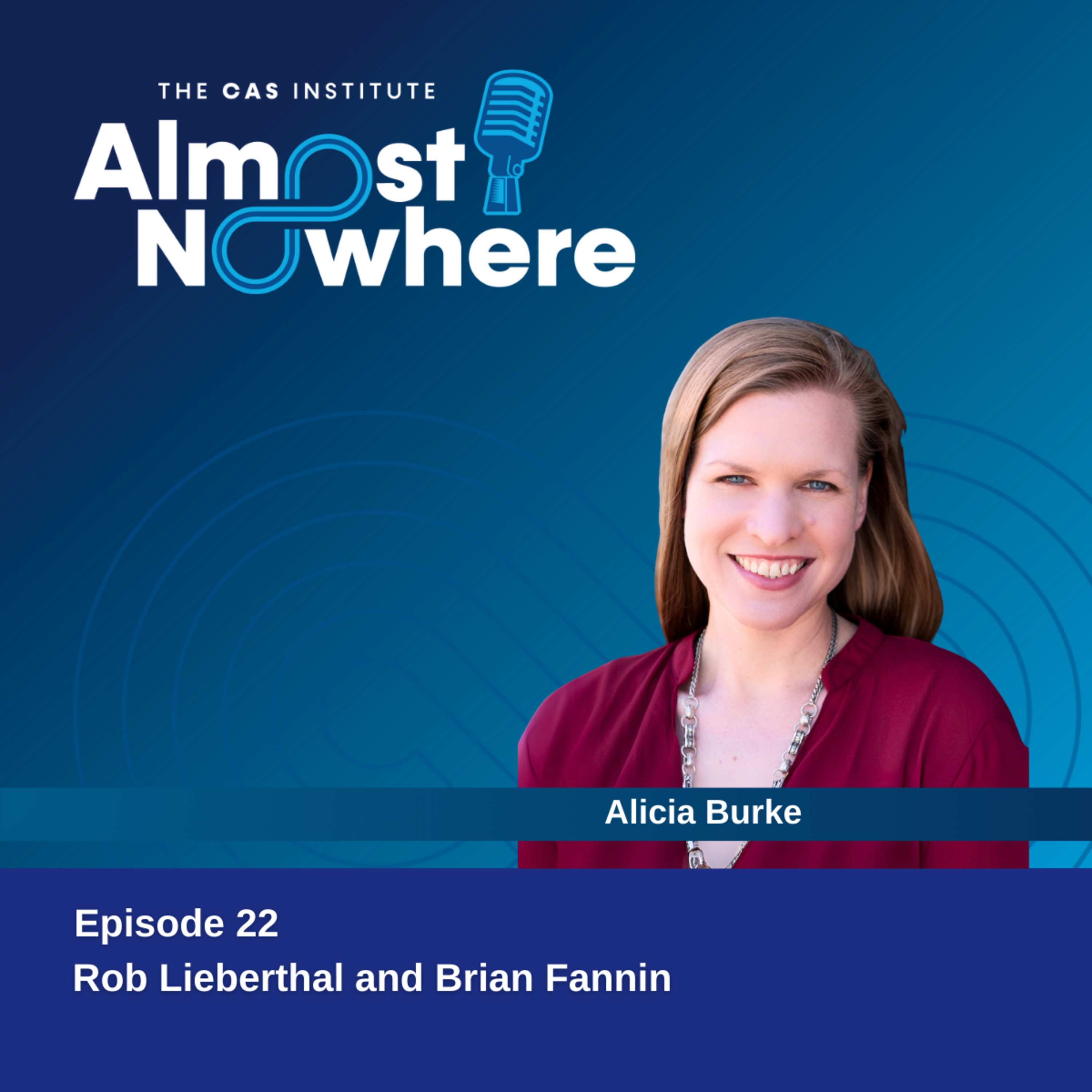
Rob Lieberthal
Nov 2100:51:12Tap to summarizeRob Lieberthal joins Alicia Burke and guest co-host Brian Fannin in our final episode recorded at 2025 CLRS to unpack his CAS-funded research project focused on turning messy, unstructured claims data—like medical notes and adjuster reports—into actuarial insights using large language models (LLMs). From the promise of synthetic medical records to the limits of explainability, Rob shares how he and his team are building an end-to-end framework that could change how we work with complex claims data. Plus, hear how you can get involved and provide input as the project evolves.
Transcribe →