← Alt Goes Mainstream: The Latest on Alternative Investments, WealthTech, & Private Markets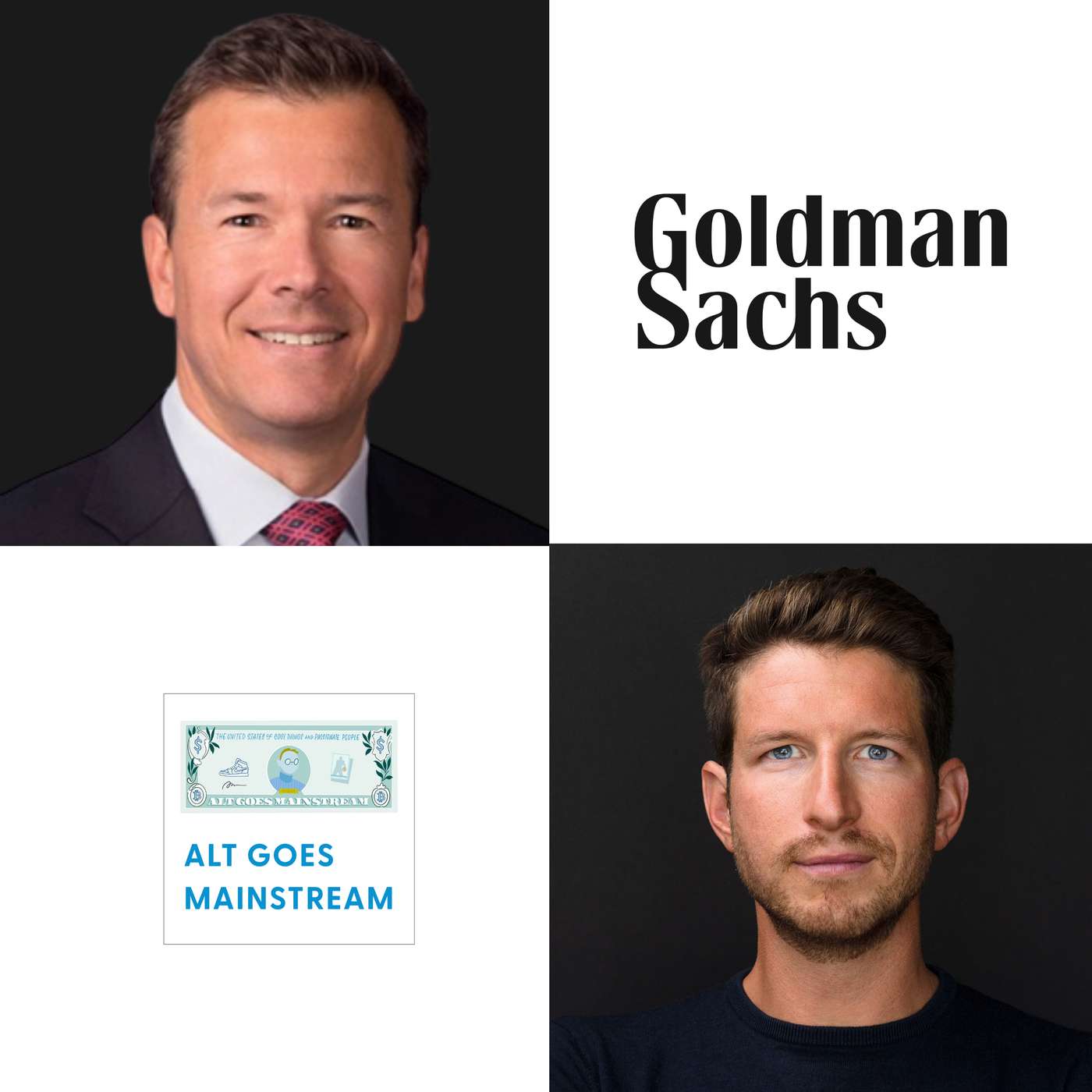
Alt Goes Mainstream: The Latest on Alternative Investments, WealthTech, & Private Markets
AGM Unscripted: Goldman Sachs' James Reynolds - From Mezzanine to Moats: Over a Quarter-Century of Goldman Sachs Private Credit
00:28:16
Loading summary
Transcript34 lines
- [00:00]
A
It's not about deploying, it's an investment culture. It's about saying no. It's about cautious underwriting. You need an origination engine that allows you to effectively be very picky, very selective. And so if you can see all the deals and you can see those deals at the time of inception, not announcement of the deal, but six months earlier because you're in the room and you're doing your due diligence with the buyer or the seller or it's a tech private, you're in the room and then you can build your conviction one way or another. That is very differentiated.
- [00:41]
B
Welcome back to the Alcos Mainstream Podcast. In this special series we went behind the scenes at the Goldman Sachs Alternatives Conference and interviewed six Goldman Sachs Alternatives leaders about their current thinking on private markets and and how the firm has built and evolved its private markets capabilities. The next interview in this series is with James Reynolds. James is the global co head of private credit within Goldman Sachs Asset Management. He also serves as co chief Executive officer of Goldman Sachs Asset Management International. We had an interesting and insightful conversation. Thanks James and please enjoy. We're going mainstream. James, welcome to the Okos Mainstream podcast.
- [01:18]
A
Thank you.
- [01:19]
B
There's so much going on in private credit and you have a long history in the space so I'm fascinated to get into the nuances of the space and hear your perspectives. We'd love to start with your background. You've seen this industry evolve over a number of years. So how did you get to where you are today?
- [01:39]
A
Well, thank you for having me. So I started over 25 years ago now in London in what was called at the time the merchant banking division where which was where the firm invested on behalf of the firm, its employees but also we had third party investors. So from day one I've been an investor. I was even a Summer intern in 1999. I came back in 2000. In the early years we were a small team doing private equity and private credit. Back in the days we had a MEZ fund which we had launched in 1996 so call it Junior Direct Lending. And after several years of doing both I came to the view that the returns that we could achieve on the credit side on the MES at the time and especially from a kind of a risk adjusted standpoint, they were exceptional. I thought we had something special as well in terms of helping clients of the firm so interest, fully aligned and being able to utilize the whole ecosystem at Goldman and I was keen building a business and so I raised my hands, I went to my boss and said, you know what, I'm going to join. We didn't even have a team at the time, but this is what I'm going to do. And then I've been doing that now for many decades.
- [02:45]
B
Private credit means something to people today, but in its current form it's maybe a bit of a newer and more nascent industry. When you started private credit business, what did private credit mean then in terms of relationships between borrowers and lenders, the types of solutions you were providing to borrowers?
- [03:04]
A
That's right. And I would say still today that's the type of private credit investing that we're doing. So what do we do and what did we do at the time? Direct origination of a financing solution which is either senior or junior or even a combo or more hybrid, directly originated with the owners of a business or the management team. And we do that in the us, in Europe and in Asia. And we've done it for a long time, including in Europe. We started in 1996 as well in Europe. So I think the spirit, the philosophy has not changed for the past 28 years. We're still a solution provider. We do heavy underwriting work, we've got real in depth access to information to the companies, the management teams. We complement that with a lot of access that we have using Goldman Sachs, but also using the vast knowledge that we can tap outside also of Goldman Sachs. So I mean that has not changed. What has changed is that now the team is vastly more experienced than when I started back in 2000.
- [04:08]
B
Private credit's grown from a few hundred billion of total market size 5, six years ago to close to 3 trillion today. What has the growth in the industry and the increase in capital meant for private credit today?
- [04:24]
A
And by the way, there's a reason to exist for private credit. It provides a solution, it provides flexibility, certainty, customized solutions. So there's a reason why a lot of borrowers are looking to get their financing done privately. And that's not going to change. No matter what the noise is out there, that's not going to change. And that's been the case for the past 30 years. By the way. Lending is an age old activity. You just have to lend to the right businesses. So what it means today is yeah, a lot of capital came into the industry in particular in the last, call it five years. A lot of headline around the industry now. What I would say though is all capital is not created equal. What you need here when you get the capital is one, you need a team that is experienced you need a team that has seen cycles that are stuck together. You need an investment culture in that team. It's really important. It's not about deploying, it's an investment culture. It's about saying no. It's about cautious underwriting. You need an origination engine that allows you to effectively be very picky, very selective. And so if you can see all the deals and you can see those deals at the time of inception, not announcement of the deal, but six months earlier, because you're in the room and you're doing your due diligence with the buyer or the seller or it's a tech private, you're in the room and then you can build your conviction one way or another that is very differentiated. And so all the capital that is coming into the industry is not created equal. Some capital is more getting access to deals, almost like in an adverse election type of opportunity.
- [05:55]
B
I think that brings up a really important point, which is when I hear you talk about that, I hear the word origination. Origination is the lifeblood of private credit. How do you think about origination and how do you think about giving yourself an unfair advantage in origination?
- [06:14]
A
Number one is the team has done it for a long time. So the relationships that our team across all markets have established with private equity firms and management teams over cycles being trusted, being reliable, it's really important, number one. Number two, we're very fortunate to be part of a broader ecosystem, bigger ecosystem, and by the way, we don't take it for granted because it takes investing in a relationship day in, day out with our banking colleagues and having this culture of partnership, collaboration, putting together the right incentives so that the bankers themselves, when they wake up in the morning, when they go to see that management team or that private equity firm, they know that we're here, we exist, and they also think about us and they think about us very early on in that process. And I would say that somewhat gives us a little bit of that unfair advantage. If you think about a tech private, it's confidential. Your first call is going to be your M and A advisor. But if that M and A advisor can also provide you with a financing solution, private, for instance, and you have certainty of that financing, then hey, what not to like about these? So that's one example. If we're sell sides and we can get access to the company as it prepares itself for sale process down the road, and normally it takes a few months and we're in the room, we can ask our question, we can work with the management team that way we can establish a relationship that also gives us an edge when it comes to the information. The third thing is if you are established, we have over 700 portfolio companies globally today. These companies are healthy, they're doing well, they're growing, they need capital that also provides a moat around our business, like the ability for new entrants, new capital to come in and try to get access to those companies is virtually impossible unless you undercut completely pricing returns. And yet you're still an unknown entity. That makes it really difficult for kind of new capital. And the other thing that I would mention is being part of this firm who sells more companies than anybody else, who advises on buy side of more companies than anybody else, who does more kind of tech private than anybody else. It really sets the relationship that we can have with management teams and private equity firms at a completely different level compared to if we're just an independent firm whose only mission is to provide capital.
- [08:38]
B
The other interesting thing there is it feels like the universe of credit has expanded. So when I hear you say that Goldman on the banking side has relationships with all sorts of firms, many of the largest corporates in the world, some of those counterparts or borrowers are investment grade. There's this expanding of the universe of credit across ignition private IG now as well as non IG direct lending. How do you think about the expansion of this universe of investable opportunities and what this means in terms of the types of deals you can finance?
- [09:16]
A
Yeah, and that's a great trend by the way, started about a decade ago, led by insurance companies. But if you think about who in the world has access or is covering 12,000 corporates, boards, CEOs, CFOs, not just once a year when they may need some financing, but almost day in, day out, every week. These are the banks. And here at Goldman, effectively our bankers cover these corporates day in, day out for all their needs. And some of their needs could be effectively a private investment grade financing. But we're in the boardroom, we're being hired by this management team and the board who kind of trust the firm. And so that is a massive edge that we have in terms of origination. And we've been very excited in particular about raising capital to be able to match this kind of unique origination engine that we have here and working really well, by the way, with our banking colleagues. And if you recall, at the start of the year there was an announcement about the creation of csg. And this is about harnessing the origination power of Goldman Sachs for The benefit of our clients, but also our platform.
- [10:23]
B
On that point, I think you mentioned the harmonization of the firm one Goldman across. There's institutional clients, there's insurance clients which are increasingly playing a role in private markets. There's wealth clients. Are you finding that the increased surface area of the capital sources is also changing the way that private credit can be done? What I mean by that, the finer point is, can you go to borrowers now and say, hey, we can be a single solution, we don't need to syndicate this deal out. Is that a trend that you're seeing unfold in the market in part due to the different capital sources that you can tap into?
- [10:59]
A
We've been doing that for effectively 25 years. You go to a borrower and you show up with leverage finance on one side and our sales on one side. And then you let the borrower decide and their owners decide. Do they want to have a market solution that would be underwritten by us, but then us being leveraged finance and then syndicated, or would you rather have a solution that is private? Or maybe a combination of both, depending on the size of the capital structure. But this is effectively what we've been doing for over 25 years. Maybe it did not attract so much attention in the media, but effectively when we started in 1996 on the junior side, and then by 2007 we raised our first senior direct lending fund, $10.5 billion and effectively going after these businesses and being a solution provider for their kind of financing needs. So that's what we do. And the thing that we on day one that we set together was effectively to be a partnership with banking so that we would never go head to head with investment banking, but do it in a very kind of collaborative way. And that's very unique.
- [12:01]
B
I want to unpack that point a little bit because perhaps to someone from the outside looking in, they may say, okay, there's an explosion of dollars going into private credit. Large private equity firms are really not private equity firms anymore. They're multi strategy alternative asset managers and they have both large private credit franchises as well as large private equity franchises. How is the evolution of alternative asset management interfacing with the way in which you do private credit? Because you also have a banking business and not just Goldman, but other banks often work with private equity firms. How are all these different relationships unfolding and what does it mean for private credit?
- [12:47]
A
I think it really plays to our advantage because we have such a way to communicate, collaborate and provide unified solutions, whatever the needs of the company or Even the private equity firm is that we can come up with a solution. We can provide M and A, we can provide leverage finance, we can provide private financing on the senior, on the junior, or maybe if it's more kind of capital solution or hybrid side, some of them may need wealth management advice, or we can provide economic advice. We say to our investors and we say to our management teams, we're going to provide more than just capital by us becoming your sole or largest lender. You're going to have access to the entire platform at Goldman Sachs. Whatever you need, we will try to provide to you. And oftentimes we put all our CEOs, CFOs in the room together and we debate that we're going to provide a lot more than just capital. And I think that's very, very differentiated.
- [13:43]
B
By the way, I want to touch on something that might be top of mind for a lot of people, which is there's been growth in private credit and pretty fast growth in terms of AUM coming into the space. And there's been a need to deploy that capital that gets to origination then underwriting. There's been a lot of talk recently, more publicly, about certain assets that maybe have not been underwritten so well, and there's issues in those assets and potentially within the broader ecosystem. I want to make sure we touch on that in the context of how do you think about private credit today and what does the broader ecosystem look like today?
- [14:26]
A
So to start with, we're very constructive about private credits. As I said, we started almost 30 years ago. We went through ups and downs, went through the financial crisis, you know, pandemic, and very different macro environments. And it's been an outstanding asset class for us and very consistent performance for 30 years. So we continue to be very constructive. And I understand that there's noise and there's a narrative and headlines out there now. Private credit, if you want to create alpha, it's all about minimizing your defaults and subsequently your losses. That's it. So we go back to what we said earlier, which is for that you need to have the widest origination funnel possible. You need an investment culture. It's not about deploying. You should never be forced to deploy. And actually, if I look at what we've done in the last 12 months in particular, we've slowed down our deployment. There are areas around the world in private credit where we thought, you know what, the market may be overheating a little bit here. We can find better opportunities there and we can modulate our deployment pace and figure out in particular where we think there are better opportunities you should never be forced to deploy. So what do I think? Where are we today? Well, first of all, in 2022, when the rates went from zero after a decade or Even negative to 5%, I think that was the start of the new cycle. We've been three years now into that new cycle, and the question that we get asked is when the next cycle starts? No, the cycle started already three years ago. And it's really exposed a number of capital structures, companies whose capital structure today of financing is not fit for purpose anymore. And it can create opportunities if you provide fresh capital to these companies and extend maturities. And these are good companies, but it will also create a number of situations where the lenders will effectively take over the keys of an asset. And over the last three years, we've seen an acceleration of these kind of restructurings, both in the US in Europe. We're now kind of three years into that cycle. What does that mean? It means that you're going to see for the first time in the last 15 years, a lot of dispersion, a lot of dispersion of performance, dispersion of returns. The next question that LP should be asking is what are the capabilities of these platforms now to effectively maximize recovery? Because they're not private equity firms, they may not have the expertise to sit on the board and own a business that's also very differentiated. At Goldman, we can tap into the vast network, all the resources that we have at our disposal at the firm, but also outside, but including at the firm, and that's a major advantage.
- [17:05]
B
I want to touch on that last point of making sure you know how to underwrite. Well, that gets back to something that you discussed, which is having an investment culture. How do you build an investment culture?
- [17:20]
A
You build it over a long period of time. In our team, if you look at our investment committee, on average, the partners have 22 years at Goldman. And we have people that were doing direct lending in the 90s in our team, and I started in 2000. So first, you build it over time. You build it with a culture of apprenticeship, of collaboration, making sure that as you hire people, over time, they have a voice they can get access to effectively. All the discussions we're having are not closed door. All the screenings, they're open to everybody, whether you're an analyst or a partner, everybody has a voice. We're fully aligned with the performance ourselves because over the last 25 years, a lot of the capital has come from the Employees and the teams investing. And we have transparent, candid debate about all these opportunities. That's how, you know, over time you create that culture. And it's a culture of ownership, it's a culture of accountability. When we make mistakes, we own the mistakes. We don't just outsource the recovery or the restructuring to another team or to a law firm. We own it. We own it from sourcing to getting our money back or whatever we have to do.
- [18:32]
B
When I hear you talk about that, my mind goes to the type of personality that it takes to be a great credit investor. Equity and credit are fundamentally different in terms of the instruments that they are and what they do for companies. What do you think the right personality or traits are to be a great credit investor?
- [18:56]
A
That's an interesting question. I remember 15 years ago when we hired people, we would have them kind of read the five Forces of Potter, because at the core is really understanding a business, an industry, a business. You don't have to be an expert in software or in healthcare regulation, but you have to be a good student of businesses. And what makes a business special. What's the right to win? What are the barriers to entry? Because in those screenings we spend our time discussing what can disrupt it. And by the way, two years ago we were already turning down opportunities because we were worried about AI. It's not just a moment in time today. So the point number one is that we want people are very curious, people that are going to voice their opinion. Want people who feel that they are owners, not agents, but owners. We want people that can work in teams. Nobody makes a decision on their own. In our team, at the committee, but before the committee, even across in all our discussions, people that can collaborate and work well also with the rest of the Goldman Sachs. We don't want to be in a silo somewhere isolated from the rest of Goldman Sachs. As I said earlier, we benefit from being part of this massive major ecosystem. And that's one of the strengths. I'll give you another example. You were asking about the edge. Well, in software, oftentimes Goldman is a client of that software company. And we spend an enormous amount of time with our engineers to understand why did you select that software? What were the KPIs you looked at? Who else did you look at? Is it performing as you expect? Why don't you do it in house? Why don't you do it with AI in house? And so that unfair advantage that we have, as you mentioned it, we try to make sure that our people can also work well with the organization, which is very much kind of a partnership driven organization. These are the traits. People are very committed, they work hard.
- [20:47]
B
So you mentioned something interesting there that I want to pull out and turn around and ask in a slightly different context. So you mentioned that as a private credit investor you want to be a student of business. Given where we are in private credit's current market structure, the business of asset management, how would you assess your own business and what would you ask RLP's for that? And what would you say in the current market you create edges in a way to orient your business?
- [21:19]
A
Absolutely. Look, and I'm half kidding, like you need to ask the LPs but kind of the vote of confidence is when the LPs go back time after time and they go back to the next vintage or we launch a new strategy and they say, you know what, I love the story, I trust you guys, I'm going to back that new strategy. And we've done it a few times now. Our business right now has really huge momentum. You know, yes, there's a narrative out there, but our business has really good momentum in terms of continuing to attract capital to the business, delivering the returns that we've been promising or expecting for our investors. I look at our portfolio today and a lot of what we do is kind of risk management and portfolio monitoring. And right now the portfolio is in good shape despite some of the macro pressure and the volatility that we see. The team, I think the team is really exceptional. At the end of the day, this is also a people business. It's a team that collaborates, that works well. It's a global team that shares information quickly, communicates. Well, back to what I was saying, it's a team that has done it for a long time. I mean Europe almost 30 years ago, US more than 30 years ago, Asia for the last 20 years we've been investing in that market. So look, I'm not going to put a grade on the business, but you should ask our LPs for that. But we're certainly very excited about the business today. Outlook for the business.
- [22:42]
B
You mentioned Europe. I want to touch on that because it feels like investors are taking a more global perspective in the current market environment for a number of reasons. You're based in Europe, although you travel over the world. As the co head of the the private credit business, how do you think about the opportunity in Europe? You've done it for quite some time, but how do you think about Europe and the opportunity there? There's other large alternative asset Managers that are spending more time there, they're saying they're going to invest a lot of capital, they have boots on the ground, they've either thought about acquiring or building their own capabilities. You've been in Europe for a while. What's your view on Europe today? In the credit space?
- [23:21]
A
In credit, I think you also want to be diversified. And it's interesting because for the first time in a long time, we're seeing now investors look beyond the US. We started in Europe in 1996. Our first investment actually was the European one on the junior side. When we launched our first senior direct lending strategy in 2007, our first investment was also a European business. If I look at the last 10 years and you look at the pie charts where we have invested, we've invested slightly more outside of the US in the past 10 years. And so, yes, you're right. I mean, this year we're seeing more fundraising happen in direct lending, for instance, outside of the us, because people, for the first time asking the question, should I look beyond what else is there? Can I find some attractive strategies out of Europe? Europe has been a really fertile market for us for a long time. I would say by now we have an established large presence with a large portfolio. Europe is a bit more complex. You don't do a deal in the same way in one jurisdiction versus another. You got fx, it's more fragmented, the ability to set up an infrastructure a bit more costly because you have to do it across a pretty heterogeneous continent. And there we also benefit from having the bigger infrastructure of Goldman. I would say Europe favors the income. And why? Because relationships that you've established over the past 20, 25 years create a moat around our business. I would say if you're a new entrant in Europe and you're trying to get access to the best deals, it's going to be more complicated. You're going to have to probably undercut from a margin or a pricing standpoint, and that's probably not great for your investors. So Europe has always had a little bit of that complexity, which you can price, which we've been able to price over time. And also what's interesting about Europe, by the way, is, unlike the us, where you can scale businesses maybe a bit faster, it's one huge market. But on the other hand, it's also like one regulator, which take healthcare, you're going to have one regulator in Europe when you start going and lending to those larger businesses that are spread across a number of geographies, maybe it's a bit harder to scale these businesses. But I would say from a credit standpoint, maybe the ability for all regulators to take that same decision at the same time is very unlikely. Or you may be a market leader in one jurisdiction, but that doesn't give you the right to win in another jurisdiction because of the language barrier and culture and so on. And so we've always found that Europe, from a credit standpoint, has always been a great place for us to invest, and not just this year, but for the last 28 years.
- [26:03]
B
I want to end by asking a question. Given that you're a credit investor and you think so deeply about underwriting, what are you most concerned about going forward in private credit?
- [26:16]
A
The other thing that makes a good credit investor is that you need to worry. That's what when we discuss as a team, it's all about, okay, what's going to disrupt that company in the next few years. I think the job has become a little bit harder, more complex over the last few years because of the advent of technology and AI in particular, which forces us to really kind of think outside the box about what can happen to any industry. In the same way that if you go back in time, kind of.com boom in the 90s and the burst subsequently, but nonetheless, it set the foundation for a really seismic change in business models. We all remember the yellow pages back 25, 20 years ago. And so I think the job has become a little bit more complicated here in terms of assessing where the risk may come from. We still have a lot of questions around regulation, around competitive dynamics within industries. Geopolitical concern is certainly part of the debate today. I would say we remain very constructive about the industry, but on the other hand, we spend a lot of time worrying. And I say often we spend all that time worrying so that our LPs can sleep well at night.
- [27:25]
B
I love that. Really encapsulates what you've done and what you've built. You're an optimistic pessimist if you think about it, right. You're constructive and optimistic on the space, but also very thoughtful about how you think about the risks in private credit, how you underwrite and what makes your business different. I think you did such a good job of tying all those things together and this was a fantastic conversation. Thank you.
- [27:49]
A
And you know, in this moment, we also need to manage the narrative.
- [27:52]
B
And you've done that so well today. So thanks so much, James.
- [27:55]
A
Thank you very much. I appreciate it. Thank you.
- [27:59]
B
Thanks for listening to this episode of Alt Goes Mainstream. I hope you enjoyed it. You can read more about alts at my substack altgoes mainstream.substack.com Thanks a lot and have a great day.