← Alt Goes Mainstream: The Latest on Alternative Investments, WealthTech, & Private Markets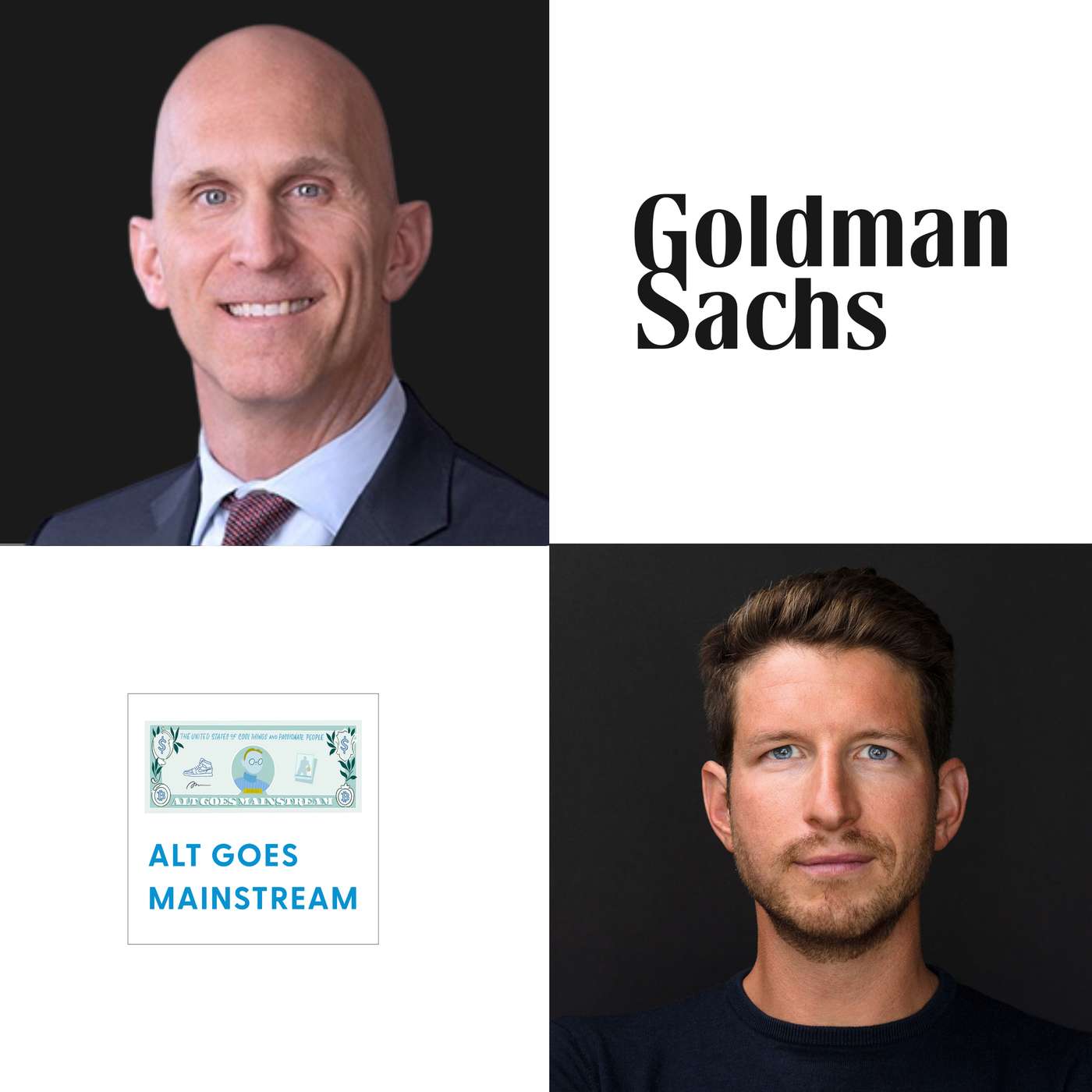
Alt Goes Mainstream: The Latest on Alternative Investments, WealthTech, & Private Markets
AGM Unscripted: Goldman Sachs' Matt Gibson - Navigating the Future of Alternatives: Scale, Supply, and Geopolitics
00:34:04
Loading summary
Transcript47 lines
- [00:00]
A
For us to serve all these various channels. The clients all want alts, but they want it packaged in different ways. They want a different risk return profile maybe than another type of channel or even another region. So we spend a lot of time in product strategy on the alternative side, figuring out what are the products where clients at scale want us to do certain things for them. And so in the retail space of course there's been a proliferation of open ended evergreen vehicles which have been set up to be more suitable to the retail investor. But we're increasingly finding, for example, our institutional clients and insurance clients want access to that same sort of vehicle just tweaked to their needs.
- [00:57]
B
Welcome back to the Alcos Mainstream Podcast. In this special series, we went behind the scenes at the Goldman Sachs Alternatives Conference and interviewed six Goldman Sachs Alternatives leaders about their current thinking on private markets and how the firm has built and evolved its private markets capabilities. The first interview in this series is with Matt Gibson. Matt is the Global Head of the Client Solutions Group within Goldman Sachs Asset Management. Prior to his current role, he served as co head of the Technology, Media and Telecommunications Group in the Investment banking division from 2021 to 2023. Before that, Matt served as co head of One Goldman Sachs from 2019 to 2021 and served as the global co head of Client coverage within Investment banking services from 2015 to 2020. We had an interesting and insightful conversation. Thanks Matt and please enjoy.
- [01:46]
A
We're going mainstream.
- [01:49]
B
Matt, welcome to the Alcos Mainstream Podcast.
- [01:52]
A
Thanks so much for having me. I'm excited to be here.
- [01:54]
B
Likewise. Well, thanks for having me here. We have the Goldman Alternative Summit. I think this is such an emblematic place to be given all the things you're doing. You're at the cross section of institutional business. The Wealth Channel's growing. You have one Goldman Sachs which you created. I'd love to start there. You have such an interesting purview of the firm and the evolution, particularly as it relates to the evolution of alternatives at Goldman Sachs as well. So would love to hear how you ended up where you are and how the evolution of Goldman has also mirrored your career.
- [02:31]
A
Well, I joined the firm in 2001 full time out of business school. I'd been in the Navy before that and spent the next 21 years in a series of roles in investment banking. Thought that that is what I would always do. Got asked about three years ago to move over to the asset management business and run the client business. Having a great time leading that effort at such an important time of change in the industry, as you pointed out, you know, this summit today, we really bring together clients across institutional insurance, third party wealth and our own internal wealth channel. So it's about 400 clients across that entire thing. And we, we think about the agenda as something that would be both like informative and also interesting. So you'll see very content rich panels, you'll see very just informative or interesting panels like a panel on the science of happiness, for example. And look one Goldman Sachs on the first day that David and John came into office in 2018, I think it was the first memo they put out was on one Goldman Sachs. In retrospect, it's actually interesting how prescient their observation was, was that the firm really needed to knock down walls internally between businesses and face off with clients as one unified team. And we had never done that before. And so I was asked to co lead that effort in 2019. It was in the early days of it. And one of the things we did was create a group of 100 clients initially to focus on the clients who touch various parts of Goldman Sachs in different ways, touched investment banking, touched asset management, touched trading. And we really spent a lot of time thinking about what's the right way to face off with those clients in a unified way. So that we were all talking to each other internally and the client saw that cohesion. And I'll tell you the there's really been two big outcomes of one Goldman Sachs. One is commercially. It's been unbelievable how much interaction there is in other divisions other than your own that is helpful to you in pursuing your commercial objectives there. So number one, just commercially it's been a home run. Something I don't know if David and John saw in the beginning. But it also ended up being so culturally additive to our partnership internally because so many of us before won Goldman Sachs didn't really know each other. If you lived in investment banking, you didn't really know the partners in trading and you didn't really know the partners in asset management. So it's just been a real culturally enriching experience to just know the entire partnership. And then it's much easier to pick up the phone and call on a commercial matter and say hey, let's work together. And it's just evolved from there.
- [05:26]
B
You bring up such an interesting point about one Goldman Sachs unifying different aspects of the firm. It comes at a really interesting time, particularly as it relates to private markets and public markets as well, where there's this real convergence, right? You're seeing products that are being Combined public and private products. You're seeing the rearchitecting of portfolios. Thinking about private and public differently because liquidity is viewed as differently. There's different ways of thinking about liquidity now and risk. The spectrum of what's liquid, what's illiquid. You have partnerships in the industry. I'd love for you to touch on some of these things that are such top of mind trends and what it means as you think about serving the various clients that you have at Goldman. Because even within the wealth channel, it's not monolithic. You mentioned insurance. That's another huge channel, that private, that's becoming a bigger participant in private markets. So how have you figured out how to connect all the dots and bring everything together?
- [06:28]
A
It's a good question. We spent a lot of time thinking about that. You know the, the. When you look at growth and alternatives globally, there's a ton of growth in retail or third party wealth almost no matter where you look, but particularly outside the U.S. when you look at insurance as it relates to alts, a lot of our clients around the world are completely under allocated and they're looking to catch up, particularly in private credit, but also across other asset classes. In the institutional market there are certain pockets of the world where pension regulation is driving real growth of funds into the pension systems. So you have Australia, Korea, Mexico and other places where that's the case. And other parts of the world in the institutional market it's a bit more flat to sort of mid single digits growth. But there is a ton of demand for alternatives which right now in my view exceeds the origination supply. Now for us to serve all these various channels, the clients all want alts, but they want it packaged in different ways. They want a different risk return profile maybe than another type of channel or even another region. And so we spend a lot of time in product strategy on the alternative side, figuring out what are the products where clients at scale want us to do certain things for them. And so in the retail space of course there's been a proliferation of open ended evergreen vehicles which have been set up to be more suitable to the retail investor. But we're increasingly finding, for example, our institutional clients and insurance clients want access to that same sort of vehicle just tweaked to their needs. And so unfortunately for us and our peers, there's really no one size fits all when it comes to creating products that are suitable for all these channels.
- [08:23]
B
How do you balance customization with scale?
- [08:27]
A
It's like you're sitting in our meetings. I mean we Debate that all the time. And one way we think about it is just there's a certain amount of customization that you can do even within a fund as it relates to reporting or other things like that that don't mean you're turning everything upside down. But the real question we ask ourself is from a customization perspective for a certain vehicle, is there enough interest in it or is it just for one unique thing? And so generally, just given all the things we're trying to do, we make sure that if we're going to pursue a certain vehicle structure, let's say, and it's got enough demand from clients to make it worth it, how do you.
- [09:11]
B
Think about bringing the different pieces of the Goldman Sachs platform to bear? So you have a growing presence within private markets, 542 billion or so in alternatives. You're a large player in private markets, but within asset and wealth management you also have a large public business. You have an ocio, you have the technology through partnership with Geo Wealth. It's interesting to think about where we are in private markets as it relates to also overlapping with public markets and combining portfolios, thinking about providing total portfolio solutions. How do you think about bringing all the aspects of the platform to bear, whether it's for institutional clients or wealth clients?
- [09:58]
A
It really all starts with knowing your client at a PhD level because each client has different needs, right? And we've got this very broad platform across public and private and no one client is going to need everything that we do. And so, you know, on my team, one of the things that, that I work with, you know, the client advisors on is really understanding what your client wants from the firm and to look for areas where we can uniquely package things together, given all the kind of various pockets of the firm that you mentioned, to serve their needs and to really understand what their portfolio objectives are and how we might fit into that with the things that we do well. And one of the challenges we have internally is that we do so many things that we have to ruthlessly prioritize for our sales force. What are the things that they should be focused on. So, so we've got this broad suite of things that clients can do with us, but it really starts with understanding what are their more narrow objectives and then how do we put a booster shot of content and advice into that, given the machine that we have. I'd also say that one of the things that people probably don't realize as much as they should about our platform is the nexus between the asset management division and the Investment bank and in privates in particular, from an origination perspective. We've of course got this really well developed asset management origination platform in each of our businesses, private credit, private equity. But we've gotten really good in the last 10 to 15 years at also using that investment banking force as another origination platform. Because what happens is you have these investment bankers that are sitting in the boardroom at a private client, for example, that client is trying to sell itself. Our bankers are advising on the deal. The deal doesn't happen for some reason because most deals don't happen and we're already in the boardroom and the client needs financing because the deal didn't happen. So our bankers are trained to call our private credit team to bring them in to give advice to the client on their financing solutions. And what that gives us a lot of the time is an early look at the situation or an idiosyncratic look at the situation. So to your question, because of the way that we're organized together like that, that really ends up providing us a unique lens into the client on that point.
- [12:23]
B
I think culture and DNA of a firm really drive how a firm operates and what makes them different. How do you think about infusing the Goldman Sachs culture and DNA into the various parts of the firm so that, like you say, it creates this one Goldman Sachs, where everything bubbles up to the surface?
- [12:43]
A
It's a really good question. And we do have one culture at the firm. But having worked now across multiple divisions, there are differences and expectations both internally and externally for how you operate. And one of the things David and John have been smart about in this regard is moving people around. And so there's been a fair number of senior people, myself included, that have been moved from one division to another. Now part of that is they want to infuse it with capabilities, but part of that is they see a place in the firm that they want to inject some culture from another part of the firm into. And so I think one GS has been a big part of it because people are now working directly, more close together on deal teams. So they're seeing each other in action. That's a big part. But another big part of it has been actually moving people around, which is a bit rare when you look across Wall street to see that happen.
- [13:42]
B
Do you think private markets requires a different culture than other parts of the firm? Whether it's investment banking or wealth management or asset long only asset management?
- [13:55]
A
Yes, slightly. It's a very long cycle business. You know, you, you're investing for the long, long, long term. So you have to be long term oriented. At the same time you have to have an amount of hustle just like you do in the other businesses to originate and win deals. I think you're not mark to market every day in the private markets. And so you, you can take that lens and look out. Whereas if you're a public markets investor, you are mark to market every day. And so while you say you look through that and you do, you're still impacted by the near term moves. And so I think the sort of the things that thread their way through the Goldman Sachs culture, a high standard of excellence, a focus on the client, you know, that's in every business you come across, you know, working 247 is another piece of it. But then within that, to your point, because the businesses themselves are different, there's minor variations around behavior, how do you.
- [14:56]
B
Then think about balancing the preservation of the Goldman culture and how you operate and where you're different with thinking about where to add capabilities, industry ventures you recently acquired to add venture and growth capability and access to co invest and secondaries and private companies as private companies stay longer, particularly in areas like venture AI. How do you think about the balance of building from within versus either partnering or acquiring?
- [15:29]
A
We think a lot about who we are when we make these decisions, right? And there's things we could be chasing right now on our own because we have the capabilities. But it might take us 10 years or five years and by the time we get there, we won't be as good as if we partnered with somebody today who's already gone through that journey and has already learned lessons along the way. Right. And so your question is interesting because we spend a lot of time internally. Given our breadth and our brand, there's not a lot of things we don't have the capability to do. So the question becomes more, with an honest look inside, can we do it better on our own by building it? That gets back to culture and DNA, or are we better off partnering with this person who has a different culture but maybe more advanced capabilities in something that gets us there faster? And then we have to think about, okay, once we get there, what do we look like? Is that consistent with who we are? One obvious one would be we don't do a ton of passive investing. Some of our peers do and they've been very successful at that. And that's a volume game and a scale game. That's a game we could be playing, but we think others are probably better at that.
- [16:43]
B
Longer term brings Up A really interesting question, because when you look at private markets in particular, it does feel like certainly on the institutional side, maybe you could even extend this to insurance, where LPs want to do more with less. So work with less firms, trim their LP relationships, but do more with them. How do you think about that element and evolution in private markets?
- [17:08]
A
Right. What's definitely happening, we like that trend because we have a broad platform. And so when you think about LPs doing more with less, they're seeking GPs who can do a lot with them. And I think it's smart. I think they're doing it for a couple reasons. One is it's actually pretty onerous on them to have dozens and dozens and dozens of gps that they have to track and communicate with and go to conferences for and all those things. But I think the second thing is they've realized, LPs have realized that the more meaningful they are to the gp, the better outcome they get. And that's deal flow, co invest, fees. And so we like that trend because we have strategies in every pocket and corner of the private markets. And the conversation I'm having with clients right now, a lot is they will say they're trying to do more with fewer and we'll take a good look at their portfolio and say, okay, we do these two things together, we can do these two more things, wrap it in a different way, maybe get rid of this other thing and come up with something that's better for both of us. And if we were just a single strategy or a dual strategy firm, we wouldn't have the capability to do that.
- [18:18]
B
Where my mind goes when I think about that is we talked about this a little bit earlier is when you think about where private markets are today, you can kind of look back 10 years or so. Obviously post GFC, private markets has really gone through an evolution. You have firms that went public, you have firms that have become real multi strategy firms. Just in private markets. You have traditional asset managers get into private markets. But decisions that were made five and 10 years ago are informing how firms are today. How do you think about that aspect of things? And what were some of the decisions you were thinking about making five or 10 years ago that are now manifesting themselves today?
- [18:59]
A
That's a critical point because it takes so long to build some of these things in asset management. And you gotta be really careful when you make your bets. And as you and I were talking about earlier, when you compare our peers to each other, everybody's got a slightly different strategy. And some cases A very different strategy. And then you ask why? And it's, well, it's because of bets that they made 10 years ago or five years ago. And for us, we've been doing alternatives for 35 years. We were always going to be a player in alternatives. But then questions come up like when do you go into retail alts? How do you go into retail alts? How do we leverage our strengths in that area? How do we utilize our insurance platform for that? And for us, as you know, we brought together all of our alternatives businesses about five years ago under the asset management platform. And we found that to be very powerful to have it all housed in one place. Because now when we make decisions, we're making decisions for the whole. You know, whereas before when it was housed in different places, whether or not to rent enter retail alts was a decision that should be taken by the whole, but was left to sort of a piece of the firm. So as a result of that strategic transformation that we've gone through, you've seen us enter or not enter markets at various points in time.
- [20:28]
B
Continuing on and related to the last two questions is how do you think about the decisions you're making today? Because private markets feels like it's moving so fast. Firms are partnering, firms are moving really fast, investing in things like product creation and building out distribution teams and servicing teams. On the wealth side, how do you think the decisions that are being made today by firms like Goldman and your peers are going to impact how private markets looks in five or ten years from now?
- [20:58]
A
The way that we think about it is we don't like to dabble in things. And so when we spot a big trend, you know, one thing we've observed over the last 10 or 15 years on the alt side is that people, people move quickly and that sometimes being early to something matters a lot in terms of capturing mind share and capturing fun flow. We like to measure twice and cut once when we're coming out with new products or strategies, but we don't need to measure the curtains three or four times. And so the thing that we've learned is you have to be agile and nimble, but you gotta have your product strategy org set up to evaluate things hard but move quickly. And so, you know, to your question, like, how do we do it today? We've got a group of people, we look at what the demand might be for a certain thing, we look at the regulations, we look at how global it might be. And if we think it's a real opportunity, then we go hard after it. Versus and that we might do that in three things versus in ten things. Like, we were very aware of the fact that we're capacity constrained, like all of our peers at capacity. There's only so much mind share you have within your organization to do a certain number of things. What we're really trying to do is take the number of things we do and make sure that it looks like this and not like this, so that we can put all of our resources into the growth areas that we think are going to be attractive for us.
- [22:23]
B
I think it's a really important point. If I'm putting an LP hat on and looking at things from an lp, which is there's more capital coming into private markets, there's obviously a number of dynamics that would make more origination flow possible. If you think about the expanding universe of private credit, you think about private equity, private companies staying private longer. But there's a really important nuance in that, in that point, which is that flows and origination matters a lot in private markets, particularly as it relates to evergreen funds. Yes. You need to have enough flows and product to be able to fill the different types of product structures that you have, whether it's for institutional or wealth clients. How do you think about that aspect of private markets to make sure that you're doing right by your clients and serving them properly?
- [23:15]
A
That's a real time debate that we're having. I shouldn't say debate, I'd say discussion with a lot of our institutional clients in particular. Right. For a long time, alts were the sole domain of the institutional investor. And one of the concerns that some LPs have on the institutional side is whether there's going to be a mismatch between supply and demand at the origination level. And the reason they're concerned about that is that if a retail vehicle scales too quickly, that's associated with the same pool of origination, then you could have behavior where GPs feel like they have to feed the beast and do deals that they otherwise wouldn't do. And so we're seeing some of our institutional LP clients approach this topic in different ways. Some of them are seeking to cap the size of funds inclusive of the retail. Others are just being more selective in terms of which GPS they engage with to make sure they don't engage with a GP that's got too scaled of a retail vehicle where it might get out of. And the way that we deal with this problem is we're very mindful of the balance between the origination flows that we see in a given product and what the demand for that will be inclusive of the closed ended funds, the SMAs alongside that fund and retail. And when you add to the mix the prospect of alts into 401 for example, you could see this problem getting even trickier. And one of the first places that you might see the strain in it, if you look forward two, three years, is in co invest flow allocated to institutional gps. So I think we on the GP side, we all have to be very careful and we at Goldman certainly are very careful about this to make sure that the origination pool that we have access to, and we're very blessed, as I said earlier, given our investment bank and our asset management together, but to make sure that that's enough to feed all the commitments that we've made inclusive of co invest.
- [25:22]
B
Do you think that gps are going to pick their spots then and they're going to say whether it's on the origination or investment strategy side, say I'm going to focus here. And then on the client or LP side they're going to say I'm going to focus my efforts more on certain types of LPs based on the platform. I have to, to your earlier point.
- [25:45]
A
Definitely, and we've already seen some of that. I think sometimes the motivation or the incentive for a GP can be just to raise as much capital as they can across these various channels. But what's going to happen is if you don't measure that the right way and you're not thoughtful about it, it can impact investment performance, which is the most important thing. So you can't have that. It can impact how you can allocate co investment flow to the people that you've committed that to. And by the way, even in the third party wealth channel, we're starting to see demand for co investment. So I think the best thing a GP can do is to be really, really thoughtful about at what pace is origination going to grow. And then given that, really look across their platform, all the channels, all the vehicles, and just make sure that they can fulfill their commitments without distorting behavior at the deal level. And I think that's something we spend a lot of time thinking about. I'm not sure yet that everybody's doing that.
- [26:43]
B
My mind goes to scale can be an advantage. Yes, but scale can also be a challenge. How do you think about that?
- [26:51]
A
Yeah, I mean scale can be an advantage. It can also be a challenge. You know, we, if you look at our businesses, we like on the private equity side, for example, we are upper mid Market on the private equity side. Now why is that? Certainly Goldman Sachs, you could be a mega cap buyout fund. You know, Goldman does everything big and so forth. But we see more value in the upper mid market in part because it's easier for us to exit our positions through a trade sale when they're of us, when they're a billion dollars and not $10 billion. And so in that case we don't see scale as big of an advantage. In other cases like in credit or in secondaries, we see scale as a huge advantage in secondary is you need to have a huge built out platform with hundreds of people to evaluate all these portfolio companies. And if you don't have that, you're not going to be as good at it. And so scale can be an advantage because you can get any deal done on the secondary side. But as I said to you before, the place where scale can become a disadvantage is if you don't ruthlessly prioritize within your own business. Because if you're trying to do everything in a big way at the same time, you know, there's just not enough capacity for that.
- [28:03]
B
The other aspect of this is the world seems to be getting increasingly complicated. So there's an element of ruthlessly prioritizing. But I imagine it's also not easy to prioritize as the world gets more complicated. That could be geopolitically feels like we've entered new world order. I think from an investment perspective. You touched on this earlier, how different firms are different. Feels like we've entered a new world order in investing. Yes. I want to ask this question through the lens of your background because you were in the Navy, right. So you probably have an interesting perspective on the concept of geopolitics in a.
- [28:41]
A
World you spend a lot of time.
- [28:42]
B
Thinking about it and what that means. How do you think about the element of geopolitics and investing and what that should mean for how LPs, NGPs for that matter should approach the current world of investing?
- [28:56]
A
Well, I think it's, it's more important now than ever to have a global lens on what you're doing as a gp. Your investments are more global than they've ever been. And in fact you've seen us and a lot of asset managers really move people into senior positions who understand that very well. Right now the market seems to be looking through in large measurements all the geopolitical issues we have around the world. If you just look at the equity markets, for example, and you look at the impact of tariffs and the things that are unresolved. The markets are betting on a sanguine outcome to that right now. And so it's not really priced in what could happen now. There's maybe good reason for that because given all the things that are happening in the world, we started off in one place with the tariffs in April. The market reacted, obviously, there was a pivot, and now there's a bunch of negotiation happening. Market is betting that cooler heads will prevail on that and on us, China and Russia, Ukraine and so forth. So it's not that we and our peers aren't concerned about all these things. We are. Supply chains have largely adjusted to the things that are happening around the world. And you have to, at some point just get on with your business and make certain assumptions about the way things are going to go. And, you know, as I look around the world right now, I think there's a cautionary note you could strike that one of these things could end up actually being more of a prolonged issue than the market's pricing in. But certainly the geopolitical risk, I'd say right now is something that all of our clients worry about, but doesn't seem to be priced into what anybody's doing.
- [30:38]
B
How do you overlay what you just shared with some of these megatrends that could be in infrastructure, the need to finance AI or power digitization or decarbonization? You could say the same about real estate or credit. Is financing a lot of these things or private companies staying longer, whether that's private equity or secondaries? How would you overlay some of these megatrends with the geopolitical commentary that you just made, where it's harder to make decisions and things may be more uncertain. But are these megatrends so big that they will continue to persist despite maybe more frequent volatility?
- [31:21]
A
It's that you basically identify the megatrend, you know, AI, you know, you're right. Energy transition, things like that. And then you ask yourself, is the way that I'm choosing to play that or express that going to be impacted by any of these geopolitical things that are happening around the world? Most likely. And in some cases, you see. You know, I think that's one of the reasons, by the way, that you see so many GPs and LPs still being focused on the US despite a lot of the political rhetoric and things that you hear, because, you know, the U.S. despite what's happening, is still, you know, viewed as a place with the rule of law and access to the capital markets and innovation gets commercialized and so, you know, I think that the US Remains a place that a lot of people want to play out these themes. But increasingly, you look to the Middle east, you look to Asia and other parts of the world that are really growing as it relates to where these themes are expressing themselves. And so I would say you identify the theme, you go hard at it, but you just remain mindful of how geopolitics might. Might impact it. You try to avoid the landmines.
- [32:33]
B
Speaking of landmines, what's something that's not obvious to many people in private markets that is on your mind or that they should be thinking about?
- [32:43]
A
I hate to bang the drum, but I think it's that demand is going to outstrip supply in certain strategies. And the world is sort of just waking up to the fact that alts can actually be really important part of people's retirement portfolios, a really important part of people's retail portfolios. And I think this is going to play out over the next three to five years where I think that supply, demand gets strained. And as a gp, you're going to have to work really hard to make sure that your own origination and your own demand stays in line. And the question comes up a lot, but I don't think people are focused on it enough yet.
- [33:30]
B
I think that's such a great way to tie this whole conversation together because it touches on how firms need to think about their own business, how they need to evolve, how they need to think about deal flow, where to invest, how to invest. Matt, this was a great conversation.
- [33:43]
A
This was great.
- [33:43]
B
Thanks so much.
- [33:43]
A
Thanks so much for having me.
- [33:44]
B
Appreciate it.
- [33:45]
A
Thank you.
- [33:45]
B
Yeah. Pleasure. Thanks for listening to this episode of Alt Goes Mainstream. I hope you enjoyed it. You can read more about alts at my substack, altgoes Mainstream substack. Com. Thanks a lot and have a great day.
- [33:59]
A
We're going mainstream.