← Alt Goes Mainstream: The Latest on Alternative Investments, WealthTech, & Private Markets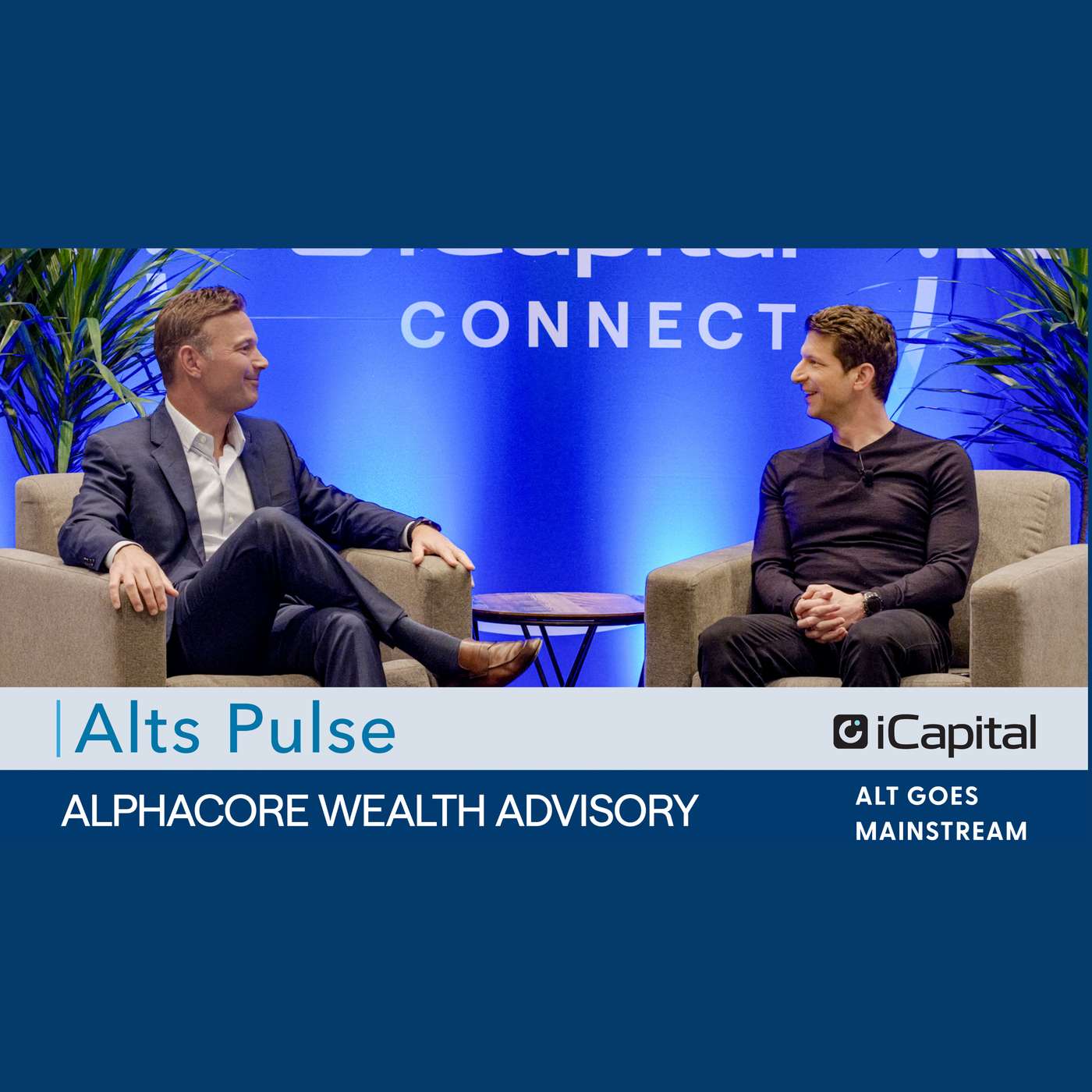
Alt Goes Mainstream: The Latest on Alternative Investments, WealthTech, & Private Markets
AlphaCore Wealth Advisory's Dick Pfister - Wealth management with alpha at its core: live from iCapital Connect
00:30:00
Loading summary
Transcript46 lines
- [00:10]
A
So, Dick, great to see you. Well, welcome to Podcast live here at iCapital Connect. I think you have such a fascinating background that blends both private markets expertise, now wealth management. I think we'll have to get into the name of your firm as to why it's called alphacore. I have some guesses, but we'll let you answer that. But first, we'd love to to start with your background because I think it's very instructive to how you've thought about serving the wealth management space both in your prior life and then in your current life.
- [00:41]
B
Well, thanks first of all for having me here and what a great conference so far it's been excellent. Every year it gets better and better. So it's really good to see. For me, I've been in the business for over 30 years. I have an interesting genesis. I was a floor trader for Dean Witter back in the early 90s and then mid-90s. That's when Dean Witter was the largest futures clearing firm in the world. And they cleared some of the best hedge fund managers at the time. At the time, they weren't that famous, but today they are. This is names like George Soros and Paul Tudor Jones. And when I was with them trading Japanese yen futures, British Pound, I really got hooked on the world of good risk management. And what does that mean? Well, it's good risk adjusted returns, capturing some of the upside, but mitigating the downside. And those managers at the time were way ahead of the curve. And what I realized is that those managers were really only accessible to some of the biggest endowments and pensions in the world. And so my career started to say, well, how do we democratize access to these great strategies? And myself and my former business partners, we launched a firm called Altegris, which stood for Alternatives, Integrity and Risk Management. And we became the first independent alternatives platform in the country back in 2002. And as time went on, eventually I Capital acquired Altegris, which is a crazy small world story, but I've taken that idea of democratizing access to institutional quality managers to democratizing access to institutional wealth management. The reason that came about was in the early days before I launched AlphaCore, I realized there were some great wealth advisors out there that were good at doing fundamental financial planning, kind of 101, where they gather your information, they look at your trust, your estate. Do you have a 529? And look at cash flows. And myself, after we had sold Altegris, I had gone through a liquidity event. And so I sat down with them and with myself and my wife and three kids. And they said, okay, well now that we've gathered your information, as long as you can make between 8 and 12% return per year, you won't run out of money. And then when I asked them, well, how do you make 8 to 12% a year? They said, well, we'll put 60% of your money in equities and 40% in bonds. And for me, ironically, this is 2014. I thought that was too risky. And they were, what do you mean? You're from the world of alts. I'm like, yeah, well, alternatives can provide diversification. So I literally sat down with my wife and this is the origin story of the name. And I, I drew a circle on a page and I said, okay, in the center of our portfolio we'll put diversified alpha generators. So we'll put long short equity, global macro, multi strat, private equity, private credit, private real estate. Not one manager, one style would have a diversified core. And that may be anywhere between 20 and 40% of our portfolio. And the remainder of that will be long only beta. So long only equities, long only fixed income international US because we still believe in the creativity of equities. And that will be a low cost beta. And we'll have alpha in the center. And so when I drew this out for my wife, she said, well, you should name your firm AlphaCore. And that's the origin of the name. And as we started to build, we were the first clients of AlphaCore. And then I said, okay, well I want to have everything that a ultra high net worth family wants. And I want great research, I want great investment management, but I also want that supplemented with great wealth planning. So high end estate planning, high end tax planning and tax prep. And that's how we've gotten to where we are today.
- [03:55]
A
So on that last point, I think that's a good segue to how you've thought about building your firm. I think it's interesting to hear what's in a name Alpha Core. And it's not just access to high quality private markets investments where you think alpha can be generated. I'd love for you to discuss what you mean by alpha at its core across all aspects of wealth management, because private markets is integrated into that. But it's not the only thing. There's other aspects that I think provide a great service model to end client where client can generate quote unquote alpha.
- [04:27]
B
That's right. Yeah, it's a good point. So the genesis was when you think of alpha. And we all know generally what alpha means in the finance world is a return above a benchmark, is return above your peers. And that was the genesis of AlphaCore. And we built AlphaCore for, call it a $50 million family. Where when you do that, you say, okay, well if we're going to put LPs, interval funds, liquid alternatives into portfolios, you need to have institutional grade research team, but you also need operations, you need customer service, you need high end financial planners so they know the language of alternatives and how that can blend across traditional stocks and bonds. And so what we realized is, yes, alpha in the investment sense is important, but you can generate alpha across your entire company. So we can have customer service alpha, we can be better than the average at customer service, we can have operational alpha, do it more efficiently, we can have financial planning alpha. Do financial planning better than the rest. And it goes down the line across the board. So Elva has really taken on a different meaning inside of our firm and it's really resonated with our client base because we've now democratized what $50 million family could have. If you build the scale and efficiencies that we have, you can take that down and democratize it to a $5 million family or a $3 million family.
- [05:38]
A
When you share that kind of. In my head, I picture this circle and this kind of constellation of different technology solutions across all the different functions that you as an advisory firm provide to clients and what you have to do to run your firm better. I want to in a bit, but before we do, I think it's important to kind of unpack the then and the now with AlphaCore and with private markets. So 2014, how much was private markets investments and access to high quality private markets fund solutions the differentiator for winning client business?
- [06:16]
B
It's always been a part of our story and philosophy that differentiate it. I think what's interesting about when we launched AlphaCore just over a decade ago is we could access things that we couldn't access, let's say in 2005 or 2000. And this is really why iCapital is such an important partner to us, is that we have the ability now to use the platform not only for limited partnerships, which is also streamlined with the iCapital platform, but interval funds as well. It becomes part of the vernacular and part of this is the education piece. Right. We will put it in portfolios, but our advisors need to understand what that means and how they're going to articulate that to the end client. So we'll use some of the curriculum that you guys have built. We created a thing called the alphacore Academy, which is a badging system that all of our advisors go through to teach. And so it's been a critical, important part. Now every client's a little different. If your client comes to us and says, all I want is daily liquid income and I'm really tax sensitive, well, they're probably going to go into a muni bond SMA portfolio. The reality is though, most of our clients, if you're $5 million and up, you don't need your access to your capital every single day. 24 hour liquidity. What we find out is there's liquidity buckets across client portfolios. So maybe a third of their, let's call it a $5 million portfolio, they need access to every day. But you really press them and say, well what about, could you handle quarterly liquidity? Maybe another third can go in quarterly and then the last third can go into something longer term. And that's how we split it up.
- [07:40]
A
Now that we're talking about technology, how do you think technology is impacting the wealth management business and the workflow that you have as a firm?
- [07:48]
B
Yeah, so workflows are critical to us. From the day I started alphacore was building scalable systems and to utilize this asset allocation philosophy you have to have scalable Systems. So our CRM, we've built probably 50 different workflows. So an advisor can come in and begin a workflow process. Let's imagine they have a new client that comes in and let's say it's $10 million as an example and we're going to put two interval funds, two LPs and the rest liquid SMAs. Well, they can generate a workflow that begins our operations and customer service team to start it and they can watch that workflow go through from inception to actually execution. The other part of this is when you're discussing it with your clients, they've got to be able to visually show what this means. So if somebody comes to us and said let's have the Mag 7, and they say, well I've got, I've done really well in the Mag 7 over the last 15 years. And we say, well, we'd like to diversify you. Well, we use Architect, which is a risk analytics tool to show them, well, here's what you look like now and if we have another 2020 or we have a 2022 or 2008, here's what would happen. So the visually showing something in Architect is Really powerful.
- [08:53]
A
How much does that help you win new client business?
- [08:56]
B
I think it's a big component. So we do proposal generation for our clients. Our advisors really love the fact that we've built in something like Architect into proposal generation. So in proposal generation you've got a few things. One might be E Money. You might use a financial planning tool, E Money Money Guide Pro. So you want to show cash flow analysis and then you want to show a kind of here's your current portfolio, here's the proposed portfolio, and that's where Architect comes in. So you do full financial plan, show them cash flows. Then you go to that, oh, how do you make the 8 to 12%? This is where Architect comes in.
- [09:27]
A
So when I listen to that, I think about, you need kind of a holistic view of a client's portfolio now that more clients are thinking about private markets. And you'll appreciate this because you've been in private markets for a long time. It can be kind of hard to capture what private markets does to a portfolio on a day to day basis. What do you think is still missing from a technology perspective as it relates to how private markets data post investment can help you run your business better, can help clients understand what their exposures look like?
- [10:01]
B
Well, I think the adoption of AI is going to be critical. We continually look to add AI solutions and make our lives and days more efficient. But for me, I'm a visual learner. Our clients are visual learners, our advisors are visual learners. So just like we were talking to the chief economist of Apollo yesterday and he was saying if you look at private markets, you have to be really concerned about the different risk factors you're getting exposure to or not. And so if you think about AI, AI is in public, it's in equity and fixed and private markets. By using like the risk factor radar and Architect, you can actually dive deeper into the private market solutions and say, okay, if I'm going to add private credit or I'm going to add private equity, am I just doubling up on some of the risk I already have in the public side? And by being more nuanced with that, it's really helpful and you get a radar into and say, okay, if this client has, let's say a value bent in their existing long only equity portfolio, then I probably shouldn't put a value bent long short manager in. I need something that has the diversification to give you different risk factor and that's critical as a technology solution.
- [11:04]
A
On that point, I want to dive a little bit deeper on how you Think about investing, especially given that you've done private markets for so long. How do you think about risk as it relates to private markets? What in your mind is risky? What in your mind is less risky?
- [11:23]
B
So we take the world of alternatives and we put it into two major buckets. One would be alternative asset classes, and that would be things like private credit, private equity, private real estate venture, essentially long only, but in a different type of wrapper than liquid. So the reality is they're going to be less liquid, but you should get an illiquidity premium if you're going to go into those. And then there's alternative strategies and these are more hedging in nature. So that's macro, multi, strat, long, short, stat arb. And I think the world has to split things into those two different major buckets to really understand what you're going to get from your allocation to alternatives. For us, when you're going to quote, unquote, allocate to alts, but all you chose was, let's say, private credit and private equity, well, then you're not necessarily getting what could be crisis alpha if you had global, macro or multistrat. Unfortunately, people learn when they see like what's going on in the markets today, they're like, oh, well, actually multistrad's a really good place to be right now because dispersion is widened. So managers like long, short or stat arb can actually do really well. So you kind of have to look at it in these two buckets. That way, you know you're going to get diversification. So, and that's how we educate our clients is you're going to source your private equity exposure from your equity bucket, you're going to source private credit from your fixed income bucket, and then your diversifiers are going to come from both of those into alternative strategies.
- [12:42]
A
What do you think asset managers can do a better job of as it relates to educating wealth managers as well as wealth managers and clients?
- [12:54]
B
Education has been just kind of first and foremost for me since I've been in this for a long time now. It really is taking it as seriously as your financial plan. So if you get a CFP and you become a planner, you're really dedicated to making sure you gather the information. You actually articulate it really well. You have to certify that you're going to do it as a CFP in a certain way. I used to make all of our advisors get a Kaya Chartered Alternative Investment Analyst designation because we took it so seriously. Because it really comes down in the world of wealth advisory, it's the advisor relationship with the client. They have to feel comfortable enough to number one, put them in portfolios, but then hold them in. And I think what's going on private credit has obviously been a topic of the conference, but this is the natural evolution of what's going on in private credit. There's a trillion dollars in private credit and the stress that's going on with getting redemptions over above 5%. I think this is a natural evolution of actually now the advisors have to explain why you should hold this and why you shouldn't be afraid to hold it. They do it all the time in long only equities. Now they're starting to do it in the private markets as well.
- [13:56]
A
What do you think advisors need to learn about private markets as it relates to being comfortable having those conversations with their clients and holding through more challenging times? There's no right answer necessarily. It's ultimately how do you serve the client best? So how do you think about some of those nuances and what do you look for in advisors that you either bring onto the team or you've accomplished? Acquired a few businesses. Last year we did our podcast, you acquired Callen. How do you think about educating advisors or looking for advisors who understand some of the nuances around private markets and educating their clients?
- [14:33]
B
I think it's interesting that the firms that we're emerging or acquiring, we're doing it because of geography and talent. And what we're finding is kind of the patriarch of potential advisor. They may be as stuck in their old ways and maybe it didn't take the time, the effort, energy to learn what alternatives are and how they can fit in portfolios. But their G2 is extremely interested. It's just like, you know, they're interested in AI, but they're also interested in looking at what's the next greatest thing to allocate to. So the G2 wants to be a part of it and they know their clients are demanding it. Their clients are demanding different return streams. They want to go further upstream. And so that's exciting for us because we are offering a differentiated allocation, but we're also offering the ability for them to get educated on it. And that's been a key part of our growth. It's here, it's not going away. And I think the advisors need to take the time, effort, energy to learn how to do it.
- [15:22]
A
When I hear you talk about making sure you serve the G2 client, that could either be making sure you retain the client or capturing a New client who may be a little more tech forward in how they think about investing, may want different types of exposures, may want a little more risk as well. How does that inform how you think about acquiring or bringing on certain firms? Has that changed the complexion of the types of advisory firms that you look to partner with and bring into the alphacore family?
- [15:51]
B
Yeah, it becomes a natural filtering mechanism. I mean, I think a lot of advisors now use alternatives, but when you define alternatives the way I have, they might only use one piece of alternatives. They want to get more diversified, but they don't have the research, the team, the operational efficiencies. Part of the reason they might join us is they want to get more exposure and they can tap into basically all of our plumbing that goes along with that. Or they haven't done it before and they are afraid to do it because they didn't have two or three research members to actually do the research. And for us they can join and say, okay, now I can actually put in some of these. Maybe it's infrastructure, maybe it's long, short, something that they can actually explain. So to me it's a key differentiator. Now there are advisors who are just, they're old school and they're not touching anything. They're going to keep 6040 as their bedrock, even though 6040 has become really correlated. And so for them that is a natural filtering.
- [16:41]
A
For us, you think going forward, public equity markets are going to look different and there's going to be a need to do private markets, whether it's for diversification or excess return generation.
- [16:51]
B
I mean, it already does look different. Right. The Russell 5000 only has 3600 stocks in it. Right. So the markets have evolved to be more private than they ever have been. I don't think that's changing. And with platforms like iCap, with registrations going the way they've gone, you get more transparency, you get regulations, you get access points to make it more efficient. So I think that's here to stay. So advisors have to get on board and you could see that they are, but even more so over the next decade.
- [17:18]
A
So I think there's an interesting nuance in combining what you just said and your comments before around how you're thinking about growing the platform and the types of advisors you'd bring on. So, and you'll appreciate this because you were really at the unlocking access to alts version 1.0 integris. That's right, iCapital version 2.0. And then now we're at kind of 3.0 because platforms like iCapital have provided access that's now table stakes. So now that access is table stakes in wealth management and all different types of firms can get exposure to private markets. How do you differentiate with private markets today?
- [17:56]
B
It's really, you know, when you think about the world of equities because it makes it simple. If you think 30 years ago you'd say oh well, everybody's going to do active long only equities are going to be fundamental stock pickers. Then there became systematic stock pickers and more quant based. And then indices came out and said oh well no, we're just going to be passive. And that was a huge evolution. But you had to know at some point there was value, there was growth, there was all the sectors. We're at that stage now in the world of alternatives where you should know more nuanced information about this different strategies and what makes them different. And not be afraid to understand global macro. Like when I got into the space, let's say Soros macro was oh my, these are swashbucklers. They're taking huge bets on currencies and they're going to break the bank of England. That was the mentality in the late 80s, early 90s. That's completely evolved in 2026 that is not the case. These are institutional allocators and advisors should not be afraid to learn and understand and articulate what that means. You still have a hesitation like when you try to say what's multi strat? Well, oh, that's just everything. Well no, it's actually a lot more sophisticated in that you should understand why it makes sense for your client. And I think your clients deserve the best. So when you think about a 5 or 6 million dollars family, they're still wealthy, they're in the upper 1% or more. So they deserve to get the best risk adjusted returns.
- [19:13]
A
You bring up a really important point as it relates to private markets. This kind of gets to firms may look similar when you look at the top line. They're few hundred billion dollars manager across different strategies they all look big. Maybe a lot of the cohort of publicly traded alts managers look quote unquote the same. They're actually very different underneath. And part of why they're different is because of their origin. So how much do you think about and how much do you think that the wealth channel should really be thinking about understanding the histories of these firms? Because that informs the not just the who and the what but the why of why they may allocate to an Apollo versus a Blackstone.
- [19:56]
B
That's a great point. I think the origins and then the team they've built from those origins is critical. Some of the best of the best are they've really diversified across private real estate, private credit, private equity. They truly have world class teams across them all. So you kind of look at that and say, okay, well who goes deep and understand, well, maybe I don't want to have the same GP across every one of those. And that's where the nuance is. It's not simple. I'm not saying it's simple to do that. Right. We have a 10 person research team that is, I think the best in the business. Been in the business for a long time, 20 years plus in some cases. So you have to be able to and willing to invest in that research to say, well maybe I'll use this manager, this GP for private equity, I'll use this one for GP stakes, I'll use this one for private credit. And if you're looking at new vintages right now, there's some great options right now because new money going into the ground today is really interesting and you might not want to use some of that you had over the last decade.
- [20:49]
A
How do you think about the trends of centralization the CIO function within a lot of these wealth platforms? As they get bigger, they have to think about centralizing a lot of their investment functions. And at the large end, platform end, there's a lot of ocio consolidation into wealth management firms. How do you think that that's changing the industry and how firms will operate?
- [21:14]
B
Our belief is we want to still have flexibility but within a format. So when you're joining an independent advisor like AlphaCore, that is part of the reason why they join because we're independent still, we're boutique. There's no mothership that's telling you, oh no, but you can't do that. We're still nimble enough to be able to say okay, we have an approved list of funds you can use which is about 70 different firms and they can either use a model that's off the shelf that we've created, or they can actually customize and build together. And so I've fiercely independent, I want to have that open architecture model where we can hire and fire manager way we see fit. But if they're leaning on and saying okay, we can show them all the studies that say if you use a model, you're going to run much more efficiently, you're going to have much more time to spend with your clients and over time, what naturally does happen, even if they come and say, oh no, no, no, I want to use, I want to use a platform, it's great, but I want to customize everything. Usually over the course of a couple of years. It's like, well, wait a minute, your models are actually performing better than me. So why don't I just start tapping into what you guys have done?
- [22:16]
A
And I think that brings up a really interesting insight, which is this tension of customization. But you're on a growth path. When we had last talked, you had a few billion, then Callan added a few other a few billion more. So you're on a growth path, you're adding more advisors, maybe different types of clients as well, to some extent within those different advisor teams. So there's this inherent tension of customization with scale. How do you think about balancing those two features? Because it's like we've talked about this too with something like Venture. You have a very interesting and differentiated view on the world of venture and what types of managers you believe make sense. But that requires customization, that requires a research team to be able to do that. How do you balance those two things?
- [23:00]
B
So you look at client segmentation, you've got think of non accredited, accredited and qualified purchasers. And we use that because that's the way the SEC will define things. I think it's kind of outdated, but let's just use it for the sake of this conversation. We've created models for each one of those accreditation levels, so they're related. But if you think about conservative balance and growth, each one of those client segmentations has an allocation that goes with it. So when you build that, then you said, okay, now I built for scale these models that use that says nine models. We have more than that, but that's nine just kind of get off the ground. And then you say, okay, how does our customer service team and ops team work with the advisors to fulfill each one of those models and each one of those segmentations as you start building it now, you've educated your team and you build for scale across the board. The upper end is always going to be slightly different, slightly more customized. If you think about Venture, for example, this is the $25 million families and up we've all seen make mistakes in venture. They go out and they say, my friend told me to buy this biotech stock for half a million dollars. And I haven't. My money's gone. I haven't seen it in 20 years. So we basically said, let's let's create a solution that can actually get you access to Venture. Do it systematically, do it over time, multiple vintages and get you exposure to Venture.
- [24:13]
A
Do you think that that model of creating, I don't mean this in a negative sense, but creating your own funds or vintages, maybe not product, but you're creating your own fund of funds, for example, is that going to become more and more commonplace in the wealth management world?
- [24:31]
B
I think as you become more nuanced, I think the difference for me is I don't want to be the general partner of a fund. So it's not whether we can or can't do it. If you're coming to us, we want to be able to offer you a full suite of offerings and Venture is one of them. Especially our ultra high net worth families. They're saying, I'm either going to go get Venture somewhere else or I'm going to get it through you. So you better come with something. You guys are in this space so you have the natural ability to deliver it. So we brought in a venture capital expert on our team and then he leans on our research team to help build it out. And for us that was a natural evolution of what we were going to do.
- [25:04]
A
How much of a trend do you think it'll be of kind of bleeding over into the asset management world as wealth managers? Do you think that that's something you have that capability and expertise that maybe other advisors or teams may not have? They may want that, but they may want to stay at the platform they're at? Do you think that that will become more of a trend where there will be this bleeding over of the asset management side from the wealth management side?
- [25:29]
B
I think it depends. Again, you go back to the open architecture version of what we do. We don't think we can necessarily compete with Blackstone in certain things. Right. That's not. If they're doing it better, we're going to use them. We're going to do what's best for the client. You start there, say do what's best for the client. And if you look across the board, some of the great things that have gone on is you're able to access the best of the best. Now directly or through a platform like iCap, you don't have to launch it yourself. Twenty years ago, you probably had to. And so for us, Venture was one of those things that more niche, we can actually help add value, but in certain other components we really don't need to. We can actually use what's off the shelf.
- [26:05]
A
What in your mind as it relates to private wealth, accessing private markets is the next frontier.
- [26:12]
B
I think the biggest gap remaining in this space is education. Education is. It sounds really simple, but it really is becoming having your advisors truly understand what's going on. And I think that that's been the ceiling, I think, for a long time. As soon as we unlock that for our advisors, the more it gets allocated, the more people hold.
- [26:33]
A
How can the industry or industries, both wealth management and asset management, come together to help better educate advisors on the nuances of private markets?
- [26:44]
B
I mean, delivering it via technology is going to be critical. The new way people are digesting things. Obviously a podcast is a great way to do it, right? But video is a great way to do it. There's a whole host of things that the younger generation is digesting in a much more simplistic way. And I think that's going to be how it comes together with the asset managers and the wealth managers doing it jointly.
- [27:03]
A
How much do you think clients want to be educated on that same content and that you would deliver the same content or similar content that you'd provide to advisors directly to the end clients?
- [27:14]
B
It's a big discussion inside of AlphaCore because we do a large wealth summit every fall and we have great content on the stage. And then we'll have some clients say, I just want to come for the cocktail hour, I want to hear the music. So it really is a dichotomy of client base. Some clients are like, once you tell them you've got it and they know you've got the expertise, like, great, now I check that box. I don't need to know anymore. I just want you to tell me that everything's good. And there's other clients who are engineers, computer programmers, they want to know all the nuances and they want to keep up. So you really have to build a broad array of either ways to talk and discuss that, whether that's video or it's podcast or it's commentary, and then also have person to person events. I think that's going to become more and more important.
- [27:57]
A
How much do you think the advice model has changed as now clients have access to information through social media. They gather their information different ways. Like you say, it could be podcasts, it could be social media, could be memes, for better or worse. But that creates certain perspectives and views that may or may not be the case. How do you think about dealing with that as you try to educate clients young or old about how to think about markets, private markets and Also, just like holistic financial advice, our clients or
- [28:36]
B
prospects are coming to us much more educated than they have been historically. So they're using various LLMs. You can name any of them, whether it's Claude or Chad or Grok or whatever. They're going to come to us asking good questions and we have to be ready to answer those questions. But I don't think we're replacing the person to person, which is when you're dealing with somebody's money, which is so important to them, that is a critical piece and I think that's not going away anytime soon.
- [29:00]
A
So the human and technology can work together. I think that that's a great way. I want to ask one final question, which is what do you think is both the biggest threat and opportunity of AI as it relates to wealth management?
- [29:12]
B
I think it's an opportunity. I really do. I think it's going to help us be more efficient. I think it's just adopting the next and greatest technology. I mean, there's threats. If you think about Elon Musk in the world, what's to come with a singularity? I don't think that's anytime soon. I think for us, it's much more of an opportunity than a threat and we're going to use it as where we can across the board at AlphaCore.
- [29:32]
A
Oh, this is from someone who's done Private Markets 1.0, Private Markets 2.0, and now Private Markets 3.0 as it relates to the wealth management world. Thanks so much, Dick. This was a great conversation. Congratulations.
- [29:42]
B
Thanks for having me. Thank you. Thank you, Sam.