← Alt Goes Mainstream: The Latest on Alternative Investments, WealthTech, & Private Markets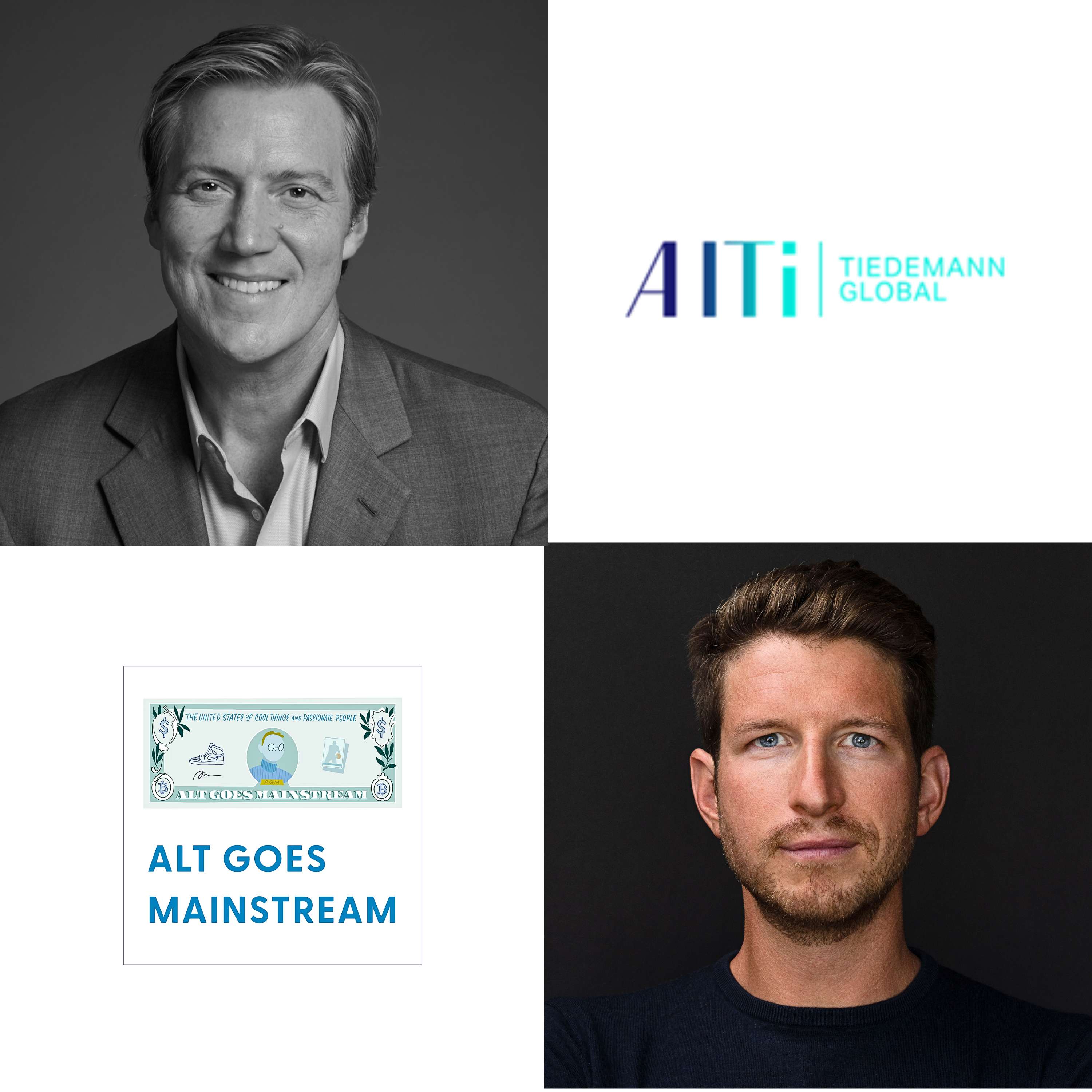
Alt Goes Mainstream: The Latest on Alternative Investments, WealthTech, & Private Markets
AlTi Global's Mike Tiedemann - when wealth management goes global
01:01:37
Loading summary
Transcript88 lines
- [00:00]
Podcast Host / Sponsor Announcer
This episode of the Altcos Mainstream Podcast is brought to you by Ultimus, a leading full service fund administrator for asset managers in private and public markets. As private markets continue to move into the mainstream, the industry requires infrastructure solutions that help funds and investors keep pace. Ultimas is a leading full service fund administrator for asset managers in both private and public markets, offering a wide range of capabilities across registered funds, private funds and public plans, as well as outsourced middle office services delivering operational excellence, Ultimas helps firms manage the ever changing regulatory environment while meeting the needs of their institutional and retail investors. Ultimas provides comprehensive operational support and fund governance services to help managers successfully launch retail alternative products. Trusted by institutions, investment consultants, registered investment advisors, state governments and fund managers, Ultimas provides solutions for nearly every investment structure in the marketplace. Visit www.ultimusfundsolutions.com to learn more about Ultimas technology enhanced services and solutions or contact Altimus Executive Vice President of Business Development Gary Harris on email@gharrisultimasfundsolutions.com we thank Altimus for their support of Alts Going Mainstream.
- [01:18]
Chorus / Group Vocalist
Everybody gets a piece we're going mainstream. Everybody's gonna we're going mainstream. All my family see see you on mainstream we're going mainstream.
- [01:37]
Interviewer / Podcast Host
From Wall street to Melrose Avenue, we're going mainstream. Venture capitalists to athletes to creators to the person who has collected trading cards, we're going mainstream. In a collision of culture and finance, we're going mainstream.
- [01:56]
Podcast Host / Introduction Narrator
Welcome back to the Alkos Mainstream Podcast. Today's guest is an industry leader in wealth management who's been very active in private markets. Mike Tiedemann is a pioneer in the wealth management space in a number of ways. He's at the helm of the first Pure Play publicly traded wealth management business, Alti Global. Alti, a $72 billion AUM platform, came out of a merger between Mike's successful and highly regarded wealth management and alternatives business, Tiedemann Advisors, which merged with Alverian. Founded in 1999, Tiedemann grew into a global company under Mike's leadership, expanding across geographies and building out a trust company and an alternatives manager on its way to overseeing over $29 billion of AUA. Mike has since run the combined company of Altiglobal, where they've built a global wealth management and alternatives platform. They're also backed by Allianz and Constellation Wealth Capital as they continue to serve many ultra high net worth families worldwide. Mike is very well versed in private markets given his deep expertise in allocating to many of the industry's best fund managers. So we had a fascinating conversation about the intersection of private markets and wealth management. We discussed the business of wealth management, the evolution of the wealth management industry, why understanding private markets is so critical for wealth managers, the advantage of being a global wealth management business, the need to customize private markets, portfolio construction as a way to differentiate versus other wealth management platforms, and his views on impact investing. Thanks Mike for coming on the show to share your views and wisdom on the wealth management space and private markets.
- [03:26]
Chorus / Group Vocalist
We're going mainstream.
- [03:29]
Interviewer / Podcast Host
Mike, welcome to the Alkos Mainstream podcast.
- [03:32]
Mike Tiedemann
Thank you. It's great to be here.
- [03:33]
Interviewer / Podcast Host
Pleasure to have you. You have such a fascinating background. You've built an incredible business in the wealth management space, really at the intersection of alts and wealth. We'll get into all that, but first I want to start with your background. You worked in Brazil very early on.
- [03:49]
Mike Tiedemann
Yeah, my trip to and travels in Brazil were exceptional. That was in the early mid and through the late 90s. And I had a blueprint which was set by my oldest brother who went over to Asia. He was in Hong Kong and then initially in Japan and had an incredible life experience and work experience as an expat in Asia. And I sort of saw Latin America as a part of the world that was really developing at the time and the markets were really opening up. And I was lucky enough to get a job at a firm called Guarantia, which was founded by Georges Paolo Lehman, who's a 3G founder and a brilliant, brilliant collection of people. It was really a miniature Goldman Sachs and I was really at the time the only American working down there. And it was just an incredible time to be there. It was hyperinflation. It was before the real. I happened to be there. I landed on the day Ayurvedonsena died, if you like, F1 and know his history. It was incredibly shut the markets. I mean, it was just an amazing time to be in Brazil. They won the World cup weeks later. I was living in Brazil when Brazil won the World Cup. So it was really incredible period to learn to learn about markets, volatility, currency movements, political discount rates. And there were so many things that were coming at me all at once. And I was sitting on an open trading floor with all these brilliant young people as the only American. So I was taken in by a lot of my friends who are still friends 30 years later to this day. And I think I was earning $16,000 a year. And then they devalued the real. So I was at more like, I was like, mom, send money. I can't dry clean my shirts. But it was a tremendous, tremendous experience. I wouldn't have changed a single thing.
- [05:26]
Interviewer / Podcast Host
What do you think you learned most from seeing all of the different aspects of a little bit of a different financial system, Obviously dealing with things like hyperinflation. What do you think it taught you most about money management that you've brought with you today?
- [05:42]
Mike Tiedemann
Liquidity, luxury. That liquidity provides the security that liquidity provides in volatility. When there's volatility like we were experiencing then, it was akin to being overleveraged and just everything was exaggerated and you'd have these huge liquidity pockets. So always having dry powder was really a survival component as asset managers. And I saw the smartest managers who we were trading with and trading for, manage that successfully and they were able to navigate these extreme periods of volatility. They knew the quality assets they were buying, they just had their prices and they were just patient. But they always had the ability to buy more or not be sort of out of dry powder when the real opportunity, when the bottom really fell out for whatever reason. But the interconnectivity between, in that case is geopolitics and the exaggerated importance of geopolitics on an economic structure, and then on this, the market structure that really was responding to those two. And it was just really interesting to see because in the US we've had such stability for so long. You really don't see that here.
- [06:51]
Interviewer / Podcast Host
I want to touch on that last point first, because I think it's relevant today, geopolitics playing a more prominent role in investing, for better or for worse. And I think that is probably a more important aspect of investing, whether you're a GP or, or an LP underwriting a gp. Do you place a higher level of importance on a manager's understanding of geopolitics as it relates to how they invest, how they manage risk, how they manage liquidity. When you're looking at working with a manager because of the experience you had.
- [07:26]
Mike Tiedemann
I think my answer would have been different 10 or 15 years ago than today. I would say no is the short answer today. First of all, enough is evaluated quickly enough, but the structure of markets have changed. And when you look at the US market, equity and debt, corporate treasury, I mean, there's so much depth to this market. And then there's the banking system, there's the private credit system. So there's just an incredible amount of depth that exists here in the States that will be responsive to geopolitics and will be responsive to events. But if you look at the sort of really disconnected nature of markets relative to some of the events that have occurred in the past five, 10 years, with the exception maybe of COVID which was really just everything shut down, you've begun to see that markets ignore a lot of things that otherwise would have triggered some kind of volatility in the past.
- [08:14]
Interviewer / Podcast Host
Do you think that's going to continue or do you think that will change?
- [08:17]
Mike Tiedemann
I do. There's enough passive money. There is enough money that is structured in terms of. When you look at the big winners in the alternative space, they have terms that are perfectly aligned with. There's no asset liability or very few asset liability mismatchings as there were going into the GFC and you know, 0708 timeframe. So you see less stress that a manager has to endure based on redemptions or redemption request at the time when they want to be putting money to work, they're being forced to redeem what have you. So those are, I think in much more sound places. And then again, the effect of passive money is really profound. And you see it in liquid markets. And so I think that is a muting effect that a lot of us.
- [09:03]
Interviewer / Podcast Host
That may be a muting effect. That's also to some extent what's making more and more people say they should have some exposure to privates. You've obviously been very active in private markets. I'd love to hear your views on private markets and maybe put it in the context of first your business Tiedemann, now Alti Global. You've done private markets for quite some time now. You're doing it in a bunch of different ways. So how do you think about private markets and how have you thought about private markets over the years?
- [09:33]
Mike Tiedemann
Our history in private markets, it's really started in 1980, if you can believe it. I was still in grade school, but my father started as we were. Believe it or not. I think Morgan Stanley's first prime brokerage client, we go back that far and the view then was that the ability to have balance and long short or be able to have protective components and really be able to stock pick and then have index hedges or however a manager might structure their investment portfolio, but that there were inefficiencies that managers with disciplined but flexible mandates could ultimately drive a lot of added value or differentiation in terms of return stream. So I don't think that's gone away. A lot of it has been systematized. When you look at the multi Strat managers who are really the winners of the capital flows in the spaces in these great firms. They are great for investors and they are great firms in terms of how they operate. And they have incredible efficiency and treasury functions in terms of optimization of their leverage. There's so many things that they can do that a standalone single strategy firm can't necessarily do. So they're constantly finding these little pockets of value and arbs and just mispricings that occur in capital markets. So the answer there is yes, those do exist. The ability to be hyperactive, let's call it as opposed to passive, does exist. It is being proven. But it's also these are small margins. There's a lot of leverage that's used and there's a lot of risk oversight that makes it a stable return stream. But it took 30 years for these firms to build themselves. It's incredible what they've built, but they really have been curated and built and constructed over that time frame. They're very hard mousetraps to compete with.
- [11:14]
Interviewer / Podcast Host
You talk about how you were exposed to private markets very early on and when private markets really was in its infancy, I mean, 1980s, that was just the beginning, more or less, of the hedge fund industry, certainly the private equity industry. Do you think the fact that you've been exposed to private markets for such a long period of time gave you a very different perspective on private markets? Because you probably knew who the players were, and I think that's such an important aspect to this too, is like knowing who Blackstone is or Paulo is and their beginnings and their histories and their origin stories probably helps you understand and make sense of what they are as firms today and what other firms are today as a result. How much has that helped?
- [11:57]
Mike Tiedemann
I think the answer differs over time because so much changes over time. And I think you have to be mindful of that. It's a great question. I would say the initial advantage we had when we started the wealth management business, so this is 25 years ago, was we really knew players, people knew us, so they were willing to take capital if they were maybe limiting capital flows. And we also knew the operating reality of these businesses. And that was, I think, a distinct advantage we had in early days that we really understood the operating reality and particularly the growth of strategies and what we saw time and time again. We used to do backward looking analysis on managers and the alpha they generated relative to their aum. And that alpha, that sort of excess return that was pretty constant, would start diminishing as their AUM grew and they started expanding out of their core strategies into other ones and what have you. So that multi strategy strategy that is today the winner, many people tried to do and to diversify over times and to not great effect. I think we had the perspective back then about realities related to how strategy can grow and really the discipline needed in order to maintain that outperformance. But that really helped us. That was probably the number one reason why we fired managers that we allocated to was they began changing terms and overgrowing their real investment capacity. The decisions we made to fire managers based on performance or poor performance invariably were the wrong ones. It's very easy to bottom tick a strategy right before they recover. We were sober with our analysis and looking at both sides, but the times where we made great decisions to exit were ones where firms overgrew or really started, began changing terms and having a lot of turnover of key people.
- [13:41]
Interviewer / Podcast Host
You mentioned that a lot of managers that we see and hear about today, the biggest multi strategy managers, whether that's hedge fund, the Citadels, Millennial millenniums, et cetera, of the world, or in Blackstone, Apollo, kkr, et cetera, they've become these large multi strategy platforms. Having seen the evolution of private markets, do you have a different view on these types of firms and where they are today than you would have years ago, given how you've seen how the whole space has evolved? And also as you think about that in the context of wealth management too, you have to place client capital somewhere. Sometimes it makes sense to place it with a brand. Sometimes it makes sense to do something more bespoke and unique, differentiated. How do you think about all of those evolutions and kind of confluence of themes coming together?
- [14:29]
Mike Tiedemann
I'll answer the first part of the question, which is related to the bigger firms. I would have said I would have been more skeptical of them 10 years ago than I'm now, just in awe of them. They have created incredible, as I said earlier, mouse traps and just platforms to acquire talent, to in large part retain, retain their talent. Then they have the ability to evaluate opportunities that come over time. They do a great job of packaging. You know, they'll be out there researching opportunities, find them. It'll run up the chain to the investment committee. The investment committee says yes, it gets put into motion. They create the structures and strategy and that is just a rinse and repeat approach to business. And that has been a winning approach. We have great respect for how they operate. Ten, 15 years ago, I probably would have been more skeptical that they would have been as successful as they have been, but they have been unquestionably successful. With that said, there still is, I do believe, specialty strategies and firms that see an opportunity set that might be in its development phase. You can look at things like land banking or rail car leasing that have really interesting tax components. So for taxable investors can be really, really interesting strategies that are not run of the mill.
- [15:41]
Interviewer / Podcast Host
So I want to touch on something that you said, but put it in the context of your own business, of alti. So these businesses have gotten to size and scale. On the alternatives manager side, the wealth management space has gone through this evolution as well. I'd love to unpack your own business because I think you're emblematic in some senses earlier than others of figuring out how to grow and scale wealth management platform with an alternative component to it. You've gone public, you've kind of gone through a lot of these things that now the wealth management industry more broadly has to start thinking through. So tell us a little bit about Tiedemann, how it became Alti Global, why you went public.
- [16:23]
Mike Tiedemann
The wealth side, we always have been and remain focused on the highest end of the market. We work with, serve as help construct single family offices. So the very, very large side of the market and then people that depending on where they lived or what kind of infrastructure, might be able to set up their own family office, but have chosen to use our platform, we find that tends to save any single family office close to 50%. They can still retain a really great staff, but they can pipe through our system, use the benefit of our scale. So whether it's a single family office or just a family that has a large amount of capital, we are intent and very intentional about having our scale accrue to the benefit of our clients. So in what way? Not just cost. I mean obviously you want to have the system synergies and then the pricing power that we have across the entire platform, the retention of our great people. One of the reasons why we started the firm was when we looked in the late 90s at all the mergers that were happening between the banks because the wealth management business was largely bank dominated then still is to a large part, but the systems were terrible, the reporting was terrible, the turnover people was terrible and families do not like to lose their point of contact. And then there were conflicts of interest up and down the system that got exposed in the 01278 timeframe. So we started with a blank slate. We really wanted to retain the good parts of the word institution. Durable, permanent structure. That's one of the Reasons why we're public and then systems and resources and what have you. And as we think about going global, one of the reasons why we did it is we had the terrible cross border offering. But we have a lot of families who are having kids, marry or they own a home in Italy and they wanted to have this sort of cross border service and we couldn't provide it. So that was the choice to invest there, was really to extend the service offering.
- [18:18]
Interviewer / Podcast Host
You mentioned a few of the things that the clients that you work with might want from a wealth management service offering at the highest end of the wealth management chain. What would you say clients demand most of all? There's certain things that they really want. Is it investments, is it tax and estate planning? Are there certain things that they really care about more than others they can't get elsewhere?
- [18:44]
Mike Tiedemann
Well, for starters, they're price setters, not price takers. And they expect that not just, as I said earlier, not just to stop with us, but to really flow all the way through in terms of all the offerings they have or anything we do for them. So again, going back to the benefit of scale accruing to the client, that we really need to be able to show that. And we do show that they also think holistically about their wealth. They assume that you're going to have a competitive investment offering. And I don't want to say that's commoditized because it's not. But they know that when you're managing 70, 80 billion, there are a lot of other families and a lot of smart people and institutions that work with you as a result. So they know that there's quality there. There are obviously results that you can show, but they want to know that you can serve their families across every component of their family needs. And these are families that are not spending their portfolio. These are multi generational pools in many ways. They're like taxable endowments. And these are parents that are thinking about their grandkids, kids and structures that are going to be set up to ensure that they don't do damage by transferring capital or that they have the right foundations that their families maybe can convene on and drive change in areas of causes that they care about or impact investing, which is a huge area of importance to families. There are all of these components that we bring to families and I think the really large and very forward looking families are considering all of these things, not just can I get my accounts paid? We obviously have family office services as well, but not everyone. There are a lot of Large families that like to write their own checks still. And we're comfortable keeping that sort of as a separate component or maybe run by an executive assistant.
- [20:25]
Interviewer / Podcast Host
You mentioned on the investment side you feel that there needs to be some level of differentiation. I think that's such an important theme that's happening right now in the wealth space is how do you think about creating differentiation or customization for clients? What is differentiated for you and your clients when it comes to investment offerings?
- [20:48]
Mike Tiedemann
So there are several answers there. One, obviously you have to have good performance and then really good risk adjusted performance. So our clients, particularly in stress cycles, and let's not forget we really haven't had a challenged market for a while. I loathe to say that knocking wood, but I think that's when ultimately clients can be rewarded for a platform that has great quality and great risk management. So put that in a category because again, these are people thinking long term. They're not worried about the upside. They oftentimes do not ever want to see that they're losing money. They care about structure, they care about tax efficiency that often gets lost. People show a lot of net returns that are pre tax net returns. So tax structures making sure that you can serve and invest along all the entities that families have. And to do that in a very fluid manner, in a very coordinated manner. And obviously they do like the tangible nature of investments. They like the information that comes from managers. One of the things that we like to do with our managers that we have great relationships with is bring them in and we do global macro calls where they kind of are giving a perspective. Then that gives us in all of our advisors the ability to transfer that information to our clients. And the clients, not all of them equally, but a lot of them really do enjoy that off market information that comes from specialists in an area or top leading firms as opposed to reading about in the paper or seeing it on cnbc.
- [22:12]
Interviewer / Podcast Host
I think one of the things that's interesting in what you said is that structure matters a lot. You have to deal with different entities across the client. I thought it was interesting you call a lot of your clients almost taxable institutional investors or taxable endowments. That I think is one of the differences between the wealth channel and the institutional investor where Both are important LPs for GPS, but they're different investors with different outcomes that are required. So how do you think about and how much importance do you place on investment structure and asset allocation rather than specific picking of managers necessarily where the structure kind of drives how you then think about Investing in certain managers. Obviously, we both know that manager selection matters, particularly in private markets. But there's an element of where structure ends up being so important, particularly if the outcome is how do you solve for a taxable investor?
- [23:11]
Mike Tiedemann
Well, you're touching on something that is. And this goes back to our history of knowing when my father started the hedge fund business, the effective tax rate at the highest end was 74%. And the reason why they created partnerships and the reason why they allowed gating and the ability to deliver in kind was so that if someone redeemed, they could actually deliver, just like Julian Robinson did, famously with I think it was U.S. air stock or something. But people did that to protect their client base. Those gating rules got used very badly in 2008. Roll the clock forward. And they were actually abused in many cases. But the capital that was pouring into funds, hedge funds and private equity as well. Private equity is obviously a much more tax efficient strategy or set of strategies, but hedge funds just abandon any concerns for tax efficiency. So one of the challenges that we had was really finding managers and it was really in long, short equity that was the one asset class where managers still get great benefit from trying to be more tax efficient.
- [24:17]
Interviewer / Podcast Host
Well, that's interesting because one of the investors in your firm, Allianz, is an insurance company.
- [24:23]
Mike Tiedemann
Yes.
- [24:24]
Interviewer / Podcast Host
How does having an insurance business and you also have a fund Constellation wealth as investors in your business in addition to public markets investors, how does that give you certain advantages that maybe other wealth managers don't have in the current constructs that they have as privately held businesses, but maybe backed by private equity.
- [24:45]
Mike Tiedemann
Constellation obviously has great network effect for us. So whether they be individuals, our CTO was introduced by them. It was a great hire. Allianz loved the fact that we were global and of the reasons they invested in us, they saw us at a segment of the market that they thought was unique. The highest end, they saw our global footprint. They were all operating throughout Europe and Hong Kong and Singapore and obviously the States. So they saw us as the starting point, as a global platform from which to build. And it was a solution for large families that they've worked with that they do not currently have. They came across us at a time when we were raising capital. So both groups have been really helpful in terms of just like the operating structure and what we're looking to do short term and obviously setting goals long term. Allianz, what is different between the two is Allianz obviously has a huge amount of permanent balance sheet capital. They're just an Incredibly well run, very large organization. They're enormous. In asset management, we are looking at ways to partner with them like we have with private credit, where they're one of the largest allocators in the space. As a result of that, they get incredible terms and then there are obviously co investment opportunities as well. So our clients now will be able to co invest alongside an enormous insurance balance sheet that has a great track record. We also can curate some of that on behalf of our clients. These are all managers, many of them we know and think highly of, none of whom have the terms that Allianz has because of their scale. So that's a perfect example of how we will work with them and beginning to work with them.
- [26:19]
Interviewer / Podcast Host
When you think about the decision to go public, when you were evaluating different ways to continue to build and grow t them in and now Alti Global, what went through your mind on both the positives and negatives of being a publicly traded wealth management firm?
- [26:35]
Mike Tiedemann
Let me answer the rationale as to why our goal and one of our primary goals was to be and build a permanent organization. When you have that mindset, time frame, quality, the way you reinvest in the business, everything is governed by that word. At least in my mind it is. When we think about a private business, a private partnership that was growing and we were doing continue to do exceptionally well as a public business. By the way, our wealth platform is growing, healthy. It's never been better, actually. However, at some point, partners get to an age where they say, you know, everyone's selling it 22, 25 times out there and you know, what's the plan? The internal bid for my stock's low. This is a big retirement asset. I would have been put under tremendous pressure at some point in the next five years to sell to a private and then you have a point in time exit all the partners of the business, roll their equity. So we all own public stock now. They might sell a little bit here and there and I'm sure they have for taxes or liquidity or what have you, but we can just continue to operate the business and when it's time to sell some or give shares away or do something with a trust, you have an asset that is actually portable in smaller amounts. There's not this sort of one time, one moment and then the positives of being public in terms of having a currency, in terms of access to public debt markets, those are all things that are out in front of us. The transition to being public. When you're merging three businesses and going public through A SPAC is very hard. There's a reason probably why no one did it except for us. And we're earning our way out of that. Allianz and Constellation have taken a bet that we will. And with their guidance and others, I think we have a great chance of really succeeding in the future. But all the known challenges of being public, the costs you have, every quarter I'm on a recording whether I want to be or not, and you're laying out the views of your firm and it's for everyone to judge. Then there's a stock price which can be totally disconnected at times from the actual strength and improvements in the business. You have to live with that. You have to know how to communicate with your people internally. You've got to learn also what not to communicate internally or externally. You've got to be very careful. So there are things like socks. I mean they're all in terms of controls and oversight and process that get built. All of it is making us a better business and a more permanent business. But it is a huge investment of time, it's an investment of money as well. And then the hard part is behind you and then you execute.
- [29:05]
Interviewer / Podcast Host
Maybe this is a bit of an unfair question in the sense that you are public so you have permanent capital. But I think it's an important question to ask because it's relevant to the wealth management industry more broadly is do you think wealth management businesses, which are businesses that compound over time, they as businesses can probably exist in perpetuity, assuming it's a well run business, should they all be businesses in a perfect world that just have permanence of capital?
- [29:34]
Mike Tiedemann
Our mindset around running a wealth management business, if you remember we had a trust company from day one. So we've always been dealing with the entities, the surviving members of families 20, 30, 50 years from now. We were always thinking with that timeframe, we weren't building a practice to hope that someone would bias at any point. And as a public company, we're just looking to continue on with that sort of long time timeframe and we'll deal with the public market components of IT expectations and you know exactly how we have to run the business and whether or not we have a dividend or buying shares back or what have you. Those are all just realities that we face, but also opportunities that we face. I think any great wealth management firm should have a balance sheet that can survive the storms of markets or anything that goes wrong. I think the first lens that an operator should be thinking about is what happens if The S&P 500 is down 25% next year for reasons that are unforeseen. And can we survive it? Because you can't just not pay your people. So do we have cash on our balance sheet? How much leverage are we operating with? How is the bank going to treat us when things aren't going swimmingly? You have to have that survival mentality. I believe in order to be running a firm that is dealing with families and in many cases, all of the wealth of the families that you're dealing with, which is the case with most of our families, we are dealing with most of their wealth. We need to run an organization that has that ability to survive the nuclear winters that might come.
- [31:12]
Interviewer / Podcast Host
Well, I asked that last question in part because I think as we look at the wealth management space, many firms, particularly in the independent channel, are now private equity backed or they're rolling up or consolidating into other firms. What do you think that means for the industry more broadly?
- [31:29]
Mike Tiedemann
If you look at what's happened in alternatives, there was the massive fragmentation and then there was either someone out of business or there was consolidation. And that's called the expression of consolidation. And alts are the multi strats. You're seeing that with wealth management and you're seeing it with insurance brokers. Actually, insurance brokers and wealth managers are akin to each other in terms of growth rates and obviously the engagement with families. But I would say the consolidation will continue. It will likely be more global. I think we're out in front of most other people in terms of our focus globally and our belief that the markets non us are where the competitive market was 15 years ago, which sounds like an arrogant American statement. Why I say that is because the banks still have such a dominant role. And the reason why the banks have such a dominant role is because a lot of the jurisdictional challenges and realities, as well as the various countries which are operating and the languages and regulators and what have you. So we've created a roadmap and we'll add to it where we can operate seamlessly for families that either live there and you have that sort of local, global dynamic where they get investment opportunities that are in the States or anywhere around the world, but we can serve them with local teams.
- [32:52]
Interviewer / Podcast Host
And that's critically important as a global wealth management business. Do you have certain bets on specific geographies or regions where you think more wealth is going to be created and you want to be able to service clients? To some extent. I think if I'm an investor in a US wealth manager. Okay. I'm betting on US wealth, stock market growth, generational transfer wealth. If I'm an investor in a global wealth management business or a business that has exposure to a certain region. Europe, Asia, Latin America, Africa. Do you have any views on where you want to make certain bets? Because you think those regional wealth hubs are going to grow in ways that we maybe haven't seen in the past?
- [33:40]
Mike Tiedemann
Yes, but there's some nuance. So the US Market again is the deepest in terms of wealthy families. And it's also the most competitive in terms of the offerings that we have some very good competitors. We know them and we know some of the people that work there filled with great people and have great offerings. So it's competitive. However, there are a lot of families, a shocking number of people who have, and there's been an amazing amount of wealth created in the last 10, 15 years. So the US is its own market in many ways. Europe is much more nuanced. For example, Switzerland has 3,000 wealth managers. Many of them are smaller. And that tends to be a jurisdiction of which a lot of wealth from the Middle east or other parts of the world will come through. Some of that's changing. The UK is a market that is perhaps more neutral right now in terms of its growth. There's still a lot of wealth there, but there's money moving. Large wealth is moving to Italy, so you have to be in Italy. Spain is booming because there's Latin American money to Spain. We have an operating hub in Lisbon. That's unbelievable. It's like incredibly talented individuals. And that in many ways will serve like our Wilmington, Delaware where our trust company is hub where you have a lot of talented people. Cost of living is cheaper as opposed to having the operate and live in New York. So there's a lot of nuance. And then if you look at Singapore and Hong Kong, the change in those two cities in the last 10 years is remarkable. I mean, Singapore's obviously boomed. And then in Hong Kong, it's a lot of sort of old money that has been not in age, but it's in terms of defined and developed money that has been in Hong Kong for years. But that market is also changing. So it's really interesting as you move around, we are not sure where the capital necessarily will come from. For example, the Middle east capital might be just as happy to go work out of our Singapore offering for structuring reasons as they will out of our Zurich or Geneva or Lugano office. And so we really want to make sure that we have teams that can work together, that these aren't separate organizations. We deal with regulators on the ground and so those entities directly deal with regulators. But we have the ability to have the teams work fluidly depending on where the domicile is that the client wants. So it's a long answer to your question, but it is quite nuanced as you get off the shores of the.
- [36:05]
Interviewer / Podcast Host
US on that point. Where my mind goes is how regionally specific is wealth management and the offerings that you have to provide or can as a global platform that has scale, can you share a lot of those services to be able to serve clients globally?
- [36:24]
Mike Tiedemann
Yes, in the sense that information and portfolio allocation and risk in terms of markets, I believe can be shared and the model and some systems where the structures, however, are different have to be different. They're icabs or ucits or what have you, non US and then the tax withholdings and structuring that needs to happen in or for example, if someone wants to invest in the US or someone from the Middle east is looking at something in the US their view on whether or not yield is able to be taken or not and sort of withholding against it. So there's a lot of structure that gets put into place. Again, that's where large asset managers, alternative managers, they have all the structures set up. They have a lot of experience with them and so they're very quick to establish a structure to enable capital to move quickly. So we have to be able to do the same as a wealth manager.
- [37:19]
Interviewer / Podcast Host
On that point, how do you think about creating the right and appropriate private markets offerings for clients, given that you might have to deal with some of these regional or jurisdictional challenges?
- [37:32]
Mike Tiedemann
Well, the way we're approaching it is we do believe in trying to create structures that can have some scale behind them. So a family might only be able to invest a few million dollars from an entity, but it enters into an ALTI entity that is serving a variety of clients. That entity then has buying power into a single fund or several funds within a portfolio approach. Within that entity, the manager is facing off with one entity and maybe 60 or 70 underlying clients. So we have to create and then you just have to do that regionally. So in the US we have entities that we've had operating for years that do this and it's the clients sign all the and the advisors take care of all the administration of the investment into that entity and then the entity is run like a fund and invested like a fund on behalf of our.
- [38:26]
Interviewer / Podcast Host
Client base on private Markets offerings. Where do you feel you can really differentiate from other advisors? I think we're in a place in private markets where there's other platforms that will work with ultra high net worth clients. How do you think about differentiating in terms of manager selection, in terms of manufacturing your own product, in terms of strategies, all of that fees.
- [38:55]
Mike Tiedemann
So again I say and there are certain strategies where if you have an assumed 9 to 11% return stream, 50 basis points matters, you know that always matters. But it becomes more pronounced when you have a sort of, let's call it a more defined and then the ability to move quickly, to be brought into the room, to have relationships with managers where when they see an opportunity that is more bespoke, a co investment opportunity, maybe an expansion of their strategy into a new area where they've done a lot of work and they know that we are circumspect. However, we will also listen and really dig in and that sort of reverse inquiry, that conversation that can occur will end up leading to an early move into a space that is really interesting. And so we have a long history of actually having dialogue with managers and really trying to understand what they're looking at. That's exciting. Not so much just an update on the portfolio, but really what they're worried about. So we can start thinking about how that might affect the rest of our portfolios and make decisions or that will be exciting for us to invest into and also is a bespoke and differentiated product.
- [40:03]
Interviewer / Podcast Host
What do you think alternatives, managers large and small can do better when it comes to working with the wealth channel?
- [40:11]
Mike Tiedemann
Well, we talked about taxes. I mean I think that is the greatest cost of investing. So any improvement on that is something I would say not all, but most managers don't spend a lot of time thinking about. And it is a direct benefit to their client base, taxable client base.
- [40:30]
Interviewer / Podcast Host
Is that something that the alternatives manager should really be thinking about or is that something more that the wealth manager needs to think about and figure out how to structure? Now there's certainly an element of structuring for the alternative asset manager and how to and how they structure an entity or whether it's an evergreen structure that that brings rise to. I think another theme here too, right. Which is like all these different types of structures, there's now evergreen structures in addition to closed end vehicles. If retirement accounts are able to more actively invest in the private markets that brings things to the table in a different way. Do you think that it's really more on the wealth manager to figure that out for the client or is it the alternatives manager, creating and manufacturing products that are really innovative, that actually make the difference and move the dialogue in partnership?
- [41:20]
Mike Tiedemann
I think it's both. We've had experience just pushing the dialogue with managers, so maybe we start and initiate the conversation related to a new structure or tax efficiency as how can we deliver a better end result to our clients. And then the managers, you have to be able to get in the room with them and once you are, then it enables them to get the perspective. They're focused on running and making money and doing their job and raising the next billion dollars from someone else. So you really have to be the one to push the subject and then I think work collaboratively and that's where in the past we've, we've had success.
- [41:58]
Interviewer / Podcast Host
Do you think managers look at you differently or think about you in a different light? Because you're a publicly traded firm yourself and you've kind of gone through certainly with the other publicly traded alternatives managers, but you've kind of gone through a similar business arc as them, so maybe you understand them a little bit better.
- [42:15]
Mike Tiedemann
I think there's sort of a, anytime I meet someone who's been a publico CEO or gone through the listing process, they look and they sort of say, how are you holding up? And you can have sort of off the record, not overly informative conversation about shared things that you've gone through. I don't think it has anything to do with capital flow. So I don't think the fact that we're public and they're public would really enter the mind. Mostly because our clients don't care. Our clients want to make sure that we retain our really great people, that we run a really well run business. And anything, anything we're doing to seek growth and to seek a higher share price and essentially our end goals does not come at their expense. The same applies to any allocation we're making with our capital. Everything we're doing is to the benefit of our clients. But now with that said, I think the public manager, when you get inside and you're able to meet a C suite executive and they want to offer some advice, I listen and I'm very happy to have those conversations.
- [43:11]
Interviewer / Podcast Host
Well, I think what's so interesting about this this topic is when you think about private markets and wealth management, those two industries are inextricably linked and I think they're related too. It's like what's happening in the evolution of wealth management and private equity coming into wealth management is also related to Alternative asset managers and their own business evolution, them working with the wealth channel. So there's a lot of similarities probably between the way that these two industries are evolving. And I think one area where it actually is very similar is around brand. You think about the biggest alternative asset managers, them going public has enhanced their brand. Yes, the enhancement of their brand has benefited them in the wealth channel. On that topic of brand, how much has being public helped you as a business in terms of working with clients and people knowing your brand versus being a privately held wealth management business?
- [44:10]
Mike Tiedemann
Too soon to tell. So clients didn't leave us because we went public and we really made a promise that the client experience was going to get better and that's been the case. But prospects will ask, especially if they're going against one of the other top competitors of whom you interview already or will in the future and they sort of want what does it mean? What? Why is this not bad for me? Because there's a lot of skepticism about being public in the U.S. as you go off the shores of the U.S. if you think that you can be a U.S. based private partnership that's somewhat opaque, audited but opaque, let's call it and go and raise money from a large Italian family or Swiss family or British family or family in Hong Kong, it's hard. They might give you some money but to be the sort of preeminent wealth manager and to be the holistic advisor where they're really running their family off office through you, I think it's a lot easier when they know that you're listed, you're regulated, you're transparent. They at any point can pull up all the information they need on you. And so I think it will serve us better in the future than it has to date. And in terms of building a brand, Alte is two years old. Tiedemann was, you know, 40, 25 year long wealth. So we are in process of building that brand. Working towards is really defining ALTI and the client experience. And then obviously our partnership with Allianz and what we can do together jointly.
- [45:35]
Interviewer / Podcast Host
What do you think the wealth management industry looks like in 5 to 10 years? As more private capital flows into wealth management businesses? You've gone public. Others will probably have to figure out an exit of some sort, whether that's being public or trading Again, what do you think this all means for the wealth space?
- [45:53]
Mike Tiedemann
I think there will be some bifurcation. First of all, I do think others will go public. I don't think they should use us as a reason not to. Where we've gone through two years of a de spac and no one ever thought this would be quick or easy. But there will be larger firms that have done roll ups and roll ups and roll ups that have done it over maybe a decade that will then have enough scale that I think they'll capture the public imagination when they list. So I do think that's coming. But in terms of the offering to clients, which is really where I think at the end of the day that's where as CEO I've always taken the purview of saying what is it that we're trying to do that is better than the next person? Or that a family will need, or certainly the kids will need it. Because if you just keep the parents happy and the kids grow into that wealth, they won't stay with you. So you really have to have a continually improving platform. So ours is holistic, focused and a combination of great systems architecture plus people. But there are going to be plenty of people, maybe down market or just plenty of people who want more of a tech interface and want less human interaction and maybe less customization, simpler structures, simpler solutions. So I do think there is going to be somewhat of a bifurcation as we go out and I think systems will drive a good portion of that. But there will always be the family that wants to have the people that they trust supported by all these systems and all this architecture across the table for them, sitting next to them, helping them make decisions.
- [47:26]
Interviewer / Podcast Host
You bring up something interesting in the wealth space as well, which is systems and technology. You now have AI, you have automation. How much of that can really drive step function change in operating margins in wealth management businesses?
- [47:42]
Mike Tiedemann
It's going to help. I mean it should. It would be a huge surprise if it didn't. We've experienced it. Not necessarily going back to things like when we took on a firm and we were one of the early adopters and there are a few other systems, others that are well adapted by the industry. But, but how we use those enable our associate advisors to do their job much more efficiently. And the same thing when you look at AI or when you look at ChatGPT or whatever and you look at things like RFPs, we have an RFP library. We've been asked a thousand questions, so we have the answers in a repository of information we can pre populate. And so now we don't need to have people doing that, we can have people reviewing them and then those people now are actually maybe doing other tasks that are more front of office tasks. So I think it makes the business more scalable, certainly helps with margins, and ends up using your talent in ways that are probably a lot more enjoyable for them as well. More career oriented brings up an interesting.
- [48:39]
Interviewer / Podcast Host
Question in the context of the talent coming into the wealth management industry more broadly. I think there's data that shows that there are less people at a younger age going into wealth management. You have more people aging out. That's why we're seeing a lot of this consolidation too, right? So you have less people in the industry than maybe 20, 30 years ago. Does technology fill that gap where you don't necessarily need as many people at a young age who are training up to become advisors because technology does a lot of the work for that next crop of advisors?
- [49:15]
Mike Tiedemann
Yes and no. I think it helps younger people spend more time understanding portfolios or understanding the investment strategies as opposed to just doing the reporting related to the investment portfolios. As an example, I think they can spend more time understanding estate planning structures and maybe work with the systems more closely so that as tasks get removed from them, their jobs, I would argue, improve. They don't go away. Now, you might not need as many of them, but you also might not turn over as many of them. So a lot of the turnover at junior levels is they're sitting. Especially during COVID everyone's like, oh no. If you bring people in the office, no one wants to work in the office. No, people were sitting at home doing tasks by themselves. And I think it was kind of a reminder. I don't have any peers to chat with. I've known to have a beer with after work. I'm sitting here doing this sort of mundane task and some the of someone offered me $20,000 more of base salary. I'm going to take that job. A lot of the turnover was because of that. I do think you begin to limit the tasks. You get people working together. You see the way senior people answer questions differently or respond to clients or problem solve. A lot of the stuff we're doing is structural solutions that we're trying to find for families or project work that we're doing for families that are really cool. You have them working on those as opposed to doing mundane work. And you have more automation related to the mundane work. I think you end up retaining your great people then of learning how to really deal with clients sooner in their career and ultimately stay longer with you as a firm.
- [50:48]
Interviewer / Podcast Host
In today's world of wealth management, what do you think are the most important skills that wealth managers need to have.
- [50:56]
Mike Tiedemann
For the client advisors? I Think the more breadth of understanding certainly on our platform, someone who can understand alternatives, understand passive structures, work with the systems and as you know, more automation comes. The 5060 year old advisor. I'm 53, I have to be careful. But you know the older advisors tend to be a little less tech savvy. I think it's pretty well documented fact and they don't really love working with the system. Those systems however are critically important for retaining the information, meeting to meeting in terms of meeting notes and what have you. But ultimately I think being a holistic advisor, someone who can talk about impact investing alternatives, trust in the states and be fluid, not necessarily a specialist, but fluid with all of them and really learn as you go and retain that information because a lot of that information can be transferable client by client. In terms of situations that the clients are considering.
- [51:57]
Interviewer / Podcast Host
What do you think the next gen client is going to demand that maybe they didn't in the past?
- [52:03]
Mike Tiedemann
Tech impact investing, those are top two of my list. I mean they want the interface as they want it and they deserve it and they want solutions provided without a huge amount of like I don't want to have to come in and sit with someone for two hours to get this. I want it done quickly and it should be done in a way that can be done digitally. Impact investing is very different. Impact is highly customized, highly personalized maybe is a better way of saying it. Families themselves go through, we call it a journey. But essentially we sit with the families and we do a discovery process. Understanding what are the things they care greatly about. The environment is obviously one that the vast majority of our clients care greatly about. But then there are other that are more social causes and then we find solutions for them. And then as you start to look at tangible solutions within impact and you can talk about the non financial results, you talk about the financial results. But when you talk about the non financial results at the end of the year and you see where their capital has been invested and what has come back, it is game changing. It really brings the two generations in many cases together.
- [53:11]
Interviewer / Podcast Host
What are you most excited about in private markets?
- [53:15]
Mike Tiedemann
What am I most excited about in.
- [53:16]
Interviewer / Podcast Host
Terms of investment strategies, trends?
- [53:20]
Mike Tiedemann
So I think infrastructure, I think investing in impact solutions that can be scaled, that are environmentally oriented. For example, there's old industry that's not going to go away where decarb solutions can be applied and that can be done in scale so you can begin driving great impact. And there's a lot of stuff that's occurred by the way, just as an Aside, everyone talks about climate change, which is in my view undeniable. However, you look at the advancements in solar, wind, cost of solar, wind batteries down 80% in 10 years. China put in more solar in 2023 than the US had in its history in one single year. It's just incredible how much is being deployed just within solar as an example. So solutions are coming quickly too. Amazon just ran its entire business on renewables this year, seven years ahead of expectations. So the positive rate of change is occurring as well. But nevertheless, those are two areas I would say the private credit space is interesting. It's going to be very interesting to see how it continues to develop and when there's a challenging cycle, what happens. And I can tell you you're going to want to be with the people who have the strongest capital backing and solutions to provide.
- [54:40]
Interviewer / Podcast Host
On that point, how do you think about capital flows? Right, because I think you're hitting on what people are concerned about in a space like private credit is a lot of capital has flown into a space like private credit in your mind.
- [54:55]
Mike Tiedemann
How.
- [54:55]
Interviewer / Podcast Host
Much does that concern you when it comes to return generation?
- [55:00]
Mike Tiedemann
Historically it would have concerned me greatly and it still concerns me. So I don't want to dismiss it. I do think that the space has done a good job of being essentially from the banking system over and over and over again. And so they're going into businesses, wealth management being one of them, but going into businesses which they never would have been able to get in front of, but now they have credibility, now they've got scale, they move quickly, they've got measure of flexibility that banks can offer, etc. And they're really filling that void. So what will matter is the cycle or the cycles that are much more challenging within some of the industries. The open question I have, and it's hard to get a sense of is are they over exposed to any single sector? And I think when you look at all the banking crises, whether it be cable in the sort of 0102 timeframe, obviously real estate and those things, 708 with the securitization market, other cycles where energy and 14, 15, there's always a sector that gets over invested in. I don't know whether or not there's not a lot of leverage in the AI, there's not a lot of equity raised. I don't know where that over exposure might reside. That's the only thing that I don't get the sense that there is one. You might be able to survive the cycle a little bit More normally, but how they treat the customers and the businesses, how the default cycle works for these companies, it's going to determine, I think the next 10 years of growth in that industry, like how that cycle plays out.
- [56:33]
Interviewer / Podcast Host
How much do you worry about challenges in a specific strategy like private credit or a specific investment structure like Evergreens? If things don't work out well for investors, particularly in the wealth channel, does that have very negative knock on effects where the wealth channel maybe doesn't participate in private markets as much if they see something happen in a space where they've allocated to whether structure, structure or strategy?
- [56:58]
Mike Tiedemann
Yes and no. So no in the sense that I think institutions are retail and drag. So I've always felt that institutions get way too much credit and they are overreactive as well at times and have long memories. But I do think individual investors, if the herd is exiting based on issues that have developed, there's no question that will have an impact. So I do think that they are entering into strategies today that are being run by really well run, really well funded organizations that have true infrastructure to support and risk management to support. So I think there are layers of quality that will ultimately prevent real issues from developing. With that said, asset liability is always the one matching, you know, just something becoming less liquid and the retail not really understanding that or candidly just needing liquidity that they thought they could have. That's where you typically see issues with retail structures. There's a yield and that yield pulls people in and then all of a sudden the underlying asset is shaky, they have to cut the yield and then people say, well that's not what I signed up for. And then they start pulling back capital and it can't be provided those situations do happen, probably will happen.
- [58:14]
Interviewer / Podcast Host
We just talked a little bit about the challenges or risks. I always like to end by asking people what personally are their most favorite or interesting alternative investments rather than look back. Because I think there's so much change happening in private markets right now. I'd love to hear what your favorite or most interesting private investment is going forward.
- [58:37]
Mike Tiedemann
I would say there are two spaces that I think I'm thinking now as a US taxable investor. So I think the GP staking space is going to continue to be really interesting and I think there's a food chain of strategies why?
- [58:55]
Interviewer / Podcast Host
And I want to unpack that one because I want to hear your views on GP stakes. But in a sense your own business is in effect similar to GP stakes and you took capital from investors. So I think both of those perspectives Would be fascinating to hear why you think GP stakes are interesting.
- [59:10]
Mike Tiedemann
I own a lot of my stock, so I would say that I'm long the strategy, but I think it's depending on how it's structured. I think it's a way to really help fund the growth of strategies. And then there's a great yield component for investors. But if you can provide also enhanced distribution for them, I think that's an interesting strategy. I think more on the ground single strategies. I think land banking is a really interesting strategy where it's very fragmented.
- [59:35]
Interviewer / Podcast Host
I want to end on this question. I think it's important to ask because you mentioned diversified portfolio and we talked about public markets. Now I know you work with clients who are more institutional in nature in terms of the size and scale, probably their sophistication in private markets. So maybe it's a little bit different than many others in the wealth channel. But what do you feel the allocation to private markets will look like in the future? Because many in the wealth channel are at the 1 to 5% range now. Maybe that's more of the later adopters relative to more evolved wealth platforms. And with clients of your size and scale may be different, but what do you think that looks like when it comes to overall asset allocation and exposure to private markets?
- [60:21]
Mike Tiedemann
25 to 30%. So I would say private equity and when I say private equity, I mean it's really more of a duration I E illiquid. So that can be real estate, that can be infrastructure assets like railcar leasing, private credit hedge funds, multi strategies. So you combine that all together and very easily. Our clients typically have somewhere between 20 and 30, but some of them have more. And so let's call it five times what you see today in most portfolios. So I'm a believer that the space continues to grow, that wealth continues to transition there. I think the key will be that liability, asset liability matching or liquidity, illiquidity tolerance. I think that is a defining line for most families.
- [61:05]
Interviewer / Podcast Host
That's a great way to end because you started on liquidity when you were talking about your time in Brazil. So that was a fantastic way to put a bow on this conversation.
- [61:14]
Mike Tiedemann
Thank you.
- [61:15]
Interviewer / Podcast Host
Thanks for coming on the show. This is a great conversation.
- [61:17]
Mike Tiedemann
Thank you for having me. Really appreciate it.
- [61:21]
Interviewer / Podcast Host
Thanks for listening to this episode of Alt Goes Mainstream. I hope you enjoyed it.
- [61:25]
Podcast Host / Introduction Narrator
You can read more about Alt at.
- [61:26]
Interviewer / Podcast Host
My substack altgoes mainstream.substack.com Thanks a lot and have a great day.