← Alt Goes Mainstream: The Latest on Alternative Investments, WealthTech, & Private Markets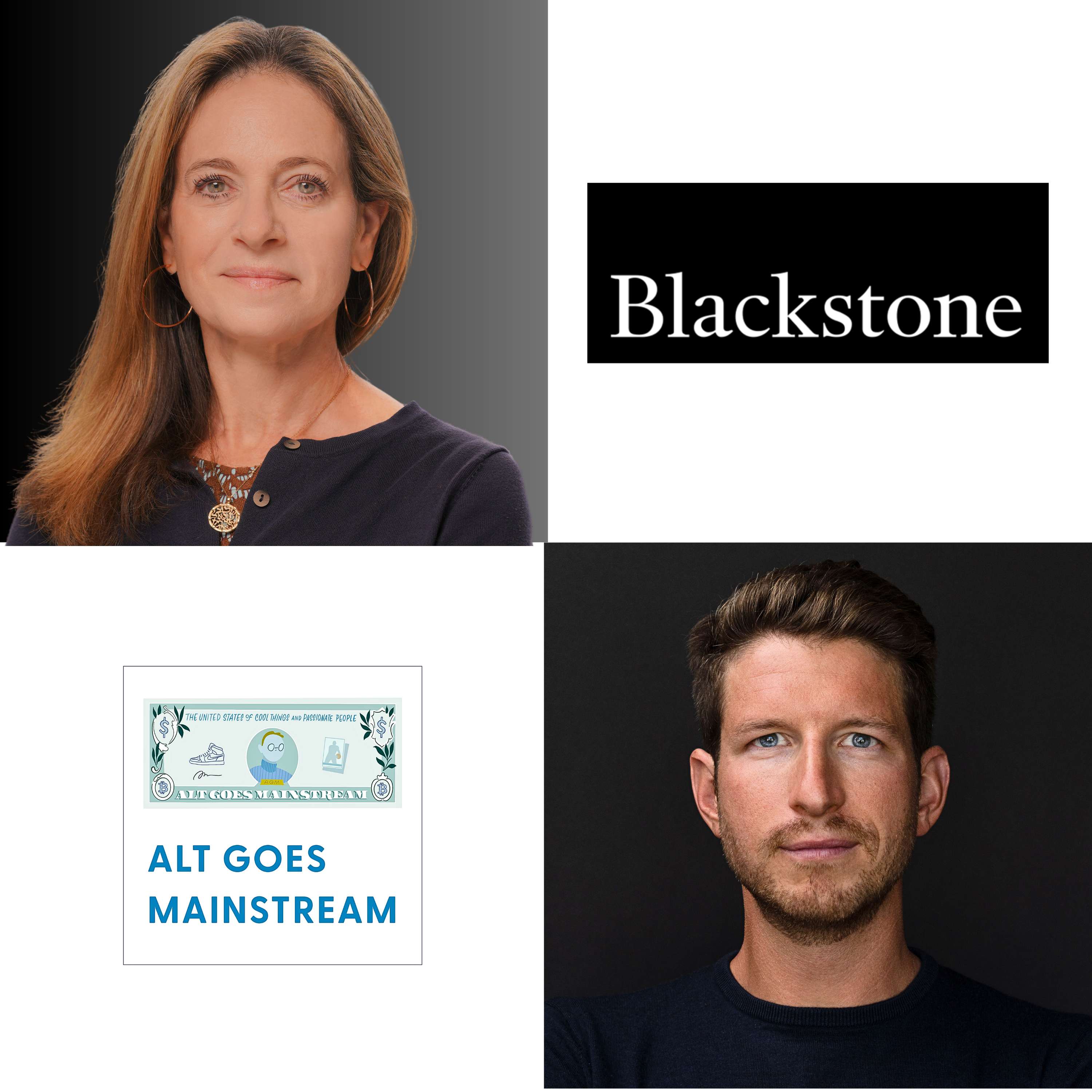
Alt Goes Mainstream: The Latest on Alternative Investments, WealthTech, & Private Markets
Blackstone's Joan Solotar - early innings for private markets? It's still spring training
00:43:41
Loading summary
Transcript70 lines
- [00:00]
Podcast Host / Announcer
This episode of the Altcos Mainstream Podcast is brought to you by Ultimus, a leading full service fund administrator for asset managers in private and public markets. As private markets continue to move into the mainstream, the industry requires infrastructure solutions that help funds and investors keep pace. Ultimas is a leading full service fund administrator for asset managers in both private and public markets, offering a wide range of capabilities across registered funds, private funds and public plans as well as outsourced middle office services delivering operational excellence, Ultimas helps firms manage the ever changing regulatory environment while meeting the needs of their institutional and retail investors. Ultimas provides comprehensive operational support and fund governance services to help managers successfully launch retail alternative products. Trusted by institutions, investment consultants, registered investment advisors, state governments and fund managers, Ultimas provides solutions for nearly every investment structure in the marketplace. Visit www.ultimusfundsolutions.com to learn more about Ultimas technology enhanced services and solutions or contact Altimus Executive Vice President of Business Development Gary Harris on email@gharrisultimasfundsolutions.com we thank Altimus for their support of Alts Going Mainstream.
- [01:18]
Podcast Chorus / Group
Everybody gets a piece we're going mainstream Everybody's gonna eat we're going mainstream all my family see see you on Mainstream we're going mainstream.
- [01:37]
Interviewer / Podcast Host
From Wall street to Melrose Avenue, we're going mainstream Venture capitalists to athletes to creators to the person who has collected.
- [01:48]
Podcast Chorus / Group
Trading cards, we're going mainstream. In a collision of culture and finance, we're going mainstream.
- [01:56]
Interviewer / Podcast Host
Welcome back to the Altgoes Mainstream Podcast. Today's episode features an industry leader who has pioneered working with the Wealth Channel. We talk with Joan Solitar, the global Head of Private Wealth Solutions at Blackstone, where she also serves on the firm's management committee. Joan has been responsible for leading Blackstone's impressive work in the Wealth Channel. She's grown the firm's footprint in private wealth to over $250 billion in assets, making the Wealth Channel a quarter of Blackstone's trillion dollars of aum. Blackstone Private Wealth Solutions mission is to bring institutional quality products across a broad spectrum of alternative asset classes to high net worth clients and their advisors. Before Joining Blackstone in 2007, Joan was head of Equity Research at Bank of America securities and a highly ranked institutional investor All Star Financial Services Analyst at Credit Suisse and Donaldson, Lufkin and Genret. She also serves on the Board of Directors at First Eagle Investment Management. Joan and I had a fascinating conversation about how to build and scale a business in the Wealth Channel we discussed how Blackstone built a 250 billion AUM business in the Wealth Channel, how Joan's background in equity research helped her as she built a business for the Wealth Channel. The early days of building Blackstone's private wealth solutions business, where, why and how private markets fit into a portfolio, how model portfolios will evolve, why private markets are no longer an alternative, and how to build an effective brand in asset management. Thanks, Joan, for coming on the show to share your wisdom and expertise on private markets and your work with the Wealth Channel.
- [03:23]
Podcast Chorus / Group
We're going mainstream.
- [03:27]
Interviewer / Podcast Host
Joan, welcome to the Alcos Mainstream podcast.
- [03:29]
Joan Solotar
Thanks. Great being here.
- [03:31]
Interviewer / Podcast Host
Pleasure to have you. You've done so much interesting work pre Blackstone, but also at Blackstone in really building the wealth channel within the firm as well as really the industry. So I'm excited for this conversation. We'd love to start with your background because I think you have a fascinating background and maybe it informs the world that you sit in today and your worldview as well.
- [03:56]
Joan Solotar
Started in equity research and originally I worked for savings and loan analyst. My background undergrad was MIS management Information system. So that was like coding and system design. And I was hired to build on a mainframe computer a merger model between savings and loans and banks. So that was my first foray. I had literally no idea what I was doing. So maybe lesson one is you can figure most things out, but it's scary. And then I went with the insurance analyst actually to DLJ and spent a lot of years there in research covering many different sectors on the financial institution side, ultimately brokerage and asset management. Took a lot of firms public, including your former employer, Goldman Sachs, and then went on to run research at bank of America and then landed at Blackstone. I joined the firm to help take it public and ran strategy in the different external relations groups. And now about nine years ago, I took on the role of building out the global private wealth business. So it's been a journey.
- [05:17]
Interviewer / Podcast Host
It has. How do you think your experience and background in something like equity research has helped you as you've had to build out a business in the wealth channel, build a brand, work with advisors, educate them. I imagine that was interesting background to bring this.
- [05:35]
Joan Solotar
I mean, I think equity research is fantastic background from the perspective of not just analytics, but market sense and the need to evaluate strategies company by company. You, over a period of time, I think develop a good sense for what's great and what's not great, observe different leadership styles and I think bringing all of that into strategic thinking, understanding how markets value Companies and businesses and the like, I think informs, I think, pretty well, a better way to build a business, a better way to manage a business, the importance of brand, the importance of culture. And I think we've been able to bring all of that to bear in our business.
- [06:29]
Interviewer / Podcast Host
I want to touch on those last things that you just said, because I think so much of that's important in building a business that you have at Blackstone. But it's also an interesting evolution. When you were tasked with building the wealth business, there really wasn't much happening in the wealth channel, save for working with large family offices, et cetera. I'd love for you to unpack what those early days of building the private wealth business was like.
- [06:55]
Joan Solotar
So I wasn't part of the private wealth business at the very beginning. I joined about four years into the journey. But I was part of the group that formulated the strategy, hired the initial team and the like. I would say the earliest days we were selling small pieces of the drawdown fund, so global private equity fund or global real estate fund through very few firms. And by very few, I mean one to start with that first year, I think we raised $200 million. And so the earliest days were a bit of a struggle because we did have great product. But I think there was skepticism, like why is Blackstone, that's growing so rapidly on the institutional side, interested in developing a private wealth business? And I think, unfortunately, advisors had experienced companies through the years coming with subpar product, charging exorbitant fees. So there was a healthy and natural skepticism. So it took a lot of meetings and a lot of education, a lot of really proving that we were here to stay and really wanted to present them with very high quality product, very high quality service. But that takes time, and I think we've now been time tested.
- [08:31]
Interviewer / Podcast Host
What did you have to do early on to really convince advisors that one, you were here to stay and that you wanted to dedicate resources, the firm, to working with the wealth channel? And then also, how did you convince them that they should be doing this?
- [08:49]
Joan Solotar
I think on the 1st, we were able to bring the whole firm to bear and we were able to allocate funds that were oversubscribed on the institutional side. So, for example, Blackstone's global real estate fund over subscribed by institutional investors, and yet we would still carve out capacity for our distribution partners and say to them, understand, we're bringing you our best funds, and irrespective of the fact that we could actually sell this very quickly on the institutional side, that built partnership. We were coming with a track record in really almost all areas that was very strong, that had navigated global financial crisis well, and trust in the Blackstone brand institutionally was understood. So from that perspective, I think we didn't have to prove the why as much as why. We were there because of what I just said, like if you're raising so much and you're over allocated already or over subscribed, why do you need us? But our thought was looking at markets and markets developing. It made no sense that institutional investors were increasing their allocations and benefiting. Or the simple premise, if you were a policeman or a fireman or a teacher, you had a fair amount of private investments in your pension fund. But if you were doing it on your own or just building your investment account, you didn't. And even today the allocations are so tiny, they're growing, but they're still very small.
- [10:45]
Interviewer / Podcast Host
On that point, how early are we? Just to give a sense of things, you've obviously grown. You mentioned the number 200 million was what you raised in the first year. For context, Blackstone I think is over 250 billion of capital in the wealth channel, over a trillion in total. But yet it still feels like we're very early. How early are we?
- [11:04]
Joan Solotar
So I like to say we're in spring training. I don't even think we're in early innings.
- [11:11]
Interviewer / Podcast Host
Why is that?
- [11:12]
Joan Solotar
Because even the advisors that are allocating and have been are allocating generally speaking to a pretty small part of their client base. And when I look at whether it's the US or Canada or Europe or Asia at wealth, even if you don't go down below a million dollars, let's say you're just talking about investors a million and above, they're still sub 5% in private investment. So it's really tiny.
- [11:48]
Interviewer / Podcast Host
What's the needle mover? Is the needle mover getting those clients million net worth and above from 5 to 10%? Or is it getting all the other clients and then maybe individuals in a more self directed way or through brokerage channels, the Schwab's, even the Robinhoods, et cetera, embedding alts into what they do. Is it getting them from zero to some percentage?
- [12:11]
Joan Solotar
Yes and yes and yes. It's really all of that for us. It's going to be continuing to develop new funds and continuing to expand the offering. It is working with new firms, it's working with new advisors. But then it's also really deepening the relationships that we already have around the world. And again, it's hard to find any firm that doesn't have very ambitious goals of driving this business forward. And why is that? If you're trying to build aum, the easiest way to do that is with assets that are sticky and that are compounding at higher rates. It's simple. Those will grow faster than a cash account.
- [13:00]
Interviewer / Podcast Host
I think that's a really interesting point that can't be missed when thinking about this because I think the evolution of wealth management is going in tandem with the evolution of private markets. Those things go hand in hand. But 10 years ago or so a lot of advisors seemed very reticent about the concept of illiquidity and what you just said. One, what has changed? And two, unpack this concept of liquidity and illiquidity.
- [13:27]
Joan Solotar
It's a great question and I don't want to overstate that. Advisors have really moved dramatically because a lot of advisors still are not allocating. But I think there's more understanding that you're able to match the liquidity of the asset within a structure and still provide some liquidity, especially with open ended funds. But there is, I think, a conflation between illiquidity and risk and the two are not the same. I would argue that owning core plus real estate is less risky than owning Russian equities. One is you could trade daily and the other you can't. So I think you have to separate. You have to think about liquidity and liquidity needs and then you want to think about return income, volatility and diversification in a portfolio. And I believe increasingly we're seeing greater sophistication around that. But we still have a very long way to go.
- [14:36]
Interviewer / Podcast Host
How do you educate people on that concept?
- [14:39]
Joan Solotar
We do it in a lot of different ways. So we continue to hold Blackstone universities in person regionally. We do a lot of online education, we've developed the essentials of private markets. We talk a lot about construction of portfolios. Increasingly that's actually a big part of the conversation. Asset allocation, how advisors should think about that, how CIOs might think about that. And at the end of the day it is the in person meetings where you're sitting down with an advisor and trying to understand what she or he is focused on, what their needs are and talking through how our investments, or even if they're not our investments, how privates can actually work in the portfolio. The other piece of it is if you're an advisor, you probably aren't going to talk about private investments with your client unless you're very comfortable. We'll also go with them in their client meetings. And once they hear one of our folks talking five, six times, there's just a much greater level of comfort on that point.
- [15:56]
Interviewer / Podcast Host
Are a lot of clients demanding that advisors have the ability to allocate to private markets, or is it really more the advisors who are saying, you know what, this should be the way we should think about constructing portfolios. It should be part of a portfolio.
- [16:12]
Joan Solotar
There certainly are some investors who are inquiring, but I think it's actually been a tool on the part of advisors to draw in new clients. A very experienced advisor made the point that when ETFs were first becoming more available, popular, he utilized those to win clients because they're more tax efficient. And his one liner was, is it on purpose that your advisor doesn't have any ETFs in your portfolio? And today he does the same with private investments. Is it on purpose that your advisor has zero private investments in your portfolio as a way to win new clients? So I do think it's a great tool to be able to do that. And because of the very low penetration rates still sub 5%, it remains a big opportunity.
- [17:09]
Interviewer / Podcast Host
It's interesting to think about what really gets advisors to shift and clients to shift on the concept of portfolio construction. Two things there. One, are advisors really thinking about portfolio construction differently based on some of the things you just said? And two, is there anything around the branding of the concept of alternatives? I find it interesting that feels like we're moving from alternatives to private markets because just the connotation of what alternatives is, it's slice of the pie. It's like an alternative to something. How much of those things are prevalent in this whole portfolio construction conversation?
- [17:44]
Joan Solotar
I think it's really early days in the discussion around alternatives or privates in portfolio construction. And in part perhaps because the tools available are so rudimentary, most of the portfolio construction tools do not incorporate private investments well. And so I just think advisors haven't had much access to it. Interestingly, on the naming of the asset, the groups of asset classes as alternatives, we thought long and hard when the firm first went public for something other than alternative because of your point, it just makes it sound like other and we couldn't come up with anything. But I would say today what we tried to speak to is if you're only investing in stocks and bonds and publics, whether it's real estate or equity, meaning publicly traded REITs or publicly traded equities, and you're addressing such a Narrow slice of the potential investment pie. As we know, many more companies are private than public. Around 90% of even like pretty meaningfully sized companies. And the same in commercial real estate, around 90% is private. So it is the biggest part of the investment pie that most individuals aren't yet accessing. Now, I believe at the end of the day, what does a financial advisor want when thinking about portfolio construction? If it's a growth oriented portfolio, they want faster growth with less volatility. And these assets work very well in that portfolio. You want more income. You can get higher income over time from private credit than you can from fixed income. Higher returns from private equity than public over time, higher returns from private real estate than public infrastructure. Kind of on and on. And I don't think that will be lost on anyone. But you need the proper technology tools and frameworks for folks to really understand it and make it easy.
- [20:10]
Interviewer / Podcast Host
Maybe the new branding for alternatives is that there is no alternative. There should be no alternative. Based on what you're saying, you have to be doing it. So as we think about the evolution of this space, you say there has to be tools that make it easy. It seems like we're at the dawn of the concept of models or ways to make it very easy for plug and play for advisors to allocate to alts private markets. Is there things that are happening on the model side that you're seeing that will make it easier for advisors to say, okay, I should just be doing alt, I need to make it easy? Because I think that also gets to another really important point related to this, which is how much of this is around just ease of use and access versus portfolio construction picking.
- [20:55]
Joan Solotar
So I'm going to answer the second first. I think ease of use is it. If you were to tell me that tomorrow we will wake up and it will be as easy to buy a private fund as it is a stock or bond. Allocations would go through the roof. That's the simple truth. Buying and selling and reporting and incorporating them into models, all of that. I think we are probably not even in spring training when it comes to private investments in model portfolios, but there is a desire for those to be made available and to be created. And so I think there are a lot of folks working on it, whether it's the asset manager or distribution firms or technology companies. I think you will have a number of solutions and I think they will evolve over a long period of time and they'll get more robust. These two probably will be pretty rudimentary at the beginning and then they will become more sophisticated.
- [22:05]
Interviewer / Podcast Host
How do you think the model space will unfold? Is it the type of thing where people will pick and choose the different components of the model that they want from a fund perspective, or will they just go to a firm? I think we also saw this in the institutional side a little bit, that once an institutional allocator decided to work with a brand, they would probably not just invest with one fund, they would invest with multiple funds across various strategies. Because you vetted the brand, you trust the brand. How do you think about that concept in the model space?
- [22:31]
Joan Solotar
I think it's very similar, I like to say about advisors working with Blackstone. The more they do, the more they do. If you have a good experience with a firm and with a fund, you're more likely to allocate an additional fund. And we've seen that as we've launched new products, we have a lot of advisors who go from one to the next because it's of course the table stakes are you need to provide a good performance. Right. But especially as it relates to alternative funds and private funds, you also need to be able to provide service and support. And that can't be underestimated. And that's transparency. It's a lot of communication. It's support around investor services and the like. I think it's that total package. And once you work with a firm that offers something superior, which is both product and experience, you just want to keep going back. It's probably no different than a restaurant experience or anything else. I think oftentimes that what makes companies great, you think about the innovators, whether it's a technology company or any other company, it's because they've either transformed or created a completely new product or they've transformed the experience. And I believe we have taken a lead in transforming the experience of how advisors have been able to access private investments.
- [24:11]
Interviewer / Podcast Host
On that point, what did you do differently to create a differentiated experience?
- [24:17]
Joan Solotar
I think it's thinking about every single point of interaction and what could we do to make it better? Great. Our people are very knowledgeable about all of the asset classes with real depth. So if you're talking to them about our non traded reit, they'll be able to do a deep dive on what's in the portfolio. When there's a new transaction or a news story, they are very fast to get out and talk through what's happening and how that fits in the portfolio. And when inevitably you hit some kind of air pocket, whether it's Covid or something Else, rather than hiding under the table, you do the opposite. You really lean in and you're there for your clients. When you do that often enough and they see how you behave during a cycle, you are differentiated. I think the second piece for us is this is a business that we have been building for 13 years, that the firm prioritized as perhaps its most important strategic initiative, where we've had not just the capital to build the business, but the time and attention of the most senior people. If you are an advisor and you see that Steve Schwarzman is taking the time to meet with you and genuinely cares about what you need and is listening and responding in kind, whether it's product, service, what could we be doing better? That means a lot to people. I think I mentioned earlier the cynicism initially. Why would blacks don't do that? Well, I think today everyone understands because they see John Gray and they see Steve Schwarzman and the most senior people from around the firm giving them an awful lot of time and attention. And what that says to everyone is you are important and we are bringing everything to bear to make your experience better. As you know, it doesn't matter the sector. There's real differentiation in quality. It's not just the brand, but that's super important. But it's the product that you're delivering. And especially on the private side, the differentiation in performance between top and bottom quartile is much wider than it is on the public side. So who you're giving your money to really matters. Just to say I'm interested in private equity or private credit or private real estate or infrastructure, that's fine. But what we own in our real estate portfolio is very different from what anyone else owns.
- [27:17]
Interviewer / Podcast Host
Seeing is believing. That's where my mind goes when you say that the firm commitment so important. I think that relates to another really interesting aspect of all of this in the wealth channel is it's actually a very complex sale because you have to sell to the advisor, but then the advisor has to sell to the end client. Even if you're really selling the advisor and they're making the decision, the end client has to understand it and be comfortable with it. As you said earlier, how do you think about that concept in terms of building the business? I think there's component of brand that you mentioned before too, which is so important to everything that you're doing. And how do you think about that just in the context of building the wealth business? It's not just having an IR person and talking to an investor.
- [27:59]
Joan Solotar
Yeah, it's Harder, it takes longer, it's more fragmented. And you have to recognize that you don't just have a single meeting and you're done. It takes time to educate on the asset class, on the structure, how does liquidity work, and making sure that the advisor really understands all of that and making sure that they're knowledgeable enough to take the step that you're talking about, which is going to their clients and getting their clients comfortable with it. So it's a much longer sales process that maybe shortens over time. I do think these will be basic building blocks over time. I don't know what that timeframe is, but it's happening. And I was looking back, we had Blackstone Investor Day in the fall of 2018, and at that time our business was $58 billion. And I had said I thought it could be $250 billion in 10 years. And we've obviously now hit that faster, which is always kind of nice. But back then, when I put that number out, there was so much disbelief, like, how are you going to go from 58 to 250 in 10 years? But now when I say I think we can go from 250 to 500 or 750, people shrug like, oh yeah, you could do that. So we're easy to do it. And that's only because they recognize that this adoption cycle is happening, that advisors want to be more educated. You know, it's a longer cycle, but this is a massive, massive market.
- [29:53]
Interviewer / Podcast Host
How much do you think brand and marketing help to shorten that cycle?
- [29:59]
Joan Solotar
I think those are important components because when you are entrusting your investments with someone, of course performance is key, but trust is probably even more important. And if you can invest with, in our case, the reference institution and alternatives, where the biggest manager institutionally, well, that gives you some confidence as an individual. So I do think the safe pair of hands, less volatility in outcomes is key on the advertising and marketing front. Absolutely. A lot of these firms will be less well known because they haven't been as big a part of the discussion. So marketing, advertising, I think, are important.
- [30:58]
Interviewer / Podcast Host
I've kind of thought about the marriage of marketing and sales as kind of like you need your boots on the ground, the salespeople meeting with the advisors all the time. But then you need kind of the aerial support from marketing, and you can't really do one without the other.
- [31:13]
Joan Solotar
So true. And I think they should be integrated functions. I don't think you can have a marketing team that is disconnected from the salesforce. It has to be fully integrated because they have to understand what's happening out in the field and everywhere in the world, and that then informs what their approach is.
- [31:38]
Interviewer / Podcast Host
On that point too. We talked about education of the client being so important, but education of the team and the people who are educating the advisors and the end clients. How do you go about doing that?
- [31:54]
Joan Solotar
It is a lot of work. We've created a chief learning office within our business because one, we're growing, and so we're onboarding lots of folks. But we are continually educating on every asset class, making sure there's pitch training, that folks are really understanding what they're talking about. But then there's also the apprenticeship part of training, and it doesn't always work this way. But we hire folks who are initially making calls to advisors who are new and they're regionally paired with teams out in the field and also others on the desk who are more experienced. We sit in an open area so everyone can hear what everyone else is saying. They're hearing how the more experienced folks on the desk are speaking to the asset classes and the funds or a particular issue, answering questions, and they learn and they get a lot of feedback in turn. But we don't even allow them to do that till they're very well trained and they have to be able to talk about the firm and our business and the asset classes and the funds. So I think it's super exciting when someone joins. But the common phrase is, I feel like I'm drinking from a fire hose. That's what we hear.
- [33:23]
Interviewer / Podcast Host
They have to go through their own Blackstone University, too.
- [33:25]
Joan Solotar
Exactly. Oh, yeah. And over and over again. So the beauty of a perpetual fund is that it's forever.
- [33:32]
Interviewer / Podcast Host
Yeah. Also an infinite responsibility.
- [33:34]
Joan Solotar
Exactly.
- [33:34]
Interviewer / Podcast Host
As Rob Collins from Partners Group said that on the podcast.
- [33:37]
Podcast Host / Announcer
He did.
- [33:38]
Interviewer / Podcast Host
Which I think. But it's an important concept.
- [33:40]
Joan Solotar
Right.
- [33:40]
Interviewer / Podcast Host
Related to that too. So you said we're in spring training when it comes to adoption of alts for advisors, we're in batting practice. When it comes to adoption of model.
- [33:51]
Joan Solotar
Portfolios like that, I'm stealing that from you.
- [33:53]
Interviewer / Podcast Host
Where are we in terms of education of sales forces and marketing teams and people who would be in the private markets industry?
- [34:05]
Joan Solotar
On the wealth side, I think we're at. I can only speak to our team because we've been at it for so long and we have real stability of our employee group, I would say, for our employees. And we're towards the end of the game. I don't know. We'll continue to evolve, of course. And There will always be new asset classes and new things to learn, but I think we've gotten the training down to a science on how to onboard people and integrate them and make sure that we don't put them out there until they are very ready. And it's again, it's a constant drip of information. We have people from our different investing businesses coming to our group on a weekly basis talking about what's going on. We have a global meeting ourselves where we hear from our investment strategists. So we get a good feel for the macro in the moment and the firm since COVID Every Monday morning kicks off the week. Actually, I should say Monday morning in New York. It's not quite the morning other places in the world, but we kick off with BXTV and we center around what's happening in the environment, big initiatives, deals. We typically do a deep dive on one area or a transaction or something like that. And that unifies everyone in terms of knowledge. And then each group has its own trainings. Every Monday, our salesforce has its own meeting, different groups.
- [35:51]
Interviewer / Podcast Host
I think you're hitting on such an important point of all of this too, which is hard to appreciate unless you keep spending time in the space, which is that people need to just know who the players are. If you know who the players are, you know the history. Blackstone's only 40 years old and yet a trillion of aum. I think when people, particularly on the wealth side, start to understand the players and their histories, and I'm sure same with doing that internally, building a culture that's same with any nation state. Right? Like doing that. But that ends up being really important in terms of creating culture and history that you can then share and show people who you are. On the branding side, I think that also relates to something that you've done extremely well, which I want to touch on. And it's kind of fitting because we met sitting next to each other at a breakfast. We were both tables next to each other. You're going to go see the Solstice in the west of England. And I bring that up because I think it actually relates to something that Blackstone does so well and is so core to some of the success on the marketing side, which is you've humanized people on your team, made them visible so people know who they are. I'd love to hear your thoughts on that and how that became part of the strategy.
- [37:02]
Joan Solotar
I think we genuinely have a culture of nice people who are collaborative and who are accessible, and we want our clients to understand that we're people, just like their people. We're not intimidating humans. They should feel comfortable asking whatever questions they have, and therefore you want to put forth that that's real. And whether it's John Gray posting videos of himself running wherever he's traveling, or I do share on social what's happening, not just with our product and our funds, but I provide a window into what's happening in my life, including. That was really an amazing, amazing morning at Stonehenge, watching Sunrise, Summer Solstice. It was incredible. I highly recommend it for anyone, but I think whether it's an advisor or an end client or someone in the home office feeling like they just know you as a person, you've been able to establish a connection. So I travel a lot, meet with a lot of people, and it is frequent that folks will say, hey, I saw on LinkedIn that you did this or did that, or I feel like I know you. I actually, I was in London earlier this week, which is kind of hard to believe. I'm here back in New York, but I ran into a former colleague who I haven't seen, I'm sure, in like 10 years or so, and he said, oh, I feel like I'm totally up to date on what's happening with you, because we're connected on LinkedIn. And that's great. I love that.
- [38:57]
Interviewer / Podcast Host
I think that's so important to capture kind of the humanization of this industry and help people understand that. I think that also relates to the company side as well. The holiday video, a lot of people saw it.
- [39:10]
Joan Solotar
It will be released Thursday. And I am. It is more absurd than last year. That's what I'm told. I only know my little slice of it. I have not seen anything woven together. But if they're saying it's more absurd, it will probably be.
- [39:28]
Interviewer / Podcast Host
I'm looking forward to seeing it. And I know a lot of people made fun of it. I for one, thought it was brilliant. And here's why. Because you were not only humanizing the people behind the process, but you were also showing the companies that you invested in, people may not know that you invested in Bumble. There was also the picture of shipping containers. There was data centers, like all of these things that are powering the economy that people touch and feel. If they know that that's something that you're a part of, I think that changes how people might think about things. And I think that's such an important aspect of things that, particularly as private markets firms or alternative asset managers become an increasingly important part of Financial services. So I imagine you've thought about that aspect of things too.
- [40:13]
Joan Solotar
Yeah, it's super interesting. I mean, especially when we are in our funds acquiring companies that are consumer facing. Folks love it. And if you are an investor in one of those funds and you feel like, oh, I own a little piece of tropical smoothie or seven brew, it's fun. And so yeah, I would say that's an important element of it. When we host our Blackstone Universities, we do highlight products, so Rover, which I think a lot of folks know, believe it or not, we did have rolls of poop bags at our last gathering and I have to say it was one of the most popular products that the advisors kind of went towards.
- [41:04]
Interviewer / Podcast Host
That says it all right there. So I want to wrap this up with a question that I ask every guest. I think the past has been interesting and you probably have made or thought about really interesting investments in the past. But I think the world is changing so much. I'd love to hear what your going forward, your favorite or most interesting alternative investment is in your mind.
- [41:27]
Joan Solotar
Oh, wow. So the theme I'm most interested in is AI. And I don't mean because you can invest in Nvidia and all of that, but it's the whole ecosystem around it. And I'm fascinated by just the acceleration in data usage and what that implies, the need for energy transition and more natural gas, frankly, better battery storage, data centers, all these things. We've chosen to invest in the picks and shovels rather than the tech companies per se for the most part. And to me it's the most exciting secular trend and industry that I have witnessed really since the origins of the Internet. I wasn't there when they invented electricity. That probably would have been exciting too. But I think this is transformational. I think it is one in a generation and it's happening so rapidly and I think there are just going to be a lot of different ways to invest. Now of course you have to be conscious of going in price for whatever you're paying, but we tend to like the areas that where there's just more demand than supply. So that could be on the power side or the data center side or some of the other tangential areas that I mentioned.
- [42:56]
Interviewer / Podcast Host
I think what's so fascinating about that description is that it shows the breadth and scale of a platform like Blackstone. Investing in AI is not just one thing or in one way.
- [43:06]
Joan Solotar
No. And it cuts across asset classes, whether it's credit, real estate, infrastructure, private equity, the intellectual capital shared and we go.
- [43:16]
Interviewer / Podcast Host
All in I'm looking forward to seeing more about that. Thanks John for coming on the podcast. This was great.
- [43:22]
Joan Solotar
Thank you for having me.
- [43:25]
Interviewer / Podcast Host
Thanks for listening to this episode of Alt Goes Mainstream. I hope you enjoyed it. You can read more about Alts at my substack, altgoes mainstream.substack.com Thanks a lot and have a great day.
- [43:36]
Podcast Chorus / Group
We're going mainstream.