← Alt Goes Mainstream: The Latest on Alternative Investments, WealthTech, & Private Markets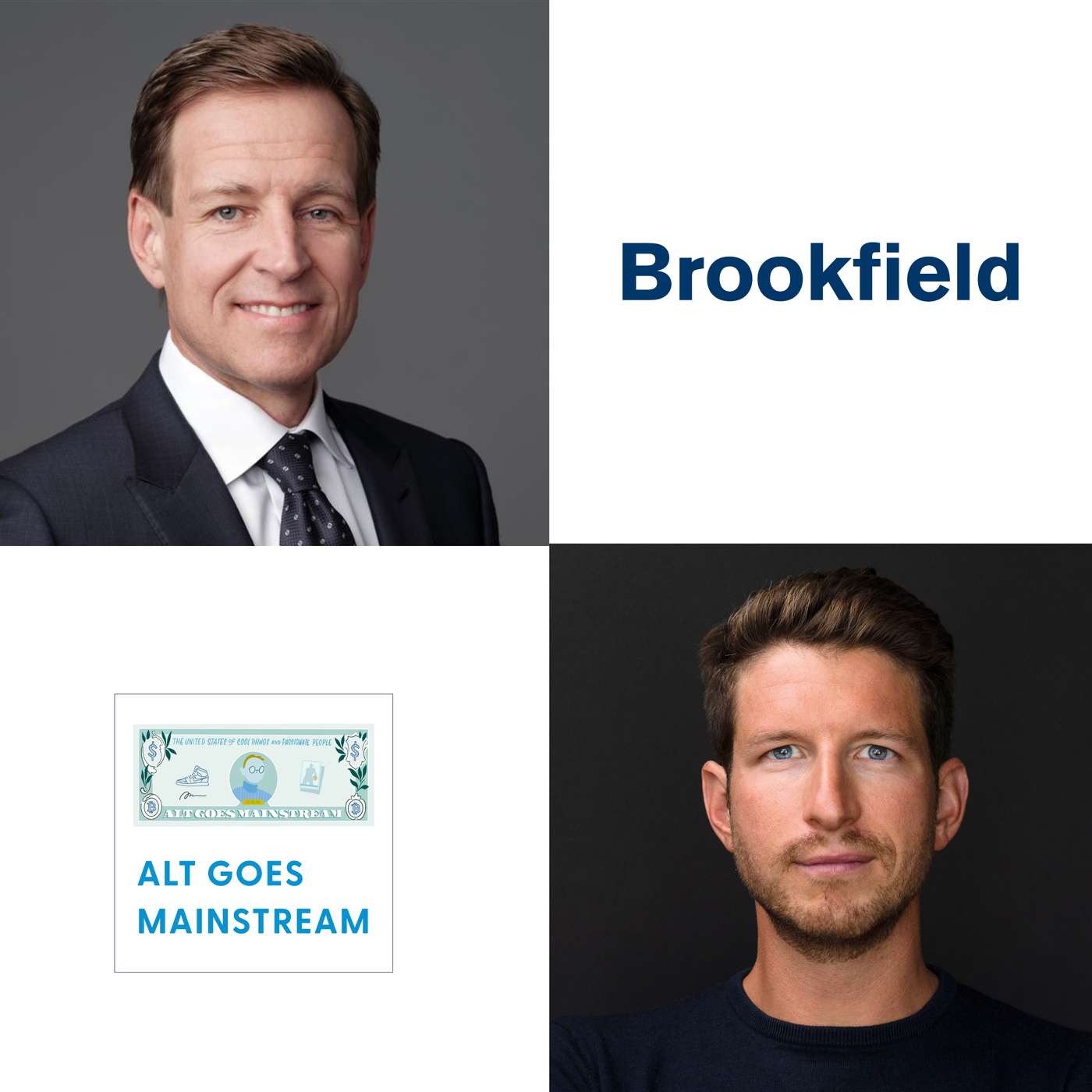
Alt Goes Mainstream: The Latest on Alternative Investments, WealthTech, & Private Markets
Brookfield Asset Management's David Nowak - "earn your seat" private equity
00:54:55
Loading summary
Transcript71 lines
- [00:00]
David Nowak
I think the greatest thing about this job is every day is different and you do learn something new every day. You have to have this never ending restlessness of intellectual curiosity to do this job.
- [00:14]
Podcast Host - Intro/Outro Voice
Everybody gets a piece we're going mainstream Everybody's gonna eat we're going mainstream all my family sing See you on mainstream we're going mainstre From Wall street to
- [00:34]
Narrator/Producer
Melrose Avenue, venture capitalists to athletes to creators to the person who has collected trading cards in a collision of culture
- [00:48]
Podcast Host - Intro/Outro Voice
and finance, we're going mainstream.
- [00:51]
Narrator/Producer
This episode of Alt Goes Mainstream is brought to you by Ultimus, the full service fund administrator and transfer agent powering asset managers in private and public markets. As alts go mainstream, you need real expertise to handle complex fund structures, connect with key distribution partners, and handle sophisticated compliance reporting and transparency demands. That's Altagus High Tech High Touch Solutions for over 450 clients and 2,500 funds with over 775 billion in assets under administration. Backed by an expert team of over 1200 employees, they place client service at the core of their business, helping you navigate complexity during your fund structuring or launch, and then supporting you through every stage of growth. Whether you're already in the market or thinking about entering private wealth. You can trust their team's deep expertise in retail alternatives to help you reach your goals. Learn more at altimusfundsolutions.com or email infoultimisfundsolutions.com welcome back to the AltGoes Mainstream Podcast. Today's episode unpacks how to build a private equity firm within one of the largest and most unique investment platforms in private markets. We sat down in Brookfield Asset Management's Brookfield Place office in downtown New York with David Nowak, the President of Brookfield's private equity group. With a view of Lady Liberty in the background, David and I dove into a conversation about the private equity industry, Brookfield's approach to private equity, and how the firm's culture and DNA shapes how they work with portfolio companies and LPs. David has overall responsibility for the private equity group's North American business. He also serves as Chief Executive Officer of Brookfield Private Equity Fund. He joined Brookfield in 2011 and he holds an MBA from Duke University, where
- [02:32]
Podcast Host/Interviewer
he graduated as a Foqua Scholar and
- [02:35]
Narrator/Producer
a Bachelor of Laws degree from the University of Western Ontario. David and I had a fascinating conversation about private equity and the Brookfield platform. We covered how Brookfield's owner operator alignment informs, how they approach private equity investing and their partnerships with portfolio companies how the industry has gone from roll your dice private equity to roll up your sleeves private equity why and how the firm has a blue collar work ethic. The firm's flat structure and a culture of collective effort, humility and earning your seat. And why Brookfield's private equity business focuses
- [03:07]
Podcast Host/Interviewer
on complex carve outs.
- [03:09]
Narrator/Producer
How the firm approaches value creation and the importance of understanding value creation levers before they even make an investment. And why private equity is an apprenticeship business and how AI might impact the next generation of private equity leaders. Thanks, David, for sharing your expertise, wisdom and passion for private equity through company and culture building.
- [03:27]
Podcast Host - Intro/Outro Voice
We're going mainstream.
- [03:30]
Podcast Host/Interviewer
David, welcome to the Elkos Mainstream podcast.
- [03:32]
David Nowak
Thank you.
- [03:33]
Podcast Host/Interviewer
Pleasure to have you. Great to be in one of Brookfield buildings. We'll get into all the different aspects of Brookfield as a platform, the private equity business that you've built, those two things are woven together. But Brookfield Place probably a great place to start because it gets, I think to some extent to the heritage of the firm, which I think has informed a lot of how you as a business operate.
- [03:56]
David Nowak
I just want to clarify one thing you said the business you built. I want to be careful in making sure the emphasis is on what we have built. There's a real emphasis within our firm of the collective effort. And one of the things culturally that's important to the firm is you don't hear a lot of people say, I. It's always about we, you know, what can we do? And there's a real collaborative culture to what we do. So I apologize, but I just want to make sure. I appreciate that.
- [04:23]
Podcast Host/Interviewer
I'd love to dig into that further because I do think that a lot of firms are built in a certain way and their DNA informs who they are. It is an expression of their culture and values. That's an expression of their investment culture. And that comes out in terms of how they both invest and how they partner with both companies as well as their LPs. So I'd love for you to unpack that a bit further.
- [04:48]
David Nowak
I will say, I think one of the real secrets and the joys to being here, but the secret to the success of the firm has been the leadership by example and then the transitioning of succession through the firm. And if you go back to Jack Cockwell, who many people know as instrumental in building the firm, he then taps Bruce Flatt to be the leader. Bruce has now tapped Conor. And then along the way, Bruce had great support from Brian Lawson, George Myhal, Sam Pollack, Cyrus Madden, Brian Kingston. These were all fantastic leaders who led by example. And there were some common traits among all of these leaders that I think are still really important today. Work ethic would be one. But the word that I think everybody would use to describe them and that they would probably want to be described with is humility. There's a real emphasis within the firm of staying humble and not getting caught up in sort of, I'll say, the trappings of life and just coming to work every day. We have an expression right here, just earn your seed. And I think that's been really a part of the DNA of the firm. And we're in this period now where there has been some succession going on. So Cyrus Madden, who built the private equity, has tapped Anuj Aranjan as the CEO. Anuj has been in the seat for a little bit, but it was sort of a long, carefully thought out passing of the baton. And Anuj been in the firm for 20 odd years. So he grew up here and he has those characteristics as well. And it's something that we try to continue to pass on to the younger people.
- [06:22]
Podcast Host/Interviewer
I think earn your seat is a great segue to how Brookfield as a business has operated in some senses. So it was an owner operator, right? So it owned assets, as far as I understand, a large portion of the firm's capital or balance sheet invests into the funds. What does that mean for you as a business builder and an investor, along with your colleagues, of how you actually think about building the private equity practice?
- [06:54]
David Nowak
The alignment is exceptional. So if you go back in time, you sort of started the conversation about the beginnings of Brookfield. And if you, if you go back to early 2000, when we made the decision to go into the asset management business, prior to that, we had just invested on our own account, or we were think of it as merchant bank and investment investing on our own balance sheet. The decision was made in early 2000 to take on third party capital and start to invest on behalf of clients. But one of the critical components in how we structured that is that we would still maintain being the largest investor. And so if you look at our business, for example, in private equity, and you look at our closed end fund offerings, we, Brookfield, are the largest investor and generally about 25, 30% in each of our strategies. That alignment's exceptional. And what it means is it's our money too, along with our clients. We're not just investing for a management fee and carry. It's our capital that is alongside our clients, its capital. And so when things don't Go right. And the nature of what we do is there is risk. That's how you get equity returns. We tend to get our shoulder behind it and we really try and figure it out and we lean in and we try and get it on the right path. And similarly, when things do go well, we don't just accept that, well, this is a 3x multiple of capital. We've done our job. We try and we keep going. We try and get it to 4, we try and get it to 5. So the alignment is great. We had an investment as an example, max bathtub and spa, which it is as it sounds, it made bathtubs and spas and shower kits. We invested it just before the global financial crisis. So you know what happened then? Housing starts fall off a cliff. Those are real strong headwinds. Most people, in our instance, would probably have cut costs and just try and generate cash to sort of tread water, or they would have just walked away from the investment entirely. We did something different. We actually invested in the business and developed new products. And the reason for that was we were confident that housing would come back. We didn't know when, we didn't know what the slope of the curve would look like, but we knew housing would come back and we knew all of our competitors would not have invested back in the business. And so what happened was, when that recovery eventually came, we were able to actually take market share. And that was a function of investment, probably a zero. In any other private equity group, when it's your money, zeros really hurt. And we muscled our way. So it's a good example of where I think that alignment is really beneficial.
- [09:32]
Podcast Host/Interviewer
Two things come to mind there. I want to touch on each of those. So one is, in that example, you talk about the fact that you get your shoulder behind these companies and try to make things work. Your colleague Anuj said this recently, a quote that I think is pretty instructive of today's private equity landscape. Going from roll the dice private equity to roll up your sleeves private equity. I'd love for you to get into that because I think that is so instructive to kind of understand what it means to help these companies operationally and what it means for your process in terms of how you do that.
- [10:11]
David Nowak
I think the context of the comment that Anuj made was in and around the fact that a lot of the private equity landscape people have benefited from unbelievably rates and the plentiful availability of debt. And so it's financial engineering, and we've never done that. Our approach has always been to find businesses where you can drive returns through better operating improvements. And that goes back to that owner operator mindset that you reference. And so there really is a bifurcation happening in the private equity space. A lot of people ask you questions like, are the best days behind us? And our answer is, we don't believe so. We believe that people that have depended on financial engineering, that's a very, very difficult, difficult way turn your returns in the next sort of 5 to 10 years of this vintage. And because I think there'll be a thinning out generally in the private equity space, so there's a real pride around here of the roll up your sleeves kind of mindset. I think Anuj was capturing the financial engineering part, but also the fact that we like to lean in and we like to be helpful. Our mindset is to lend arms and legs. So if you're trying to stand up, a lot of stuff we do is corporate carve out. So if you're trying to stand up a finance group, we help, we put people in and get the finance function stood up. So it's a different approach. It's not for everybody. Just to highlight the point, the makeup of the skill sets within our team is like typical private equity. We have investment bankers, accountants, management consultants, we have lawyers. But the missing component that we have that most people don't have is we have men and women who grew up in industry. They've been COOs, CEOs, they run businesses. I've never run a business. And so that lens that comes in, that training and that thought processing of how they think is much different than a finance M and a professional. So we have people that come with that lens. The other thing we do is we put our young people into businesses on secondment. It's actually a requirement to advance up to the senior vice president level. And that is a phenomenal way to train young people. Because people that work in private equity generally are high achieving, very financially literate people. They've gone to good schools, they've worked at all the right banks, accounting firms. Everything has to reconcile to perfection. But that's not the reality of when you're operating a business. And so you drop them in a business and all of a sudden they realize, well, this is how the business really works. And we think it makes them a better investor. We think when they come back, they also think a bit more like an operator. And I think it helps with contributing to a better underwrite.
- [12:53]
Podcast Host/Interviewer
Unpack that a little bit more. How does it contribute to a Better underwriting.
- [12:58]
David Nowak
Look, the reality is in an operating business, the depth of talent within an operating team is not as deep as if you have a banker who worked at Goldman Sachs, Morgan Stanley. They're surrounded by people who care a lot, who work hard. And you go into an operating company and you look around and there's a lot of competent people, there's people who don't care. And so they're also operating on imperfect information. So most people that come up through the private equity career path, they're used to getting all the right data, exhausting the information gathering and coming to a well formed decision. You work in an operating company, sometimes you have imperfect information, sometimes you have 70, 80% of the information. But you need to make a decision. And so I think that they have an appreciation that what looks easy on spreadsheet might actually translate to being difficult in reality. And so it's that theoretical and that practical analysis.
- [13:58]
Podcast Host/Interviewer
There's another thing I want to touch on in relation to what you just talked about as well as the example with the bathtub business. So what you're getting at is the platform of Brookfield in terms of how you help companies. Many people, when they think of Brookfield to some extent, they think of real estate. I think it's a really interesting dimension of looking at the example you gave on the private equity side with the bathtub business. Where my mind went with that is because you understood the real estate market. Were you able to get insights into how people were thinking about buying bathtubs, how the housing market or real estate market would be going forward? And we were able to develop conviction in ways that other investors might not because of whether it could be real estate, could be infrastructure, the broad based platform. What does that do for you as a business?
- [14:52]
David Nowak
It is incredibly valuable. It's a real significant contributor to the success across the firm. Let me explain what I mean by that. And some of this ties back into the point about humility. There's an awareness that there's a lot of really smart people with a lot of capital trying to do this job. And one of the things that we are very mindful of is you need a competitive advantage. Our competitive advantage in our private equity group is we sit within a trillion dollars of AUM ecosystem with subject matter experts in infrastructure, real estate, renewable power, energy, transition credit. We have people who are subject matter experts that really know their space well. And so when we look at an opportunity, we always ask ourselves in the private equity group, are we a logical owner of this business and can we drive Insights or get information advantages that other people may not see. Example would be Westinghouse. Westinghouse services nuclear power facilities. It's a great business. It has high barriers to entry, recurring revenue, but people didn't want to touch it because it had the word nuclear around it. And what we did in the very first pass of looking at that investment, in considering it, we went to our colleagues in the power group who know the regional power markets. And we said in these markets where there's a nuclear facility, that Westinghouse services, if you pulled that capacity out of that market, could they meet the demands in that market? And what we found is they couldn't. And so we took a perspective that all the sort of political rhetoric around people saying, well, they're going to retire nukes was just political rhetoric because once you pull it out and you can't provide power in a hot summer day or a cold winter day, people are going to revert and they're going to put power back into the grid. And so we understood that, I think better than most people.
- [16:47]
Podcast Host/Interviewer
So on the surface, I think a lot of people would say these broad based platforms with tons of different exposures across different asset classes and different markets would help them. But all these strategies or asset classes and businesses within those asset classes are they're busy doing their own thing. I want to get one layer deeper of how do you actually harmonize each of those groups together and call them, tap them for information in a way where they're going to spend their time helping you and vice versa, where there's actually a ton of benefit from having this collective platform.
- [17:28]
David Nowak
There's three reasons it works. One is the leadership. It's just you see all of the leaders across all of the different asset classes collaborating like endlessly. We have this open concept office. So people don't have offices, including the most senior people, the CEO. And we all sit out in the open and I describe it as, it's very much like an undergraduate library. People working at tables and talking amongst whatnot. So you actually see people from real estate talking to people in private equity, talking to people in infrastructure. And so we lead by example is number one. Number two is a self interest point. The third is more of a practical one. I recognize that for me to be good at investing and successful and achieving our investment returns, I actually need the help of my colleagues, the renewable power folks. We needed their help on Westinghouse. So in order for that to work, it has to be a reciprocal relationship. So when they call and they ask a question, they need help. You can't ignore it because there's this mutual understanding that you'll help one another and it'll help them make better investment decisions. And you know what that does. The senior folks in the firm observe who actually collaborates and who has that mindset of sharing information. And there is a benefit too that people tend to rise through the organization if they're seen to be a builder of the firm.
- [18:56]
Podcast Host/Interviewer
I want to touch on the point about alignment of incentives and relate that back to the DNA of the firm. How much do you think the fact that the business was owner operator from the outset and it's the firm's capital investing alongside of its LPs and then you combine that with the fact that Brookfield is a business, both BAM and Brookfield Corp. Have had tremendous run as a business. And compounding the value of the stock, but also just the enterprise value itself. How do you think that plays into how you think about investing in the private equity business and thinking for the long term as you partner with these firms? Do you have a slightly different mindset or time horizon as you think about investing and underwriting these businesses?
- [19:46]
David Nowak
We're not fast money. We're not a sort of invest and flip type place. We realize that it's hard work to earn the repeatable returns. It's definitely something that has a recurring aspect to it if you stick to what you've done historically. We have a playbook where we sort of pull uncertain levers. We try to share successes and mistakes across the organization and learn from history. But I think that there's a mindset around here of buying into more of a long term plan. It's that sort of patient day in and day out mindset of just coming to work and doing your job and doing it right and being successful. And so I think when we do take a look at our investing, we're actually looking for stuff that is achievable. We're not looking for stuff that needs a whole bunch of macro tailwind help that if it comes, the investment's going to go like this. We're just looking for the slow, steady progression to the top right of the page. And we try and do that with more than one lever. So not everything's going to go your way. So if you can drive your returns through maybe six or seven levers that you can pull, maybe 80% of them are available to you. Pandemics happen. There's all kinds of stuff that can happen along the way. But I think that's how that mindset is Translated to how we invest, I
- [21:08]
Podcast Host/Interviewer
think that's a great segue to. From what I understand, about 50% of the returns come from creating value through better operating the business. I'd love to unpack that a bit more. What do you think really has been the defining features of how you're able to drive value through helping better operate a business?
- [21:31]
David Nowak
There's three parts to our investment strategy which all contribute into how do you earn better returns through your ownership, which is at the core of your observation. The first part is understanding a business or an opportunity better than most people. That's the ecosystem point that we talked about a bit earlier. And in some ways it's taking a contrarian perspective of a situation. So I talked about Westinghouse and the nuclear element. We bought a business, Klarios, one of our largest, most successful businesses. They manufacture automotive batteries and one in three cars has a Klaros battery in it. The time we bought it, everybody was predicting the end of the internal combustion engine. And so Klarios was somewhat out of favor. But what we saw was we saw the opportunity to actually transition into batteries that were these higher technology batteries that would be more readily used in hybrids and electric vehicles. We also thought the decline, we thought electrification penetration was real, but we thought it was somewhat overstated. And so we did a bunch of work on that that caused us to actually take a contrarian view. We had insights in that from other parts of the firm that had exposure to the auto industry. So point one is understanding businesses and industries better than most people that leads to an information advantage where you have insights. The second part of it is this operational improvement aspect of trying to find businesses that are not run the most efficiently and driving change with the men and women of our team that have this operating lens. And when you do that, there's stuff that you have that's sort of within your control and stuff that's third party impacted. The stuff that's within your control are things like capacity rationalization. Like you have a number of facilities are not fully utilized, you close one facility, shift production. It's centralizing procurement, procurement spend. It's having a digital strategy where you can actually modernize the offering of the business. So those are all things that I would describe would be more within our control. And we do a lot of that on a rinse and repeat basis. Then there's a bunch of stuff that's maybe out of your control that might be things like pricing initiatives and things that would be more third party dependent. We don't underwrite the Stuff that's outside of our control, we underwrite the stuff that's within our control. But there's an aspect. If you go through all of our portfolio companies, there's a repeatability to what's been done in different businesses in completely different spaces. And then the third part of what we do is we try to buy for value. We try not to overpay for businesses. So I talk about Clarios. We paid eight times for Klarios. We paid eight times for Westinghouse. Westinghouse. The EBITDA was 400 million. When we sold it, it was 800 million. Just driven largely through operating improvements. So having that contrarian vantage point allows you to sort of hunt in grounds that are less traveled and you can buy for value.
- [24:38]
Podcast Host/Interviewer
So I want to get to a nuance of finding contrarian businesses. You also invest in megatrends across the firm. So things like digitalization, decarbonization. How do you balance thinking about some of these megatrends and investing behind some of these megatrends with finding the contrarian business?
- [25:03]
David Nowak
The primary driver for what we do in private equity is the following. We try and find great businesses that are misunderstood, that we think we can operate better. That said, and we invest primarily in essential business services and essential industrial products. Those are the two sort of swim lanes that we have. And within each of those sectors, we have sub sectors. And we have people that are responsible for things like building products. And what they'll do is their job is to understand the 25 companies that we would like to own in that space. So we try to stay on top of it and actually understand businesses quite well. But the reason it's important to stick to businesses that we think we can understand better than most people that are maybe not run the most efficiently is that it allows you to invest at any time in the cycle. And some of our best investments have been sort of top of the market before the global financial crisis, before the pandemic. And I think if you get caught up in thematic investing like we had Liberation Day, and people were all talking in our industry about how do you capture the impact of tariffs in an investment strategy? We don't get distracted in that sort of, I'll say, flavor of the moment. We just continue to look for businesses that might be unloved, that we think we understand and could run better.
- [26:25]
Podcast Host/Interviewer
You say that some of the best investments you made were in businesses you invested at the top of the cycle. Were you paying higher multiples for those business at that point in time?
- [26:34]
David Nowak
Yes and no. So I think there's a nuance here in how you look at valuations. I'll give you an example by what I mean. Graphtec manufactures what are called graphite electrodes. Graphite electrodes conduct heat and what they do is they melt scrap that turns into steel. So in the steel production, there's a blast furnace and there's an electric arc furnace or a mini mill. The mini mills use the graphite electrodes, which literally look like a big pencil. What we loved about this business is because it conducts heat, it's a consumable, gets replaced every seven to eight hours. It's 2% of the overall cost of the operator. And you can't actually operate a mini mill without a graphite electrode. And so that's that essential product component of it. Our customers needed it. We paid 30, 30 plus times EBITDA for that business because it was a business needed a bit of a turnaround, but it was less than a third of replacement cost. So because a lot of the businesses that we're getting involved with have somewhat of an operating turnaround component to it, I don't think you can just look at the headline, multiple of earnings or multiple of cash flow. What we often do is we look at it through that lens. We then try to assess on an objective basis what operating implementations we would put in. And if we did do that within the 12 months, what is the real going in valuation?
- [27:55]
Podcast Host/Interviewer
What do you think is the secret sauce about how you're able to help these businesses improve their operations? Because imagine going in, you see all these businesses that need some tweak to their operating model, need to do something different. I imagine that can be hard at times to get that right and underwrite the ability to change something with the operations as the like. You may have the right idea, but it might not work. So how do you delineate between here's an operating issue that we can fix versus here's an operating issue that we think we can fix, but it's actually going to be a lot harder than we think it might be.
- [28:43]
David Nowak
There's an art and a science to what we do. And some of this is the benefit of experience, of learning from instances where we thought we could do something, it turns out we couldn't. Biggest challenge we have in a lot of the businesses we have is you want to implement change in an industry where it's never been done that way. And so you go in and you say to the management team, well, why don't we do it this way? Oh, we've never done it this way. Well, maybe we should try. And sometimes that's successful and sometimes that fails. I think the bigger issue of what you're drawn to is what you have to do is let's say you identify 10 opportunities in a portfolio company. Anytime there's private equity ownership in change, it's very unsettling to the men and women in that business. Like everybody has their impression of what private equity means and a lot of times it's negative. A lot of it is, well, these people are going to come in, they're going to come in from Wall street, they're going to cut jobs, they're going to take costs out, they're going to make the business weaker, they're going to sell it, they're going to make a bunch of money and move on. That's the general impression of our industry. What I think we do. And what you have to do is you have to go in and you have to get buy in from the management team. And part of this comes from the alignment in the ltip. You have to resist going in and wanting to change all 10 things. You have to get early wins. And so you generally pick maybe the most material driver or the less offensive of the 10 operating changes. And once the management team sees that your suggestion can actually drive value and therefore translate to growth in their ltip, you might get a little bit of buy in. I'll come back to my humility point from the outset. I think what's important when you do this is that you go in with humility. So I mentioned we send our young people in on secondment. I actually think they're a huge part of our success because we have incredibly smart, dedicated young people who are very humble. And when they go into these businesses, the feedback that we get from the CEOs and the CFOs are just glowing in how these people are impressive. But they're also really humble and they want to work hard. They'll go work the photocopier, they'll go down and get the Uber eats. It's important that you get the buy in from the people that are actually on the ground.
- [31:06]
Podcast Host/Interviewer
How do you think that is exported to the conversations that you're having with prospective portfolio companies as you're looking to build a relationship with a founder executive or win a deal with one of those companies?
- [31:22]
David Nowak
I think there's a lot of just old fashioned common sense that's required. My mother, I remember, would say to me, you have two ears and one mouth for a reason. So we try and emphasize that people listen like you're going to go in and talk to a CEO whose life work is been either that business or that industry. And in our case, where we have a lot of young people in very senior roles. So if you're a 35 to 40 year old senior person around here, but to the outside world, that's still a relatively young person in this sort of life cycle, going in with listening and not telling people how they should run their business or expressing your opinions on the industry or how it should go, I think it's stuff like that that matters.
- [32:09]
Podcast Host/Interviewer
What has enabled you as a firm to have that mid-30s to early-40s role, be a senior role here versus maybe some of your peers, where that's considered still more junior relative to the more senior people?
- [32:26]
David Nowak
It's a real cultural belief that if you get really strong young people, you need to stretch them and give them opportunities. Part of the benefit is the firm's been growing. So if you go back and you track the growth from 2000 to today, we've had phenomenal periods of growth. And when you're growing, just white space opens up and younger people get stretched in early fashion. Bruce Flatt speaks openly about. We have a culture where we encourage mistakes, hopefully not fatal mistakes. And I think one of the great attributes of being at Brookfield is you get these opportunities to go into senior roles quicker than you would if you were at one of our peers. And there's this sense that you are flying a bit without a net and you can make mistakes and you don't have to be afraid of it. It's not going to be the end of your career. And I think as an older person now around the firm, there's a lot of energy that the older crowd gets from being around the younger people. We really do have a flat structure. I say to the young people in our group, I personally don't have an interest in having the right answer. I just want to get to the right answer. And Cyrus Madden would always, every time we would go around the table and review an investment, so I mentioned we have this open concept office, we have a table that sits in the middle. And so the way that Cyrus sort of trained a group of us growing up underneath him is we'd get to the table, we'd do a work up on an investment, he would go through it each page, he'd ask questions, and then at the end of it, everybody around the table. If there were six people, he would ask every single person, what do you think we should do? And that Sort of empowers people to have a voice. So the most junior person felt like they could actually express their perspective. And I would watch him in the moment just get energized from all these young, smart people.
- [34:15]
Podcast Host/Interviewer
Flat structure, I guess. Pun intended or. Yeah, but I think another question there. You've grown as a firm. The firm will continue to grow and scale. The largest firms in the industry have to continue to grow and scale. Both just because that's the natural evolution of a firm, but also because the landscape is getting more competitive, more capital's coming into private markets. How do you maintain that entrepreneurial go getter culture as you scale and add more people? What can you do to keep that same culture so core to how you do things?
- [34:53]
David Nowak
A couple of things. I think that's part of what draws people to being here. I think people love that entrepreneurial spirit and the opportunity to create open space. Anish Ranjan is a great example where he'll tell you this story where he was just asked if he wanted to go to India. We know business in India. He just went and he created this business. So we attract people like that within the firm that really love the idea of open space to create something. I think the other thing we do is we move people around and we move people around across strategies and across geographies. And that's a real important aspect of how we build continuity among the people. So Connor Teske, who's now CEO, started in Toronto, he's now in London. Dave Gregory, who's our private equity cio, started in Toronto, he's now in New York. We move people around. And then on a more micro level, within the private equity group, we actually move people around on deals. So if the London team is looking at an opportunity, what we do as a absolute every single deal aspect is we'll send somebody from New York, we'll send somebody from Mumbai, somebody from Sydney
- [36:10]
Podcast Host/Interviewer
to look at that deal and spend together with the team.
- [36:12]
David Nowak
They work together. And we do that for two reasons. One is you get continuity of underwriting practices and you actually elevate the best practices so you don't end up in a scenario where one office has a higher standard of underwriting and the other one sort of is lagging behind. You bring best practices to every underwriting because everybody brings something from the way they're trained. So that's number one. Number two is you build chemistry around the team. I've had a few of the people that have worked within the group that I manage. I've sent them to Australia for 12, 14 weeks. That's asking a lot. I'm certain when the people are there, they're working hard, maybe they go out for a few drinks with colleagues. They might complain about the fact that they haven't been home. They build chemistry and that is important because it goes back to that point of how do you ensure connectivity within the firm? We have connectivity in the firm to share ideas and information at all levels. And those younger people that are taking those assignments in Australia or in London, different offices, they're building relationships, they're going to grow through the firm and one day they'll be the senior leaders of the firm and they will have known each other 25 years.
- [37:20]
Podcast Host/Interviewer
I think that's a great segue going from how you think about the business of private equity within your own firm to what's going on in the industry. So I want to touch on private equity as a rate of return business. The industry is growing, there's more capital coming in, particularly from the wealth channel. How do you think about the size and scale of funds in private equity as it relates to your business and how you continue to maintain the types of returns that you've generated for investors and for your own capital in years past and particularly as it relates to the types of businesses you're investing in. You do a lot of corporate carve outs. They're large deals. There's now firms that are very large doing these large deals. Maybe it gets competitive, maybe people pay up. How do you think about all of those different dynamics as it relates to fund size and rate of return business?
- [38:24]
David Nowak
Part of it is you've had this unbelievable period within private equity where people have benefited from the rising tide of private equity. But the real reason is we bought better businesses. So if you stacked up the portfolios on a continuum and you looked at business quality, you would see not great businesses. In the early days, we were really deep value investors. We invested in commoditized businesses. And that's okay when the commodity goes in your favor, but it's a tough, tough way to do it consistently. And I give Cyrus credit because he was the one coming out of that fund I mentioned, that billion dollar fund where he said, look, we gotta focus on higher quality businesses. And that's where we really got focused on essential services, essential products.
- [39:15]
Podcast Host/Interviewer
How do you continue to invest in the high quality businesses when I imagine there's more capital chasing quality and scale for that matter too?
- [39:25]
David Nowak
Look, we start with the checklist where we have this flowchart where we ask people to say, is it a Good business or is it really, really cheap? That's sort of the two lanes you can end up on.
- [39:37]
Podcast Host/Interviewer
That's the delineation. I'd love to unpack that a bit too because there can be at times, I imagine good businesses that are undervalued. But what does cheap actually mean?
- [39:47]
David Nowak
Well, this is the problem, right, because everybody will tell you everything's cheap or they're trying to get a deal done for us. I'll start with I almost do it by default. Try to prove it's a high quality business and if it falls down and it doesn't hit all the aspects of being a high quality business, then it falls in the is it cheap enough? And then actually compare the metrics to figure out is it fairly valued or is it really cheap relative to the risk that you're taking? If you think about what we do, we're assessing risk in every investment that we're making. And we're making a series of decisions in the underwriting along the way. And most often one or two decisions is not sort of the fatal decision making point. If you get it wrong, it usually isn't because you got one or two things wrong. It's that it's the sum of decisions led to the problem. But what we do is if you're a good investor generally you have a really good lens at assessing risk and trying to find, we describe it as asymmetrical risk reward returns. Trying to find those opportunities where the downside is relatively protected and maybe there's a bit more room on the upside. I'll go back to a point you raised at the outset about the alignment of our capital. Because we are the largest investor in every investment we do, we are laser focused on not losing invested capital. So when you talk to people around here when you're doing the underwriting process, I think they'll tell you that 70% of the conversation is around what would have to go wrong for us to impair capital.
- [41:20]
Podcast Host/Interviewer
Do you find that that tends to possibly cap the upside on investments because of how people approach what they might want to invest in or what they're underwriting?
- [41:32]
David Nowak
I don't think it caps it, but it might limit us to more singles and doubles. And that's okay. It hasn't been because we took binary risk in the investment. It's always come through the operating part of our business that driving value through better operations and portfolio management. I'll give you a very brief example. I mentioned graphtec earlier. What happened was at one point in the business, Dave Gregory, who was the champion of the investment. And Jeff Dutton. These were the two of our colleagues that were in the business trying to turn it around. And at one point, customers were calling 10 months ahead for orders for the next year. And they observed this and everybody thought, well, but what's unusual about that? And what they said was, usually people don't call until three months before the year. So people were calling ahead. And so we're like, why is that an issue? And they said, well, something's going on. And we have a saying around here. Go get the fax. And so the guys went and got the facts and they came back and they said, this is what's going on. The second significant input in graphite electrodes is something called needle Coke. Needle coke's other primary use is in the batteries for electric vehicles. So this was at a point in time when every major auto manufacturer was talking about going electric. And there was this concern among our customers for the graphite electrodes, that all the global needle coke supply would be used for electric vehicles and they wouldn't make graphite electrodes. And so they were trying to get their orders booked ahead of time. So Dave and Jeff, with Cyrus and Peter Gordon came up with this idea that we would hold an auction for capacity for the next five years. And the outcome was EBITDA went from $100 million to a billion. And it's just staggering, but it's illustrative of the fact that we were in the business. We were engaged in the business. And had we not been in the business, had we been people who just had a monthly review with the management team or quarterly board meetings, we would have missed it. Management team would have filled the book with maybe a 10% price increase. EBITDA go from 100 to 110. Everybody would think it's great, but because we were in the business, we saw that opportunity.
- [43:46]
Podcast Host/Interviewer
How do you do as much of that before you end up investing? I think once you get in the business and you're invested, you learn a
- [43:55]
Narrator/Producer
lot about your investment.
- [43:55]
Podcast Host/Interviewer
You learn a lot about the team you're partnering with, what it's like to work with them. How do you do as much of that as you can up front beforehand? Because as you said, you're investing in businesses that are often they need something on the operational side to turn the dials, to change it. They're corporate carve outs, they're complex. What do you do to be able to figure that out as much as you can beforehand versus being in it and fixing it?
- [44:19]
David Nowak
We are exhaustive in the work that we do, but it's never a straight line. And when you come out of investment committee meetings and you see the young people who are just exhausted, right, they've been working hard for weeks, sometimes months at a time. And I always joke with them. We come out of the investment committee, I say, okay, now the investment committee memo is out of date. Now we're going to really figure out what do we have here? And hopefully we get more right than we get wrong. Goes back to the point that I said about having multiple levers. Because you may think that you have these levers available to you and you may not have as many as you thought, you may have some new ones that open up. In some cases, the business may shift within the industry because the competitors have somewhat of a reaction that you didn't anticipate. And you have to think about how do we drive the business forward. I think the biggest thing is to be decisive though, because the experience that we've had is where we've underperformed is because we didn't move fast enough and where we have outperformed because we moved. We saw the opportunity and we jumped through the window. And I think, how do you get there? I think it's doing a lot of the upfront work. If you wait for the banker to call you on a name, I don't think you'll be successful. I think you have to have a 30 yard head start in order to outpace the rest of the people because it is competitive.
- [45:47]
Podcast Host/Interviewer
Where my mind goes with that is one, you need to know what a good business looks like. And I want to tie the next question to something you said earlier, which is what high quality businesses are. So if we were in investment committee and I was sitting in there listening to you and you were going through this is what a high quality business is. What would you say or how would you describe what a high quality business is?
- [46:13]
David Nowak
So we have a framework where people would go through and they would analyze different aspects. So I'll share some of the things that you talk about. First of all, you want to know if there's barriers to entry. You want to assess the competition. Do you have pricing power in the business? Does the business grow with a need for capital? If it does require capital, is there an acceptable return on that capital? Is it a complex business? Sometimes businesses are too complex and too difficult to manage. Is it subject to maybe disruption or technological risk? So those are some of the standard things that you would think about. We spend a lot of time on free cash flow. And it goes back to this point of it's never really a straight line. So one of the things you don't want to do is put the balance sheet at risk. You don't want to put too much debt or leverage on the business. You want to generate an acceptable levered free cash flow yield. Because if things you get caught in a global pandemic, you want to have a way to getting your invested capital back.
- [47:11]
Podcast Host/Interviewer
When I'm listening to you go through this, some of the things that you describe, I think are are also features of Brookfield's business itself. How much do you look inward at your own business and study the business of Brookfield as you think about the types of businesses that you'd want to invest in and own, it's unavoidable.
- [47:29]
David Nowak
It's where you are every day. There's a lot of aspects of what we do in investing that you pick up from being within the Brookfield universe. I think the biggest thing, though, is just how you treat people. The thing that is absolutely transferable throughout all of the portfolio companies, across all the asset classes within Brookfield is this sense of how you treat people. We treat people, I think with fairness, with humanity, with decency, with consistency. And I find with the portfolio companies that we've had, even the ones where we've had to change people out or have had to have had difficult conversations with people, I think think people embrace it or accept it. If you treat them with respect and you're candid with people, I think that's
- [48:15]
Podcast Host/Interviewer
a great segue to the fact that you've been in this industry for a while. What do you find most intellectually interesting about private equity today?
- [48:28]
David Nowak
I have university age, college age children, and they're trying to figure out what they want to do with their lives. I think the greatest thing about this job is every day is different. And you do learn something new every day. And I've been at it a while. That's the polite way of saying, I'm old.
- [48:46]
Podcast Host/Interviewer
Gray hair is good in this business.
- [48:47]
David Nowak
Cyrus and I joke about having longevity, but how many people can say that? You get to this stage of your life and your career and you're still learning. Most people are fatigued and tired, same old same, just trying to figure out how to get to retirement. It's different. We get up energized, thinking about a new business. I tell young people who come through they want to go into private equity, and I say, well, why do you want to be in private equity? And a lot of times it's just because somebody has told them somewhere that it's an interesting career path if you're in a business program and you might make some money. And so I should go do that. And what I describe for people is you have to have this never ending restlessness of intellectual curiosity to do this job. And the example I give is if you go into Home Depot on a Saturday and you're one of these people who walks around and is figuring out, wow, it's awful cold in here, they must be saving on the heating bill. They're trying to control costs. There's no customer service here. They must be worried about their labor costs. You're looking at the SKUs and you want to know why they have more screwdrivers than hammers. And what's the margin of this product? That's the kind of mind that most people within our industry have. And one of my kids said, and he said, dad, you seem to know a lot about, like a lot of stuff, but it's all useless stuff because you'll opine on the fact that we had a cold storage business and I knew something about ice cream. I'm like, how do you know that about ice cream? Oh, ice cream's a big customer of ours. So you learn stuff that you never thought you would learn and you continue to learn in your career.
- [50:22]
Podcast Host/Interviewer
So in a world where AI is taking hold, it may be impacting the way people do their work. How they prosecute information, research things, even write their memos. Maybe in private equity, how do you think the apprenticeship model will change with the advent of technological innovation and AI and what does it mean for training the next generation of private equity leaders?
- [50:56]
David Nowak
Time will tell. There's sort of two sides to that coin. The one side of the coin, you might argue that it'll make them more efficient and it'll accelerate their development because they will get through, I'll say, the mundane PowerPoint presentations of ticking and tying and all of that type of stuff, and they'll get to the substantive, complex part of the job quicker and they'll get more reps at that. The other side of the coin is people are going to miss out on a fundamental period of development, of growth, of sort of grinding it out and learning the basics. The foundation of the business we look at the early part of people's career is about building up their toolkit. We use that expression around here a lot. And getting in as many deals as you can and diligences and getting your reps is about finding the tools in your toolkit. And using them. And I use an expression that we have. Our private equity group is sort of a blue collar private equity group. And what I'm getting at in that is, in some ways, we are folks who are just reaching in the toolkit and just using our tools and going at it sort of one step at a time. Doing that in an apprenticeship fashion, like recognizing that, yes, you may have come out of a great school and you might have been the top of your class, but you still have something to learn. And people with 20, 30 years of experience in this business have a lot to offer. They have a lot of scars on their back. You can benefit from the mistakes that we have made, the older people. And I think the other element of this blue collar approach that we have is back to the humility, is we don't celebrate the successes in an obvious outward way, which some people may say, you really should enjoy the moment a bit more. But the flip side to that is we don't bear down on the failures either, because I do think that those things are connected. And so when somebody makes a mistake, I made a mistake the first year I was here. I forgot to put a hedge on and an investment, and the hedge went against us, and it cost us about $10 million. And I remember saying to my wife, I said, I think I might be done. It was such an unbearably bad mistake. And I did the right thing. I went to Cyrus, who was the CEO, and I said, and I screwed up, didn't do the hedge, and here's what it cost us. And I'll never forget in the moment, he said, that's okay. You're going to make us more money. And two things stuck with me. The way he handled it with such grace. And he was just calm and unflappable. It was a real teaching moment for me. And he was dead right. Because I literally, like every day, would obsess about how do I get myself out of this hole, how do we make the money? And we eventually figured out the structural nuance in that investment that made us $25 million. And so I think that blue collar approach of just coming to work and just earning your seat and just doing what you do day in and day out is something we don't want to lose here.
- [54:04]
Podcast Host/Interviewer
I think that's such a great way to wrap up, not only because of the imagery of blue and Brookfield being blue, but that, I think just puts such a nice bow on the business. The history of the firm, how that's threaded throughout, how you think about things. You're investing in a lot of essential businesses, not necessarily blue collar, but they're critical to what that people need every day, use every day. And you do that with a blue collar work ethic that you have to earn your seat every day. So it's a fascinating conversation. Thanks so much for having me.
- [54:35]
David Nowak
Thank you. Really enjoyed it. Thanks.
- [54:39]
Podcast Host/Interviewer
Thanks for listening to this episode of Altgoes Mainstream. I hope you enjoyed it. You can read more about Alts at my substack, altgoesmainstream.substack.com Thanks a lot and
- [54:49]
Narrator/Producer
have a great day.
- [54:50]
Podcast Host - Intro/Outro Voice
We're going mainstream.