← Alt Goes Mainstream: The Latest on Alternative Investments, WealthTech, & Private Markets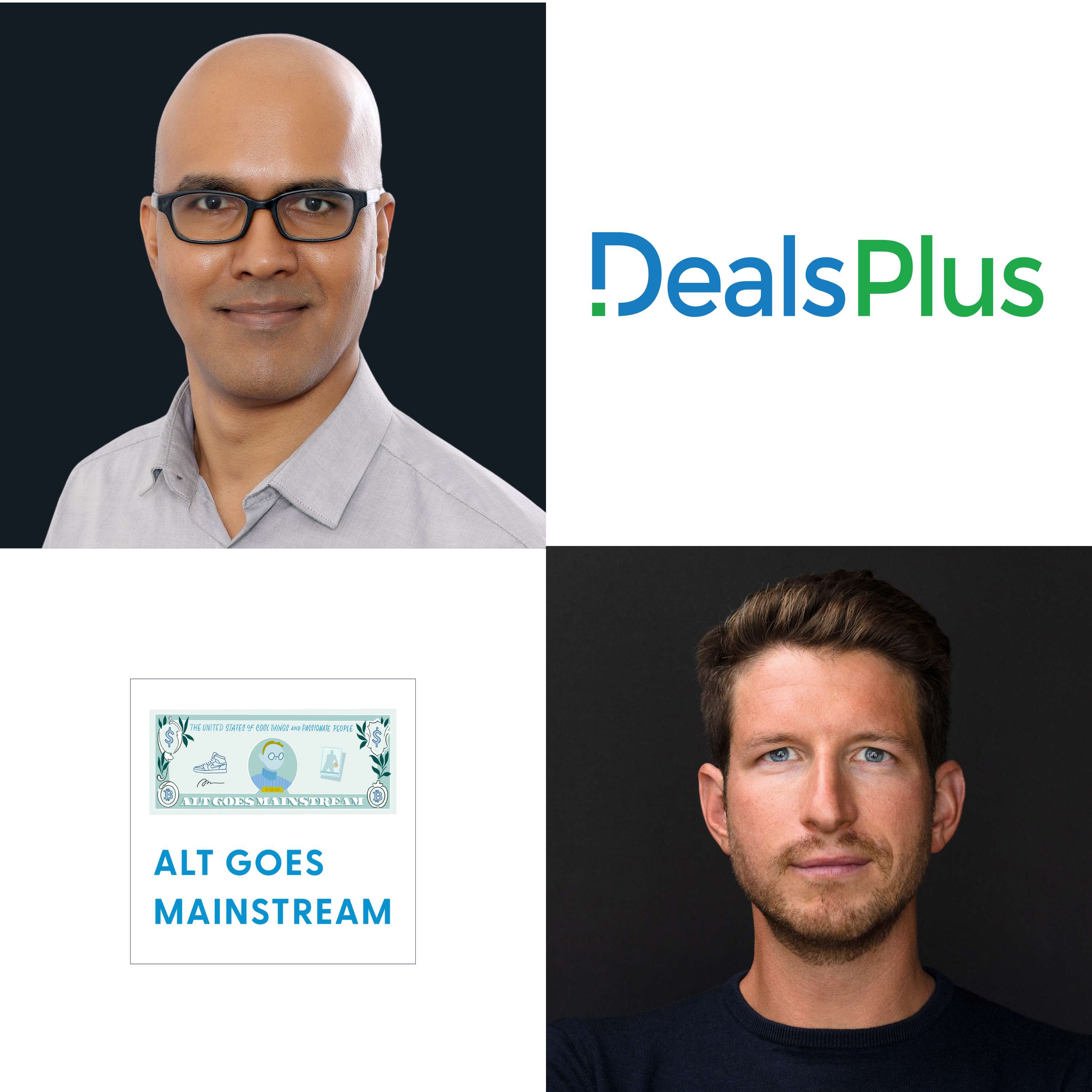
Alt Goes Mainstream: The Latest on Alternative Investments, WealthTech, & Private Markets
DealsPlus' Venkat Subramaniam - building a single source of truth for private markets
00:39:37
Loading summary
Transcript67 lines
- [00:00]
A
This episode of the Altcos Mainstream Podcast is brought to you by Ultimus, a leading full service fund administrator for asset managers in private and public markets. As private markets continue to move into the mainstream, the industry requires infrastructure solutions that help funds and investors keep pace. Ultimas is a leading full service fund administrator for asset managers in both private and public markets, offering a wide range of capabilities across registered funds, private funds and public plans as well as outsourced middle office services Delivering operational excellence Ultimas helps firms manage the ever changing regulatory environment while meeting the needs of their institutional and retail investors. Ultimas provides comprehensive operational support and fund governance services to help managers successfully launch retail alternative products. Trusted by institutions, investment consultants, registered investment advisors, state governments and fund managers, Ultimas provides solutions for nearly every investment structure in the marketplace. Visit www.ultimusfundsolutions.com to learn more about Ultimas technology enhanced services and solutions or contact Altimus Executive Vice President of Business Development Gary Harris on email@gharrisultimasfundsolutions.com we thank Altimus for their support of Alts Going Mainstream.
- [01:18]
B
Everybody gets a piece we're going mainstream Everybody's gonna we're going mainstream. All my family see see you on Main street we're going mainstream. From Wall street to Melrose Avenue, we're going mainstream.
- [01:41]
C
Venture capitalists to athletes to creators to.
- [01:46]
B
The person who has collected trading cards, we're going mainstream. They're in collision of culture and finance we're going mainstream.
- [01:57]
D
Welcome back to the Altcos Mainstream Podcast. Today's episode is with a founder who is building mission critical software for private equity firms. We are joined by Venkat Subramaniam, the co founder of Deals plus, to discuss why he has built Deals plus. Deals plus provides a digital solution to streamline, digitize and automate the management of complex holdings. Capital Structures for Private Equity Firms Historically, private equity firms have relied on humans and manual processes to manage and track cap tables, transactions and entities. This process has required significant human intervention and has often been rife with errors, making deals harder to consummate and transactions harder to complete. Venkat has taken his 15 years of experience advising private equity managers and cross border transactions, most recently as an associate partner at Eyuk to build Deals plus to create a single source of truth for capital structures for private equity firms. Deals plus works with a number of industry leading private equity firms and is backed by a private equity firm with.
- [02:53]
C
$38 billion in AUM.
- [02:55]
D
Venkat and I had a fascinating conversation about the challenges private equity firms face with managing and tracking transactions and portfolio companies. We discussed why it's been so hard to create cap table management solutions for private equity. How private markets can move from the Excel age to the digital age. How to build software that provides a.
- [03:12]
C
Single source of truth, the atomic unit.
- [03:14]
D
Of value in private markets. Building an end to end platform versus building a point solution and what's next Post Investment Ops Tech Innovation Thanks Venkat for coming on the show to share your thoughts and wisdom on private markets tech.
- [03:28]
C
We're going mainstream Venkat welcome to the Alcos Mainstream podcast.
- [03:34]
E
Thank you, thank you Michael.
- [03:36]
C
Pleasure to have you here. We're live from the citywire studios in London. I think quite a fitting place to do this podcast because it's really the home for asset managers and where they come and see what's going on in the world of private markets. You're building something that's really core to what alternative asset managers need to run their business day to day. So excited to get into that first, really want to hear your background in terms of how you got to build deals plus based on background in tax.
- [04:06]
E
And M and A before deals plus I was a tax advisor, as you know. So my day job was helping private equity funds structure transactions. We used to do two things, deal structuring or you're doing due diligence and both go hand in hand. So you're putting in place all these really complex structures to make sure your returns are aligned, management, equity plans, funds and so on. And then on the other side, when a portfolio is coming for an exit, you're asking for all the information on those structures and you're diligencing them. And what we were seeing was every time we would work on a transaction, especially on the diligence side, it used to take a long time to get hold of the facts. And then you'd find a lot of things haven't happened the way they should have happened. And you know, risks come in and so you kind of go, at some point, well there must be a better way of doing these things. You're managing so much money. I think private equity funds manage about 7 trillion or more in assets and you're putting in place some very sophisticated investment structures and there must be a better way of doing this. And that was the genesis behind Deals.
- [05:09]
C
Plus, when you were in the middle of some of those transactions, what was it like? Walk us through some of the challenges that both you as the advisor helping firms structure things faced. But also I'm sure you dealt with the team members too. And as they were trying to deal with all of this, how did they feel?
- [05:26]
E
We have plenty of war stories and I think if you speak to people in this industry, whether it's tax, legal, advisors, deal teams, they'll always say something that they have experienced. I've got lots of stories. One of the best I have is actually not mine personally, but our CPOs. He was also ex tax accountant and there was this transaction at a big take public of a big private equity portfolio company and it was as always time pressured and he was doing the modeling of the returns. Basically what was being projected in an Excel file was way off the reality because some of the instruments were not being accrued or the terms were different or the dates of accruals are different and it's off by few billions of pounds and this kind of returns that have been communicated to various people. So that was a big nightmare. And you none of this should be happening, but it does happen all the time. So you're under severe pressure, multiple teams and you're trying to deliver in time.
- [06:26]
C
Why do you think there's such a lack of uniformity around many of these transactions and the processes? Is that something that has just been the way things have been done in the industry? Is that a lack of technology? Is it something else?
- [06:39]
E
I think it's a combination of both. With most industries your front office is way ahead of what back office needs to do to catch up. And that's been partly what's happened with private equity as well. But I think things are now catching up, which is good news. I think there's a real realization that technology is there and it can do things. And when you have industry people trying to solve the problem with technology, and I think things like cloud computing and the way UI UX has improved and so on makes a huge difference. But Excel overload, back office always trying to catch up and keep up with front office and that creates a lot of these problems.
- [07:16]
C
Do you think a lot of the technology solutions that are now being built for private markets could have been built five, 10 years ago or did technology innovation, whether it was process automation, AI, cloud, those things really been what's driven a lot of the more recent innovation in private markets?
- [07:34]
E
I think the the two biggest things that have made the biggest difference for people like us to come and solve this is cloud computing. Cloud has really made a huge difference. You can launch products a lot more easily and a lot quickly. And I think there's a realization that processes are very important and if you want Humans to work with technology, the UI UX needs to be very, very clean and very user friendly. If you look at the legacy software systems, they were not really built for purpose. Some of the front end technology and the way people are designing things, enterprise applications are becoming more like your Netflix of the world and so on. It's very, very important. And once that happens, data becomes cleaner, that's coming in and then AI can obviously play its role if the data is there. I think cloud computing and the way people think about designing software, that's a.
- [08:25]
C
Really important point, the consumerization of enterprise software, because people as consumers are so used to using certain technologies and they expect, I think they demand more of the way in which their user experience is. On that point, I actually had Griff Norville is the head of technology at Hamilton Lane. He said that private markets needs to move from the Stone Age or the Excel age to the digital age. What do you make of that? Do you feel that especially for back office functions like Cap table management, deal structuring, do you think Excel will still be the core of what they do or are there now better solutions?
- [09:04]
E
I think Excel is a great tool. I've worked with Excel for many, many years and I still love Excel and I think Excel will always have a use case. Excel is great, is if you're modeling scenarios, especially scenario analysis. If you have a lot of data and you want to play around with it and see what it means, Excel is a great tool. What it's not good with is if you're trying to track events, you're trying to manage workflows, and when Excel is being used for that, that is where it sort of falters. And that's where I think technology has got a huge role to play. Cap table is a very good example because you've got two things happening there. You've got an ownership position at a point in time and then you've got all the events that are happening to get to that ownership position. I think if you're trying to use Excel to manage the latter, it will be a big issue. But that's where all the problems we see come in. But if you need that data to flow into Excel to then model your waterfalls and valuations, that is a great use case for Excel. So I think software will help Excel become more powerful and vice versa.
- [10:04]
C
Something that's really interesting that you're getting at and where my mind goes when you're talking about that is that what you're talking about might be a back office function, but it actually Connects to the front office. The investment team has to be able to understand waterfall scenarios and modeling pre investment. Yeah, but then obviously it matters post investment, it matters with investor communications, touches, the IR team. All of this kind of flows together and is interconnected. What do you make of that and how do you think about. Yes, you might be a back office innovation and the teams that are using this or the finance or the operations teams. But when should people be leveraging technology? Should it come before they do deals? Obviously private equity firms are going concerned so they're already using solutions and they now have to fit something in. But how do you think about this interplay between maybe a back office solution, how it impacts the front office or investor relations?
- [10:55]
E
So when we were working on this problem, we kind of did a pain statement. It's a really messy chart with lots of yellow sticky papers connecting everything. And when you really drill into it, you realize if you take cap table as an example, you realize that people actually asking for cap table data without actually saying what they want as a cap table and it's across the piece, front office, back office. And I'll give you a few examples. So, so let's say you have a portfolio company and they are one of the subsidiary entities opening a bank comes in there and the banks want to do a KYC analysis. They may say, we want a structure chart. We want to see everything all the way up to the fund that is a cap table deliverable. You can't do a structure chart and show ownerships without cap table. It's a very indirect way of asking for cap table information. The same applies to deal teams. They may be thinking, I want value this instrument or this return or your valuation teams every quarter. They might be thinking, I want to value the equity position that a fund holds across all the investments. What they're effectively asking for is cap table data. Because you can't do that without accurate cap tables. Exits your tax advisors come in, they want to look at the entire exit process and the diligence risks. They may be asking for lots of information that is indirectly connected to the cap table. So it goes across all areas, front office, back office, middle. And this problem is occurring all the time, on a daily basis, quarterly basis, yearly basis. But then teams are working in silos so they don't realize it's all connected to that source data. We didn't realize it, to be honest, until it was a long time in. Then you know, penny drop movement. And then you go, well, this is it. We connect all that dot and I think Everything is connected, including investor reporting, ultimately your relationships with the LPs. But the problems are myriad and vast. We focused on one right now.
- [12:44]
C
Unpack why you're focused on that specific problem. Is it because the cap table data, that underlying asset level data is the core and kernel of everything, where everything else kind of revolves around that.
- [12:57]
E
We like to call it the messy middle. There's a lot of tech in private markets, as you know, investor relationships, fund accounting, portfolio monitoring, and lots of new tech coming, which is very exciting. But there is this messy middle between the fund and the portfolio companies. There is complexity in this data set because these things are highly structured. There is lots of moving parts during the whole period and there's volume because a fund will have many investments, each of which will have its own unique. What we thought was identify a pain point, but a pain point that is recurring. I don't think just having a pain will validate the need for a product. Because if you're trying to solve for exit efficiencies, that maybe happens once every four or five years. And private active funds are very good at throwing people and lots of resources at it. But if you have a pain that is more recurring, let's say annual audits, it's once every year, but even better, quarterly valuations and reporting, that's once every quarter. Now the funny thing is it's all connected. So if you have a recurring pain like quarterly valuations and you build a capable solution, that's solving it, your annual audits are going to become very easy. And if your annual audits are clean and easy, your exits are going to become clean and easy. So we kind of zeroed in on cap tables, but specifically from the standpoint of quarterly reporting function. But the way we do it is we have that big vision in play. So you do it properly, then your annual audits become easier, your exits become easier, and then it all rolls in and connects the dots.
- [14:33]
C
So cap tables are something that many people will be familiar with in private markets. In the venture context, Carta has built a large cap table management business focused on venture funds and venture backed companies. Why has it been harder to do that for private equity?
- [14:48]
E
Carter have done an amazing job in building what they did in venture. And the reason why there wasn't anything available to private equity is because of the complexity. I think the value proposition is exactly the same. What Carter is trying to solve is what we are doing for pe, but the complexity in private equity is that, for example, the cap tables are never at one level. You have multiple levels of legal entity chains, they are never in one jurisdiction, multiple jurisdictions, they are never in one currency. So if you take Europe as an example, a PE fund might hold investment in UK across Europe, in Switzerland, there's vast amounts of currencies in there. And then the instruments that are used in private equity context are very different. There's a combination of debt and equity. So the complexity level in PE requires a completely different product. But if you think about the value proposition that CART are trying to solve, that's exactly what we are doing. But different solution.
- [15:44]
C
The value proposition may be similar or the same, but the way in which you build the platform is that very different.
- [15:51]
E
It is, because what you end up having to do when you're solving for pecap table is you're combining a lot of different things because you can't do PE capital without some form of legal entity relationship and legal entity management thing. So you're connecting that and you can't do PE capital without things like structure charts, debt instruments, waterfall Valuations matter a lot, I think in venture. Venture funds don't seem to be doing quarterly valuations in the same sophisticated way as PE does. In pe it matters a lot more because you're a majority owner or a significant majority owner and you have lots of different types of instruments. So the product requires a lot more than just a simple cap table solution. So we have ended up having to kind of connect dots across lots of different things.
- [16:37]
C
Another really important point that you bring up is making sure you're connecting dots across a lot of different things and also organizations. So I imagine there's also more stakeholders that have to be connected in the process. It's external stakeholders, tax audit valuation, in addition to everyone internally. How does a platform get built to work with this cadre of service providers who have to be involved in these processes on an ongoing basis?
- [17:06]
E
That is the beauty of software. And this is maybe where the Excel and software play comes in as well. Because when we speak to any of our clients, there'll never be a single source of truth, which is a common phrase used. We excel at multiple different levels. So fund finance teams would keep their own version that they'll roll up every quarter. Deal teams might have their own version, portfolio companies may have their own version, advisors may be holding something that is outdated, and so on. The beauty of a software is you can bring all those players together. Obviously that means you need to spend a lot of time thinking about user management, role based access controls and there's a lot of sensitivity to this data. So you need to Be careful with that. But once you achieve it, that's where the power comes in. So in our context, you're able to grant access to the valuation teams, the deal teams, the portfolio companies, CFOs and CEOs and so on advisors, they all can come in and use the data when they need it. And now I think even our audits auditors are spending a lot of time diligencing this data. So software makes a huge difference. And I think one benefit of being an ex tax person is also that tax in many ways is the glue between front and back office. So a lot of what front office are doing when they're putting these structures in place is driven by commercial requirements. But tax plays a huge part in achieving those commercial requirements. And then you, you become the glue with the back office teams. So when we speak to heads of tax or PE funds and they look at our solution, they get it very quickly because they're being pulled in both directions. They're having to solve the front office problems, but after a deal is done, they become the glue with all the back office functions. So stakeholder management is a huge part of having software.
- [18:50]
C
How much time is saved in a process like this?
- [18:54]
E
So we did a bit of exercise recently. You know the yellow sticky paper I was referring to? We kind of did some work on how many hours spent across the board. We think on average, if you're a mid market CPE fund large, you can kind of extrapolate it, let's say 20 portfolio companies across multiple jurisdictions, you're looking at easily over a thousand hours a year of time being wasted. But it's more than that. It's the hours you can quantify. But it's what you're doing is your decision makers are spending a lot of time trying to get access to facts. Emails are going. I was speaking to a DLT member a while back and his frustration was every time he needed captable information or a structure chart, you'd have to email someone and wait on it. It's crucial. Why? Why do we have to wait on it? And why are people spending all the time trying to figure out is this the right information? And this happens across the board. So your productivity of your decision makers, you're firefighting often on exits, trying to correct some issue. So it's how it's lost, it's cost and if the risks are such that they've only been identified on an exit, that is a lot of advisor costs and reputational issues as well with the buyer you're haggling on Maybe warranties and empties and price adjustments.
- [20:13]
C
Where my mind goes when you talk about how do you get easy access to that information. How do technologies like what you're building at Deals plus become an integral part of the operating system of a firm? Because I think that's part of a broader industry trend, which is many of these alternative asset managers are really evolving as businesses themselves. Therefore they need software that helps them run their business and helps them kind of cross the value chain. And is their operating system. How does something like Deals plus get integrated into the workflows of what someone's doing day to day or becomes the operating system?
- [20:47]
E
That's a great question. Private markets are very complex. I don't think you can have one software that solves everything. You've got investor relationships to manage, you've got deal originations, you've got portfolio KPIs track things like ours, accounting systems. At the fund level, there's lots of moving good pieces. I think there is a recognition more and more as I speak to CTOs and more people that you need best in class applications that are solving each individual problem. But then there's a lot of data in all those applications and funds want that data and that's why I think AI plays a huge part in that. But you need to consolidate that data together. So an interesting trend I'm seeing now is things like data cubes or data warehouses. We have a client who has spent a lot of time in building a data warehouse and they're plugging in all these best in class applications that they're using. It also allows them to use best in class applications and then all that data comes into your data cube or data warehouse and then that becomes way more meaningful for them. So I think that's a very interesting trend I'm seeing. But the industry is moving towards let's have the best in class application doing each thing and we will take care of the rest.
- [22:01]
C
So what's the takeaway from that? Because I get this sense in private markets that there's a lot of point solutions being built pre and post investment. There are obviously some end to end platforms in certain parts of the private markets technology life cycle. But is your view that there's going to be these best in class point solutions? Because it's so hard to build a specific solution for a specific thing because there's so much complexity around that one thing. Whether it's cap table management, whether it's fund accounting, portfolio monitoring or valuation software, there's going to be these single point solutions. Rather than one size fits all comprehensive.
- [22:38]
E
Solution, I think so I can talk about cap table management because I know the problem and I'm sure it applies to a lot of these other solutions as well. Some of the issues we are solving for are so complex and so esoteric that it'd be very difficult to bring them all together in a big single application. You need domain knowledge but you also need very good engineering connection with that. And we live and breathe that solution. So if you're a private market fund and you go, well these guys know this bet and they will solve that bit perfectly for us and all they're doing is thinking about that all the time and they carry on build, you have to keep on building as well. It doesn't stop. That's the problem taken care of. And that probably is happening across the board, whether it's investor relationships or portfolio monitoring as innovation happening all the time. So I think point best in class solutions, connect them together through APIs or data warehouses. That'll be the trend.
- [23:34]
C
How much does size of fund drive complexity? So what I mean by that is are there technology solutions that can serve every firm from the small single fund firm all the way to the multi strategy platform?
- [23:50]
E
That's a very interesting question. I don't know yet if you can build a solution that serves multi strategy in our context, possibly down the line, but you have to focus on one to start with and solve that perfectly. Because I think if you take cap table as an example, if you're solving that for private equity, it's very different to solving that for real estate to debt. But I think once you solve one and the most complex one will be private equity for various reasons, then there are ways in which you can roll it out across other strategies. But you probably need to focus on that problem, solve it on that point as well.
- [24:28]
C
Do you think it's better to build for the larger firms? It's harder to sell the larger firms. But is it better in your mind as an entrepreneur building software for private markets firms? It's better to start with the larger firms, more complex and then work your way down or the other way around, start with smaller firms, work your way up and add features and complexities based on the size and scale of a fund?
- [24:49]
E
Yeah, it's a great question. I think we, we ended up building a solution that funnily works whether you're a large or small firm. I think the challenge of private equity is you might be a very small firm managing say 500 million in a the complexity in your deal structures Will not be too dissimilar to a larger portfolio company or larger deal. It's very similar. But what happens is stakeholder management. So it's not the product. The product has to be pretty similar. But a larger fund will have many more people with the software. You're also changing a lot of processes. It's a lot easier for a smaller fund to change those processes because the decision makers are concentrated in one place, Whereas in a larger fund you have lots of different stakeholders. So it's more of a process and kind of stakeholder management and behavioral problem than a product problem.
- [25:42]
C
It's a really interesting question that you bring up, which is, do you think a lot of this technology really positively impacts the smaller funds in a bigger way versus the larger funds? Because larger funds have the resources and scale to throw people at the problem. Do you think that they'll just continue to throw people at the problem, Maybe augment with software, but throw people at the problem Versus a smaller firm may have to use technology because they have no other choice?
- [26:06]
E
Yeah, I think so. Right now, I think that is the case. We have a mixture of large fund clients and small clients. But I can tell you that small funds, there's two things there. One is small funds benefit a lot faster. But the clients who benefit from technology, who get the return quickly are people who already have a degree of processes in place. They may not have technology, but they have a process. And they have a way in which things are happening now. When they see technology, they are able to very quickly marry that process with technology and then get the return fast. So even if you're a small fund, but if you don't have process, you will struggle. And a lot of what we end up doing with our product is you're creating processes and you need. I think even with things like AI, if you don't have data, AI is not of that much value. If you want data to be quality data, you need processes. And software is a great way to create very strong processes. And yeah, small funds will benefit faster. I think big funds are moving in their direction, but processes matter more.
- [27:09]
C
There's an interesting piece of your business though as well, which is in the process of creating these processes and the workflow tools for a certain fund. Private equity will also have multiple transactions in a lifecycle of a company. So one private equity firm will sell to another private equity firm. I imagine firms that are larger will see a smaller firm leveraging a platform like deals, plus seeing that process and saying, wow, this was easy. Maybe we should adopt this too. So there's some interesting inbuilt network effects in a lot of these technology solutions for private markets. Because once one firm uses it, sees it, then others can use it. And that I think should only help the industry as a whole just get more efficient.
- [27:48]
E
That's such a good point. So we see so much value being created. When that starts happening, it's already started happening now one of our clients buys a business, we bring in that business into the platform. You see all the diligence findings that have happened. Often another PE fund is sold and go, well, wish they had deals. Plus because none of this diligence findings would have happened and A, you'd have saved so much time, B, so much cost and created efficiencies. Now that is what platform like this does because when you're then exiting and a new fund is buying, they would be a lot cleaner or more efficient. The management teams and the portfolio companies would actually want to continue that. That's where the decision making comes from. They're the ones who are going, we've been using this to carry on using this because we've seen all the efficiencies from it. So network effect is a huge benefit of software.
- [28:44]
C
Is there a certain feature within Deals plus where CFO or finance team is using it? And that's a wow feature.
- [28:54]
E
I think it's the waterfall that we're working on that's the wow feature. Because cap tables ultimately are a source for valuations. And there's two sets of valuations. There's the enterprise value that requires a lot of different things. You're getting KPI data, you're doing multiples and DCFS and all that. That's not the valuation I'm talking about. I'm talking about what happens to that equity value between all the different stakeholders. And that requires cap table data. And that's where the software ensures that your cap tables are accurate. But the wow feature is the ability to take that cap table data, run it through the waterfall at any time and see what it means for the fund, for the management teams, for co investors and so on. So that's a big wealth issue. But then to get some of the instruments value to debt, instruments in European structures are very commonly used for your preference shares and loan notes. Insanely complex to get them right. You don't have to worry about any of those. So that's also our feature.
- [29:52]
C
Well, if we talk about two trends that are happening in private markets broadly, I'm sure that has an impact on valuations and waterfalls, which one the increasing prevalence of private debt and credit used to finance deals, and also the changing market structure of private credit. Now you have a lot of direct lending and a lot of single transactions where there's one private credit provider rather than a syndicate that I imagine has a big impact. And then the other piece of it is valuing these investments on a more regular basis. I mean, as many of the larger firms are launching evergreen structures, valuations become A something that needs to happen more often and B, as you work with the wealth channel, you can't get it wrong.
- [30:35]
E
It happens every quarter, even now. And it's a really messy process because if you're a fund and you have 50 investments and some funds have a lot More, you have 50 Excel spreadsheets and they all look different. And things may have happened during that quarter between last quarter and this quarter. And how do you know if this is right or wrong? And there's no validation in an Excel file, but underlying documentation and so many other things. And getting things wrong can come at a big cost. Analytics can become very, very time consuming, but exits, it's a big cost. So you do need software and private, like you said, lenders and then various stakeholders and PE deals are getting very complex. Now you have co investors. Management teams are also now asking for a lot of data about their stakes and communication with management teams on a regular basis. You have to align your interests with them because they are working hard for the next five years and communicating what that means in a more meaningful manner requires all this data. This is where all the hard bit is. And if you don't get this right, then it can come back to buy too.
- [31:43]
C
You mentioned something in there, transparency that's so important. I think for the investors in private markets, transparency is increasingly important, particularly as you get to the wealth channel that's learning about private markets. How do you think software solutions like Deals plus help create more transparency about assets in private markets?
- [32:05]
E
Just having that single source and being able to connect transactions, underlying transaction events with the kind of proof of those transactions, the documents and that data flowing into all the other deliverables, whether it's valuations, cap tables, structures, whatever they may be, that is where the transfer and giving access to all the stakeholders to that data in one platform. So whether it's a CFO at a portfolio company or your custodian who is verifying your ownership positions, or your auditor or a deal team member. So it comes from kind of A making sure your workflows and data are correct and B giving access to that data in the right format to the different stakeholders.
- [32:49]
C
On the flip side of this, there's obviously certain aspects of these processes that are still manual. What in your mind is the hardest problem to solve right now? And where would you love to see technology fill the gap solving some of those problems?
- [33:07]
E
Lots of hard problems. If you look at our roadmap, you'll see there's still lots of hard problems to solve. I think the hardest problem I would say is if you have softwares like ours and you consolidate all the data, making use of this data at the fund level. So this becomes a source data for let's say carry modeling. And then this also becomes a source data for some very complex things like investor tax reporting, your K1s in the US now, how do you connect all these portfolio level underlying information through the funds all the way to the LPs and for your tax reporting, how do you connect that for your carry modeling? How do you enable funds to visualize what the funds positions look like across all the portfolio companies? By changing variables. That's the power of the software. So if you have all this data and software, how do you leverage off that? I think those are the sort of very hard problems, but you have to start from the bottom up. But that's what we're excited about. I think a lot of tech starts from top down in private equity. Start from bottom up. There there are some very interesting possibilities, very hard ones, but they become meaningful.
- [34:16]
C
Do you think more technology in private markets will start from bottom up? Single source of truth on up?
- [34:23]
E
I think so, absolutely. That's the way to go. I think if you start from bottom up, possibilities open up. Top down. I think you're limited by the quality of data because you're always reliant on the underlying data. But if you start from bottom up, you can build. Carta is a good example. On the venture side I think they started, if you look at where they're going now, they started with cap table just bottom up, but now they're kind of using all this data in the venture fund business.
- [34:50]
C
Yeah, I mean that's a really interesting point and I think that gets to the experience or talent question. In private markets. Do you think it requires someone who came from industry and was a practitioner to be able to go bottom up? Because you actually have to understand the problem in a way that you actually dealt with it.
- [35:05]
E
It's a very interesting question. I think my view is you need to understand the problem, but you need to be passionate about the problem. You need to feel very strongly about the problem and you need to have the desire to solve it. I think if you don't have the latter, it becomes very difficult when you're building, because building is challenging, because building is not just building software and silos, it's stakeholder management. It's lots of other things. But I think one benefit people from the industry have is they understand the problem and that's half the battle won. And then if you're passionate about the problem and you feel strongly, then you're off to the races. The difficulty is obviously engineering, right? Because you need to very quickly learn that. So you will need to invest time in some place. I'll rather try and understand engineering, rather know the problem and be passionate about it than be an engineer in the problem that we are solving. Because it's very esoteric, it's very complex. And once you're passionate about the problem, you know it, it becomes easier.
- [36:04]
C
On the flip side, you work with a number of different private equity firms, large, small, different jurisdictions. Do you find that they have very different problems that they're looking to solve or do they all have a similar problem that they want to solve when it comes to cap table management and back office software?
- [36:21]
E
So every PE fund will feel that they are unique and they will be unique in many ways because it's a people organization and so individuals are very different and there'll be different ways in which they're working. When you drill into the data and when you start looking at break down the processes, quarterly evaluations, what tax is doing, what legal is doing, it's the same and the data set is the same. So the beauty with the software is you can bring them all together and you can create those processes, allow people to do what they've been doing and contribute lot better. But we don't see a major difference between large and small. Where we see a difference is getting them the behavioral change. I think in smaller funds, as we discussed earlier, it's a lot easier to get the behavioral change going. Whereas in the larger fund, if it doesn't come from top down, it can take a lot longer because people carry on working in Excel, they may not connect the dots. Somebody doing quality valuations may be passionate about those Excel files and they might be very keen to do the way they're doing it without realizing what it means from a kind of larger standpoint. So you need the decisions to come in from top down and then you can cofact the behavioral change. Smaller funds is easier because the people who are the decision makers often are also the people who are experiencing the problem. So it's concentrated so it's easier.
- [37:42]
C
What's interesting about that too is I think private markets is undergoing such a technological transformation and the industry feels certainly right now that it's moving so fast. Need to get into the wealth channel. These businesses as asset managers are evolving so rapidly. There's more players in private markets. There's new product creation around evergreens, et cetera. Do you think that we're going to just see really rapid transformation of private market software or do you think it's kind of slow, slow, slow, and then all of a sudden it's going to speed up at some point in the future?
- [38:13]
E
I think there'll be a rapid one happening the next five to 10 years. I think that's pretty obvious to us now. A lot of the hard work has happened in the last three, four, five years. I think we are seeing there'll be a much faster transition happening over the next five to 10 years. We are very excited about what's coming in the next 10 years. And 10 years is a kind of right horizon to look at. But even in the next three to five years, things are changing very rapidly.
- [38:38]
C
Well, you're going to be a big part of that. Change everything you're building, I think. So important to think about. How do you actually make the processes more efficient? And like you said, it really ties into everything that a firm does. It's so important.
- [38:50]
E
It's such an important part. There's only two things if you break down the private markets business. There's investors and then there's assets. And we want to be at the heart of what those assets are and what we actually own. And we are very excited about profit. And the industry is also very much buying into the digital transformation age, which makes it even more exciting for us.
- [39:12]
C
So we are moving from the stone age to the digital age. I love it. Well, thanks so much for coming on the show, Venkat.
- [39:17]
E
Thank you, Michael. Thanks.
- [39:18]
C
Great to have you. Thanks for listening to this episode of AltGoes Mainstream. I hope you enjoyed it. You can read more about Alts at my substack, altgoes mainstream.substack.com Thanks a lot and have a great day.
- [39:32]
B
We're going mainstream.