← Alt Goes Mainstream: The Latest on Alternative Investments, WealthTech, & Private Markets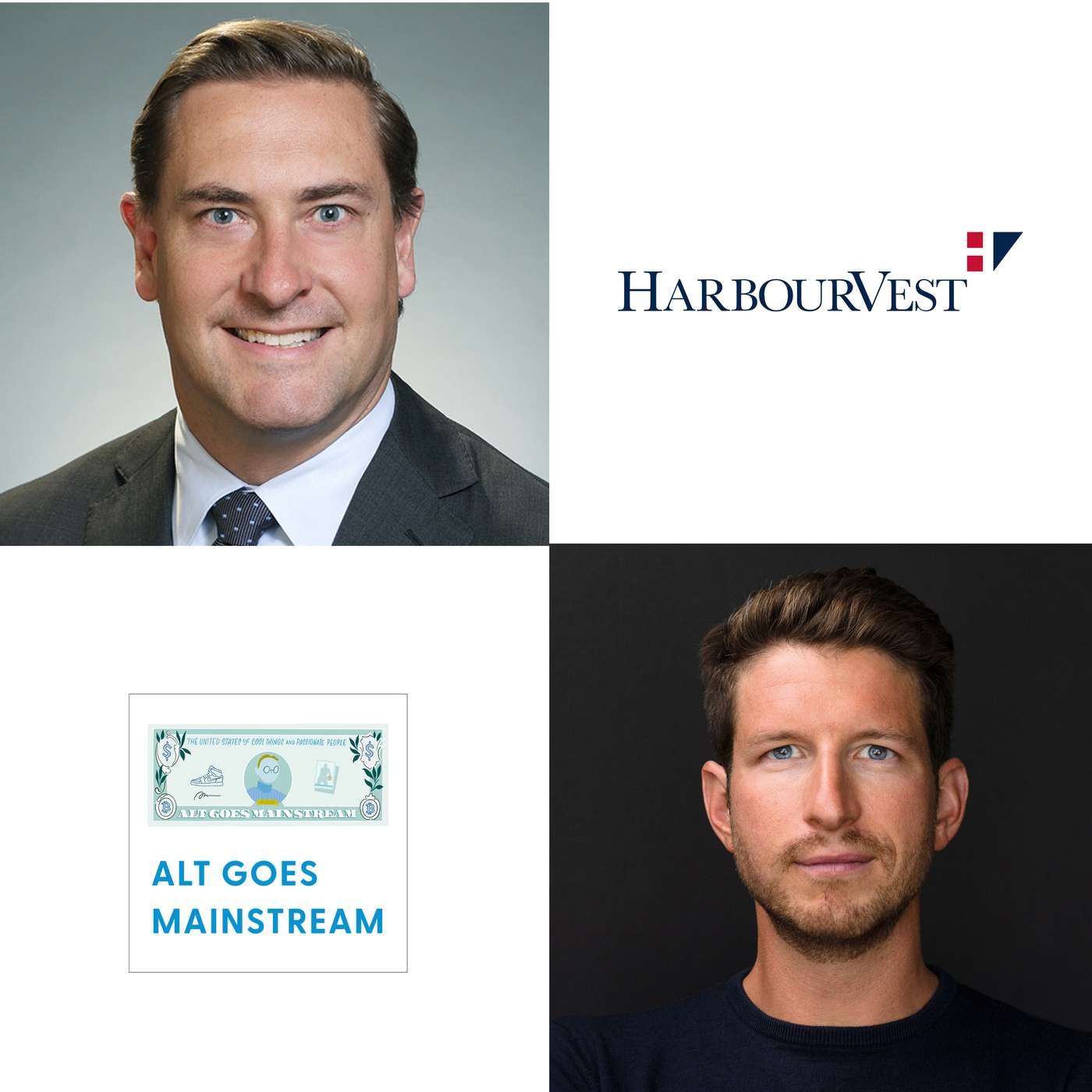
Alt Goes Mainstream: The Latest on Alternative Investments, WealthTech, & Private Markets
HarbourVest's John Toomey - over 40 years of "earning investors' trust"
00:58:55
Loading summary
Transcript88 lines
- [00:00]
John Toomey
What I see is just like in the institutional side, you'll have wealth investors who say, I want to make one commitment, I want my private markets exposure or my private equity exposure. And I'm going to do it in the way that thousands of institutional investors do, which is ultimately a multi manager format. That's going to be my core allocation. And then I think you'll have others who may have that allocation and they just take views on certain geographies or certain parts of private markets and they're going to lean in in a few places because that's what they or their advisors want to and or they want to be able to complement anything else they might have on the public side or the rest of their balance sheet.
- [00:40]
Podcast Guest or Participant
Everybody gets a piece. We're going mainstream. Everybody's gonna eat. We're going mainstream. All my family see you on mainstream. We're going mainstream.
- [00:58]
Podcast Host
Wal to Melrose Avenue
- [01:02]
John Toomey
venture capitalists, to
- [01:04]
Podcast Host
athletes, to creators, to the person who has collected trading cards
- [01:12]
John Toomey
in a collision of culture and finance.
- [01:17]
Sponsor or Announcer
This episode of Alt Goes Mainstream is brought to you by Ultimus, the full service fund administrator and transfer agent powering asset managers in private and public markets. As alts go mainstream, you need real expertise to handle complex fund structures, connect with key distribution partners, and handle sophisticated compliance reporting and transparency demands. That's Altimus High Tech High Touch Solutions for over 450 clients and 2,500 funds with over $775 billion in assets under administration. Backed by an expert team of over 1200 employees, they place client service at the core of their business, helping you navigate complexity during your fund structuring or launch, and then supporting you through every stage of growth. Whether you're already in the market or
- [01:59]
Podcast Host
thinking about entering private wealth.
- [02:01]
Sponsor or Announcer
You can trust their team's deep expertise in retail alternatives to help you reach your goals. Learn more at altimusfundsolutions.com or email infoultimusfundsolutions.com welcome back to the Altcos Mainstream Podcast. Today's conversation dives into the nuances of private markets with one of the industry's leaders. We sat down with Harborvest CEO John Toomey, where he leads a firm that has over 146 billion in AUM and has over 43 years of experience investing across primary funds, secondary transactions, direct co investments, and building customized investment programs for LPs. John has been at HarborVest for almost 30 years, joining the firm in 1997 as an analyst in the direct team. He spent 10 years as one of the leaders of the secondary business before serving on global investment committees for nearly a decade. He also served as the original CFO for the HarbourVest global private equity vehicle, which went public in 2007 on Euronext Amsterdam. John is also a member of the firm's Conflicts Committee, Sustainable Investing Council and DEI Council. He received a BA Cum laude in Chemistry and Physics from Harvard University and an MBA from Harvard Business School. John and I had a fascinating and thought provoking conversation about the evolution of private markets as an industry. We covered the biggest differences between private markets in the 1990s and private markets today. How private markets has evolved over the past 30 years what LPs are looking for today in their manager relationships whether or not LPs want more choice or less why LPs both institutions and wealth investors might outsource private markets capabilities how the institutionalization of private wealth platforms is shaping how alternative asset managers partner with the wealth channel where scale matters for alternative asset managers, where allocators should be narrow and limited with their GP relationships and where allocators should be diversified what is required for managers that launch manage evergreen vehicles and the why and how behind launching a private wealth solutions business. Thanks John for coming on the show to share your wisdom, expertise and passion for private markets.
- [03:59]
Podcast Host
Collision of culture and finance John, welcome to the Elkos Mainstream podcast.
- [04:07]
John Toomey
Thanks a lot. I appreciate you having me here.
- [04:09]
Podcast Host
Pleasure to have you. I think you have such a fascinating perspective on private markets in a number of different ways. 1. Your career in the space. You've been at harborvest for almost 30 years, so you've seen a lot of what's happened in private markets and its evolution. Harborvest's perch in the space working with so many managers and so many LPs in a number of different ways. So first I'd love to start with your background. You've been at one firm your entire career.
- [04:39]
John Toomey
Oh but two years? But yeah, so more more than half my life.
- [04:43]
Podcast Host
Let's start there. What was it like when you started
- [04:47]
John Toomey
at Harbor Best 1997, two years out of school. We had maybe 45, 50 people in the firm, three offices, maybe 4 or 5 billion of fee paying assets under management. Still predominantly a fund that invested in other funds at the time and the roots of the business were really in the venture capital space. So we just have just a tremendous history and legacy and depth of relationships. We did have a secondary business. It was actually quite small at the time. The whole market was quite small and I'm sure we'll talk about how that has Grown and at that time we really served exclusively institutional investors. It was the global business, although there was predominantly the US and Western Europe at the time.
- [05:30]
Podcast Host
What do you think has changed about what LPs wanted then and what they want today?
- [05:38]
John Toomey
I think what's been constant is excess returns. I don't think there's been anything other than that. Today it's table stakes from a solutions or service provider. And back then that might have been effectively the only capability or outcome that investors were seeking. They were looking for maybe non correlated returns with public equity markets. They were willing to take some form of illiquidity to achieve that. Across the industry, I would say the depth of reporting, the precision of reporting was actually quite poor. It was very limited. The valuations were technically quarterly, but then we knew this in the old days of the secondary market. It was always wonderful trying to buy off of September net asset values because the best marks were almost annually or even semiannually. And that has obviously changed a lot over the years. And I think in many ways institutional investors accepted that. There was not a lot of transparency and not a lot of precision around the valuations in the early days. But for at least that annual or
- [06:44]
Podcast Host
semiannual, there's a lot to unpack in there around how LPs approach private markets. There's also a lot about the evolution of private markets, not just from what LPs wanted and what GPs were doing, but also from the data side as it relates to the technology market structure, evolution, more transparency. Now today there needs to be as well with structures like Evergreens which have more frequent reporting cycles. But I think there's a lot to unpack as it relates to how LPs thought about working with a solutions provider then. And I think that can then get us to today. But back then I'd love for you to just paint a picture of why they would partner with a platform as opposed to try to do it themselves.
- [07:35]
John Toomey
Again, the early days of the industry, on the institutional side, institutions initially didn't even have dedicated specialists who might have been working with the equities manager or leader, maybe sometimes with the CIO directly. I think the early days of the industry it was more heavily leaned towards almost complete outsourcing of investment capabilities. And I think what happened in the institutional world is over time, the market continues to mature, information becomes a little bit more readily available, the relationships continue to expand directly into the end market with managers. And so institutions over time have decided to internalize their investment capabilities and then to what degree they do that actually varies. Widely, there are institutions today who externalize entirely with us and others today. The value proposition is not just returns and not full correlation, but also the convenience of a one stop solution. And yet at the same time, we have investors who have been investing with us from the beginning, who manage very large significant programs in their own right. But they have come to view that the value proposition parts of the private markets that they would never be able to access better on their own. And so we've evolved our business to ensure that we bring value proposition and work with any of the 1300 investors in the way that makes the most sense for them.
- [09:02]
Podcast Host
You used a word in there that I think is important to unpack program. And I think that particularly for those that are a little bit newer to private markets, that word has real meaning to it and explains why a firm, whether institutional or wealth, might work with a solutions provider. I'd love for you to unpack what you mean by the concept of a programmatic approach to private markets and why working with a one stop shop might make sense.
- [09:34]
John Toomey
So if I think about our business and the clients that we serve, no matter institutional or wealth or size or geography, I always remind our people we do three things for clients. So the first thing is we earn their trust. Our investors can invest anywhere they want in private markets for the most part, but they choose us. They choose to trust us with their capital. The second thing we do is we invest and build portfolios, we generate excess returns, we manage risk. Then that's at its core the most fundamental part of our business. And the third, and I think perhaps the most underappreciated until say the last decade has been delivering services, reporting ease of use, tax reporting, cash flow management, liquidity management, and all of the other parts that are required to access private markets using the building blocks of the closed end fund, the drawdown fund, which the whole industry has been built upon.
- [10:31]
Podcast Host
I want to get into a bit more on on a few of those points. First, how do you get clients to earn your trust? What does that mean?
- [10:40]
John Toomey
At some point it's a little bit simplest, do what you say you do. And when you do that over and over and over and over again, you deliver attractive returns. You serve them well, you report on them, you bring transparency to the table, you meet their needs in whatever format that is from a solution standpoint, data analytics. And when you do that, you hopefully are at the top of the call list when they have a particular need within their portfolio or a need that's adjacent to their portfolio from just overall
- [11:15]
Podcast Host
support how do you think about earning trust in an environment where for LPs there's now more choice rather than less?
- [11:25]
John Toomey
I don't recall the time when the market wasn't competitive. People like to paint the picture of like it's competitive today, but there was a point where it wasn't competitive. I have a lot of respect for the people that we've competed with for four decades. They've built wonderful businesses like ourselves. And I think the level of need for institutional investors maybe 30 years ago seemed quite basic as you opened up what's the same and what's different? But as time has marched on, you think about over 1300 institutional clients, the needs of each type of client actually have become quite distinct. And we've worked hard at Harborvest to ensure that in order to actually be able to provide a complete outsourced solution, whether it's to institutions or to, well, wealth managers, advisors and the clients, you actually have to have building blocks for each part of the portfolio and each part of the service chain.
- [12:18]
Podcast Host
What do you mean by building blocks?
- [12:19]
John Toomey
So again, back to the three parts that we do for clients. You need to have exceptional relationship people who can understand what the needs are of clients. About 15 years ago, we expanded our business from three offices around the world to 15. And a big part of that was that my traveling to Japan twice a year, three times a year, four times a year was helpful. But it did not compare to having a Japanese national or a team on the ground based in Tokyo meeting with clients consistently. So having exceptional people who can cultivate relationships, understand what the needs are of clients, frankly listen well, and can marshal the resources of our organization as the front end on the investment side. Again, capabilities, any one of our investment strategies, we actually also raise distinct bespoke solutions for that strategy. I have this favorite saying that at Harbor Vest, which is that what I think doesn't matter, even though I'm the CEO. The only thing that matters is what our clients think. They are the ultimate arbiters of whether we are successful or not. So we can market test our viability, if you will, with each of those individual strategies as we go to market. And, and I didn't even get the chance to touch upon the operational infrastructure and the servicing element from a reporting, cash flow management and so on. That that's also critical for the client experience.
- [13:43]
Podcast Host
So when I listen to you talk about that, there's the LP side, but then also gps have expanding and evolving needs as well as the GP side of the equation. Even if we just look at one asset class, like private equity, you obviously now have private credit, which now has private credit secondaries and you have solutions there. We have the CV market, which we can talk about as well. There's all these different markets that have kind of expanded for different reasons and for different needs. But if we just focus on on private equity, as the big firms have gotten bigger, they probably have different needs. Then there's also the smaller firms that may not be able to reach certain parts of the LP community. And they probably look to you as the way in which they can reach that community. And you're the solutions provider, both the GP and the lp. How have you thought about the evolving needs of the gp? As putting together the pieces of the puzzle to help serve the LPs and their programs, which as you touched on earlier, are bespoke in nature. In many respects you may have building blocks, but then you have to customize for different LPs needs.
- [14:50]
John Toomey
Just like the LP world is not monolithic, neither is the GP world, as you state. If you're going back to the early days of the firm from the 1980s, it was we invested in managers new funds, we purchased secondary interest in their funds and we co invested with them alongside. And that is still the core of the business today. Obviously capital is quite important in terms of supporting managers when they're raising their funds. But what's been fascinating to me is to see what. I think what we're witnessing is the evolution of the private capital markets. And if you think back 20 years ago, to be invested in a XYZ private company, you actually had to have been an investor in the fund of a manager who purchased that company. And that was really how you access that company. You fast forward to today, you can buy a secondary in that fund. Today that fund may have been rolled in a continuation fund into a new opportunity in which you can also come in through on a secondary basis. You can co invest much more frequently at the entry. You have co investors who may not want to exit at the same time as the original sponsor. You have a sponsor who sold it to a second sponsor and they rolled a bit. So it's not atomizing like the private markets, but the access points in this development of the private capital markets continues to proliferate. And so not only on the LP side, but for the GP side, you actually have lots of different ways to engage with general partners. Whether it's leading a continuation fund, acquiring interest in a fund for investors who are no longer supporting that manager. On the co investment side, our business has evolved quite a bit from participating in the syndication part of the market 20, 30 years ago to today. We will co underwrite transactions that allows middle market managers to actually reach up and acquire businesses that they may not actually have the capital to do today and then actually provide the service to the GP to sell down a portion of that to their other limited partners.
- [16:49]
Podcast Host
I want to unpack that last piece of what you said because I think there's a few elements of the current market that have created the situation you described. So one is you have large platforms that have the size and scale to in some cases do those deals themselves. You may have been LPs in those firms at one point, maybe you still are. But in certain cases you may not be LPs in those firms. And maybe you don't get as much co invest. Then you then have smaller managers that can benefit from the ability to punch above their weight by partnering with someone like you and getting access to co invest. And then you have like the Bain report just talked about this recently, these very large megadeals where sovereigns and other investors were actually the larger parts of the deals than the big gps who themselves did the deals, which is an interesting feature. I think all of those things combined to an interesting component of where the market is today, which is what are the access points that you have. I know you mentioned a bunch of different ways of getting access to different underlying investment opportunities, but is it just
- [18:00]
Sponsor or Announcer
being a co investor?
- [18:01]
Podcast Host
Is it you have to be in the fund and then that's how you get access to co investment.
- [18:04]
John Toomey
The market's not monolithic. I would say a popular way to invest capital in private markets for the last decade or so has in large institutions have deployed this is we're going to invest in the largest managers in the world, the large brands, and we're going to buy down our cost to invest by co investing. Well, that market's changing. Many of those managers have created additional sources of capital, namely the wealth or retail. And I think they're starting to eat away at those co investments that were there. If I think about our business, we have 675 active manager relationships all around the world. And if I think about how institutional invest, very few of them only invest in the large end of the market where frankly the excess returns have really not been there in the last decade or two. But it's a good, stable, broad place to invest capital if you're willing to dilute or trade some of the returns. So more of the market has gone to the middle market. But that's hard to know who are the best managers in this industry, in this country, in this region, in this strategy. So having that diversified multi manager approach has become increasingly important and we see more and more institutions going to that part of the market to build the proper diversification within their portfolio. But from a harbor vest standpoint, I wish I could tell you that just by having those manager relationships, having a dedicated team of 100 people on the co investment team and having a large capital base and a lot of history means that the phone just rings off the hook. It doesn't. It doesn't. So we have all of that, which is more than many. And in addition to that, we have a value proposition that we bring to managers that allows them to unlock transactions, it allows them to have follow on capital, it allows them to have certainty of execution in a way where they themselves are out there competing in the market to try to unlock transactions. And that type of partnership, when you do it again and again and again and again, leads us to bubble up to the top of the call list when there's a particular situation and they're looking for someone to partner with.
- [20:10]
Podcast Host
Well, I think you bring up an important point. This is probably something more protracted in venture where a small set of winners drive outcomes in the asset class in any given vintage. But still true in market buyout, large cap to some degree. How much do firms want to look to you as a partner to be able to punch above their weight and rather than sell a business to the next firm in line that's a little bit larger, hold on to those assets and they can do so by partnering with a co investor who they know will be there.
- [20:44]
John Toomey
Two examples would be when they're going in on entry and if you're a $2 billion fund and it requires $300 million to acquire the business, that feels a little chunky to them. So they have two choices. Well, three, they could choose not to pursue the opportunity or they could call up a competitor and they could partner on the deal, which means they end up splitting it 150 each and then you're sharing governance and maybe even credit on from a track record and who was really driving the value creation plan. Or they could work with somebody like us where we're going to invest $75 or $100 billion and it allows them to size it properly in their fund. We're already a minority investor, if you will, as a limited partner in the fund. And we've already underwritten the manager and in fact we've underwritten the manager we've underwritten who the deal lead is. So when we're making a co investment, we know not just what the manager's track record is overall. In a certain geography or in a certain industry, we go all the way down to the individual level to know is this being led by a partner who's done this four times before in ex exactly the same situation or not. And the or not is not disqualifying, but it's an important additional level of diligence and insight that we bring to bear to help adequately invest our clients capital to the best of our abilities.
- [21:59]
Podcast Host
Do you have any data on looking back when firms have partnered with a competitor and had to share a deal and do all the things that you just discussed in terms of sharing the governance and value creation plan, et cetera, or partnering with a co investor and doing the deal alone, is there data on which type of transaction tends to perform better than the other?
- [22:24]
John Toomey
I don't know. We have it tagged exactly like that. I think what has happened though is managers know that I think one of the sources of excess returns in private markets is better alignment of interest, better direct control, oversight, I think better governance over the underlying assets. And so when you start to dilute some of those by sharing the incentives or sharing the governance with another party who I'm sure they're good investors in their own right, but might have their different views on what to execute or how to execute on the value creation plan, I do think that starts to tear apart a little bit at what the source of the excess returns are relative to a manager who I'm not sure I know of a manager who says boy, I really looking for somebody I can share the governance with to oversee this investment if they can actually execute it in their own right.
- [23:16]
Podcast Host
I think this is a great segue to another theme that's happening in the industry evolution and the business of alternative asset management. But there's a school of thought that in this market, given how challenging it is to capital raise how many more firms there are, that either being really large, the scale platform or really niche is the way to win? How do you think about that given that there's a number of firms which by the way, a $10 to $50 billion firm is by no means a bad business, it's a great business and they can continue to generate fantastic returns and if they do, they probably have a right to win and right to exist. But how do you think about this whole evolution in the industry where you either have to be really big or really Niche and what happens to the middle? And how does a firm like Harbor Vest help all the different firms across that spectrum?
- [24:06]
John Toomey
Isn't this history doesn't repeat, but it rhymes. Isn't the public market evolution instructive? Much in the same way diversification is a core tenant in the public markets, we think it's also the same in the private markets. In the public markets, if you're an active equity manager, if you can't really generate what, 2, 300, 400 basis points above the index, you kind of don't have a reason to exist. So I think nobody intends to be in the middle when they set course on their business. And I'm not talking about asset management. I mean anything no one says, like, you know what, I'm going to be in the sweet spot where I'm not scale, but I'm also too big to be really focused in niche. Like, nobody intends to do that. But I have a saying at the firm which is, but the middle can catch you, because then what is the middle moves. And the middle has absolutely moved. What I loved about the industry since the beginning is just there's this evergreen, no pun intended element to it where entrepreneurial spirit prevails. Individuals at one firm get together and say, we just want to hang the shingle and become real focused again and do that. Obviously the market has matured where there are real true benefits of scale, which I think are well documented. And so the pressure is in the middle. The archetype that you've described. I have referred more of those managers to the big consulting firms from a strategy standpoint, more in the last two years than I did in the prior 10 years.
- [25:29]
Podcast Host
What advice would you give to those firms today?
- [25:32]
John Toomey
Get out of the middle. Go one direction or the other to your point, you can certainly stay focused. You can double down, stay focused. You manage your sources of capital carefully and then you have to be sure that you deliver the excess return that your clients are expecting. Or you need to invest into your business, reach into your pocket, invest into your business, expand your capabilities, Invest deeper into your capabilities to meet the growing needs of the investor universe who are only going in one direction year after year.
- [26:05]
Podcast Host
What are the highest leverage places for GPs to invest in their business?
- [26:09]
John Toomey
Like a lot of things in the world, it kind of moves and evolves over time. I think seven to ten years ago, it was in IR and distribution relationships. The industry really specialized from a talent, and there were career professionals who were exceptional at earning trust and winning relationships and bringing the resources of their respective organizations to bear for institutions. I think today the deployment of data and analytics and AI, frankly, faster than your peers, is becoming a bit of a race within the industry to accelerate the value creation plans of any of the businesses that people oversee today.
- [26:50]
Podcast Host
I think hearing you talk about GPS investing in their business and talking about the IR distribution side and thinking about where they continue to evolve their business, which clients they continue to serve, brings me to the question around, do you think more firms should build out offerings to serve the wealth channel or should less firms? Because I think that also gets to, and we'll get to this the second part of the question, but where a firm like Harborvest can fill the gap, because the answer may be less firms should be doing evergreens than more.
- [27:26]
John Toomey
So I had this debate recently with the CIO of a large pension consultant who said, look, the whole market's going to go evergreen. And I said, well, hold on, let's think about this, right? The industry for four decades was built on closed end 10 year drawdown funds and it still is the foundation of the industry. What I think has been fascinating is anytime you, you start to meet the needs of a new client base, like there's some commonalities, but there's often very distinct capabilities that are needed to do that. So let's go to the wealth business for a second. So again, yes, we've been serving wealth clients for almost 20 years, going back to drawdown feeder funds into our drawdown funds. I call it institutional packaging. But nonetheless, there were different reporting requirements. We were closing hundreds of clients at the same closing. So there was definitely benefits of scale in the investment that we made to do that. But at its core, the actual product itself was institutional packaging and drawdown fund. When you move into Evergreens where you don't have that episodic fundraising like you do on the closed end side now you're managing liquidity, you're managing inflows, you are managing outflows. Let's not forget velocity goes in both directions. So managing outflows will be as important as how well you manage the inflows and the capital that you're entrusted with. And so in order to do that properly, you actually need a certain breadth of pipeline of deal flow, a certain velocity of what you invest in. And I would say most single managers simply don't have the frequency of investments to serve the monthly inflows that come without having a dilution of returns and the dilution of the experience. On the evergreen side, a lot of
- [29:10]
Podcast Host
people have said that, but I'd love to Put numbers to it. When you say the size and scale of a platform required to have the deal flow to do evergreens, what does that actually look like?
- [29:22]
John Toomey
The kind of the two ends where one that I think does and one that I think doesn't and the one that I think does will be harbor Vest. I know that data well. The one that doesn't is one of the managers in the archetype that you said I met a couple of months ago on the west Coast. This is a brand name manager. Everyone would know the manager that's invested in the institutional PE asset class. They're a very good firm, very good track record. And when we talked to them about the wealth market, their response to me was we've been thinking about how we can serve that market and we have concluded that we simply cannot because we do eight deals a year. Their conclusion is at least the way people are accessing it today, it's not going to be create a solution and offer it directly or through a distribution partner. So that's on the cannot serve, cannot serve directly.
- [30:14]
Podcast Host
But then I guess one are there other ways in which they can serve the wealth channel? Maybe indirectly, maybe that's partner with Harborvest and there's access to that manager or their co invest through Harborvest.
- [30:29]
John Toomey
But in theory you could take 10 of those managers and instead of eight deals a year, there's 80 deals a year and you start to get the regular flow. And that's where the multi manager model again, if public markets are instructive, the diversification in mutual funds, index funds, ETFs in many ways what not only helped manage risk for individual and wealthy investors, but really did expand the market overall. And I think the same is going to happen in the private side.
- [30:56]
Podcast Host
The example of the manager who says they cannot serve the wealth channel, at least in the way that many of their other larger peers are evergreen structures also brings up another really interesting point which I think many of the wealth platforms are grappling with as there's this institutionalization of the wealth management space. So centralization of the CIO function. You're seeing firms consolidate OCIOs which in many cases probably worked with institutions in addition to wealth clients. So there's this interesting wealth management market structure evolution too. Is there a world where those smaller firms actually can serve the wealth channel by being differentiated by staying as closed end drawdown funds and saying that's how we're going to be different and maybe we'll serve the wealth channel in very specific targeted ways.
- [31:52]
John Toomey
I mean again, back to public markets are instructive much in the same way. While the active equity market is a lot smaller today than it once was, there's plenty of active managers out there who have specialized, who have focused and who have created good individual businesses for themselves in their own right. And I think the same will occur within private markets. I don't know that for a manager who chooses that path that access to wealth capital or wealth investors is a requirement. I think someone could build a very good institutional business in their own. And it's kind of go back to the original discussion I had with the CIO around. Will the whole market just turn this way? And I think because of the minimum required scale diversification, velocity of deal flow, frankly capability to be able to manage that liquidity in a private format, that's a very different skill set that people like Harborvest and the secondary market have. But a lot of the direct GPS have very little experience in having to do that. I don't know if it's top 20, top 30, top 40. I think there's only going to be a certain layer of the market that realistically can create viable solutions for wealth investors in an evergreen format.
- [33:03]
Podcast Host
I want to touch on how to think about constructing the right framework for an evergreen format. You mentioned things like secondaries, there's cvs, there's co investments, there's a velocity that's required. I'd love for you to go into more detail on that because I think an evergreen structure needs not just the right amount of deal flow, but the right type of deal flow. How do you think about that as it relates to one, evergreen structures and two, as it relates to this broad based platform that you have. And you can pick and choose the types of assets you might want to put in an evergreen.
- [33:43]
John Toomey
If I think about again, translating originally from the institutional world, there are many institutional investors whose first investment into the asset class came through the secondary market. And there were reasons for that. It was not just the ability to invest capital, the ability to avoid a J curve. It was also just the instant diversification that came. You kind of grab backwards vintage year diversification. And if well constructed, you can almost step right into a mature nav growth from the gecko. The evergreen vehicles themselves, again, they can take some time to ramp, but they will have that type of diversification. But even something that is exclusively direct companies that again, it's not that it's inappropriate, it just has a different profile for the shape of the portfolio and the frequency of realizations and new investments. When you compare it to on the secondary side you're getting instant and often much greater diversification. So you're helping to manage risk, which is important. And then even the shape of the cash flow tends to have capital going in initially and then additional capital over time. But most importantly, particularly if it's well diversified, it's almost like every week there's a realization within the portfolio and that just matches better in a vehicle in which there's capital inflow and outflow on a monthly basis compared to just point solutions where it's single company in and single company out, which we cannot necessarily know exactly the date when a single company is going to come out on that point.
- [35:13]
Podcast Host
How do you think the wealth channel wants to access private markets?
- [35:20]
John Toomey
Again, it's non monolithic. So it's how much time do we have here? Because I think there will be plenty of investors and we're seeing this in things like secondaries and in the venture business where a feeder into a closed end fund where someone is managing it, the cash flow and the commitment pacing on their own volition, actually those continue to have a lot of traction in the channel. Then you take that same underlying manufacturing and put it into an evergreen format. And what I see is just like in the institutional side, you'll have wealth investors who say I want to make one commitment, I want my private markets exposure or my private equity exposure and I'm going to do it in the way that thousands of institutional investors do, which is ultimately a multi manager format and that's it. That's going to be my core allocation. And then I think you'll have others who may have that allocation and they just take views on certain geographies or certain parts of private markets and they're going to lean in a few places because that's what they or their advisors want to and or they want to be able to complement anything else they might have on the public side or the rest of their balance sheet.
- [36:28]
Podcast Host
How do you think about the balancing act of providing advisors and wealth management CIOs with a single solution versus their need and in some cases desire to be the active managers of their clients portfolio and be the ones who are actually having authorship over how their clients should allocate assets?
- [36:56]
John Toomey
I think that's a story that continues to play out in the channel. My sense is the direction of travel is towards more of a centralized CIO or a model portfolio. I think a lot of wealth partners that I speak to, they would prefer advisors to not necessarily be in the investment selection business or if they are, they've got strong support and guidelines either through the model portfolio as cio, and I think that'll continue in private markets as well.
- [37:23]
Podcast Host
I think that's a really important point to touch on because it's certainly the case again, venture the most protracted, large cap buyout the least protracted. But certainly in all cases the interquartile spreads are greater than they are in public markets. But manager selection really matters. I'd love for you to touch on that because I think that's a point that can't be emphasized enough as it relates to private markets. There are probably a lot of people who think they have good access and maybe they do to some extent, but it's not nearly as good as they think it is. And then that would bear out in the interquartile spreads.
- [38:00]
John Toomey
You named it exactly right. In this asset class, the interquartile spreads generally are much more dispersed than other parts has compressed over time, particularly in parts of the market. So for instance, one of the things that our quantitative investment science team has uncovered for us, harvesting 45 years of data that we have within the industry, is that if you're a North American large buyout fund, the dispersion of returns generally is a lot more narrow. And so the right strategy there could actually be don't go broad, go deep and actually create a deeper relationship to reduce your cost to invest. And that's actually how you can source a bit more alpha in that part of the market. When you get to the middle market, the dispersion of returns are much greater and by having the diversification you can actually capture the right hand tail of returns with much more likelihood than you could when the returns are much more dispersed. So there you want to actually invest in more managers. And I can go through lots of other dimensions, not just by geography, but size and strategy within private markets all have different characteristics.
- [38:59]
Podcast Host
I want you to unpack that last point more because as I was listening to you talk about the benefits of diversification, you also talked about earlier in the conversation about you still need to have a few hundred basis points of excess returns. You need to generate alpha in private markets, particularly if you're paying higher fees, whether it's single layer fees or double layer fees. I want you to touch on the concept of balancing diversification with generating excess returns, because many people might think of and hear the word diversification and say, well, maybe that diversifies away some element of returns. How do you think about balancing both of those things?
- [39:36]
John Toomey
We've invested tens of millions of dollars in our quantitative investment science team to inform our decisions. And we run model portfolios with different numbers of investments and then different complements of investments in terms of different strategies or geographies. And then at some point it becomes a question around risk and excess return. So you can kind of keep pushing on the diversification and you're going to manage your risk continually or you can take a view. Again, it's depending upon the tolerance of risk for a particular Investor. And say 20 is the right number, 22 is the right number, 24 is the right number. I don't really need to go beyond that because you do want to capture more of the excess returns. And so with the analytics that we have, we can actually build model portfolios for clients so people can actually decide do they really want this to be the place where they're willing to lean in and get more juice out of the portfolio. But like everything in life, there's no free lunch other than diversification. So it all comes down to what the tolerance for risk and reward is in a portfolio.
- [40:40]
Podcast Host
How does that relate with public markets as well? Because I think a lot of investors will probably be thinking about this in a total portfolio context, like where should they take assets from to then allocate to private market? And that could be different strategies. Right, but how do you help whether it's institutional or wealth clients approach that framework, particularly if it's somebody a little bit newer to private markets, where should they be taking assets out of and why should they be taking it out? Is it diversification? Is it returns? How do you think about that?
- [41:14]
John Toomey
For someone started with a plain vanilla 60, 40, we've generally seen it come out of mostly, but not entirely the equity side. It's an equity at an asset class. It's correlated to public equity returns. So we should know that it's not perfectly correlated correlated, which has diversification value benefits. And then again the long term returns from there have been long term excess returns. I think in the last one to three years, when you actually do the comparison, the public equity returns on the face would show slightly better returns on the public side. On the private side recently driven by seven companies. So I think people think about like, hey, I'm going to invest in this index fund and that's going to be my core, my cornerstone. I don't think the public markets behave the way or that it has the risk characteristics that people think they do. And I think it's inevitable that that will change.
- [42:06]
Podcast Host
Well, I think two things there. One is that characterization is true last five years and last 10 years, but 15 year horizon private equity outperforms. And then there's that was from Bain report as of last week actually. And then KKR put out an interesting set of data in one of their reports talking about how as equity markets have worse returns, the spread between private equity performance ends up widening from equity. So that's the other piece of it too. It's not just diversification play, but it's
- [42:41]
John Toomey
a returns as it has been for institutions forever. And for me, when I see a lot of the debate not just in wealth but also broadly in retirement, I think the debate should be not whether people should allocate, it's really how much and how. That's really, I think the opportunity and also the need of the industry to meet the needs of a new universe of investors who are way under allocated this asset class.
- [43:06]
Podcast Host
So that brings up an interesting point because if investors are just starting their journey into private markets, the game on the field today is different than it was in years past. Again, to go back to Bain's report, Hugh and the team say 12 is the new 5. That means private equity firms now need 12% annual EBITDA growth to generate a two and a half times multiple uninvested capital, not 5% annual EBITDA growth. So if an investor's starting to think about investing, we could take a number of asset classes. But let's just take private equity today. How should they think about approaching private equity and what should they expect from their experience going forward?
- [43:49]
John Toomey
My advice would be to make sure that you're investing in something that is well diversified. If someone were taking 100% fixed income or bond portfolio and they entered into the equity markets, they wouldn't start picking stocks on their own, what would they do? So they would start to invest into that. They had a portfolio that was 0% equity, 100% fixed income. They wouldn't go to 70, 30 on a weekend. So I think some of those same experiences are instructed here. Diversified secondaries again has been a tried and true method for achieving well diversified, properly balanced access to a broad universe of geography, strategies and managers. And then after your core, just like you do in the public equity markets, you can then complement any core holding with something that's more focused by geography or industry. To the extent that that's something of interest to you.
- [44:48]
Podcast Host
How have institutional clients thought about this over time? Because when I listened to you talking about to your point one, diversified solutions are great on ramp, two secondaries are great on ramps. That gives people some foundational, not just exposure, but Knowledge, maybe access. Do you find that over time those types of investors start to build out programs that start to invest directly into funds alongside of this core solution, Maybe do some co invests things of that nature and then over time they build out their own capabilities. Maybe not to the extent of Maple 8 or a large sovereign, but that's the way the institutional world's gone.
- [45:28]
John Toomey
Some villager unwinding that today, which.
- [45:30]
Podcast Host
And we should talk about why, because that's interesting. I think it's interesting in two contexts. One is what about their attempts to do this made them say we shouldn't do this? And then I think that gets to the smaller end of the ENF market which has actually needed to outsource more.
- [45:47]
John Toomey
Yeah, yeah, yeah. I would say there's two paths that I see on that journey. Even when investors start with secondaries as like the thoughtful logical first place to go with the intention of I'm going to start with this and then I'm going to build out my own direct fund portfolio and I'm going to complement that with the opportunity for co investments to help me kind of hand select companies that I want more exposure to or even buy down my cost to invest. A funny thing happens on the way to that village and the funny thing that happens is people say, wow, I've had a great experience, I have very good returns. It's still an under capitalized part of private markets when you think about this, particularly the private equity secondary market. And it still has all those characteristics of like yeah, I kind of came for the avoidance of the J curve and the diversification and I stayed for the returns. And so we see more and more of that happening within there. There are plenty of investors who even who are on that type of journey also look at it and say, but I still want to be precise, if you will, on the types of exposures that I select. I know that I shouldn't only invest in North American large. I know that I shouldn't invest only in large generally I can't really access growth or venture as easily as others. And so they'll start to begin to select which parts of those markets they externalize and stick with an advisor versus where they say, look, I can build a portfolio on a direct fund basis that gives me exposure to this part of the market or to that part of the market. And so it never is monolithic, but it is always some narrative that follows that type of general journey.
- [47:26]
Podcast Host
What do you think the Wealth Channel can learn from how institutions have evolved the way in which they've approached private
- [47:33]
John Toomey
markets not to keep beating the dead horse, but importance of diversification. Secondaries have been a place that people have logically begun with their programs. We're starting to speak to some as you talked about the wealth distributors or the RIAs that have consolidated and become decentralized or their CIOs putting bespoked offerings together that essentially replicate the experience that we're delivering to institutions like a combination of both fund investing and co investment that gives them the same end output of lowering their cost to invest in proper diversification. I think I would be very cautious for advisors themselves without the support of deep research to be in the manager investment selection business. I think that comes with great risk. But I do expect our partners around the world to continue to build out their manager support capability advisor support capabilities with the support of managers like us from an education, from an analytics, from a module standpoint. So you have the vessel to invest into in the portfolio elements and then equally as importantly the data and analytics to plug into whatever system the advisor is using to evaluate and to be able to report on appropriately not only the private market portfolio, but how it interfaces with everything else that they're entrusted with on behalf of clients.
- [48:57]
Podcast Host
I want to touch on that a bit more. But before we do, it's not just the wealth channel that is is thinking about evergreens or using evergreens. Many people think that might be the case, but it sounds like institutions are also thinking about evergreens. I'd love for you to touch on that a bit more.
- [49:14]
John Toomey
I guess it started for us to give you a sense. Our wealth aum is about $13 billion in total. Our evergreen AUM is 11 billion. Now there's actually within evergreen. Half of that is actually institutional. And so what's been fascinating is and I guess for us it came from the lens of like we didn't think about oh we're creating a wealth product and so let's make it less than. Let's have different manufacturing, let's have a different allocation process, let's have a different investment process, let's look for lower returns. Like none of that exists at our firm. And so our view was if we're creating something for investors to entrust us with and it has our name on it, it's going to be the same quality that any of our clients have received and expected from us for decades. And so in many ways our strategy was born from that key philosophical view. And so today evergreens that we have available both outside of the US they are actually and capital is coming in not only from our wealth partners all around the world, but also from institutions who are are looking at their allocation. They've been managing a closed end program. They're targeting a certain invested capital. They haven't been able to achieve it. And this is an opportunity for them to top up or even exceed what their target allocation is. Because the models they built on their target allocation were assuming a certain return and a certain liquidity profile. And although Evergreens are liquid sometimes and not liquid at other times, they're still more liquid than a closed end fund. And so they're taking that into account. And so that's been an interesting development in our business.
- [50:54]
Podcast Host
That brings up an important question around something you mentioned earlier, which is not just velocity on the way in, but velocity on the way out.
- [51:02]
John Toomey
Yeah.
- [51:03]
Podcast Host
How do both institutional LPs and wealth LPs in evergreens think about their LP counterpart as it relates to the diligence they're doing as to how these other investors in the evergreen might think about exiting or taking some form of redemptions? Institutions have different needs than individual investors or wealth channel investors at different times. So how do they think about the other LPs in the vehicle? And how do you also help educate both of them about how this evergreen vehicle is structured, how they should think about getting liquidity, when, where, how.
- [51:42]
John Toomey
Transparency is always the best antidote. So as we've been working with partners on the distribution side, not having an over reliance on one individual distributor or one individual distributor type, or even one individual geography as well, but really atomizing it as best we can across an increasingly diverse set of partners has been a key tenet on the institutional side. And we can do this outside of the US we have different share classes that allow us to be entrusted with capital from institutions, but in exchange for three or five year locks. So we know every day how much of the capital is there, how much is subject to lock, what the roll off of that is. Again, that's part of our cash flow management as we look at the new capital that's coming in and then the possibility or probability of outflows and how we manage our portfolio. And so all of that is taken into account, I think as investors increasingly ask us who else or what's the composition of your program or who else is within the program. Like a lot of things, transparency is most important and we share that with them. And we kind of want to be partners with the wealth distributors or the institutional investors around what they're investing in and what they're entrusting us. With and how we think it will continue to evolve and behave in all markets like cycles.
- [53:06]
Podcast Host
You touched on something that I want to ask two final questions on, which is around the data that you have. You have the breadth and depth of manager relationships underlying portfolio company data. I'd love to unpack that a little bit because you have such an interesting purview on the market. So I'll ask one qualitative question, one quantitative question. The qualitative one is you have had so much purview into various managers. What do you think or how would you define edge for a manager?
- [53:42]
John Toomey
What's fascinating is that edge can be sourced from different places. And we invest with managers whose edge is they are actually just exceptional at sourcing. They have, whether it's a market position, a following within an industry or a market. And you see this more so on the venture and growth side. There's a little bit of success begets success and there's a credibility that comes with having been an early investor, having known the founders of different companies and really watched that movie before. So we've seen it in sourcing, we've seen it in value creation plants. There are managers who you could go through two dozen of their underlying investments in their portfolio and they can articulate with specificity exactly what they did for each part of the business. And you can see the pattern there. And usually those tend to be with the industry focused managers who've just kind of seen it and done it and done it over and over and over again. We see, and again, I don't put this in the financial engineering camp because it massively overstates, but we've seen managers who actually, I think are above average and how they finance and arrange capital financing for their underlying companies. And so you can see like wow, like super creative, opportunistic, you might say, quite strong with how they interface with the rest of the capital markets, but really to the benefit of their equity investors. So I don't think it sits in just one part or archetype, the whole value chain. It requires excellence everywhere. But there are absolutely managers who just spike in certain areas. And then the question is, is that repeatable? Can you continue to that? And that's our quantitative investment science team. We have examples where a manager is just in the top quartile. But when you really pull it apart, what you realize is they actually just had top quartile portfolio construction. They happen to skew to an industry that in that vintage year performed better than other industries. And they're actually just second quartile in that industry. And so are they going to repeat the portfolio construction and happen to pick the industries that tend to outperform? That's a much less durable source of return than if somebody who is consistently like, they are the best healthcare investors in the world, they are the best industrial investors in the world. And our analytics can help unpack that. And that informs our decisions when we make and manage our investments.
- [56:05]
Podcast Host
So now onto the quantitative side of all this data that you have. What's one or a few of the most non obvious insights that you've gleaned from the data that you have that people would find fascinating to hear?
- [56:23]
John Toomey
We touched on a few of them. Dispersion of returns and where it sits in the market and how that informs your portfolio construction? I think portfolio construction people think of maybe an equal number of managers, if you will, at the large end, the middle end and the small end. Well, dispersion of returns is different. You're better going more narrow at the large and much more broad at the lower end. That's one. Another one. We're constantly evaluating the correlation between public and private markets and what our quantitative investment science team actually unpacked for us and have now modeled. And now we have factored this in. When we think about things like TPA is it's not just correlated to the most recent public market performance. There's an echo in the system. So what do I mean by that? We have modeled and it's different by industry and different by geography. The correlation between the change in private equity net asset values correlated to the change in the public markets over the last quarter, we use that every day when we're buying secondaries to forecast what we think the net asset value will be as just one perspective when we acquire, say an LP portfolio. But what's fascinating is it's not just correlated to the most recent quarter. There's an echo to 2/4 before it's less strong. And if you think about it, it's the quantification of the human element of judgment when managers are deciding what to mark their portfolio. So if the public markets are down 10%, it's not likely your private market portfolio in the same quarter will be down 10%. It might be down 6 or 7. But what's interesting is we've actually quantified what the second quarter change will be and we use that information to make our investment decisions and build our portfolios.
- [58:12]
Podcast Host
I think that's such a fascinating point to end on because it highlights the breadth and depth of a platform with so much data and insights and also 30 plus years of 45 years, actually 45 years, 45 years of the ability to understand the evolution of private markets. You also talked about that and the evolution of these business models. So what a fascinating conversation. Thanks so much John.
- [58:37]
John Toomey
Thank you. Appreciate being here.
- [58:38]
Podcast Host
Thanks for listening to this episode of Alt Goes Mainstream. I hope you enjoyed it. You can read more about Alts at my substack, altgoesmainstream.substack.com Thanks a lot and
- [58:48]
Sponsor or Announcer
have a great day.
- [58:49]
Podcast Guest or Participant
We're going Mainstream.