← Alt Goes Mainstream: The Latest on Alternative Investments, WealthTech, & Private Markets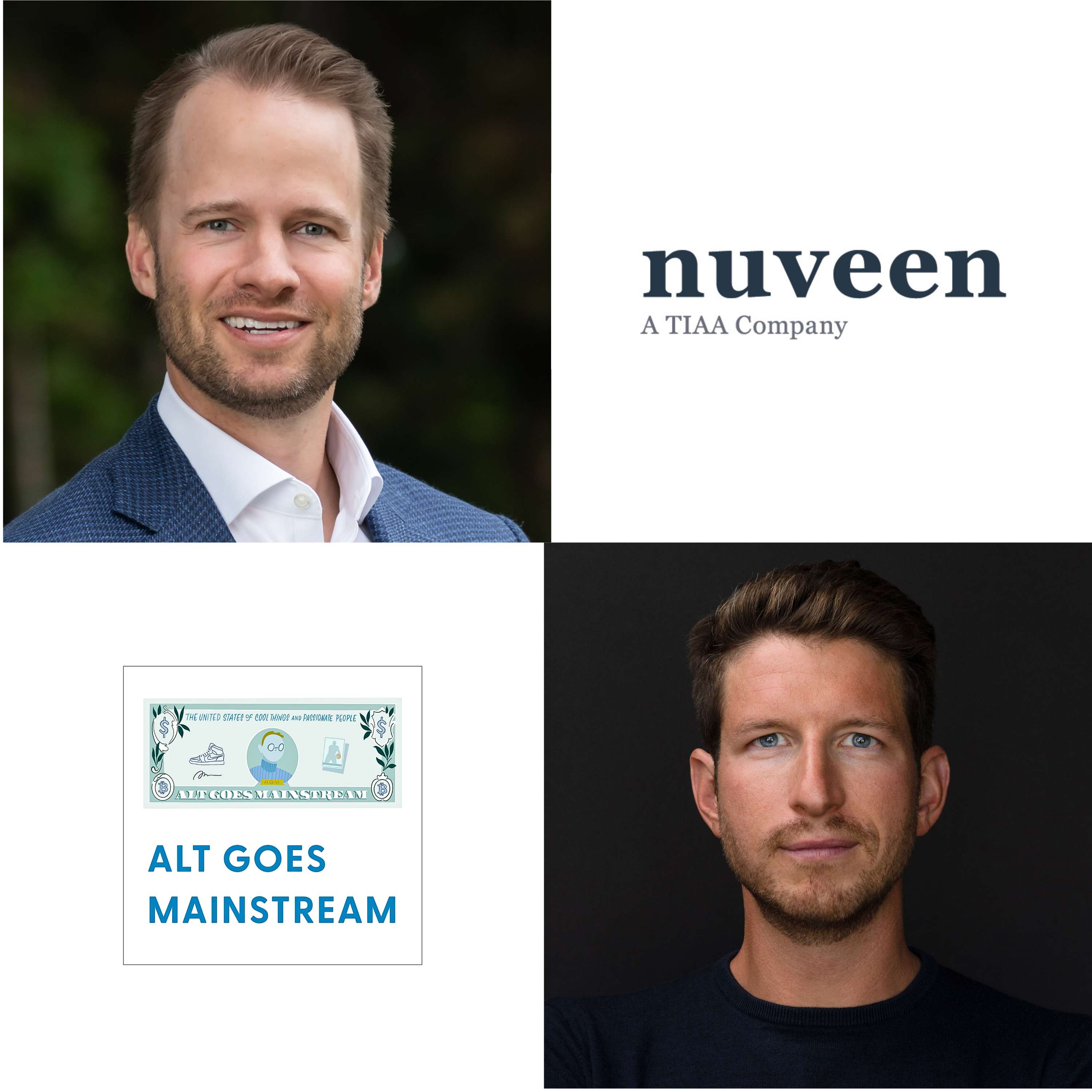
Alt Goes Mainstream: The Latest on Alternative Investments, WealthTech, & Private Markets
Live from Nuveen's nPowered Conference: Nuveen's Keith Jones - structuring products for success
00:40:17
Loading summary
Transcript64 lines
- [00:00]
A
This episode of the Altcos Mainstream Podcast is brought to you by Ultimus, a leading full service fund administrator for asset managers in private and public markets. As private markets continue to move into the mainstream, the industry requires infrastructure solutions that help funds and investors keep pace. Ultimas is a leading full service fund administrator for asset managers in both private and public markets, offering a wide range of capabilities across registered funds, private funds and public plans, as well as outsourced middle office services Delivering operational excellence Ultimas helps firms manage the ever changing regulatory environment while meeting the needs of their institutional and retail investors. Ultimas provides comprehensive operational support and fund governance services to help managers successfully launch retail alternative products. Trusted by institutions, investment consultants, registered investment advisors, state governments and fund managers, Ultimas provides solutions for nearly every investment structure in the marketplace. Visit www.ultimusfundsolutions.com to learn more about Ultimas technology, enhanced services and solutions or contact Altimus Executive Vice President of Business Development Gary Harris on email@gharrisultimasfundsolutions.com we thank Altimus for their support of Alts Going Mainstream.
- [01:18]
B
Everybody gets a piece we're going mainstream Everybody's gonna eat we're going mainstream all my family see See you on Mainstream we're going mainstream From Wall street to Melrose Avenue we're going mainstream Venture capitalists to athletes to creators to the person who has collected trading cards we're going mainstream In a collision of culture and finance we're going mainstream welcome back to the Altcos Mainstream Podcast. Altcos Mainstream was live from 1.2 trillion AUM asset manager Nuveen's Empowered Conference, a.
- [02:05]
A
Two day event bringing together Nuveen thought.
- [02:07]
B
Leaders and industry experts to explore challenges.
- [02:09]
A
And opportunities in private markets.
- [02:11]
B
We interviewed some of Nuveen's senior leadership on site to hear their views and perspectives on private markets working with the Wealth Channel and Product Innovation. We talked with Keith Jumps, the global Head of Alternative Investments product for Nuveen and a member of the extended leadership team. He's responsible for the development and ongoing management of alternative investment products distributed through Nuveen's institutional, wealth management and retirement channels globally. Keith and I had a fascinating conversation about product innovation in the Wealth Channel.
- [02:39]
A
And how to educate and market products.
- [02:41]
B
Specifically designed for the Wealth Channel.
- [02:43]
A
Thanks Keith for coming on the Altcos.
- [02:45]
B
Mainstream Podcast to share your wisdom and expertise. We hope you enjoy We're Going Mainstream all right. We are live from Nuveen's NPowered Alts conference. Pleasure to have you Keith.
- [02:59]
C
Thank You, Michael, I think we have.
- [03:00]
B
A lot to discuss on everything that's happening in private markets. You have such an interesting perspective given the work that you're doing at Nuveen. I'd love for you to start there because I think that's going to inform a lot of the things that we're talking about when it comes to how you think about structuring products, both institutional and wealth channel, what it means to distribute those products, what those products should look like. So we'd love to just hear your background.
- [03:25]
C
Happy to be here. And my background. I've been with Nuveen now for eight years. And before that I had worked at a series of banks, Stifel, Barclays, started my career at Merrill Lynch. I've been in some shape of alternative investments, structuring research or sales for the last 15 or so years. I was at Stifel at the time I got the call about Nuveen and Alternatives and they're building this new business. And I said I had little interest in the role. I was like, I know Nuveen municipal bonds, closing funds, they have Gresham Symphony, a couple outposts, but really nothing on the alternative side. But the hiring manager was an old colleague from Merrill who I hadn't connected with. So I just really wanted to connect the dots and see how he was doing. That's when I heard the story around Nuveen and the acquisition that TI had made by Nuveen and the business build and that Nuveen and TIA were going to come together. Tia's asset management business was going to merge with Nuveen to create kind of the investment arm of tia and that the goal then was to go out and commercialize. And what does that mean? It means you need to build products to be able to raise third party capital to help build those strategies. So that's when the light bulb went off and I started hearing about the real estate strategies they had and all the stuff that TIA had been doing for years in agriculture and timber and private credit. And then the Nuveen side being all third party capital with a big presence on the wealth side and kind of seeing like, oh, wow, that's a pretty big opportunity. And so that was the exciting part for me to come over to Nuveen. My current role now I'm the global head of private products. So anything that is a non traditional investment strategy or structure, my team is responsible for the development and the ongoing management, both for the institutional and for the wealth segment.
- [05:02]
B
So I want to start there because I think there's so much product innovation happening around structuring, particularly for the wealth channel, but not necessarily limited to that, could actually be poured over the institutional side too. Would love to hear what your thoughts are on structuring products for the wealth channel and what that means to you when it comes to here's what we need to do to actually create, package and deliver products to the wealth channel.
- [05:31]
C
Well, this might be a disappointing response, but I'm actually usually product or structure agnostic. I think what we really do well at Nuveen is we focus first on the client and then we look at the investment strategy and then we figure out what the right wrapper type needs to be in order to deliver that. Because it's not a one size fits all approach, there's going to be different eligibility requirements. If you go into the wealth world, wealth means a lot of different things. You got your high net worth, mass affluent all the way into $1 True Retail. On the institutional side, you're right, there's maybe not as much growth in that space, but there's a lot of complexity with changing regulations that require a lot of detailed structuring and expertise to deliver those capabilities to those clients. But I would say just generally speaking, when we look at the opportunity set, what starts with the client and at Nuveen we're fortunate to have a very broad wealth presence in which we kind of have a barbelled somewhat approach where we look at our high net worth clients, more of a private banking type relationships where we have large RIAs, even like the top end, a lot of wirehouses and broker dealers and then on the other end we have the mass affluent which is the largest addressable market here in the US but also probably the most, I don't want to say not sophisticated but requires the most education because the pipes and plumbing, everything to support that business is different than what might already exist on the private side. So when we think about kind of the universe of structuring and what products are going to be best suited for each one of those clients, it really starts with those clients and that's their sort of initial approach.
- [07:00]
B
What's the hardest part about structuring products for end client in mind? Is it the structuring of the product itself or is it all the things you have to think about post structuring and delivery to that end client? When it comes to reporting, when it comes to managing the valuations, the assets themselves, managing the portfolio for the portfolio managers, if it's an evergreen structure as.
- [07:24]
C
An example, I'll just look at my experience here at Nuveen, which is maybe unique. I mean there's a lot of other large diversified asset managers that aren't just pure play all shops that are entering the space. And so I think our experience might resonate with some folks who are entering this market. First and foremost you have to have credibility and that means brand. You got to have a brand that is tried and true, that actually has brought returns back, not just unrealized returns, but actual money back to investors. So once you have that established, then you can look at the actual structuring and again as I said, look at the clients. What's the target market? Is this a high net worth product? Is this a mass affluent? Is this an insurance product? And then once you have that, I would actually say that the structuring piece is relatively straightforward. I don't think you can be too innovative in some existence because then suddenly you're over complicated and a lot of these larger distribution platforms don't really want that level of innovation. I think at least not right out of the gate. You could look at say non trade REITs, those have been around for a long time, but suddenly it was until 2017, 2016 when suddenly they took off. Well, that was really because the wirehouses embraced the structure. So I think interval funds, same thing, that's now a new trend. Interval funds are not a new structure, but suddenly it's kind of the structure du jour because you have a lot of new public and private partnerships that are creating a lot more interesting opportunities and everyone's getting smarter about how to use them. Yes, there is complexity in how you figure out liquidity, matching and things like that. But I think the hardest part is the actual go to market. Once you actually have the strategy, you've got the pitchbook, you've got the team set up to actually go and enter the space. The bar continues to get higher, I think whether you need seed capital, whether you need any existing assets, whether you need a portfolio that represents the actual target portfolio, which means you already have hundreds of millions of dollars in some instances already invested. Well, where does that capital come from? So some people get creative, they go to existing institutional investors. We're fortunate to have a parent, that being TIA that will look to invest in most but not all of our strategies. And so that getting to market piece is really the hardest part in my mind. And then I think the fast follow to that would be three years later with performance reporting. And how do you actually keep the client experience at the highest level so that they are a sticky relationship so that they want to stay invested in that product for a longer period of time.
- [09:47]
B
So I think you mentioned something really interesting beginning of your answer, which is brand. How does brand intersect with the creation and structuring of products? What I mean by that is as firms think about creating products, how should they think about their brand in that context? It has to make sense, right? A manager who doesn't have expertise in a certain area, maybe they shouldn't structure a product in a certain asset class or strategy.
- [10:19]
C
I think it all comes back to what's your reputation. Obviously you can have new brands that come to market, but there's usually a story behind that. So and so came from this firm. This is where their credibility is. So I think you need to be thoughtful around trying to be all things to all people versus really being narrow and focused into the areas that you can be a sharpshooter and have success. We've sort of taken that approach. Real estate's our largest asset class. We've been doing it for a long time with TIA. There's 5 million plan participants that have access to our real estate account. It's like 30 billion or so in assets. And so that was a natural starting point for us to build a product to go out to the wealth channel to help bridge that brand where people I think had historically known Nuveen. For one thing, it's like, oh wait, you have 300 billion in alternatives. I had no idea. Probably the largest ultimate we've never heard of. So I think that part of it kind of helps bridge. But we started with real estate deliberately. We didn't go straight to farmland. We're the world's largest owner Farmland. We started with something that we thought clients were looking for in something where we had credibility. I think that helped us establish the brand for those who are more sharpshooter approach. I think you got to just be thoughtful around trying to be too many things and too many different types of clients.
- [11:25]
B
So on that point about making sure that you're not too many things for. For different clients, you also mentioned earlier that you think about products with the end client in mind. How do you go through the process as an organization, as somebody who's responsible for product structuring, of making sure that the distribution teams who are talking to the end client, whether it's the wealth channel or the institutional investor, are able to bubble that information up to the surface of here's what the clients want. How do you actually structure that and operationalize that so that it gets back to you? On the product structuring side, you got any tips?
- [12:06]
C
I mean it is, it's not easy. First and foremost, it's communication. You have to be really deliberate in the way you're communicating out the vision and the timelines and the next steps. You start working in a place like Nuveen where you've got 200 plus US wealth salespeople. You can't have a false start. It's like you're a battleship turning, not a speedboat. You gotta know that upfront. And so that means the communication around the plans and prioritization has to be clear. We do have a. I think it sounds sort of less sexy to talk about, but product governance is pretty important because you've got a lot of different ideas, a lot of different needs, you've got a ton of different client discussions happening and a lot of feedback that comes up. And then if that gets to say the investment teams and suddenly an idea goes off and they start to engage directly and they think there's a product coming even though that wasn't part of the prioritization. Or maybe it's something we shouldn't even be talking about because it's institutional only to a certain extent. That type of stuff can be disruptive. So I think having the ability for everybody to understand, just like an investment committee, you don't make the investment if it gets denied at ic. So it's no different. I think when it comes to getting an alignment on the go to market plans and sort of how you get all your functional partners, legal tax compliance, everybody to align and know that this is the vision forward and this is where we're going.
- [13:19]
B
Another interesting thing that we talked about a little bit earlier too was that you're responsible not just for structuring product for the wealth channel, you're also responsible for structuring product for the institutional channel. That to me jumps out as a really interesting way of constructing a product structuring organization where you see across the different types of investors, their needs, some are taxable, some are non taxable. It's probably not easy to do that. But I imagine there's also benefits. Why have you structured the product structuring side of the org in that way as opposed to having discrete product structuring capabilities or people focused on just wealth and just institutions?
- [14:00]
C
Institutional, we do have dedicated teams for wealth because it is such a different ecosystem of service providers and needs and like you said, like taxable, like all the different things that the wealth channel needs are different than what we have on the institutional side. So we do have a great team that's focused on that day in, day out. And they're the kind of the main point of contact for our sales teams and the alternative specialists who are also trying to bring out those products to market. I think where we are at somewhat of an advantage, or at least in my role in certain roles that we have on the product team that sit over the asset classes, is that you can see where the investment strategies are going earlier. You can see the PM you hired and looking at where that marketplace may be going. You can understand where there might be capacity constraints, where there might be a new strategy that we're having traction on the institutional side that might be able to pivot over into the wealth piece at some point. So it just gives you better transparency because at the end of the day, and this is the same true for the institutional side, being able to see what's happening on real estate and real assets and private capital. And nuveen client sees nuveen. So the experience they have through diligence for farmland, we want to make sure there's some common threads and there's some synergies you'll see in structuring for real estate. So having that continuity really makes sense in that regard. And we're seeing the same thing play out on the wealth side as well.
- [15:21]
B
So brings up an interesting question in my mind, which is oftentimes institutional investors end up getting access to a product first, or they're the ones who get to experience some sort of product innovation. I think the same is true for fintech generally, where people think about, okay, who are the big customers. But you look at what's happened more recently in both fintech as well as the wealth channel when it comes to private markets, and it's that I think there's actually a lot that can be learned from going to the smallest unit of investor.
- [15:55]
A
Right.
- [15:56]
B
You've had, and I believe you actually have products that are like $2,500 minimums. So you have to think about things at such a level that maybe others who've just focused on the institutional channel have never had to think about that. What do you think the institutional channel can learn from all the innovation that's happening in the wealth channel when it comes to product structuring, or how you've actually delivered investment solutions to end clients?
- [16:28]
C
I think what we're seeing a little bit happening is institutions. There's such a focus on the client experience for wealth investors. Institutions want that too. One of the biggest reasons we converted a lot of our Core lower risk, lower return, income oriented alternatives to evergreen structures was that a lot of our consultants don't want to keep repeating the diligence process over and over again. You can be on a buy list and they can do periodic reviews but they don't want to keep going through the hoops. Again wealth clients have the issue of well how do you handle the cash flows, how do you handle the allocations and what do I do with this chunk that hasn't been drawn yet? Do I put it in? S and P institutions have similar issues to grapple with with deployment. They want to be fully invested as quickly as possible and remain fully invested. So I think there's a lot of learning that we took from the wealth side and said well some of this applies to a lot of our institutional clients and consultants too. Consultants actually I think were on the forefront of a lot of these changes to move a lot of these say private credit strategies to Evergreen because it just made sense. You can do it in a BDC construct. Why can't we do it here for institutional investors?
- [17:32]
B
So how much do you think institutional investor take up of things like Evergreen Structures will actually then circle back to enable the wealth channel to get more comfortable? Because there's some, I imagine validation of when an institutional investor says yes I can invest in this product or strategy. A wealth channel investor is going to say oh wow, so and so pension plan or endowment or sovereign invested in this too. I can also underwrite that because they, they did that work. Do you think that's going to start happening as more institutions start doing that?
- [18:08]
C
Maybe. I don't think any of that happens until you resolve some of the operational friction that exists.
- [18:16]
B
Let's talk about that.
- [18:17]
C
The two biggest components to enable that would be the operational considerations and education. And both of those are pretty big opportunities but also very much under invested in this environment.
- [18:29]
B
I want to talk about the operational side because I think that's such an important aspect to enabling broader take up of private markets products. What are the biggest challenges for you when you think about structuring when it comes to keeping in mind and figuring out okay maybe we can structure it this way, but here's the operational challenges we need to solve those with fintech solutions. We need to figure out how to actually structure this properly. How do you think about that and what do you look for?
- [19:00]
C
There's a lot to unpack in that when you deconstruct the life cycle. There's areas of opportunity at every toll gate. There's the upfront piece, the subscription process. I think there's been a lot of great work that's done. You know, iCap, simplifying that so an advisor can just point and click and everything is pre populated. That's great. But then you get into the post trade piece. What about actual funding mechanisms, cash movement? That doesn't quite exist in today's environment. You've got service providers, custodians, different reporting. Not everyone's playing on the same operating system. And I think that's a big issue too because that limits the ability for information to flow and usually results in paperwork. And clients don't like paperwork. Everyone's moving beyond that. So if you think about the generational wealth transfer, every asset manager, everyone that's zeroed in on the opportunity to address the allocation issue of where we are today versus where CIOs and others say they should be, you got to get that operational ecosystem right in order to enable that. And that means that you're going to have everybody on the same page with how you're going to handle blockchain and different ways to get information from point A to point B on a real time basis. And then ultimately at some point you get to the cash movements as well. I think the reporting side is also trickier. I think as you move more into these evergreen structures, or if you think about the products that are more targeted towards the mass affluent, like the interval funds, tender offer funds maybe on the higher end of that range, that's a nice step in the right direction. Because they're 40 ACT vehicles, they already have the ability, you can have a ticker on them, it kind of makes it easier. But we're really just scratching the surface with respect to how those can be incorporated. And I think a lot of firms, meaning distribution platforms, intermediaries, haven't fully embraced them in a major way yet. So that they can actually be tolerated in certain model portfolios so that you can have them in retirement. All these channels haven't fully been unlocked.
- [20:59]
B
Yet on that point. What do you think is going to be the biggest unlock to enabling more investors to allocate to these structures? Is it going to be something like model portfolios? Is it something like figuring out subscription process or the valuation process? Is there something in your mind that it's if this got solved, this would open the floodgates beyond what's already been opened?
- [21:25]
C
I think if past is prologue. If you look at mutual funds as sort of a proxy for these more Fodoria type vehicles, interval funds retirement, when mutual funds first really got their traction back in the 80s you had good luck, you had a bull market, you had a lot of those market factors that came in together. But you had the opening up of new distribution channels. And now I think the stat is mutual funds make up over half of everyone's 401k mutual funds and the stocks. Yeah, yeah. So it's like, well, why you've got 40 ACT vehicles in these interval funds. Even REITs and BDCs should be in that same bucket. But they've got the blue sky considerations that make it a bit trickier. But someday maybe they'll be in that same bucket too and there'll be more flexibility. But I think the retirement pieces, that's a perfect type of pool of capital because it's like you set and forget it. Nuveen has been pushing into that space a little bit and incorporating private real estate into say, target date funds. But I think the actual retiree people need to be more empowered on the selection side. And I think that is a really big unlock. And one, if I may just go to education real quick. I don't think any of that happens without the educational piece though, because what do I do if I go in to look at my 401k and I'm looking at the mutual funds that I have available to me and they're all stocks and bonds, I guess, plus the TIA real estate account. I'm not expert in each one of those. So what do I look at? Stars. What's the star rating? How's the before? What's the alternatives? Market? The individual investor and the typical advisor need a credible independent party who can help them. Morningstar. And it doesn't have to be a star system, but how does somebody differentiate a investment grade real estate portfolio from maybe a high yield? And even harder, how do you do.
- [23:10]
B
It in an interesting point, like you certainly need the independent adjudicator or rating system. The other aspect of this too is how do you make it as easy as possible for advisors and or end investors to just allocate? And I feel like that gets to something. You said the word models. You almost need to make it as easy as possible for them. How do you think about inserting products into a broader, more holistic portfolio construction too? Because it's not just about educating you almost in some senses, yes, you want people to pick products, but you also want to make it as easy as possible for them. And you wonder if, like, if they're just models, then people will end up investing without having to think about which products they necessarily need to pick. And choose.
- [23:58]
C
I mean, models is a fast follow to the retirement channel from an opportunity standpoint, in my opinion, because there's already a lot of money flowing into that space. But there's all the alternative exposure, at least that I've seen is kind of a below the line. We need to get that above the line. And I think that a lot of these things we're talking about around how you get education so that something could be like, well, how do you know, gets in or out of the model? And then also the operational piece and being able to grease the skids so that you can actually be more transactional in some of these things. But I think we have to be careful, though. I always have this discussion. Somebody usually brings it up at every conference if there's a panel on the future. And they always want to bring up tokenization and liquidity and secondary markets and all this stuff. I think that's an interesting topic. But at some point you have to take a step back and say, well, why are investors interested in the asset class in the first place? It's not because it has the same liquidity and inherent risk and return characteristics as public equities. There's a reason you get a illiquidity premium. It's because there's illiquidity. And so I think you got to be thoughtful around how we approach these things in models so that if you have something like have some rules and guidelines that says you can't touch this for five years and this is in it, and then you actually have that patient capital. So I think that part, again, education, like that makes it complicated, but I think that's a part of the modeling side that needs to be thought through.
- [25:22]
B
I think you bring up some really important points here in terms of how to think about product structuring in the context of one, the end client, which you mentioned earlier, you're almost starting from the endpoint and working your way backwards, then saying, okay, this is the client. How do I structure something? I want to ask that same question in the context of education and innovations like models. How much do you those aspects as end states factor into? Then how you work backwards and say, okay, we need to educate. Here's how, here's why. We need to create certain portfolio construction frameworks. Here's how, here's why, here's the end client in mind. Walk that backwards to product structuring and product creation. How do those impact how you think about that?
- [26:11]
C
It definitely requires prioritization because what you just laid out is a massive undertaking and project and you have to think those through in the context of opportunities that are more near term. But what I always advocate when we're having our broader discussions with our distribution partners and clients is we need a partner for Nuveen, for example, or any asset manager to say we've got it without there being somebody on the other end. I think that's a more challenging approach unless you've got a brand where you can dictate that type of capability. But I think if you're going into uncharted territory or new waters, I think you want to be thoughtful and make sure you've got a partner to go through that with you. Same thing would apply for the use of new technology. You can't. As an asset manager, a lot of the pitching comes to us to say you should try this and secondary this and blockchain and look at all these things we're doing. I was like, great, well, do we have any distributors or any clients using it? Because we're in the second we've got that we're in. And I'll get all of our functional partners and service providers to join on that journey. But if we're just pushing this stuff out, I think that's hard for a big wirehouse to digest. We need them to say, we're going to invest in this alongside you and then we can make that change. And that same thing applies for models. So if we had a partner who is like, hey, this is where we want to be going. We really like all the investment and Nuveen's in a pretty unique spot. We've got 850, 900 billion in publics, 300 in privates, and we've got all the raw ingredients to do a lot of unique things for models. You could even do open architecture if you wanted to. Right. I think that's a pretty cool idea. And we actually have a platform, some tech platforms that could do. We already do models on the public side, but I think to go that leap to get privates, you gotta have a partner to help get that off the ground or to help prioritize amongst everything else you're trying to do.
- [27:54]
B
What you're getting at is really interesting too because it's taking in client feedback and trying to figure out how to marry that with the product structuring. So how do you think a well functioning organization has this connection and interplay between distribution and product structuring? Maybe the answer is like product specialists sitting in the middle. You think about that analogy to enterprise software, the product marketing manager is that Go between the product structuring and then the distribution or enterprise sales team effectively.
- [28:24]
C
I love that dynamic because that means you've got strong client relationships where you've got this feedback like this. Strong feedback like this is what we need. We need this now. That opportunity is always there and that excites me. And that's, I think, why we've had such good success for the last eight years that I've been here in growing the business and getting the brand out and getting people aware of all the capabilities because of that dynamic. But at the same time, like I mentioned earlier, Nuveen is not like every other firm. So if I was a smaller shop and we're a specialist and this is what we do, we can be nimble, we can get that feedback, boom, we can start that development engine right away. Whereas we've got a pipeline, we've got a queue, we've got things going out through 2026 that we're working on. And so if you want to redirect and take dollars to invest in something else, we just have to make sure that we're all aligned. You asked how do we do that from the top side? The communication piece is huge and creating that alignment with the investment team, with our distribution partners is really important to be able to do that.
- [29:23]
B
The investment team's skill set change when you have to think about things like creating evergreen structures. Because the way in which they source deals, the way in which they manage the portfolio, manage liquidity or distributions, that all seems to matter when it comes to particularly evergreen structures.
- [29:41]
C
Yeah, no 100%. It's a different mentality when you take an institutional PM who's used to managing a closing structure where he gets the luxury of issuing 10 day drawdown notices when he's ready to suddenly getting inflows every month, that's a different dynamic. Then on the same side you may have outflows. So that's when the portfolio construction piece really comes into play. Your use of subscription lines, bank financing, other mechanisms, other tools that you have at your disposal become a bit more important. And I think that the PMS that we have running our evergreen strategies on the wealth side, they're very well versed in that in dealing with publics and privates. And they're very thoughtful in how much they can deploy into privates. And not to exhaust the liquidity bucket.
- [30:24]
B
Does the PM skill set have to change? Like people who are either coming up in their career or will end up managing things like evergreen structures, do you think that their role as investment professionals and the skills that they have to have will need a change going forward.
- [30:38]
C
I think dealing with the wealth side is you might get a different set of questions and concerns than you would maybe on the institutional side. So I think that's one piece. There's almost that client servicing side. If you're going and doing a big pitch or you're having those types of discussions, I think that's one piece that we've seen our investment teams go through that training with our distribution folks. The other side is just how to manage the liquidity. And that usually at Nuveen requires you're suddenly talking to the public side of the house in ways you never had before. And you're setting up the pipes and plumbing operationally and all the compliance considerations around making sure that you've got that wall on the public private side appropriately set up. And so that's a nuance they didn't have to deal with before, which is a new consideration. And then the final thing is, and it's kind of like a limited partnership pack meetings, but when you do board meetings for registered products, 33, 34 public companies, there's just a little bit more nuance in what you have to prepare and what you have to do and the reporting cycles and all that. So it takes a team. You can't just say, oh, this 1:00pm has experience doing that and therefore they can do it. You need to have a good team of functional areas to support to have success.
- [31:49]
B
So going forward, what in your mind is going to be the next big product innovation in private markets?
- [31:58]
C
I'll tell you what I'm really excited about, which is, and again, we'll use mutual funds as another proxy. The growth there became when they had a lot more options. You had sector specific, you had international, you had emerging market. All that's happening now in alternatives, real estate, private credit. Okay, check now what's the next wave? And you're seeing more focus on structures that allow for the mass affluent to get involved. And so I think that there's going to be more opportunity for the public. Private structures, just because they're built for scale, are going to be really interesting and exciting place to continue to place bets from an investment standpoint. And then I have to say real assets and I say that generally speaking across farmland infrastructure, I think a lot of investors are where they may already have allocations to real estate, are looking at the same type of investment attributes, inflation, hedge income diversification. But real assets performs differently than real estate, but still provides those benefits. So I think that's going to be a really interesting area to focus on. And if you look at certain subsectors like farmland, the rural population is not declining. The need to put food on the table is going to be there for a long, long time. And that's an issue. And so having that ability to invest directly in farmland where you actually own the land, or you may have an infrastructure play where you can make improvements, I think that's an area that is not as well understood as soon as you hear one teacher like I get it. So I think there's a lot of opportunity there that hasn't been tapped yet.
- [33:26]
B
You talk about comparing things to mutual funds. My mind can't help but go to the industry evolution that happened in the mutual fund space, which is more and more products race to the bottom on fees fee compression. So that's challenging for those firms as a business. Yes. So what does that make you think when you hear that as you think about structuring products in the alternative space? And Maybe there's a 10, 15 plus year Runway, so there's plenty of time to worry about that. But I'm sure there are lessons to be learned from mutual funds space that you can port over to private markets.
- [34:01]
C
I don't know how much time we have, but we should dig into this one. This is a good one for a pint maybe. But if you dig into the public side and mutual funds, yes, I like looking at the growth there, a lot of the operational and investor driven opportunities that will help us grow. But if we get into the same state that mutual funds are in now, where if you look at dispersion of returns, it's pretty tight, it's hard to argue that you should be paying a premium for something that the dispersion between top and bottom quartile is that tight, whereas in alternatives, generally speaking, it's still pretty wide. So I think there's still going to be a pay for performance mentality where certain managers, certain capabilities that are just really good at what they do and can perform in any cycle and they know that there's limited capacity in what they can do, they will continue to command a higher rate of fees because what they do commands it. I think markets are efficient. If you start getting commoditized like private credit, it's kind of dangerous to get into that area where there's been so much money deployed such a big market. It's hard to justify having different fee levels. So alternatives are not immune to it. But I think you have to be able to justify it with performance.
- [35:13]
B
Does Structure impact returns.
- [35:15]
C
I think it can if you start structuring things to go after broader sets of clients, like retirement, for example, you start at fees, you don't start at the strategy, you start at fees. And that's where to your point earlier, you may have to structure backwards, like here's the mousetrap we have to build and how do you make that fit? But you got to be really careful in how you manufacture that. Because if you have a big retirement plan that wants to put a billion dollars a year into say, farmland as an asset class that I like, you may not have the capacity to do that. That just may not be realistic. So why are you going to give all the available capacity to this channel that wants to charge this much? So there's still a lot of thinking to be done on that.
- [35:51]
B
It creates a really interesting dynamic, not just for Naveen, just zooming out more broadly, which is particularly as these firms are publicly traded and their metric is fee related earnings, which derives from revenue growth, which derives from aum. And presumably a lot of these evergreen structures will be the places where you can really grow aum. That brings up an interesting philosophical or intellectual question of like, how do you balance those somewhat competing forces?
- [36:22]
C
I'm just thankful we're private. No, but that is a real dilemma. And I think, like I said, markets are efficient. It'll force certain decisions at the top of the house on where they're going to go to accommodate whatever the financial metrics need to be to help that firm advance.
- [36:36]
B
I mean, on that point as well, the merits of alternatives are not just around return. Sure, there's greater dispersion and we can go asset class by asset class of where interquartile dispersion is greater and less than alternatives. And then certainly you compare it to public markets. But it's not just returns, it's also diversification. So even if returns go down on an absolute basis, do you think some of these new structures enable for other things like diversification to be the reason why people are allocating to alternatives and enables more people to allocate to alternatives?
- [37:12]
C
I think so, absolutely. I mean, the return profile is one component. The risk management side is maybe not the coolest thing to talk about, but it's pretty important. And I think a lot of advisors focus on that and view a lot of these types of strategies as volatility dampeners. And that's a big driver, I think, for a lot of the flows and a lot of the interest. If you can just clip a steady coupon and not have to worry about trading or what's going to happen in the public markets and elections and all that stuff and just be able to say, hey, this is a minimum five year hold for me and I'm just going to let it ride. I think that's the ideal state to be in. And a lot of alternatives do provide that value proposition. That's a lot of why people are allocated into that space. And they all behave a little bit differently. Like I said earlier, real estate and real assets don't behave the same way from a correlation standpoint. So that's an interesting way to look at these different asset classes. And as people get more sophisticated and we get toward that target CIO allocation, whatever it may be, 10% based on risk profile, that level of information and flow is going to have to be presented to those advisors in order to make the right decisions.
- [38:14]
B
So I want to end by asking you. There's obviously a number of different things that can probably continue to be improved upon in private markets. But if there's one thing you can pick that would be a major unlock for the next wave of capital to really flow into private markets in a big way, what would that be?
- [38:34]
C
It would be the industry coming together with the backbone of how we operate to create changes. It is the custodians, the fun admins, the transfer agents, the people that can really make or break that client experience. We need to all come together and say this is what we're going to be doing and this is the path forward. And everyone, chip and everyone contribute and almost work as a coalition to advance. That is the unlock for the industry. There's plenty of things on nuveen and things that I'm personally interested in in the market. But that to me is an area that I continue to spend a lot of time on with my industry peers to say that's where change is needed.
- [39:13]
B
What's so fascinating about that comment is that we can talk all about returns and different strategies and different firms doing different ways of structuring a certain type of fund, but it really comes down to the structure for post and post investment really of how do you make this as easy as possible for people to access private markets?
- [39:32]
C
Well, I would argue it comes down and then it reverts back to the client. If the client experience is not positive, the music will stop. And that's when people stop allocating. They won't see the value proposition. They'll say, it's not worth a headache, I'm out.
- [39:47]
B
I love that way of ending because you said that clients need to be empowered. And here they are today. Empowered.
- [39:53]
C
Empowered. That's right. Well, thank you.
- [39:55]
B
I appreciate it. This was a great conversation. Thanks so much, Keith.
- [39:58]
C
Thanks, Michael.
- [40:00]
B
Thanks for listening to this episode of Alt Goes Mainstream. I hope you enjoyed it. You can read more about Alts at my substack, altgoes mainstream.substack.com Thanks a lot and have a great day.