Podcast
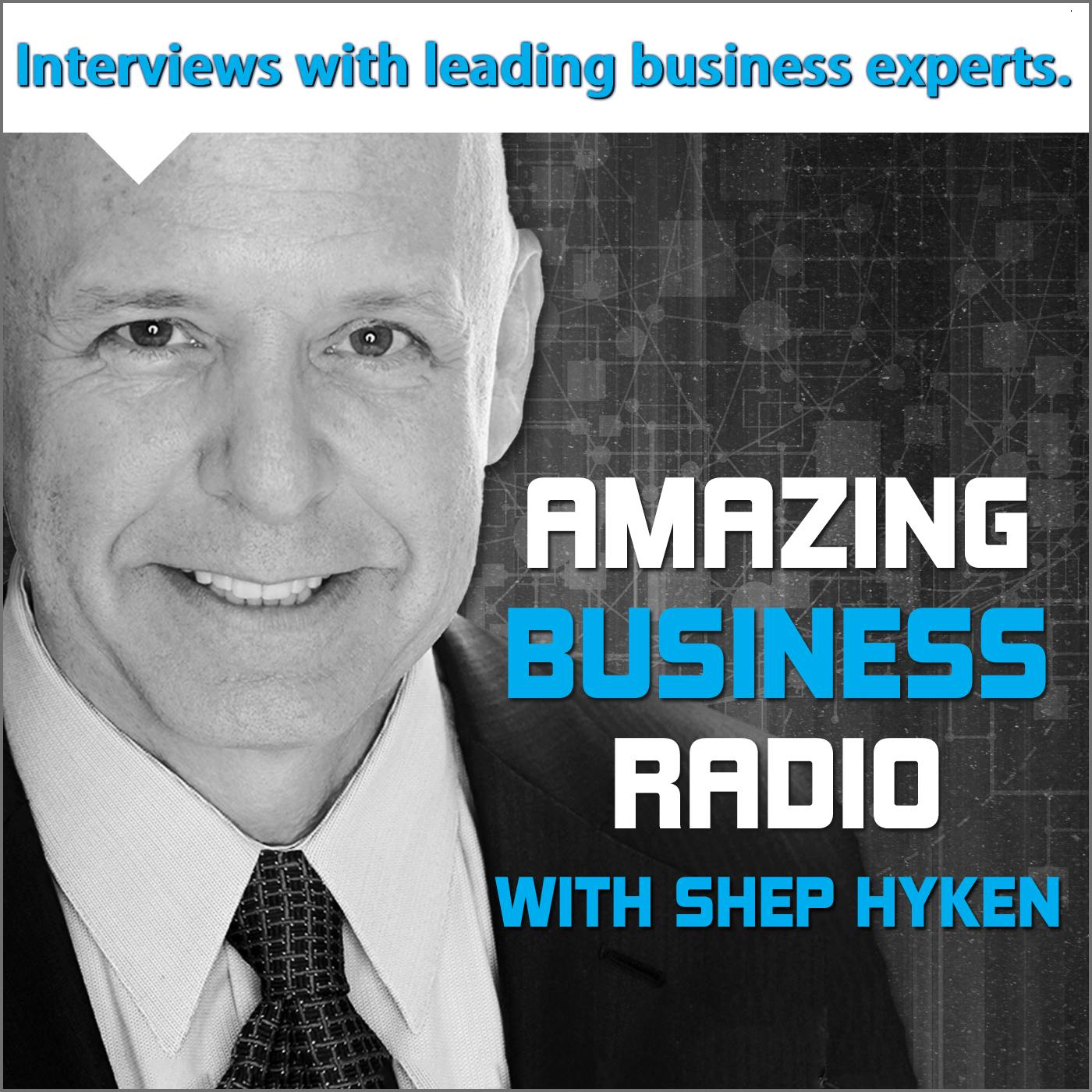
Amazing Business Radio
Hosted by Shep Hyken & C-Suite Radio · EN
Amazing Business Radio features customer service expert and New York Times bestselling author Shep Hyken who interviews leading business professionals and other customer experience experts. Each guest shares tips and insights on how to succeed in business. The bright business minds featured on Amazing Business Radio come from all over the world and include viral video stars, corporate CEOs, bestselling authors, thought leaders, and many other inspiring personalities. The show covers a variety of topics related to customer service and customer experience and will provide answers that listeners need to know in order to take their success to the next level. Amazing Business Radio airs every week on, itunes, Soundcloud, and other platforms and channels.
30episodes
Episodes
Newest firstAll episodes

How to Know the True Impact of AI in Customer Service Featuring Jeff Fettes
2w ago00:16:14Tap to summarizeBalancing Productivity and Customer Satisfaction with Automation Shep interviews Jeff Fettes, founder and CEO of Laivly. He talks about how organizations can integrate AI across the entire customer service journey to empower agents and advance business goals rather than relying on vanity metrics. This episode of Amazing Business Radio with Shep Hyken answers the following questions and more: How do you measure true ROI on AI in customer service? What customer service metrics should companies track to evaluate AI success? Why do most customer service AI implementations fail? How can contact centers integrate AI across the entire customer journey? Should AI in customer support be used to replace human employees or assist them? Top Takeaways: Use AI in customer service because it is beneficial, not just because it is new. AI should be implemented when it makes processes genuinely easier or better for customers. It is about evaluating what your customers, employees, and organization need and then using AI to deliver that. Limiting AI to the beginning of your interaction adds unnecessary cost and frustration, especially if the customer still needs to speak to a human later. For better impact, integrate AI into every stage of the customer service journey where appropriate. When customers move from AI to human agents, history and the details of the interaction should be transferred seamlessly. This way, agents do not need to ask questions that force customers to repeat themselves. The goal of AI should not be to replace staff but to support them. It should enhance the capabilities of your existing team and help them to reach your organization's unique goals. Many leaders claim their AI projects are successful even when they're over budget or delayed. A study by Laivly found that 65% of leaders called their most recent AI initiative successful even though, in reality, 43% of AI projects are delayed or stalled, and 53% went over budget. Don't measure AI by the percentage of customers it touches or deflects. Focus on how it improves productivity and customer satisfaction metrics that you have set within your organization. AI is only successful when it delivers results that are important for your business and improvements that are meaningful to your customers. Plus, Shep and Jeff discuss more stats and insights from The AI Paradox: Everyone Thinks They’re Winning. Tune in! Quote: "Customers only want to participate in AI if it's going to be good for them, if it's going to be easier for them, if it's going to make their lives better, and if they like it." About: Jeff Fettes is the founder and CEO of Laivly, a platform that addresses customer experience challenges by integrating artificial intelligence, machine learning, and automation into customer service workflows. Shep Hyken is a customer service and experience expert, New York Times bestselling author, award-winning keynote speaker, and host of Amazing Business Radio. Learn more about your ad choices. Visit megaphone.fm/adchoices
Transcribe →
How Your Reputation Becomes Your Brand Identity Featuring Daniel Vivarelli
3w ago00:19:28Tap to summarizeThe Return on Investment of Good Customer Reviews Shep interviews Daniel Vivarelli, founder of Starloop. He talks about how customer reviews build business reputations and Starloop’s unique model of planting a tree for every review to drive ethical engagement and market leadership. This episode of Amazing Business Radio with Shep Hyken answers the following questions and more: Why are customer reviews important for SEO and lead generation? What is the difference between customer surveys and online reviews? How do positive online reviews impact customer price sensitivity? How can businesses use negative reviews to improve their brand reputation? What is the best way to get more Google reviews ethically? Top Takeaways: Google reviews have evolved from a nice-to-have to one of the main factors customers consider in their decision-making process. In today’s competitive environment, businesses with the most reviews and the highest ratings attract the most clients. While both surveys and online reviews offer customer feedback, reviews deliver additional value because they are public and influence a brand's reputation. Surveys provide private insights to the business, but reviews contribute directly to marketing by enhancing trust and credibility online. Online reviews are especially valuable for local businesses whose reputation is their brand. Positive reviews can be the deciding factor when customers compare options in search results. Businesses with positive reviews online not only receive more inquiries. They also see a shift in how customers approach the business. With a strong online reputation, customers are less likely to ask about prices. They get inquiries focused on booking services or making purchases, since most of their usual "objections," such as value for money or quality, are already addressed by other customers' reviews. Negative reviews are important, too. While every business should avoid getting negative reviews, their presence is an opportunity for businesses to demonstrate how they show up for customers when something goes wrong. Building a solid reputation through reviews is a gradual process, but it offers lasting benefits. Leveraging free tools like the Google Business Profile (which is free!) to accumulate genuine reviews is a high-return strategy for long-term business growth. Plus, Shep and Daniel discuss how planting one tree for every review motivates customers and benefits businesses. Tune in! Quote: "Whoever's got the most reviews and the highest rating is the one that's going to attract the people they seek to serve." About: Daniel Vivarelli is the founder of Starloop. He created the platform in 2016 to help local businesses grow by harnessing trust, reputation, and genuine customer feedback. Shep Hyken is a customer service and experience expert, New York Times bestselling author, award-winning keynote speaker, and host of Amazing Business Radio. Learn more about your ad choices. Visit megaphone.fm/adchoices
Transcribe →
Creating Meaningful Experiences for the New Generation of Employees Featuring Mark Valentino
4w ago00:20:55Tap to summarizeBuilding Employee Engagement for Better Customer Outcomes Shep interviews Mark Valentino, Head of Business Banking at Citizens Bank. He talks about engaging and retaining the new generation of employees by creating a workplace culture that prioritizes meaning, flexibility, and personal growth. Shep has often written that what happens inside of an organization is felt by customers on the outside. Creating the best workplace culture positively impacts the customer experience. This episode of Amazing Business Radio with Shep Hyken answers the following questions and more: How are Gen Z employees changing workplace culture? How does employee satisfaction relate to customer satisfaction? Why is flexibility important for retaining today’s workforce? How do younger generations redefine professional success? How does improving the employee experience lead to better customer service? Top Takeaways: Today's young workforce expects a different career path compared to previous generations. Many no longer want or expect to stay with one company for their entire career. Instead, they are more interested in new experiences, learning new things, and feeling that their work has purpose. A recent survey from Citizens Bank shows that younger workers value meaning and opportunity over titles or tenure. For employers, this means that engagement, personal and professional growth should be prioritized over pay or seniority. Money is no longer enough to keep employees. While money is important, the new generation is more interested in work that aligns with their values. They want to feel like their efforts matter and that they are making a positive difference. Flexibility means more than just working from home. It can include flexible hours, opportunities to work in different locations, and even the ability to move between roles or projects within the same company. For example, Google has allowed some of its engineers to spend time on projects outside their scope. This allowed them to work on projects they were interested in, so they could learn from them and gain fresh, innovative ideas. When workers feel connected to the people they help and the communities they serve, their jobs become much more meaningful. When employees take pride in what they do, customers and the company benefit. Plus, Shep and Mark discuss Citizens Bank’s credo, which centers around its three pillars: colleagues, customers, and community. Tune in! Quote: "If we want to engage this next generation of workforce, we have to be prepared for them to come in and work on a specific project or a specific mission. Hopefully, we can create enough meaning around it that they will want to stay.." About: Mark Valentino is the Head of Business Banking at Citizens Bank. He oversees strategy and growth for commercial banking nationwide and brings 17 years of experience in finance and healthcare. Shep Hyken is a customer service and experience expert, New York Times bestselling author, award-winning keynote speaker, and host of Amazing Business Radio. Learn more about your ad choices. Visit megaphone.fm/adchoices
Transcribe →
Using AI to Enhance, Not Replace, Customer Relationships Featuring Natalie Beckerman
Jul 700:20:22Tap to summarizeUsing AI to Enhance, Not Replace, Customer Relationships with Natalie Beckerman Balancing AI Efficiency and Humanity in Customer Service Shep interviews Natalie Beckerman, Chief Business Officer at iQor Inc. and author of When Did You Stop Caring? She talks about why organizations need to balance efficiency and humanity in customer service. This episode of Amazing Business Radio with Shep Hyken answers the following questions and more: How can businesses balance technology and human interaction in customer service? What impact do automation and AI have on customer loyalty? Why is human connection still important in customer service? What mistakes do companies make when focusing only on efficiency? How can companies merge technology with empathetic customer service? Top Takeaways: Companies often rush to implement automation, AI, and digital solutions to enhance efficiency, but these should not come at the expense of human connection. Technology cannot replace human connection, especially in critical or emotionally charged situations. Sustainable businesses use technology to support their customer service representatives, not to eliminate them. Combining AI with human empathy, rather than relying solely on automation, creates a better experience for customers and employees. "Lazy AI" is when businesses use automation or artificial intelligence to deflect customer issues and cut costs. However, it increases customer frustration by making the experience more complicated. Technology and humanity are not mutually exclusive. While automation and AI drive efficiency, the human element is still crucial for building trust and loyalty. They should complement each other to create a better customer experience. Test your own customer experience. Leaders should experience browsing through their website, calling customer support, or trying to shop their own product to gain firsthand insight into where technology can create friction or where more human connection is needed. We are in a "caring recession" where many companies treat caring as optional. Caring is a competitive advantage and a leadership strategy. Caring for both customers and employees drives higher revenue, better retention, and sustainability. Plus, Shep and Natalie talk about the Beckerman Caring Challenge and more insights from her new book, When Did You Stop Caring?. Tune in! Quote: "Caring is a competitive advantage." About: Natalie Beckerman is the Chief Business Officer at iQor Inc. and author of When Did You Stop Caring. She is inducted into the CCWomen Hall of Fame and is among the CX Network Top 30 Contact Center Leaders. Shep Hyken is a customer service and experience expert, New York Times bestselling author, award-winning keynote speaker, and host of Amazing Business Radio. Learn more about your ad choices. Visit megaphone.fm/adchoices
Transcribe →
Delivering Consistent On-Brand Customer Experiences Every Time Featuring Greg Tucker
Jun 3000:17:07Tap to summarizeHow Consistency and Convenience Create Loyal Customers Shep interviews Greg Tucker, CEO, Tucker & Company, and author of Frictionless Brand Experience. He discusses the sources of friction that hinder the delivery of a brand promise and strategies for identifying and eliminating them. This episode of Amazing Business Radio with Shep Hyken answers the following questions and more: What is the difference between customer experience and brand experience? How can companies ensure they consistently deliver on their brand promise? What are the most common sources of friction in delivering a great brand experience? Why do customers pay more for a convenient experience? Why is cultural alignment important for providing a seamless customer experience? Top Takeaways: A brand promise is a commitment a company makes to its customers about what they can expect. A consistent brand experience across all channels ensures that what is promised aligns with what is delivered. When customers encounter friction, the risk of them switching brands doubles. And this risk multiplies every time they encounter confusing menus, slow service, difficult-to-use websites, etc. Convenient businesses remove these friction points because they know that the happier customers are, the more loyal they will be. Greg Tucker shares six types of friction that hinder the delivery of a consistent brand experience. Digital Friction: Problems with digital interfaces, such as confusing websites, poor user experience, and incorrect product data. Brand Friction: Inconsistency and lack of clarity in messaging and marketing campaigns. Product Friction: When the product itself is hard to use, too expensive, or costly to maintain. Operational Friction: Back-end processes like late shipments, slow service, or bad customer support that disrupt the overall customer experience. Organizational Friction: Internal company issues, such as siloed departments and miscommunication between teams. Cultural Friction: Company mindsets, misaligned incentives, or leadership behaviors that do not support the brand promise. While being nice is important, customers would rather have things be easy and quick than be inconvenienced, even with a smile. Our annual customer service and CX research shows that customers value a convenient, frictionless experience even more than friendly service. If a company can deliver both, it stands out from the competition. Plus, Shep and Greg discuss why convenience is no longer just “nice to have," but something customers will pay more for. Tune in! Quote: "The power behind a brand experience is great customer experience. And, the power behind a great customer experience is the employee experience." About: Greg Tucker is CEO of Tucker & Company, an award-winning leader, keynote speaker, and strategic advisor. He is the author of Frictionless Brand Experience, a book on eliminating business friction to accelerate growth. Shep Hyken is a customer service and experience expert, New York Times bestselling author, award-winning keynote speaker, and host of Amazing Business Radio. Learn more about your ad choices. Visit megaphone.fm/adchoices
Transcribe →
“Engineering” Memorable Customer Experiences Featuring Lou Carbone, the OG of Experience Engineering
Jun 2300:19:51Tap to summarizeHow Unconscious Experiences Shape Customer Loyalty Shep interviews Lou Carbone, Founder and CEO (Chief Experience Officer) of Experience Engineering®, Inc. He talks about how emotionally resonant experiences create customer loyalty and distinctive brand value. This episode of Amazing Business Radio with Shep Hyken answers the following questions and more: How does emotional impact influence customer loyalty? Why is distinctive value vital for exceptional customer service? What effects do sensory details have on memorable experiences? How can integrating technology improve customer experiences? How can businesses engineer repeat customer experiences? Top Takeaways: The power of a great experience is that the magic doesn't end when the moment does. The emotional imprint that a great experience creates is what keeps customers coming back. It can influence the way customers feel about a brand even years later. Magic lies in the details. Purposeful, repetitive clues create emotional resonance that emotionally bonds customers to a brand. Carefully embedded signals are like "pixie dust" (think Disney) that trigger unconscious perceptions, shape how people value a brand, and build a strong brand ethos that customers want to be part of. Distinctive value means being irreplaceable. It is when a company delivers experiences that are so emotionally resonant that customers cannot imagine living without them. It goes beyond simply solving problems or meeting expectations. Some organizations create deep, memorable connections that feel essential to customers’ lives. Trust grows when experiences are predictable and consistent. When customers know what to expect and consistently get it, they feel safe and comfortable with a brand. Consistency should be embedded into every part of a customer’s journey. Many organizations approach customer experience by reacting to problems instead of proactively engineering experiences that deliver emotionally impactful value. Companies that stand out are those that design experiences with intention. Plus, Lou shares insights from Disney and his book, Clued In: How to Keep Customers Coming Back Again and Again. Tune in! Quote: "The currency of experiences is memories which are unconscious and are imprinted emotionally." About: Lou Carbone is the Founder and Chief Experience Officer of Experience Engineering®, Inc., recognized globally as a pioneer and leading innovator in experience management since the late 1980s. He is a best-selling author of Clued In – How to Keep Customers Coming Back Again and Again. Shep Hyken is a customer service and experience expert, New York Times bestselling author, award-winning keynote speaker, and host of Amazing Business Radio. Learn more about your ad choices. Visit megaphone.fm/adchoices
Transcribe →
How to Be Your Customer's Trusted Partner Featuring Zee Hussain
Jun 1600:22:16Tap to summarizeCreating Future-Focused Customer Interactions Shep interviews Zee Hussain, Head of Global Enterprise Solutions at AT&T Business. He talks about how businesses can elevate customer experiences by anticipating future needs, leveraging industry expertise, and becoming their trusted partner. This episode of Amazing Business Radio with Shep Hyken answers the following questions and more: What does it mean to be a trusted advisor rather than just a vendor in customer relationships? How can companies anticipate customer needs before customers are even aware of them? How can innovations be adapted from one industry to another? What are effective ways to build trust with their customers? How does technology make customer service more efficient? Top Takeaways: Trust and credibility are built by consistently delivering on the basic services and support that customers expect from you. When you do a good job of delivering on your brand's promises to customers, it opens the door to future partnerships with them. Understand your customers' opportunities and challenges. Go beyond surface-level information. Listen to them and spend time on the front lines to gain insight into their pain points and goals, so you can tailor your solutions to what matters most to them. A trusted partner doesn't just wait for customers to define what they need. They draw on their own experiences and industry insights to identify potential challenges and opportunities their customers will face in the future. Great ideas can come from outside your industry. When facing a challenge, ask yourself, How have I solved a similar problem in a different industry, and how can I apply that perspective here? A growth mindset is having an attitude of consistent learning and curiosity. It's about striving to add value to each interaction with both customers and employees. Plus, Shep and Zee discuss the impact of companies co-creating ideas and solutions with their customers. Tune in! Quote: "If we want to be a trusted advisor for our customers, we need to sit with them side by side and talk about what their desired business outcomes for the future look like and how we can help deliver them." About: Zee Hussain is the Head of Global Enterprise Solutions at AT&T Business. He oversees teams that deliver advanced connectivity and technology solutions to major enterprise clients worldwide. Shep Hyken is a customer service and experience expert, New York Times bestselling author, award-winning keynote speaker, and host of Amazing Business Radio. Learn more about your ad choices. Visit megaphone.fm/adchoices
Transcribe →
The Return on Experience (ROX) Featuring Sujay Saha
Jun 900:22:58Tap to summarizeBuilding Customer Loyalty Through Experience and Community Shep interviews Sujay Saha, founder and CEO of Cortico-X. He talks about how aligning customer experience with pricing and expectations drives value. This episode of Amazing Business Radio with Shep Hyken answers the following questions and more: What is return on experience (ROX) and how can businesses measure it? How can businesses match customer expectations to pricing? How does blending creativity and data improve customer service strategies? What steps can companies take to minimize friction in the customer journey? How does building customer communities foster brand loyalty? Top Takeaways: The higher the price, the higher the expectation. However, this does not automatically mean more products or more features. To create amazing experiences that provide value, brands need to understand what truly matters to their customers. Every customer looks for a specific kind of value, whether it is convenience, quality, community, or something else. Understand the value that your customers are looking for and design your experiences to meet (or even exceed) these expectations. Memorable experiences are not always expensive. They are often simple, timely, or personal. Offering a free car cleaning service at an auto repair shop or designing a seamless airline boarding system can add extra value to customer interactions. Customers love connecting with others who share their experience. By cultivating communities, brands can provide memorable, shareable experiences that create loyalty and a sense of belongingness. Customers don't just compare you to similar businesses. They compare you to the best experiences they have ever had, regardless of industry, product, or price point. The real competition is every amazing experience. The return on experience (ROX) should be both actionable and accountable. Leaders must examine the root drivers behind customer experiences and use them as a guide on where to direct their investments. Then measure these investments to see whether they translate into the desired outcomes, such as increased loyalty or brand advocacy. Plus, Shep and Sujay share real-world examples of organizations that are reaping the returns of delivering exceptional customer experience. Tune in! Quote: "Don’t just consider the cost of experiences, but also think about how much loyalty you can create (with that investment), which can turn into future sales." About: Sujay Saha is the Founder and CEO of Cortico-X, known for advancing experience-led strategies and pioneering ROX (Return on Experience) for Fortune 500 companies. Shep Hyken is a customer service and experience expert, New York Times bestselling author, award-winning keynote speaker, and host of Amazing Business Radio. Learn more about your ad choices. Visit megaphone.fm/adchoices
Transcribe →
How Eliminating Communication Friction Elevates Customer Experience Featuring Damon Covey
Jun 200:19:01Tap to summarizeHow a Unified Communication System Empowers Employees and Delights Customers Shep interviews Damon Covey, General Manager of Unified Communications and Collaboration at GoTo. He talks about the importance of tailored, unified communication systems that reduce friction for both employees and customers. This episode of Amazing Business Radio with Shep Hyken answers the following questions and more: What advantages do unified communications bring to customer service? How does integrating multiple channels enhance customer experience? Why is minimizing friction important for trust and loyalty in service? What are the disadvantages of generic versus tailored communication tools? How can automation and AI improve customer support interactions? Top Takeaways: The "swiveling chair" problem hurts both customers and employees. Integrating all communication channels into a unified system prevents employees from constantly switching between programs, improving their workflow and eliminating unnecessary friction for customers. Employees can't provide amazing customer service if they are using slow, broken, or outdated systems. Most of the time, customers are frustrated not because of the person helping them but because of the tools that make solving the problem more complicated. Fragmented experiences erode customer trust. Whenever a customer has to repeat themselves or start over every time they switch between modes of communication (chatbot, email, phone, etc.), trust drops. Unified systems provide smooth experiences where the next agent knows what happened before and the best tools to help the customer are within easy reach. Follow the journey that your customers prefer. Businesses need to adapt their communication channels and technology based on what their customers actually want to use. Meet the customers where they are, whether through traditional phone calls, emails, or digital messaging. Plus, Shep and Damon discuss generational preferences in communication and how unifying these options can improve the customer experience. Tune in! Quote: "If you're building everything for everyone, you're special for no one." About: Damon Covey is the General Manager of Unified Communications and Collaboration (UCC) at GoTo. Before joining GoTo in 2021, he served as Vice President of Product Management at Cox Automotive and spent 14 years in leadership roles at cybersecurity company Symantec. Shep Hyken is a customer service and experience expert, New York Times bestselling author, award-winning keynote speaker, and host of Amazing Business Radio. Learn more about your ad choices. Visit megaphone.fm/adchoices
Transcribe →
Why Every Customer Interaction Is a Sales Opportunity Featuring Rob Jolles
May 2600:20:37Tap to summarizeListening, Learning, and Problem-Solving with Empathy Shep interviews Rob Jolles, keynote speaker, five-time bestselling author, and host of The Presentation Whisperer Show. He talks about the importance of authentic communication, empathy, and intent in delivering exceptional customer experiences. This episode of Amazing Business Radio with Shep Hyken answers the following questions and more: What is the role of frontline employees in shaping a company’s customer experience? How can handling customer complaints effectively lead to customer loyalty? What steps should customer service teams follow when responding to complaints? How does authentic communication strengthen customer trust? How does empathy impact the outcome of customer service interactions? Top Takeaways: Everybody who interacts with customers, regardless of the job title, is in sales. Every conversation, whether answering a question or dealing with an issue, is an opportunity to sell the brand and what it represents. Saying "sorry" reflexively when a customer calls about a problem can feel empty. Instead, focus on listening to the customer and gathering more information. Customers want to be heard and understood more than they want an apology. They are also more likely to work with you to solve the issue once they feel listened to. Empathy is not just about saying nice things. It is about putting yourself in the customer's shoes and having a genuine desire to help. For example, ask yourself, “How would I feel if that happened to me? Hire for attitude and empathy, not just skills. Some people genuinely like interacting with people and problem-solving. An amazing customer experience starts with hiring the right people for the job, then empowering them with the right tools and training. Communicating with customers is more than just the words you say. The tone, energy, and authenticity in your voice make a huge difference in how customers respond. They notice if you’re bored or happy to help. Make sure your words, tone, and actions align with the brand that you represent. Plus, Shep and Rob discuss more insights from Why People Don't Believe You…: Building Credibility from the Inside Out. Tune in! Quote: "When something goes wrong, customers don't call just to hear the word 'sorry." They want you to understand why they are frustrated. They want you to first listen and understand." About: Rob Jolles is a renowned speaker, five-time bestselling author, and host of The Presentation Whisperer Show. His books, featured in USA Today and Harvard Business Review, have been translated into more than a dozen languages. Shep Hyken is a customer service and experience expert, New York Times bestselling author, award-winning keynote speaker, and host of Amazing Business Radio. Learn more about your ad choices. Visit megaphone.fm/adchoices
Transcribe →