← American Alchemy with Jesse Michels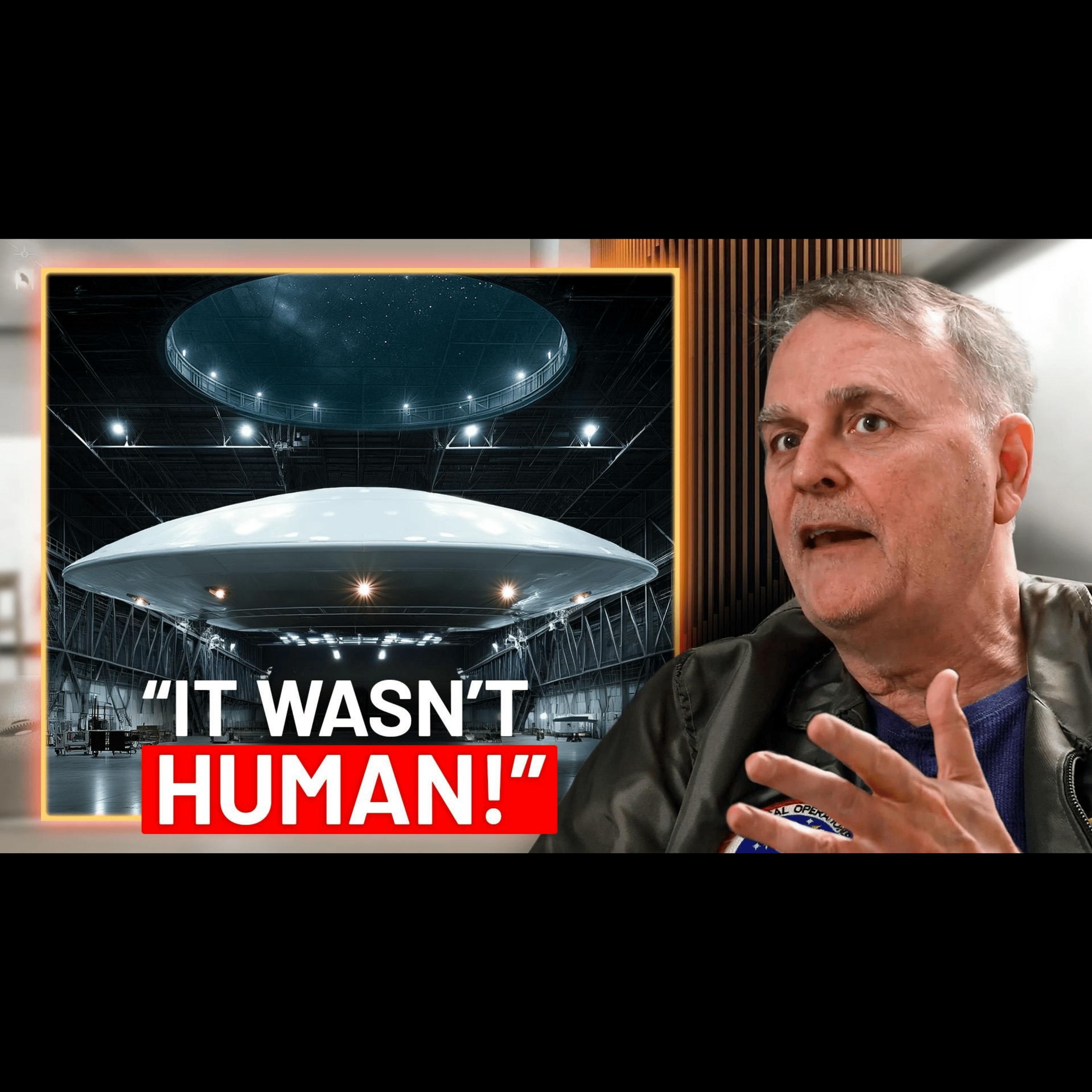
American Alchemy with Jesse Michels
NASA Director: "I Saw A UFO Hovering In THIS Secret Hangar" (Ft. Greg Rogers) | EARLY & AD FREE
02:41:29
Loading summary
Transcript459 lines
- [00:00]
Jesse
So it's what, 1992.
- [00:02]
Dr. Greg Rogers
1992. I was the chief of aerospace medicine. And he said, I've got something to show you. Even you have never seen.
- [00:10]
Jesse
Wow.
- [00:11]
Dr. Greg Rogers
And when I sat down in his chair, there's a saucer 20ft across was sort of like a modified egg. There were no rivets, no seams. But then later on it rotated. It was clear as day. It said, U.S. air Force. But then when I said, why would we build it in a design like this? He looked at me and went, we got it from them. I flew helicopters and I flew F16s. No vehicle I have ever known of could obtain a 45 degree angle of attack without moving. So when these companies say, look, we made this thing, look at how fancy it is. That's to get the people's attention so they don't look at this other thing that they're spending all the money on. Different parts of the brain have different activities.
- [01:03]
Jesse
But you know that, don't you?
- [01:09]
Dr. Greg Rogers
Maybe you should interview me.
- [01:18]
Narrator
In 2023, when David Grush testified under oath before Congress, he explained to the world and to our system of government a host of staggering revelations. The military has an alien craft retrieval program. There were bodies in some of these vehicles. And he also confirmed what had long been speculated that some combination of secret military programs and private aerospace companies have developed reverse engineered versions of this alien technology. While many of you watching this channel might have thought, like me, that Grusch's personal bravery and commitment to disclosing these truths was worthy of the utmost respect, it was unfortunate to see the tried and tested playbook of discrediting and ad hominem attacks that emerged in the wake of his testimony.
- [02:09]
Dr. Greg Rogers
Yeah, definitely experienced some really nuts stuff. You know, I don't like throwing shade, but like Neil DeGrasse Tyson, right?
- [02:14]
Narrator
Oh, yeah, he's made up his mind.
- [02:16]
Dr. Greg Rogers
I've read his tweets and I'm like, dude, you have a PhD in physics.
- [02:20]
Jesse
Where's your curiosity?
- [02:21]
Dr. Greg Rogers
I can't even believe there's no evidence that would convince an authentic skeptic.
- [02:27]
Narrator
However, even, even within UFO world, there were some who questioned the fact that Grusch had not personally seen these crafts, but was relying on the testimony of dozens of those who had members of the military or government that he hoped would personally come forward and back up his claims. One man watching this testimony knew that.
- [02:47]
Jesse
He could be one of those to come forward.
- [02:49]
Dr. Greg Rogers
I thought, I've got his six o' clock covered.
- [02:52]
Narrator
To stand up in a similar way, with all of the risk of reputation and bravely break his silence about what he had seen. Dr. Gregory Rogers, a recently retired chief flight surgeon for NASA and the US Air Force and former director of aerospace medicine, has decided that now is the right time to tell the world what he had witnessed in stunning firsthand detail.
- [03:16]
Jesse
That we have a craft that in some way or another, didn't come from here.
- [03:20]
Narrator
This wasn't something in the sky off in the distance or on radar coming out of the ocean. This was something in our possession. But this conversation isn't only about UFOs. It's about God, the universe, science, as well as life and death. Dr. Rogers has been witness to the most confronting sights that most of us can scarcely imagine. And in this conversation, he bravely speaks about his PTSD and the memories he carries and why he believes UFO disclosure and what he saw in our possession is the only path toward progress. So today, I'm so proud to present this conversation with the brilliant Dr. Greg Rogers.
- [04:01]
Jesse
This is an absolute honor. I have Greg Rogers here. You are another just extremely interesting witness who I've been trying to get on. On the show for a while. Thank you so much to Chris Leto. Leto Files, an amazing show around UFOs. And he's, you know, also a former pilot, and he does a really amazing interview with you, so I recommend everybody go check that out. But he introduced us, and after watching your interview with him, I was just fascinated by what you saw and your background, which I think is really beyond reproach. And so I'm very excited to get into this.
- [04:38]
Dr. Greg Rogers
I'm very pleased to be here. This is an honor.
- [04:40]
Jesse
Oh, it's a total honor for me. And I appreciate your courage in coming out and speaking out. Before we get into that, just what's a little bit about your background?
- [04:51]
Dr. Greg Rogers
Well, I was a flight surgeon for the United States Air Force and became the chief of Aerospace medicine at the 45th Space Wing, which included the Eastern Space and Missile Center, Cape Canaveral Air Force Station, Patrick Air Force Base, and then also the Eastern Missile Range. But as such, we also supported tenant units that included a vast array of units, including. We had aircraft from the 9th Strategic Reconnaissance Wing that most people would know as U2s, and we had the Air Force Technical Applications center, which is a whole other story. But I did deploy to the South Atlantic and South America with aftac, but we did search and rescue missions out in the ocean. If somebody managed to sink their boat and call in for help, we would go out and rescue them. So I had a wide range of duties now then, the one that most people find most fascinating was that I was the senior flight surgeon for the astronaut rescue and recovery team at Kennedy Space Center. So every time we had a space shuttle launch, I would climb in Jolly 1, we had other flight surgeons that would get in Jolly 2 and Jolly 3. So we would clear the box to make sure that there was no unwanted people into the downrange area at the time of launch. But then the three helicopters with the three flight doctors on it and three sets of PJs, pararescue jumpers were always sitting at the shuttle landing facility for any launch or landing opportunities for the space shuttle, because nothing about flying the space shuttle is routine. Even at the end of its service time, it was still considered an experimental vehicle.
- [07:05]
Jesse
Wow. So that's a pretty important role. I mean, you were kind of hands on with people inside the space shuttle at its kind of inception moment.
- [07:14]
Dr. Greg Rogers
Well, plus I helped to make other changes. As an example, when I first got there in 1989, do you remember the orange launch entry suits that the astronauts were?
- [07:26]
Jesse
Sure, yeah.
- [07:26]
Dr. Greg Rogers
Well, in their right lower leg pocket they had two chem lights and they were both red. As soon as I heard that, I said, you got to be kidding. What are you doing with red chem lights? And they said, well, we want to make sure it doesn't affect their night vision. I said, forget their night vision. First of all, green chem lights are not going to affect their night vision. They're not bright enough. But we can't see the red chem lights on our night vision goggles when we're looking for them unless we fly right over them. You give them green chem lights and on a clear night we can spot them five miles away. So what I'm concerned about is my ability to rescue those astronauts and save their lives. So it took me a year and a half to get NASA to switch to the green chem lights.
- [08:16]
Jesse
That's a big deal. So you were the guy behind the switch from the red chem lights to the green chem lights?
- [08:21]
Dr. Greg Rogers
Yes. In fact, after one of the MODATA exercises, that's an exercise where the astronauts would bail out into the Atlantic Ocean and then all the rescue forces have to go find and rescue them regardless of the day or night or anything else. But Colonel Shokaitis was the head of ddms, which is the Department of Defense Manned Space Support Office. And so the following day when we had our debriefing, when it got around to me, he said, okay, Major Rogers, what are you complaining about? This Year I said, I'm going to complain about three of the same things I complained about last year because they didn't get fixed. And so one of them was the chem lights. And after me throwing a fit in that meeting, it was only, like, two months later that we finally got the Kim lights fixed. Wow.
- [09:20]
Jesse
Crazy. Well, that's an amazing thing that you can take credit for.
- [09:25]
Dr. Greg Rogers
Well, people think of NASA as the smartest, greatest thing. Some of the NASA managers wanted to make spacesuits, and they did not want to involve the Air Force or the rescue forces, so they made these beautiful blue flight suits. You can still see astronauts having pictures taken in the blue flight suits. So when you go back in history, you'll see that when they showed it to the rescue forces, we all went, you got to be kidding. Those are blue. When they bail out into the ocean, how are we going to see them? So even if you go back to, like, the first few launches, STS 1, 2, 3, 4, they had to go to Beale Air Force Base and borrow the yellow spacesuits that the U2 and SR71 guys fly because you couldn't fly with the NASA ones. So anytime, you know, go back and look at Young and Crippen in STS1, they've got yellow flights and spacesuits on. Whoa.
- [10:40]
Jesse
Pretty crazy. Well, yeah, no, you think of it as this kind of untouchably perfect, you know, organization, and I guess it's.
- [10:48]
Dr. Greg Rogers
It's not that.
- [10:49]
Jesse
Yeah, well, you know, it all boils down to humans and human error. So. So, okay, so for context for the audience, you're at Patrick Air Force Base and Patrick air Force in 1992. 1992. That's in Florida, right? So you mentioned your Florida.
- [11:05]
Dr. Greg Rogers
It started out as the Banana River Naval Air Station. And while it was the Banana River Naval air station, Flight 19 went missing. And so the PBY that also went missing looking for them took off from flight ops at Patrick Air Force Base, but it was the Banana River Naval Air Station.
- [11:29]
Jesse
And why don't you back up for a second? Just give people context about what Flight 19 is.
- [11:33]
Dr. Greg Rogers
Okay, well, Flight 19 was a doomed set of aircraft because when they took off, the lead pilot became confused. And so there are some areas out there that even on our maps, while I was flying there, you can't trust your compasses because of magnetic deviations. And so that's part of what's some of the problem in the Bermuda Triangle, which. Which was. This was in.
- [12:08]
Jesse
This is so interesting because I just met with a former NASA engineer out here and he was like, look, I think a lot of UFO stuff's a little overhyped. But he goes, I can tell you definitively that there is a little patch around the Bermuda Triangle, like, near there where there is just tons of electromagnetic anomalies going on. He, like, he's like, I don't know if it's like a portal or like, what it is.
- [12:32]
Dr. Greg Rogers
Well, my personal belief is that there were probably in ancient, ancient, ancient times, metal meteorites that landed under the ocean floor. And as we fly over them, you can watch your compasses go crazy. And then you fly two or three more miles and they settle down and you go right back to normal. So there are times that, especially with our pilots who know how to fly by instrument flight rules, they would just forget the normal navigation, continue on their path, because they knew when they got to the other side of the, the deformation area that they could trust their instruments again.
- [13:16]
Jesse
So what happened with Flight 19?
- [13:19]
Dr. Greg Rogers
Well, they took off and they were going to go out and do a bombing raid. Well, the, the lead pilot got disoriented. You know, like I said, I talked to some of the guys that were in flight ops on that day, and they were laughing and said the lead flight pilot was arguing with his other guys because they were saying, we're traveling east. And he said, no, we've got to be in and around the islands near South Florida. And they said, no, these islands are the Bahamas. And there were arguments about whether or not some of the crews would break off and say, this guy's going to kill us. And so these guys were listening on the radio to all of these Navy pilots arguing among themselves. So finally, one of the guys said that two of the airplanes broke off and said, we're heading west because we are totally lost. But he thought they were still over the Gulf of Mexico. And so he continued to fly east, but he was confused. The weather conditions were bad that day, and so there were all sorts of problems. Well, when they lost contact with flight 19, they had this flying boat and it had two, two wings, but it could land on water. Well, they went out a few miles and they lost contact with them. But there was a visiting ship that registered an in flight explosion at about the location where the PBY would have been. So because of the confluence of the loss of this flying boat and Flight 19, everybody heard the first big great story about the Bermuda Triangle from that flight.
- [15:16]
Narrator
Wow.
- [15:17]
Jesse
And so does anybody know what happened to Flight 19? They just lost contact. They were heading east, and nobody knows.
- [15:24]
Dr. Greg Rogers
They only have limited amounts of fuel.
- [15:26]
Jesse
Yeah.
- [15:27]
Dr. Greg Rogers
And when you run out of fuel, you're not flying anywhere.
- [15:30]
Jesse
Right. And it was never found.
- [15:32]
Dr. Greg Rogers
And it was never found.
- [15:34]
Jesse
And then, you know, back on the base, is there speculation that, you know, all these sort of weird electromagnetic anomalies that you mentioned, you know, what do people think caused. Caused these things?
- [15:48]
Dr. Greg Rogers
There were discussion of, of all of these things, but we had areas that we had marked on our maps that this is an area that you don't want to trust your magnetic compass on. And so we knew to either avoid those areas or account for the effect of the magnetic flaws when you flew over that area.
- [16:12]
Jesse
Fascinating.
- [16:13]
Narrator
Do you.
- [16:14]
Jesse
You know, what I've found just anecdotally is when I meet people inside the government or who've worked at, you know, NASA or the Air Force, you expect them to be less conspiratorial than people on the outside in the civilian world. Right. Because, like, they, they sort of know more.
- [16:30]
Dr. Greg Rogers
Well, one way or the other, often.
- [16:32]
Jesse
It'S the inverse where they've seen a thing or two. They know that, you know, there's some weird things in our reality, like the, you know, Bermuda Triangle thing you just mentioned. And so that kind of opens them up to a whole host of possibilities. Are there any other things outside of the core experience that we're going to get into in 1992 that you experienced in a sort of government context, you know, Air Force or NASA, that really kind of widened your worldview?
- [17:02]
Dr. Greg Rogers
Well, there were a couple of just sort of transient events that we all looked at each other and said, you know, what was that? This one time we were flying out, I believe an aircraft had been reported spotted in the water, like 130 miles off the 110 radial from Cape Canaveral. And so as we're flying out there, the weather's kind of funny. And so we had estimated what our time of arrival would be. And so we were flying straight and level. Didn't seem like anything was going on, but. But when we got there, we were 10 minutes later than what we expected. And so we thought, you know, man, we must have deviated from course or, or something. But we're all sort of looking at each other like, nah, it could, couldn't have been that. But, you know, it was just one of those weird events. But it's not like you're going to talk about it or report it. We're not going to include it in the demission brief.
- [18:13]
Jesse
What do you think caused it?
- [18:14]
Dr. Greg Rogers
It could have been that the winds we encountered made a difference, but it wasn't anything that we recognized at the time.
- [18:24]
Jesse
Fascinating. So what was the speculation?
- [18:27]
Dr. Greg Rogers
We all just looked at each other. Nobody really said anything. We didn't speculate about that.
- [18:32]
Jesse
Yeah, that's also, you know, a cultural thing, I think, where it's like you all look at each other like that was weird, and then you kind of move on. You're stoic. Yeah, well, I want to get into the core experience, which you've had a lot of courage to come out and speak about. So it's what, 1992.
- [18:49]
Dr. Greg Rogers
1992.
- [18:51]
Jesse
And what is your role and where are you stationed?
- [18:53]
Dr. Greg Rogers
Okay, I was the chief of aerospace medicine.
- [18:57]
Jesse
So what does that mean?
- [18:58]
Dr. Greg Rogers
Okay, the 45th Space Wing owned everything at the Cape Patrick Air Force Base, Eastern Space and Missile center, and some other things that we won't be discussing. But there was a medical group that was part of the 45th Space Wing, and that was the 45th Medical Group. So my colonel, the commander, answered to the general for everything to do medically. You know, if somebody got sick at the Officers Club from eating something last night, well, we got to go investigate, you know, with something there. Just every kind of thing you can imagine.
- [19:43]
Jesse
Did you manage a lot of people in that capacity, or were you.
- [19:48]
Dr. Greg Rogers
I had a bio environmental engineer. I had a medical. A military public health officer. And then underneath them were probably about 20, 25 people. But then I also was the chief flight surgeon, so I oversaw the flight medicine program. So I had a really good flight surgeon that was there when I got there, and she was wonderful. So she helped teach me the ropes when I first got there and help run everything, but we also had to do everything else. Cape Canaveral Air Force Station is a large facility, and so there has to be a company that oversees all of the normal stuff, like. Like you would expect a town council would. So somebody's got to maintain the. Somebody's got to fix the traffic lights if they go bad. But this company was called EG&G, which is a major, major military industrial corporation. And so they oversaw all of the normal operations of that. However, that does not reprise the US Air Force from being responsible for it. So just like any contractor, you have to have someone monitor the contract to make sure that the contractor is doing the right thing.
- [21:32]
Jesse
So what was Egg responsible for on the base?
- [21:35]
Dr. Greg Rogers
They were responsible for all of the. The grounds. They maintained the buildings and did all of that kind of stuff. Now then, in this building, they maintained it, but it was leased to Lockheed. This one was leased to Martin Marietta. Now, Then the reason I say them separately was that Martin Marietta was separate from Lockheed at the time I was There only in 1995 did they ever join to be Lockheed Martin. So Martin Marietta was, was doing a whole bunch of other things, but every contractor there, Boeing, Raytheon, everything, they had to sort of lease their, their housing, their support, everything from EG and G. That's interesting.
- [22:36]
Jesse
So EG and G had this like prime contractor position.
- [22:39]
Dr. Greg Rogers
Yes, they were the prime contractor for Cape Canaveral.
- [22:43]
Jesse
And what do you do you know much about, about them? Because they, you know, they have an interesting history.
- [22:47]
Dr. Greg Rogers
They came out and yeah, egg is a whole story unto itself. And yeah, I'm, I'm not going to touch that one, guys.
- [23:00]
Narrator
As you can tell, Dr. Rogers was keeping some information and speculation about the company, EG and G to himself here. But this is one of those histories I can't resist unpacking because EG&G's role in the UFO cover up might be far bigger than most people realize. So a quick history lesson. EG and G is most associated with one of its founders, Harold Doc Edgerton. He was a brilliant scientist at mit, a close associate of the legendary figure associated with the UFO World and the MJ12, and the father of the American.
- [23:34]
Jesse
Nuclear program, Vannevar Bush.
- [23:36]
Narrator
Doc Edgerton had developed a revolutionary use of stroboscopic cameras that along with other pioneering wartime technology, ended up being used in the Manhattan Project. All of those amazing photographs of the initial microseconds of nuclear blasts, that was EG and G. From the start, they were embedded in the deepest military secrets. Remember, when a test nuclear detonation goes off, often all of the sensors get fried in the area. This is caused by an electromagnetic pulse. So the novel filming techniques EG&G had developed would have been crucial to capturing.
- [24:11]
Jesse
UFOs because when the bomb goes off.
- [24:14]
Dr. Greg Rogers
You can't get in the first few seconds.
- [24:17]
Jesse
There are no electronics that work, so.
- [24:20]
Dr. Greg Rogers
You'Re not able to get any electrical readings or measurements. So all you have to look at are the films coming back from the test.
- [24:29]
Narrator
And we all know UFOs show up consistently around nuclear detonations. This would have given EG and G prepared proprietary and early knowledge of the UFO phenomena. By the 1950s, EG&G was woven into the fabric of the Atomic Energy Commission itself. If you've watched this channel before, you will know that the Atomic Energy Commission has more than a few shady ties to UFO programs. EG&G became the AEC's prime contractor and later filled the same role for the Department of Energy. EG and G essentially ran the Nevada test site where the most nuclear detonations occurred. They also worked side by side with Los Alamos, Livermore and Sandia Labs to develop and refine atomic weapons. The Atomic energy commission trusted EG&G with its most sensitive operations. They held the queue clearances and had intimate access to the depths of the atomic kingdom. They were present at the creation of the military secret programs, the development of the government's most sensitive tech, and they were managing the contracts and locations covering these programs. EG and G also played a key role in one of the most compelling UFO stories to come out of the 1960s. Something I've talked about at length here on this show and an event tied to the story of Harold Malmgren, Presidential Advisor to jfk, lbj, Nixon and Ford. I'm of course talking about the Bluegill triple prime test that occurred in October of 1962 during the Cuban Missile Crisis.
- [26:02]
Jesse
Crisis.
- [26:02]
Narrator
This was one of the high altitude nuclear detonations that occurred in the Marshall Islands. And it was unique because there is a lot of documentation leading me to believe that a UFO fell out of the plume. The blast in the air of this test. They were so used to UFOs showing up around nuclear detonations that they called these objects tagalongs.
- [26:24]
Jesse
Well, guess what?
- [26:25]
Narrator
It was E, G and G crews aboard the planes from filming that high altitude nuclear detonation. Given that they were also deeply involved in managing a facility like Sandia Labs.
- [26:36]
Jesse
Where it was rumored the recovered debris.
- [26:38]
Narrator
Was transferred, it would seem highly probable that EG and G were well aware of the existence of this exotic technology.
- [26:45]
Jesse
So I said, well what, what am I here to find out?
- [26:49]
Dr. Greg Rogers
He said, well, he reached for some stuff sitting on his desk. These are things that have come down. I'm looking at that round rock.
- [27:04]
Jesse
So you're looking at like anomalous material. Yeah, debris.
- [27:07]
Dr. Greg Rogers
Yeah, but debris or images, the brain. Wow.
- [27:16]
Jesse
Wow.
- [27:16]
Narrator
That's amazing.
- [27:18]
Dr. Greg Rogers
I think that the people of that generation were so accustomed to seeing them that they didn't. They knew it wasn't Russian. They knew it wasn't in those days it was never going to be Chinese. They knew it wasn't a threat. So dad said yeah, we called it a tag along. A tag along? Like didn't you ask what it was? And. And he sort of replied in such a way that I realized nobody asked any questions at that time. And they were probably encouraged not to ask any questions. When I saw this object.
- [27:56]
Jesse
Which I.
- [27:56]
Dr. Greg Rogers
Called a tag along.
- [27:58]
Jesse
That's what you would call them. Tagalongs.
- [28:00]
Dr. Greg Rogers
Wow.
- [28:01]
Narrator
And all of this would, of course, comport with EG&G's management of the most infamous facility in UFO lore, Area 51. In the early 1960s, EG&G's special Projects Division, based in Las Vegas, had been trusted to handle personnel, screenings, site access, transportation, and daily operations. If you were hired for any black program at Area 51, your official paperwork and pay often had to come through EG and G. Even if you were working for the CIA or Air Force, they essentially became the operational gatekeeper for Groom Lake, running the commuter flights in and out, managing the security badge office, and controlling access lists. If Groom lake and Area 51 was, and still is home to exotic craft not of this earth, EG and G were the ones keeping that technology under lock and key. Which brings us to Bob Lazar.
- [28:55]
Dr. Greg Rogers
Los Alamos officials told us they had no records of a Robert Lazar ever working there. They were either mistaken or were lying. A 1982 phone book from the lab lists Lazar right there among the other scientists and technicians. EG&G, which is where Lazar says he was interviewed for the job at S4, also has no records. It's as if someone has made him disappear.
- [29:17]
Narrator
Whatever you think of his story, whether it's true, fabricated, or part of a carefully managed leak, it certainly supports EG&G's foundational role in the UFO story. See, Lazar said that it was EG&G that handled his background checks and EG&G that flew him on those unmarked janet flights to S4. He claimed that there were nine alien crafts at S4. Even if you doubt him, the kind of gatekeeping he describes is exactly what EG&G specialized in. Stories that support the idea that EG&G manages large complexes, many of them underground, and that they are directly experimenting on or handling recovered UFOs have surfaced time and time again. For instance, in 1991, a caller into a Las Vegas radio show claimed he was hired to run electricity 3,000ft underground on a certain test site, a job that came through Reynolds Electronics, an EGG subsidiary. He also said that military personnel were working alongside beings that resembled aliens. And many hardcore UFO researchers have placed EG&G's name alongside Lockheed, Boeing, Northrop Bechtel and a roster of private entities working on UFO technology. In 2001, a former Lockheed and CIA contractor went public saying that Lockheed is working on UFO technology and that scientists contracted with E, G and G were organizing work in private labs in Utah. A year after that, an infamous meeting would take place between scientist Eric Davis and Admiral Thomas Wilson, who oversaw basically all American military technology at the time. In this meeting, Wilson expressed extreme frustration at a covert UFO reverse engineering program being hidden from him. And the meeting happened to take place just outside of Egg's special projects headquarters in Las Vegas. And in 2023, George Knapp was informed by a senior EG&G manager, Alfred O', Donnell, that they had recovered a flying saucer in New Mexico and had a live being that had human like features. From the Manhattan Project to Bluegill Triple prime to Area 51 and beyond. Egg's fingerprints are everywhere in the UFO story. They don't just guard the doors, they manage the facilities where the technology is stored, where it's studied and where the deepest layers of the UFO coverup are kept alive. And as you'll see, it's a pattern that connects directly to what was happening at cape Canaveral where Dr. Rogers was working. But before we get back to that conversation, remember, for even deeper dives into parts of these interviews that don't make the final cut, check out the American Alchemy magazine on substack, the mysterious flight disappearance of Flight 19 that Rogers mentioned earlier. We've got the full story there, so sign up today. I'm putting the link in the description now back to Rogers core testimony.
- [32:19]
Dr. Greg Rogers
Anyway, because they were operating, they also ran the healthcare clinics and so they had a chief doctor and so I had to oversee him. So I spent a lot of time with him. You know, we were buddies, got along. He had been there for many, many years and so he actually knew a lot more about what was going on than I did. So I would go and then he would say, hey, we've got new operations here, a new operation here, new operation here. I'm going to send my escort with you and that way you can take a look at what we're doing. So on this particular day I went out to the first set of buildings, I went to the second set of buildings, I went to the third set of buildings. Well, we were only going to look at three sets. So while we'd gone into the clean room and come out as soon as, because it's a clean room, you have to take your little hair bonnet off, you had to take your gloves off, you had to take an outer jacket like a lab coat off, and then you had to take the booties off of your shoes. Well, he had done it so many times that he said, okay, see you doc. Boom, boom, boom. And. And he was out of there. So I was taking just a little bit of extra time. So maybe one or two minutes was all that separated the EG and G escort leaving the building from me leaving the building. I thought, well, as I left that area, I went through this set of double doors and there was a major that was standing there. And he immediately recognized me as the. The flight surgeon. But there were so many people that I did physicals on that, you know, I couldn't remember everybody, so I didn't even really recognize him. But he was smiling real big and he said, I've got something to show you. Even you have never seen.
- [34:22]
Jesse
Wow.
- [34:23]
Dr. Greg Rogers
Now then, I believe the reason he said that was because with the EG&G contract, I went to probably 80% of the buildings on Cape Canaveral. The people in a specific work site for compartmentalization, they could go to that building and then they left, but they couldn't go to any other buildings. That way we didn't have cross contamination of people learning things that they had no need to know. So he knew. I went all over the Cape. You know, on top of everything else, for a lot of the different sections, you had to have specific ID cards. So at the time, I probably had like 12 different ID cards. He had one, so. But, you know, he was anxious to show me something, so he said, I gotta show you this. I said, okay, well, show it to me and, you know, let's get on with it. I.
- [35:24]
Jesse
You think he's trying to impress you?
- [35:26]
Dr. Greg Rogers
Oh, yeah. Yeah, absolutely.
- [35:28]
Jesse
What day is this? Do you know the date?
- [35:31]
Dr. Greg Rogers
No, I would say it was in, like, April or May. It was a hot day, but it wasn't quite fully summer.
- [35:40]
Jesse
Was it midday? Towards the end of the day?
- [35:43]
Dr. Greg Rogers
It was probably, I would guess, about one or two o' clock in the afternoon.
- [35:48]
Narrator
Before we jump into today's episode of American Alchemy, I want to thank today's sponsor, Hexclad Cookware, AKA the pans I didn't know I needed until I ditched the warped, flaked mess I've been cooking with since college. But here's what sold me. Hexclad pans are like if stainless steel and nonstick had a love child, and then Gordon Ramsay adopted it. No joke. He actually uses them at home and in his restaurants. And as we all know, that guy doesn't suffer fools gladly, so he probably has equally high standards for his cookware. First meal, I made a seared steak and some scrambled eggs. No sticking, no smoke alarm. No, soaking it overnight like it's some artifact from an archaeological dig. They're oven safe, up to 500 degrees Fahrenheit. They're toxic free and they even come somehow with a lifetime warranty, which to me sounds like cookware immortality. And the knives? Japanese Damascus steel, 67 layers. It's this kind of precision that makes you wonder if these were reverse engineered from material found at a UFO crash site. So if you've got some sad pan haunting your kitchen, replace it. For a limited time. Get 10% off my exclusive link. Hexclad.com Jesse Again, that's hexclad.com Jesse Please use that link. It shows a ton of support for the channel and you get a discount. Now back to the episode.
- [37:16]
Dr. Greg Rogers
So I'm anxious to get back to my clinic. Our clinic would close at 4 to 4:30, and so anything that had gone on while I was gone I would have to deal with when I got back. So I was interested in getting back. Well, he took me inside this office that was there and you know, that didn't seem unusual. There was a door and then there were two or three windows there and they all had louvered blinds on them. Well, as soon as he took me inside there, he shut the door and locked it. And then he closed the louvered blinds for the door and then he closed the louver blinds for all of these windows. So I'm thinking, what's, what's he doing? You know, this is kind of strange. Well, he sat down at his computer console and so he turned it on and he turned on his video apparatus, you know, computer screen. And so I'm just sort of sitting there talking, but he, he's talking, kind of excited. So I'm mainly just listening, you know, okay, this guy's excited about something, you know, whatever. So when the screen finally came up, he did something, you know, to sort of fine tune it, I guess or something. And then all of a sudden he said, sit down here. So he moved to the seat next to his chair and I sat down in his chair. And when I sat down in his chair, I looked at his screen and I was totally shocked. It was a closed circuit television feed and it had no identification of classification, location, where it was coming from, the time of day, it was anything about it. The screen was completely clean. All I could see was this closed circuit television.
- [39:23]
Jesse
How'd you know it was a closed circuit feed?
- [39:26]
Dr. Greg Rogers
Because that's what it looked like.
- [39:29]
Jesse
Sure.
- [39:32]
Dr. Greg Rogers
You know, I, I'd seen dozens and dozens of them and you know, Here, here's another one. And it was just like all of the others. There was nothing special about it except for what was on the screen. So when, when I looked at it, there were two guys over to the right, lower hand, and they looked like engineer types to me because they had on lab coats.
- [40:01]
Jesse
This is in the frame. On the screen.
- [40:03]
Dr. Greg Rogers
In the frame on, on the screen. Well over to the right, there were three guys and they had Tyvek suits, I would call them now. And they were standing there talking. And right in between them, there's a saucer. I would say it's a flying saucer, but it wasn't flying yet. But There's a saucer 20ft across. It was sort of like a modified egg. The surface was completely smooth. There were no rivets, no seams, no. No windows. Nothing that I could see.
- [40:46]
Jesse
Do you know what color it was?
- [40:48]
Dr. Greg Rogers
Oh, it was pearly white.
- [40:49]
Jesse
Pearly white. And was it an egg or was it a saucer?
- [40:53]
Dr. Greg Rogers
Well, it was a saucer that was shaped. You know, an egg is a little off center. If you could modify the egg to where it wasn't off center, that's sort of.
- [41:05]
Jesse
Got it.
- [41:05]
Dr. Greg Rogers
It would look like.
- [41:06]
Jesse
So it was like. Yeah, I can totally picture. So it's like a. A pancake or something with some.
- [41:12]
Dr. Greg Rogers
Yeah, a really thick pancake.
- [41:14]
Jesse
Yes. With some, some concave ends or whatever. Yeah, interesting.
- [41:19]
Dr. Greg Rogers
Now then.
- [41:22]
Jesse
There were.
- [41:23]
Dr. Greg Rogers
Because this was pearly white, I mean, you couldn't see anything else on it. There were black rectangles that had been, I assume, painted onto the vehicle. So along the beam, about 60% of the spacecraft was above and 40% below, but it had this beam that went across. From the 12:30 to 2:30 point, there was a horizontal rectangle that was pure black. And then from the 330 to 530 it was pure black. And then as I saw motion later, I could tell that at 6:30 to 8:30 there was a horizontal rectangle that was black and another one at the 9:30 to 11:30. So along the beam, these four rectangles covered most of the area. Now then, at what I would call the 3 o' clock position, there was a vertical rectangle. And I could barely see something at the 6 o' clock position. But as I saw it moving later, I could tell that there was the same rectangle at 3 o', clock, 6 o' clock and 9 o'. Clock. Aside from that, it was just pearly white. I immediately thought, you know, this is a test bed program. You know, this is an experimental vehicle. And they've had to paint the rectangles so that they could watch the motion. Well, at the 12 o' clock position, there was something that I could sort of see but not really see. But then later on, it rotated clockwise and, and when I saw it, it was clear as day. It said U.S. air Force. And then just above that was an Air Force flight insignia.
- [43:27]
Jesse
And it. So the craft rotated. How did it rotate?
- [43:31]
Dr. Greg Rogers
Well, it was, it was initially on the floor and then all of a sudden it just lifted off, just light as a feather. If I had not been watching it, I might not have even seen it. It was such smooth motion. So now all of a sudden it's floating three feet up. Well, the nose of it started to. It didn't have a nose. But what I'm identifying is the 12 o' clock position begin to rotate clockwise and went one full circle, 360 degrees. Then it paused for a few moments and then it rotated back 360 degrees the other way so that it was in exactly the same place it had started. But this had given me a complete view of the entire craft. And, you know, if it did not have the black markings, it didn't have the US Air Force on it or the Air Force insignia. It was so pearly white that even if it had rotated, I don't know that I could have detected the motion. So with those rectangles on there and the markings, I could see the rotation.
- [44:51]
Jesse
And we saw U.S. air Force, and.
- [44:53]
Dr. Greg Rogers
I saw U. S. Air Force on it.
- [44:55]
Jesse
And so these two guys in the room, what are they doing?
- [44:57]
Dr. Greg Rogers
Well, everybody left before they initiated action. I, I should have said that, but this sort of like warning beacon went off and tells everybody. Okay, get out of the way, we're about to do this.
- [45:11]
Jesse
So it's like some sort of test or something?
- [45:13]
Dr. Greg Rogers
Oh, yes, I absolutely believe that this was the test of a prototype flying saucer. And I believe it was probably owned by a defense contractor and was not part of the US Air Force inventory.
- [45:34]
Jesse
Do you have any sense of which defense contractor might have owned it or.
- [45:38]
Dr. Greg Rogers
There was nothing that gave me a clue. So whatever I came up with would be speculation on my part.
- [45:48]
Jesse
But like, I don't know, maybe EG and G given that.
- [45:50]
Dr. Greg Rogers
Oh, no, no, it wouldn't have been EG and G. Okay. It would have been something like Lockheed or Northrop Boyne. Northrop.
- [46:00]
Jesse
Got it. Raytheon.
- [46:03]
Dr. Greg Rogers
Raytheon. That would have been a little bit of a big thing for Raytheon by themselves. But they could have certainly been in partnership with the consortium. You know, Martin Marietta, at the time, this is 92 Lockheed. And Martin Marietta had not joined into Lockheed Martin yet. So in 95, they did that. But somebody owns this thing, and it's. And I did not believe it's the US Air Force. Every time, you know, when we wanted to have the F117, we didn't start off with the F117. Back in the 70s, we started with what the called the have Blue system. And so it was a primitive attempt to try to show that we could do this. Once we had the have Blue system working and functioning, then the Air Force said, okay, we're going to give you a contract. We want you to build this many F117s. And so they modified it and improved it and then made the actual F117. And then the Air Force paid him for it, and it went into the Air Force inventory. So at that point, the Air Force owned it. But when it was have Blue and it was the preliminary designs, the US Air Force did not own that. Even though it had US Air Force markings, it was owned by Lockheed Skunk Works.
- [47:41]
Jesse
And so you're. You're looking at this craft. Do you have any sense of. Outside of the U.S. air Force insignia on it, whether it is extraterrestrial or not, from here or whether it is from here?
- [47:54]
Dr. Greg Rogers
When I saw this thing, I looked over the guy and I said, who would design something like that? And he said, I can't tell you. But then when I said, well, why would we build it in a design like this? This is exactly what he did. He looked at me and went, we got it from them. So, I mean, I don't have to figure out what that means. But that. That was exactly what he said. We got it from them. Now, then, one of the characteristics of this thing was that as soon as it became activated, there were electromagnetic discharges across the surface of the vehicle. But I could not detect any sort of structure for what was producing those signals. You know, if. If you see a little patch on the side of an aircraft, you can say, oh, either that's an electronic marker. These days, we even have radars that are having a very small location. But there was nothing like that.
- [49:14]
Jesse
This thing was nothing to generate the electromagnetic anomalies.
- [49:17]
Dr. Greg Rogers
It was pearly white.
- [49:19]
Jesse
How could you even see electromagnetic anomalies around the craft just through.
- [49:24]
Dr. Greg Rogers
Well, first of all, video footage. I also heard them, but it was like little sparks just like this, like.
- [49:30]
Jesse
Like static discharge.
- [49:32]
Dr. Greg Rogers
Static discharges. And and so it was going on all over.
- [49:36]
Jesse
But it was. If the vehicle itself was charged up or something.
- [49:39]
Dr. Greg Rogers
Yes, the. The vehicle appeared to be making the electrical discharges.
- [49:47]
Jesse
Were there any transformers or power sources?
- [49:49]
Dr. Greg Rogers
Well, at the top of the craft there was a pole, and going up from the pole, there were three lines that impressed me as umbilicals. So they may have been feeding electricity to it, they may have been feeding electrical controls, whatever. Now then, that's one of the reasons that I immediately thought that it was a contractor model, because you can't fly in air or space with umbilicals tied to your craft. So I felt like that what this indicated to me was that on the inside, they did not have sufficient power source, control mechanism, anything. And so through the umbilicals, they were having to feed this information into the vehicle to make it function properly. So if it was a more mature platform, it should have had all of these things internal to the spacecraft without having to have umbilicals feeding into it to provide it power and information or whatever else it was.
- [51:15]
Jesse
Did you get any other context? Did you say, where are we? Where's this video porting into? Or. What do you mean? We got it from them? Who are they?
- [51:22]
Dr. Greg Rogers
No. Well, the thing is, by this time, I had watched levitate, rotate 360. Rotate counterclockwise 360. It had moved left and right, forward and back.
- [51:35]
Jesse
Really? It moved left and right. Did it move smoothly or.
- [51:38]
Dr. Greg Rogers
Oh, yeah, very smoothly. It's just like, you know, if you're playing a video game for the first time and you've got an aircraft and you want to try out the controls to make sure it works right.
- [51:52]
Jesse
Was it enveloped in any sort of bubble or something? A lot of people say that, that.
- [52:00]
Dr. Greg Rogers
These electromagnetic discharges were audible. You could hear them and you could see them, but it was sort of like there was an electromagnetic cover on it, like almost like a plasma sheet shield that had formed on it. Now when I think of it moving, if it was moving according to the sheer electromagnetic forces, for. For it to rise up, those forces should have been aimed down. That's not what happened.
- [52:50]
Narrator
As you know, I'm always on the hunt for things that help me stay sharp, focused, and full of energy while I'm diving into life's myster and making this show happen. And I've got to say, mud water has completely transformed my mornings. Back in the day, I used to struggle with that post coffee crash. And let's not even get into the caffeine jitters. Mud water gave me the smooth, steady energy I was missing.
- [53:13]
Jesse
It's packed with functional mushrooms like lion's.
- [53:16]
Narrator
Mane, chaga and reishi, plus turmeric and cacao. All working together to keep me focused, calm and grounded. Honestly, it's like coffee went on a yoga retreat and came back Zen. What I love most is that it's not just about replacing coffee. It's a whole new ritual. It's a simple, nourishing way to start the day and I actually look forward to it every morning. Every ingredient is USDA certified organic, vegan, non gmo, and there's zero sugar. It's energy that doesn't mess with your sleep or make you question your life choices. At 3am, ready to make the switch to cleaner energy? Head to mudwtr.com that's M u d w t r.com and grab your starter kit.
- [53:59]
Jesse
Today.
- [54:00]
Narrator
Right now, our listeners get an exclusive deal. Up to 43% off your entire order, plus free shipping and a free rechargeable frother when you use Code Jesse. That's right. Up to 43% off with code Jesse. @mudwtr.com after your purchase, they'll ask you how you found them. Please show your support and let them know we sent you. Keep your energy natural and refreshing all year long with mud water because life's too short for anything less than clean, delicious energy.
- [54:32]
Dr. Greg Rogers
When, when I saw initially lift off the ground there, there were maybe three or four electromagnetic signals generated each second.
- [54:45]
Jesse
Little just static, sparky thing.
- [54:47]
Dr. Greg Rogers
But the thing is they were totally random. There wasn't anything, you know, if you want it to move this way, you know, there's a bunch of them over here. It was moving, you know, when it was moving back and forth sometimes like when it was moving backward. I don't believe there were any electromagnetic discharges on that end of the craft. And I don't think there were really any on the opposite end. It was more across the top and bottom surface of the vehicle. So that caused me to immediately believe the electromagnetic discharges are there, but the electromagnetic discharges are not. What is moving this thing?
- [55:37]
Jesse
Do you have a sense of what might have been moving the thing?
- [55:42]
Dr. Greg Rogers
It. It had to be a force that I was unfamiliar with.
- [55:48]
Jesse
Fascinating. Okay, so when this guy next to you is saying it came from them.
- [55:54]
Dr. Greg Rogers
Yeah.
- [55:55]
Jesse
Do you get any more context on that?
- [55:58]
Dr. Greg Rogers
No, and here's why. In, in like the next few seconds, the three, the 12 o' clock position rose to a 45 degree angle.
- [56:11]
Jesse
Now then, that's almost like the commander David Fravor thing where it's like it goes, boop, you know?
- [56:17]
Dr. Greg Rogers
Yes. Now then I flew helicopters and I flew F16s. No vehicle I have ever known of could obtain a 45 degree angle of attack without moving. A helicopter will get a 45 degree angle of attack, no problem. But as soon as you do that, you're going to have the force vector point forward, and so the rotor is going to move the opposite direction.
- [56:49]
Jesse
Yep.
- [56:51]
Dr. Greg Rogers
So there's no vehicle that I know of that could obtain that 45 degree angle of attack. But just then there was a knock on the window. So somebody said, hey, what's going on in there? That the doors are locked. Well, man, this guy panics. He shuts off the computer and the console. He looks at me and says, don't tell anyone I showed you this. You know, I'm thinking, you just showed me a flying saucer. Who am I going to tell it to? So he goes over and he unlocks the door, and this lieutenant colonel came in. And we were both majors, so he outranks us. And then there were two other guys, I think they were captains. And so the lieutenant colonel comes in and says, what's going on in here? What are you guys up to? And so this, Major, is the room.
- [57:46]
Jesse
Just like, dedicated to, like, feeding into wherever this UFO is located or.
- [57:53]
Dr. Greg Rogers
Well, it's. It's a computer, a set of computer consoles. There were four people. There were four computer consoles. It didn't look any different from any other four.
- [58:06]
Jesse
But were you in the room alone with the one guy?
- [58:09]
Dr. Greg Rogers
I was alone with him for a total of maybe 15 minutes. But as soon as they knocked on the door and opened it. Now there's five of us here.
- [58:20]
Jesse
Before we get into that, one final question. You have any sense on the location of the craft? You know where you're feeding into in this?
- [58:27]
Dr. Greg Rogers
No. If I were to guess, the Lockheed Skunk Works would be one of the tops of the list.
- [58:35]
Jesse
Sure.
- [58:36]
Dr. Greg Rogers
Area 51 would be at the top of the list.
- [58:39]
Jesse
Yeah.
- [58:41]
Dr. Greg Rogers
I. I would think Wright Patterson would be at the top of the list.
- [58:46]
Jesse
Usual suspects.
- [58:47]
Dr. Greg Rogers
It could be a different location on Cape Canaveral that I. I don't know about. It could have been at the Dugway Proving Grounds or two li out there. You know, I have no idea where it is, but it also gave me no indications where it was.
- [59:09]
Jesse
Yeah, yeah, Fascinating. Wow. Okay, so you. Everybody storms into the room all of a sudden. So who's in the room? At this point? It's you.
- [59:19]
Dr. Greg Rogers
So me? Yeah, the major that showed it to me, a lieutenant colonel and I believe it was two captains. So the major says, well, I had this skin lesion that I thought might be cancerous, so I just wanted to show it to the doc. And that's why I closed the door for my privacy. Well, now everybody turns and looks at me and I'm sitting there. I just saw flying saucer. Yeah, I mean, this is. This is the most bizarre thing I've ever seen at this point, but my mind is racing. If there had been any degree of classification that was indicated on that video. This episode is brought to you by Progressive Insurance.
- [60:05]
Jesse
Do you ever find yourself playing the budgeting game? Well, with the name your price tool from Progressive, you can find options that fit your budget and potentially lower your bills.
- [60:16]
Dr. Greg Rogers
Try it@progressive.com Progressive Casualty Insurance Company and affiliates.
- [60:21]
Jesse
Price and coverage match limited by state law. Not available in all states.
- [60:28]
Dr. Greg Rogers
I would have had to immediately report this guy because if that had showed classified and he showed it to me in an improper fashion, I'm reporting him. But it didn't say classified. So I'm looking at him and then I'm also thinking, well, this guy couldn't have found out about it unless somebody showed him. Now, if this lieutenant colonel showed him and I reported, then I'm also going to have to report the lieutenant colonel. I'm going to have to go up their chain of command. I'm going to have to go to his commander and say, they showed me a flying saucer video. Now then if they came back in here and said, well, put it up on the screen and nobody could find it. Nobody could find it. Then my story would make me look like an idiot. And not only that, but when I got back to my clinic, I would have to go to my commander and say, colonel, sir, sorry about that, but I just saw a flying saucer. And I reported to security and to the chain of command. The. The general is probably going to hear about it and then it's probably going to blossom from there with all of the people that are going to hear about this flying saucer. So I'm sitting there thinking, you know, this is a career decision for me. So I just said it wasn't cancer, everything's fine. I got up and left and I booked it out of there. I got in my car thinking, on your feet. I drove 30 minutes down to Patrick and I'm thinking, this whole time and you know, I have heard pilots and astronauts talk about things they have seen that they failed to report. Well, as I'm driving down highway A1A. I'm sitting there thinking, man, I'm going to join them. Yeah, I am not going to report this thing.
- [62:36]
Jesse
So what? Yeah. What makes you even higher conviction that that's the right thing to do? So obviously you don't want some big bureaucratic blow up. You don't want this guy to get in trouble, maybe because he was just trying to impress you. But you also, you don't want to get like, you know, kind of drugged through the mud about like what you saw, interrogated and that sort of thing.
- [62:55]
Dr. Greg Rogers
If, if I went back and said I saw a flying saucer, I have no idea what it would have done to my career. So, you know, in 1992, you just didn't report flying saucers. It doesn't, it doesn't matter what you see. You can talk about it in the debrief, but when you write the debrief, you're not going to put that in there.
- [63:17]
Jesse
Did you get the vibe that the lieutenant colonel or, you know, the captain had any sense of, you know, what that room might be feeding into as far as footage of this, you know, ufo?
- [63:30]
Dr. Greg Rogers
Since the computer screen was off when they came in, I have no knowledge then or now whether or not they had seen that video.
- [63:42]
Jesse
Right.
- [63:43]
Dr. Greg Rogers
They might have seen it 30 minutes earlier and shown it to the major.
- [63:48]
Jesse
Right.
- [63:48]
Dr. Greg Rogers
I don't know.
- [63:50]
Jesse
Does any part of you think that this could have been some sort of elaborate psyop?
- [63:57]
Dr. Greg Rogers
If so, it was one of the most random things ever.
- [64:02]
Jesse
Right?
- [64:02]
Dr. Greg Rogers
Because that was the only time I ever went to that building. If I had been a little bit quicker in taking off my hair bonnet, my gloves, my lab coat and my booties and walked out at the same time as my escort, I don't think that guy would have even broached and.
- [64:26]
Jesse
Never would have happened. Hey, everyone.
- [64:28]
Narrator
Jesse here. Let's talk about something. A lot of us quietly deal with hair loss. This is something that messes with your confidence more than you'd expect. Okay. You might be wondering, Jesse, you clearly don't suffer from this. It's true, the biggest issue I face is hat hair. I actually have very thick hair. But one of my good friends deals with hair loss. So when Irestore sent me their Irestore elite, I gifted it to him and I've been amazed at the results it gave him. The first thing that stood out to him is it's comfortable and easy to use. You just pop it on while reading or working and it does its thing. This isn't some Gimmick. It uses 300 lasers and 200 LEDs to deliver clinically backed red light therapy straight to the scalp. This is the best way to stimulate hair growth. Over the past few weeks, I've seen noticeable improvement with my friend. He says that his hair feels thicker and healthier and it's improved his overall confidence in life. The Irestore Elite uses triple wavelength technology and Lumitech red light therapy. It's engineered for deeper penetration and broader coverage. That means more stimulation to hair follicles and better, faster results. And look, if it doesn't work for you, they offer a 12 month money back guarantee. I've never heard of a money back guarantee that lasts that long. Try it consistently and if you're not happy, they get you your money back. Of course, the restocking fee applies. That made it a no brainer for my friend. So give yourself the gift of hair confidence. This spring, for a limited time only, our listeners get a huge discount on Irestore Elite when you use code Jesse J E S s e@irestore.com head over to irestore.com and use code Jesse J E S S E for our show's exclusive discounts on the Irestore Elite. Please support our show and tell them we sent you. Hair loss is frustrating. You don't have to fight it alone. Thanks to Iristore.
- [66:16]
Dr. Greg Rogers
If I'm by myself, he mentions it, but if I'm with an EG&G Escorts, I don't, I don't think he would bring it up in any way, shape or form.
- [66:26]
Jesse
What do you think his incentive was to. Because it's like he doesn't. He didn't have a prior relationship with you, right? He didn't know who you were.
- [66:34]
Dr. Greg Rogers
Well, he knew who I was. You know, I might have done his physical a year and a half before. Okay, but.
- [66:41]
Jesse
But you guys weren't close friends?
- [66:43]
Dr. Greg Rogers
No, it's. It's like when you're an ER doctor and you're, you're busy all day long.
- [66:50]
Jesse
She probably knew everybody.
- [66:53]
Dr. Greg Rogers
You, you, you see the people. But there are times that if you're really busy, someone says, what about the heart attack guy? Well, do you mean the first one or the second?
- [67:04]
Jesse
Sure, sure, sure.
- [67:06]
Dr. Greg Rogers
And then, you know, six months later, somebody comes up to you in Walmart, says, hey, my shoulders doing better. Okay. You know, I don't know who that person is, but you took care of my shoulder, remember? You gave me an injection.
- [67:23]
Jesse
Yeah.
- [67:23]
Narrator
So do you.
- [67:24]
Dr. Greg Rogers
Oh. Oh, well, yeah. I'm glad. It feels better. It's, it's Doing better now. Yeah, it's really doing good.
- [67:30]
Jesse
So a lot of these people probably have asymmetric relationships with you. Like they're very grateful to you, and then to you, it's like another number, you know, one of. One of a thousand or whatever. So, so this guy, what do you, have you thought of what his motives might have been as far as showing you this, you know, camera feed?
- [67:51]
Dr. Greg Rogers
Let's think about human basic nature.
- [67:55]
Jesse
If.
- [67:58]
Dr. Greg Rogers
Somebody flips a pop bottle and it lands exactly on top and doesn't break and it doesn't fall over, and they say, wow, look what I did. Someone walking by, they say, hey, look what I did with the pop bottle. You know, we, we as humans like to share things. There have been plenty of other times that when, when something happens, they say, hey, hey, Doc, I know you're not supposed to watch this, but I know you work on the space shuttle, so that's okay. And so, you know, when I was on the submarine, they took me into the sonar room.
- [68:41]
Jesse
That's a great example.
- [68:42]
Dr. Greg Rogers
Yeah, they were not supposed to take me into the sonar.
- [68:45]
Jesse
Or let you drive the submarine or.
- [68:47]
Dr. Greg Rogers
Or drive the submarine, but we're, we're on a cruise. And they, they said, hey, Doc, we're not really supposed to show you this, but we want you to see how good our sonar is. And so they took me into the sonar room and showed stuff. Well, they weren't really supposed to do that, but it's not like I'm going to go tell anybody what their sonar stuff is.
- [69:07]
Jesse
So you think he was trying to impress you?
- [69:08]
Dr. Greg Rogers
Oh, he, he was obviously trying to impress.
- [69:11]
Jesse
And do you think on some level, you know, maybe he wasn't supposed to know about this footage to begin with because he was just a major? Right.
- [69:19]
Dr. Greg Rogers
And, well, it, A lot of times you could be a tech sergeant enlisted, but you have a reason to know what's going on. And so that tech sergeant is read into a program, whereas the major is not. So the major may say, hey, what was that thing you were working with? And the tech sergeant says, sorry, sir, can't tell you. And. And off he goes.
- [69:48]
Jesse
So the point is, seniority doesn't necessitate, you know, more information. In all these cases, especially I've, you know, it's very hard to shape the contours of, you know, some covert UFO program. But I've heard this many times of people who are superior in rank not being aware of the program, and then middle manager types, you know, being in charge in many cases for security.
- [70:11]
Dr. Greg Rogers
There's Two things that you need. One of them is a sufficient classification that you have been personally granted. And the other one is it doesn't matter what your classification is if you don't have a need to know. You're not supposed to know that.
- [70:27]
Jesse
Did you ever see that guy again? Who? The Major.
- [70:30]
Dr. Greg Rogers
I never saw that guy again and I assure you I never went back to that building.
- [70:34]
Jesse
Wow. And since then, have you thought about. You know, I think EG and G is an interesting vector. You know, they came out of mit, Doc Edgerton. You know, I think they formalized as a company in like the 50s or so, come out of the kind of atomic era and are responsible for a lot of interesting kind of, you know, deep black work for the, for the US Government. Have you thought about them at all? Because, you know, another good example is Bob Lazar in, you know, the 80s was, you know, supposedly stationed at Area 51S4. He gets a job through Edward Teller, but he specifically gets a job with EG&G and E. G and G pops up elsewhere. In 1997, you have Admiral Thomas Wilson, who's head of the J2 Joint Chiefs, who is, you know, under his purview is all, you know, technical capabilities of, you know, US military. And he's meeting with Dr. Eric Davis and they're in the EG&G parking lot. And he's, he's. He's expressing extreme frustration that he doesn't have oversight over these sort of UFO programs. So do you think EG&G might play a part in UFO story?
- [71:47]
Dr. Greg Rogers
And G is all over the military. For me to guess which contractor had the precedent on which project, I couldn't know. But EG and G had their fingerprints all over Cape Canaveral. They were the prime contractor. Everybody functioned with EG and G, regardless of the. The other contractors and what they were doing on the Cape.
- [72:21]
Jesse
That's so fascinating. Yeah. And they were interested also in psychic research. They were doing some really out there stuff on the kind of psionic, psychic, parapsychology side. And then also on the exotic propulsion side, they were also in charge of atomic testing. And if you think about, you know, where UFOs show up, they show up around, you know, sensitive nuclear sites. One example is I interviewed a guy named Harold Malmgren. I don't know if you're familiar with him, but he was a presidential advisor for jfk, Nixon, Kennedy and Ford. And. Or, sorry, he was. He was a presidential advisor for jfk, lbj, Nixon and Ford. And he was in charge of costing These sort of, you know, ICBM defense systems for, for basically taking out Russian ICBMs. And it was this sort of nuclear detonation combined with this X ray projection that would take out sort of anything in its vicinity. And EG&G was responsible for getting the footage of these atomic tests. And so, you know, I found that to be very fascinating that even they were, were involved back then. And, you know, literally the optical footage around the most sensitive atomic tests where, especially if, you know, nuclear detonation is taking out all the surrounding electronics within, you know, an emp, you know, the optical footage is going to be really significant, especially for spotting anomalous things like UFOs. So I often think maybe EG and G plays this really important role.
- [73:59]
Dr. Greg Rogers
Well, on Cape Canaveral, it was this big, large facility. Just to get into Cape Canaveral Air Force Station, you had to have a clearance and a need to know. So we would have people like three star generals that are on vacation in Florida drive up and say, hey, I want to come on and take a look at this stuff. And so the enlisted guard at the gate says, I'm sorry, sir, but you do not have authorization to enter this facility. And they would sometimes argue with them, but guess what? The security guard always won. Well, there were lots of other things on Cape Canaveral that weren't exactly directly related to the space program, but once you put it on Cape Canaveral, it has a very high level of secrecy. And if anybody asks, you know, it could. I'm not even going to use a subject as an example, but it could be for Project X. Now then, if you put Project X in New Mexico, they're going to wonder what it is. If you put Project X on Cape Canaveral Air Force Station, they can always say, oh, well, it's just related to the space program. So we had other projects that were on Cape Canaveral, but anything, anytime someone says Cape Canaveral, they say, oh, well, it's a space program. Well, maybe, maybe not. But there were other kinds of things that we had operating that weren't exactly space program related.
- [75:57]
Jesse
Interesting. Some more kind of exotic science or something. Okay, well, I could tell you you might know a thing or two more than what you're saying, but.
- [76:07]
Dr. Greg Rogers
Well, I would hope that I knew a few more things than what I said because I shouldn't be talking about everything.
- [76:15]
Jesse
Yeah, no, for sure. So what made you want to come out? So it's been, you know, what, almost 25 years, you know, since. Since that event. And you came out, you know, was it a couple months ago now or.
- [76:30]
Dr. Greg Rogers
Yeah, I. I retired from the Department of defense on the 30th of April, and. And so congratulations. Yes, thank you. Yeah, I still haven't gotten all my pace straight, so if anyone in the pay department is listening, make sure I get my retirement pay straightened out.
- [76:53]
Jesse
Yeah, yeah, yeah. He. He won't do any more interviews if you just pay him now. I'm just kidding.
- [76:59]
Dr. Greg Rogers
Yeah, yeah. I. I don't want to link those two things.
- [77:03]
Jesse
I'm joking, but extort.
- [77:05]
Dr. Greg Rogers
On the 4th of May, Josh Boswell came out with an interview from the UK Daily Mail, and then Ty Roberts came out with one for both the International UFO Bureau and also for Total disclosure. He's part of both of those. You know, I need to say that I am on the board for the International UFO Bureau. I'm from Oklahoma. So guess what, it's headquartered in Oklahoma City.
- [77:45]
Jesse
So.
- [77:45]
Dr. Greg Rogers
So that comes out very handy.
- [77:48]
Jesse
Were you into UFOs before the sighting at all or before. Before this, you know, security camera sighting?
- [77:57]
Dr. Greg Rogers
You have to go back to 1969, I believe it was. And when. When I read Chariots of the Gods by Eric von Doniken, I was hooked. Yeah, I was hooked for life. And my wife was even more hooked than I was. So she has always been fascinated with all of this.
- [78:17]
Jesse
Would you talk about it on the base with people? Would you express interest in UFOs?
- [78:24]
Dr. Greg Rogers
We would sometimes talk about things of that sort of. Even though. Even if someone walked into the room and said, what were you just talking about? We would have said baseball.
- [78:37]
Jesse
Yeah. And you don't think you were kind of psychologically profiled and tracked and you were like. They were like, you know what, Doc Rogers, he loves the UFO thing. And then, you know, they try to show you a thing to corroborate your belief or something.
- [78:54]
Dr. Greg Rogers
I had no idea I was going to that building that day.
- [78:57]
Jesse
Yep.
- [78:59]
Dr. Greg Rogers
My EG&G escort knew I was going to that building that day, but.
- [79:07]
Jesse
Yeah. So could it have been this EG and G coordinated.
- [79:10]
Dr. Greg Rogers
Yeah.
- [79:10]
Jesse
Psyop or something.
- [79:12]
Dr. Greg Rogers
But he, he would have had to have done something more to make sure that he did not walk out at the same time I did in order for that majority to speak with me, because that major knew me as a flight sergeant, but he would not have known the escort as an EG and G guy. And if we had walked out at the same time, I don't think he would have brought anything to my attention.
- [79:41]
Jesse
Yeah. And also it is, it is a good question. To what end? Like what do they, what do they want from that? You know, it's wow, okay, so yeah.
- [79:50]
Dr. Greg Rogers
You know, the average person, they look up in the sky, they think they see a ufo, they take their camera, their family comes home. What are they going to do with their family? They're, they're going to, they're going to show it to everybody they know. That's what we as humans tend to do. And so wanting to show something unusual to other people is pretty common.
- [80:18]
Jesse
Yeah, yeah, no, totally. Often Occam's razor on a lot of these things. It's just, just the human aspects of it. And like people talk more than they should, they want to impress other people more than they should. And you know, it's the human fallibility explains way more than, you know, people want some sort of, you know, super coordinated psyop or whatever and that's just often not the case. So, okay, so, so, you know, two decades plus go by, you retire. And what makes you want to, want to come and speak out about this? This.
- [80:54]
Dr. Greg Rogers
First of all, everything changed in 2017 when the new York Times article came out and I saw the videos. You know, having known pilots for so many years, it wasn't just what they were looking at. Even if I had not seen what they were looking at when I heard the tone of the voices of these pilots as they're talking back and forth to each other, like, wow, did you see that? They're not watching anything ordinary. No, I would recognize from their voice. Oh my goodness. They are seeing something they have never seen in their life.
- [81:37]
Jesse
Because you've probably heard audio know tons of audio from pilots.
- [81:40]
Dr. Greg Rogers
Well, I've flown with pilots.
- [81:42]
Jesse
Yeah.
- [81:43]
Dr. Greg Rogers
So you know, if, if we're in a formation and, and all of a sudden, you know, some strange things happen. You know, we, we talk about it one time.
- [81:54]
Jesse
Have you ever seen a UFO in the air with any pilots or.
- [81:58]
Dr. Greg Rogers
No, I haven't.
- [81:59]
Jesse
Okay.
- [82:00]
Dr. Greg Rogers
But as an example of something that happens, I was in a Blackhawk flying in Germany and we were flying low level, which meant that as we came over the hill, we were supposed to be within 25ft above ground level AGL. And so we had come over this hill and was going down into the valley and then there was a hill on the other side and this was the last hill before you get to the Rhine river valley. And just on the other side there was an air defense artillery battery. Well, this F4 Phantom that was using anti radar missiles, harm missiles and was performing this kind of Stuff was not supposed to be in this airspace, but he came screaming down this valley at probably 400 knots. Well, we're just coming down and he flies between us and the ground and then books it up into there because he knew, man, he just nearly died. Well, the problem is we just nearly died too. His jet wash hit us and blew us up and rotated us. And so now we're across the valley and we are still getting a downward movement because of the pressure that his aircraft made. Well, on this side the hill is coming up. So we deviate to try to gain as much air as possible. So we can't go straight. We go right into the mountain. Mountain. So, so we bank as, as hard as we can. And when we get up to right here, there was a road. And so they have hundred foot high trees there. But where the road was, it was clear. And so we passed that road at probably about 5 foot AGL. If there was a car we would have hit it. But the trees are coming up on both sides. And so we went between the trees, climbing up. Jesus, we nearly died because of what that F4 pilot had done. Now then, as soon as we get up, I'll include this because it's funny, from my standpoint, as soon as we, we climbed, we were not staying low level anymore. We were, we were putting some air under us. And I made the comment, gentlemen, I want you to know my flight suit is dry. And the crew chief said, well, Doc, I sure wish I could say it, he had voided his bladder. But the thing is, as soon as we got back to the base, we're telling everybody this story. Well, it didn't involve anybody else. There was really nothing to do with, but it was an interesting story. So we were telling it.
- [85:12]
Jesse
So that, yeah, that, that, that sounds like a close call.
- [85:15]
Dr. Greg Rogers
Oh yeah, yeah. There's been several times that God was looking out for me or we wouldn't have made it.
- [85:21]
Jesse
Yeah. Wow, that, that's fascinating. And so, okay, so you, so 25 years later, you see this article come out in the New York Times, you see three Pentagon videos getting, you know, kind of released that are unidentified by definition. And that sort of emboldens you to start to think about maybe at that.
- [85:43]
Dr. Greg Rogers
Time I spoke to a gentleman that I respect very greatly. I don't want to mention his name, but if I mentioned his name, boy would you know who he was. But I.
- [85:56]
Jesse
Why do you want to mention it?
- [85:57]
Dr. Greg Rogers
I had, yeah, I'm, I'm getting dinged from people all over the place since I came Out. I'm not going to dump on somebody else.
- [86:08]
Jesse
Okay.
- [86:09]
Dr. Greg Rogers
You know, anyway, I talked to him for quite a while, and then the real impetus was when David Grush testified.
- [86:20]
Jesse
Yeah.
- [86:20]
Dr. Greg Rogers
And he gave all of this expert testimony and then said, I know that we have reverse engineered craft. I just don't have anyone who will come out and say it in this setting. Well, as I watched the video multiple times, I thought, I've got a six o' clock cover now. You know, he said, no one's come out and told their story. Well, if I come out, you know, David is exposed because no one will say that they saw a reverse engineered craft.
- [87:15]
Jesse
So you wanted to back him up.
- [87:16]
Dr. Greg Rogers
So, you know, I can't confirm all of the other stuff he did, but when. And then some of the government officials said, we have never had a craft like that in our inventory. And I sitting there saying, what are you talking about? I saw it. So I decided, you know, when I retire, I'm going to tell my story whether they like it or not. And next time David Grush speaks, he can say, look, not only do I know that there are reverse engineered spacecraft, Dr. Greg Rogers testified to it.
- [88:02]
Jesse
Well, he, he's definitely the tip of the spear, I think, in a lot of people's opinion. You know, he's provided, you know, hundreds of pages to the, you know, Inspector General of the intelligence community, Thomas Manheim, to the effect that there are covert reverse engineering programs. He's, you know, on C Span talking to, you know, AOC who's saying, do you have the locations of, you know, where these crafts are being reverse engineered? And he says, yes, I have the addresses and I will give them to you if you just get me into a skiff. So I think that's kind of a, a bold, you know, flag to plant. Right. If, you know, if you weren't being honest. And I think so. I think, think. I think, you know, all of his colleagues say that, you know, he's beyond reproach and, you know, all have good things to say about him. He was National Geospatial Agency, National Reconnaissance Office, Air Force, Space Force. I think maybe, maybe just Air Force. I don't know about Space Force, actually, but, you know, and I've gotten to know him pretty well and I, you know, he's just autistic. Attention to detail, literally, because he's level one autism, so.
- [89:09]
Dr. Greg Rogers
Well, that would be me as well.
- [89:14]
Jesse
You have level one autism, too?
- [89:15]
Dr. Greg Rogers
Yeah, along with ptsd.
- [89:17]
Jesse
Oh, wow.
- [89:18]
Dr. Greg Rogers
In the. I've written a book since I went out to Contact in the desert. Because so many people were saying, you've got to tell these stories.
- [89:32]
Jesse
So.
- [89:35]
Dr. Greg Rogers
I've written a book. Book. What's the book to be really ingenious. I decided to call it We Got.
- [89:43]
Jesse
It from Them and is it about UFOs?
- [89:47]
Dr. Greg Rogers
Yeah, it's about UFOs, but it also contains additional stories from my background because I want non military people to sort of feel like what a military career is composed of.
- [90:04]
Jesse
Yeah.
- [90:04]
Dr. Greg Rogers
And between each section I tell a different one of my stories. And right before the final chapter, I just came right out and said, I have ptsd. Lots and lots of soldier, sailors, Air force, Marines have this. And too many people see it as something that you've got to hide, that you can't admit what's going on. So I wanted to spend one whole section trying to convince people, look, if you have ptsd, get help. Yeah, here, here, here are things that, that can help you. But you know, with, with the way people treat whistleblowers, if, if I have ptsd, someone's going to bring it out in a negative way, so I might as well beat them to the punch and just say, look, we're good for you.
- [91:14]
Jesse
Well, that happened to David Grush. It's crazy, but they, they basically leaked his medical records from the, I guess the, the police department locally in Virginia leaked this, you know, call that he had because, you know, he, one of his friends was mortared right next to him. Another friend committed suicide due to his own ptsd. Was an Afghanistan combat veteran and he had suffered for. He talks about it in this interview I do with him where he talks about doing, you know, heart rate variability, breath work and other things to really, you know, reintegrate. So I admire your courage for, for talking about this and I think you're right to, to say it prophylactically because I can't tell you how many other whistleblowers I've broken who are in my opinion are sort of war heroes. Things they tell me off air, really impressive things they've gone through. And then people just go after their core credential. They don't go after the experience. They go after their, you know, they act like they weren't like this one guy, like wasn't a Green Beret or something. It's like crazy. It's like, you know, I know he was.
- [92:21]
Dr. Greg Rogers
Well, you can have PTSD by survivors remorse. There was one guy when I was a very young doctor who was in Vietnam and they were in a firefight and so they were trying to keep Suppressive cover down, and he had emptied his M16. And so he put the next magazine in, and he was just hesitating because, man, they're taking fire from everywhere. Well, his sort of battle buddy guy was still firing next to him, and he paused instead of immediately returning fire. And while he paused, his best friend got hit and killed. And so for the rest of his life, he felt like, if I had given suppression fire, my buddy wouldn't have died. And so I talked to him a number of times, but his family would say, you're a hero, and people would say all this kind of stuff. And yet in his mind, he wasn't a hero. His buddy died because he hesitated. He was the least thing of a hero in his own mind that it could be because his buddy had died because he paused before returning fire. And that was something that that guy was going to live with the rest of his life.
- [93:53]
Jesse
Yeah, I could see that eating away at you more than something having happened to you direct. Exactly. So broadly, is the source of your PTSD just seeing all these people in the medical context, or is it?
- [94:08]
Dr. Greg Rogers
Well, it's all kinds of things, sort of. The one thing that sort of stands out as a story was that we had an aircraft mishap where one of our pilots died. And so I had to go and collect urine samples from him, blood samples from him. I had to gather up the rest of his body and try to get as much of his body together as we could before we shipped it off for an autopsy. And so this was out in the field environment. And so I got back to my tent because a bunch of people saw what happened. So I had to counsel all of these other people. So I spent the whole afternoon counseling these people and doing my job as a flight surgeon to prepare for the aircraft mishap investigation that was going to come out of this, because every time an aircraft crashes, we try to find the details so that we can prevent the next one. So I finally got back to my GP medium, which is a general purpose tent. And as. As I sit down on my cot, one of my medics says, captain Rogers, how bad was it? As bad as you can imagine. I mean, yeah, I picked up parts of his body 130 yards away. And, you know, and so I was giving her just a few details, and all of a sudden she looked and she said, captain Rogers, I don't know how to tell you this, but it looks like part of his brain is on your boot.
- [96:06]
Jesse
Oh.
- [96:07]
Dr. Greg Rogers
So I looked down and I said, oh, yeah, it is. So I picked up part of his brain and we had a potbelly stove to keep us warm. And I just tossed it into that potbelly stove for me. The very next moment, there was a hand on my shoulder and it was my staff sergeant, who is my ncoic. And he said, come on, doc, we got to get some breakfast. Head over to third attack. And I said, what are you talking about? It's the middle of the night. No, it's 0553. We need to get moving. And so he didn't realize what had happened to me. I didn't realize what happened, but I got up and went and got some breakfast, went over to the 3rd Attack Battalion aid station and did all of the stuff I was supposed to do because the man who died was from third attack. And so late that day, I finally saw my medic and I said, hey, do you remember talking to me early this morning? She said, oh, yeah. And I said, do you remember telling me that part of his brain was on my boot? And she said, yes, sir. I said, and I took it and I put it in the potbelly stove. And she said, yes, sir. And I said, what did I do then? And she said, well, you just sat there. I tried to talk to you, but you weren't responding. So I just got back in my sleeping bag and went to sleep. I had lost more than four hours that I can't account for.
- [97:53]
Jesse
Jesus. You went into some sort of catatonic state or something.
- [97:57]
Dr. Greg Rogers
Yeah. And needless to say, there. There have been times that I have relived these issues in my dreams.
- [98:07]
Jesse
Yeah.
- [98:07]
Dr. Greg Rogers
And. And I've got lots of other stories.
- [98:10]
Jesse
Yeah.
- [98:10]
Dr. Greg Rogers
But they're not all good stories.
- [98:13]
Jesse
Yeah.
- [98:15]
Dr. Greg Rogers
And you can't undo a story like that.
- [98:19]
Jesse
Yeah.
- [98:21]
Dr. Greg Rogers
You know, this was one of my. One of my friends. I had done this flight physical two weeks before we went out there, and now I'm taking part of his brain and throwing it in a potbelly stove.
- [98:38]
Jesse
Yeah.
- [98:39]
Dr. Greg Rogers
So tell me how that that's going to get fixed.
- [98:47]
Jesse
Yeah.
- [98:48]
Dr. Greg Rogers
You can't fix that.
- [98:49]
Jesse
No, you can't. You can't do it.
- [98:51]
Dr. Greg Rogers
So I've got other stories like that that I don't want to go into it.
- [98:54]
Jesse
I'm sorry, man. Well, we're all here for you. I really appreciate you, you know, having the courage to come out and like you said, you have David Grush's six o' clock position. I think it's very cool that you're doing this and, and that you're being so open and sharing about Your. Your ptsd, which is in no way related to, you know, the.
- [99:19]
Dr. Greg Rogers
The.
- [99:19]
Jesse
Your.
- [99:20]
Dr. Greg Rogers
Your.
- [99:20]
Jesse
Your testimony, which people should realize. You know, if you were to blanket discount, you know, people with ptsd, you'd be like, discounting half the military. Well, you know, people don't realize it.
- [99:33]
Dr. Greg Rogers
But we have archaeological evidence that goes all the way back to the Spartans. And there was a doctor that had written a treatise back then, and that treatise fit every category of PTSD now. And so even the ancient Spartans who we think of, they were the greatest fighters now. They were humans, and they still had PTSD deep back then.
- [100:01]
Jesse
Absolutely. I mean, you can't. I think you can't be human. And. And you. You see these things, of course, you're going to dissociate somewhat, and you're gonna, you know, repress these, like, extreme feelings. And if you don't have those extreme feelings, there's something else kind of off with you around, you know, maybe sociopathy or something. If you're. If you're very close with a person and you see something that bad happen to them, you know, especially if you're sensitive, you know, like. Well, I think Grush is another good example where he's. He's a. You could tell he's a. He's a sensitive guy. You're gonna. You're gonna store a lot. You're gonna pick up a lot, and you have to, you know, like the electrostatic discharge on the craft, you need. You need to discharge that somehow or it's gonna. It's gonna kind of eat at you. So I. I admire you being open about all of this. I think it's. I think it's awesome, and nothing at all to be ashamed about. If anything, it. You know, we should be honoring you for having served our country for so long. So appreciate you.
- [101:00]
Dr. Greg Rogers
Well, I look back at the friends of mine who. Who died, and I think, no, those are the real heroes. You know, sometimes it's very hard for people with survival guilt to accept somebody saying something good to him. Because, you know, in. In one circumstance, I was working on a good friend of mine, and I could not save his life, and he died. I did not feel like a hero after that.
- [101:41]
Jesse
Yeah, but that's par for the course with your job. You're not going to have a hundred percent success rate, and you're gonna have cases where no human could ever save them. So I think you. You can't be too hard on yourself. And I think just the fact that you were fulfilling that role, which is one that I think Most people would be too. Too afraid to even, you know, do. I think is a really amazing, you know, testament. And we don't know what happens when you die, so, you know, I always think that sometimes, like, it's such a tragedy when. When people pass onto the other side, but they could be. They could be. They could be watching over you right now and so proud of what you're doing.
- [102:22]
Dr. Greg Rogers
And.
- [102:22]
Jesse
Well, as a doctor, I'm really happy, you know, we don't know.
- [102:25]
Dr. Greg Rogers
As a doctor, I can assure you there are worse things than dying.
- [102:29]
Jesse
Yeah.
- [102:30]
Dr. Greg Rogers
I do not want to have 99% of my body burned and me survive totally in total agony. I do not want my brain to survive my body. I don't want my body to survive my brain. I've seen both, and they're not pretty.
- [102:51]
Jesse
They're not pretty. Yeah. No, that sounds like purgatory. Like you're walking around and, you know, I mean, that's. That's. That's probably the worst. I. I agree. Well, I do want you to know I think you're.
- [103:03]
Dr. Greg Rogers
Yeah.
- [103:03]
Jesse
You did the Lord's work, and you have nothing, nothing to be, you know, regretful about.
- [103:10]
Dr. Greg Rogers
Well, God drives everything in the universe. You know, science cannot disprove God because God made science. You know, one of the things that used to bug me when I was a kid and I was reading Genesis, it said the evening and the morning were the first day. And during the first day, God said, let there be light. Okay, so there's the light. Then it said the evening and the morning were the second day. Well, hold a second. There was light in the first day. Where did the light go that it got dark again? The sun wasn't formed. It wasn't. The Earth just turned the opposite direction. Well, the thing is, I never had an explanation for that until I learned about the cosmic microwave background. And then when you understand the cosmic microwave background, you understand this is exactly what happened at. At the time of the Big Bang. The temperatures in the early universe were so hot that all you had was plasma. It was so hot that no proton could hook onto an electron because it would break apart because there was so much energy. So for 380,000 years, there was an orange light that filled the universe, and it was this plasma. But at 380,000 years after the Big Bang, it finally cooled enough that for the first time, the proton could grab an electron, and boom, you've got a hydrogen atom.
- [105:07]
Jesse
380,000 years.
- [105:08]
Dr. Greg Rogers
380,000 years.
- [105:10]
Jesse
That's amazing.
- [105:11]
Dr. Greg Rogers
But once one proton could grab an Electron, so could the other proton and the other proton. And so within a very short time, we went from this plasma filled universe to the first atoms that were made. And the universe was completely clear. Yeah, but there was no light because until enough of these protons with the hydrogen atom got together and they started accumulating using electrostatic forces and gravity, they finally made such a big mass, all of these atoms that gravitational force compress them and boom, you, you have the first generation star. And so light returned to the universe and that's the light of the second day.
- [106:20]
Jesse
So you have the light of the Big Bang and then you have no light until you get this hydrogen formation up until a star and then you get light back. And so it matches with the Bible. I like that. I would say, you know, I believe in God, but I would say that our cosmological models of the universe are just super limited. And so I don't even know if the Big Bang is a thing. And the reason I say that is the James Webb telescope is now picking up all these early galaxies that were far earlier than we ever thought galaxies formed. And basically, if they exist in proportion to what was found in this little section of the universe, then they might better explain the cosmic microwave background than the actual Big Bang itself. And so my larger kind of point is like we just, we just need a lot of epistemic humility around cosmological models. Like, I think physics has a scaling problem. So if you have anomalies at low scale, we were talking about, you know, alternative propulsion like the Casimir effect or by field brown, like these things that like, like we don't, we can't explain, you know, simply through general relativity or quantum mechanics. If you have any sort of anomalies.
- [107:33]
Narrator
At low scale, which of course we.
- [107:35]
Jesse
Do, because at any given time in history you have anomalies in your physical models of reality. And that's. Then they get updated. Then it's like your rocket is one degree off course. And so when you try to scale it to a cosmological model, you have this sort of error propagation and you're like way off. And then you have to come up with placeholders like dark matter, which is this glue, which explains gravity, gravity's weakness, or cosmic inflation, which is sort of the expansion of the universe. Where if you were to ask a physicist what fund, what fundamental force is represented in cosmic inflation, they wouldn't have an answer for you. They'd say some sort of repulsive form of gravity. They'd say anti gravity. And so you end up, I Think in like, you know, this crazy kind of hyperspace, like just trying to make the math work to comport with our human very limited epistemology. There are all these issues with the cosmological constant. I mean, we could go on for a long time as far as issues with cosmology. So I think none of that. You can't use science to discount God because I mean the universe is just so miraculous and the earth is somewhere. You have the Planck's constant, you know, if it were slightly different, you know, we wouldn't have an atmosphere. Right. And there's so many examples like that. So I don't know. What do you think?
- [108:58]
Dr. Greg Rogers
Well, the, the single Vegas problem is that if you don't have God, everything has to happen randomly. But the universe isn't random. How much do you know about chirality?
- [109:15]
Jesse
I know a little bit about it.
- [109:16]
Dr. Greg Rogers
Okay, well, chirality means that there is something that is going to occur in which you can have one version and you can have the opposite version. If you take the carbon of the methane molecule and you have four hydrogen molecules and let's just put say 12, 3, 6 and 9. If you decide to make methyl chloride and you take a chlorine atom and put it at the 3 o' clock position, the composition is CH3Cl. But now then, if you take this, the chlorine and you put it at this, at the 9 o' clock model instead of the, the 3 o' clock model, the chemical formula is exactly the same. But if you shine, if you, if you shine polarized light through that, if it's at the 9 o' clock position, it's going to turn the polarized light to the right. If it's at the, if the chlorine is at the 3 o' clock position, it's going to turn it to the left. So you have a left handed methyl chloride and a right handed methyl chloride. Now it seems like there shouldn't be a difference, but biologic systems will only function with one of those options. Yeah, glucose. There's, there's a left handed glucose and a right handed glucose. But the right handed glucose is the only glucose that any plant will make that any animal will consume that any protoplasm will be able to manufacture energy from. So it's not 50, 50. What, what is happening is that I put this in a book years ago. The case for God. If you take a nickel and you flip it 50, 50 chance it's coming up heads. So it comes up heads. So you flip it again, comes up heads. Again. So you say, hey, I'm going to Vegas. I'm going to find a casino where I can flip a nickel and bet on it. So you put $5 down, you flip it comes up heads, you got $10, you flip it again, you got $20, you flip it again, you've got $40 by the time you flip this thing 20 times. And it came up heads every time the casino is visiting you because you have a nickel that has been fixed, it has been altered. And so it is not a 50, 50 chance. It's 100% and 0%. And when you look at the chirality throughout the universe, there are all of these multiple, multiple, multiple times when there should be a 50, 50 reaction. And it's 100% and 0%.
- [112:33]
Jesse
Yeah.
- [112:34]
Dr. Greg Rogers
And, and so if you are trying to explain this randomly, you don't have a real good case if you say there is a God who knows how to fix a nickel so that it comes up heads every time. Very simple explanation.
- [112:53]
Jesse
Yeah. And there are rational explanations basically for God and then there are rational explanations for pure randomness. And I think the very fact that our world is so kind of, you know, this anthropic principle. Another good example would be water and ice, where normally the, you know, solid version of a molecular structure is heavier and more dense than the liquid version of that structure. And in the case of H2O, because hydrogen and oxygen have to happen to when they bond and freeze, they form these perfect crystal lattice structures. They're actually less dense than water. And so you end up basically where, with this thing where like ice can float on water. And if that weren't the case, the Earth would flood a million times over. So you have this kind of anthropic principle around that Planck's constant, the weak electro kind of, you know, you know, that's, that's anthropic. All of these things, if they're, you know, gravitational constant, if it is actually constant, if any of these things were slightly off, you know, the Earth would not be habitable as we kind of know it. And then you get into physics principles, principles like Heisenberg's uncertainty principle, where if you, you're only measuring, you know, position and momentum, one gets fuzzier as the other gets more accurate. And that sounds, that looks a lot like kind of a computational caching function. And so you end up with this model where there's, there are really rational ways to actually explain God. You have even like in vogue today's Nick Bostrom and like, you know, Elon Musk saying, we live in a simulation. Well, it's like, who simulated us? Like, you know, God, you know, you know, God is a sort of a, you know, placeholder that, you know, it's very hard to know exactly what that is. But, you know, for a lot of people who don't have sort of a gnostic, you know, felt sense of God. But on the other side, I don't, I don't. I don't know if the other side is more rational is all I'm saying. I think there's like a lot of really interesting data points that point you towards, you know, we live in a, you know, creative intelligent universe. Yeah, go for it.
- [115:01]
Dr. Greg Rogers
You know, when Albert Einstein created the special theory of relativity, people argued with him and, you know, they argued with him so much between that and general relativity that even though Einstein won a Nobel Prize, it wasn't for relativity because too many people still argued about that. No, sir, he won it for the photoelectric electric effect.
- [115:27]
Jesse
Special relativity. Yeah.
- [115:28]
Dr. Greg Rogers
They were not going to give Einstein the credit he needed for relativity.
- [115:34]
Jesse
General relativity was known as a novel curiosity until 1957. And that's when, you know, guys like now, like Kip Thorne will, they call it the golden age of general relativity. Basically post Einstein, where he gets resuscitated and you know, turned into this, you know, modern genius who explains everything kind of cosmologically. But before that, it was this kind of novel curiosity that was not at all established physics.
- [116:02]
Dr. Greg Rogers
It wasn't established physics, but it was in the Bible, General relativity, general relativity.
- [116:09]
Jesse
So you've got this.
- [116:10]
Dr. Greg Rogers
Jesus. Jesus said that with God, a thousand years is a day, and a thousand and a day is a thousand years. No, I think it's Peter. Sorry, but at the time, that was an element of belief. They had no reason to believe it, but they were going to believe it. Now then, when you take scientists today, I'm not one of them, but there are scientists who can calculate for 24 hours to pass on Earth. An astronaut would have to be traveling at this speed, close to the speed of light, in order for them to see a thousand years and this guy to see 24 hours. It's not a belief anymore. It's an equation.
- [116:59]
Jesse
Well, it's another. Another good example of that is one of my favorite lines is in the book of Mark, and I am, I'm going to paraphrase here, but it's something like, careful what you measure, because what you measure you'll get more of. And it's this very, you know, seek and you shall find sort of, you know, comment. And I am really interested in this field of parapsychology, this idea, you know, of like where your attentional sensor is pointed, you will receive more of that thing. And everybody, if you were to pull them and they're open to this somewhat, a lot of people, high percentage of people will say that empirically that happens in their life life that like, you know, they think about a thing and then it just pops and they think about a friend and the friend calls them, you know, that sort of thing. And so I think there's a lot of deep truth to the Bible that again, people discount. They say it was like, you know, a bunch of bullshit, you know, paranormal magic tricks or something. And I don't think that's right. I think there, there are some real, there's some deep ontological truth that it's pointing at.
- [118:01]
Dr. Greg Rogers
Well, there's truth all over the world as well. You know, when you look at the Vedic texts, they're talking about vimanas now then at the time those were the strangest things ever. But they described like an arrow that when it was shot, it would guide itself to, through the air until it hit its target. If you were watching an F22 fighting Mig 29 and they fire heat seeking air to air missile, that missile is going to guide itself until it hits its target.
- [118:46]
Jesse
Totally.
- [118:47]
Dr. Greg Rogers
So this was a description in the Vedic texts thousands of years ago.
- [118:53]
Jesse
Or what about the vimanas, which describe literally UFOs with spinning mercury inside. Yes, which then get later. I mean, you have a famous UFO whistleblower named Edgar Fouche, claimed to be at Area 51 and he was working on that, you know, or I think he was aware of the TR3 A and B series from Northrop Grumman and it involves spinning mercury. And so who knows. But I've had in your chair a Senate staffer for the intelligence community, Kirk McConnell, bring this up to me. So you know, you have to trust me. Crazy podcaster or whatever. Like he brought this up both in the context of Die Glocke, this German bell, right. Which is I think no longer fictional. We know there was something there. There's literally like a rig, a picture of a rig there. And Nick Cook has done all this interesting investigation into anti gravity research. Mid century has gone in there. And so you know that De Glock probably existed and they're supposed to be spinning mercury there. And then you have Edgar Fouche saying later in the TR3A and B series you had spinning mercury. So. And Then the vimanas, spinning Mercury, I don't know.
- [120:00]
Dr. Greg Rogers
You know, you can take some of the models of so called birds from South America and if you show them to American grade school kids, they're going to look at them and say those are airplanes. Why? Because they look like airplanes. Now then these things are thousands of years old. Why do they look like airplanes? Could it be because they were airplanes? You know, we're not nearly as smart as we think we are.
- [120:37]
Jesse
I agree. Also, if a cataclysm were to occur, you'd have no idea it would be so buried. You know, they're talking about like something happened. I mean, we have very, very little record of the dinosaurs and they were wiped out, you know, 66 million years ago. So if you, you could have a civilization, you know, you could have this sort of S curve thing with civilizational cycles and cataclysms and it'd be hard to know until you first discover the thing. You know, right now civilization is getting older progressively, every call it 30 or 40 years, we find, oh, now we have Gobekli Tepe. Oh actually go back to Tepli isn't the earliest, you know, megalithic site. So I just think our understanding of the past as you're implying is extremely limited. And there's actually, you know, all sorts of forbidden archeology where you have like the antique theorem mechanism which is a little computer with astronomical alignments found, you know, in the, I think the Aegean or the, you know.
- [121:38]
Dr. Greg Rogers
And it's undeniable.
- [121:40]
Jesse
Yeah, it's undeniable. No, that is a fact. Yeah. So then you get an accumulation of these things and it's like, well maybe our, maybe our understanding of our past is just way off. So fascinating. So one, one thing I want to, you know, getting back to your, the core case is it is interesting with a lot of these testimonies where you flip one switch and you could explain what you saw not by them because maybe that was just told the major and maybe the major related to you, but it could be explained by just a terrestrial, also equally exciting but anti gravity line of aerospace. And we were talking off air before the show about the bi field brown effect and like, you know, exotic propulsion. Do you think that it's possible that what you saw was actually maybe just some extremely exciting human propulsion breakthrough?
- [122:35]
Dr. Greg Rogers
I, I think that what I saw was human built. Why we would design it that way, I could not prove one way or the other. But knowing aerospace as I do, because I dealt with rockets, I dealt with the space shuttle, I dealt with F16s, I dealt with H1 attack helicopters. There is nothing that would be advantageous aerodynamically for us to build that. And for somebody to go off on a crazy tangent and say, I'm going to build this, even though it's not aerodynamic and it doesn't show any basic advantage over any of our current aircraft, to me, that, that's nuts. That's crazy.
- [123:37]
Jesse
I think it's a little nuts too. And for context for the audience, the 80s was really the stealth revolution. So you have the F117 coming out in the early 80s and then you have the B2 coming out in the late 80s. And obviously the B2 had probably been around for a little bit longer, but like billions of dollars were being spent on these, you know, programs. And that was really kind of the state of the art. And it is hard to believe, you know, America did have a flying saucer program proven nobody would argue with the Avro car. So the Avro car was in the 50s and 60s and it was at right airfield and you had a.
- [124:15]
Dr. Greg Rogers
But that was a joke.
- [124:16]
Jesse
It kind of a joke. But the point is, is that you had a radial gas flowing turbine engine, but you had all these issues aerodynamically.
- [124:23]
Dr. Greg Rogers
With, with couldn't get out of ground effect. That's the same thing that happened with Vanguard.
- [124:28]
Jesse
It couldn't get out of ground effect. It had this sort of coanda effect, wobbly thing going on.
- [124:34]
Dr. Greg Rogers
And with, with helicopters, when we fly helicopters, when, when we are moving forward, if you go fast enough, you will finally ground effect and you'll go into translational lift and then you will ascend. But if, if you're having trouble with your engine, you want to stay close to the ground because the force of the rotor wash hitting the ground gives you the equivalent of additional lift until you lose it and you lose ground effect.
- [125:09]
Jesse
I do find it interesting that right when Wright airfield is working on the Avro car, they're also sponsoring this conference with the top theoretical, you know, physics research in the country at UNC Chapel Hill University of North Carolina. And the guy who's running University of North Carolina's, you know, Institute of Field Physics with This guy, Bryce DeWitt, one of the top theoretical physicists in the world at the time was a guy named Agni Bonson. And he had in his diaries, you know, that were found years later. It was the space brothers came to me and said, get, get me in touch with Townsend Brown because I want to build a spaceship. And so I wonder, you have this Avrocar project. It's kind of a joke. It's not really working. But you have a dedicated theoretical physics group, you know, under this guy Josh Goldberg at Wright Airfield. And then they're sponsoring elite, you know, theoretical work on the subject. And then the same guy who's, you know, basically like, you know, being. Being a benefactor, being. Being sponsored by Wright Airfield, is also hiring Townsend Brown, who probably made all these interesting updates in, you know, the world of, you know, anti gravity propulsion. Then you have to ask yourself the question, you know, could we make that much progress in 20 years? And I don't know the answer to that.
- [126:34]
Dr. Greg Rogers
Well, yeah, I. With what you just said, I always think of Penn and Teller. I love to watch Penn and Teller. And one of the things they've. They always talk about magic when they say the magic is over here, you know, the magic is really over here. This is where they're wanting you to focus so that you're not paying attention over here.
- [127:00]
Jesse
Exactly.
- [127:01]
Dr. Greg Rogers
So when these companies say, look, we made this thing. Look at how fancy it is, that's to get the people's attention so they don't look at this other thing that they're spending all the money on.
- [127:14]
Jesse
That's right. Well, that's what I think now is the Avro car was probably a cover for something deeper because all the rumors are that the Roswell craft was taken to Wright Airfield. And so you had this, yeah, kind of, you know, distraction of like kind of this joke of a thing, the Avro car. And then you have like more serious stuff going on. But I think they used the Avrocar as a front to get specific Nazi scientists. Like there's this guy, Richard Mita, who went and worked for the Avro car in Canada, which, you know, before it moved to Wright Pat, it was at in Canada under the guy named John Frost. And John Frost, who ran the Avrocar project on behalf of, I think, British aircraft. It was like British aircraft and CIA were co running this thing. He was going out to recruit all these secret Nazi scientists who had worked under Hans Kammer. People like, you know, he went to try to recruit Victor Schauberger and they end up sort of stealing his work. But yeah, meet this other guy, Henry Kawanda, which the Kwanda effect is named after Is we know, was a consultant for Project Y, which is what, you know, the Avrocar project turned into is why and Silverbug. So I think they were using it as like a funnel where it's like, this is a joke. We're not making progress. Let's get all these Nazi scientists to work on these things. But I think there was something very vital underneath all of it that was actually happening. And the crazy thing about your testimony, you're talking about the craft being charged. I've heard that a couple of times. Apparently this one first hand witness who claimed to work on a craft at Wright Airfield that was retrieved in the Aztec recovery in 1948 in March in New Mexico, he, he says that the, the craft was like hooked up to these like extremely high powered transformers and it would go translucent when it got powered up. So that's interesting. And then there are a couple of other, you know, people who say similar things like that. Like, you know, a ton of power needs to be sort of mainlined into the craft. And so it's probably limited by its, by its power source. Like Townsend Brown was always looking for a power source for his megavolt range electricity. So, you know, and it was always, you know, going to be this kind of nuclear power source, like possibly cold fusion, like a low energy nuclear reaction or something. Something. But, but before you get that, before you get the cold fusion, you have to pump it full of megavolt range electricity.
- [129:46]
Dr. Greg Rogers
Well, I think one of the things that people don't really seem to grasp in general is that you have to take baby steps before you take big steps. And so recovering a craft in 47, well, okay, you have all the details to it, but you can't make it. An example that I like to use is the F22. If we took an F22 fighter in our day, which is the most advanced air to air platform that we have, and we take it back to 1914 and we say, okay, us engineers, we want the United States to have the best aircraft that'll shoot anything out of the sky. You can win the war with it and all of this stuff. And then they go look at it and they say, why does the skin feel so funny? Oh, well, that's radar absorbent material. Well, what's radar? Oh, well, it's a radio wave that you bounce off and according to how long it takes to get back, you can find the range and distance for it. And they say, well, where's the propeller? All of our aircraft are made out of wood with the propeller. I don't see any wood and I don't see a propeller. Are you sure this thing flies? Even though this is only 100 years of human technology, those 1914 engineers could not begin to understand the F22, much less rebuild it. If we can do this in 100 years of human technology. What would happen in 10,000 years of non human technology? How far behind would we be? You know, when Leonardo da Vinci was alive, there were four elements in the universe. Water, fire, air, and what am I thinking?
- [132:09]
Jesse
Earth.
- [132:09]
Dr. Greg Rogers
Earth. And they believed those were the four elements. If you asked any scientist at that time, that would be their answer. Now then, if you said, what do you think about quantum theory? They'd say, what are you even talking about? Yeah, well, atoms are not the smallest things. You can have quarks and you can glue on, have gluons. You know, you have to decide whether. Whether or not they're going to be bosons or fermions. And bosons will always have a whole number factor of the Planck constant. And they're going to say, what are you talking about? Now then these would be the smartest, most brilliant people and they think they know what physics is all about.
- [133:10]
Jesse
Mm.
- [133:11]
Dr. Greg Rogers
But they're totally and completely off base.
- [133:14]
Jesse
So what do you think these beings are that have these crafts that fly that maybe gift us, well, their craft?
- [133:22]
Dr. Greg Rogers
If our star is less than 5 billion years old, but there was another star in our same galaxy that is 6 billion years old and the life formation followed a similar pathway to us. Their physics is 1 million years ahead of us and they're going to look at our physics and say, look, they're still fighting with string theory. You know, what's wrong with these idiots? You know, they think to go into space, you have to have a chemical rocket to go in space. You know, no wonder they can't go anywhere. What appears to be magic can be nothing more than advanced technology. And we are so proud of everything we've learned. But we were so proud of what we learned in 1850, and we thought we knew a lot in 1850. Maxwell hadn't even come out with his laws yet. If you go to 1600, you know.
- [134:41]
Jesse
Well, that that's they're saying with electromagnetism is we know all the known laws in the universe. Electromagnetism explains it all. We're at the end of history. And this was immediately pre Max Planck and, you know, quanta and the whole quantum revolution.
- [134:54]
Dr. Greg Rogers
So right up until we were proven completely wrong.
- [134:58]
Jesse
Yep. Yeah, totally. No, it's. I. You always will go do well if you bet against the current physical model of reality.
- [135:08]
Dr. Greg Rogers
Yes.
- [135:08]
Jesse
You always do well. You'll always. If you bet against the house, if you bet against the Neil DeGrasse Tysons of your time, you will always make money.
- [135:16]
Dr. Greg Rogers
Yeah.
- [135:16]
Jesse
Because those people are always going to be wrong. It's such hubris to say we are at the end of history and we know everything.
- [135:22]
Narrator
It's, that's insane. Or even to say that we are.
- [135:25]
Jesse
Just rounding out the final, you know, margins like, you know, they're the, there are little errors that, you know, we just have to correct for and then we're finished. That's never how it works. It always, the next paradigm completely upends our understanding of things.
- [135:40]
Dr. Greg Rogers
If you have a really terrible shot with the pistol, if you stand 100 yards directly in front of him, the safest place to be is where they're aiming because they're always going to miss. So you don't know where they're going to miss. But if you're a lousy shot with the pistol at 100 yards, you're not going to hit anybody.
- [136:06]
Jesse
Yep, that's a great way to, it's a great way to put it. Yeah. So that's why I think, I don't know, I worry about institutions which have become increasingly close minded and they used to kind of foster real intellectual heterodoxy and open mindedness and I think they are, they've become increasingly like, you know, you have to toe the party line and if you don't, you know, you're out. So I would, I would go kind of long individuals and short institutions over the next, you know, 10 years. I think in many ways we might have a, we might be in a sort of melt up in the markets, you know, just around AI and stuff. But ultimately we're, you know, we're probably in this sort of recession already or bear market and, and then the only thing we have a bull market in right now is ideas. Like the idea we're in a crazy kind of ideas, bull market. And so that's, that's kind of exciting.
- [136:57]
Dr. Greg Rogers
But, but there can be times when we can't tell the difference between good ideas and bad ideas. In 1972, when they were first planning the space shuttle, they said, well, what happens when it lands in California and we have to get it back to the launch site in Florida? So they thought, well, we could put on a train and have a special route for that. Well, we could put it on a boat and bring it through the Panama Canal. Well, there was this one low level scientist that said, what if we put it on the back of a 747? And they said shut up. The real people are talking here. So they keep going through all this stuff and then finally one of the big guys says we could put it on the back of a 747 and fly it back. And they said, what a great idea. That's wonderful. And this guy said, I said that four weeks ago. But yeah, well, no one was listening to you. We're listening to this guy because, because he's big time.
- [138:04]
Jesse
Yeah, well, it's. So much of science is social proof and herd like. And you expect it to be the most immune from herd like thinking. But an example I always like is like, you know who, the first person who, you know, discovered that we live in a solar system that revolves around the sun and not the Earth is. Do you know.
- [138:26]
Dr. Greg Rogers
I would think it was one of the Greek philosophers.
- [138:30]
Jesse
So that's, that's amazing because most people would say copernicus, you know, 16th century, pre Galileo, you know, actually observing it. And in fact it was one of the Greek philosophers guy Aristarchus.
- [138:42]
Dr. Greg Rogers
Yeah, well, one of these guys was able to take a stick, put it in the ground and measure the distance and do the mathematics. And he estimated the entire length around the world and, and he was like within 3%.
- [139:07]
Jesse
Whoa. Who is this?
- [139:09]
Dr. Greg Rogers
I, I don't remember. But you know, it's, I'm sure you could.
- [139:14]
Jesse
That's so cool.
- [139:15]
Dr. Greg Rogers
But. Because he studied the shadow of a.
- [139:18]
Jesse
Stick, you're pretty smart. Yeah, I feel like you're, you're pretty self taught in all these sort of, you know, physics and astronomy and that's impressive.
- [139:26]
Dr. Greg Rogers
Well, think of that guy. How smart did he have to be?
- [139:31]
Jesse
Well, that's the thing. It's like, I think a lot of, you know, this sort of modern version of intelligence is just, it's like you have like adornments in a, in your hat or something, you know, you know, a cap and your feather or whatever. But, but you know, you could say a bunch of shit that makes you sound smart. But like so much of real intelligence should just be like childlike thinking about the universe, like, like forgetting all priors and almost being not super socialized so that there's, you're not just adhering to the fashionable ideas of the time and just really thinking about things in kind of a, you know, this is an overused term but like a first principles way, like seeing things for what they are. That's a very rare thing.
- [140:13]
Dr. Greg Rogers
There was, there was a Greek inventor that made a circle, a sphere and had one little spigot sticking out one side, one little spigot sticking out the other. If you put water in it and heat becomes a spinning, spinning wheel from the, the steam. It's essentially a steam engine. And everybody thought, hey, that's a cute joke. Now then, if he had just taken a chain and hooked that up to a chariot. As the steam toy goes around, it turns the mama papa chain. All of a sudden we've got the industrial revolution.
- [141:31]
Jesse
Then 1800 years earlier, 1800 years earlier, you could have radical breaks and junctures in real. It's almost like technology is like timeline hopping or something. Like if you create some. You know, I think about this with the steampunk revolution, you know, where, you know, it's like William Gibson sci fi novels is like this alternative, you know, second Industrial revolution where we weren't using gas engines and we were just using, you know, steam or whatever. And like, there are different, I don't know, like the semiconductor, that's somewhat arbitrary. What if we had like, like some sort of biological computation or something? We're programming little like rat neurons. And like, that's how we were. That. That's a whole computational tech tree, you know, outside of silicon. And so it is. It's so interesting how we just get routed in these different. And sometimes it's a cul de sac, like string theory, where it's like, I don't think that's going anywhere. You know, we got to figure out something new. It's fascinating.
- [142:29]
Dr. Greg Rogers
Well, as I said, we're never as smart as we think we are. And every time we have a major breakthrough, when we look on the other side, we say, well, now that we did this, we're going to need a couple more major breakthroughs up there, because what we see ahead. So even Einstein, when he came up with his miracle year in 1905, he was feeling really good in 1906, but he wasn't feeling so good in 1917 when he couldn't prove his general relativity theory. And of all people, it would take an enemy of Germany, Eddington, to do the work on capturing the deviation of a star around the sun during an eclipse to prove that Albert Einstein was correct.
- [143:29]
Jesse
Totally. And even then it wasn't fully accepted. And he also was a foundational player in quantum mechanics. He really helped establish it. People don't really give him credit for that part of his work, but he.
- [143:40]
Narrator
Had all sorts of issues with quantum.
- [143:42]
Jesse
Mechanics as kind of ontological framework. And he has debates with Niels Bohr in the Copenhagen School about what, you know, this meant and what, what entanglement meant and how it was even, even possible. You know, even though he was kind of responsible for a lot of early entanglement work. Epr, you know, that's Einstein and Rosen. So.
- [144:02]
Dr. Greg Rogers
Well, what did he get his Nobel Prize in? Photoelectric effect. Yeah, a photon of light. He. He received his Nobel Prize for a quantum theory.
- [144:17]
Jesse
Yes.
- [144:19]
Dr. Greg Rogers
And his general relativity never got a Nobel Prize.
- [144:23]
Jesse
And the photoelectric effect, even when he discovered it in 1905, hadn't been experimentally proven. It was just a theory, and then it was later experimentally proven. But, yeah, obviously the photoelectric effect has had him, you know, in some ways. I don't know. I'd be curious if somebody were to, like, you know, do it, do research on this. But whether general relativity or special relativity has had a greater impact on our reality. Because the photoelectric effect, you wouldn't have, like, a tv, right? Like, it's like, literally just light and its interaction with, like, metal surfaces. And that's pretty key to, like, everything, even a lot of the stuff in quantum mechanics and then general relativity. You know, that feels to me, again, I'm a student physics idiot, but, like, feels a little more important for, like, cosmology. And then, like, I think we're kind of off on a lot of cosmological stuff, so. And it's kind of put a governor on propulsion, you know, where it's like, you know, the speed of light is just the speed limit. It's the global speed limit. So I wonder if maybe, maybe, maybe actually the Nobel Prize committee back then, you know, knew what it was doing or something.
- [145:28]
Dr. Greg Rogers
Well, those. The mathematician from India, he was writing really great lectures, and he sent one to Albert Einstein, said, nobody's listening to me. And he said, well, I'll put my name on it, and then they'll listen. And. And so, you know, bosons are named after Bose. So, you know, it's just crazy that this guy that nobody believed from India, that no one would pay attention to, as soon as Albert Einstein puts his name on it. Oh, you're brilliant. Yeah, right up until Albert Einstein said, you're brilliant, you were stupid, right?
- [146:16]
Jesse
Yeah, we're. We're very mimetic. We. We like what other people like. And if they're of high stature, then all of a sudden that's this, like, really important stamp of approval. And so. Yeah. Well, where do you think disclosure is headed? Do you think we'll get some exciting, you know, revelation near term? Do you think it'll stay in this sort of liminal space of some people believing others not? Or what do you think?
- [146:40]
Dr. Greg Rogers
I think this simple biggest problem is bureaucratic inertia. It takes somebody who is really strong in their beliefs to step out from the group of people who are all agreeing how smart they are and say, listen, y' all are smart, but you're not smart about this one thing. And so you have to have the other people agree that, yes, what you're talking about is true, before the. The entire group will finally begin to act as though it's true. I believe that we are to a point where that realistically, we don't need to prove that UAP are real. We have plenty of evidence that UAP are real. But as long as we're still fighting the battle, UAP are real, we're missing the bigger battle, which is what are we going to do with it? And so we need to stop fighting over whether it's real, because it is real. So now we need to figure out what on earth are we going to do with it? You know, that guy came up.
- [147:57]
Jesse
What do you think we should do with it?
- [148:00]
Dr. Greg Rogers
I think we need to release a large part of the information being from the military. I know that if I have an advantage, if I'm flying an F16 and I have an advantage over another jet, I'm. I'm not going to tell you what my advantage is. However, there are so many elements of what UAPS mean to humans, to technology, that I think it is irresponsible to continue to say, there's nothing to see here. No, we can already see it. When you stand up and say that, you just look stupid.
- [148:51]
Jesse
Yeah.
- [148:52]
Dr. Greg Rogers
And then if we accept that we look stupid.
- [148:55]
Jesse
Yeah.
- [148:56]
Dr. Greg Rogers
We need to be moving beyond stupidity and we need to be making progress. The only way we're going to make progress is to get meaningful disclosure. Yeah, but the people who own the processes are the ones who will determine whether or not the disclosure occurs.
- [149:14]
Jesse
Do you think you know Bob Lazar, who's reportedly any G and G employee, not too many years before your sighting, Right? Four years.
- [149:23]
Dr. Greg Rogers
No.
- [149:23]
Jesse
Do you think that your story adds corroboration to his stated work at Area 51, reverse engineering a UFO?
- [149:32]
Dr. Greg Rogers
I. I would say it does. Now then, his story is very complex, so I don't know which elements. I would say this really adds to it when this one doesn't add much to it. The only way I could really judge that was if I ever met him. And we had a long discussion, just the two of us, with nobody listening. But to a certain extent, one of the things I mentioned was that if you take away the oddness to the corners and the sections of his craft and smooth it out, as I've described, with this Egg. It would be very much like his sports model. Now, I don't know if they're at all related it, but, boy, it would be a lot like it.
- [150:34]
Jesse
Yeah, it sounds very similar. It sounds just like a smoother, pearly white version right. Of it, where you don't have this kind of cockpit, but you. It just kind of smooths. Yeah. Fascinating.
- [150:46]
Dr. Greg Rogers
Well, if you look at the early aircraft that. That was used in combat aviation, and then you look at the smooth surfaces of the F22 and the F35, you don't see big fat wings. You don't see vertical stabilizers. You don't see great big engines with propellers on them. They're both flight vehicles, and at the time, they were both viable. But the modern version is smooth so that you're not going to reflect radar waves. Well, when they first made the fighting aircraft In World War I, there were no radars. They didn't worry about a radar cross section. They had no idea about that. And even In World War II, we were able to make some progression. But it was easier to just drop a bunch of aluminum pieces and call it window because it reflects so much of the radar waves. And then we can sneak our airplane in. Stealth was dropping pieces of aluminum from your airplane. That was as good as it got at that point. So we continue to make steady progress. The only way to really make progress is to give the best construction capabilities to the smartest people.
- [152:30]
Jesse
I love it. Well, on that note, I guess you brought. You brought these really interesting patches. Do you have. Do you have, like, maybe one or two favorites that we can just show the audience?
- [152:44]
Dr. Greg Rogers
The Joint Stars. Desert Storm is one of my favorites. No, that's the one that we used before Desert Storm. And then this one. This one. Yeah.
- [152:57]
Jesse
That's pretty awesome. Do you want to show that to the camera?
- [153:00]
Dr. Greg Rogers
In fact, if we hold the two of them together, you'll be able to see the difference. So this one shows Saudi Arabia and the sand in the color, and it says Desert Storm. The original one, if you can hand me that one.
- [153:19]
Jesse
This one?
- [153:19]
Dr. Greg Rogers
Yeah, this is the one that I wore during the whole time we were developing it. And so it showed our aircraft. It sort of gives clues as to what it was, but it really doesn't tell you what Joint Stars was about. This one shows, hey, we did this in Desert Storm. And after Joint Stars was demonstrated in Desert Storm, we decided we will never go into combat without the synthetic aperture radar that was developed by Jointstars.
- [153:55]
Jesse
Very cool. And then finally, I wanted to show the audience you have playing cards here, which.
- [154:03]
Dr. Greg Rogers
Yes.
- [154:03]
Jesse
If you're involved in a hostage situation, maybe you're the hostage keeper. Right?
- [154:08]
Dr. Greg Rogers
Yeah, that, that was, that was what we used in, back in the Cold War. And so these were actual playing cards that you can play cards with. Yeah, but the purpose was that we had English, Russian, so if, if we wanted to show what a word is in English, they would read it in Russian. And it was a means for us to communicate.
- [154:40]
Jesse
So here you have, you have medicine, and then you have the Russian word for medicine.
- [154:45]
Dr. Greg Rogers
Yeah, I'll let you pronounce the Russian one.
- [154:47]
Jesse
You. I can't read that. Then you have, you have jeep, and then you have the Russian word for jeep. So it's like, if you're trying to communicate with them, you can do that through. Build rapport through with your hostage through these playing cards, some, some Cold War memorabilia. It's pretty, pretty, pretty amazing. Well, Mr. Rogers, Greg, it's been an absolute honor, man. This is really fun. And I, I really admire your courage and I appreciate you speaking out not only about your experience, but about, you know, the other things you faced as a, as a flight surgeon and as a director of aerospace medicine, who is essential to all sorts of operations, as evidenced by your various patches. But, but also to your, you know, your core testimony, which, you know, is just fascinating and I think should be added to the, the public repository, the public canon of official sightings. And many people see, you know, close encounters with, you know, first, second and third kind out in the wilderness or in the air, you know, whatever. But your, yours is in, like, an official, you know, capacity. And so I think that's kind of, you know, those are in a league of their own. And that's, that's really interesting. So appreciate you.
- [156:05]
Dr. Greg Rogers
One of the most interesting things was that I recently found out that the Jesse Marcel Library in Montana has put up an article about me in their library.
- [156:18]
Jesse
Wow.
- [156:19]
Dr. Greg Rogers
So that's amazing. I'm going to speak to him later this month on the 19th, and we'll do a zoom call. But I never expected my name and Jesse Marcel's to be associated.
- [156:33]
Jesse
Well, it makes sense because Jesse Marcel senior was an army intelligence officer, but Junior was an Air Force flight surgeon. So there you go. You're part of the lineage. And it's pretty amazing. And I think for years to come, people will remember this testimony. It's a very important one. And I want to give a huge shout out, by the way, to Chris Leto.
- [156:56]
Dr. Greg Rogers
Oh, absolutely.
- [156:57]
Jesse
So thanks so much, Greg. This is an absolute honor. Really appreciate you, man.
- [157:01]
Dr. Greg Rogers
Okay, well, I appreciate being here.
- [157:04]
Jesse
All right, cool.