Loading summary
Transcript10 lines
- [00:00]
Lindsey Graham
Hi, this is Lindsey Graham, host of American Scandal. Our back catalog has moved behind a paywall. Recent episodes remain free, but older ones will require a Wondery plus subscription. With Wondery, you get access to the full American Scandal archive ad free, plus early access to new seasons and more. Join Wondery plus in the Wondery app or on Apple Podcasts. It's January 27, 1986, at 6pm in Titusville, Florida, a few miles from NASA's Kennedy Space Center. Al McDonald, the director of Morton Thiokol's space shuttle rocket program, is staying in Titusville at a colleague's house. He's in town for the latest mission of the space shuttle Challenger, which is expected to be the most watched launch in the shuttle program's history, thanks to the presence of Christa McAuliffe, the high school teacher who's about to become the first civilian in space. There's so much anticipation around the launch that MacDonald couldn't find a hotel room. Everything for miles around Cape Canaveral is booked. But McDonnell is not sharing in that excitement. Instead, he's sitting alone at his colleague's kitchen table, holding his head in his hands. He's just received a call from someone at Thiokol's headquarters in Utah earlier urging him to postpone tomorrow's launch. According to the weather forecast, overnight temperatures at Cape Canaveral are expected to plunge below freezing, and that's a big problem. McDonald's company, Thiokol, is responsible for manufacturing the thin rubber O rings that seal the joints on the shuttle's two rocket boosters. And based on their testing, Thiokol engineers have determined that the O rings become unreliable at temperatures below 50 degrees Fahrenheit. If even one set of them were to fail during launch, the entire shuttle could explode. Given this risk, delaying the launch should be an easy call to make. But McDonnell knows it won't be. Thanks to the presence of McAuliffe, this Challenger mission has become a media circus, and it was already postponed once this morning after a series of other technical issues. McDonald knows that NASA is under intense pressure to avoid any further delays and that asking the agency to postpone a second time could jeopardize Thiokol's relationship with their biggest client. So McDonnell is going to need to present NASA with data showing why a postponement is necessary. McDonald picks up the phone and dials Bob Ebling, a senior thiocall engineer back in Utah. Hello, this is Bob Ebling. Hey, Bob, it's Al MacDonald here on the Cape. Hey, Al, how's the beautiful Florida weather? Not so beautiful. They're saying it could be 26 degrees during the launch window tomorrow. That low might as well be launching from Chicago. Well, that's why I called. Sounds like you and the other engineers in Utah are unanimous that under these conditions, tomorrow's launch needs to be canceled. Yeah, that's right. I was already worried sick about it. But below freezing? I'm right there with you. But we need to get the decision makers at Diacol and NASA to agree. All right, what do you need? I need to have your guys estimate how cold O Rings will get inside the boosters if the temperature outside 25 degrees, 30 degrees, 35 degrees, et cetera. And then calculate how the O Rings will perform in each and every scenario. All right, then I need you to come up with a definitive minimum temperature for the O Rings to function properly and ensure a safe launch. Well, I can tell you right now, if it's anything close to those temperatures in the forecast, the O Rings are not going to form a tight seal. Yeah, but we need a firm, specific number we all agree on and we need to stick to it. Okay, I understand. I'll put it together. I appreciate, but it's going to be tough. There's going to be a big conference call between everyone at Thiocall and NASA at 8pm tonight. You've only got about two hours to gather the data. Oh, wow. Okay. Well, we'll do the best we can. Don't waste any time putting together any fancy slides. Just get the numbers squared away. We need to make sure this is an engineering decision, not some management decision. Understood. Al, I'll have those numbers for you as soon as possible. As McDonald hangs up, he's already thinking about the next call he has to make and he's dreading it. He needs to talk to Larry Malloy, the hard headed NASA manager who oversees the rocket booster program. McDonnell has a feeling Malloy will be the most difficult to convince in this upcoming meeting. And he needs to begin easing him into the idea of canceling tomorrow's launch. The lives of seven astronauts could depend on it. American Scandal is sponsored by Audible, whose best of 2024 picks are here. Discover the year's top audiobooks and originals in all your favorite genres, from memoirs and sci to mysteries and thrillers. Audible's curated list in every category is the best way to hear 2024's best in audio entertainment. Like a stunning new full cast production of George Orwell's 1984 heartfelt memoirs. Like Supreme Court Justice Ketanji Brown, Jackson's lovely one, the year's best fiction, like the Women by Kristin Hannah and Percival Everett's brilliantly subversive title, James, or a personal pick of mine, Malcolm Gladwell's latest audiobook, Revenge of the Tipping Point. Find a new favorite and get listening with Audible, because there's more to imagine when you listen. Go to audible.com as and discover all the year's best waiting for you.
- [05:29]
Unknown
Looking for your next streaming obsession? Paramount has a mountain of all new.
- [05:33]
Lindsey Graham
Original dramas, including the series everyone is.
- [05:37]
Unknown
Talking about, Landman, starring Billy Bob Thornton, Jon Hamm and Demi Moore. Plus Lioness, with Zoe Saldana and Nicole Kidman, and Tulsa King, starring Sylvester Stallone. From Showtime comes the Agency, a spy thriller starring Michael Fassbender and Richard Gere. Get the Paramount with Showtime plan to start streaming today.
- [06:07]
Lindsey Graham
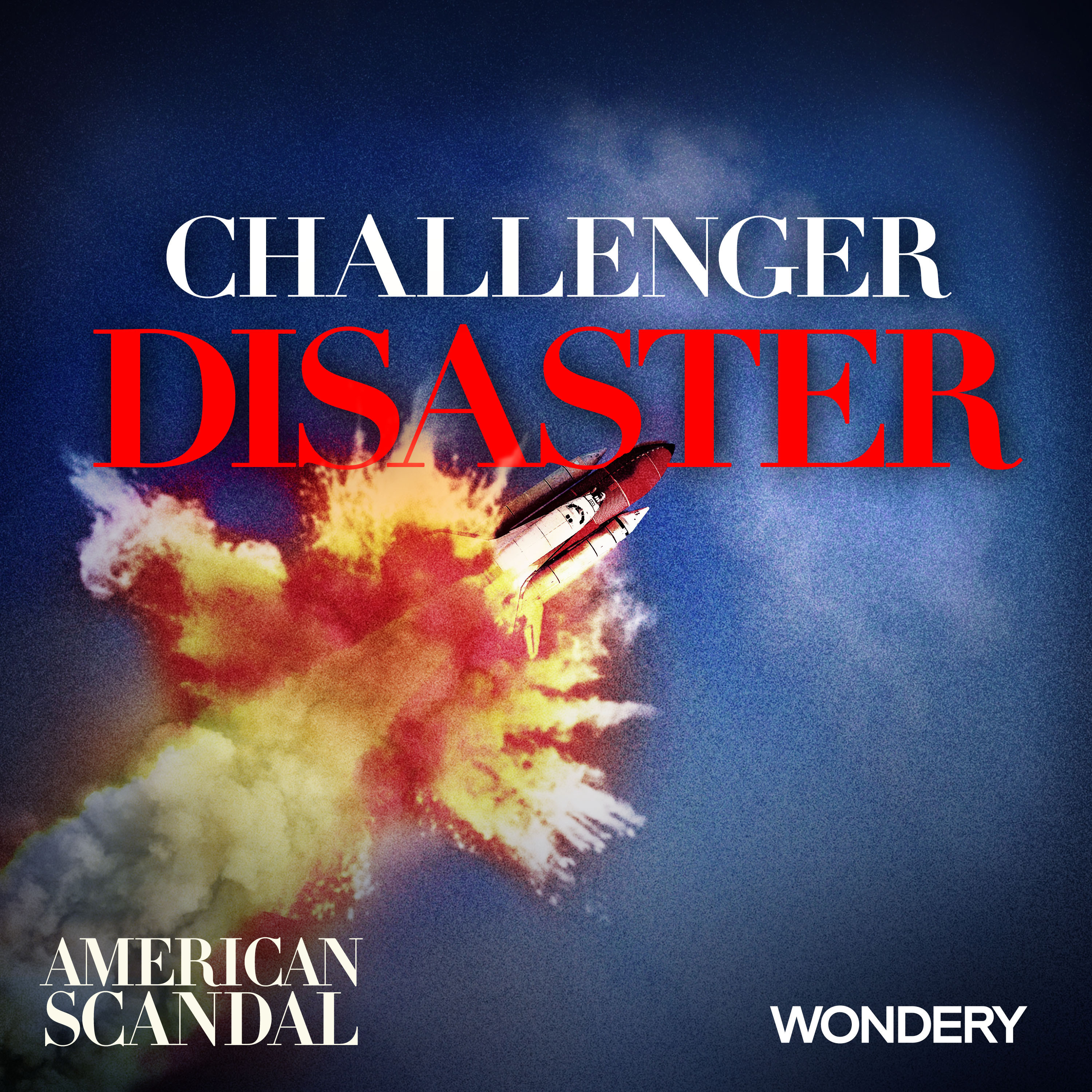
From Wondery I'm Lindsey Graham and this is American Scandal In January of 1986, NASA was ready for the most high profile launch yet of its four year old space shuttle program, the Teacher in Space mission, which would send the first American civilian, Christa McAuliffe, into orbit aboard the Challenger. But behind the scenes, there were warning signs that the mission might not go according to plan. As far back as four years ago, in 1982, engineers had identified a design flaw in a key component of the shuttle, the synthetic rubber gaskets called O rings, which form the seals between different segments of the rocket boosters that propelled the shuttle into orbit. After several shuttle launches, when the boosters were recovered, the O rings had been partially burned away by leaking rocket fuel. So far, the leaks had not caused a catastrophic failure. But at Morton Thiokol, the contractor that had built the rockets, some engineers became convinced that with each passing launch, NASA was playing Russian roulette with the lives of its astronauts. While trying to find a solution to the o ring issue, Thiocol engineer Roger Beaujolais identified the likeliest cause, cold temperatures, which made the synthetic rubber brittle and unable to form a tight seal. But when he presented his concerns to engineering colleagues at NASA, he was told, we don't want to hear that. One of the space shuttle's primary functions was to deliver military and communications satellites into orbit and prove that space travel could be as routine and cost effective as commercial air travel. So NASA was under intense pressure to stick to an ambitious schedule of more than a dozen launches a year, and to them, the known flaw in the O rings constituted an acceptable risk. But when it became clear that NASA was planning to launch the Challenger in temperatures below freezing, engineers realized they had to take a stand. This is episode three launch day. It's 8:15pm on the night of January 27th, 1986, at Morton Thiokol headquarters in Utah. Inside a glass walled conference room, Robert Beaujolais and a dozen of his fellow engineers are seated around a table along with a handful of Thiocol executives. In just a few minutes, they'll be joining an emergency teleconference with NASA, and the tension in the room is palpable. Beaujolais is on a mission tonight to convince the executives at NASA and his own company to cancel the Challenger launch, but he's not entirely confident in the materials. He has to make his case. Beaujolais and his colleagues have only had a few hours to prepare for this meeting, so all they've managed to cobble together are some hand drawn charts and rough estimates. They've also been left with no time to coordinate with each other and rehearse what they're going to say, and time has run out. As the Thiokol executive clicks on the speakerphone, the teleconference begins. Beaujolais fellow engineer Brian Russell starts by giving an overview of the history of the O ring issue. And then it's Beaujolais turn to speak. He directs everyone's attention to a handmade sketch illustrating the basic design of each joint on the rocket boosters, which has been faxed over to NASA for review. Beaujolais reminds everyone that the O ring's function is to expand quickly to seal the booster joint and prevent a fuel leak. To do this effectively, each O ring has to be flexible enough to expand within milliseconds. And if it does not, and superheated gas begins to escape through the joint, it can burn through the O rings, making the leak progressively worse. Beaujolais goes on to point out that tomorrow morning is projected to be 20 degrees colder than any shuttle launch in history. And at temperatures that cold, the O rings become less elastic, rendering them incapable of doing the one thing they were designed to do. Expanding quickly to seal the booster joint, preventing a leak and quite possibly an explosion. As Beaujolais ends his presentation, he sits back in his chair, hoping that his message has finally gotten through. But before he can take a breath, he hears a familiar skeptical voice over the speakerphone. Larry Molloy, the manager of NASA's solid rocket booster program, is joining the call from the Marshall Space Flight center in Alabama, and he asks if Beaujolais has any more data to share. Beaujolais says he doesn't, but he remains firm on his key point. The numbers he does have clearly show that the colder it gets, the worse the O rings perform. Molloy pauses for a moment before announcing that Beaujolais is just making assumptions. He says that Diokol's data is thin and inconclusive. And he notes that in other cool weather launches, most of the booster's joints performed fine. Beaujolais admits that Malloy is technically correct. Not every O Ring launched in cold weather has shown signs of damage. But he reminds Malloy that NASA bears the burden to prove that a launch is safe before signing off on it. But Malloy snaps back, declaring that the burden of proof is on dacol. If they want to halt the launch, then they have to prove it's not safe. And unless they can do that, the launch will remain on schedule. Beaujolais is left speechless. Malloy seems to be changing NASA's safety policy. Just hours before launching, Beaujolais looks around at his fellow engineers for help, but they appear to be just as stunned as he is. The emergency teleconference continues for another hour, with other Thiokol engineers stepping in to offer their analysis and opinion. All of them are unanimous in their support for canceling the launch. And then, finally, after all the discussion, NASA asks Thiokol's management for their official recommendation. Bob Lund, Thiokol's vice president for engineering, says that based on the available data, he would not recommend launching at temperatures below 53 degrees. And Joseph Kilminster, the vice president for the rocket booster program, agrees. But NASA's Larry Malloy still won't consent to canceling the launch. He continues to poke holes in the Thiokol engineer's reasoning, citing multiple examples of occasions when the O rings performed fine in cold temperatures. He points out that the subcontractor that makes the O rings says that they can perform in temperatures as low as -20 degrees. Malloy also accuses the Thiokol engineers of trying to change their launch criteria at the last minute and notes angrily that if he accepts this 53 degree cutoff, it could wreak havoc on NASA's entire schedule of upcoming shuttle launches. With attention on the call growing by the minute, Kilminster suggests that his team of Thiokol engineers and managers take a break to discuss the issue internally and puts the speakerphone on mute. Sitting at the head of the table, Kilminster looks around the room. As a senior leader on the booster program, he knows his opinion carries a lot of weight. But he feels trapped between a rock and a hard place he understands the engineer's position and sides with them. But as an executive, he also has to weigh his company's business concerns. If his team refuses to recommend a launch at the last minute and creates a new precedent based on temperature, he could be jeopardizing Thiokol's entire relationship with NASA. Senior Vice President Jerry Mason, the highest ranking Thiocol executive in the room, speaks first. He argues that, yes, the O rings have shown damage in previous launches, but they've been able to avoid total failure so far. Each joint has a secondary O ring, and those have always functioned successfully as a backup. But hearing this, Roger Beaujolais leaps from his seat, storms across the room and slams a photo on the table in front of Mason. It's a picture of both the primary and secondary O rings from a launch last January, and both are clearly singed, covered in black soot. Kilminster is still leaning toward siding with the engineers, and he hopes Beaujolais outburst is enough to sway Mason. But Mason just silently glares at Beaujolais until the engineer finally returns to his seat. After nearly half an hour of debate, Mason announces that he's going to poll the room on whether or not to recommend a launch. But he explains, the engineers will not be getting a vote. Only the vice presidents will be deciding the challenger's fate. Which means Mason, Kilminster, Lund, and fellow executive Cal Wiggins have a decision to make, and it has to be unanimous. As they go around a table, Kilminster feels a knot growing in his stomach. Mason votes first, saying he thinks they should go ahead with the launch. Then Mason turns to Wiggins, who quickly agrees with Mason, and Kilminster isn't surprised. Wiggins is Mason's loyal sidekick. Then Mason turns to Kilminster for his vote. He pauses to consider, knowing the engineers are right. Tomorrow's launch is too risky. But now his boss is staring him down, and Kilminster realizes that if he votes no, Mason could hold him personally responsible for losing Thiokol's most important contract. So Kilminster lowers his head, unable to look his engineers in the eyes, and quietly says he thinks they should launch. Now the final vote comes down to Lund, and Mason tells him to take off his engineering hat and put on his management hat. It's time to step up and make a business decision. Kilminster watches as Lund puts both hands into the air, palms facing forward, like a soldier surrendering at gunpoint. Then Lund says he agrees with Mason they should recommend the launch. Kilminster feels nauseous. Knowing there's no turning back from here, he unmutes his speakerphone and announces to his counterparts at NASA that while the Thiokol executives remain concerned about the temperature, they agree that the engineer's data is inconclusive and they are now recommending the Challenger launch should go forward. Larry Molloy is pleased to hear this, but others within NASA are surprised by the sudden reversal. Looking to provide cover, NASA executive George Hardy tells Thiokol that he'll need to have their official recommendation put into writing. So they look to Al MacDonald, the lead Thiokol manager on the ground in Cape Canaveral, to lend his signature. But McDonald remains adamant that the launch should not go forward and refuses to put his name on the recommendation. He explains that if anything goes wrong with the shuttle tomorrow, he does not want to be the one who has to answer it. So any signed recommendation will have to come. From Thiokol headquarters in Utah, Joseph Kilminster and Bob Lund exchange a look. Just moments ago, they reversed their position on the launch, and now they're being pressured to sign their names to that decision. But ultimately, they know they have no choice. After the call ends, Kilminster and Lund stay behind to draft the document recommending that NASA proceed with the Challenger launch as scheduled. And in the end, Kilminster is the one who signs his name to it. By now, it's nearly midnight, and at Cape Canaveral, temperatures are continuing to drop. And on launch pad 39B, NASA crews are attempting to prepare for the morning's launch in record breaking cold. But when Charlie Stevenson, leader of the Kennedy Space center ice team, arrives at the launch pad, he's shocked by what he sees. Icicles 18 inches long cover the launch tower. Standing on the top level at the same height as the Challenger's nose, he has to hold tight to the railing just to prevent himself from slipping on the ice beneath his feet. With a launch still scheduled for 9:30am only about five hours from now, Stephenson needs to start cleaning the ice from around the shuttle. Quickly, he steps into an elevator and rides it 20 stories down to the ground level. Arriving at the bottom, he's met by one of his ice team colleagues. As they shiver in the cold wind, Stephenson prioritizes what to tackle first. All right, let's take a look at the sound suppression troughs first. Copy that. And watch your step, boss. I nearly broke my neck between here and the launcher platform. The sound suppression troughs sit below the rocket nozzles. And are filled with water that absorbs the acoustic shockwave of the rockets. And liftoff. But when they arrive at the first trough, Stephenson is stunned to discover that the water has a thick sheen of ice on top. Oh man, we could play hockey on this. How is this even possible? Didn't they add the antifreeze? About 1400 gallons worth? Apparently it didn't do the trick. Man, there's no way they're going to actually launch this thing today, right? No, not a chance. I saw nearly two foot icicles hanging from the top of the gantry. When those things get shaken loose during launch, this going to cut through the thermal protection tiles like a knife. But launch control wants us to go through the motion, so we got to get on with it. Stephenson and his team of technicians begin breaking up the ice and using long handled nets to skim the chunks out of the troughs. It's exhausting work, made all the more challenging by the frigid cold. When Stevenson can no longer feel his fingers, he stands back to examine their progress. Oh God. It's looking better. Let's get some temperature readings for the logbook. Stephenson's colleague hands him an infrared thermometer and Stevenson holds it beneath the exhaust nozzle at the bottom of the left booster. Wow. 25 degrees. But I guess that's to be expected. It's about the same as the ambient air temperature. Let's check the other booster. The two men walk gingerly across the icy launch pad to the right booster, careful not to slip. Ah, man. This one is 8 degrees. But the boosters are identical. How is this one 17 degrees lower? That can't be right. The thermometer must be malfunctioning. This is getting ridiculous. The launch has to be scrubbed. Meanwhile, we're out here killing time until the bosses wake up and make it official. I guess we gotta take a team up to the top and start clearing off the icicles. As his colleague heads toward the elevator, Stephenson looks up the launch tower and beside it, the Challenger, glittering in the moonlight. From his earlier inspection, Stephenson knows that most of what's glittering is ice. Nearly every support beam, walkway and cable is covered in a layer of the stuff. And in all his years at NASA, he's never seen anything like it. Stephenson checks his watch and tries to guess how many more hours it will be until the manager arrives on site and sees how big bad the ice is. Because he feels sure that once they do, they'll make the only call they can to cancel the launch. American scandal is sponsored by Noom, a leader in behavior change weight loss. But now they offer Noom GLP1, combining their proven weight loss program with proven medication so you can lose weight and keep it off. Because Noom doesn't just give you access to meds, it helps you build healthy habits so you can lose weight and keep it off. Noom's app features protein tracking so you can ensure you're getting the right nutrients, and fitness classes so you can keep the muscle while losing fat. Noom GLP1 starts at $149 and is delivered to your door in just seven days. Start your GLP1 journey today at Noom.com that's n o o m dot com Noom the smart way to lose weight not all customers will medically qualify for prescription medications. Compounded medications are not reviewed by the FDA for safety, efficacy, or quality. How weird does it feel to be called someone's fiance?
- [21:30]
Unknown
The first time you hear it, you do a double take from there.
- [21:34]
Lindsey Graham
Let's enjoy this moment turns into we're planning a fall wedding. That's where Zola comes in from. A venue and vendor discovery tool that matches you with your dream team. To save the dates, websites, and an easy to use registry, Zola has everything you need to plan your wedding in one place. Start planning@zola.com that's z o l a.com in the early morning hours of January 28, 1986, many of the people at Cape Canaveral expect the Challenger launch to be canceled, including the astronauts. But the official call has yet to be made. Some at NASA are especially concerned about the icicle still coating the shuttle's launch tower. They're also worried about the gusty winds blowing offshore, which might make it difficult to retrieve the solid rocket boosters after they fall into the Atlantic. But NASA's rocket booster program manager, Larry Malloy, expresses no concern. He meets with his boss, Bill Lucas, director of NASA's Marshall Space Flight center, and shows him Thiokol's official launch recommendation. Malloy explains that while the Thiokol engineers had initially expressed reservations about how the O rings might perform in the cold weather, they ultimately all agreed to go forward. So despite the low temperatures, NASA proceeds with its pre launch protocol, staying on track for a morning liftoff. And just after 8am Challenger's commander, Dick Scobee, is joined by the six other astronauts for the elevator ride 20 stories up to the entrance of the orbiter. As the elevator begins to ascend, Scobie grins with anticipation. When he woke up this morning and saw the weather report he wondered whether the launch would be postponed. He wasn't happy at the thought of having to spend more time sitting and waiting in the astronauts pre launch quarantine. But now it appears today's launch is actually going to happen and he's excited to get the show on the road. Scoby squints in the bright sunshine as he exits the elevator with his crew right behind him. He's greeted by Johnny Corlew, NASA's Quality Insurance Inspector. Scoby gives Corlew a big smile and notes that the skies are crystal clear, a beautiful day to fly. Corlue seems surprised by this comment and remarks on the unusually cold temperature, but Scobie shrugs him off, determined not to let anything dampen his optimism. He's even bought a little gift for handing him a bolt with a red ribbon tied around it, a joke referencing the faulty bolt that caused the cancellation of yesterday's launch. Corlu laughs and shakes his head. Then the crew helps Scobie and the other astronauts into their flight harnesses before leading them to the orbiter's entrance hatch. Once strapped into their seats inside the orbiter, Scobie takes a moment to check on the other astronauts. As a veteran test pilot and astronaut, he's well accustomed to the jitters that creep in just before a flight. And he's especially mindful of Christa McAuliffe, who's only been with NASA for a few months and will be making her first launch ever today. Scoby looks over his shoulder at her and asks how she's doing. McAuliffe replies that she's ready to launch. But as Scobie looks into her eyes more deeply, he can see she's scared. He tries to reassure her that everyone feels nervous before launch and that before she knows it, she'll be up there in zero gravity having the time of her life. While the seven astronauts inside the Challenger's orbiter move through their pre launch processes, the temperatures outside remain below freezing. At the last minute, NASA officials decide to push the launch back 30 minutes based on the weather forecast. They hope that by then the temperature will rise above freezing and the tower will have thawed out. In the meantime, NASA's Space Shuttle program manager, Arnold Aldrich, convenes a meeting of more than two dozen senior managers from NASA and their various contractors to discuss the continuation of the launch. They already have a green light from Thiokol, maker of the solid rocket boosters, and in this newest meeting, NASA's own engineers unanimously vote to move forward as soon as the temperature reaches 32 degrees Fahrenheit. But there are dissenting voices from Rockwell, the contractor responsible for manufacturing Challenger's orbiter. The Rockwell engineers tell Aldrich it's not safe to launch, and because these temperature conditions are unprecedented, they cannot be sure how the orbiter will perform. But Aldrich brushes Rockwell's concerns aside. If his own engineers are voting to move forward, then that's good enough for him. So after a few more minor delays, the countdown resumes with a new launch time set for 11:38am Eastern Time. As the astronauts sit and wait strapped inside Challenger's crew Cabin, more than 500 observers file into nearby bleachers to watch the launch. They're dressed in hats and gloves, shivering in the cold. But the weather doesn't dampen their excitement. The crowd includes members of the astronauts extended families, as well as dozens of school children there to see Christa McAuliffe become the first teacher in space. And around the country, more than 2 million other children are also gathered around TVs in their classrooms, watching a live feed provided by NASA. Including at Concord High School in New Hampshire, McAuliffe's own students packed into an auditorium filled with banners and noisemakers to celebrate the historic launch. But at Morton Thiokol headquarters in Utah, the mood is far from celebratory. Around 11.30am, just minutes away from launch, Thiokol engineer Roger Beaujolais is sitting in his office, filled with dread. He can see his fellow engineers are beginning to gather in the conference room down the hall to watch the launch, but he can't bear to join them. Over the past year, Beaujolais has devoted countless hours to raising the alarm about the O ring issue. Just 12 hours ago, he pleaded with leaders at NASA and Thiokol to postpone the launch, presenting extensive data and even photos of charred O rings. But it wasn't enough. T minus two minutes and counting. As the conference room TV blares the final countdown. Reaching the two minute mark, Beaujolais becomes too nervous to sit still. He stands up from his desk and begins pacing up and down the hallway outside his office. But as he passes the conference room, he sees his fellow engineer, Bob Ebeling, poke his head out. Hey, Roger, they're about to launch. Why don't you come in and join us? I can't do that, Bob. I don't have the stomach to watch. Just let me know when it's over. Come on, buddy. We're all in this together now, and I'm just as nervous as you are. I need you in here, Beaujolais. Can see in his colleague's eyes that his words are sincere. He sighs and agrees to join Ebelyne. But when he enters the conference room, he sees all the chairs are already occupied. You know, there's nowhere to sit here. I'll just go back to my desk. No, no, no. There's room for you. Come sit with me and my daughter in front. Ebling leads Beaujolais to the front of the room, where he takes a seat on the floor in front of Ebling's legs. Seated next to Ebling is his daughter, also an employee at Diacon. Beaujolais looks up at the large projection TV at the front of the room showing the launch. And as the countdown reaches the final 10 seconds, he reaches up and clasps hands with Ebling. On screen, the engines ignite and the Challenger slowly begins to ascend from the launch pad in a plume of white smoke. Hearing the Challenger's engines roar, Beaujolais breathes a sigh of relief. We just dodged a bullet. Bomb booster's made it through liftoff. Well, we're not done quite yet. Now, seven seconds into the flight, Beaujolais watches Challenger begin to turn over the ocean as it angles toward orbit. Good. Roll program confirmed. Challenger now heading down range. Three engines running normal. As the seconds tick by, Beaujolais feels himself relax. But then, about a minute after launch, a flash of bright light envelops the shuttle. From a cloud of smoke and flame, two white contrails emerge, flying in different directions. What happened? I don't know. I don't know. I think those contrails are the boosters. They separated. But where's the orbiter? Beaujolais watches, dumbstruck, as his worst fears have just been realized. The space shuttle Challenger has exploded. Beaujolais releases Epling's hand, gets up off the floor and walks out of the room. He makes his way back toward his office, wiping tears from his eyes. It's too early to say what exactly caused this disaster, but he feels certain that his company's boosters were involved. And if he's right, he is determined to tell the world that this horrible tragedy could have been prevented. It's better over here at&T customers. Switching to T Mobile has never been easier. We'll pay off your existing phone and give you a new one free. All on America's largest 5G network. Visit t mobile.com carrierfreedom to switch today. Pay off up to $650 via virtual prepaid MasterCard in 15 days. Free phone up to $830 via 24 monthly bill credits plus tax qualifying port in trade in service on Go 5G next and credit required. Contact us before canceling entire account to continue bill credits. Your credit stop and balance and required finance agreement is due.
- [30:58]
Unknown
Ladies, is everyone trying to fix their health concerns with unproven gummies and tricks? Well, thank goodness low Libido has a real clinically proven treatment Low libido can be so frustrating, but there is a treatment called addi. ADDI is the first and only FDA approved pill proven to boost sexual desire in certain premenopausal women. Isn't that great a clinically proven option for your low libido that comes from a doctor, not a gas station? Learn more@addi.com and take charge of your sexual health with a treatment that's backed by science. Remember, that's Addy A d d y I.com Addi or Flovanserin is for premenopausal women with acquired Generalized hypoactive sexual Desire disorder who have not had problems with low sexual desire in the past who have low sexual desire. No matter the type of sexual activity, the situation, or the sexual partner, the low sexual desire is troubling to them and is not due to a medical or mental health problem, problems in the relationship, or medicine, or other drug use. ADDI is not for use in men or to enhance sexual performance. Your risk of severe low blood pressure and fainting is increased if you drink one to two standard alcoholic drinks. Close in time to your ADDI dose. Wait at least two hours after drinking before taking ADDI at bedtime. Your risk of severe low blood pressure and fainting is also increased if you take certain prescriptions over the counter or herbal medications or have liver problems. Low blood pressure and fainting can happen when you take addi even if you don't drink alcohol or take other medicines. Do not take if you are allergic to any of the ingredients in addi. Allergic reactions may include hives, itching or trouble breathing. Sleepiness, sometimes serious, can occur. Common side effects include dizziness, nausea, tiredness, difficulty falling asleep or staying asleep, and dry mouth. See full PI and medication guide, including boxed warning@addie.com PI or call 844 pink pill addy that's addy a d d.
- [32:48]
Lindsey Graham
Y I.com At 11:39am Eastern Time on January 28, 1986, the Space Shuttle Challenger disappears in an apparent explosion at Mission Control in Houston, Texas. NASA officials and engineers sit in stunned silence. They assume the worst for all astronauts on board, so they immediately pivot to their contingency plans for the search and recovery of the remains of the shuttle. Which are still tumbling down into the Atlantic Ocean. Meanwhile, at Cape Canaveral, a voice over the loudspeaker tells the crowd of onlookers that the vehicle has exploded. The spectators grow quiet, and then many begin to cry. But on the rooftop of NASA's launch control building. Some of the astronauts immediate family members continue to hope for the best. Among them are Commander Dick Scobee's wife, June, along with her adult son and daughter. Christa McAuliffe's husband Steve looks to June for answers. But she knows as little as anyone else. Staring out at the trails of white smoke over the ocean, June knows it doesn't look good. But she also knows that the astronauts are trained for emergencies just like this. If the orbit orbiter somehow survived the explosion, she believes her husband can land it. Soon the families are loaded onto a bus. And taken to a small dormitory building. Where the astronauts are housed before each mission. And in the building's modest lobby, June huddles with a few dozen of the astronauts. Spouses, children and parents, holding each other tightly as some of the children begin to cry. The building is nearly empty of any NASA employees. But soon several astronauts who weren't on the flight begin streaming in to provide comfort. They rush to turn off the TVs. Which are now wall to wall with coverage of the disaster. And they offer families food, drink and even sedatives. June declines their offers, telling them she just wants to know what happened. And finally, an hour after the explosion, NASA's director of flight Operations, George Abbey, walks solemnly through the building's glass doors. He asks the adults to accompany him into a conference room. And suggests that the children should stay in the lobby where the other astronauts can look after them. Abby leads the group into a cramped conference room. And then closes the door. All right, everyone. We don't know all the details, but obviously there's been an explosion. June Scobie presses him for more. We know that. We all saw it happen. What about the orbiter? Did they bring it down safely? I'm sorry. I don't believe there's any hope for the crew. But how do you know? Did you recover the orbiter? Did you open it up, look inside? No. It will be some time before it's recovered. But look, June, no one could survive that. Not even Dick. I'm so sorry. So who's going to tell the children out there their parents are coming home? I think it would be best if you all handled that. June walks in a daze back to the lobby where the astronauts spouses begin breaking the news to their children. She sees the teenage daughter of Challenger pilot Mike Smith begin to hyperventilate as a NASA crew member helps the girl breathe into a paper bag. But June doesn't linger. Instead she finds herself wandering toward her husband's room down the hall. There, inside, June sees her husband's clothing still hanging in the closet. She wraps her arms around some of his shirts, squeezing them tightly, desperate to feel close to him somehow. And on the desk she finds Dick's brown leather briefcase. Opening it, she thumbs through the maps, flight manuals and NASA pins he had collected as souvenirs from the mission. And at the bottom of the case, she finds a Valentine's Day card addressed to her. He must have planned to give it to her when he returned home. Overcome with emotion, she sits on the bed, puts her head in her hands and finally allows herself to cry. As the families of the astronauts begin to mourn their losses, the NASA engineers inside Houston Mission Control prepare for the inevitable post disaster investigation. Within only minutes of the explosion they are told to lock their monitors in place to preserve data. Then the office doors are locked and they are warned not to leave the room for any reason, even to use the bathroom. They are also instructed not to make any outgoing phone calls and forbidden from communicating with anyone, especially the press, about what has happened. President Ronald Reagan's State of the Union address had been scheduled for that night. But now the White House announces that the speech will be rescheduled for the following week. And as word of the tragedy spreads around the country, people flock to their TVs desperate for any insight. But NASA stays tight lipped, refusing to talk to the press and even seizing photos of the launch taken by reporters. News anchors like Tom Brokaw and Peter Jennings are only left to speculate about the cause of the disaster on air as they roll footage of the explosion in a continuous loop. Finally, around 4:30pm nearly five hours after the launch, NASA calls a press conference at Cape Canaveral. By this time the number of reporters on site has grown to more than 300, forcing NASA to hold the event outdoors. Jesse Moore, the head of the agency shuttle program reads a brief statement, then takes questions, but his answers come off as evasive. Moore refuses to speculate on the causes of the explosion, insisting that the unusually cold weather that morning did not play a role in in the disaster and that the previous delays created no additional pressure to launch. He assures the public that to his knowledge everyone involved was unanimous in their insistence that The Challenger was ready to fly. But in Utah, at Morton Thiokol headquarters, engineer Roger Beaujolais knows better. And as he watches the press conference from his office, he grows increasingly suspicious about what he's hearing from NASA. It's even beginning to spread. Smell like a cover up. The following morning, when Beaujolais returns to work, he's surprised to see that it's back to business as usual. All around him, technicians continue their work as if nothing had happened. Beaujolais figures he might as well follow suit and distract himself from his grief. So he heads to his office and begins gathering folders full of data on the booster's O rings, the component he suspects caused the explosion. But as he opens the files on his desk, there's a knock on the door. It's a company secretary delivering a memo from management. The letter instructs Diokol engineers to hand over any relevant documentation they have about Challenger's launch. As they await the coming investigation, Beaujolais nods at the secretary and tells her he'll deliver the documents by the end of the day. But he has no intention of following through on that promise. Already suspicious of NASA, Beaujolais now begins to worry that his own company is preparing a cover up of their own. So Beaujolais begins going through his files and pulling anything related to the launch he can find. Soon he has a small pile of documents on his desk, and in the stack are slides from his presentation to NASA the night before the launch. Notebooks full of data on the booster's performance over time, and a series of memos he had written to his bosses warning of the dangers posed by faulty O rings. There's even war. One memo he sent to Thiokol's head of engineering six months ago warning about a possible loss of human life. As he looks at the pile, Beaujolais knows it would be suspicious not to turn anything in. So he takes a moment to consider what's the least valuable. He settles on the presentation slides and puts those into a manila folder to be handed over to management. He puts the rest of the papers in his desk drawer and locks it. Then, before he heads upstairs to hand in the manila folder, he jiggles the drawer, making sure it's locked tight because he knows what's inside could be important in the coming months and that there are powerful people who would rather it never see the light of day. From Wonder E. This is episode three of the Challenger disaster from American Scan. In our next episode, an independent commission. Whoops. And the causes of the tragedy. And when executives at NASA and Thiocol, try to conceal what really happened. Engineers step forward to blow the whistle. If you're enjoying American scandal, you can unlock exclusive seasons on Wonder plus, binge new seasons first and listen completely ad free when you join Wondery plus in the Wondery app, Apple Podcasts, or Spotify. And before you go, tell us about yourself by filling out a survey@wondry.com survey if you'd like to learn more about the Challenger disaster, we recommend the books Challenger by Adam Higinbotham, the Burning Blue by Kevin Cook, and the Netflix docuseries the Final Flight. This episode contains reenactments and dramatized details. And while in most cases we can't know exactly what was said, all our dramatizations are based on historical research. American Scandal is hosted, edited and executive produced by me, Lindsey Graham for Airship Audio editing by Christian Faraga sound design by Gabriel Gould music by Lindsey Graham this episode is written by Corey Metcalf edited by Emma Cortlandt Fact checking by Alyssa Jung Perry produced by John Reed managing producer Joe Florentino senior producers Andy Beckerman and Andy Herman development by Stephanie Jens Executive producers are Jenny Lauer, Beckman, Marsha Louie and Erin O'Flaherty. For wondering.
- [42:28]
Unknown
This is a story that begins with a dying wish. My mother's last request that my sister and I finish writing the memoir she'd started about her German childhood when her father designed a secret superweapon for Adolf Hitler. My grandfather, Robert Lesser, headed the Nazi project to build the world's first cruise missile, which terrorized millions and left a legacy that dogged my mother like a curse. She had some secrets. Mom had some secrets. I'm Suzanne Rico. Join my sister and me as we search for the truth behind our grandfather's work and for the first time, face the ghosts of our past. Who is he? Listen to the man who Calculated Death Exclusively with Wondery Plus. Join Wondery plus in the Wondery app, Apple Podcasts, or Spot.