Loading summary
Transcript29 lines
- [00:01]
Lindsey Graham
Want to get more from American Scandal? Subscribe to Wondery for early access to new episodes, ad free listening and exclusive content you can't find anywhere else. Join Wondery in the Wondery app or on Apple Podcasts. American Scandal uses dramatizations that are based on true events. Some elements, including dialogue, might be invented, but everything is based on historical research.
- [00:25]
John Wathan
Wondering.
- [00:39]
Lindsey Graham
It'S 9:45pm on April 20, 2010, on the Deepwater Horizon oil rig, 50 miles off the coast of Louisiana. In his office, Mike Williams turns away from the computer and picks up the phone. Williams is in charge of keeping the rig's electronic and safety systems running. He's just finished a long day of repairs and maintenance reports because despite Deepwater Horizons reputation as one of the most technologically advanced rigs in the world, it hasn't had a major overhaul since it was launched almost a decade ago. Now it's showing its age. For the past few months, the horizon has been floating above the Macondo exploratory well. But drilling here has proven difficult, and the rig's crew is tired and on edge. Almost everyone is looking forward to going home. Cradling the phone under his chin, Williams calls his wife. She picks up right away. Hey, honey. Hey, how are you? How's your day?
- [01:36]
John Wathan
Oh, the kids have been running me ragged.
- [01:38]
Lindsey Graham
But what's new? How are things out there? Williams sighs and leans back in his chair. I'm up to my eyeballs and paperwork. It's just job after job right now. Well, good thing you're there to fix it, all right. Well, I guess it's keeping me busy for sure. Sounds like they'd be lost without you. Yeah, but I just can't wait to be home. Williams is interrupted by an alert sounding on the public address system. Oh God, not again. What is it? It's just a gas warning. A gas warning? No, it goes off all the time. It's gonna be a false alarm just like all the others. But then Williams frowns. The alert says gas levels are approaching 200 parts per million. Then Williams hears a hiss and smells a familiar, familiar sweet odor. He tenses up. Hey, hon, I. I think I need to check this out. Is everything all right? Yeah, I'm sure it's nothing, but I need to call you later, okay? Love you. Williams hangs up the phone. Through the vents, he can hear an alarm sounding in the engine control room next door. He pushes back from the table, but just then the lights in the room flare brighter. He flinches as the bulbs burst. Overhead, one by one, the computer monitor in front of him explodes. Williams ducks, but not fast enough to stop shards of glass grazing his face and neck. Now in complete darkness, Williams can hear the rig's number three engine struggling over the sounds of the alarms. He moves toward the door. The rig's engines hum louder. Williams gropes into the darkness for the door handle. But then a huge explosion rips the door from its hinges. Williams is thrown across the room, and everything goes black. By the time Mike Williams comes to, smoke has filled his office and it's difficult to breathe. Disoriented and bleeding, he eventually makes his way out of the room and feels his way through the wreckage and debris until he reaches a hatch leading to the lifeboat deck. But when he pulls it open, he freezes in shock. Where there had been handrails and a walkway, there is now only a jagged metal ledge and a sheer drop into the darkness. The lifeboat deck is gone. The entire back of the Deepwater Horizon has been ripped away. American Scandal is sponsored by AT and T. It's quite a relief in knowing things are handled. You know, like when a neighbor brings in your mail before it rains, or a friend grabs your coat from the chair you left it on. Staying connected matters. And that's why AT and T has connectivity you can depend on, or they'll proactively make it right. That's the AT and T guarantee. AT and T connecting changes everything. Terms and conditions apply, so visit@&t.com guarantee for details.
- [04:26]
Sleep Number Advertiser
Why Choose a Sleep number Smart Bed.
- [04:27]
Lindsey Graham
Can I make my site softer? Can I make my site firmer? Can we sleep cooler?
- [04:32]
Sleep Number Advertiser
Sleep number does that cools up to eight times faster and lets you choose your ideal comfort on either side. Your sleep number setting Enjoy personalized comfort for better sleep night after night. And now max out your savings. The more you buy, the more you save on beds, bases and more. Plus, get free home delivery on any smart bed with bass limited time. Check it out at a Sleep Number store near you or@sleepnumber.com today.
- [05:04]
Lindsey Graham
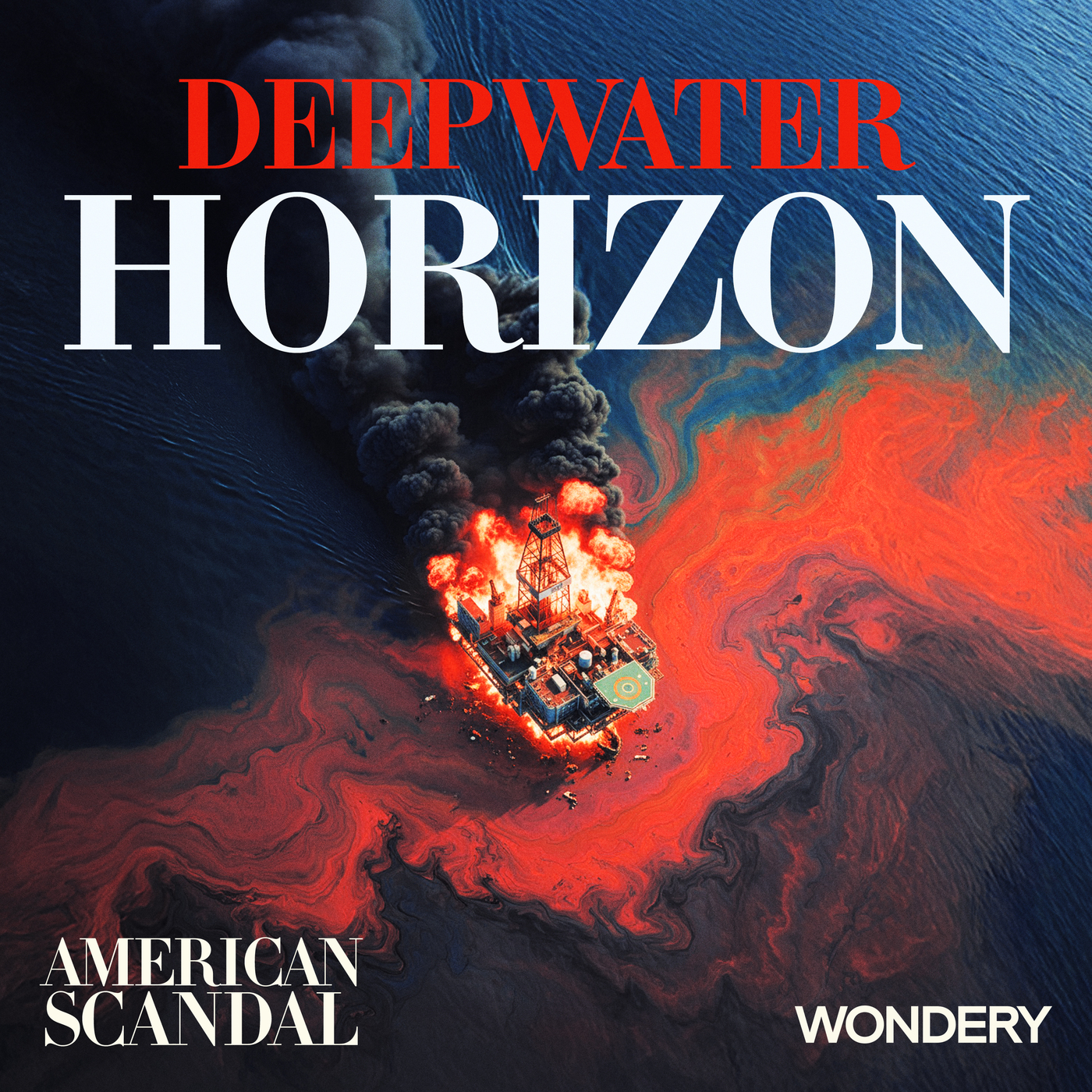
From Wondery I'm Lindsey Graham and this is American scandal in February 2010, the Deepwater Horizon oil rig began operations at the Macondo well in the Gulf of Mexico. The drilling program was designed and managed by the fossil fuel giant bp, but from the start it was plagued by delays and equipment failures, and the site itself was so temperamental that the Horizon crew soon nicknamed Macondo the well from Hell. Then, late on April 20, 2010, the crew was preparing to wrap up operations when a huge burst of pressure surged up the well. A blowout preventer designed to protect the Horizon failed, and a torrent of gas and drilling mud erupted on the rig floor before exploding in a gigantic blast that was heard for miles. Instantly, 11 members of the crew were killed. But for the wider Gulf region, the real disaster had only just begun. This is episode three, the Summer of Tears. It's around 9:50pm on April 20, 2010, only minutes after a huge explosion rocked the Deepwater Horizon drilling rig and knocked Chief Electronics Technician Mike Williams unconscious. Now, as flames lick the night sky, casting sinister shadows that dance like snakes, Mike Williams stumbles along the side of the shattered rig. He's bleeding heavily and shields his face from the intense heat as he makes his way toward the bridge. When he gets there, he finds a scene of utter chaos. Workers are gathered around the computer monitors, trying to bring the rig's systems back online. Across the room, someone is making a mayday call on the radio. While others argue over just how serious the situation is, Williams yells that the lifeboats are gone and they have to abandon ship. But he struggles to make himself heard over the din. Eventually, he gets the captain's attention. Out of breath, Williams explains that the engine, pump room, and consoles are all gone. But the captain doesn't seem to understand. According to later testimony before a Coast Guard inquest, the captain tries to calm Williams down and reassures him that they're working to restore power. This only makes Williams grow agitated. He tells the crew that they need to activate the emergency disconnect system. This is the last resort that cuts off the rig and seals the well, leaving them free to drift away to safety. But Williams is shocked when, rather than disconnect the well, the team starts arguing about the chain of command. The captain is in charge when the rig is moving, but the offshore installation manager, Jimmy Harrell, outranks him when the rig is stationary. So it's Harold who needs to make the call to disconnect the well. The captain refuses to do anything without him. Williams can't believe they're debating this. The rig is burning down all around them. But just then, Harold bursts through the door, coughing and retching from the fumes. He immediately gives the order, and the crew activates the emergency disconnect system. But nothing happens. The system is offline. They're trapped on top of a burning wellhead. One of the men suggests going to the backup generators. They haven't been able to bring them online from the bridge, but there's a manual startup procedure they can follow. If they can restore some power, perhaps they can get the emergency disconnect. System working again. Despite his head wound, Williams volunteers along with other members of the crew to go. So these three men make their way from the bridge along the side of the rig, past the flames roaring up the oil derrick. It's like walking into an oven. They stumble forward in single file, holding onto the backs of one another's shirts. Beneath them, the metal gangway is slick with oil and drilling mud and their feet threaten to slip from under them with every step. When they reach the backup generator, the room is dark. One of the men hands Williams a penlight. He reads out the startup procedure posted on the wall while the other men follow his instructions. But it doesn't work. The entire system is dead. And without power, there's nothing they can do. They have to abandon ship. They leave the generator room and head for the stairs. But while they've been trying to restore power on deck below, panic has taken hold. The explosion ripped off the back of the Deepwater Horizon and destroyed half the rig's lifeboats. Now there are only two left and there isn't enough room in them for all. All 126 people on board. According to the later testimony of crane operator Micah Sandel. There are attempts at a headcount, but the situation is too chaotic. Some crew leap from the deck into the sea, some 60ft below, preferring to take their chances in the water, then spend another second on the burning rig. Others already in the lifeboats beg for them to be dropped even as more survivors are climbing on board. But one of the BP supervisors on the rig tries to stop the boats from leaving. He stands with one foot on the deck and another in a lifeboat. He shouts at the terrified crew to be patient, that there's still time to get everyone into the boats. But then a 150,000 pound drilling block falls from the burning oil derrick and crashes to the deck just yards away. It's clear that the deep water horizon is breaking apart. The BP man immediately gives the order to drop the lifeboats. And as the first descends to the sea below, he takes his place in the last remaining lifeboat. Seconds later, it too hits the water. So by the time Mike Williams and the other two men from the generator room reach the deck, there's only a few other people left on the rig. Six men and women from the bridge, including the captain and chief mate. Above the roar of the flames overhead, Williams bellows at the captain. Where are the boats? They left without us. What? We're gonna take one of the rafts. The captain points to a white plastic cylinder suspended above the deck. It contains an inflatable life raft that will be just big enough to hold them all. Williams flinches and another huge explosion rocks the platform. Meanwhile, the chief mate rushes to work a winch and begin to swing the life raft clear of the deck. But then it suddenly jerks to a stop. Chief mate tries the lever again, but it won't move. Another crewman rushes over, but even with the two of them pulling at the lever, the raft won't budge. Through the thick smoke, Williams spots the problem. The raft is still attached to the deck by a straining rope. Williams follows the rope to where it's attached with the shackle. He tries to unscrew screw it by hand, but can't free it. Hey, anyone got a knife? I need a knife. No, we can't carry them. Company policy. Williams fumbles through his pockets with shaking hands. Hang on. Hang on. I might have something. He pulls out a small pair of cable cutters and begins using them to unscrew the shackle. More explosions rock the deck. The cable cutters slip in William's hands. God damn it. Come on. Nearly there. Suddenly, the shackle comes loose and the plastic cylinder swings free. The chief mate winches it out beside the deck. With a sudden pop, the white case bursts open and the life raft inside inflates. The other crew members start climbing in while the captain and another man from the bridge hold it steady. Williams hurries to join them, but as he nears the raft, he smells burning rubber. The raft itself is starting to melt in the heat. Another few seconds and it won't be seaworthy. The captain turns to look at Williams. Sorry, there's no time. No, no. Wait. Stop. But they've already released the raft. Williams hears it hit the water below. He stares at the captain. The smoke and heat are growing even more intense. But there's no way they'll be able to launch another raft. What about us? What do we do? Well, I don't know about you guys, but I'm gonna jump. Williams looks from the captain to the other men, then down to the water below. It's at least a six story drop and the sea beneath them is burning. I don't know if I can do it. Well, if we stay here, we die. We don't have a choice. Williams hesitates. Captain shakes his head. Look, I'm jumping. The captain then disappears over the side of the deck. A moment later, the other man jumps too. Williams looks around. The deck is empty. He's the last one left. Left. He looks down again at the churning sea. A spitting Slick of burning oil. Then he runs forward until his feet meet empty space. He plunges down into the water. As he services, his skin and hair immediately start to burn. Williams swims away, kicking as hard as he can, putting as much distance between him and the flames as he can. Behind him on the shattered rig, the fires roar, metal shrieks and the deep water horizon begins to break apart. Mike Williams is only in the water for a few minutes before he's rescued. He feels strong arms grab him and haul him into a speedboat. By now, there are several vessels circling the burning Deepwater Horizon. The largest is the Damon B. Bankston, a 260 foot supply boat that picked up the rig's mayday call. The ship helps rescue 17 crew members from the water, as well as picking up those who escaped in the lifeboats. But no one is yet sure who's missing, and the rescue boats spend hours circling the debris looking for survivors. Meanwhile, the rig continues to burn and tilts lower and lower into the sea. On board the Bankson Deepwater Horizon employees are treated for their injuries at a makeshift hospital. There are numerous burns, cuts and broken bones to mend. The ship's crew lends the shocked survivors blankets, bunks and even the clothes off their backs. It's almost 8am before the Coast Guard finally releases the Bankston from search and rescue duty. By then, it's been established that 11 Deepwater Horizon workers are missing. Most were on the drill floor when the blowout happened. They wouldn't have stood a chance. Of the survivors, the most badly injured, including Mike Williams, are medevaced to safety. The rest will be taken back to the mainland by the Bankston. Among these is offshore installation manager Jimmy Harrell. He hasn't slept. Instead, he's spent all night watching his rig. He feels crushing guilt over the blowout and the deaths of his crew. If only he'd tried harder to stop BP from shutting in the well with concrete foam, then perhaps none of this would have happened. But he does his best to comfort the other survivors, even though he is in shock himself. All he wants is to see his family, but they're still nowhere near port and management won't let them call home. BP and Transocean officials have told the crew that they can't talk to anyone until the companies have approved it. Harold isn't happy about this, but there's nothing he can do. He may have been the boss on the Deepwater Horizon, but right now on the Bankston, he's just a survivor. Before they can reach shore, they make stop at Another oil rig in the Gulf. There, investigators from the US Coast Guard come on board. They hand out packs of cigarettes and start pulling senior members of the Deepwater Horizon crew into meetings. They want answers about what caused the explosion. As the rig's manager, Harrell is one of the first men they want to talk to. So he drags himself into a cramped meeting room and falls into a chair. He can barely keep his eyes open. But the Coast Guard agents press Harrell on safety standards, his involvement in the decision to seal the well, and the sequence of events leading up to the blowout. The Harold is so exhausted, he barely knows what he's telling them. It's been hours since the explosion. Harold hasn't slept. And when the Bankston finally reaches port in Louisiana, it's the middle of the night. The next day. But rather than being greeted by their loved ones, the Deepwater Horizons survivors are met by more personnel from the Coast Guard. As they file off the boat, they're directed to a row of porta potties. Every member of the crew must provide a urine sample for drug testing. Then everyone is interviewed again. This leaves Harold seething. He just wants to go home. He and all the rest are victims of a horrible tragedy. But they're being treated more like criminals. And it's well after midnight before Harold is finally reunited with his family. But there's no escaping the Deepwater Horizon disaster. It's all over the TV news and in the newspapers. Harold and the rest of the crew's story of personal survival is about to become a national crisis. American scandal is supported by AT&T. There's a certain comfort in knowing someone's looking out for you before you even need it. A roommate who remembers to lock the door. A friend who shows up unasked with dinner when you're swamped. It's rare, but when it happens, you remember. Because staying connected matters. And that's why in the rare event of a network outage, AT and T will proactively credit you for a full day of Service. That's the AT&T guarantee. It's so before today's over, take a second and reach out to someone. Those small check ins, they're the moments that matter. AT&T connecting changes everything. Credit for fiber downtime lasting 20 minutes or more or for wireless downtime lasting 60 minutes or more caused by a single incident impacting 10 or more towers must be connected to impacted tower at. Onset of outage. Restrictions and exclusions apply, so see@&t.com guarantee for full details. Derry is a beautiful place. But things do happen from time to time. A new HBO original series Folks are getting funny ideas. Keep the people you love close. Your lives depend on begins here. There's something here, something bad it welcome to Dairy streaming Sundays at 9pm exclusively.
- [19:13]
Sleep Number Advertiser
On HBO Max.
- [19:26]
Lindsey Graham
For almost two days after the explosion on the deep water horizon, the oil rig burns. Firefighters pour hundreds of thousands of gallons of salt water and flame retardant foam onto the wreckage, but the blaze proves impossible to contain, and on April 22, 2010, the Deepwater Horizon collapses into the water and sinks beneath the surface of the Gulf of Mexico. Soon after, planes spot a rainbow sheen on the ocean's surface. Half a mile wide, it stretches over two miles in length. It's oil of some kind, but at first it's impossible to tell where it came from. The hope is that the slick has been caused by the 700,000 gallons of diesel that went down with the Deepwater Horizon, but the fear is that it's a sign that the Macondo well itself is leaking. For now, though, officials from both BP and the US Government still believe the rig's blowout preventer has done its job and cut off the well. But the wreckage of the rig has kicked up so much silt from the seabed that remote cameras can't see what's going on at the wellhead. It takes another day for the silt to clear enough for pictures to be relayed to the surface, and that's when BP engineers first begin to realize the scale of the problem. There is a leak in the steel pipe above the blowout preventer, and oil is spewing out into the ocean. Hoping to fix it, BP uses remotely operated vehicles to close the blowout preventer, manually cutting off the flow of oil into the pipe above, and at first it seems to work. But by the next day, they discover a second leak and realize oil is still seeping from the well. Publicly, BP estimates that around 1,000 barrels per day are leaking into the ocean, a number the company describes as manageable. Officials quickly revised that estimate to 5,000 barrels, but they still appear confident that they can get the spill under control and release plans for digging a relief well that will allow BP to capture the oil before it leaks into the sea. Outside experts are more skeptical. By the end of the first week after the explosion, the oil slick has grown to cover 1,800 square miles of the Gulf, an area larger than Rhode Island. This rapid spread indicates a far higher flow rate than BP has admitted, and as the days pass, the blue water of the Gulf begins to turn a deep purple as crude oil drifts to the surface. Whatever BP says, it's increasingly clear to the public that then a major oil spill is underway. The media starts calling it potentially the biggest environmental disaster in American history. Press aircraft swarm the sky to capture footage of the oil, and there is so much air traffic that several planes almost collide as they jostle for position. Meanwhile, in Washington, D.C. president Barack Obama convenes an emergency meeting in the Oval Office. He tells government officials to treat the response effort as the administration's new number one priority. The following day, a spill of national significance is declared, and the White House announces an Incident Commander will be appointed to coordinate the response across federal and local agencies. But this is little comfort to residents when the oil starts washing up on their coastline. It's May 6th when the slick finally reaches land. It's first spotted on a group of barrier islands off the Mississippi Delta, and it's only a matter of days before it spreads to the mainland. In response, the National Marine Fisheries Service immediately closes almost 7,000 square miles of fishing waters in the Gulf. And that number rapidly grows. Soon, thousands of people who depend on the sea for their livelihoods find themselves out of work. Rob Campo is one of those affected. A fourth generation fisherman, his family has been working in the Gulf for a hundred years. And just like he does almost every day, one morning in early May, he takes his boat out off the coast of Louisiana. Campo watches the first rays of light blush the sky. But for once, he takes no joy in the stunning sunrise. On any other day, he and his crew would have a boat full of fish by now. But the government has shut down the fisheries around here and Campo has had to send his crew home until it all blows over. So he's out on the water alone, just him and the Gauls. He's been watching the same reports as everyone else about the oil spill, but he hoped the media might be blowing things out of proportion. So he decided to come out and see for himself. As the sun rises over the horizon, he sees a rainbow sheen glistening on the waves. Then he dips his hand into the water and it feels greasy. He motors further into the Gulf, trying to reach the end of the slick. But he doesn't find it. Instead, he sees dozens of dead fish floating on the surface. The mullet, speckled trout and blue crabs. He even spots a dead porpoise floating on its back, already decomposing in the heat. The smell of decay mingles with the sweet scent of oil. Campo has been out on the ocean almost Every day of his life and has never been seasick. But as he stares at the once crystal clear waters, he feels nauseated because Campo's family is only just recovering from a previous disaster. After hurricane Katrina hit Louisiana in 2005, Campo lost almost everything. But he always knew that as long as there were fish in the sea, he'd be alright. But now even that's been taken away. He doesn't know how he'll pay for the lease on his oyster beds after the oil kills them off. And he wonders whether there'll be anything left of his business to pass on to his sons when all is said and done. But even if it were still possible to fish, Rob Campo wouldn't have any buyers. Businesses across the nation are canceling orders with the shocking images of a burning rig and a spreading oil slick on every news report. Americans don't seem to want to eat seafood from the Gulf anymore. And it's not just the fishing industry that's hurting. Countless restaurants and hotels are soon sitting nearly empty as vacations are canceled and couples rearrange their weddings. The tourism board estimates losses in the range of $20 billion. Locals start to call it the summer of tears. But BP promises to make things right. It opens up a claim process for fishermen and small businesses affected by the spill. And it offers emergency payments to help people get by while their compensation claims are being processed. But these checks come with strings attached. Many don't notice the fine print. But by signing the paperwork, they are releasing BP from any liability and giving up their right to sue the company in the future. So while BP publicly insists that the emergency payments are just a part of a wider compensation package that will come later, they are quietly shutting off avenues for potential litigation. This practice is quickly stopped by the Louisiana state attorney, who forces BP to cancel the contracts. But the incident only deepens suspicion toward BP among residents of the gulf. And so, trying to limit the damage to its reputation, BP starts holding town meetings all across the coast. One is held in Rob Campo's parish of St. Bernard. When Campo arrives, the room is already packed. People have driven for miles around to attend the session. They all want answers about what's really going on in the Gulf and what's being done to stop it. At the front of the room, perched behind folding tables, are a line of local, state and federal officials, along with a representative from bp. The room hears statements from several of the officials, mostly just repeating what Campo has already heard on television. But then the moderator turns questions over to the audience. The room erupts into A loud clamor as residents try to have their voices heard. The BP rep takes a microphone. All right, if we could just all quiet down, please. No, let's not shout. We've got a microphone here so everyone can hear if we do this one at a time. All right? Yes, sir. You go ahead. Standing at the back beside some friends, Rob Campo strains to see as a middle aged man steps up to the mic. Yes, hello. I'm an oysterman here in the bayou. I fished these waters 30 years and what I'm seeing out there, well, it breaks my heart. Yes, I understand, sir. BP gave me a check for $5,000. But last May I made 27. When am I gonna see the rest of my money? Well, sir, first let me say this. I get it. What's happening here is heartbreaking. I've lived locally myself for two months now. I understand. At the back of the hall, Rob Campo and his buddies roll their eyes. He can't believe this guy is claiming to be a local. But then he goes on. But the company is processing thousands of claims. If you got proof, income statements, receipts, etc. Then I promise BP will pay. It'll just take a little time. This answer doesn't seem to satisfy the oysterman. You know, before the oil, if you had a rod and a net, you had dinner on the table. No one's got a receipt for feeding their family. How are you going to pay us for that? Sir, we are doing all we can. Remember, most of the Gulf is still open for fishing. There's a wave of bitter laughter. You think it's safe to eat those fish right now? As I understand it, the FDA has done extensive studies. They found no contamination. That seafood was food is safe. Would you feed it to your kids? Well, yes, sir, without hesitation. Well, that's baloney. What happens when I sell a fish and someone gets sick? I'm gonna get sued. Are you gonna cover me then? Well, I. I can't say how future claims might work. Of course you can. Lots of talk and no answers. Look, look, every. Everyone, I. I recognize your frustration. I feel it too. But I promise you, BP will clean this up. We will make. Make it right. Resident after resident line up to ask more questions. One points out that there's already oil on her local beach, even when officials are claiming there's no sign of the spill in their area. Another raises concerns about air quality and the health issues they've been having. The government and BP representatives promise to investigate all the issues that are raised. But despite their reassurances Rob Kamper and the other residents of St Bernard leave the meeting with more questions and answers and more doubts about what the future may hold. American Scandal is sponsored by AT and T. There's a special kind of calm when you know things are taken care of. Like when the trash bins are already at the curb before you remember it's pickup day. Or when a friend texts to say they've picked up your kid from practice because they know you're stuck in traffic. They're all little things, but they take a load off. Staying connected matters. And that's why, in the rare event of a network outage, AT and T will proactively credit you for a full day of service. That's the AT and T guarantee. Because connection isn't just about big life events. It's hearing your best friend's laugh on a random Tuesday. It's sending a thinking of you text and knowing it'll actually send. It's those quick in between moments that end up meaning the most AT and T connecting changes everything. Credit for fiber downtime lasting 20 minutes or more or for wireless downtime lasting 60 minutes or more caused by a single incident impacting 10 or more towers must be connected to impacted tower at onset of outage. Restrictions and exclusions apply, so see@&t.com guarantee for full details.
- [30:29]
Narrator/Promoter
How hard is it to kill a planet? Maybe all it takes is a little drilling, some mining and a whole lot of carbon pumped into the atmosphere. When you see what's left, it starts to look like a crime scene.
- [30:41]
Lindsey Graham
Are we really safe? Is our water safe? You destroyed our tap.
- [30:44]
Narrator/Promoter
And crimes like that, they don't just happen.
- [30:47]
Lindsey Graham
We call things accidents. There is no accident. This was 100% preventable.
- [30:54]
Narrator/Promoter
They're the result of choices by people. Ruthless oil tycoons, corrupt politicians, even organized crime. These are the stories we need to be telling about our changing planet. Stories of scams, murders and coverage cover ups that are about us and the things we're doing to either protect the Earth or destroy it. Follow Lawless Planet on the Wondry app or wherever you get your podcasts. You can listen to new episodes of Lawless Planet early and ad free right now by joining Wondry plus in the Wondry App, Apple Podcasts or spot.
- [31:39]
Lindsey Graham
In mid May 2010, nearly a month after the Deepwater Horizon explosion, BP launches a new initiative. The Vessels of Opportunity program is a chance for out of work fishermen to earn money. Helping with the cleanup in the Gulf of Mexico, vessels will be hired by BP for up to $3,000 a day depending on the size of the boat. While individual crew members are promised up to $1,000 a week, the job isn't glamorous. The fishermen will be monitoring the slick, laying down floating barriers to contain the oil, or just shoveling it off beaches. But with all the restrictions on fishing in the Gulf and the collapse in demand for seafood, working for BP is better than any other job going right now. So there's an immediate rush to sign up. But while the program seems generous, many in the Gulf are still skeptical. US government agencies are already already investigating BP's role in the Deepwater Horizon disaster. And congressional hearings are looming as well. If BP is found guilty of negligence in the oil spill, it could be forced to pay huge fines and even face restrictions on doing business in the US in the future. So in the eyes of many, the Vessels of Opportunity program looks more like a PR move designed to soften the government's response than a genuine attempt to make things right. Those suspicions are deepened by the program's rocky start. Eligibility rules are murky and quickly exploited. The program attracts out of towners who bring their boats to the area just to claim the fees. Some even register multiple vessels to scoop up more of the money. Facing yet more anger in the Gulf, BP establishes a verification process to combat these fraudulent claims. And around 10,000 local people are eventually signed up the to program. But many get more than they bargained for. Rob Campo is among those who joined the Vessels of Opportunity program. In previous seasons, he and his crew would spend the days on their boat trawling for shrimp or collecting oysters. Now they're working for bp. Laying boom. These floating barriers unspool off the back of their boat where they are then tied together with metal toggles. The work is backbreaking. The booms can weigh hundreds of pounds each and the oil in the water makes the deck of the boat slippery and dangerous. By the end of each day, the fisherman's clothes are soaked through with seawater, sweat and oil. They go home exhausted. But Rob Campo is happy to do it if it means protecting the coastline. It's his birthright, his home and his livelihood. So as the crew guides the boom into the water, Campo slowly motors the boat forward. Rust colored foam coats the waves. Elsewhere, bobbing on the surface are black tar patties with consistent consistency of burned marshmallows. Ahead, Campo spots another boat approaching with a few BP officials on board. He quickly calls out a warning to his crew and passes out a half dozen orange life jackets. BP insists on a safety first approach. Campo and his crew can have their pay docked or even be fired from the Vessels of Opportunity program if they're caught without life jackets. But old habits die hard. Campo's been out on the water for decades and rarely worn a life jacket. They get in the way, they're uncomfortable in the heat, and everyone hates wearing them. So Campo and his crew only put on the jackets when BP officials are around. And as soon as the BP boat moves on, the fishermen slip the life jackets off again and sling them onto a pile on the deck. Campo may not want to wear a life jacket, but he does wish they all had masks. He heard about guys getting sick out on the water, vomiting over the side of their boats, and. And Campo himself has been getting bad headaches. He can't help thinking about all the dead fish he's seen. He hopes that's not what's in store for him and his crew. But the BP rep told them the oil isn't toxic and wouldn't allow them to wear respirators. Campo can't help wondering if it's because the life jackets make BP look better, while masks would make the company look worse. But with or without masks, Campo and his crew are out on the water until sunset. And as they motor back along the coast, Campo sees the familiar iridescent shine of oil on the surface. But it's on the wrong side of the boom they've been laying. The oil has slipped underneath the boom as if it wasn't there. Campo shakes his head. Some days it feels like their hard work is for nothing and that the Vessels of Opportunity program is all just a charade. In truth, though, there's no easy way to clean up an oil spill at sea. The only available options to BP are to skim it off the surface mechanically, to disperse it using chemicals, or to burn it in enormous fires. Skimming the oil is a painstaking and inefficient process. The first problem is finding an area of oil thick enough to skim. Often the oil isn't dense enough to take off the surface, and teams pick up mostly just water. Dispersing the oil is problematic, too. The chemicals used break down the oil into tiny droplets, Making it appear to almost vanish. But the oil hasn't really gone anywhere. The reality is the dispersants have just hidden it. The third option is burning. Booms are used to gather the oil into giant burn boxes and then are set alight. Scientists worry the toxic chemicals this releases into the air will do more harm than the oil in the water. But overall, it is the same simplest Way to deal with a spill. And over the summer of 2010, BP contractors light hundreds of fires at sea. It's so many and so controversial that in June of that year, Alabama environmental activist John Wathen decides to see them for himself. He's heard about a burn box just off the coast of Louisiana, and he's hoping to take pictures of it from the air. He hitches a ride in a light aircraft with a pilot who promises to fly him right over the floor fires. As the plane moves away from the coast, magnitude of the spill quickly becomes obvious. As far as the eye can see, the water is marbled with streaks of oil that have turned the sea the color of a bruise. Wathan snaps a picture and calls out to the pilot over his headset.
- [37:38]
John Wathan
How far have we come now? We're just over 20 miles out. God, he just doesn't look real, does it? Those little boats down there are deploying. Boom. They give you a better sense of scale. They can't think that's the solution. It'll take them years to gather up.
- [37:51]
Lindsey Graham
The oil like that.
- [37:52]
John Wathan
Yeah, it's like using a teaspoon to empty a swimming pool.
- [37:56]
Lindsey Graham
Pilot leans over and hands Walthen a mask.
- [37:59]
John Wathan
Here, you're gonna want to put this on. You really need masks all the way up here? I promise you, you'll thank me in a few minutes. All right, now let's go down for a closer look.
- [38:08]
Lindsey Graham
Wathen slips into the mask over his nose and mouth as the plane descends. In the distance, he can make out four towers of flame so high they seem to burn the clouds. Wathan clears his throat.
- [38:19]
John Wathan
Yeah, you weren't kidding. You can really feel it. Yeah. Oh, hey, you see that down there?
- [38:25]
Lindsey Graham
The pilot points to the water below. Wathan peers down, and it can make out a dozen dots in the ocean not far from the site of the fires.
- [38:33]
John Wathan
Are those dolphins? Yeah, a whole pot of them.
- [38:36]
Lindsey Graham
Their heads bob at the surface, hardly moving. Wathan quickly takes a photo. I've never seen anything like it.
- [38:42]
John Wathan
You'd think they'd want to get away from those fires. Well, they'd have to swim a thousand miles to find clean water right now. What do you think they're doing down there? Probably the same as us, watching the world burn.
- [38:56]
Lindsey Graham
John Wathan snaps photograph after photography. Between shots, he takes video footage as well. For weeks, it seemed to him like BP is doing everything it can to hide the true extent of the disaster. So he wants to record the evidence before it all gets burned away. The world deserves to see what's really happening. In the Gulf. And when he gets home, Wathan posts his eyewitness account online. As far as he's concerned, Deepwater Horizon is a disaster that could and should have been prevented. It can never be allowed to happen again. Again from wondering this is episode three of Deepwater Horizon for American Skin. In our next episode, as oil continues to pour into the Gulf, BP struggles to contain the damage to the environment and its reputation. And while engineers work to finally plug the Macondo well, government officials demand answers about how the disaster happened in the first place. If you're enjoying American scandal, you can unlock exclusive seasons on Wondery Binge new season first and listen completely ad free when you join Wondery in the Wondery app, Apple Podcasts or Spotify. And before you go, tell us about yourself by filling out a survey@wondry.com survey if you'd like to learn more about the Deepwater Horizon oil spill, we recommend the books Run to Failure by Abram Lusgarden, A Sea in Flames by Carl Safina and Fire on the Horizon by Tom Schroeder and John Conrad. This episode contains reenactments and dramatized details. And while in most cases we can't know exactly what was said, all our dramatizations are based on historical research. American Scandal is hosted, edited and executive produced by me, Lindsey Graham for Airship Audio editing by Mohammad Shazi sound design by Gabriel Ghoul music by Thrum. This episode is written and researched by Lauren Sudworth, fact checking by Alyssa Jung Perry Managing Producer, Emily Burke, development by Stephanie Jens senior Producer Andy Beckerman. Executive producers are William Simpson for Airship and Jenny Lauer Beckman and Marshall Louie for wondery. In the 1880s, the lawless streets of Tombstone, Arizona were home to the most legendary gunfight in history. Hi, I'm Lindsey Graham, the host of the podcast American Historytellers. We take you to the events, times and people that shaped America and Americans, our values, our struggles and our dreams. In our latest series, we follow the notorious Earp brothers as they take on a band of gun slinging hooligans intent on disrupting law and order. But tensions boiled over on October 26, 1881 when the Earps confronted the Clanton and McClurry gangs near the O.K. corral. In a hail of gunfire, three cowboys were killed, setting off a cycle of violence and retribution transforming the Earps into both heroes and outlaws. Follow American Historytellers on the Wondery app or wherever you get your podcasts. You can binge all episodes of American Historytellers. The shootout at the OK Corral early and ad free right now on Wondery.