← Amicus With Dahlia Lithwick | Law, justice, and the courts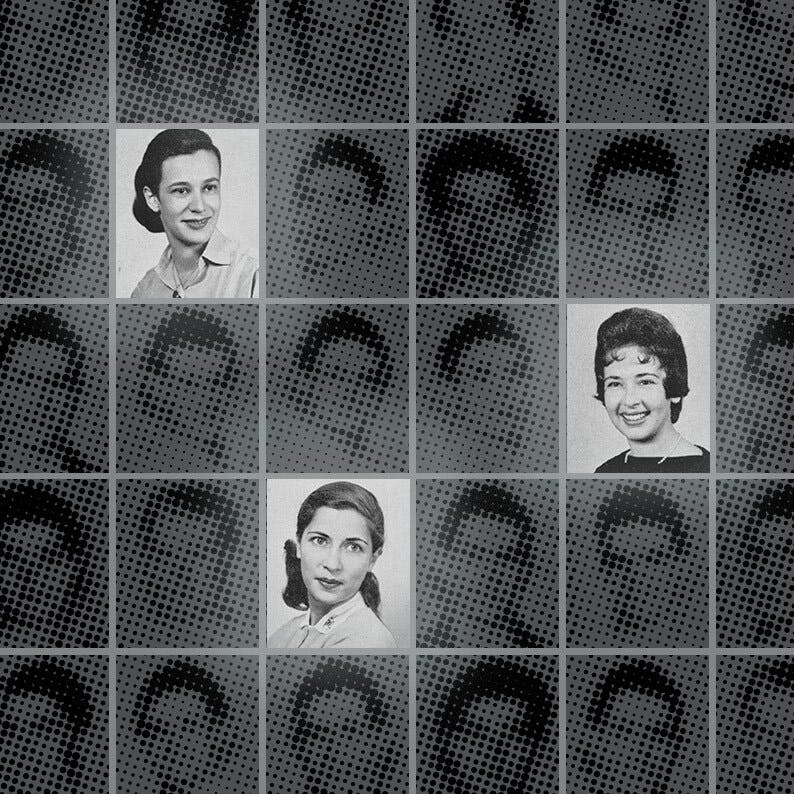
Amicus With Dahlia Lithwick | Law, justice, and the courts
Amicus Presents: The Class of RBG Part One
00:35:31
Who were the nine other women in Ruth Bader Ginsburg’s Harvard Law Class? The justice remembers them all.
Loading summary
Transcript132 lines
- [00:01]
A
There's this moment in one of the recent movies about Ruth Bader Ginsburg's life. The movie's called on the Basis of Sex. The women in the class of 1959 at Harvard Law are invited to a dinner at the Dean's house, and they are asked to justify taking up a spot at Harvard Law School.
- [00:20]
B
This is only the sixth year women have had the privilege to earn a Harvard Law degree. This little soiree is our way of saying, welcome. My wife Harriet and I are very glad all nine of you have joined us.
- [00:35]
A
Sam Waterston as Dean Erwin Griswold at the head of a grand table.
- [00:40]
B
Let us go around the table and each of you ladies report who you are, where you're from, and why you're occupying a place at Harvard that could have gone to a man.
- [00:52]
A
A couple of women take their turn, each rising to their feet to answer the question. And then, I'm Bruce Ginsburg from Brooklyn. And why are you here, Ms. Ginsburg?
- [01:12]
B
Mrs. Ginsburg?
- [01:14]
A
Actually, my husband Marty is in the second year class. I'm at Harvard to learn more about his work so I can be a more patient and understanding wife. That's pretty much how the real Ruth Bader Ginsburg answered Dean Griswold's question that night. Back in 1956, even if you don't follow every opinion and dissent from the high court, you probably already know that she was being a little facetious. This studious, feeling, fierce feminist becomes the second woman to sit on the US Supreme Court. But back in 1956, she was not yet a three initial icon. Ruth was one of nine women among about 500 men in that class at Harvard Law School. So as I watched that movie scene, I kept wondering, who were the other women at that table, the classmates chuckling in the background at Ginsburg's response to the dean? How did they come to be sitting at that table? How did they answer that question about why they were there taking the place of a man and what became of them? If your classmate is Ruth Bader Ginsburg, the history begins and ends with her. But even her story about what it was like to break into the elite world of attorneys and judges, about what it took to make it to the Supreme Court. That story is actually better understood if the women who didn't end up on the federal bench are. Are taken into account too. So we tracked them down. I'm Dahlia Lithwick. I'm a senior editor at Slate. I've been covering the U.S. supreme Court for 20 years, and I host this podcast, amicus. You are listening to the first episode of the class of rbg. We've come to think of this project as part archive, part belated class reunion for these women of Harvard Law school's class of 59. We have spent over a year now collecting the stories of all the women of that class, talking to family members and spouses of the women who are no longer with us, and interviewing some of the octogenarians who are still alive. You'll find full stories of all of these women's lives, photos, archived letters, transcripts@slate.com RBG and in this two part special audio series, you're going to hear from the women who agreed to be featured on this podcast. Two amazing trailblazers you don't yet know by name and one that you most certainly do. The 1957 Harvard Law School yearbook is an oxblood bound volume with a gold seal. The pages are full of black and white portraits of men, so many, many men. And then, one by one, here and there, the women of that 1L class begin to appear.
- [04:24]
C
We were all oddities of one sort or another. We really were. You would walk and everybody would look because we're this weird group of people, you know, with breasts.
- [04:50]
A
Meet Judge Carol Brosnahan.
- [04:52]
C
That's who I am today.
- [04:54]
A
Carol is a sitting judge on the Alameda County Superior Court in Berkeley, California.
- [05:00]
C
Hi.
- [05:01]
A
But in the yearbook, she was Carol Simon. Back then, she says she was studious and a little shy from Queens, New York. She had dark curls that in her photo are not quite smoothed.
- [05:13]
C
I was skinny. I was funny looking. And things came pretty easily to me and academically.
- [05:23]
A
Now say hello to Flora Schnell.
- [05:26]
D
Hi, Dahlia.
- [05:27]
A
Hi there.
- [05:27]
D
Have you spoken to any of my classmates already? Yes, to Carol.
- [05:33]
A
Carol was amazing.
- [05:35]
D
She is amazing, really.
- [05:37]
A
Flora's a retired real estate lawyer these days. In her yearbook photo, she has short hair, a kind of Audrey Hepburn haircut and a string of pearls.
- [05:47]
D
I was always, you know, the top of my class, but I wouldn't describe myself as bookish.
- [05:52]
A
Carol and Flora were roommates at Harvard, but they were in different small sections for their first year classes. Now, as luck would have it, Flora got Professor W. Barton Leach for property law. He was a former Air Force general who liked to drink and said that every lecture should begin with a laugh to fill the lungs. In the six short years that Harvard Law School had been admitting women, Professor Leech had developed an annual tradition to kind of shine a spotlight on them.
- [06:25]
C
My poor roommate Flora. She had W. Barton Leach.
- [06:30]
D
I'm sure Carol mentioned Bart Leach, who had a Ladies Day. Only the women in the class had to answer all the questions. And answering a question in class was a chance to be humiliated. So it certainly singled us out.
- [06:50]
C
Laura had to sing.
- [06:52]
D
It was at Christmas time. And I had to sing Good King.
- [06:54]
C
Winsloss she can't sing.
- [06:58]
D
Notwithstanding that, I played the piano and the cello. I could not carry a tune. So I practiced it for a whole week and I had to sing it in class. It was quite terrifying for me.
- [07:10]
C
It was so ridiculous.
- [07:13]
D
The King winces lost when out you could see singing is not my metier.
- [07:22]
C
I mean, it was so degrading. They didn't have a Men's Day.
- [07:32]
A
Actually, every day had been Men's Day at Harvard Law School for a long time. US law schools first started to admit women in the late 19th and early 20th centuries. Though small numbers of women had previously practiced law without having had a university degree at all, the transition to coeducation was slowest at the more prestigious schools. But by 1919, Yale had its first female law student and Columbia followed in 1928. When Harvard realized it could no longer hold out, it was one of the very last law schools in the country to admit women. And that was 1950. Dean Griswold did warn the admissions committee that women would probably just drop out and waste their degrees. But ultimately he steered the committee to vote in favor of it anyway. There were about a dozen women in those early co ed classes. And in the spring of 1956, the law school saw another big first. Lila Fenwick became the first black woman to graduate from Harvard Law. But when Ruth Bader Ginsburg and her classmates showed up that fall, the demographics of the most elite law school in the country were still overwhelmingly white and overwhelmingly male. So why did these women pick Harvard? The way Carol Brosnahan tells it, she went to Harvard Law School because of a man and because other postgraduate options were close to her altogether.
- [08:54]
C
As a woman, I wanted to go to the Harvard Business School. I had gotten my degree in economics, but I couldn't, I couldn't get into the Harvard Business School because they didn't take women. So I worked on Wall street for a year.
- [09:17]
A
What did you do when you worked on Wall Street? That must have been a pretty male dominated moment too.
- [09:23]
C
Oh, it was hilarious. I was denominated an assistant investment counselor. But I wasn't allowed to meet the clients, you know, because women weren't supposed to be managing their money. These were high level money people. And so we would do the Research, but we didn't get to meet the clients. I was, at that time, engaged to be married. And my fiance said it wouldn't be appropriate for me to work, but I could go to school. And that's how come I applied to the Harvard Law School.
- [10:11]
A
So, wait, I have to ask. Was that fiance the man you ended up marrying?
- [10:16]
C
Oh, gosh, no.
- [10:17]
A
Oh, good.
- [10:18]
C
I broke my engagement right before I went to the law school.
- [10:22]
A
So you applied in order to not be working?
- [10:27]
C
Well, I applied because I wanted to do something worthwhile. Didn't want to try again to go to the business school. And I thought being a lawyer would be a good thing.
- [10:41]
A
So she applied, broke up with that fiance, and headed off to Cambridge in the fall of 1956.
- [10:47]
C
My very first class was Contracts with a James Kasner. And on the first day of the first class, he called on me and said, Ms. Simon, if you break the engagement, do you have to give back the ring? And I looked at him and I said, I just did. And he never called on me again.
- [11:27]
A
Carol didn't mind so much being an oddity. After her broken engagement and her undergraduate studies at Wellesley, Harvard was kind of a refreshing change.
- [11:37]
C
Having gone to a women's college. It was really fun. There were nine women and 525 men in the class. I would never have had to take a note if I didn't want to, because there was always somebody who was willing to help out. So it was fun for me.
- [12:00]
A
Flora Schnall grew up in Brooklyn. She went to the same high school as Ruth Bader Ginsburg, although they were a few years apart. And like Carol, law school was not a first choice for Flora either.
- [12:11]
D
I studied the piano, thought I wanted to go to Juilliard, realized I wasn't good enough. I graduated from Smith College. The truth was, I was dating someone at college, at law school. So I went to classes with them. So I knew something about it. But I really wanted to be a writer. But I realized when I was graduating that everyone at Time there wasn't a woman who was a reporter on the magazine. And let's see, this was 1956. They were all, I guess, researchers. So I guess on a lark, I decided to apply to Harvard Law School.
- [12:57]
A
At the beginning of the first year, Ruth Bader Ginsburg was the only married woman in the class. But it didn't stay that way for long. By graduation, half the women were married. Carol and Flora both remember carefree days for the single gals.
- [13:13]
C
The married students really had a different life. They were not going to the parties and mingling with the other students and sitting on the steps doing the New York Times crossword puzzles with a classmate. I still do the New York Times crossword puzzles.
- [13:38]
D
Well, the three of us room together. Carol, BJ and I. Betty Jean Oestrich.
- [13:45]
A
Or BJ was another woman in the class of 59.
- [13:49]
D
So the two of them were fabulous cooks. So they'd come home every night with a cackle of guys, and we'd have a dinner party.
- [13:59]
A
Oh, there were dinner parties, and then there was just straight up women cooking for the men. Carol, who you're probably noticing by now, has this kind of glass half full view of the world. She actually found the upside to catering for the male students.
- [14:16]
C
Third year at the Harvard Law School. I was working my way through, and I took a job. I was secretary to the Harvard Voluntary Defenders. And one of the Voluntary defenders said, you know, we have these six guys, we have a house on the corner of the law school, but nobody can cook. And I said, well, I can cook. I'll do your cooking in exchange for my meals, as long as I don't have to do the dishes and the dirty work. So he said, grace. And one of the people in the house was a guy by the name of Jim Brosnahan. And three weeks later, we were engaged. And three weeks later we were married.
- [15:09]
A
Strong work, Jim Brosnahan.
- [15:11]
C
We have now been married for 60 years.
- [15:15]
A
Ruth Ginsburg also attended dinner parties from time to time. But as Flora says, her approach to socializing was notably different.
- [15:25]
D
Ruth, even then, had no small talk. It was nice to be with Ruth when you had a legal issue to discuss or a legal project. She was very, very focused. I would say, I know that if she was at dinner at our house, which Marty, her husband, would cook, she might excuse herself and go into the bedroom and work on a brief or.
- [15:57]
A
Something while people were over.
- [15:59]
D
While people were over.
- [16:02]
A
This is not a typical 1950s marriage. Marty cooked, Ruth worked on briefs. But Ginsburg had followed a man to Harvard. She'd met her husband, Marty, when they were both at Cornell. After graduating, she went with him to Oklahoma for his military service. Their daughter Jane was born the summer before. Marty started at Harvard Law in 1955, and by the time Ruth enrolled a year later, at the ripe old age of 23, she was the oldest woman in the class. But more than 60 years later, she remembers all her fellow oddities perfectly.
- [16:39]
B
It's amazing. It was amazing to me when I heard from you how distinctly I remember each of these women.
- [16:48]
A
Like, can you Imagine their faces in your.
- [16:51]
C
Yes.
- [16:53]
A
When we come back, Justice Ginsburg, the Harvard years and the women she remembers so distinctly. Okay.
- [17:02]
D
Bye.
- [17:02]
C
Bye.
- [17:02]
A
We gotta.
- [17:03]
B
Yeah.
- [17:03]
A
Get some stuff out of your pocket. Okay.
- [17:05]
B
Thank you.
- [17:06]
A
In late January, in the before times, weeks before the court emptied and went remote shifting to telephonic oral arguments and online opinion announcements, a few colleagues and I headed up the sweeping marble steps of the Supreme Court for an interview with Ruth Bader Ginsburg. This was going to be a conversation about her time at Harvard law school almost 65 years ago and the other women from those yearbook pages. We waited in the lawyer's lounge, an imposing room with wood panels and large portraits of, well, mostly white men in gilded frames. The kind of room that makes you smooth your skirt out, pull your shoulders back. We're ready when you are. While we waited, a pot of tea with a single cup on a saucer was placed on the small table directly across from me. It was not for me. And a few minutes later, Justice Ginsburg arrived. We now have to ask you about a story that we heard from several of the women. That I have to say. My jaw hit the floor. They described something called Ladies Day.
- [18:18]
B
The professor notorious for Ladies Day was Barton Leach. Lining them up in the first row and after ignoring them for the whole semester, that one day concentrating all their attention. But I think my classmates were warned by the women in the class ahead what they could expect.
- [18:41]
A
It was interesting because both Carol and Flora remembered it like every. The singing and every sort of detail of it. It's both funny, but also kind of deliberately humiliating.
- [18:54]
B
Yeah, well, there were episodes like that one in my section. We had classes six days a week. So Saturday morning classes. And we had, as visitors two people we'd been close to in the army. And I brought the woman to class with me. Far from going to law school, she had not even gone to college. So my contracts professor calls on her, and I stood up and said, she's my house guest. He said, any fool can answer that question. You answer it. And then I told him that he was rude to my guest and I would answer the question.
- [19:46]
A
Really?
- [19:46]
B
Yes. And he said something about Mrs. Ginsburg being a killjoy.
- [19:53]
A
Did he give you a C in contracts?
- [19:56]
B
No.
- [19:58]
A
Now, you've already heard me say that. While other law schools had been admitting women for decades, Harvard had taken its sweet time to make the change. While the matter was put to a vote three times and ahead of the successful vote in 1949, a major concern for the administrators was cost. Harvard Medical school had spent $80,000 to provide ladies toilets when women were admitted there. Dean Erwin Griswold was insistent that the cost of accommodating women would be lower for Harvard Law School. And he managed to find a way to do it for just $11,000.
- [20:34]
B
The cost was fixing up a bathroom, which, by the way, was always overheated. There was asbestos dripping from the ceiling. Before we knew that asbestos wasn't good for people's health.
- [20:48]
A
Having just one dilapidated bathroom in one building often meant that it was a sprint to the distant restroom even during exams for these women.
- [21:00]
B
But most of this, you know, it just came with the territory. We didn't even question it. We just accepted that that's the way it was.
- [21:14]
A
I think initially when we started this project, we thought that you'd all clump together and be like a pack. And I was remembering when I started at Stanford Law School, you know, in 1992, all the women were just in a pack. But it doesn't seem as though that necessarily organically happened. You didn't kind of travel all the women kind of having each other's backs, right? It was a little more complicated.
- [21:39]
B
Well, for me, I had no time to waste because Jane was 14 months when I started. So my time was used very efficiently for classes, for studying after class, come home at 4 o' clock to take care of Jane. So I didn't have time for any socializing except on weekends.
- [22:05]
A
Did you feel kind of isolated?
- [22:08]
B
I did not feel any lack of companionship. I had Marty and the people that we socialized with were mainly in his class. And then I was just so engaged all the time with either law school or with Jane. I had no time to be lonely or anything like that. I was just constantly engaged. And it was even more intense my second year when Marty had cancer. They rallied around us, his classmates, and they got him through that very trying year.
- [23:03]
A
Marty and Ruth had a support network and they were each other's support network. But that was the exception, not the rule, for one of the other women in the class. Far from having a supportive spouse, her husband stood between her and one of the most coveted things at Harvard Law School, a spot on the Law Review.
- [23:24]
B
The Law Review invitations went out at the end of the first year. So it wasn't a competition there. It was just strictly on the basis of grades.
- [23:33]
A
On the basis of grades. Ruth Bader Ginsburg was invited to join the other high scoring students to edit Harvard Law School's prestigious academic journal. Flora Schnall says even among the brains of the Law Review Ginsburg stood out.
- [23:48]
D
Everybody in my study group was on Law Review except me.
- [23:53]
A
Oh, wow.
- [23:54]
D
So I did know how bright she was because they would tell me that, you know, here she has a two year old little girl and she's doing all this work on Law Review and in classrooms. But I didn't know quite how bright she was. I would say she was the shining star of the people on Loriview.
- [24:16]
A
But by her own account, Ginsburg was not the smartest woman in the class. That designation in her mind went to Alice Vogel in her yearbook photo. Alice looks directly into the camera. She's not quite smiling. By the end of the first year, she had become Mrs. Alice V. Stroh. And Mrs. Stroh was also invited to be on the Law Review.
- [24:38]
B
She was the smartest girl by far in the class. Her grades were higher than mine anyway. And there were two men in the class, John Winston and Frank Goodman, who tried first to get her to go on the Law Review. After the first year, she had just gotten married. She married somebody in Marty's class one year ahead. And so she decided new marriage, too much. Then after the second year, they tried very, very hard to persuade her. And she in fact came to the Law Review two or three days. And then her husband said no. He didn't like. Didn't like her to be away.
- [25:33]
A
In the end. Ruth Bader Ginsburg was the only woman from that class on the Law Review. In 1956, there was only one woman's organization at Harvard Law School and Ruth Ginsburg was a member of, but it wasn't open to the rest of her first year classmates.
- [25:56]
B
There was in those years the Harvard Law Wives Club. And I got invited because I was a law wife. So that was to help the wives be supportive of their husbands who were engaged in this intense education at the Law School.
- [26:20]
A
The rye smile is audible there. You heard it too, right? As the justice says at Harvard, her social life revolved around Marty and his friends, if it revolved at all. Focus and no time for frivolity. Not for her. The cooking for a cackle of guys that Flora and Carol recalled earlier. Also not for her. A prize food fight that originated with a group of Harvard men getting the women of the Ladies College Radcliffe to cook for them.
- [26:51]
B
It was called the Radcliffe Cooking Contest. They'd have a competition and they'd have a different girl come and cook for them. And at the end of the year, they'd give a prize to the winner of the Radcliffe Cooking Contest.
- [27:07]
A
A group of men at the Law School thought The cooking contest was a great idea, adopting and adapting it, but.
- [27:14]
B
They would use the women in the class instead of the Radcliffe girls.
- [27:22]
A
And this was fun for the women.
- [27:25]
B
I don't know. I don't know.
- [27:28]
A
There's this line between funny and hazing, between being in on the joke and being the butt of it, that is actually very familiar to anyone who's ever been an only or an oddity. Figuring out if you're being lifted up by an ally or just picked on by an adversary. The line really isn't that fine. But for these women, it served to always raise questions about who truly belonged in that class of 59 and who didn't. It ran right through their time at Harvard Law School, from the cooking contest to Barton Leach and his Ladies Day. That line ran all the way up to the dean of the law school and that famous dinner at his house. And were you part of the famous story that Justice Ginsburg tells about Dean Griswold hosting a dinner?
- [28:23]
C
Oh, yes.
- [28:26]
A
The story of dinner at Dean Irwin Griswold's, the one we heard about at the very beginning of this episode. Oh, it is widely recalled, but not identically retold. Let's start with Carol Brosnahan's memory of that evening.
- [28:41]
C
Oh, yes, I was there.
- [28:43]
A
And so he made you each explain why you were taking a man's place at the law school?
- [28:47]
C
No, he didn't make us explain. He just announced to us that we were taking the place. Now, Ruth may have responded. I think I was too flabbergasted to respond.
- [29:03]
A
Flora Schnall doesn't remember Carol being there at all. Just her and Ruth Bader Ginsburg.
- [29:09]
D
Well, no, it was actually. She and I were in the Dean's Moot Court Club, and it was a dinner at his house, and she and I were the only two women, and, I don't know, 50, 75 men. And he said, what are the two of you doing here? And of course, she was already married and she had a child. And I said. She reminded me that I said, dean.
- [29:34]
B
Visual, there are X number of us. Well, Ruth Ginsburg doesn't count for this purpose. There are 500 of them. What better place to find a man?
- [29:46]
D
Dean, I'm here looking for a husband.
- [29:49]
A
And were you just doing that for comedy purposes, or was that.
- [29:52]
D
I think I was just heckling the dean.
- [29:55]
A
Ruth Bader Ginsburg was sitting next to a Columbia Law professor, Herb Wexler.
- [30:01]
B
Each of us had an escort.
- [30:05]
A
Back then, it was not the done thing for a woman to go to the dean's dinner alone. And so escorts were provided. Never mind that RBG was already married. An escort was not a date. It was something more like a chaperone.
- [30:23]
B
In those days, I smoked herb, was a chain smoker. So I had the ashtray that we were sharing on my lap, and when I got up to say something, all cigarette butts were on the floor. Griswold's living room. And I didn't know. Oh, it was really one of those moments when you wish you could have a trapdoor to fall through. So I mumbled something about, my husband is in the second year of class, and I think it's important for a wife to understand her husband's work.
- [30:57]
A
Flora told us that she actually thought that Dean Griswold was trying to be helpful to women.
- [31:03]
D
I don't think he was as bad as we all make him out to be. I think he was kind of putting us on in a way.
- [31:11]
B
He was. There were many good things about Dean Griswold, but he didn't have a sense of humor. And because he had been a proponent of the admission of women, he wanted to assure the doubting Thomases on the faculty that these women were going to do something worthwhile with their law degrees. So he asked that question, why are you here occupying a seat that could be healed by a man? Because he wanted to be armed with stories from the women themselves about how they planned to make use of that law degrees and not just waste this wonderful education that they would get. He didn't have any sense that he was making the women feel uncomfortable about this.
- [32:03]
A
If you could answer it again today in the fullness of knowledge, what would your answer?
- [32:09]
B
I'd say I went to law school because I wanted to study law. It wasn't a truthful answer when I gave it.
- [32:16]
C
Yeah.
- [32:20]
A
Each of the women I interviewed defended Dean Griswold despite his loaded question that night. As Justice Ginsburg says, he had helped women get into Harvard after all. Besides, how could they have answered that question honestly? What on earth would that kind of answer have sounded like at that stuffy dinner? Escorts at their sides. I want to study law. I want to be an attorney. I want to be a part of shaping this country and the Constitution, Please. They couldn't have said those things because there was no good answer and there was no single answer. The women told me they came to study law for all kinds of different reasons, but also when they took all of those nine spots at Harvard Law School that could have gone to a man they were training to enter into an elite profession that still had no intention of placing women in meaningful jobs at its highest echelons. The irony behind Dean Griswold's question the legal system was designed to ensure that women, with very few exceptions, wasted their law degrees, designed for them to have taken the place of a man for no good reason at all. After the law school, years of intense study, sexist hazing, bathroom dashes, endless cooking for men, the crossword puzzles, the exams, the women of the class of 1959 would build careers. All of them. But it was not going to be easy. What happened to the ladies of Harvard Law School after Harvard Law School? Next time.
- [34:02]
B
It was getting that first job that was powerfully hard.
- [34:06]
C
I passed both bars and I was going crazy trying to stay home with.
- [34:12]
B
The kids, he said. Give her a chance and if she doesn't work out, there's a young man in her class who jump in and take over.
- [34:20]
D
It wasn't easy to have any support from women because they they just swerved many women around to do that.
- [34:39]
A
The Class of RBG is produced by me, Dahlia Lithwick and Sarah Burningham, with editorial direction by Laura Bennett and Susan Matthews. Molly Olmsted, a staff writer at Slate, contributed an absolutely immense amount of reporting to this podcast. Again, you're going to want to read the full stories and see the photos of all these women's lives written by molly@slate.com RBG. Gabriel Roth is editorial director, Alicia Montgomery is executive producer, and June Thomas is senior managing producer of Slate Podcasts. The artwork for this special series was done by by Holly Allen. Special thanks go out to Slates. Danielle Hewitt, Chow Tu, Katie Rayford, Jason De Leon, Mary Wilson, Noreen Malone, Allison Benedict and Jared Holt. Thank you for listening.