← Andy Beshear Podcast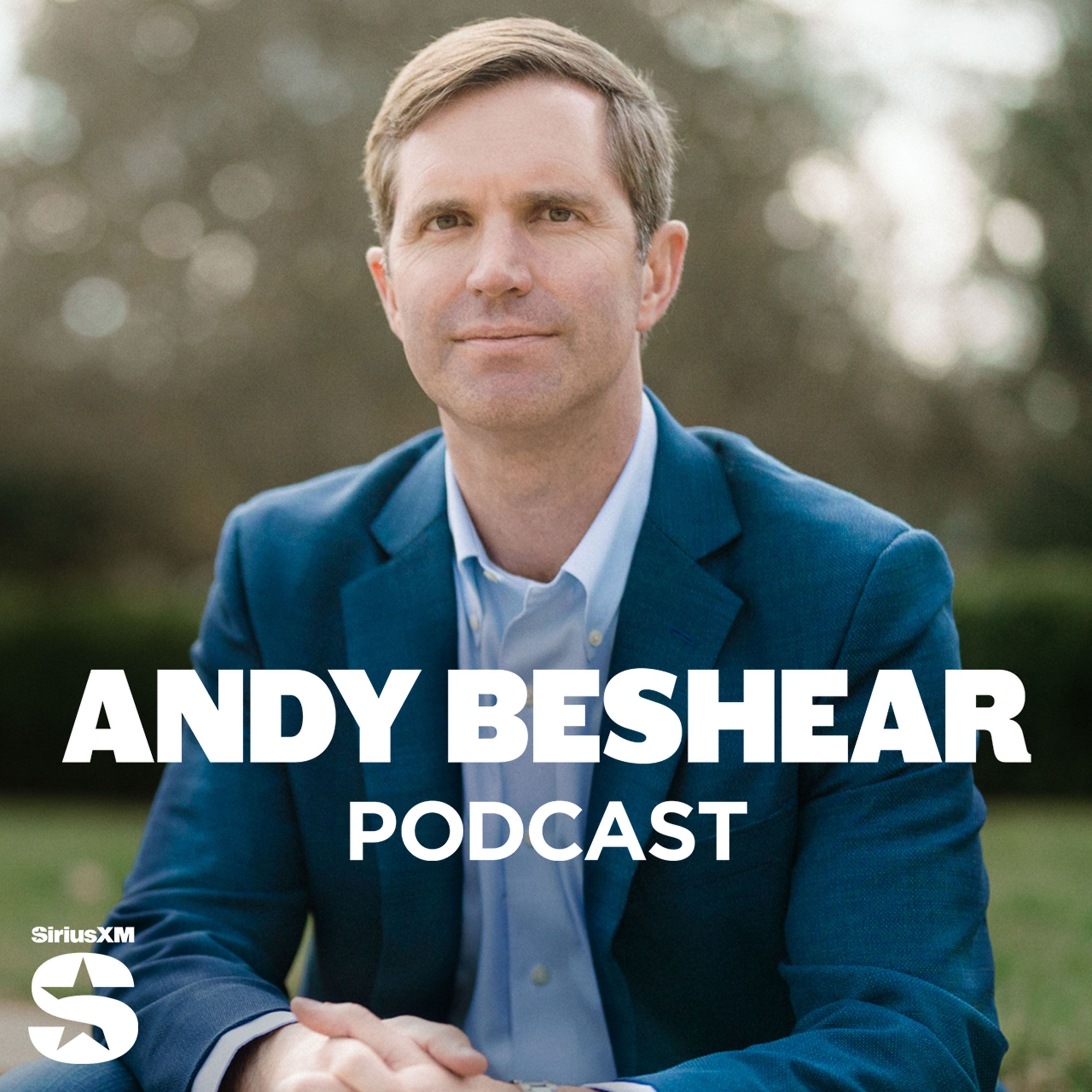
Andy Beshear Podcast
Episode 27: Steve Kerr, National Guard Deployment and More Tariffs
00:50:02
This week on The Andy Beshear Podcast, we might just have our biggest episode yet. Andy sits down with nine-time NBA champion and Team USA coach Steve Kerr for a powerful and wide-ranging conversation about leadership, authenticity, and courage – on and off the court.
Loading summary
Transcript178 lines
- [00:00]
A
Hey everyone, it's Nicki and Bri and we're here to let you know that we have a podcast, the Nicki and Bri Show. Yes. And we've got new episodes every Monday and Thursday. We're serving up real deal conversations that go beyond the cameras. Think motherhood confessions, sisterhood vibes, boss business energy and TV Live tea. Need a laugh? We got you craving inspo. We got inspiration and affirmations on deck. Want a little cry or a big Heck yes. Then that's our jam. Whether we're breaking down pop culture, sharing parenting wins or fails, unpacking personal growth, or just riffing on everyday chaos, nothing is off limits. Plus, we welcome incredible guests, play our favorite games, and do what only sisters can. Keep it 100 while raising a glass together. So pop a bottle, hit play and come hang with us. Listen to the Nikki and Bri show wherever you get your podcast.
- [01:10]
B
Welcome to the Andy Beshear Podcast, a proud part of the Sirius XM podcast family. Today we may have the biggest episode yet. We've got nine time NBA champion Steve Kerr. He's going to talk about hitting that incredible shot with the Bulls. He's going to talk about leadership tips he learned from Michael Jordan, Tim Duncan, David Robinson, Phil Jackson, Greg Popovich. And he's going to talk about his brand of leadership and his concerns with some of the things going on in the country and what he hopes to see. Then we have Illinois Attorney General Kwame Raul who's going to talk about the legality or the lack of legality of the President sending troops or or National Guard to Illinois. We'll have our conversation among friends. And Will is back not just to teach us Gen Z lingo but to tell us a pretty big group out there that may just be imitating the Andy Beshear Podcast. Let's get to it. You're listening to the Andy Beshear Podcast. Today's guest is a special one. We have a former NBA champion as a player with five championships and as a coach with four NBA championships. Steve Kerr, who also has led Team USA to a gold medal. Coach, thanks for joining us.
- [02:44]
C
Thanks so much for having me, Governor. Appreciate it.
- [02:47]
B
Well, I am really excited. I told you, I was just watching the Netflix series where you are front and center. What was it like leading your country to a gold medal at the Olympics?
- [03:01]
C
You're coaching the best players on earth. Just get out of their way, make sure they have all the space they need. But it was an incredible experience to see those guys together on the court the way they worked the way they collaborated. Just an incredible group of people.
- [03:19]
B
I think you're very humble because as I watched, I saw a master class in leadership because you have all these Alphas, you have the best players in the world, and they're not all going to play certain minutes. And you got to balance the chemistry and the personalities. Did, did that keep you up at night?
- [03:37]
C
It did. That was probably the, the toughest part. And we actually addressed it the night we all met for the first time, before we even practiced. The whole point was we're trying to win a gold medal. We have 12, probably 12 hall of Famers. I wouldn't be surprised if when all is said and done with their respective careers, all 12 of those guys are in the hall, but you can only play nine or 10. So we talked about it with the group. Every night there's going to be a couple guys who don't play, but we're going to need everyone.
- [04:10]
B
I also have thought about your time on the court and the different type of floor generals and leaders that were on those teams. You played very famously with Michael Jordan, by the way. Hit one of the most iconic shots in NBA history. When you're having a bad day, do you ever turn that on just to see it just as a good pick me up?
- [04:34]
C
We just keep it on loop actually at the house every day. So.
- [04:38]
B
So that sounds right. I think if I have a bad day, I'm going to watch your shot.
- [04:42]
C
Perfect.
- [04:43]
B
But. But you've got Michael Jordan, which to me seems like he's probably a more in your face type of leader.
- [04:49]
C
Right.
- [04:49]
B
And then you have guys like David Robinson and Tim Duncan. So, so tell me what, what you took from all of that that eventually impacted your leadership style?
- [04:59]
C
Yeah, well, I mean, I played for 15 years, but I was never a starter in the NBA. I was always a role player. And I think as a role player, it's, it's probably easier to, to see the dynamics of a team if, and especially when you have great internal leadership from guys like, like Michael and Tim and David. And so it really prepared me to, to, to coach in that I saw what it's supposed to look like. You know, a great collaboration between coach and best players, great collaboration between management and coach, and then ultimately just the vibe that you build each day that the guys feel when they come to the, to the facility to train. And my coaches were masters at that. And so I was really lucky. I got a great apprenticeship to prepare for coaching and got to play with, you know, some of the all time Greats, and now I get to. To coach one and Steph Curry. So I've lived a charmed NBA life, for sure.
- [06:01]
B
While you're a player, you did have a number of incredible coaches, I think, about Phil Jackson and Greg Popovich. Do you feel like you took one or two things from each of them that you merged together to make Steve Kerr the coach?
- [06:15]
C
I took way more than one or two, you know, and there were others, too. My college coach, Lud Olson. I played for Lenny Wilkins. Another hall of Famer, Cotton Fitzsimmons in Phoenix, who was just a phenomenal coach. And I think we are all basically products of our environment. So, you know, I'm a product of my parents raising me and then the coaches that I played for and the game that I realized that, you know, I enjoyed playing so much, which is one of ball movement and pace, and. And so I picked up not only a lot of basketball knowledge from those coaches, but, you know, the insights on culture and how to connect groups. And I think Phil and Pop in the NBA in particular, just built amazing cultures, and they did it in very different ways because they're very different people. But the key was it was very authentic to each of them, and I try to be authentic myself, and I think people appreciate that.
- [07:23]
B
So you come into coaching and at least with the Golden State warriors, and you find immediate success. Got. Got some great players, but also bring them together to play at a level that I think we hadn't seen. As you look back at that first season, what do you see as the keys to. To how far you went and what got you there?
- [07:48]
C
Well, number one, I took over a team that was ready to win. And so much of coaching in the NBA is about your roster. And do you have a group that's ready to win, or are they a rebuilding group? Are they a middle of the pack team? I took over the warriors when they had been really good for about two years, and they were on the rise with a bunch of young talent, and it was just a golden opportunity. Um, so I. I thought the key was the, you know, the talent, the continuity that they had already built, and then just trying to, you know, to add things here and there, whether it was strategic or just culturally, you know, what I could help bring out of the guys was, was what I focused on. And we just had an incredible group. They were amazing to coach. They were connected. They were fun, joyful, competitive. And to win a title in my first season was something I never, never dreamt of.
- [08:48]
B
And then three after that, meaning you had built such a special core. Tell, tell us the challenge. I guess it's working with the general manager of, of a salary cap that every team has to deal with about keeping those core players, but then also having to, to, to find those other players that can complement them, to be able to come back and to win four championships around the same core.
- [09:18]
C
Yeah, yeah. And we had great, great management, ownership, you know, Bob Myers, now Mike Dunleavy, who does a great job. I'm really blessed to work with amazing people. I think the, the fact that Steph Curry is who he is made a lot of players want to come play with him. So, you know, in the early years, you know, Andre Iguodala, Sean Livingston, Kevin Durant, of course, you know, arrives in 16, and we instantly become one of the great rosters of all time and, and 1, 2, 2 straight titles immediately. But even our role players, our management did a great job of finding guys who fit. And I think the collaboration organizationally was a really big part of all this.
- [10:05]
B
Coach, we met at the Democratic National Convention, and I didn't realize it when we were first talking, but we were in the Bulls locker room, which I thought was, was pretty incredible, but you were there speaking out. And I know that there are some coaches or athletes that, especially right now, when there can be such reactions, are choosing not to. So tell me what, what drives you to speak your mind and to stand up for what you believe in?
- [10:34]
C
Well, thanks for the compliment. I, I, I think Greg Popovich really inspired me. You know, playing for him, he was not shy about speaking out on issues that he felt were important. But it was more than that. It was the perspective that he offered us as players, really giving the, you know, world events, world politics a lot of focus in our meetings and our thoughts. He wanted us to be interested in more than just basketball. And when I saw him speak out about things that he was passionate about, I was really inspired. And, and then I just felt like over the last decade or so, it, the timing seemed right for people like me with a platform to speak up. And my number one issue is gun violence prevention. I lost my father to, to gun violence, and I realized I had a platform. We clearly need common sense, gun safety rules in our country, and I decided to start speaking up on that topic.
- [11:39]
B
Well, thank you for doing that. I lost one of my closest friends about two and a half years ago. It's a club that nobody wants to be in. Sadly, too many of us are. Tell me what you say to NBA players that have spoken out and get that Terrible response from some that shut up and dribble.
- [12:02]
C
Yeah, I mean, you know, I. I think our guys are used to the criticism, the judgment, whether it's in basketball or politics, it doesn't matter. The life that we live right now, the social media world can be so unhealthy, and I think our players have. Have heard a lot of things. Shut up and dribble, I think is particularly insulting because it implies that they're not smart or smart enough to have a take on society and what. What's going on in American culture. So it's very insulting, but it's sort of par for the course in, you know, today's discourse. There's just such an ugly bent to everything, and in some ways, you have to try to just rise above it, and you have to deal with it in some way. I personally have learned to deal with it by eliminating all social media from my life, and I feel way better about it.
- [13:02]
B
How do you counsel your players on social media where you've got some players that are really young that really haven't lived any of their life without it? What type of guidance do you or the organization try to give them?
- [13:17]
C
Yeah, it's a great question. You know, the NBA instituted some rules where players are not allowed to be on their phones. You know, from I think it's like 45 minutes before game time to, you know, half an hour after it ends, something like that. But look, phones are. Are just. We're all so accustomed to being on our phones constantly, and. And so it's not something that we drive home. I usually wait until I get to know a player or in person pretty well before I have that discussion. It's really up to each person to decide, you know, how they're going to approach this. But there's more and more research now that shows just how unhealthy it can be. And we try to share some of that with our players when the time is right and help them realize, you know, that there are. There are ways you can kind of work around it and be in a healthier frame of mind.
- [14:15]
B
I always tell people the number one rule is don't read the comments.
- [14:20]
C
Yeah. And not the truth.
- [14:22]
B
And if you read the comments and you think they're bad, go to my social media and read the comments and you'll feel just a little bit better. Right, That's. That's politics right now.
- [14:31]
C
Yeah. I don't. I don't envy you and your job and your. All of your. Your colleagues. It's such a scary time with Political violence and just so much division. So I admire your public service and that of all your colleagues. And I wish we could find a way to unify this country because we have a lot more in common than not. But we are clearly being pushed and divided by a lot of different forces, including many individual people, and it's demoralizing.
- [15:08]
B
I think that is so true that, that the things that matter most to people are nonpartisan. Sometimes we talk about needing to work bipartisan, but I think we've forgotten nonpartisan. We got some people that even tried to take an act of violence and turn it into some type of partisan advantage or, or attack.
- [15:31]
C
Yeah, and it's such a shame because you said it. I mean, the vast majority of us are. We share the same values. Right? We're trying to, you know, raise our families in a safe environment. We're trying to get economic equality. We want our kids to be able to buy homes. I think about the difference from when I graduated from college, the job prospects, the prospects to buy a house compared to now. And I've got three kids, they're 33, 31, 27 from then to now, the opportunities, the economy, the housing market, it's just dramatic in terms of how much less opportunity there is out there for this young generation.
- [16:16]
B
I've been thinking about that news for profit piece. When our networks originally got permission to be on the air from the fcc, they had to do a certain amount of educational programming, and that's what the news used to be. And now we see it sensationalized. We see anything violent that happened for the first seven minutes and maybe something policy wise, substantive in the 20th of 30 minutes.
- [16:47]
C
It's, I think it's a common theme in a lot of different walks of life. I think about the NRA. You know, 50 years ago, the NRA was all about gun safety. And it was, you know, if you had a child with a gun, you immediately signed up with the nra. You got gun safety training. You learned how to clean a gun, how to store it safely. The NRA was a wonderful organization. You know, now it's just part of the gun lobby trying to sell more guns. And they're trying to literally get rid of, you know, any regulation that's out there. And you think about why this has happened. And it's just for political gain, right? I mean, you're in Kentucky, I'm sure, you know, so many responsible gun owners who would love to have more gun safety precautionary laws and measures put in place to protect them, protect their families. But this is a political issue more than it is a human one. And how is that possible? We have more children dying from gun deaths than anything else. Disease, accidents, cancer, anything. And that. We have to do something about that. But politics are in the way more than actual opinions.
- [18:13]
B
Politics used to be about winning. So you could do the job running as a Democrat, Republican, or independent, but then serving everybody once you won. I think one of the challenges now, especially in the US Congress, is it's all about that next election. And can we have one more of this letter than that letter at any cost.
- [18:37]
C
That's right. And yeah. And then you get to, you know, to drive your initiative, to drive your. Your agenda. So I get it, but at what cost? You know, at what point are we going to lose our. Our values as a country? Our. Our system that has worked, you know, pretty well. System of checks and balances, which is what our founders insisted on implementing. And it feels like that's slipping away. And that's. That's a scary thought.
- [19:06]
B
So if you could take Republican leadership and Democratic leadership and bring them to your practice court, what drills do you think you'd run to make them work together?
- [19:18]
C
Well, I wouldn't have them scrimmage right away. I can tell you that.
- [19:21]
B
That's a good idea.
- [19:24]
C
Yeah. But I do think about this from time to time, and, And I know it's totally different, but I think about if, you know, if. If a sports team were run by, you know, one of these extremist politicians. I won't name any names, but, you know, if. If the coach was an extremist, you know, he would literally tell half the team, hey, you guys suck. And you were responsible for the loss. And you guys on the other half, you guys were good. And we're going to keep, you know, giving you the ball. That team's going to lose all the time. And, And I, I get it. It's. Maybe it's a flimsy match metaphor, but when I think about our country, I just think, how are we supposed to thrive if we have people just trying to divide us, our leaders, so many of our leaders. So we've got to find a way, and I don't have the answers. I know I'm just a basketball coach, but like many Americans, I'm very discouraged by the lack of collaboration in Washington and around the country. If anything, I think you governors out there are the ones who are capable and who are doing the collaborative work with both sides of the aisle, because you're the ones who really affect policy the most. I would like to hear your thoughts on that, though, because that's my thought. But what's your actual experience in that regard?
- [20:46]
B
Well, what I see is I live in a state that voted for Donald Trump by 30 points, but I've got a 68% approval rating. And I think that's because I work for the things that aren't political. Creating new jobs, expanding healthcare so you can see your doctor in your own community, making your roads and bridges safer, making your school that you drop your kids off at a little bit better, and making you feel safer in your community. Those are ideas and areas where you can lift everyone up and kick no one while they're down. And I think the people of Kentucky have just seen that. And I think the people of the United States of America are just craving someone that'll focus on them, not their political party. But just like you said, people feel that American dream is slipping away. And if you can't afford a home in that same decade that your parents did, that's gotta weigh on you really heavily.
- [21:40]
C
No question. It just feels to me like with national politics, it's tougher to create that change, whereas a governor and state politics, you're probably more capable of finding that at Common Ground and making real progress and real change. But I'd like to think that we could do it at the national level and that the right person could come around. But it sure is difficult given all the obstacles that are in place.
- [22:07]
B
So if you weren't coaching, what do you think you'd be doing right now?
- [22:11]
C
I come from a family of educators, and so coaching really is an extension of teaching, but I don't really know how to do anything else.
- [22:23]
B
We always ask our guests what their secret superpower is. What is something that you are really good at that no one knows?
- [22:32]
C
I think I'm a good dad. You know, I think. And I actually think. I think being a good dad is like being a coach, you know, But I have three kids, and I think my wife and I, we take a lot of pride in our parenting. The way we raised our kids, my wife always says, you know, we. We gave them just enough rope, and we've raised three wonderful kids. So I'm very proud of that.
- [22:55]
B
So this podcast has a national audience, but I admit there's a lot of people in Kentucky that listen to it. Tell us a little bit about coaching Bam Adebayo, because we are very proud.
- [23:05]
C
Of him in this commonwealth, as you should be. Bam was just an incredible guided coach. Very easy to connect with right away. Sometimes it takes a while to really connect with, with a player. And with bam, it was like, you know, one day and you could just see his character, his energy, his willingness to, you know, put the team above him, you know, and, and that's what you really want in the Olympics when you're only together for six weeks. He texted me last week on my birthday, you know, like, we, we don't know each other that well, but he's so thoughtful that he, you know, he's still reaching out and he's, he's just a phenomenal human being and a great player, obviously.
- [23:46]
B
You also got to coach Devin Booker, who we, we follow here in the Commonwealth and, and loved his time, his one year at the University of Kentucky. Tell us about him.
- [23:57]
C
Yeah, Book was kind of our unsung hero on that team. I thought he hit the biggest shot of the game against Serbia when we were in real trouble. He had a three and got fouled on the play and made the, made the free throw for a four point play. Had completely swung that game and allowed us to come back and win. Just a rock solid human being. When we went to Phoenix last year, two years ago, he, he sent me a bottle of wine. I was an assistant coach in Tokyo when Book helped the team win a gold medal there in the 21 Olympics. And so, you know, these guys are, they've both obviously just been, been raised really well because they're, they're thankful for the life they've been allowed to live and respect their coaches and continue to reach out and maintain these relationships. So I really enjoyed and love both guys.
- [24:50]
B
That huge shot you hit with the Bulls, that's been pretty iconic for my life and many people around my age. Do you still have the ball?
- [24:59]
C
I'm pretty sure Michael Jordan has the ball.
- [25:01]
B
I think he owes you that one.
- [25:04]
C
I don't think, I don't think he owes me anything.
- [25:08]
B
But tell you what, if I ever see Michael Jordan, I'm going to ask him if he'll send you that ball, please.
- [25:14]
C
Yeah, he's got plenty of those. You know, he doesn't need anything more.
- [25:17]
B
No, I think you may have a few more rings. Coach Steve Kerr, thank you for being on the podcast.
- [25:23]
C
Thank you so much, Governor. I really enjoy.
- [25:25]
A
Hey, everyone, it's Nikki and Bri, and we're here to let you know that we have a podcast, the Nikki and Bri Show. Yes. And we've got new episodes every Monday and Thursday. We're serving up real deal conversations that go beyond the cameras. Think Motherhood, Confessions, Sisterhood vibes, boss business energy and TV life tea. Need a laugh? We got you craving inspo. We got inspiration and affirmations on deck. Want a little cry or a big Heck yes. That's our jam. Whether we're breaking down pop culture, sharing parenting wins or fails, unpacking personal growth, or just riffing on everyday chaos, nothing is off limits. Plus, we welcome incredible guests, play our favorite games, and do what only sisters can. Keep it 100 while raising a glass together. So pop a bottle, hit play and come hang with us. Listen to the Nikki and Bree show wherever you get your podcast.
- [26:28]
B
It's Cybersecurity awareness month and LifeLock is here with tips to help protect your identity. Use strong passwords, set up multi factor authentication and report phishing scams. And for comprehensive identity protection, LifeLock is your best choice. LifeLock alerts you to suspicious uses of your personal information and also fixes identity theft, guaranteed or your money back. Stay smart, stay safe, and stay protected. With a 30 day free trial at lifelock.com special offer terms apply. You're listening to the Andy Beshear Podcast. We talk about this podcast as being a conversation among friends and so on. Just about every episode we have a conversation among friends. I'm here with John Rabinowitz. We have John McConnell coming remotely in. And a whole lot has happened in this last week. I think some of the biggest news is the government shut down day two and now in the second day. So Democrats are talking about why they are not voting on the demands of the Trump administration and congressional Republicans. And what they're saying is that we are standing up for health care and if we do not extend some tax subsidies, some subsidies under the Affordable Care act, then health insurance costs will go up on millions of Americans. John, why don't you comment on that?
- [28:08]
D
Well, I can hop in on this one. Amiens, you guys are going to do the legal conversations, the, the insurance side. I could, I could dig in. And it's the premium tax credit. And the premium tax credit helps families, depending on, you know, the, the number of children they have ages and typically subsidizes those prices. And you're going to be looking at a 50 to 100% rate increase if we don't continue those subsidies into 2026. And we're, you know, we're up on the, the deadline because enrollments have to start happening for January 1st. And you know, Andy, you've talked a lot about what's happening with Medicaid, you know, and now with this happening to individual private health insurance being purchased, it's going to hit our rural systems even harder. So when you see what's challenging with our rural systems, how much more pressure is this going to add?
- [29:05]
B
So, so many families are struggling to pay the bills. Their premiums, if they are on the exchange, could double at a time when they already can't pay the bills. And then everybody else's premiums are going to go up because of it as well. What that means is more people will lose healthcare coverage and there will be even less revenue going into these rural hospitals that are really struggling to hang on.
- [29:30]
E
So I appreciate the fight and I know why the Democrats are doing what they're doing. And I understand that it would be horrible for these rates to double. But I also, I mean, shutdowns are bad. I think we can agree on that. And I don't want to lose sight of, in fact, one of our good friends guys we have, it's a young couple, husband and wife, both work for the federal government. Both are furloughed right now without pay and have a young kid, young family. And this is after they just found out that their jobs were not getting terminated. They were told that it may now be terminated in the future, and that the craziest part about the whole thing is they're told not to check their emails or the communication messaging system they had. So how do they know?
- [30:14]
B
Job?
- [30:15]
E
Right. They can't. They're going to have to watch TV and find out if they are employed in the future. So, I mean, they're political pawns right now.
- [30:22]
B
So the furlough happens because of the shutdown. And I believe that Democrats and Republicans ought to be worried about those families and how they're impacted by it. But the potential firings haven't occurred during any other shutdown. This is an intentional decision by the Trump administration. And while they may try to blame Democrats for it, he doesn't have to fire a single person, including our friends. If he does, it's entirely on him.
- [30:49]
E
And I do think it's sad that. I think he was quoted as saying it's an unprecedented opportunity for them to make changes. And that's when I think about our friends and how hard they work, how much they love their job. It's very disappointing to hear the president target a group of people that way.
- [31:03]
B
And they're federal employees. And in this instance, they probably voted for him and he's going to cause them significant pain.
- [31:10]
E
Yeah, it's brutal.
- [31:11]
B
Let's now turn towards something we talked about the last time we were together on the Podcast. And that was whether Trump was going to be able to successfully pressure an indictment of one of his political enemies. This was James Comey, who had been the FBI director, The Trump appointed U.S. attorney for the Eastern District of Virginia, refused to do it, said there wasn't the evidence. And I believe that the number two in the DOJ agreed with him. He was forced to resign. Trump put one of his personal defense attorneys in, who I think has never prosecuted a case, and she pushed through an indictment on two counts, correct? On, I think two counts, yeah.
- [31:55]
E
So it is concerning because it's supposed to be independent. And there were just, I think a few days before there was messaging that he wanted it done before the statute of limitation ran.
- [32:06]
B
Yeah, he wrote it on Truth Social.
- [32:08]
E
Now. But we also need to understand an indictment is not a conviction. We don't really know what evidence was presented. I don't know that we would even find that out till a trial.
- [32:17]
B
Based on the indictment, it doesn't look like a lot.
- [32:20]
E
The indictment is not a conviction. And yes, the standard's different. The standard's a probable cause standard, not beyond a reasonable doubt. I bet it gets dismissed.
- [32:30]
B
Oh, I think it will certainly get dismissed, but it is chilling because we have never seen a president outwardly and directly pressure for the indictment of a political opponent.
- [32:40]
E
Yeah.
- [32:41]
D
I've got a question from the non lawyer side of this to help me understand. I mean, but the Justice Department really is supposed to help be at check of power, independent, the executive branch. Correct.
- [32:52]
B
This is, this is breaking it. I said before that I hoped it wouldn't happen. This is.
- [32:57]
E
It questions the integrity of it breaking.
- [32:59]
B
The Department of Justice. Hopefully the judicial branch will stand up and do the right thing, which in this instance, I think it will. All right, moving to the next crazy thing. We saw generals, three, four star generals required to fly in from all over the globe, leaving their posts to, I think what was meant to be a pep rally by Secretary. We're now supposed to call him Secretary of War Pete Hegseth and President Trump.
- [33:30]
E
It was surreal.
- [33:32]
B
First, Pete Hegseth goes on this entire thing about physical fitness. No fat generals, no no beards. He's talking about manliness. And the guy put in a makeup studio in the Department of War.
- [33:47]
E
John. I just kept thinking they said no long hair and no beard. So you were out.
- [33:53]
D
Yeah, I mean, if, if I could grow long hair, I would have long hair. And just watching these generals come in and you see Pete standing up there, trying to put on his version of a TED Talk and trying to give the ethos of war to these gentlemen who are out there as our commanders actually in the field leading our troops just seemed ridiculous.
- [34:15]
E
Can you imagine what they must have been thinking about, like, while they're watching this? After 20 to 30 years of experience in the military and leaders, and they just. I bet they couldn't believe it.
- [34:27]
B
Americans love their military. And I think the reason we can all support our military, regardless of our party, is that they're professional and not political. Yet they were brought in that room and they were asked to be political, to clap, to cheer, and guess what? They didn't do it. They remained stoic. They remain professional, even in such an unprofessional setting. But I think it was a line in the president's speech that I think is causing the greatest amount of concern. When he looked at all these generals and he talked about US Cities being training grounds for, I guess, foreign conflict, I think that that's really concerning, especially based on our history as a governor.
- [35:10]
E
When you hear something like that, what are you thinking?
- [35:12]
B
I'm thinking we have a president who in that instance was being as un American as I can imagine. Part of this country is you don't get off a plane and see our military, that they are not marching through our streets, and we do not use our military on US Citizens. Instead, we actually work to fix the problems that we ought to be addressing. But that view just fits more into the us versus them. He's talking about the enemy within when he's talking about people who disagree with him politically. And to come off of two weeks ago, where we're talking about free speech and then talking about using the military from the enemy within, people that disagree with you. It's incredibly concerning and violates just about every tenet of what America is.
- [35:59]
E
I couldn't agree more.
- [36:01]
B
All right, as we close out, we have a new round of tariffs. And it wouldn't be this discussion without talking about tariffs. Remember, we started across the board.
- [36:13]
E
I think we are on episode, what, 26 of tariffs of Terrorists.
- [36:17]
B
I mean, we called it the tariff podcast. I'm not sure our viewership or our listenership would be as good. That's why we do it late in the episode.
- [36:25]
E
Gotcha.
- [36:25]
C
But.
- [36:25]
B
But the chaos of this thing is has. You need a diagram to go from across the board to reciprocal to industry specific to now the country specific. Now it's even product specific, where we learned that kitchen cabinets and upholstery are going to have an extra tariff.
- [36:48]
E
Listen, again, I love the idea of us bringing manufacturing back and providing more jobs for Americans. Hopefully we can fill those jobs with workers. But it is again, chaotic. Especially, I mean, think about home builders, home buyers right now. How can you plan when you see these tariffs are going from what, 10% on some things, 25% on some things, 50. I'll tell you the other thing that was interesting is what happened with the pharmaceutical, with Pfizer, on how basically there's a three year lull if they contribute to manufacturing. It's really interesting to your point how it's product specific now.
- [37:27]
D
Well, and I think I mentioned to John and Andy a little while ago that, you know, we have a hard enough time with our younger people coming out of college now trying to start life to afford to buy a home. And now they're not going to be able to afford to buy a couch or, you know, kitchen cabinets.
- [37:42]
B
I think that's so important.
- [37:43]
C
Yeah.
- [37:44]
B
Because I believe part of what's going on our country right now is a large portion feels like the American dream is no longer attainable. And being able to buy especially your first home as a young couple is such a part of that. And right now they, they can't buy it in the same decade span of 10 years that maybe their parents could that many years ago. And so I think making the things inside that house costs that much more. The lumber already subject to a tariff is, is just going to hit our American families that much harder and it's gonna again make that young couple that thinks they'll never be able to achieve the success the last generation did that much more.
- [38:28]
E
I mean, to John's point, it's not just the purchase of a house, it's the purchase of everyday items are becoming at times very challenging for our children to purchase.
- [38:39]
B
If you know one thing about this podcast, you know we are against tariffs. It's time for our new segment statement of the case on the Andy Beshear podcast. Today we have a stellar guest, Attorney General Kwame Raul from Illinois. He is the 42nd Attorney General of Illinois and has served since 2019. We are excited to have him on and we are grateful for the work he is doing to stand up for American citizens. Kwame, welcome to the podcast.
- [39:19]
C
Thank you, Andy.
- [39:19]
F
Thanks for having me on.
- [39:21]
B
Well, I'm excited to have you on and I'm also grateful that you are where you are right now at this point in our country. The President has announced that he intends to send either National Guard or regular military troops into Chicago, Illinois, despite the fact that both the Governor and the mayor have said no Tell me the type of potential legal response that you see and why the President can't or shouldn't take this action.
- [39:55]
C
Yeah, thank you.
- [39:56]
F
Thanks for the question. So this is sort of the second time around where we're dealing with this issue. The President had made a similar announcement a couple of months ago and then eventually backed off of sending the Guard in. And it was on the heels of him sending the Guard in to Los Angeles and then subsequently into the District of Columbia, which the federal government has a different type of authority with the District of Columbia. But in each case, we've indicated that our sovereignty. The 10th Amendment gives us sovereignty to enforce criminal law at the state level. And then the Constitution gives Congress the power to determine when the National Guard is federalized. And Congress has done so by what is the Posse Comitatus Act. And there are three conditions in which the President could have such authority to federalize the Guard. One, if there's a foreign invasion, and there is none in the city of Chicago, I assure you, Andy, I believe you. Two, there'd have to be a rebellion. And that has not happened either. I think the last time we've seen something like that might have been on January 6, a few years ago. And the third circumstance is when.
- [41:29]
C
Federal.
- [41:29]
F
Law cannot be enforced in a certain way. And the last time that was invoked was President Nixon, when postal service was on strike in New York and National Guard were deployed to deliver mail. The courts are open here in Chicago. The federal courts are open. Federal law enforcement still has their authority, and there's still acting. Even immigration enforcement is taking place. And there's no need for the National Guard. We don't have a rebellion. We don't have anything that's occurring. There are people who are peacefully protesting, but there's nothing that cannot be handled by local law enforcement.
- [42:13]
B
So without quote and statute, there are really two ways that the Guard can be called up. One is through governors, which is what we're seeing in Washington, D.C. and they have certain powers if they're called up that way. The other is through this federalization. And at least from that initial decision in Los Angeles, if called in this way, they're limited, aren't they, in what they could do, for instance, protecting federal property.
- [42:43]
F
Correct. And we did get a hold of a memorandum that was sent from Andrew Whitaker at the Department of Homeland Security to the Department of Defense, making a request for personnel from the military. It didn't explicitly say National Guard. What we do know, this is a similar pattern that occurred in Oregon. Been in touch with my colleague Attorney General Rayfield with regards to that, and our staffs have been in touch and he filed a lawsuit with regards to the recent deployment this past weekend. And so if that pattern holds and their follow up holds and we should expect something similar to happen here in Chicago. It has not happened yet, but we are prepared to, to challenge any such action.
- [43:49]
B
So you are prepared to file a lawsuit to prevent that type of mobilization?
- [43:55]
F
Absolutely. As much of the country found out, here in Chicago, we're able to do crowd control. We had the Democrat National Convention last year. People exercised their First Amendment rights, are thousands of people not only from within Illinois, but coming in from throughout the country. And local law enforcement did a tremendous job of crowd control. And we had a very successful convention and that was a good display of how we can do crowd control and we can maintain the ability to carry out laws, whether it's state, local or federal laws.
- [44:39]
B
You're also leading a lawsuit that Kentucky is a part of where the Trump administration has tried to cancel appropriations made from Congress to help us build more resiliently to be prepared for the next natural disaster. These dollars flow through FEMA, but are critically important to protecting the people of the United States from, well, from Mother Nature. Tell us a little bit about that.
- [45:05]
F
Yeah, so we actually read on a lawsuit with regards to these conditions being put on emergency funds. These are funds that, as you said, go towards our infrastructure for cyber threats, for natural disaster threats, to make sure that we have a preparedness, then we can respond. And some of these funds go to law enforcement. And it's ironic that the Trump administration would do something like this and at the same time say that he needs to deploy National Guard to help deal with crime. He would defund law enforcement agencies through this unlawful act with regards to Fijima, yet say he needs to send in guard into our, the National Guard into our states. And so we were successful in obtaining summary judgment on our first suit. They have followed up and tried to threaten reallocation of these emergency funds to states that are collaborating with them on federal immigration enforcement. So we have filed another lawsuit basically on the same basis that it's arbitrary and capricious, it violates separation of powers. And we anticipate being successful with that second lawsuit just as we were with the first.
- [46:43]
B
And for the listeners, this was a list of terms that you would have to potentially agree to if you were going to receive funding to help prepare for natural disasters. That. And one of the terms was basically any objective of the President.
- [47:01]
F
Yeah, that's exactly, that's exactly right. So not only is it unlawful because you can't condition something that Congress didn't lay out in the appropriation of these funds, but secondly, it's vague and it's just arbitrary. It's. It's difficult to predict what the conditions are, even that they're trying to unlawfully attach to this.
- [47:34]
B
So as we close out statement of the case, talk about just the number of unlawful acts of this administration and why it's so important that our democratic AGs are standing up and ultimately going to court.
- [47:49]
F
Yeah, Andy, this is critically important for people to really not get lulled to sleep about this. We filed over 40 lawsuits where the President and his administration are blatantly disregarding our Constitution and federal law. People need to realize that their constitutional rights are being violated on a daily basis. We did not elect a king. And so he cannot ignore the fact that there is a co equal in Congress and he needs to abide by the parameters that Congress has put on the executive branch. And he also has to follow the other co equal branch, the judicial branch, when judgment comes down against them. And so this last action with regards to fema, just right on the heels of us being successful and getting a summary judgment order, they violate again by trying to reallocate FEMA funds.
- [48:54]
B
Well, General Raul, thank you for putting up the good fight. And thanks for being on the podcast Mazda.
- [49:01]
A
Once you Discover the Mazda CX90 Plug.
- [49:03]
B
In Hybrid Mazda, it doesn't take long to get it.
- [49:07]
A
With three rows, a luxurious interior and the ability to go all electric, it's flexible enough for nearly any journey.
- [49:13]
B
It will have you saying Mazda.
- [49:15]
A
The Mazda CX90 plug in hybrid.
- [49:18]
B
It's made to move you.
- [49:19]
F
Every Mazda SUV offers you an elevated driving experience and refined performance. Discover it at your local Mazda dealer today.
- [49:30]
A
Hey everyone, it's Nikki and Bri. And we're here to let you know that we have a podcast, the Nikki and Bri Show. Yes. And we've got new episodes every Monday and Thursday. We're serving up real deal conversations that go beyond the cameras. Think motherhood confessions, sisterhood vibes, boss business energy and tv Live tea. Need a laugh? We got you craving inspo. We got inspiration and affirmations on deck. Want a little cry or a big? Heck yes. That's our jam. Whether we're breaking down pop culture, sharing, parenting wins or fails, unpacking personal growth, or just riffing on everyday chaos, nothing is off limits. Plus, we welcome incredible guests, play our favorite games, and do what only sisters can. Keep it 100 while raising a glass Together. So pop a bottle, hit play and come hang with us. Listen to the Nikki and Bree show wherever you get your podcast.
- [50:31]
F
Thanks for having me.
- [50:40]
B
Back. By popular demand on the Andy Beshear podcast is Gen Z Lingo with Will Bashir. Will, we've come a long way since episode one.
- [50:51]
G
We have.
- [50:51]
B
We've been signed by Sirius XM Radio and now I think we should feel flattered because we've had some pretty serious folks imitate this segment.
- [51:03]
G
Yeah. So the YouTube group Dude Perfect has just started a podcast and on their first episode they had a a segment about Gen Z Lingo where so a.
- [51:14]
B
New podcast on the first episode does Gen Z Lingo.
- [51:20]
E
Hey, we must be doing something right them to copy us.
- [51:23]
B
I think that there should be a competition without question versus them for the title of Gen Z Lingo.
- [51:32]
G
This is the official challenge. We need to see who is the the king of Gen Z Lingo. So but now on to our word.
- [51:39]
B
Okay.
- [51:39]
G
For the today.
- [51:40]
B
Because if we're going to take them on, we've got to keep learning.
- [51:43]
G
Yes, we do. And our word today is sus.
- [51:46]
B
Sus.
- [51:47]
G
So it's short for suspicious or suspect.
- [51:50]
B
Okay.
- [51:51]
G
And little origins here. This word kind of came about during the pandemic in 2020 and now it's not really used a lot, but it's used more in a funny context like, oh, like John's outfit on the fourth of July. That was sus.
- [52:06]
E
Oh, really?
- [52:07]
B
He did look like a suspect for something.
- [52:09]
G
Yes, yes.
- [52:11]
B
I was thinking, I thought that outfit was at least a misdemeanor.
- [52:13]
E
Oh, without question. I was thinking like this dude Perfect copying us is sus.
- [52:19]
G
Oh, definitely.
- [52:20]
B
I think it's pretty awesome.
- [52:21]
E
It is pretty awesome.
- [52:23]
B
They've got a pretty, pretty decent following. I mean they're not the Andy Bashir.
- [52:26]
C
Podcast in terms of they don't have.
- [52:28]
G
Our number, they don't have a serious XM deal. Suspect is us. Or sus is usually used in the context of trying to be funny. Like I said. So next time I want to challenge you guys, I want to see who can use SUS on John McConnell the best because he's not here.
- [52:43]
E
That should be easy.
- [52:44]
B
So that's kind of his like everyday life. The way that John lives is a little bit sus.
- [52:48]
G
A little bit, yeah.
- [52:49]
E
The fact that John left to go out at 4:30 is sus.
- [52:55]
B
So if somebody is acting odd, is it sus or is it more goofy?
- [53:00]
G
It's sus. I'd say you can tell when somebody's being goofy and trying to be funny.
- [53:05]
B
So sometimes you're like standing in a crowd and you're looking around that guy over there, sus.
- [53:10]
E
So John just is trying to be funny. So he's not sus.
- [53:13]
G
He's more funny than sus, I would say. Yes.
- [53:16]
B
What is the most overused Gen Z millennial type word that when you hear someone our age use, you just cringe?
- [53:25]
G
Slay. 100%. Because there was a period where you were trying to be funny, you and mom, and you were like that, oh my gosh, that's so slay. And that was definitely the nails on the chalkboard. I just wanted to like cover my ears.
- [53:40]
B
I personally thought this new jacket Slay. Andy Beshear Podcast we're not saying slay. We are fire. And there's no sus here. Join us next time. And remember, you can download us on every major platform, but make sure you subscribe to SiriusXM. We're proud to be a part of that family and we look forward to being back with more of the Eddie Beshear podcast.
- [54:09]
A
Mazda Once you discovered the Mazda CX5.
- [54:12]
B
Mazda, it doesn't take long to get it.
- [54:15]
A
With standard all wheel drive, a premium interior, and advanced safety features, it's an SUV that gives you more at every turn.
- [54:22]
B
It will have you saying Mazda.
- [54:24]
A
The Mazda CX5.
- [54:26]
B
It's made to move you every Every.
- [54:28]
F
Mazda SUV offers you an elevated driving experience and refined performance.
- [54:34]
B
Discover it at your local Mazda dealer today.