Loading summary
Transcript197 lines
- [00:07]
Andy Beshear
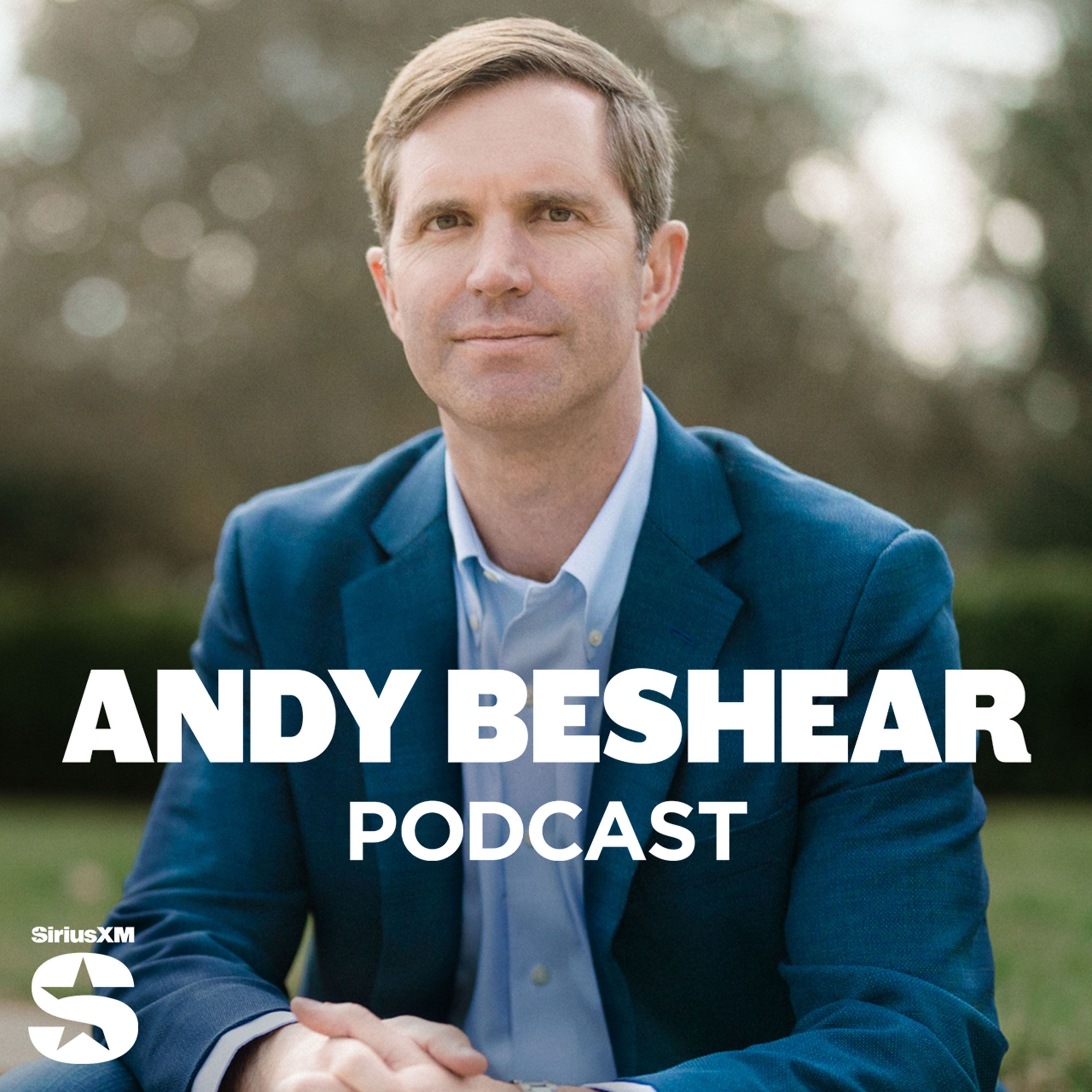
Hello everybody and welcome to the Andy Beshear Podcast. This is our pilot and first episode. The world feels pretty heavy right now. The news comes at you and hits you minute by minute by minute. It can be stressful and it can feel overwhelming. Our goal here is to process a a lot of that information and news, but in a conversation between friends. A conversation between friends covers a lot of topics. So no, this isn't just a politics show. We'll talk about parenting. We'll talk about faith, we'll talk about sports. We'll talk about entertainment. Just like the way you talk with your friends, we'll cover a lot of different things. My goal is that our listeners leave each episode refreshed and ready to face this complicated world that we live in. My goal is also that this conversation is real. Far too much of what we see out there tries to put us in a box is this talking head versus that talking head. It tries to make everything D or R, red or blue, left or right. And we know the world's so much more complicated than that. So to make sure that we provide that real show for you, we've made some ground rules. We call them the cast rules and we know they'll change from time to time. And we encourage you in the comments to give us some ideas. So here are our five starting cast rules. Number one, be authentic. You be you. Boo. Number two, talk like a real human being. When folks are going through addiction, they don't call it substance use disorder. When someone's hungry, they don't call it food insecurity. We want to make sure this is a conversation where we're using real words that have real meaning with real emotion. Number three, no debating reality. Far too often now we see people trying to argue against facts. Number four, tell your why. We want to get beyond just what you think and get to why you think it. We want our guests to talk about what drives them in life and how they make their decisions. When we talk about our why, we can give each other the grace and the space to disagree, but to understand somebody could be coming from a good place. And number five, have fun this week we'll talk about the week that was the week that is to come. And we're going to have a special guest, John Morgan, on to talk about his life story. John is a self made billionaire and hopefully he'll give us some tips on making billions too. And we're even going to have my son Will on who's going to teach me what some of the words that high schoolers are saying actually mean. I'm a little worried this is going to turn into how lame is dad? Now is the moment that the Andy Beshear Podcast gets to welcome our very first guest. Our first guest is John Morgan. He is a self made billionaire who comes from, of course, Kentucky. He now lives in Florida, but runs the largest plaintiffs law firm in the world, Morgan and Morgan. And he's got an incredible story, but I want him to be able to tell that to you. John, welcome to the Andy Beshear Podcast.
- [03:32]
John Morgan
Well, I'm happy to be here and I'm very happy to see you.
- [03:37]
Andy Beshear
Well, we've been friends for a while and I know most of the world knows your story to becoming one of the newest billionaires in the United States. But tell us a little bit about that journey.
- [03:50]
John Morgan
Well, the journey started in Lexington, Kentucky in 1956. It's St. Joseph's Hospital. Every time I drive by there, I look up at that window where I was. And the toughest day in my life was the day I left Kentucky because I didn't want to leave Kentucky. I went to Christ the King and then went to Cassidy and Morton and. But my dad drank a little bit too much, lost too many jobs. We had to come to Florida and we'd never been on an airplane before. But I remember my grandmother lived two streets over on Catalpa and leaving her was brutal. I cried all the way. We stayed with my cousins in Versailles the night before we left and then we left the next day and got on the airplane and flew to Florida. And it was devastating leaving Kentucky. And I still remember it. And then I step off in Orlando and it was the hottest I had ever. I'd never been out, I'd never been anywhere. I'd never been on vacation. And now I'm in Florida and it's like a sauna, like, what in the world is going to happen here? And that was the beginning of my new life.
- [05:07]
Andy Beshear
So tell us what led you to start the law firm? But even before that, your story about why you became a lawyer is pretty special.
- [05:19]
John Morgan
Well, I became a lawyer. Look, I gotta confess, I'm no good in math and I'm no good in science. So I learned that early on at Christ the King I was going to have to. And I like to debate and I like to argue. So I kind of knew that I had to be something in the legal field. But I couldn't do numbers. I was terrible in math, but I got great in math once I started putting dollar signs next to the numbers. Then I became like the Rain Man. I became an idiot savant with math. But so I go to the University of Florida. I get a call one day from my dad at night. My brother Tim had been paralyzed from the neck down as a lifeguard at Walt Disney World. That began this huge legal saga where they really fought him hard. And because our mother had already left the family. And so it was just a bunch of ragamuffins trying to navigate this thing. And there's your brother, who you love so much. Disney was fighting so hard, and I didn't even know what a personal injury lawyer was, but I sure found out. And I think we hired the wrong lawyer, in retrospect. But that process of watching your brother. There's nothing worse, Andy. And I know this because I see you speak to it. There is no worse feeling than to be hopeless and powerless and helpless.
- [06:46]
Andy Beshear
Yeah.
- [06:48]
John Morgan
And that's all the emotions I felt for my brother, because I loved him so much. And it turned into rage, which turned into motivation, which turned into drive, which turned into my entire career. And so later in life, me and Tim built this together. He ran my call center. He was with me every single day of my career, him and his dog Sam. And so it was a terrible. It was terrible. But it gave me a purpose and passion, and that's how I became a plaintiff's lawyer. I never applied to work anywhere else. I had a lot of job offers, but I never applied to go anywhere else.
- [07:39]
Andy Beshear
So family was what got you into law. Family is how you built the law firm, but family is also how you brand the law firm in so many ways. There's a lot of Morgans. I know it says Morgan and Morgan, but there's a whole lot of Morgans. Tell me a little bit about getting to work with your family. Bring all your boys in.
- [07:58]
John Morgan
Well, first of all, we're Irish Catholics, and my wife is very Catholic, and so that's how we had all these children. And she grew up in upstate New York, and she's very devout. And so along the way, we met. My wife and I met in law school. I think I may have told John this story. One day, I just decided to go to church in the middle of the week just to clear my head. I wasn't a Daily Mask guy, but I went to church, and I looked up in front of me and I saw this girl, and I was like, wow. And that was who became my wife. She was teaching legal writing at the University of Florida. We had a date, and I told my roommate that night when I came home, I said, I'm going to marry that girl. And my wife says, you know, when you know? And I said, when do you know? And she said, you know, when bells go off? And so bells went off for us, and then we, you know, it was our family business, and the kids worked there with John Rabinowitz there in the middle. John was there working in before my kids. His dad is a great friend of mine, and John was a runner in the firm. His main talent was setting up happy hour on Friday afternoons, set up my.
- [09:19]
John McConnell
Future with the INSC and bourbon bar, Right?
- [09:20]
John Rabinowitz
Yeah.
- [09:21]
John Morgan
Oh, yeah. He was serving us. He was serving bourbon before he knew he was going to Kentucky. And so I introduced John to bourbon and happy hours. And so they all grew up kind of in the business. You're sitting at the table at night, you're talking about cases, you're talking about justice, you're talking about trials, you're talking about legislation, tort reform. I mean, they're probably the only kids in America who knew what tort reform was from dinner. Yeah. Most people think it's like, you know, some kind of venereal disease you gotta cure, but they grew up in the business, and they all. All three of my boys are in the business, and my daughter Kate has a structured settlement company, so it's Morgan and Morgan. My wife says she is the first Morgan and that I am the second Morgan.
- [10:14]
Andy Beshear
Sounds right.
- [10:15]
John Morgan
You know what sounds good to me sounds right.
- [10:20]
Andy Beshear
When I look at my life right now, I realize the most popular Bashir is my dog Winnie, who's right here, followed by my wife, my kids. And I come somewhere after that.
- [10:31]
John Morgan
Listen, you can't go wrong with dogs. You can never go wrong with dogs. As my brother Tim used to say, dogs know. They know who's good and who's bad. We asked some people over here at the house last night, and my dog kept going to this one lady, and I told her when she left, I said, I want to tell you something. I know you're a good person. She said, why? I said, because dogs know, and they do.
- [10:54]
Andy Beshear
John, I know with your brother and watching what he went through, you also developed a passion for legalizing medical marijuana and seeing what it could do for people.
- [11:07]
John Morgan
I did two things. Well, first of all, he was on Percocet and Xanax and everything else. And he would be a zombie, you know, he was taking so many. But marijuana stopped the spasms, stop the pain, settled him down. And I saw it. And so when I started making money, I said, what can I do with my money? There's philanthropy, which of course, but then I called it political philanthropy. Andy, I talked about, I'm going to take a chance and spend millions of dollars to get a constitutional amendment on the ballot. If I can do it, I can do more good with this risk money than I could in anything else. So I did it. First time I did it, you need 60% in Florida. The first time I did it, we failed by a percent. I said, no, we're going to come back. We came back and we passed it with 72%. And then later, and here's an important lesson that I think you have demonstrated in the state of Kentucky. I said, you know, this, this minimum wage disparity is unfair. I've already learned this thing. And so I did another ballot. The minimum wage in Florida was $8. I did a ballot to raise it to 15. Everybody said, you're crazy, you're crazy. And I said, no, I'm going to try this political philanthropy one more time. Think of the good I can do by raising the minimum wage by double. And guess what? It passed with 63% of the vote. But here's the real lesson, and I've watched it with you in Kentucky when you take the D and the R next down from issues.
- [12:39]
Andy Beshear
Amen.
- [12:40]
John Morgan
Most of us agree on most things. Most people are very, very good and very, very compassionate and very, very kind. It's when we get these special interests who want to stop us, who want to have free labor or want to have a market on, you know, pharmaceutical industry certainly did not want medical marijuana because it works. And so from afar and sometimes up close, I've got to watch the way you have governed. And I will tell you, it's almost like you were watching us in Florida to see that most of us agree on most things when we're working for each other and not for special interest.
- [13:27]
Andy Beshear
Amen. I'm convinced that when people wake up in the morning, they're not thinking about politics. You know, they're thinking about their job. They're thinking about their next doctor's appointment, the roads and bridges they drive every day, the school their kids go to, and public safety in their community. And if we could just take out the right and the left, the D and the R, the red and the blue, think about how much we could do.
- [13:51]
John Morgan
Well, listen, I've seen it in Florida and there was two other amendments that passed too. One, they restored felons rights. Everybody said it wouldn't pass. Then they got fair dis. We all agree. Most of us agree on most things, but politics and special interests and monopolies is what's choking us all down. And so it gave me great hope. It gave me great hope about people because I don't want to lose faith in people. And so I did both of those amendments, it passed. Me and Tim went around the state on a bus, barnstorming. It was almost like I was running for a political office myself. And we passed it. And listen, everywhere I go, people come up to me and thank me. I had a guy last Friday before I left Florida, I was getting some gas and this guy walks over, he goes, I'd like to buy you a tank of gas. I said, why? He said, medical marijuana. I said, well, I said, damn, I've already got the thing almost filled up. I said, you know, I'll be back here next week.
- [14:54]
Andy Beshear
I gotta think. When John Morgan travels on a bus, Are we talking about a school bus or are you talking about a concert tour bus?
- [15:03]
John Morgan
I used Willie Nelson's bus.
- [15:07]
John McConnell
You knew that had to be the answer.
- [15:09]
John Morgan
I used Willie Nelson's. The Calhoun family, who does Willie's buses down in Leesburg, Florida, we painted it with our amendment. No, we. We did have some bourbon in those buses as we were crisscrossing the state of Florida.
- [15:23]
Andy Beshear
We appreciate you helping our economy. So the answer to when John Morgan goes on a bus tour, what bus he uses is Willie Nelson's.
- [15:31]
John Morgan
Well, the great night of my life here in Maui is me and two of my boys, Matt and Dan, went down to Willie Nelson's house to play poker. And that's the bucket.
- [15:45]
Andy Beshear
Is Willie Nelson good at poker?
- [15:47]
John McConnell
And who else was at that table?
- [15:49]
John Morgan
Well, I'll tell you who. Paul Simon was at the table. But here's the story about Willie Nelson. So we're having this game of poker, and my son Dan's in it, going back and forth with Willie back, and it's just him. And this pot was getting higher and I was staking Dan at the end. They show their cards and Willie goes to pull up the chips, and Dan goes, willie, I think I won't. And Willie looked down and goes, cool. And I don't know. I don't know. I don't know if Willie was making a mistake or was trying to hustle Dan. But I tell you, Dan bout gave up his pot to Willie Nelson. He about got hustled by Willie at Willie's.
- [16:31]
John McConnell
I love it.
- [16:32]
Andy Beshear
This is already the best podcast ever. After that story, you know, we've talked a little bit about. About law, but you really run a giant business. You got a thousand plus employees. And I know you've written a couple books on leadership. Talk about your style and how you think other people can learn a little something on leadership that can help them.
- [16:55]
John Morgan
Well, Morgan and Morgan, we have 6,000 employees. And then I have other businesses, hotels and attractions and build shopping centers. The way I think, the way I manage is this. Always try to hire somebody better and smarter than you. The way companies usually go down is A's hire Bs, and Bs hire Cs, and Cs hire Ds. And before you know it, you got an F company. You gotta hire people that challenge you, that make you better, that are coming at you for more money, more points, more equity. My God, Rabinowitz has been like a tiger about wanting more money. But, but, but, but, but when they, but when they deserve it, they get it. So we, as John Rabinowitz knows, I've surrounded myself with really, really strong leaders. I mean, people who could do anything. And, and then I give them a lot of rope. We set our goals and we're very, we watch our goals every day. We measure our productivity every single day. But at our firms, whether it's the attractions, everybody can get, do better by doing better. It's very formulaic. You do this, you do this, you keep making more money, you keep making more money. I believe strongly in partnership. I believe strongly in bringing people who own. Why? Because if you own the business, you'll turn the lights off when you leave at night. If you don't own the business, you might not even lock the door when you leave at night. And I want that owner mentality. I think we have John. 140 partners across Morgan and Morgan. We've done a really good job of empowering women. We have some hellacious women trial lawyers that really were never. There's not that many in America. And that was one of our goals. And one of my wife's goals is she was one of the first, you know, female lawyers coming out back in, you know, in the 80s when we came out. But now there's more women than men going to law school. So I'm proud of that. And we just, I tell people this, I wrote the two books, you can't teach hungry and you can't teach vision. They're on Amazon. But I said, listen, when you try to build a business, you're building a circus. And you can build a great circus or you can build a sorry circus. A sorry circus is something you see a beat up Tent in a Piggly Wiggly parking lot with a drunk clown and a seal out of water and an elephant with. Or you can build the greatest show on earth. And the greatest show on earth has lions and tigers and bears. And the ringmaster is in the ring with those bears and tigers. And people come to the circus for one reason. They want to see the lions and the tigers eat the man in the ring. They want to see the guy fall off the wire. How do you stop that from happening? And this is how I manage. You love them and you feed them, and when you love them and feed them, they're not going to turn on you. I don't know why the tiger ate Roy, but. But something happened.
- [20:10]
Andy Beshear
Something happened.
- [20:10]
John Morgan
And. And when you see the Great Wallenda walking that wire, well, there's only one thing that keeps him on there. Focus. And you know, he finally fell. He got to. He was too old. You gotta. You gotta know about succession. You gotta remember the Kenny Roger. One time I had Kenny Rogers sing at one of my picnics, and he sang the Gambler. And you know what? In business, you gotta know when to hold him. You got to know when to fold them, and you need to. Need to know when to walk away. And I have done a very good job of succession, of having. John's one of my coos. Andrew Clemson's my CEO. My boys are in different positions. You got to be real. You got to know what you can do. Should I be up on that wire at some point? Maybe not. But I still have a lot of institutional knowledge that I can help them go back on the wire. So feed them, pay them. Focus.
- [21:07]
John McConnell
Andy, if you don't mind, he's still very much involved in daily activities, and so are the boys. We talked about the boys earlier, and, you know, they just aren't on commercials. Mike's getting verdicts, Matt's getting verdicts. Dan's everywhere now. And we get the opportunity now to get and interview some of the best trial lawyers in the world. They want to come work for us, which is awesome. And one thing I always say about it, it's so true, is John gives you nothing but opportunity. And that opportunity is limitless. If you're willing to work hard, you're dedicated, like you said, and you're focused. And so it's been great.
- [21:44]
Andy Beshear
So what I learned from that answer is that John has impressive circus knowledge and that Piggly Wiggly is never going to sponsor this podcast.
- [21:53]
John McConnell
They might.
- [21:54]
Andy Beshear
John, I'd close by. I think one of the reasons that you got into law. And one of the reasons I got into politics is that we don't like bullies. I don't like when, when, when bullies pick on people. And I wanted to be in a position to stop them. When you look at parts of our country and the world right now, you see a lot of bullies. Tell us your thoughts.
- [22:20]
John Morgan
We're living in a special time where we're in, you know, reality is not reality. And we're all being gaslighted like we've never thought possible. But the bad thing about getting old is getting old. The good thing about getting old is you get some wisdom, you get to see things. What's happening now? Pendulums used to swing very slowly in politics, but now pendulums swing very fast, and you can be in today and out tomorrow. And I believe what's going to happen in America is America's going to wake up on its own and go, what were we doing? What were we thinking? Look, I understand the immigration situation, I understand the waste in government, but I don't understand cruelty. I understand you gotta lay somebody off, but I don't understand taking a chainsaw and being gleeful.
- [23:24]
Andy Beshear
Look, Andy, dancing around on stage, dancing around.
- [23:27]
John Morgan
My dad got fired a lot. And when I'd come down the street and see his car in the park in the driveway, I knew that another bad spell was coming. And for the family whose parents lose their jobs, it's devastating. And by the way, those are your heroes, your mom and your dad, no matter who, everybody's mom and dad's the hero, and now they're fired. I don't like the joy, the joy that we're having in people losing their jobs. And I understand government waste, believe me. I'm a business person. But as John Rabinowitz knows at Morgan and Morgan, I don't fire easily. And when I do fire, I fire with severance. And a lot of times I just come in and say, look, it's better to get a job with a job. Go out there and, you know, apply and let me help you.
- [24:20]
Andy Beshear
I.
- [24:21]
John Morgan
And maybe it's just I'm kind of, you know, those Depression era kids, they had their scarring. My scarring is from my dad losing so many jobs. So it's very painful for me to watch the joy in firing people and. But I think this pendulum will swing faster. I think people will say, wait, this, we wanted some of this, but we didn't want all of this. And the problem with politics now is there's just, you know, it's either A or B. And it's, there's no, you can't even say, I want to compromise. If you say I'm going to compromise, they see he's weak, he's bad. But compromise is what makes business work, and it should be what makes our country work.
- [25:07]
Andy Beshear
I couldn't agree with John more about the swinging of the pendulum and the belief that the American people right now just desperately want it to stop swinging. Ladies and gentlemen, John Morgan. Thanks for joining us.
- [25:19]
John McConnell
Thanks, John.
- [25:24]
Andy Beshear
To have a conversation between friends, it helps to have one or two. So today we're starting with my friend John McConnell, businessman from Western Kentucky, that's going to talk through some of the issues of the day with us. You ready, John?
- [25:38]
John Rabinowitz
ANDY I'm ready. I'm definitely the new one in front of a camera and a microphone. So just got to follow your lead.
- [25:44]
Andy Beshear
So when we look at this, last week, I think we saw one of the craziest political, governmental stories that I can ever recall in my life, and that's all of these national security officials, the secretary of the Department of Defense, the vice president, and so many others on a text chain talking about a military strike. And if that wasn't bad enough that all of these national security officials are talking about classified information on a text chain, one of them adds a reporter and a reporter apparently, that they don't like. So these folks that apparently can't operate their phones are in charge of our missile defense systems. So tell me your thoughts as this news came out.
- [26:34]
John Rabinowitz
Well, I mean, we've all added an accidental person to a text chain. I mean, you can, you can be embarrassed, but this kind of goes beyond being embarrassed. So one question I would have is when you do get sensitive information, which I'm sure happens from time, is this the typical protocol, is that a text chain gets formed and you just have to be careful with reporters?
- [26:54]
Andy Beshear
No, as governor, you don't get a lot of classified information. But when I get sensitive information, I have to go to a secure location. I have to store my phone outside that secure location, and then anything I am shown is taken back and then you leave the secure location. So imagine the difference between that for information that's probably not all that sensitive, if I'm getting it as a governor. And this.
- [27:21]
John Rabinowitz
Well, and you've got a few employees in the state, I think, what, around number, 30,000? Somewhere around that number. So when you start to look at leadership and you start to talk about accountability, just kind of curious, is there a thought process that goes on if this had fallen on your desk and all of a sudden, you get extra reporters added to a text chain with sensitive information.
- [27:40]
Andy Beshear
Well, the first thing there'd be would be consequences. I mean, this is a mistake that you can't make when you're talking about national security. But the second is, if you've made a mistake, I think you've got to own it. I mean, they're trying to blame the reporter. And he had the funniest response. I thought he said, hey, you added me to your text chain. I thought we were friends, and now you're coming after me. But in the very least, they ought to be able to look at a camera and say, we messed up. I think the American people will forgive you for a lot, but only if you're honest with them and they can tell dishonesty. They can see that people aren't being honest about this. You know, I had a really embarrassing moment during. During COVID You remember this?
- [28:23]
John Rabinowitz
I remember this.
- [28:24]
Andy Beshear
So there was an application for. For unemployment benefits under the name of Tupac Shakur. And I got, you know, all revved up, and I went out there for one of. One of the updates, and I looked at the camera and I said, people are trying to take advantage of us. During this period, there was somebody named Tupac Shakur that filed for unemployment, and this is a fraud. Well, there's a real person in Kentucky named Tupac Shakur. He lived in Lexington, and he had applied. And in fact, one of the reporters at the update knew it and let us know afterwards. And I felt awful. I mean, I just almost run over somebody in public. But he owed a direct. I owed him a direct apology, which I did. And he was really graceful about it. But then I came back on and looked at every camera I did the day before and said, I messed up. I mean, why can't these people, when it is so out obvious and when there's such trust that's supposed to be in them, just say, we messed up?
- [29:31]
John Rabinowitz
Well, when you take the accountability for it and then you start to look and the first reaction is just to attack, attack, attack, Discredit, discredit, discredit. I guess the question is, if that. If they're not someone who's quality or they shouldn't be in your phone, then why are they in your phone all of a sudden to be added to a text chain? So, I mean, there's a lot of questions there.
- [29:50]
Andy Beshear
If this. If this. I think he's the editor of the Atlantic. He said, I've been calling him a reporter. But if this editor of the Atlantic Is fake news? Why is he in somebody's contacts?
- [30:00]
John Rabinowitz
And then you have to ask, are there other things going out to him? Because you just don't know if they're.
- [30:04]
Andy Beshear
Already in your contacts, why is he in the contacts? Is this one where people are feeding him stuff when it helps them and then calling it fake news afterwards? And it just adds to this lack of credibility. If anything bad happens, do you just come out and say, oh, that's the radical left. Turn around, laugh a little bit, and then turn back to the camera and say, no, I'm serious.
- [30:25]
John Rabinowitz
Well, I think when you look at it at the country overall, too, I mean, this is the first big one that's gotten out. There's going to be someone with text chains happening. So we have to feel that this probably is not going to be the last. So when we start to look forward, I mean, do you think that accountability is going to change?
- [30:42]
Andy Beshear
Two things struck me on the text exchange itself. Aside from the fact that they were talking about a missile strike on a commercially available text app, these are people that have every resource in the world. One runs the Department of Defense, another's a vice president, another's in charge of intelligence. And the fact that this happens and it's so dumb and there are so many of these people in charge of intelligence is pretty ironic. But the two things that struck me there is they were talking about this might not be popular, so let's blame Biden and just wrote it. And then the second one is, these guys really don't like Europe.
- [31:20]
John Rabinowitz
No, no, no. There was a lot of comments in there that had to do with the thoughts about Europe and kind of how they felt.
- [31:27]
Andy Beshear
And that makes me nervous because so much of our global security has been based on NATO, on the alliances that we have with Europe. And these are all the top defense and intelligence officials writing back and forth about how they couldn't believe we were bailing out Europe. Yeah.
- [31:48]
John Rabinowitz
When you see this situation at a national level, we talked about accountability, we talked about the consequences you felt that you would be willing to put out there. What else do you think you would have to add to this? It comes off the top of your head when this happens.
- [32:01]
Andy Beshear
Well, the first thing is competence and here, incompetence. You know, I always thought that Pete Hegseth wasn't qualified whatsoever to be the Secretary of Defense. And I think he's showing it. That guy spends hours on his hair every morning, probably more time getting ready for the camera than he spends protecting our country. But you just, you look at all of these people and their titles on it, the secretary of state and how not one of them said, we can't, we can't talk about this on this text chain. You know, we can't be doing this.
- [32:36]
John Rabinowitz
Yeah, I think there was up to 17 or 18, one or two were added more than once. And of course, the wrong person was added. And it just kind of brings into question, you know, what's going to happen next, you know, will there be more leaks and more text chains come out like this? But it's something we're just going to have to kind of wait and see.
- [32:54]
Andy Beshear
So if that was the week that was the week that is coming is on the federal budget. So the Republican majority and the House and the Senate working with President Trump, want to keep a tax break for the wealthiest of Americans in place. And to do that, they've passed a resolution that says we are going to cut billions upon billions of dollars out of the federal budget. And they don't say how they're going to do it so that they can deny. But every economist, everybody who's looked at federal budgets say there's no way they can do this without drastic cuts to Medicaid. And I want to talk a little bit about what Medicaid is. So Medicaid covers the people that we love the most, our parents and our kids. 50% of Kentucky's kids are on Medicaid, including your son. We'll talk about that in a minute. 70% of long term care costs in Kentucky are covered by Medicaid. And every rural hospital system, the one in Murray and all across all of rural America, depend on Medicaid. Without it, rural hospitals will close. And whether you have private insurance or Medicaid, you'll then have to drive several hours to the biggest city probably to see the same doctor. Why? Because they lost their job in your local community, lost all that tax benefit. And now think about it. When your kids have an appointment, when your parents have an appointment, that's going to be a whole day, productivity will be impacted and then just the communities itself, because you and I know the number one employer in most of our rural communities is the school system. And of course there are attacks and cuts there that have been threatened. But number two is the local hospital system.
- [34:42]
John Rabinowitz
And we're fortunate to have a great, great hospital system in our town. And when you look at what Medicaid does and what it provides, I mean, you mentioned the kids in Kentucky, but it covers close to 30 million kids in this entire country. They put another 80 total insured on top of that. And Medicaid is a real lifeline for a lot of people who just either can't afford to get health insurance and there's in that situation of what do I do next? You know, I need medical care, I need help. Then how do you go, how do you go get that? How do you access it?
- [35:18]
Andy Beshear
Well, and I wanted to have you on today on this because we want to show our why. So tell us why this is so important to you.
- [35:28]
John Rabinowitz
Well, my son, 14 now, Lyndon, is.
- [35:31]
Andy Beshear
Autistic and nonverbal and amazing.
- [35:34]
John Rabinowitz
Yeah, he's. He's a good kid. He's a good kid and he's bigger than me now, so he's his own little animal with his own little mind to him. But when you look at the resources that Medicaid has made available for us as far as speech therapy, language therapy, ABA therapy, that's a huge one for us. You know, when we first started down this path and we realized Medicaid was an option and we tried to find a way to get on it, then we ended up accessing a waiver program after that, that opened up so many more resources to us and the ability for him when he was young to go four to five days a week to one on one therapy, just helping him cope. And it. What people don't realize is they talk about Medicare and they talk about the cuts and what they can do. Medicaid. Yeah. And to the families, Medicaid. If you have that support and all of a sudden you have a family like ours because, you know, Heather, my wife, she ended up not working and she's an rn. So when you start to look at the ability to have his improvement, where he can go to school, to where he can start to participate more in life, all of a sudden it becomes. This sounds strange. Part of a workforce issue because she's free to go do things now.
- [36:48]
Andy Beshear
And this touches everybody. I think you've said to me before, it either touches a family or, or a friend. And Lyndon's become my buddy over the last decade, I believe. Could an American family without Medicaid afford those services? That would help?
- [37:10]
John Rabinowitz
No, no. The cost is just, it's too much to be absorbed because you end up with, I mean, it's 70, $80 an hour for one on one therapy. And these kids, when they're young, the intervention is what changes that path five and 10 years later. So the ability to have intense therapy and get those kids the help they need, you know, from the ability to use a utensil the ability to communicate on a communication device, which he can do now when he wants to.
- [37:42]
Andy Beshear
His voice.
- [37:42]
John Rabinowitz
Yeah, his voice. He can use his voice and he can. That changes your ability to interact with the world, not just with him, but for the whole family to get out and to be mobile.
- [37:53]
Andy Beshear
So if we had members of Congress that are watching that will have to vote on all this, what would you say to them?
- [38:01]
John Rabinowitz
I would say think about the families who need this the most. Think about the families, the extended families, the grandparents, the parents. Because it doesn't just affect one person, it affects everyone in that entire family unit. And the one thing that I'll notice as we're out and about, and, you know, obviously we speak openly about this, you'll always have someone. What you said about. I know someone, my cousin, my uncle, my aunt, they have a child in this situation and they've all gone to family events, whether that be a Thanksgiving, a Christmas. And they've seen just exactly how difficult it can be. And you start to understand that intervention and that medical care, what that can do to change not only that family's life, but the extended family's life.
- [38:51]
Andy Beshear
Thanks for sharing your why people need to hear these stories. They need to hear the collective voices of Americans and how they'll be impacted. While we're filming this podcast, the country is tuned in to watch March Madness. So we have to talk some sports. We've added a couple of extra, well, friends and family for this segment. My friend John Rabinowitz, an attorney at Morgan Morgan and an NFL agent, my son Will. And we even brought Winnie Beshear with us. So first, for anybody who isn't aware or maybe doesn't follow sports, but this podcast is about learning about new things. What is nil?
- [39:34]
John McConnell
So nil. Name, image and likeness was something that the NCAA approved, I think, in 2021. And what it does is it allows student athletes to be compensated for their name, image and likeness. Go ahead.
- [39:49]
Andy Beshear
And there's been a push for a while for this. If we remember the story about Michigan's Fab 5 and the amount of money that I think Nike and Michigan were were making and they were being marketed. Yet if I remember, Chris Weber had trouble paying for a pizza.
- [40:03]
John McConnell
So listen forever. There's going to be times where people say there's pros and cons, is a scholarship enough. But understand these schools were making hundreds of millions of dollars off the name, imagery, likeness of student athletes for many years. And what the NCAA and now states like Kentucky now allow those individuals, those student athletes to be compensated for their commercial image.
- [40:30]
Andy Beshear
So, John, tell us a little bit about what it's like to represent an athlete.
- [40:36]
John McConnell
Listen, it's much different in your 40s than it was when your 20s, but it's been a true honor. Like, we've really gotten to be part of the journey of so many young student athletes, young men, as they've grown, not just in the league, but like as, as fathers, as husbands. And so they've had tremendous success. We've had the opportunity to lead a lot of people this year. Like, we're really excited. We have a local quarterback from the University of Louisville who we believe is the best quarterback in the draft, Tyler Schuck. We, we truly believe he is the first round quarterback that everybody needs. And so, you know, it's been an honor and we're really excited about Tyler and what he can accomplish at the next level.
- [41:18]
Andy Beshear
Sports is so different right now than it was even just a couple years ago with nil, I think, being an enormous change where athletes can get some compensation, but it's definitely changed collegiate athletics.
- [41:33]
John McConnell
Well, listen, you were a leader in it, if you remember. I think it was around 20, 21 is when the NCAA allowed student athletes to commercialize their image. And so, you know, there's people that are for it, there's people who are against it. Some will say that the scholarship is enough. I will tell you that I'm one that although there are pros and cons, I'm one that I believe the student athletes should be able to be compensated for their name, image and likeness. I think shortly after the NCAA allowed it, you drafted a bill and it got passed and we had. I remember, I think every head coach in his state come and so listen, it's reality. The coaches, we have found that the coaches that adapt to that reality quicker have more success. But there's no question that in our world, and now the reality is that the name in the front of the jersey is more important than name in the back because the rosters will change.
- [42:33]
Andy Beshear
Every year and we're even seeing nil starting in some states. To get down to high schools, it is.
- [42:39]
John McConnell
Listen, we only have one athlete in this room right now. It's not John McConnell or myself. Right. But I will tell you that some of our best athletes in Kentucky are recruited by high schools out of state to come. And some are compensated in an amount that we would really shock you like. Some are compensated, you know, above 400,000, above 500,000.
- [43:05]
John Morgan
Wow.
- [43:05]
John McConnell
And this is in high school. Can you imagine? I know it's crazy. Listen, you and I were not getting offered anything like that, right?
- [43:12]
Andy Beshear
So I wasn't getting offered a starting position, much less dollars.
- [43:17]
John McConnell
Definitely Will got his athleticism from Brittany.
- [43:20]
Andy Beshear
Yes, yes, he did. From his mom. No, I think of Nil. It existed when I was in high school. They would have made me pay the team.
- [43:26]
John McConnell
I love it. No, it's a reality. I think I'm going to continue to tell you, like, let's consider it. I think all our surrounding states, you'll see, like in the high school basketball level, we've had some high schools like Huntington Prep and School out of Atlanta come up and just recently play some of our local high schools. But a lot of those kids are not just from Kentucky, but from across the United States.
- [43:48]
Andy Beshear
Well, what do you think? Nil in high school?
- [43:50]
Will Beshear
I think so, yeah.
- [43:54]
Andy Beshear
So as you look into the future, do you see any changes? Anything like a salary cap that they have in the pros?
- [44:02]
John McConnell
So, you know, you and I have talked about this and we've talked to some athletic directors. It's our understanding that April 7th we're going to find out whether the judge approves the NCAA settlement. And if that happens, I believe that each school has, if they opt in up to a little over $20 million to compensate all their student athletes, I think that football will probably take the lion's share. Many will argue that, that this will further divide the haves and have nots in sports. But also remember, like, people still have to get. Get up to that number. So another thing is, like, boosters are going to become so much more part of the team to try to raise to that level.
- [44:47]
Andy Beshear
Well, both, both of you all have different sponsorships with athletics, whether it's at Murray State or through, through Morgan. And Morgan, tell me how you use sports to ultimately publicize or advertise your business.
- [45:03]
John Rabinowitz
Well, in Murray, we've advertised the games for years just because, you know, being a local business, it makes a lot of sense to go and advertise. But as far as me adding anything to the Nil conversation, I know the least about sports of anyone in here. And really, Will's the only one who's got a chance of getting any money out of this thing whatsoever.
- [45:22]
Andy Beshear
But we're building big expectations today.
- [45:24]
John Rabinowitz
Hey, hey, I'm for him. I'm for him. I'm for him. We'll just see what happens.
- [45:28]
John McConnell
Listen, gov, let's just consider it.
- [45:30]
Andy Beshear
Let's just consider it. He's already gotten me to lower the age of getting your permit in Kentucky and now it's nil.
- [45:40]
John McConnell
It has to happen soon. I will tell you to follow John. We're big, obviously, Morgan and Morgan, we're big believers in nil. Like we've done it for a few years. We've had incredibly, had. Have had incredible success. We really believe it builds our brand. Dan Morgan's kind of the head of that for us. We've represented student athletes, West Virginia, Kentucky, Georgia, Alabama. And really what it does for us is it promotes our brand across the entire state and region. And we've had great kids represent our brand and so we've had tremendous success with it.
- [46:19]
Andy Beshear
So when you are an agent, do you still end up rooting for teams like you did when you were growing up, or do you end up rooting for the players?
- [46:27]
John McConnell
So that is a great question. I will tell you. I end up liking a lot more teams that my players are on. It's very convenient. I grew up a Tampa Bay Buccaneer fan, which was a hard row for a long, long time until, you know, Brady came in and before that. But now I just hope that I can get more of my athletes in teams that are in the south because going to Green Bay in the winter is brutal.
- [46:54]
Andy Beshear
You know, you always get asked in Kentucky which team you root for. And I finally found the right answer. It's that your job is to root for your in state schools and to root against Duke.
- [47:04]
John McConnell
I think that's the right answer.
- [47:06]
Andy Beshear
You know, sometimes that that brings us all together. When I made that first sports bet.
- [47:10]
John McConnell
I was going to say the first sports bet. Yeah.
- [47:11]
Andy Beshear
And Duke was four and one or four and oh, at the time.
- [47:15]
John McConnell
And I told you what a horrible bet that was, I couldn't believe it.
- [47:17]
Andy Beshear
And I bet the over on UK and UofL and when asked about it, I said, oh, no, ducal tank. And we were that close. That close. And so it was probably worth it.
- [47:28]
John McConnell
It was worth it. And by the way, we are doing incredibly well in sports wagering to show the power of sports. Over 3 billion in handle so far. And you led the way in that.
- [47:42]
John Rabinowitz
So I want to ask a question because we've always had the conversations around professional athletes and money management and they're adults entering adulthood, most of them. You know, now all of a sudden we're looking at for sure college and then also at the same time talking now about high school. So I think about kids Will's age all of a sudden coming up, being juniors and seniors and being asked for contracts and where is that money going to go?
- [48:09]
Andy Beshear
I'm Happy to manage his money.
- [48:11]
John Rabinowitz
Will, what's your opinion? Is that a yay or a nay?
- [48:14]
Will Beshear
I think it will eventually happen. You grow up a lot in high school, and I think that that's just the next piece of this puzzle.
- [48:21]
John McConnell
Sure. And I will tell you, in college, they have collectives that try to guide the student athletes. There might be a change with this if teams opt in on how they manage that, but the parents are still heavily engaged in the student athletes we represent. And usually they have a financial advisor working through the process. And with NFL players, you have to be certified. A certified financial plan to represent NFL players. So there's a lot of guidance, but you have to be super careful, for sure.
- [48:56]
Andy Beshear
Our next segment is something that I've been looking forward to and dreading all at the same time. It's one where my son Will is going to teach the three of us the meaning of some of the lingo that kids are using out there. I'm a little nervous about this one, but here we go. Hey, Will.
- [49:16]
Will Beshear
Hey, dad.
- [49:17]
Andy Beshear
So there's a lot of lingo that I hear you and your friends and so many other people using, and I was hoping today you'd teach us at least one word or phrase.
- [49:31]
Will Beshear
Okay, so the word of the day today. Skippity.
- [49:36]
Andy Beshear
Skippity?
- [49:37]
Will Beshear
Yes. You want to try spelling that?
- [49:38]
Andy Beshear
No.
- [49:39]
Will Beshear
No. Okay, so skippity, basically, is another word for saying something is good. Right. So, you know, John, I like your outfit today. You look very skippity today.
- [49:50]
Andy Beshear
Him, I'm the closest to him.
- [49:52]
John Rabinowitz
That's what I did.
- [49:52]
Will Beshear
Here's an example.
- [49:55]
Andy Beshear
Using it in a sentence, right?
- [49:56]
Will Beshear
Using it in a sentence. Yes. So I want you guys to try to use it in a sentence off of that definition. And I want to start with you, dad.
- [50:04]
Andy Beshear
Oh, so it's something that's. That's good.
- [50:07]
Will Beshear
Yeah.
- [50:07]
Andy Beshear
Now, wait, wait. But then how does skippity different. Is it different than fire?
- [50:13]
Will Beshear
No, fire is like. It's really good. Skippity is just like. Oh, okay.
- [50:16]
Andy Beshear
This is so it's like a level down.
- [50:18]
Will Beshear
Yeah.
- [50:18]
Andy Beshear
So if we said the Andy Beshear podcast is fire.
- [50:21]
Will Beshear
That's better.
- [50:22]
Andy Beshear
Okay, I got it. But we'd say, you know, John's jacket is skippity.
- [50:28]
Will Beshear
Right. But Winnie's collar is fire.
- [50:32]
Andy Beshear
Okay.
- [50:33]
Will Beshear
Yeah.
- [50:33]
Andy Beshear
So, all right, let's. Let's hear you use it in a sentence, John.
- [50:36]
John Rabinowitz
Me use it a sentence?
- [50:37]
Andy Beshear
Yeah.
- [50:37]
John Rabinowitz
Okay. Hold on. Gotta get my aura built up here real quick. Get ready for this. Gotta get ready. What? Come on, Will.
- [50:44]
Andy Beshear
How old do we sound?
- [50:45]
Will Beshear
Right now, not any older than 45.
- [50:49]
Andy Beshear
Oh, thank you. I just got younger today.
- [50:52]
John Rabinowitz
We backtracked a little bit. Yeah, I'll take that. All right, that's skippity. Thank you.
- [50:57]
John Morgan
Oh, there we go.
- [50:58]
Andy Beshear
All right, John, I was going to.
- [51:00]
John McConnell
Say, I think your shoes are skippity, but then I learned I felt like that would be insulting because they're not fire. Right. So I'm learning. I really have to learn the difference.
- [51:08]
Andy Beshear
Wait, shouldn't your clothes be drip?
- [51:11]
John McConnell
Oh.
- [51:12]
Will Beshear
So how painful is it to hear me say skippity? This is very painful.
- [51:15]
John Rabinowitz
This is.
- [51:16]
Will Beshear
But okay. Skippity is a really. Like, it has a good connotation. Like, it's a positive connotation. So when you say something skippity as opposed to something's fire, it's still a.
- [51:26]
Andy Beshear
Compliment, but it's not, like a great compliment.
- [51:29]
John McConnell
It's good. Not great.
- [51:30]
Will Beshear
Good. Yes, Good. Not great.
- [51:32]
Andy Beshear
So if somebody says that skippity, does part of you say, man, I thought it was fire?
- [51:37]
Will Beshear
I guess part of that does. I've never really thought about it.
- [51:39]
John McConnell
Wait, wait, no.
- [51:40]
John Rabinowitz
Have you ever heard anyone say that?
- [51:42]
Andy Beshear
No, never.
- [51:43]
John Rabinowitz
That's the answer. That's the real answer.
- [51:45]
Andy Beshear
But is there, like, topics that people will normally attach skippity to as opposed to fire?
- [51:52]
Will Beshear
It's just, like, a funny word people use. It's not like a serious.
- [51:55]
Andy Beshear
Does anyone say awesome anymore?
- [51:57]
Will Beshear
No, fire is more of, like, a literal word you'll use to describe something. Oh, like, you know, that's fire. Like, I would say that in a regular sentence.
- [52:05]
Andy Beshear
Is it legit to use a fire emoji?
- [52:08]
Will Beshear
Yeah, I would say so.
- [52:10]
Andy Beshear
Is it legit to use a fire emoji in a text chain with national security folks putting classified information out on a commercially available app?
- [52:24]
Will Beshear
Probably not.
- [52:25]
Andy Beshear
See, he gets it.
- [52:26]
John Rabinowitz
Wait, do people use the word legit still?
- [52:28]
Will Beshear
Yes, legit.
- [52:30]
John Rabinowitz
All right, sorry.
- [52:31]
John McConnell
If we want to say skippity with an emoji, which one would we use if it's not the fire?
- [52:35]
Will Beshear
Maybe like the thumbs up emoji.
- [52:37]
John McConnell
Okay, this is very helpful.
- [52:39]
Andy Beshear
I've been told the thumbs up. Thumbs up emoji is passive aggressive. I didn't get it. I thought it says okay.
- [52:43]
Will Beshear
Yeah.
- [52:44]
John McConnell
Oh, really?
- [52:45]
Andy Beshear
Or approved. So I've been.
- [52:48]
John McConnell
We probably need that in another segment for him to explain to us what to use and not use on these emojis.
- [52:52]
Andy Beshear
That'll be episode two, proper use of emoji emoji etiquette. I think. Could be a whole podcast in and of itself.
- [52:59]
John McConnell
Amen.
- [53:00]
Will Beshear
That'd be great.
- [53:01]
John Rabinowitz
I like it. I like it.
- [53:03]
Andy Beshear
All right, everybody. Thank you for tuning in to the first episode of the Andy Beshear Podcast. I. I hope you enjoyed. I hope it took a little of the weight off of your shoulders. Remember, it might be a tough world, but we're always better. When we choose hope over anger, when we choose love over hate, and when we get together with friends to try to process all that weight that's on our shoulders, I still believe that people out there are good. And we're going to see people waking up all across the country wanting to do the right thing. When I think about this first podcast, I think about the fact that we learned some lingo. We got a Willie Nelson story. We really heard about John's why, his love for his son and his family and the importance of Medicaid. And we learned that we need some new folks leading national security in this country. I hope you all enjoyed. We'll see you soon. Thanks for tuning in. Be sure to subscribe at Andy Beshear podcast on all major social media platforms.