← Andy Beshear Podcast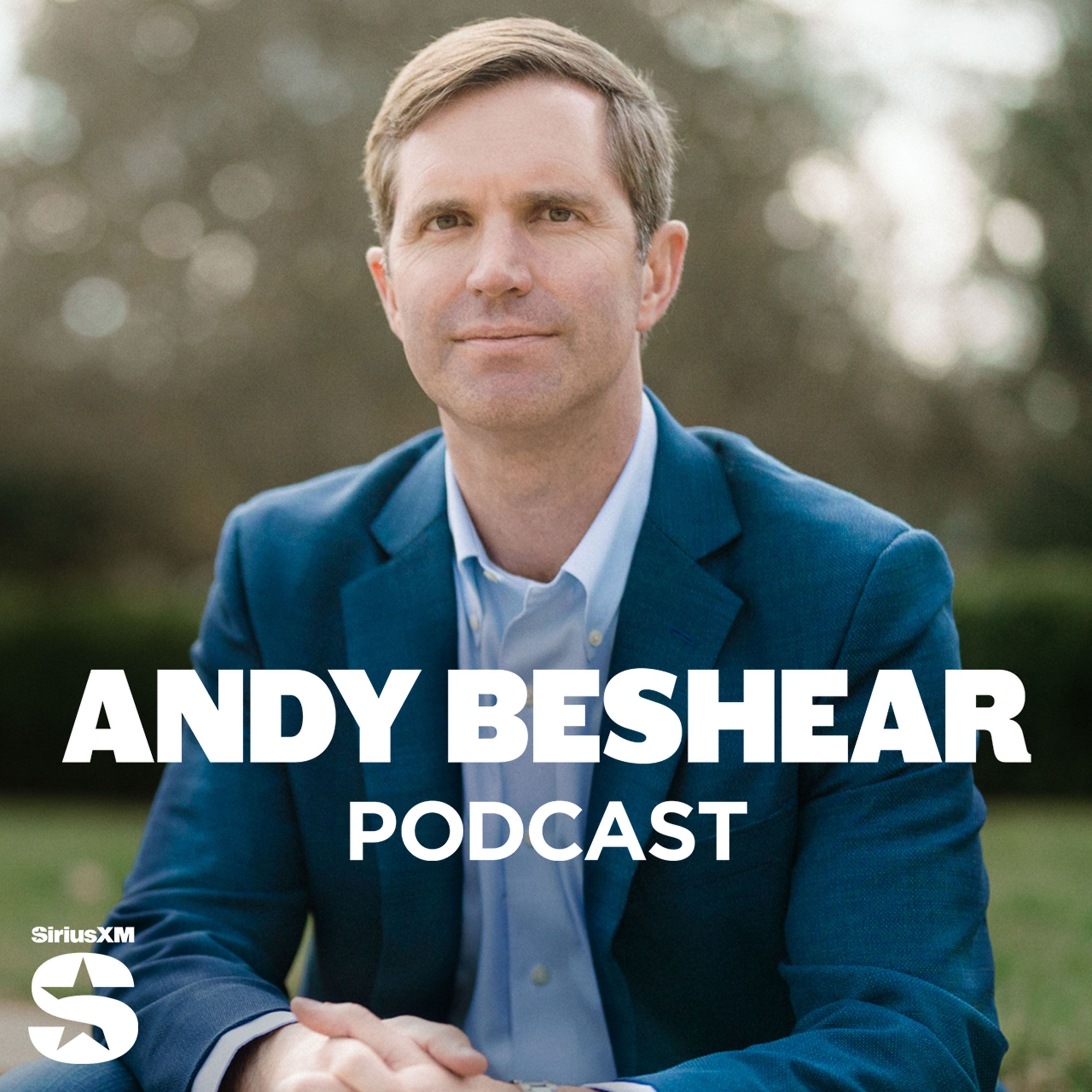
Andy Beshear Podcast
Secretary Tony Blinken, Breaking the Silence and Trump's Biggest Foreign Policy Mistake
01:09:28
This week, Andy sits down with two guests fighting for the future of this country on very different fronts. First, former Secretary of State Tony Blinken joins to talk Iran, China's race to dominate global AI, and what he calls the real secret sauce behind American innovation: the alliance between government, universities, research institutions, and the national labs, paired with a welcome mat for the world's best and brightest. Secretary Blinken makes the case that formula is being ripped apart right now, and lays out exactly what that damage looks like. Plus, he gets honest about his secret, surprising talent.
Loading summary
Transcript230 lines
- [00:01]
Oregon Lottery Announcer
Oregon parks make an Oregon summer. But what makes an Oregon park? Well, Oregon Lottery gameplay helps no matter the game Megabucks, video lottery or keno funds from lottery games help support parks projects across the state, ensuring they stay safe, accessible, and open for all. In fact, Discover State Park Scratches are in stores now. It's the perfect way to put a little bit of Oregon's parks in your pocket. The Oregon Lottery Together we do good things. Must be 18 or older to play Lottery games are based on chance and should be played for entertainment only.
- [00:38]
Andy Beshear
Hey everyone, and welcome to the Andy Beshear Podcast. Today's episode takes us from the world stage to the front lines of democracy right here at home. First up, I'm joined by Secretary Tony Blinken, who spent four years as America's top diplomat. He'll talk about rebuilding alliances, standing up to China, and confronting Russia's war crimes in Ukraine. We're going to get into where things stand with Iran right now. Why he believes China understands something about the future of AI that Washington still hasn't fully caught up to. And what he calls the real secret sauce behind American innovation, the alliance between government, universities, research institutions, and our national labs, paired with a welcome mat for the best and brightest minds in the world. Secretary Blinken believes that that formula is being ripped apart right now, and he's going to tell us exactly what that damage looks like. Then I sit down with Garland Gilchrist, who is running for Michigan's secretary of state at a moment when that office matters more than almost any other office in the country. Donald Trump just used a primetime address to order the FBI to investigate long debunked claims about Michigan's elections. Trump's Department of Justice is sending federal monitors into three Michigan cities, including including Garland's hometown of Detroit. And Garland's opponent, a sitting county clerk, has hired someone tied to January 6th to work in his own office. We're going to talk about what it actually means to defend an election right now. Not in theory, but in practice. Let's get started. Our first guest on the Andy Beshear Podcast is former Secretary of State Tony Blinken. He has spent his life in service to the country. He loves helping to shape how America shows up in the world and what it stands for when it does. Over three decades in foreign policy, he's worked alongside presidents, allies and citizens alike to advance the simple but powerful idea that America, leadership at its best, can deliver real benefits to people's lives. At the heart of that vision is a belief that America is strongest when it works in common cause with others. Secretary, thanks for joining the podcast.
- [02:57]
Tony Blinken
Great to be with you. Thanks for having me.
- [03:00]
Andy Beshear
I've got to think right now, with all your service, especially related to foreign policy, you've got a lot of concerns with the standing of the United States abroad. Tell us a little bit about how you see the landscape.
- [03:17]
Tony Blinken
Well, Governor, I think what we're seeing in so many places, in so many ways is the bottom dropping out in support for the United States and seeing the United States as a credible leader that other countries want to work with and follow. And you don't have to take my word for it. We see it in poll after poll, in country after country polls showing that China is considered more reliable, more trustworthy, that the United States is considered an adversary by countries like Germany. 70% of people in one recent poll in Germany said the United States is an adversary. We're seeing similar numbers in other countries across Europe, Korea, Japan and other places. And that's not just bad in and of itself. It's bad because it makes it so much harder for us to do the things we need to do to deliver for the American people, because it's harder to bring all these other countries along to deal with problems that as strong and powerful as we are, we simply can't effectively deal with on our own.
- [04:16]
Andy Beshear
Talk to our listeners about the importance of alliances, the difference between going into an international conflict or significant diplomacy with friends around you versus what we see out of this Trump administration when he starts this war with Iran and, and then somehow just demands that others get involved.
- [04:37]
Tony Blinken
You know, I think Americans feel this instinctively. They know it. We're much better off having friends in the world than not. And one of the things that has set us apart for decades were these alliances, voluntary in nature, not something that we did under the barrel of a gun or some kind of economic coercion, but because there were so many like minded countries that whatever our small differences might be, were fundamentally aligned with us in trying to achieve the same goals. And that meant that not just the weight of the United States, but their weight too, could go toward achieving those goals. Let me give you one concrete example because it's, I think, important for all of us. One of the most complex and arguably most important relationships we have is the one with China. And I don't want to reduce it to a bumper sticker. It's competitive. There are aspects of contestation, there are aspects of cooperation, and we want to avoid conflict. But if we're playing one on one against China, there's a mismatch. There They're a lot bigger than we are. Their market's a lot bigger. Their manufacturing is three times ours. They've got more ships, they put forward more papers and more patents. And as strong and as powerful as we are, you know, playing one on one can be tough. But if we're aligned with other countries that have similar problems with some of China's actions, whether it's Europe, whether it's Japan, Korea, India, Canada, Australia, suddenly we go from dealing with China representing about a quarter of the world's economy, to dealing with China representing 50 or 60% of the world's economy. And that's a much heavier weight for China to ignore. So it just shows that when we're trying to get things done, we're so much better off when we're aligned with other countries.
- [06:27]
Andy Beshear
I think another example playing out right now, especially with how this president is going about the war between Russia and Ukraine, is NATO. As I've grown up in my lifetime, this has been the alliance that the American people have believed rightfully so, has kept us safe abroad, and the one that no other president has ever questioned. How damaging is Donald Trump's stance and his statements on NATO?
- [06:56]
Tony Blinken
Well, let's go back to the secret sauce of NATO. Why is it so important? I think it's a story we haven't told very well. Back after the Second World War, when we were doing everything possible to make sure there wasn't a Third World War, one of the things that came out of that was the NATO alliance, a defensive alliance. And what was so brilliant about it was this one piece called Article 5. And Article 5 said, an attack on one is an attack on all. What did that mean? It meant that any would be aggressor against any one NATO country had to think to themselves, if I attack this country, I've got to deal with all of those countries. And that proved to be the best deterrent, the best way to prevent war. People don't want to be Americans don't want to be in more wars. They're 100% right. But defensive alliances where everyone has each other's back, is the best way to make sure we don't get into a war in the first place. There's a very good reason that Russia has not attacked a NATO country. It's because it knows that it's going to have to take on all of them. Now, the United States is, in many ways, first among equal. If you take us out of that picture, NATO becomes maybe less of a concern as a deterrent. So that's why it's so important we remain engaged. But remember, too, when we were attacked on 9 11, the first and only time Article 5 has been invoked was after 9 11, when all of our European partners came to our defense and they jumped in and were with us in Afghanistan for year after year after year, proportionately taking greater losses than we did. So I hope that we can remember why this alliance was such a brilliant institution in the first place and why it's exactly the thing to do to make sure we're not in more wars.
- [08:37]
Andy Beshear
You're listening to the Andy Beshear Podcast. Our guest this week, Tony Blinken, was Secretary of State under President Biden, but also Deputy Secretary of State under President Obama. And during that period, you all had extensive negotiations with Iran. And so with our listeners having woken up this weekend to news of additional casualties, I spent Saturday unveiling a road named after one of our soldiers in Kentucky that sacrificed the ultimate sacrifice. Try to bring, and it's hard, some clarity to what our goals are in this war, because it appears that the president initially announced we were going into war for regime change, which I don't think anyone who understands Iran would think was possible or very possible. And then it seemed to shift to their missile capability and their navy, and then apparently nuclear material, which previously we were told a year before was completely and totally, I believe, obliterated was the word.
- [09:46]
Tony Blinken
That's right.
- [09:48]
Andy Beshear
And now we've had a ceasefire where there's been fire exchange virtually every day, which leads me, and this is my opinion, not putting words in your mouth, to believe that this is the most mismanaged foreign conflict that I've ever observed.
- [10:04]
Tony Blinken
Well, I wouldn't disagree with you. And I think the fact that there were not clear achievable objectives that were set out clearly for the American people as well as for Congress beforehand, never mind our allies and partners around the world, who we then said, we need you in this, after we didn't tell them what it was about and engaged in something that had severe repercussions for them. And then to get into something where, as always, our military does the job we ask it to do. But it's that job, not having thought it through, not having set out clear achievable objectives that leads to this great mismatch where you might have tactical successes in taking out, you know, some Iranian missiles somewhere, or as you pointed out, re obliterating parts of its nuclear program but losing the war strategically. And now we're in a situation where the President seems to be in a corner that he can't get out of. Some have called it an escalation trap. I thought initially that he would be really hemmed in by two things. Markets on the one hand, munitions on the other, markets in the sense that the longer this went on and you saw gas prices going up, fertilizer, diesel, you know, as you saw fertilizer price, etcetera, that there would be a real constraint, especially the closer you got to midterm elections. And then munitions. We're fast running through a lot of critical munitions, both defensive as well as offensive, that we need in other theaters potentially to act as a deterrent. And I think the President knows that, at least I hope he knows that. And I think he wants to get out of the corner he's put himself into. He's been looking for an off ramp, but he can't find it. And he can't accept the proposition that he's also created an entirely new reality that didn't exist before this war, which is the Strait of Hormuz. There's a good reason, Andy, why administration after administration, while trying to make sure that Iran never had a nuclear weapon, was very careful about the way we did that, and particularly not getting into a situation with them where they thought that the regime was existentially threatened, as they obviously do now. We knew that one thing that they could do would be to close the Strait of Hormuz, and it would be very difficult for us to open it again absent some kind of land invasion of Iran, a country of 90 million people. And in addition to that, we have troops in the region, whether it's in Saudi Arabia, whether it's in the uae, whether it's in Qatar, whether it's in Iraq, who would be endangered and what have we seen? They closed the Strait and they've killed our troops. So this was not thought through. And beyond that, getting out of it now is very, very challenging.
- [12:52]
Andy Beshear
So to paint a picture for our listeners, as a Secretary of State, you are in many ways, I know there are multiple. But at least a lead advisor to the president on foreign affairs, you were that person in the room talking directly to the commander in chief. So if you'd have been in that room with President Trump and I guess, hopefully days before his State of the Union, where he hardly mentioned it, he is thinking about this or right after, what would have been your advice, especially if, in his mind, he thought this would be somehow like Venezuela?
- [13:31]
Tony Blinken
Well, first, I wish I'd been in the room with him in the first Trump term when he tore up the nuclear agreement that President Obama negotiated with Iran. Right. Because I would have told him, this is a catastrophic mistake. The agreement that we reached that I worked very hard on with a number of my colleagues and obviously Secretary Kerry, Wendy Sherman, Jake Sullivan, Bill Burns, others, and President Obama concluded with Iran, almost by definition, anytime you're negotiating something with an adversary, negotiation means you don't get everything you want. But we got a good deal. And in particular, what were we trying to do? We were trying to, at the very least, take the prospect of Iran having a nuclear weapon off the table. And to do that, we looked at this and we said, well, you know, there are three things that it needs. It needs fissile material, the gasoline, if you will, for a weapon. It needs the weapon itself, and then it needs some way to deliver it. And the thing that has the most visible production chain is the fissile material. And so the agreement that we reached basically put that in a box, and it had in it constraints on Iran such that if it had chosen to break out of the agreement, it would have taken it at least a year to produce enough fissile material for one nuclear weapon. Plenty of time to then, if we had to use a military option, because that was never off the table. And people complained that the agreement, parts of the agreement expired after a certain period of time. Well, many arms control agreements do. And then you either renew them, extend them, renegotiate them, or if the other side refuses, we still have the military option. President Trump back then just tore it up, said he didn't like it, tore it up and replaced it with nothing. And then Iran started moving closer to a bomb or at least producing the material that it needed to make one. That's what he kind of created as his own inheritance with President Biden. We tried to get back to the agreement for a whole variety of reasons that we can get into, but we may not have time to. We couldn't get there. But that was because we inherited this mess from President Trump, and it came back to Biden. So, having said all of that, I think had I been in the room this time around, one, I would have said, try to work back to that agreement or some version of it. Keep the incredible economic pressure on Iran that Biden maintained and that the world was maintaining, and see if you can't get back to some version of the deal, maybe you can improve on it.
- [16:05]
Odoo Advertiser
Great.
- [16:07]
Tony Blinken
Unfortunately, of course, tragically, he didn't do that. Second, if you're going to go forward with what you're going forward with, go to the American people, lay it out for them, explain it to them, seek their support. Same with Congress, same with our allies and partners, and then proceed if that's what you decide is the thing that needs to be done. But to do it in the way that he did it has proven to be, I think, a terrible decision, as evidenced by the fact that much of the country opposes it. And we're alone, we're without allies and partners.
- [16:42]
Andy Beshear
We also seem to be without experienced negotiators. In looking at the team that's been sent over as son in law, a developer vice president with no real background in this type of work, talk a little bit about how important it is to have those people at the table that have negotiated these types of agreements, that have spent a lifetime studying a country that understand the mannerisms and the customs, just how critical it is that we have an experience for in service that can help us in these moments.
- [17:19]
Tony Blinken
You know, I think you've really put your finger on it and you said it very, very well. That experience is irreplaceable. And the fact of the matter is these are complicated issues. They demand tremendous expertise. To get the nuclear deal that President Obama got, it took two years, a little more than two years. And at the table every step along the way were not only the senior political appointees of the administration, but genuine experts who knew Iran, knew nuclear issues, knew the whole thing that we needed to know in order to get at a deal. And that absence of expertise, I think is a critical flaw. And we've seen it manifested just recently. So there was a ceasefire, right? And the ceasefire was embodied in something called a memorandum of understanding, an agreement with Iran that was so loosely and poorly drafted that each side could read into it what it would. And inevitably that led to the resumption of hostilities because the Iranians read into it that they actually were the ones who could control the Strait of Hormuz, that they could charge countries money for moving their ships through it. We claim that's not what we intended. Well, at least if you have someone who can draft an agreement, it might help avoid that misunderstanding. But beyond that, it's just this notion that these incredibly complicated matters can just simply be dealt with in a matter of days or weeks when the, the reality is they can't. And I know this is a time when expertise is maligned, institutions are maligned, and they all have their problems, they all have their challenges. And this is not trying to put a genie back in the bottle and say we have to go back to the way things were. We need to refashion a new bottle. But we also shouldn't lose sight of the fact that expertise, yeah, it actually does matter. And it can make a real difference. When I look at how we thought about things over administrations going back decades. Republican, Democrat, it doesn't matter. You know, we had three basic things on the. On the national security, foreign policy side, people, process. Policy, people. You tried to get genuine experts around the table who could bring that expertise to bear. Process, yes, an actual process where everyone is around the same table and they're bringing their different perspectives to bear so that you can see the second and third order consequences of what you're proposing to do and then game them out. And then finally you come up with a policy that at least tells your friends and your foes alike where you're coming from. It may not fully survive first contact, but at least it gives you a place to start that seems to have been thrown out the window. And I think it's to our detriment.
- [20:04]
Andy Beshear
Here on the Andy Beshear podcast, we're having a conversation with Secretary Tony Blinken. We have just gone through a deep dive, or at least a medium dive on Iran, but I want to turn towards AI, because you've recently commented online and elsewhere about what you see between this race between the United States and China, but also a big difference on the federal government either establishing guardrails like we saw being created in the Biden administration, or seemingly acting to prevent any at all under the Trump administration.
- [20:44]
Tony Blinken
It's been schizophrenic, Andy. I mean, look at what we did and look at what's happening now. First, to state the obvious, this is a technology that is revolutionizing our lives, and it will. And it has so much extraordinary potential for good. Just as like any technology, it also has real potential for misuse and harm. And so I think it's incumbent on anyone involved, whether it's the frontier companies, whether it's governments, whether it's others, to make sure that we maximize the good and minimize the bad. Now it's happening so fast. The rate of progress, the rate of change is unlike anything we've ever seen. We've seen a doubling in AI capacity every four months. Moore's Law on computational power suggested there was a doubling every 18 months. Well, we're down to four, and maybe even less with AI. It's moving even faster than governments or anyone else can keep up with it. But our judgment was there need to be some guardrails around it, but done in such a way that it didn't inhibit innovation because yes, we want to make sure that we're number one, that we stay ahead of China. We worked on a voluntary basis with all of the major companies and we got voluntary commitments from those companies. Voluntary to basically self police on safety, on security, on trust. And then some of us went around the world and tried to establish those commitments as international principles at the Group of Seven, the G7, the largest industrialized democracies. Even beyond that, we got the first ever UN General assembly resolution on artificial intelligence. And in that way, American leadership could be what was establishing the norms, the rules, the standards by which AI would be used and governed going forward. No one else. Now what did we just see? About a few days ago, President Xi Jinping for the second time had dozens of countries in Shanghai for an AI governance conference. And China is putting out its notion of these norms, these rules, these standards. And about 30 countries have signed up and we seem to have abdicated that effort, that role, that responsibility. And the danger is China will be the one setting the rules, the norms and standards, not the United States and not like minded countries. That's not a place that we should be going to. I'm convinced that we can do this in a way that doesn't inhibit innovation, that doesn't put the kind of constraints on our companies that would make it challenging to stay ahead in the race with China. But we have to dig in. Last thing I'd mention is this. I also think we have to make every effort, as hard as it is, to try to engage the Chinese and others ourselves on finding areas where we can agree on general governance principles, because they face real challenges with AI too. Challenges that they want to make sure they can control that may well be in our interest. So I think we have to make that effort even as we are the ones, hopefully not abdicating the responsibility of AI governance, but helping to lead it.
- [24:00]
Andy Beshear
I want to talk to you a little bit about being Secretary of State. Now this is one of the premier, most important positions in, in our country. I think about your predecessors throughout history and what an incredible group to be a part of. So when you put your hand on that Bible or wherever you put your hand and you swore that oath of office, tell me how it felt to be sworn in as Secretary of State of the United States of America.
- [24:28]
Tony Blinken
Well, to your point, it was awe inspiring. And it was awe inspiring in no small measure because of some of the people that I was following, who I looked up to for, for decades, people like a Jim Baker for example. And to follow in that tradition, or at least to try to follow that tradition, was something that certainly gave me, gave me pause, or Madeline Albright and so many others. But there's also something about it that's both incredibly humbling but also incredibly inspiring, and that is this notion of American leadership and American engagement. Because as we look around the world, here's one thing that is obvious to me and really animated many of my efforts. The world doesn't organize itself. If the United States is not engaged, if we're not leading, then one of two things is likely. Either someone else will be doing it, and probably not in a way that fully reflects our own interests and our own values, or maybe just as bad, no one will. And then you're likely to have a vacuum that's filled by bad things before it's filled by good things. So being in a position where I could hopefully play a role in re establishing, but also reimagining what American leadership means around the world in the 21st century was an incredible responsibility. The other thing is, and we've mentioned this before, I just think there's a greater premium than there's been in my lifetime on figuring out ways to cooperate and coordinate with others. So it's not just leadership, it is figuring out those. Those ways to cooperate and coordinate. Because whether we like it or not, anything that we're trying to deal with around the world that affects the lives of the American people, we're going to be much better off doing it with others than alone. The reality is, if you're trying to prevent fentanyl from coming into this country, we've got to figure out ways to do that with a Mexico, with a China, with many other countries around the world. If you're trying to prevent networks of terrorists from, from being created, you've got to work with other countries to, to stop that. If you're trying to prevent a country from getting the kinds of weapons that can easily be shot across continents, you've got to be working with others to exert the necessary pressure. If you're dealing with aggressor countries that could wind up creating a larger conflict that draws us in, you've got to be working with other countries. If you're looking to deal with COVID as we saw, if you're looking to deal with food, security around the world, all these kinds of things that will have an impact on us even if we're an ocean away from it, we're so much better off with others. So to me, it was that awesome responsibility that came with the job following the footsteps of truly great leaders that was both, as I said, humbling and usually inspiring.
- [27:20]
Andy Beshear
If you could go back in time, before you were Secretary of State or maybe Deputy Secretary of State, and say, here is one piece of advice that nobody gave me but will really help, or here is one skill that you would never expect but is critically important. What advice or skill would you talk to yourself about?
- [27:38]
Tony Blinken
You know my friend Tom Friedman, the great columnist for the New York Times? He wrote a piece a couple of years ago that I loved. You'll see why in a second, not by way of making excuses for my failures or shortcomings, but just by explaining the world as it is now. And it wasn't so much then. He wrote a column, Andy, that started out and said, mothers and fathers, whatever you do, do not let your sons and daughters grow up to be Secretary of State. Anything else is fine, but not Secretary of State. But here's what he was driving at when the greats were doing it. Take your pick. Jim Baker, Henry Kissinger. If there was a problem around the world, there were basically four or five people. You called and you picked up the phone. And if you could get those four or five people together, and they were typically your counterparts in a handful of countries, you could figure out a way to deal with the problem or at least approach it. Now we're living in a moment, in a time where this extraordinary proliferation of actors who have been super empowered by technology and by information, all have a say, all have a stake, all have an ability to affect an outcome. And if you can't somehow corral them on the takeoff, you're probably going to have a crash landing. And sometimes it's hard to know even where to start. So this goes way beyond governments. It goes to companies, it goes to NGOs, it goes to groups of one kind or another that, again, are empowered by technology in ways that they weren't before. And so the advice that I guess I would have given and certainly felt very strongly was you have to think up front in ways we never had to before, about how do you bring all of these different actors, all these different stakeholders, the word that we sometimes use, together on the takeoff, not just on the landing.
- [29:23]
Andy Beshear
So if Tom Friedman in that column, said, don't let your kids grow up to be Secretary of State, did he suggest that maybe you let them grow up to be a guitarist?
- [29:34]
Tony Blinken
Well, you know, that might have proved a better path, and certainly it was one that I was really interested in. But then I realized at one point that there was just one ingredient I was lacking after being in, you know, band after band in high school and college, and that ingredient was talent. So in its absence, I became a, you know, lifelong appreciator of music and someone who still occasionally plays it. But. And it's been a thread throughout my life and by the way, an incredible connector among people and among countries. I can't tell you the number of times when I've been, you know, in a difficult situation with another country arguing over something with a profound difference. And yet we could connect over music. It has a way of taking down barriers, whether they're language, whether they're culture, whether they're religion, whether they're geography. That's incredibly powerful.
- [30:27]
Andy Beshear
Have you ever.
- [30:28]
Tony Blinken
I just love it.
- [30:29]
Andy Beshear
Have you ever played with other world leaders?
- [30:32]
Tony Blinken
I played with some of my foreign minister counterparts over the years, and let's just say that thank God it wasn't recorded.
- [30:43]
Andy Beshear
That has to be the strangest jam session you could imagine. We're working on this issue of international importance. We have hit this point where we need to take a break. Let's play music and see what happens.
- [30:57]
Tony Blinken
It is. It was. But it was also a wonderful moments of just human connection. We need more of that. You know, this is the thing that the devils me more than anything else.
- [31:06]
Andy Beshear
You've actually. You have some songs that are out there, right? I do, yeah. Under. Under Abe Lincoln.
- [31:14]
Tony Blinken
That is correct.
- [31:15]
Andy Beshear
That's pretty. Pretty incredible. So what's your. What's your favorite song to. To play when you need to unwind? What do you. What do you like to.
- [31:23]
Tony Blinken
Look, I'm a. I'm a. I'm a fanatic of. Of the blues in general. And I got into that a long time ago and it's never left me. So I love, you know, I love classic rock, I love power pop. I love so many different things, country, R and B. But for me, the thing that I come back to again and again is the blues. I think it just taps into something very fundamental, very basic, very human, and it just transcends everything. So if I'm feeling down, or for that matter, if I just feel like I want to whale away, it's probably going to be blues. And the fact that, you know, it may be three chords and you're out, doesn't hurt you.
- [32:06]
Andy Beshear
No. I gotta say, next time on the podcast, if you'll actually play some R and B, this whole thing will take off. Your career may be mine too.
- [32:14]
Tony Blinken
If you're trying to chase folks away from the podcast, I'm your guy.
- [32:17]
Andy Beshear
We do a Good enough job on that on our own. If you were talking to somebody in college right now that was considering the Foreign Service, what would you tell them?
- [32:28]
Tony Blinken
Oh, I would say, come on down. First of all, the one thing that's so powerful about the foreign services, I did this for more than 30 years. And I started out at the State Department at the very beginning of the Clinton administration. I finished at the end of Biden, and I was back and forth between State and the White House over three administrations. I got to know hundreds, thousands of people who were Foreign Service officers, civil servants, you name it. And what came across again and again and again was virtually each and every one of them was there because they wanted to do something for their country. They wanted to be part of something bigger than themselves. I could not tell you, Andy, who among them was a Republican, a Democrat, an Independent, or something else. They were there to do the work of the nation. And that's a really powerful thing to be a part of. And the other thing is this. You know, there's so many things you can do in life, and I've had the wonderful opportunity to do different things. There's so many things you can do in life that bring satisfaction and joy. And different people have different ways of finding that. But I found that nothing could quite replace going to work every day with the stars and stripes behind me, either literally or figuratively. That feeling of representing in some small way my own country, in being part of a tradition of having done that going back to our founding, that to me, was the most powerful thing. And so one thing that gratifies me is I keep running into young people, in one way or another, a rising generation that still want to do it. And so I say, yes, absolutely, please do it, but also, you know, keep your horizons broad. There are different ways, if you want to engage internationally, if you want to be part of the world, doesn't have to be the government. It doesn't have to be the Foreign Service. I hope that it would be, but it doesn't have to be. There's so many other ways of doing that, in finding ways to connect people up. I'm convinced that just about anything we're grappling with as you, as. As. As human beings, any problem, any challenge we're facing somewhere, someone has probably figured out how to. How to approach it, how to tackle it. But if we're not talking to each other, if we're not engaged, if we're not creating these linkages, then everyone's got to go reinvent the wheel each time out diplomacy, fundamentally, is about making sure that we try not to fight each other. If we do fight each other, that we stop. And more to the point, that we build these connections and we build these connections for the betterment of people's lives. That's an incredible thing to do with your life. And what I would say to folks in the department when we'd actually get something done, when we distributed nearly a billion Covid vaccines, for example, is when we got hostages released from a country, arbitrarily detained Americans, when we were able to help folks deal much more effectively with a fentanyl coming into this country, saving life after life after life, that you should feel incredibly good about what you're doing, because you can look at that and say, I made a difference. I made a difference in someone's life. I saved someone's life. I helped the story go on that otherwise would have ended.
- [35:44]
Andy Beshear
That's a amazing. That's amazing hope for those individually now as we close out. Give us some hope as a country.
- [35:55]
Tony Blinken
Oh, I think, yeah, look, I'm an optimist by nature, and maybe that's a failure. But I think we both look at the sweep of our history and we go back to whether it was the revolution, whether it was the Civil War, whether it was the reconstruction, whether it was the challenges in the 1920s, two world wars, the 1960s, all sorts of moments when it looked like the bottom was falling out in different ways on this incredible enterprise, this effort to forge and always build a more perfect union. And each and every time, we came out on the other side and we came out ahead, and I'm convinced, as convinced as I've ever been, that not only can we do that, we will do that, but it is a really challenging moment, and one that means that people can't be complacent. You have to dig in, you have to be engaged, you have to continue to do whatever your part is in trying to build that more perfect union. That's everything that has made this country move forward from generation to generation. That objective of building that more perfect union. And as long as we don't lose sight of that, then I'm convinced we will continue to show progress as a country. We will continue to overcome. But I hope that as we do that, you know, the poison in our commonwealth more than anything else is, in my judgment, dehumanization, the inability to see the humanity in someone else. This reflex. Now, that is exacerbated by technology, exacerbated by all the incentives in our system to see someone else as an enemy. That's probably in my mind, our biggest problem at home as well as around the world. We have a real chance to make sure that the story that we've written together continues and gets even better.
- [37:59]
Andy Beshear
Mr. Secretary, thank you for the sanity, thank you for the hope and thanks for joining the Andy Beshear Podcast.
- [38:05]
Tony Blinken
Andy, great to be with you. Thanks so much.
- [38:07]
ROE GLP1 Pill Advertiser
The GLP1 pill you've been waiting for is now on row. Yep, it's finally here with the same clinically proven ingredient now in a pill. And now on Roe. It's the first FDA approved GLP1 pill for weight loss at the lowest price available. That's one daily GLP one pill for big results now on ro go to ROE Co Listen to see if you qualify RX only. Go to ROE Co Safety for serious side effects and boxed warning associated with GLP1s.
- [38:37]
Sierra Miller
Hi, it's Sierra Miller. I can't wait for you to check out my new collection of shoes and accessories at Designer Shoe Warehouse. If you love shoes as much as I I do, then trust me, I got you. From cute sneakerinas to the perfect flip flops to stunning heels, these shoes are all style, no drama. It's a girls girl summer. And DSW has just the shoes. Shop the Sierra Miller Collection right now at your dsw store or dsw.com
- [39:07]
Tony Blinken
thanks for having me.
- [39:12]
Andy Beshear
And now on the Andy Beshear Podcast, my conversation with the Johns. This is when my friends John Rabinowitz, John McConnell and I talk about the issues of the week, try to process them and get ready for the week to come. We on this segment have talked about two topics more than any others, and they are back. First, the return of tariffs. You would think that after the Supreme Court ruled them unconstitutional, we wouldn't talk about them as much, especially in areas that are blatantly unconstitutional. But we had a little bit of haze in the sky today. It's a heck of a lot worse in the Northeast, in Chicago and others because Canadian wildfire sent so much smoke into the United States. Donald Trump just assessed a new tariff on Canada.
- [40:07]
John Rabinowitz
I mean, talk about love thy neighbor as Canada is on fire, which I'm sure they don't want to be on fire putting smoke in the air.
- [40:15]
Andy Beshear
I'm sure they would prefer not to be on fire.
- [40:16]
John Rabinowitz
We're going to tariff them because of it.
- [40:18]
John McConnell
It is strange that there's almost a thousand fires going on, but it does seem like this happens every year. We have to deal with this every year. Now, I would say parts of our country have also caught on fire over the last year. And I'm presuming probably Canada helped us out on some of those issues and did not, you know, terrify us. But I will say this smoke is not great.
- [40:42]
Andy Beshear
No, it's not great. But the whole set of decisions and approaches to tariffs, where we all got in the conclusion is tariffs can only be used for other economic means. For instance, when Donald Trump was trying to tariff Brazil, we were talking about it because he didn't like a criminal trial going on there. This is, I don't like the smoke coming from your country. Here's a tariff.
- [41:09]
John McConnell
Well, also, I think it probably annoys him that Canada is claiming it's because of climate change. But then they've also spent.
- [41:17]
Andy Beshear
It would annoy this president.
- [41:19]
John McConnell
That's what I'm saying. But they also, I think They've spent over 12 billion in Canadian dollars to try to prevent these things from happening. But it seems every year we're dealing with it.
- [41:31]
Andy Beshear
And it just, I don't want to say it's baffling because nothing about this administration is baffling anymore. But how many times can you be told tariffs put in effect in this manner are illegal? And you just keep doing it. At some point, we are a nation of laws stop.
- [41:51]
John Rabinowitz
And it hurts small business. The tariffs come right down to it. That's who it's going to hit the most.
- [41:55]
Andy Beshear
And it hurts industries like bourbon, where Canadians have stopped drinking it. It's hurt tourism in Las Vegas, where Canadians aren't going. When I'm in New Hampshire, they're talking about how many fewer Canadian visitors there are. This has actually had a big impact on the American economy. It is the number one export market for Canadian Kentucky goods.
- [42:16]
John McConnell
But don't you think people just hear him say these things and kind of ignore them at this point?
- [42:21]
Andy Beshear
Not if you're Canadian.
- [42:22]
John McConnell
Well, but, but what I'm saying is I don't even know that this will actually even happen. He just puts this stuff out there,
- [42:29]
Andy Beshear
the tariff, the tariffs.
- [42:31]
John McConnell
Like you never know what he's going to say and do day to day.
- [42:35]
Andy Beshear
Let's go to the next most discussed topic, which actually turned deadlier this weekend, which is this president's war with Iran. We lost several more service members. And of course, the first thing we do is grieve for their families. And regardless of how anyone feels about why we went into this war, I think we all have a duty to thank these individuals for their sacrifice, for their service. They don't get to choose the call. They just Answer it.
- [43:07]
Garland Gilchrist
Right.
- [43:07]
John McConnell
You know, it's actually really sad. We were talking about earlier when you. They release the names of the individuals who passed and you forget how young they are.
- [43:16]
Andy Beshear
Yes.
- [43:17]
John McConnell
25 and 19. And it just, it really hits home when you think about how horrific it is. And they now think there could be as many as four that have been killed since over the weekend. And it doesn't seem like the war is de escalating anyway. It seems, if anything, it's picking up.
- [43:36]
Andy Beshear
There doesn't seem to be any end game that's being explained to the American people. And now it's reported that President Trump is meeting with advisors on what at least a partial land invasion around islands on the Strait of Hormuz would look like. And of course, that begins to look more like Iraq and Afghanistan by the day.
- [44:00]
John McConnell
Back to an endless war.
- [44:02]
ROE GLP1 Pill Advertiser
Yeah.
- [44:02]
John Rabinowitz
You start something, then we don't know where we're going, so we're just going to keep doing more.
- [44:07]
Andy Beshear
I do think you're right. How tragic the losses of especially these young people are. My friend Ted, who I lost at 9, 11, we weren't especially close. We were classmates. We were in the same fraternity. I realized about five years ago that he doesn't age right in my mind. He still, he's still 23 and never got the chance to do so many of the things that we have. He's never had a chance to have his son on a podcast like we're about to a little bit later with. Will never get a chance to go through those moments. And now that's been taken from these kids as well.
- [44:43]
John McConnell
And in addition, what are we back to? Gas prices soaring?
- [44:47]
Andy Beshear
Yep.
- [44:48]
John McConnell
I filled up on the way here again. And I just, I'm like, hey, this is like March and April all over again. It's back to the same.
- [44:56]
Andy Beshear
And I think we saw with the interview with Secretary Blinken what competence in this area looks like versus what we're seeing now. Let's go on to another example of gross incompetence. That's anything having to do with Pete Hegseth. You want to talk about the newest one?
- [45:16]
John Rabinowitz
Oh, Pete. Testosterone. Hegseth. Yes. Wants to know what your T levels are.
- [45:22]
Andy Beshear
So we have gone from him talking about beardos not liking big beers in the military. You know, I guess he's not worried about how effective you are in combat to now wanting to test every member of the military past a certain age for testosterone.
- [45:41]
John Rabinowitz
I mean, is this legal? You guys are the law. I mean, can you do that?
- [45:45]
John McConnell
Well, he's not Requiring them to take it. But he is testing all of them, I guess age 30 and up. Right. And I guess it applies to both males and females.
- [45:55]
Andy Beshear
I think so, given the initial report.
- [45:59]
John McConnell
So, I mean, this is an interesting topic and we're going to have to see could they just put them on a diet or do other things other
- [46:09]
John Rabinowitz
than in general or calisthenics.
- [46:10]
Andy Beshear
Just get to pass on this in just one moment of seriousness. We are seeing whether we agree or disagree with different strikes that are ordered to be carried out. You look at what happened in Venezuela, an incredibly trained, effective US Military and this, I mean, this makes it sound like there is a problem with this incredibly effective military. I just don't think you say, hey, we support and believe in our troops and then immediately say, but there are a bunch of wimps that need more testosterone and, and shouldn't have.
- [46:43]
John McConnell
What does he say? It's to ensure optimal performance and long term health. John, can you take the lead?
- [46:49]
John Rabinowitz
The explosive story across the country.
- [46:52]
John McConnell
This is a very important story.
- [46:54]
John Rabinowitz
Yes, it is. Well, it involves lettuce and it involves some very bad side effects from that. Lettuce.
- [47:02]
Andy Beshear
Intestinal illness.
- [47:04]
John Rabinowitz
An intestinal illness is what it is now. And unfortunately, Taco Bell seems to have taken the brunt of some of this press.
- [47:11]
John McConnell
There was no way it was any other restaurant. Right. It had to be poor Taco Bell.
- [47:16]
John Rabinowitz
Yeah, I think you guys like assumed risk. Isn't that like something that's out there in the world that you assume a certain degree of risk?
- [47:23]
Andy Beshear
I do want to point out that Taco Bell is not a sponsor of the podcast, but I will say this.
- [47:29]
John McConnell
What worries me the most is they said there's like a delayed appearance of these symptoms. And I for sure have had Taco Bell in the last two weeks. So I'm a little nervous about this.
- [47:39]
John Rabinowitz
Hey, everybody loves a taco.
- [47:40]
Andy Beshear
Perhaps we need to end this segment early. All right, World cup just, just ended. We filmed this on Monday, on Sunday. What are your thoughts on that?
- [47:50]
John Rabinowitz
Oh, you talk about a game, a defensive game, and I'm still shocked that Argentina could not get more offense. But after they, after they stuck somewhere right on Messi, it became apparent.
- [48:03]
John McConnell
I'll tell you, I think it's made the summer fun. Oh, and I'm not a huge soccer guy, but just watching the fans, I think about Scotland, I think about Norway in the atmosphere. I mean, what a fun summer watching these games every day.
- [48:16]
Andy Beshear
What a final crazy image of Trump standing with the Spanish team as they want to raise the trophy after he has tried to order an end to all trade with Spain. Just caught up in the moment, I guess of the pageantry and standing with a team that represents everything that he claims he doesn't.
- [48:36]
John McConnell
So do you think it comes back in the next 20, 30 years?
- [48:41]
John Rabinowitz
I hope so. And I was shocked to see the level of participation from everyone around the world in it and just our culture all of a sudden being exposed.
- [48:50]
John McConnell
And I heard the other day that the champion team brings home $50 million
- [48:56]
John Rabinowitz
to be split amongst the players.
- [48:58]
Andy Beshear
Okay, if it's $50 million and I was Argentina, I would have actually shot the ball and shot the ball.
- [49:04]
John McConnell
Well, runner up is 33 million.
- [49:06]
Andy Beshear
Yeah, but I'd like to think the difference between those two means actually trying to score during regulation.
- [49:12]
John McConnell
That's a good point. I mean it seemed like it was one sided for sure the whole game. The fact that they were still in it was amazing.
- [49:18]
John Rabinowitz
Yes. All the way to the end. I think they were trying to push it to penalty kicks where I think they probably would have had an advantage.
- [49:25]
John McConnell
One of your favorite singers, Madonna did halftime.
- [49:27]
John Rabinowitz
Oh, she was amazing. But now listen, even though I was excited about Madonna, when you saw Justin come out, Justin Bieber, you were just so excited. He was a believer. You could see it come out in his eyes.
- [49:36]
Andy Beshear
I saw Ted Lasso and that was it for me.
- [49:38]
John McConnell
That was great.
- [49:39]
Andy Beshear
Gotta believe. You gotta believe.
- [49:43]
John McConnell
Well, John, we're here with our producer and I think this is evidence that the tiny couch is extremely tiny. Yeah, I think you ended up in your own chair.
- [49:52]
John Rabinowitz
I. I don't know.
- [49:53]
John McConnell
Ridiculous.
- [49:54]
John Rabinowitz
I never get a chair. Someh I've got a chair.
- [49:57]
John McConnell
But we're here for a really important reason.
- [49:59]
John Rabinowitz
Yes, we are. Upcoming Storytellers really tell our listeners a
- [50:03]
John McConnell
little bit about your summer camp you have going on and what you're doing.
- [50:07]
Upcoming Storytellers Representative
Yeah. So summer camp is going on this week. Wrapping up. We've been filming, we'll be filming all types of content, but it's all around. It's a short film that we're doing that's really about just bringing community, all different types of people together to create an experience that's to raise money for a young kid who's got a medical issue. And they do it all around gaming. So it's a gaming tournament is what this movie's about. Think of like School of Rock but around gaming.
- [50:36]
John McConnell
So are we talking about like when John was growing up Atari? Are we talking about a little bit later?
- [50:41]
Upcoming Storytellers Representative
It's a great question. That's a great question actually. Yeah, it's more like Atari. I mean actually we partnered with a company called Iheartra Pizza which is. Was started by this guy who had stage four cancer and has said that, you know, if he gets through this, he's going to start his. His live out his dreams.
- [50:57]
Tony Blinken
Yeah.
- [50:57]
Upcoming Storytellers Representative
And his dream was always to create a gaming company and a pizza company. And so that's pretty much what he did. And we kismet happened. We connected and he over another project that we did for him and we're like hey, this is insane because we short. We wrote this script prior to even meeting this guy and then like two weeks later we met this guy and I was like, we've got to work together. And it's been a great, great collaboration since.
- [51:20]
John Rabinowitz
So you said eight big games, is that right?
- [51:22]
Upcoming Storytellers Representative
Games. That's right.
- [51:23]
John Rabinowitz
So that's going to be original Mario Brothers. I mean we're talking what, Duck Hunt.
- [51:28]
Upcoming Storytellers Representative
Duck Hunt, Yeah.
- [51:29]
John McConnell
Oh, Duck Hunt. Were you good at Duck Hunt?
- [51:31]
John Rabinowitz
I was good at Duck Hunt. That was the game.
- [51:33]
John McConnell
Yeah.
- [51:34]
Upcoming Storytellers Representative
Yeah. So it's like kind of like Tekken style games where it's like, you know, player against player. There's like Galactica type of games as well.
- [51:42]
Tony Blinken
What about tech level?
- [51:44]
Upcoming Storytellers Representative
That one I don't know about. That's. That might be.
- [51:48]
John McConnell
Jackson would win that word.
- [51:49]
Upcoming Storytellers Representative
Okay.
- [51:50]
John Rabinowitz
I bet the original Street Fighters on this one.
- [51:52]
Upcoming Storytellers Representative
Something like that. Yeah. But the cool thing is it's like. It's like games that we like that we grew up with.
- [51:56]
John McConnell
Yes.
- [51:57]
Upcoming Storytellers Representative
But it's all like he kind of created his own spin to it. It's all like around this kind of similar cause of what he's about and it's.
- [52:03]
John McConnell
How can people learn more about it?
- [52:05]
Tony Blinken
So if you look at.
- [52:06]
Upcoming Storytellers Representative
If you look up upcomingstorytellers.com you can find out all the information about the film, about our program, what we've been doing. We've been doing this for about four years now and just the good work we're doing, it's really about just bringing people together, good causes and bringing from. From small businesses to youth to schools together. I mean I think when you look at film and just even what you know, media is able to do, it's just connecting people and I think that's
- [52:32]
Tony Blinken
what we're all about.
- [52:33]
John McConnell
Listen, you had me a pizza video gate in a good cause I'm.
- [52:37]
John Rabinowitz
There you go.
- [52:37]
Upcoming Storytellers Representative
It's. It's definitely a dream come true. I would say.
- [52:40]
John Rabinowitz
That's amazing. We'll look it up. Everybody go find it out there. Prepare to donate to be Involved. And get this. Give this the support it deserves.
- [52:48]
John McConnell
Brilliant. Thank you for all you do for us.
- [52:49]
Upcoming Storytellers Representative
Yes, I appreciate it.
- [52:56]
Andy Beshear
Now on the Andy Beshear Podcast, we have the return of Gen Z lingo with the og, the guy who helped originate it in the very first episode. Let's welcome back Will Bashir.
- [53:08]
Will Bashir
It's good to be here again. I'm excited to be sitting on the tiny couch again with John, ready to do some lingo.
- [53:15]
John McConnell
We missed you.
- [53:16]
John Rabinowitz
Yeah, we did.
- [53:17]
Andy Beshear
You're about a foot taller than the last time we had you here.
- [53:19]
Will Bashir
Maybe a bit of an exaggeration.
- [53:21]
John Rabinowitz
It's the couch.
- [53:22]
John McConnell
It had a great season this past season. Yes, we saw a lot of great highlights.
- [53:27]
Will Bashir
Did my best. Had to give dad something to post about.
- [53:31]
Upcoming Storytellers Representative
That's right.
- [53:32]
Andy Beshear
Gotta have something.
- [53:33]
Will Bashir
Yeah. Right.
- [53:33]
Andy Beshear
All right, so what do you have for us in lingo today?
- [53:37]
Will Bashir
So our word today is rage bait. Okay.
- [53:42]
Andy Beshear
Rage bait.
- [53:42]
Will Bashir
So I want you to think about this like, you know, like you're fishing. And so you or me, the person who is initiating the rage bait right onto you. I'm trying to make you upset.
- [53:56]
Andy Beshear
You're trying to get me to punch.
- [53:57]
Will Bashir
I'm trying to. I'm trying to get you to bite. So you're the fish, but I have to poke fun at you until you, you know, get mad and you bite the hook.
- [54:05]
Andy Beshear
So instead of food, it's like just picking a fight.
- [54:08]
Will Bashir
It's. It's picking on someone, but it's like, you don't mean it to be. As a bully. You mean it to be just as, like, making fun of them so they get angry, and then you laugh about it after.
- [54:21]
John McConnell
Sounds like making fun of them.
- [54:22]
Andy Beshear
So.
- [54:23]
John Rabinowitz
So this would be like. This would be like if you happen to be taller than your dad and you pointed that out.
- [54:28]
Will Bashir
Okay, well, I'm not the one that points out the height difference. It's usually this guy.
- [54:32]
Andy Beshear
Rage bait. I think it would be more like if we did an entire segment on the Andy Beshear Podcast on how old John McConnell is. Rage bait.
- [54:41]
John Rabinowitz
Rage bait on that side.
- [54:43]
Will Bashir
That sounds about right.
- [54:44]
John McConnell
Does that upset you?
- [54:45]
John Rabinowitz
No, actually, it doesn't. People have to hold doors for me, and occasionally I get discounts at everywhere I go, so I'm good with it.
- [54:52]
Andy Beshear
So, as we close out on another episode of the Andy Beshear Podcast, Will, you had some big news recently that you shared online.
- [55:04]
Will Bashir
Yeah. I'm going to be attending Swarthmore College in fall of 2027 as a member of the baseball team. I'm really excited for the opportunity. I've worked very hard for this. The coaching staff, my teammates are all fantastic. Amazing. Everyone that I've met there has shown me that it's the place I want to be.
- [55:25]
Andy Beshear
So you've committed to the early admissions process?
- [55:27]
Will Bashir
The early admissions process there.
- [55:30]
Tony Blinken
I'm really excited now going to Philly.
- [55:33]
John McConnell
Congratulations, man. That's exciting news.
- [55:35]
Will Bashir
Yeah, Cooper Sharp. Got to do Cooper Sharp instead of the Cheez Whiz.
- [55:39]
Andy Beshear
Pretty excited. Recruited or going as a two way player too.
- [55:44]
Will Bashir
Yeah, I'm really excited. Of all the opportunities I'm going to have, all the doors that I've been able to open through this and just branching out, seeing the world and setting up my future.
- [55:56]
John McConnell
Listen, great school, great athletic program. I mean, you're going to have to step it up. You ready?
- [56:01]
Will Bashir
I'm ready, John.
- [56:02]
John McConnell
Are you?
- [56:03]
Andy Beshear
We're proud of you. I'm a proud dad.
- [56:06]
ROE GLP1 Pill Advertiser
The GLP1 pill you've been waiting for is now on row. Yep, it's finally here. With the same clinically proven ingredient now in a pill and now on Roe. It's the first FDA approved GLP1 pill for weight loss at the lowest price available. That's one daily GLP1 pill for big results. Now on RO go to RO CO listen to see if you qualify RX only go to RO safety for serious side effects and boxed warning associated with GLP1s.
- [56:37]
Sierra Miller
You know that thing where you get an amazing pair of shoes at a really great price and want to tell everyone about it?
- [56:43]
Will Bashir
Yeah.
- [56:44]
John McConnell
Do we?
- [56:44]
Sierra Miller
Here at Designer Shoe Warehouse, we'll give you something to brag about, like the latest styles from brands you love or the trends everyone's obsessing over or shoes that make you feel like, well, you. So go ahead, show off a little. Buying shoes that get you at prices that get your budget. Head to your DSW store or dsw.com today. DSW. Let us surprise you.
- [57:10]
Andy Beshear
Our next guest is not new to the Andy Beshear podcast. He is our second return guest. Garland Gilchrist is a husband, dad, a public servant and an engineer dedicated to making government work for regular people. Now he's running for Secretary of State to make government work for all of us. And what is so important that we're going to spend most of our time talking about is to protect your right to vote when other people are coming for it. Welcome back to the podcast.
- [57:41]
Garland Gilchrist
Governor, it's so good to see you. I'm glad to be back here and I'll take that honor as your second repeat guest. I appreciate it.
- [57:48]
Andy Beshear
The last time we talked on the podcast, you were an announced candidate for governor. Since then, you moved to this Secretary of State race. Tell us why the Secretary of State's office is so important, that you knew this was a race that you wanted to be in and that we had to win.
- [58:06]
Garland Gilchrist
This is important and urgent. Look, I have had conversations with people all across Michigan for these last seven and a half years as I've served alongside Governor Whitmer. But it was a conversation with a woman in northern Michigan, a town called Cadillac, that really got me thinking about the urgency of the race for Secretary of State of Michigan. This is a person who I met at a restaurant. I was there eating with some folks. She came over to me and told me about what she was dealing with. The fact that everything in her life was expensive. Her childcare was too expensive for her daughter. Her elder care was too expensive for her father. She wasn't making enough money to make ends meet in her retail job. But she said something that really, really just, like, hit me in the gut. She said, garland, I'm going to do all the right things. I'm trying. I'm active in my community. But I'm worried that if Donald Trump wrecks voting the same way he raised prices, then we're screwed because I'm doing all these things. But my vote is the way I ultimately use that tool, the tool of voting to fix the systems that are failing me, to vote these prices, vote to get more childcare and housing that's affordable. But if I can't vote, I can't fix these systems that fail me. And so I need you, the engineer, problem solver, solution builder, systems guy, I think you to do something about that. And that hit me hard. And it's like, you know what? If it was urgent enough for her, then maybe it's something I had to think about, seriously. And so I stepped up and decided that I was going to pursue, to be the person who was going to stand tall for votes, voting and voters in the face of this assault on our democracy.
- [59:41]
Andy Beshear
I want to highlight that phrase again. If Donald Trump wrecks voting like he raised prices, we're all screwed.
- [59:51]
Garland Gilchrist
Yep. Now, could have said it better myself. She hit me with that.
- [59:57]
Andy Beshear
And this is before his primetime address this last week.
- [60:03]
Garland Gilchrist
She didn't need to see him lie to everybody on TV to know what the truth was.
- [60:07]
Andy Beshear
Give us your recap of that address and what you think he was trying to do.
- [60:17]
Garland Gilchrist
Okay, so President Trump is obsessed with a lot of things, but he's really obsessed with the fact that he lost the election in 2020 and can't accept it. And he's obsessed with the fact that he lost the state of Michigan and won't admit it. So he lies about the election results here and across the country. Michigan was a state he singled out more than any other state. In that 30 minute address full of lies. He's trying to create all of this pretext and circumstance to sow doubt. And this all comes down to the truth that this is a person, a president and a Congress that has passed unpopular policies that have hurt people. They've gutted Medicaid and kicked people off of Medicaid and closed rural hospitals. They've made everything more expensive. And rather than having better ideas or making a better argument, they're trying to make it harder for people to vote. And so by giving a speech like that, he's so in all that kind of discord and misinformation and disinformation which are just multi syllable words for the word lie, so that people can not trust what's going on and not trust, not trust the fact that their vote will count. And if enough people don't trust it, then maybe fewer people vote and that's ultimately what they want.
- [61:32]
Andy Beshear
Tell us about his so called Saves act that at least in my opinion, is meant to just prevent a number of people from voting, including women who have changed their last name and carry that on their driver's license.
- [61:50]
Garland Gilchrist
I'm going to give you this example through the story of my grandma. Okay? Maddie Posey is from Union Springs, Alabama, Bullock county, born on Highway 23. There was a farm that she was born on. My grandma, when she was born on a farm in the 1930s, was not granted a birth certificate. So there is no original document about her name. Maddie Pearl Jackson. My grandma got married in her uncle's living room when she was 17. She was married by a pastor, but nobody was there to give her a marriage license to document that change of her name. When my grandma got to Detroit as a grown woman and 18 year old, she voted in every single election since. And so for her to have to now all of a sudden prove to a president that probably doesn't want her to vote anyway because she would vote against her, who she is, and that she's a voter to come up with the more than $300 to somehow get the state of Alabama to generate these documents for her, that is only a mechanism for making it more difficult for this consistent voter, this black woman, to cast her ballot. It's uncalled for. And it's not solving a real problem. The problem is it is too difficult and inaccessible for voters in rural communities to be able to cast ballots or to find a Dropbox to drop their ballot into. That's the problem. But instead, again, as you alluded to, they're just trying to erect more barriers to make it more difficult for more people and more types of people in more communities to cast a ballot with confidence. That's why that act cannot pass the full Congress. It should not pass the full Congress. And we need to get frankly enough Democrats in Congress and make sure that never sees the light of day.
- [63:33]
Andy Beshear
So in that rant or presidential address, he talked about the SAVES act, he talked about Michigan, but he also talked about sending election monitors to three cities. Explain that to our listeners who might not be following it and why it's so dangerous.
- [63:55]
Garland Gilchrist
So this is, I see it as an act of intimidation of the people who do the frontline work of our democracy. Every single day and every single year and every single election season in the city of Detroit, where I live, where I vote, Trump has deployed these election monitors. And what are they, what are they coming to do? They're coming to, you know, stand over people's shoulders. They're coming to loom over. Would you want somebody looming over you when you're doing your job the right way, but only, only being there to try to set the pretext or the predicate for them to deny the results of the election in November, to do a practice run for denying the elections of results in 2028. So they've done this in three cities in Michigan, Detroit, East Lansing, which is where Michigan State University is, and Lansing, Michigan, our state capital. The only reason you send these monitors to a state where, by the way, our election has withstood this need of judge after judge after judge, 60 judges, 90 lawsuits, dozens of audits, even an audit and investigation by the Republican led state Senate here in Michigan has shown that our election workers and election officials did their job, they did it fairly, did it accurately, and we got the results that were correct. So these monitors are really searching for a problem. They're not searching for any solutions. But that's what Trump does. Again, just sort of throw these, throw these folks here into the wind. And I don't trust his intentions.
- [65:26]
Andy Beshear
I want to talk briefly about your opponent, Anthony Forlini.
- [65:32]
Garland Gilchrist
Yes.
- [65:33]
Andy Beshear
So this is someone who claims years of experience as a county clerk, years of experience about caring about the sanctity of an election, but he has hired someone connected with January 6th, the ultimate refusal to accept an election, A violent refusal to accept an election in his office. I find that disqualifying. Tell our listeners your thoughts.
- [65:58]
Tony Blinken
It's offensive.
- [66:00]
Garland Gilchrist
Governor, you know, this man hired a January 6th insurrectionist not just to work in his office, but to recruit poll workers, to recruit the people who are responsible for handling ballots, checking in voters, answering people's questions about the voting process. A January 6th insurrectionist is the wrong type of person to have it. Any polling place that I think Michiganders should vote. That's not creating safety. That's not creating a good environment for people to exercise their democratic rights. This person is the QAnon conspiracy theorist who attended a QAnon event in 2021. My opponent is already coordinating with the corrupt. The corrupt just Trump Justice Department based on lies about the election. This is a person who we cannot trust to make sure that everyone's vote will count. Because all I know is that when Donald Trump calls him and asks him to find 11,000 votes, just like he called Brad Raffensperger in Georgia, Raffensperger said no. Forlini will say, how many votes you need? He will say just yes. He'll say how high when Trump asked him to jump. We need a Secretary of State in Michigan, a state that is decisive not just in 2026 for what happens for Congress, but will be decisive in terms of who becomes the next president in 2028 and beyond. We need to have an election administrator who is responsive to the people of Michigan, our election administrator who recognizes that it is the people of Michigan's constitutional right and authority to determine how our elections are handled. They are not run by the president. They are not run by the federal government. And so I'll be that election official who stands tall for Michiganders, not picks up the phone and says, yes, sir, to Donald Trump.
- [67:40]
Andy Beshear
I'm glad you hit that, because there might be some listeners that say, okay, I know this is an important race, but there's US Senate, there's Congress, there's governors, there's AGs. Why is the Michigan Secretary of State race so important? And I think you nailed it. It's not just about 26, it's about 28. And 28 is about healing this country, hopefully moving past the corruption we're seeing and ultimately providing a better life for people. Lower costs, better wages, more housing. The things our country just desperately needs.
- [68:17]
Garland Gilchrist
You know, in Michigan, how the Secretary of State's office works is that it's the front door to experiencing the fullness of our state. It's the state that people go to when they're 14 years old to get their first ID from the state of Michigan. And you can imagine all the things you can do with an ID that you couldn't do without an id. The Secretary of State's office is the office that gives people their learner's permit and their driver's licenses. And you can experience all of pure Michigan. Drive through all of this road in the biggest state east of the Mississippi river and go see all five of our Great Lakes. You can do all that with your driver's license, have that full restoration and experience of Michigan. You can get this thing we call a recreation passport that allows you to go to every single park in the state of Michigan for a year for $12. And then when you are turning 18 and becoming voting age, you get to be a voter and have a say in how our communities move forward. In order to access all of Michigan and really experience it and be the best version of yourself in Michigan, the Secretary of State's office needs to see you, respect you, support you, and enable you to get that experience. And so that's why it is so important that this office opens its door wide to all Michiganders, that it welcomes them, that it serves them, and that it positions them for the power they have as residents, as citizens, as voters, to be able to exercise their full rights without fear of persecution, without fear of intimidation from a president or a federal government that's trying to impose on them.
- [69:44]
Andy Beshear
So, no pressure, but if we're going to save the country, we've got to win the Secretary of State race in Michigan.
- [69:52]
Garland Gilchrist
That's right.
- [69:53]
Andy Beshear
All right, well, then tell our listeners how they can follow your campaign and how they can get involved.
- [69:59]
Garland Gilchrist
I want everyone to go to garlandgilchrist.com to join this movement to stand tall for votes, voting and voters in Michigan and in America to make sure that we can protect and expand access to voting for all eligible citizens. To make sure that we can protect the data and information that this department has, that the Trump administration has sued US and 20 plus other states to get their hands on and that the big tech companies want to use so that they can build data models based on people's identity without their permission and feed it to products without their consent through data centers people don't want in their communities. Like we can do something about that by protecting it in the Michigan Secretary of State's office. And Andy, I'm the only software developer elected statewide in America. I know how to protect information. I know how to use technology to help and serve people, and that's what I'll do as secretary of State of Michigan. That could be a model for the rest of the country. So I'm asking everyone to support this campaign and help us build this movement@garlandgilchrist.com
- [70:55]
Andy Beshear
Garland, best of luck. I'll see you in Michigan soon. And thanks for being our second ever returning guest on the Andy Beshear podcast.
- [71:04]
Garland Gilchrist
Thank you, sir. Great to see you folks.
- [71:07]
Andy Beshear
That's our show. Two guests in two very different arenas, but the same underlying question. Are we going to defend the things that actually make this country work? To Secretary Blinken, thank you for laying out just how much is riding on whether we hold onto our alliances, our edge in AI, and the openness that's always made American innovation possible. To Garland, thank you for being so direct about what's happening in Michigan right now and for reminding us this fight isn't hypothetical. It's happening in Detroit right now. Folks, we've had a great show this week and we'll have a great one next week. Make sure to follow us wherever you get your podcasts and and give us a subscribe on YouTube Andy Bashir podcast. See you next time.
- [72:00]
Odoo Advertiser
Some say Odoo business management software is like fertilizer because of the way it promotes growth. Some say Odoo is like a magic beanstalk scaling with you while being magically affordable. And some say Odoo's programs for manufacturing, accounting and more more are like building blocks for creating a custom software suite. But I say Odoo is all of it. Fertilizer, magic beanstalk building blocks for business. Yeah, Odoo. Exactly what every business needs. Sign up at odoo. Com. That's odoo. Com.