← Andy Beshear Podcast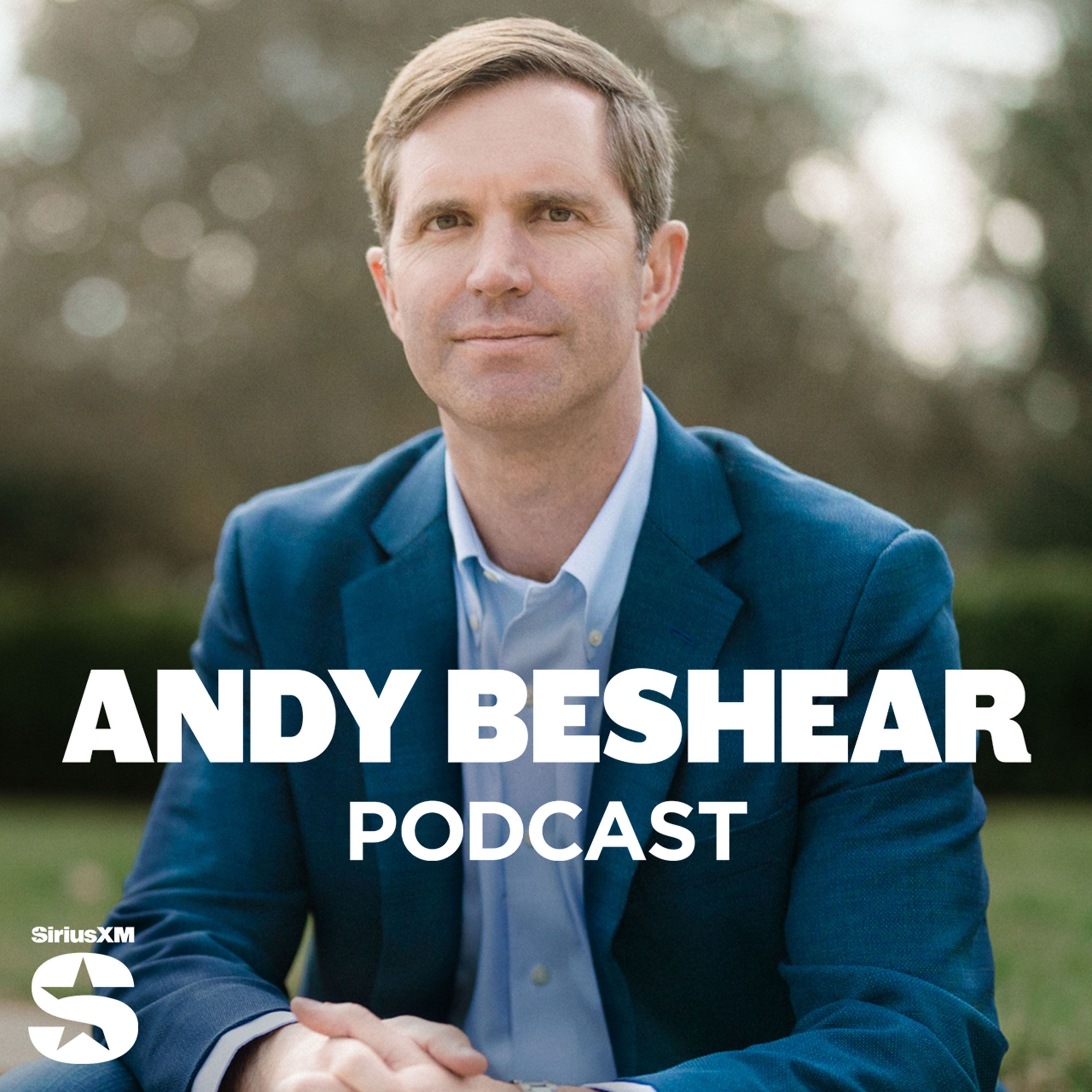
Andy Beshear Podcast
The Best Of: Top Moments, Best Guests and a Look Back at the Laughs
00:50:04
Welcome to a special bonus episode! Looking for a quick recap of the best moments of the Andy Beshear Podcast so far? We've got you. From music to horses to politics, Season 1 had been a wild ride in trying new things, having real conversations and bringing people across the country together. 🎧
Loading summary
Transcript134 lines
- [00:00]
A
This holiday season, find something extraordinary. The Genesis signature event is your moment to experience power you can feel. And every Genesis comes with Sirius xm. Three months of ad free music, plus sports news and more make Genesis a memorable start to your season.
- [00:16]
B
Welcome back. Good Thursday, everybody. Welcome. Hello, everyone, and welcome. We are on location at Churchill Downs during Derby Week. We are filming at Bourbon and Beyond, one of the largest music festivals in America. We've made it 30 episodes in and we're not stopping anytime soon. The Andy Beshear Podcast is now a part of the SiriusXM podcast network. That's right, we're a part of the SiriusXM family. Thanks to the audience. Thanks to all the subscribers. Remember, find a friend and get them to watch, too. Welcome to this bonus episode of the Andy Beshear Podcast, the Best of Season one. We want to make sure our conversation is real, so we're going to apply those cast rules. Here's a flashback to what they are. Number one, be authentic. You be you. Boo. Number two, talk like a real human being. When folks are going through addiction, they don't call it substance use disorder. When someone's hungry, they don't call it food insecurity. We, we want to make sure this is a conversation where we're using real words that have real meaning with real emotion. Number three, no debating reality. Far too often now we see people trying to argue against facts. Number four, tell your why. We want to get beyond just what you think and get to why you think it. We want our guests to talk about what drives them in life and how they make their decisions. When we talk about our why, we can give each other the grace and the space to disagree, but to understand somebody could be coming from a good place. And number five, have fun. And we start off with a huge, enormous announcement. We're a part of the SiriusXM family. This means that we're gonna be able to reach tens of millions of people all across this country and of all different backgrounds. And I hope what we're going to be able to do is to bring more people together in conversations not just about politics, but sports. Faith challenges that we all face every day as Americans. And what a platform to do it on. I've always respected Sirius XM because it's been bringing people together with different tastes in music and politics and in religion and all the different things we talk about on this podcast, both in a channel that they like and in ways that expose them to new ideas, new thoughts and new art. I'm really excited about this opportunity to hopefully push back against the us versus them to bring people together for genuine conversations that we have as Americans first and members of a political party second, third, or fourth. Just a chance to talk about our why, what drives us in this world, and maybe when we do that, to be able to connect with people we might otherwise disagree with. Our second ever guest on the Andy Beshear Podcast is Nicole Avant. Nicole is a movie producer, an author, a former diplomat, and so much more. She's been on the Daily show, the Jennifer Hudson show, the Sherry show, and now the Andy Beshear Podcast. Nicole, welcome to the show.
- [03:44]
C
Thank you. Thank you for having me.
- [03:46]
B
You had one of the most interesting upbringings as we've talked about it. Tell us a little bit about your dad and your mom.
- [03:55]
C
You know, I'm very grateful and blessed for the upbringing that I had. I was fortunate to have two great parents who were great Americans, who were both patriots and loved their country. And they knew the blessings that came with being an American and wanted me to make sure that I experienced as many blessings as possible. My father grew up In Jim Crow, North Carolina. Born 1931. Segregation. The worst of times in America. But he still believed in himself and he believed in his soul. And he believed in the soul of so many other people. And that's why he worked so hard to. To make sure that everyone had their rights, that everyone was able to at least get on the mark and run their race. He was very big about everybody deserves the right to run their race. And my mom was the same, different upbringing, and she was about 10 years younger. She had a much different life in New York City and a great woman of the arts and very smart in science and really taught me about the power of giving back and the power of serving communities and basically the power of serving whomever is in front of you in the moment. Two very powerful lives.
- [05:14]
B
You were born on your mom's 28th birthday. What's it like to share a birthday with your mom?
- [05:21]
C
It was, I'm sure for her it was annoying, but for me it was cool. You know, I mean, I look back now, I just turned 57 last month, and I look back now, and I think, you know, to come in into her life on her birthday, I mean, from my mom's point of view, she said it was the greatest blessing. It was a surprise. I was definitely two weeks early and. But it was, it was great to celebrate with her because, yes, I got the parties that I wanted and to do the things that I wanted to do, but she also took Me to whatever celebration that she was having. And that was usually in a museum, that was usually with all of her girlfriends or her family. But it was usually about. It was always celebrating the arts in some way. And I think that was very helpful to me growing up.
- [06:09]
B
Well, and your dad, Clarence, was the chairman of Motown Records. That must have been really interesting folks that would come through your house or you'd see on an everyday basis.
- [06:21]
C
It was great. I mean, you know, and that even came, you know, Governor late in his life. And that was such a great blessing and almost the cherry on top of everything. But, yeah, he. He started in the record business. He started in the 60s and he had managed, you know, everybody R and B acts and classical acts and started in jazz. And all of those people came through my. My childhood home. And. But, you know, he also was a businessman and sports agent. So all these wonderful people, you know, taught me a lot of things.
- [06:58]
B
So let me ask you, who was the funniest person that would come through your home that you would look forward to seeing when they were in town?
- [07:06]
C
No one has asked me that question. I would say the funniest person was actually Muhammad Ali.
- [07:13]
B
A Kentuckian.
- [07:16]
C
Muhammad Ali was. He loved magic tricks. So he'd love to do these magic tricks and throw me off all the time. And to watch him giggle. He had a silent giggle, but I always found him so funny because he would. He'd love to just trip people up with his magic. And he got such a kick out of it. And I loved. And I always remember laughing when he was in the house. Always smiling and laughing when he was in the house.
- [07:40]
B
So your parents were also into politics out there, supporting folks. Tell me a little bit about growing up in a political family. That's something I know a little bit about.
- [07:52]
C
I thought it was great. I mean, to hear all these different backgrounds and understand different opinions and different views. For me, it was very, very important. It was important to understand the role that we have as Americans and to live in a democracy and to be able to use my power to vote. Remember, I was the first person born in my family with all of my rights. So it was a big deal for my parents to make sure that I didn't squander the rights that people fought for. My mom taught me, don't you ever dare waste sacrifices of other people. And so for me, I loved meeting politicians and I loved hearing different points of view. Not all Democrats had the same point of view, and they had Republicans and independents as well. And that's what I Loved is listening. Everybody wanted to solve the problem. And it's okay if everyone has a different, as you know very well, people have different views of how to solve a problem. But the good news was, is that everybody wanted to solve a problem. At least they wanted to solve a problem.
- [08:57]
B
I think that's so important that this idea that the media now tries to say, if you're a Democrat, you think one way, if you're a Republican, you think another way. When we all think differently, we've all had different experiences.
- [09:11]
C
Absolutely. And there's different type of Democrats and there's different type of Republicans and there's moderates in both parties or all parties. When I vote governor, you should see me. I mean, I'm mostly in the center, but where I vote, it's all over the place, my ballot. But I love the fact that I get to live in the country and I always choose the best person that I think who has the best solution for the problems at hand in that moment. And I love the idea that all of us get to do that.
- [09:45]
B
So growing up and then now in life, you've had presidents come through your home and your parents home. I've never experienced that yet, but what's that like? You've gotta get incredibly nervous. I mean, the President of the United States is coming over to your house.
- [10:06]
C
It could be nerve wracking for sure. And interestingly. Cause it's a big deal. To your point. I mean, it's not just that person coming over, it's the entire team and everybody that goes with it and the protection team and then the advance team and then this motorcade. It's a lot, but it is the most. What a blessing. That's all I could say is it's such a big deal and it's such an honor to have this level of diplomacy, to have this level of leadership in your home and especially. And I say that because of the way my father grew up. At the time that he grew up, everyone would have told him that there was no way that his future was ever going to show up. That, you know, my dad didn't have, you know, indoor plumbing. I'm sure, like your grandparents, you know, I mean, it was a different time. My dad was 92 and a half years old when he passed away. So he didn't have anything, Governor, that we have nothing. Indoor plumbing, this and that, indoor water, nothing. So the idea that he could become something and he would say, you know, I was taught to run from the Ku Klux Klan. I knew what to do if The Ku Klux Klan was coming. So to have that mindset as a child and then to be able to, To. To have the life that he had later in his life, a. It shows you the progress of our country, which I don't think we talk about enough. But that's the best part of seeing these leaders come into my home, was seeing my parents reaction and their, oh, my God, can you believe our lives now? Especially for my father. Wow.
- [11:52]
D
Yeah.
- [11:53]
B
So speaking of there being different opinions within each party, but also within families, I know that when a certain election came up, your parents were backing Hillary Clinton and you backed a guy named Barack Obama. What was it like with you on one side and your parents on the other?
- [12:20]
C
It was tough at first because as much as my dad, he met then Senator Obama at that very early on, he liked him. He knew he was going to be something great, but he just did not see this. But I did. And I said, listen, I'm not trying to get into friendships here. I'm not trying to make a mess out of anything. But I just know that, I know that. I know that I want to be a part of this movement. And he looked at me and he said, nicole, I think you're crazy. I don't think this is going to happen. But if you really believe this, I said, I have to be a part of this movement. I just know that I want to be a part of it. Whether we win or lose, I know that this is change in America and I need to be a part of it. And so there were lots of bets going back and forth. And then I finally, then my mom was like, oh, I like both. I don't know what to do.
- [13:17]
D
It was a great.
- [13:19]
C
It was great. Because you know what? I love, to be honest with you, I loved beating my dad finally at something.
- [13:25]
B
Amen.
- [13:26]
C
I beat him at something.
- [13:28]
B
Now we're gonna answer an age old question right here, right now, and that's, can your parents ever come to you later and say you were right and they were wrong? Did he do it?
- [13:41]
C
No, actually, you know what? Actually he did. Sorry, I take that back. He didn't say. He wrote it in a letter. And I actually just found that letter not too long ago. But he, he admitted, he said, who knew? And you had so much to do with this. And what he was really forcing me to do was take credit for my part in that movement. He definitely wanted me to make sure that I didn't push it to the side. Like, oh, there were so many people, which there were, of course, but for him to have his daughter be a part of that movement and then me be right, it was a big deal for him. And I don't think he realized how much of a big deal it would be for him.
- [14:21]
B
Well, and I'm sure you were feeling what I sometimes feel. We, we crave credit, especially from our parents, and then it makes us really uncomfortable.
- [14:30]
C
Yes, 100%. That's, that's exactly it. It makes it, it's true. We crave it. And then it's okay, okay, okay, okay. You know, okay. It's enough.
- [14:39]
A
This holiday season, find something extraordinary. The Genesis Signature event is your moment to experience power you can feel. And every Genesis comes with SiriusXM. Three months of ad, free music, plus sports news and more. Make Genesis a memorable start to your season.
- [14:55]
B
When it comes to gifting, everyone on your list deserves something special. Luckily, Marshall's buyers travel far and wide, hustling for great deals on amazing gifts so you don't have to. That means your mom gets that cashmere sweater, your best friend that Italian leather bag, Your co workers unwrap their favorite beauty brands, and your nephews the coolest new toys. Go ahead.
- [15:15]
E
At prices this good, you can grab.
- [15:17]
B
Something for yourself too. Marshalls.
- [15:19]
A
We get the deals.
- [15:20]
B
You gift the good stuff. Shop now@marshalls.com or find a store near you. We're joined by U.S. senator and former presidential candidate Amy Klobuchar. She is a senator who is showing significant leadership in Washington, D.C. and is going to share some of her story. We're going to get into her why and then we're going to talk tariffs and the impact especially on farmers in her great state of Minnesota, as well as the Commonwealth of Kentucky. So, Senator, welcome to the Andy Beshear podcast.
- [15:54]
D
Hey, Governor, it is great to be on like the horse picture up there on the wall and it is. I'm a big fan of yours and I'm excited to be on to talk on your new podcast. So thanks for having me.
- [16:07]
B
Grateful you said yes and grateful for your support throughout my political career. I know supported me in a, in a number of different races. So very excited to have a friend on the podcast.
- [16:20]
D
Excellent.
- [16:21]
B
You and I have talked a lot about this current administration, about the policies that they're putting forward and we could talk about a hundred of them and maybe that's what they want us to do, to talk about all 100. But what is hitting people the most is what's hitting them in their wallets is making it harder for them to pay bills that a president who was probably elected because the last group of movable voters thought that he'd make paying the bills a little easier, are finding he's doing things that are the exact opposite. You have a unique position on the Agriculture Committee about seeing the impact of his policies on farmers.
- [17:05]
D
There are people that voted for President Trump, including a number of our farmers, who thought, okay, you know, prices are too high. I want to improve our economy. They were upset about inflation, different things. And then when he won, they expected those promises to be met. And instead what he did was put in these across the board tariffs. They want things to be made in America. Both of our states make a lot of stuff, ag or manufacturing, but they did not expect them to upend the entire economy to the point where costs are up, chaos is up, and the market is down. But they were not ready to deal with these across the board tariffs. I just think this has ended up being a fiasco. It's a $4,000 tax on every family, including $200 in groceries. So people's prices are going way up that they have to pay. And it hurts us in our economic expansion across the world. We want to be a country where we grow and make stuff, where we invent things, where we export to the world. And that can't happen if we cut ourselves off from the world's economy.
- [18:11]
B
We Talked about that $4,000 to $4,700 hit to American families on the last episode of the podcast how it blows a hole in the budget and how many families just aren't going to be able to get by. And then I think from how you started your answer, it compounds with cutting the rental assistance vouchers, which they're threatening to do, cutting Head Start, and what that would mean to these families that are already struggling, that can only go to work, or maybe both of them can only go to work because of it. If you're both taxing the American people who are struggling to get by and cutting the help that helps them get out there and be productive, how do people make it?
- [19:00]
D
Yeah. And what we're supposed to be doing is having people's backs. Politics, as Paul Wellster used to say, former Minnesota senator should be about improving people's lives. And when I look at what they're proposing right now in Congress, which just should drive all the governors nuts, because what they're proposing, I'm all for keeping in place tax cuts for people making under 400,000. So let's start with that. However, they're proposing more tax cuts for the wealthiest $50 million. For every billionaire, what they are proposing right now would total $37 trillion in debt over 30 years. And 25 trillion of it is for the people making over 400,000 and the big companies and the like. And so instead of using that money to pay down the debt and do something on the deficit, instead of using that money to make private sector incentives for more housing or childcare, instead of using it, as you've pointed out, to make sure people can buy their groceries or make sure that their grandma or their mom is being able to stay in assisted living through Medicaid and retire with dignity. Half the people in this country, that's how they retire when they're in assisted living that's paid for by Medicaid, they are messing around with the very fabric of life that guarantees that people have dignity in their retirement, that they keep the benefits that they earned and that they're able to work hard and make a living and support their family. I'm actually just shocked at how far he's gone with this. And I'm someone that works, as you know, with Republicans to Congress ago, I was number one for bipartisan bills, number three for getting them passed into law. Okay, Grassley beat me. But I actually believe that you can get things done with Republicans. But this has been so destructive of our economic moorings in this country that I'm just getting more and more worried every day. If he doesn't pull, pull this back.
- [21:10]
B
Our guest this week on the Andy Beshear podcast is Senator Chris Coons from the great state of Delaware. Senator, welcome to the podcast.
- [21:20]
E
Thank you, Governor. And yes, it is the great state of Delaware, not a commonwealth like Kentucky.
- [21:25]
B
So when you got into politics, you got in at the local level. And local politics is hard. It's mean, it's tough. I mean, everybody knows where you live.
- [21:35]
E
Smaller the yard, the meaner the dog.
- [21:38]
B
And so I'm wondering, how do your experiences there either prepare you for the U.S. senate or how different are they?
- [21:47]
E
Well, so in between the nonprofit work I did and going into local government, I spent eight years for a global manufacturing company that's headquartered here in Delaware. And I gradually got more involved, more engaged in the Democratic Party here in Delaware and was recruited to run for county council president, partly because there was a real ethics meltdown going on in county government. My master's in div School really focused on ethics, and I had worked as an ethics officer, ethics trainer for the company I worked for on County Council. When I was county council president, I wrote a new ethics code and was involved in a number of public integrity and ethics issues. I represented half a million people. And our county here, New Castle county, is mostly unincorporated. The county government provides police, fire, paramedics, land use, sewer zoning, housing, libraries for about 400,000 people. And it was a very challenging environment. Great learning opportunity. My wife and I had infant twins who were born in 99. I was elected in 2000 and our youngest child was born in 2001. So as a brand new county council president with one staff person representing roughly half a million people with three kids. Three kids. I had three kids under two years old and I had two full time jobs because I was still in house lawyer for that manufacturing company. It was crazy. I barely remember the first four years I was elected. But to your point, representing local government in the community where I grew up was both wonderful because I had a chance to really have an impact on the people I'd grown up with and to have an impact on housing and libraries and paramedic and police response time and disaster preparedness and all that stuff. But you know people and they know you and they know how to get you, and they know your mom and they know your brother in law and they, you know, they know you. And that's what's great about local government and that's what's hard about local government.
- [24:01]
B
I also, Brittany and I also had our two kids within a year and three days as we were trying to build out at least my professional career. And I'd also say I know what it's like when people try to lobby your parents about your decisions. So you got to follow Joe Biden in this Senate seat and that had to be pretty special. But also, I have to think that you thought a lot about getting into it because Joe Biden was seemingly the US Senator from Delaware since the founding of the country.
- [24:41]
E
At least since Kentucky.
- [24:42]
B
Became a Commonwealth, 1792.
- [24:47]
E
I mean, Joe had been senator from Delaware for 36 years and was an institution. Everybody has Joe Biden stories here. I mean, Delaware is just a million people and I routinely still run into people who volunteered on his first campaign in 72. In fact, the person who was my secretary when I was county executive in 2010 had been Joe Biden's secretary his very first year as a practicing lawyer.
- [25:18]
B
So I remember President Biden came in after our 2022 floods and showed such kindness to the people of Kentucky who'd been through so much. We were waiting to have this event in one of our elementary schools and he was telling stories to some of the teachers backstage And I'll never forget he told the story of how he was convinced to run for U.S. senator. All of these stories, statesmen and women had brought him in and told him about all the history and then asked him to run. And then he turned to me and he said, what got you to run for governor? And I said, Mr. President, my pollster said, I was Kentucky's Luke Skywalker. I was our last and only hope. Did you have one of those stories, I guess, that got you in at the very beginning, that recruiting?
- [26:10]
E
Well, I'll tell you, one of the things Joe Biden said to me when I told him I was going to run for County Council president was he said, everybody who comes to meet with me talking about running for office, they all know what they're running for. He said, I want to hear what you're willing to lose your office over, what you're willing to lose an election over, what are your core principles? What are the things that you're not willing to compromise on? And we had a long conversation about the importance of family, of faith, of respecting constituents of all backgrounds, of not getting too far either way in terms of being partisan, and of remembering and respecting the people of Delaware. When his son, Attorney General Beau Biden, decided not to run late in the 2010 cycle. And then Vice President Biden called me and said, I'd really like you to run for my seat. I said to him, it's an uphill climb, and you know that. And he said, yes. And I'm convinced you're the only one who can win. And you can win because I've seen you speak, I've seen you preach, I've watched how you've conducted yourself as county executive. And I think people have come to see you as a person of integrity and who can lead and make tough decisions and who isn't too partisan.
- [27:33]
B
I think you said something so important in that answer, and that's some things are worth losing over. And the moment that you don't have that principle that's worth losing over, you've either lost yourself or you've lost what the job is supposed to be about.
- [27:51]
E
One of the things I've admired about you, Governor, and your record in Kentucky, you're elected in a deep red state. I know both your senators and your congressional delegation is significantly to the right of you. Yet my impression is you all have worked well together to deliver resources to help address flooding and tornadoes, to help rebuild bridges, and to help invest in combating addiction and overcoming the opioid crisis. That's the kind of leadership that I look to for folks who I want to be friends with, want to learn from. Because at the end of the day, our country is so divided that most people who I meet traveling around our country say, why can't we work together more than we are right now in Washington? We are very divided. And part of what compelled me to want to do more was the early experiences I had in county government where we got past the politics and we solved local problems.
- [28:53]
B
We are always reminded of our humanity and that it's not Democrat or Republican. In the midst of very trying times after natural disasters, facing the deaths of so many of our family and friends due to the opioid epidemic, you're right. Those are the areas where we've been able to push out the noise and the politics and to get things done. But I know you're dealing with a lot of noise and a lot of politics right now in Washington with what seems like a full scale attack on some really important programs that help the people of Kentucky and every other state. I'm thinking about the possible cuts to AmeriCorps, the elimination of it, when there are AmeriCorps volunteers throughout the eastern Kentucky and the rest of Kentucky doing such special work.
- [29:48]
E
One of the things I'm really frankly upset about is that in recent weeks there seems to be a move to try and get into and shut down the AmeriCorps program nationally. Everybody who was involved in direct response to natural disasters in the AmeriCorps NCCC program has just been laid off. They've just been relieved of their opportunities to serve. And part of why I've always loved AmeriCorps is it gives tens of thousands of young people every year a chance to find themselves in service to others, to earn money for college, to build their skills, but more than anything, to help communities address issues, whether it's helping veterans or building affordable housing or addressing the opioid crisis or responding to natural disasters. To cut that off, this bipartisan program that's enjoyed support for decades, I think is cruel and frankly, wasteful. And it destroys part of what brings us together and helps make us special as Americans. That centuries old commitment to volunteerism and to service in our communities.
- [30:53]
B
And it's hard to know where it comes from, because AmeriCorps touches all of those core needs of our families that they don't view as partisan. The education of their children, safety in their communities, the respondents, funding and recovering from those natural disasters, health care in some rural areas where you might not otherwise get it. This is going to have serious impacts on people of all parties, but especially in rural areas of America. And regardless of how they voted, it's going to hurt.
- [31:34]
E
And that's. Look, part of what I'm struggling with about what's going on in D.C. right now is the number of programs from Meals on Wheels to Head Start, from Food stamps or what's now called snap to AmeriCorps, that help people, that help connect communities, that help address basic human needs. And I'm just seeing program after program after program cut to the core. I'm doing an event tomorrow at the Wilmington Public Library to protest the cutting off of funding for libraries. Cutting that off just strikes me as cruel.
- [32:12]
B
I know that it hurts you as a senator who has sworn to uphold the Constitution, but also as a person of faith. And so many of the teachings in our Bible seem to be impacted and impacted negatively by these actions. You think about the fishes and the loaves and, and cutting SNAP benefits. You think about the parable, the Good Samaritan, picking up that person who's different from you and not kicking them while you're down. Our first guest on this special Derby episode of the Andy Beshear podcast is Kenny McPeek. Kenny was the winner not just of last year's Kentucky Derby, but of Kentucky Oaks as well. That's the first time that's been done since 1952. It's only been done several times in our history. Kenny, welcome to the Andy Bashir Podcast.
- [33:03]
F
Thanks for having me.
- [33:04]
B
What's it like to dominate Derby weekend?
- [33:07]
F
A lot of fun. A whole lot of fun. You know, we put years and years of hard work into all this. And, and it's so hard. I mean, and for both these horses to accomplish what they accomplish, help us accomplish, I mean, it's really about the horses. Really neat thing. And so since you're here, I don't think you. I don't know if you remember, but I told you, I said one day you're going to hand me that trophy.
- [33:31]
B
Yes, you did. Yes, you did.
- [33:33]
F
I believe in channeling things.
- [33:34]
G
I think that if you.
- [33:36]
F
If you focus in on something and you believe you're going to do it, you can do it. And for whatever reason, I always knew.
- [33:41]
G
You would do that.
- [33:42]
F
Thank you.
- [33:42]
B
So Thorpedo Anna for the Kentucky Oaks, Mystic Dan for the Derby, and you were pretty confident about both of them. I remember seeing you saying, we're going to win the Oaks.
- [33:52]
F
Well, she was a Philly that. She is so big and strong and actually had one, one reporter ask me what do you think your chances. And I said, all I know is they better bring a bear because I'm bringing it. Grizzly. Wow. And they, they've nicknamed her the Grizzly since the.
- [34:07]
B
How many horses have you had like that where you are so confident even going into such a big race?
- [34:13]
F
Not that many. Yeah, but she, she helps you exude confidence that she's in again this weekend. So Friday, Friday's a big day for her and she gets to show off her talents here.
- [34:23]
G
Hopefully she gets it done.
- [34:24]
F
But, you know, she's a rare one, immodest pedigreed horse, but just on the physical, just an amazingly well made filly. A great mind on her and, you know, like a world class athlete that she is.
- [34:37]
B
I mean, she, she does things easily. So John Rabinowitz is joining me for my next guest, Charlie o', Connor, who is director of sales at Coolmore America, one of the largest thoroughbred operations in the country. And they are home to the two living Triple Crown winners, American Pharaoh and Justify. Charlie, welcome to the podcast.
- [34:59]
G
Thank you very much, Andy. It's a pleasure to be here.
- [35:02]
B
But in seriousness, you work inside this industry where you take and you train these horses. You try to pick the one that could be that next Kentucky Derby winner. Tell us a little bit about that. Tell the listeners, you know what it's like to constantly be looking for that next amazing athlete.
- [35:24]
G
You know, we're in this business and we love, love, love horses and we.
- [35:30]
A
This holiday season find something extraordinary. The Genesis signature event is your moment to experience power you can feel feel. And every Genesis comes with SiriusXM. Three months of ad, free music plus sports news and more. Make Genesis a memorable start to your season. We're interrupting this podcast to ask you a very important question. Have you had your Hershey's? When you need to brighten up your day, put a smile on your face with the classic creamy texture and pure milk chocolate flavor of Hershey's milk chocolate. Whether you're eating it on the go, breaking off a few pieces for s' mores night, or just treating yourself to something sweet, Hershey's Milk Chocolate checks all the boxes. Shop for Hershey's Milk Chocolate now at a store near you found wherever candy.
- [36:13]
G
Is sold, it starts off with the foaling season, which is one of the nicest times of the year. It's in the spring in Kentucky and when you, you can't wait. When you hear that your mare foaled last night, you can't wait to go up and look what the foal looks like. And then to see that foal progress during the summer and then to see it being weaned off his mother, then the next stage is he grows into be a nice yearling. And you're looking at these animals constantly to see how they're performing and how they're progressing and turning in. Then the time is to pick a trainer. And we've been very fortunate that in Coolmore at home, we have Aiden o', Brien, who trains most of our horses. You want to get what you feel is the best trainer, possibly for your horse, Charlie.
- [37:06]
F
As you know, we host these big guests at Keeneland and here at Churchill Downs. And one of the questions we get all asked all the time is how does the trainer pick the jockey?
- [37:16]
G
The trainer tries to have a relationship with a jockey, but then there's a jockey's agent, and he's there trying to pick the best mans for his jockey because that's his job. But the trainer wants to build up a relationship and wants him to ride a lot of his horses. So it's a tricky. It's a tricky.
- [37:34]
B
So the trainer and the agent are fighting over the jockey's time.
- [37:38]
F
Correct.
- [37:39]
B
And I'm guessing compensation.
- [37:40]
E
Correct.
- [37:41]
G
And it can be nasty. I know a lot of these jockeys, and I'll see them and I'll say, will you ride our horse next week? And they'll all go and, yeah, Charlie.
- [37:51]
B
Yeah, we ride for you.
- [37:52]
G
Just call my agent and, no, he won't even say that. Then the horses entered into the race, and there's. There's a different jockey. And I go, what the hell happened here? Well, the agent got in the way, Charlie. The agent wouldn't ride him, Charlie.
- [38:06]
F
We had Kenny McPeak here earlier.
- [38:08]
H
Yeah.
- [38:09]
F
And he talked about how winning at any level is still a thrill.
- [38:13]
G
Of course it is.
- [38:14]
F
Do you agree with that?
- [38:15]
G
100%. We get as much joy your horse winning at any level because it's such a trill and it's such a difficult thing to do and to even be sitting here in Kentucky Derby week. And we're lucky to be enough involved with three horses. It's. It's a dream, and it's so difficult to get here.
- [38:36]
B
Do you remember your first big win?
- [38:42]
G
I do, actually. I'll tell you, it was probably not till I got to America, till it was in Keeneland. And if you're from Kentucky and you live in Kentucky, Keeneland is your track and you want to win. And we won a maiden race for, actually, John Morgan, and that was a big, big Thrill for us, that was his first time being involved on the horse and his dream was also to win in Keeneland. And then our next race was to come to Churchill. So we hit Keeneland and Churchill in Kentucky.
- [39:12]
B
The Andy Beshear podcast is excited to invite our next guest, a friend of mine, Eric Wood. Eric was a star at the University of Louisville. He went on to play nine season for the Buffalo Bills. Now lives back in Louisville, though, is the color commentator for the Buffalo Bills Radio Network. Eric, welcome to the podcast.
- [39:36]
F
Thanks for having me.
- [39:36]
H
It's quite the honor.
- [39:37]
B
Well, we're thrilled that you're here and it's derby week.
- [39:40]
F
Eric, I will tell you, I had my first experience this year in Buffalo. I was blessed to see the 49er game where it was, I think, like wind chill, negative 30. And it was snowing. I don't know how many inches. People acted like there was snow on the ground, but I've never seen a better fan base in any of my NFL experiences. I mean, was it like that your whole career? It was. And I was playing for the. For all of my career. My final game was when. My final regular season game was when we broke the playoff drought. Is the longest playoff drought in all of professional sports at the time. 17 years. And in this fan base still stuck behind us, we'd be pulling into a game for December, a game when we're already eliminated from the playoffs.
- [40:24]
G
Oh, wow.
- [40:25]
F
And here's all the fans in the parking lot with their little garbage. Yeah, garbage can bonfires, their shots on a. On a ski.
- [40:33]
B
Jim Kelly jerseys, Thomas jersey.
- [40:36]
G
Absolutely.
- [40:36]
F
Now they're all Josh Allen jerseys. But at the time it was, you know, the 90s, Bills jerseys. But it's an incredible, passionate fan base that makes it a lot of fun to play for.
- [40:46]
B
So nine years playing and then moved over pretty quickly into the. Into the broadcast move and tell us about that.
- [40:54]
F
Yeah. So for an offensive lineman that didn't play in a very big market, you got to transition into the media world quick if you want to get in. So fortunately, I had been great to the guys that had covered our team for years on a national level and local level. Many of them reached out and said, hey, if we can ever do anything, let me know. A couple guys like Ian Rapaport and Mike Silver, they connected me with their agent and they were able to get me over with Fox first, then espn. And then ultimately, I've settled in on this Bill's radio gig. And I grew up in Cincinnati. Dave Lapham's been calling games on the radio for about 30. I mean, you're a huge Bengal fan. I am about 35 years. And I always wondered, why did Dave do this all these years? Because it's fun. Because it's fun to be around a team. We're allowed to talk about them. We're allowed to cheer for them during the game. You're still working, but it's a lot of fun. And now that my kids are into it and all that, it makes it more fun bringing them to games. That's great.
- [41:45]
B
Our special guest is hall of Fame and NCAA championship coach John Calipari. This is a coach that has built or rebuilt programs at UMass, at Memphis, at Kentucky, and now at Arkansas. About half of the current NBA rosters have played for him. And he is an all around great guy where I got to see his compassion and empathy really at play, especially after natural disasters. He's become a great friend. I look forward to this conversation where we'll start with his upbringing, move into basketball, and then talk about leadership, because this man knows a lot about leadership. Coach, welcome to the Andy Beshear podcast.
- [42:29]
H
Governor. You know, I wasn't turning this down. The chance to sit with you. We. We traveled the state a little bit together, didn't we?
- [42:36]
B
We did. We traveled the state during tough times, but then we traveled the state during some good times, too.
- [42:43]
H
It's a pleasure to be here with you.
- [42:44]
B
Tell me. Most coaches have this great story of sacrifice, especially when they started, how they got in on the ground level, what that's like in your very first year that you're trying to break through.
- [43:00]
H
I take a Drive on I70 from Pittsburgh to the University of Kansas. I'm going to work their basketball kit. Bob Hill invited me. Ted Owens was the head coach. We drive all the way on I70 from Pittsburgh to Lawrence, Kansas. As I'm working the camp, Ted Owens watched me with some young kids doing individual work, knew a little bit of my background, and said, I'd like you to join my staff. And I said, as an assistant? He said, yes, as a volunteer.
- [43:40]
B
Assistant, volunteer.
- [43:42]
H
And I said, how much does that guy make? But I worked in the training meal with the Sinclairs, so football and women's basketball and basketball players would come through. And I was the peas and the corn. Would you like peas? You like corn? I tell the story. They once a week, they did steaks. I never had steak growing up. I steak? Are you kidding me? So I would also eat there. I think I had three steaks the first time because I said, I don't know if I'm ever going to get steak, you know, I mean three, three of these. But again, live with the part time assistant, work their camp, you know, again, had no worries, had no money and just coach basketball. I never got in this to say how much money are you going to make coaching? No one did back then. I mean, coaches were making little more than a high school teacher would make. It's gone crazy now. But back then it wasn't about that. It was about loving the profession. It's about loving the players, loving to see them grow. So, no, but I also met my wife, she worked in the business office at the university and I was delivering something down there and she saw me and this woman was, she chased me everywhere. I mean, I'm like, gotta leave me alone, come on. Or maybe it was me chasing her. I gotta figure it out. I think I was chasing her more.
- [45:13]
B
Yeah, that, that sounds, that sounds about right. Knowing, knowing your wife. But, but you were a lucky man. Did, did your mom ever call you having served ice cream in her cafeteria now that you're at Kansas, you know, serving some of the players before you get your own and talk to you about it.
- [45:30]
H
My mom used to call and used to say, how do you do this?
- [45:34]
B
Oh yeah.
- [45:35]
H
I can't believe you're not nervous. I mean this is crazy what you're doing. I can't even watch the games. But she was the like your mom, mama bear, would you say?
- [45:48]
B
Oh yes. I remember when I said guys, I think I want to run for office. And she looked at me and said no. And, and then we, we worked through it after that. But, but it's that, it's that love of a mom and wanting to, to, to protect you. It's a pretty special thing that I wouldn't trade for, for anything. Coach, when was the, that first moment where you said I could be really good at this, that first moment that you had that said I can be a top tier coach?
- [46:20]
H
First of all, my first year at UMass we gave up 100 points, I think 14 times. We were the worst defensive team in the. My first year I called Rick Barnes, who's a good friend, and I said, rick, what do I do? He asked, what, what would you say? I don't know, if we jumped up, see, what would you tell me? You, you demand, what do you work on? What are your defensive principles? So I tried to give him like 20 things. Too many, too many, give me four. And from that point, ball pressure, gaps, don't give them lanes, get around the post and get off on the weak side. And to this day, that's basically the premise of our defense. And from that conversation, the next year, we got better. The next year, we got better. The next year. My first year, I was trying to do drills which I had learned that didn't even fit how we were playing. But they, if you came in and watched us, you'd say, wow, he runs good drills. Just didn't fit. So you learn as you go on this, and if you don't fail, if you don't take a spill or two, I got fired by the nets. If you don't have stuff like that to let you know, you're going to be fine. It's hard to not worry about result. Worry about your team getting better, worry about the process, worry about loving every day in practice. The result will take care of itself. Well, when you're so concerned with the result, it's hard to really get your team back.
- [48:07]
B
The idea of it's hard to win if you're afraid of losing.
- [48:10]
H
We call it winning and learning. Just learn from it and march on. I want to see when things go bad. What kind of leader is that? Coach? Now, it's easy when you're winning every game, but when things go wrong in your position. I've seen you when co hit our state. I watched you, I saw what you did when some of the biggest disasters that this state has ever faced has been with you as governor. And now, well, what do we jump under the covers? Do we blame? Do we? Or do we just go out, let's get something done. And it may not be everything we want to do, but we're going to do something and we're going to get started. I think in coaching, things go bad. Do you blame or do you take responsibility? Does your team splinter? And if they do splinter and start blaming each other, it tells a lot about your leadership. If they come together as things get crazy and they get better and tighter, talks about leadership. Leadership in these jobs is, how do I help? How do I move? How do I influence? What do I do that this state or city or university needs for me, the students. Ellen and I did something for the students in education. Knowing the loans that those kids, which was incredible, we talked to the school, the dean of the school of education, and say, how can we help? And so it's, you know, the federal workers. Do you remember when they laid off the federal workers in Lexington?
- [49:56]
B
Oh, I do.
- [49:58]
H
And Ellen said, how do we help? And I said, look, I think we gave grants to each of them that would wanted to come. And you know, we did stuff with Kroger. We did stuff. I mean that position I held in the one I have now, really, it carries weight in those states. You've done things that no one knows that you did.
- [50:23]
B
This new jacket Slay Andy Beshear Podcast we're not saying slay, we are fire and there's no sus here. And no matter what said on the podcast, we respond either facts or cap. Did we do it for the plot? Thank you all for tuning in to the Andy Bashir Podcast. We'll see you this coming Thursday with our next episode. But I hope you've enjoyed learning how to get really excited about something. Maybe it's like that golf clap that we learned and saying clock it. And that's a wrap on this episode of the Andy Beshear Podcast. Remember, you can listen to us on the Progress Channel as well as download us on the Sirius XM app or anywhere you get your podcast. But we really would encourage you head over to YouTube at Andy Bashir Podcast, subscribe and even leave some comments. We want to hear from you. Thanks for listening to Andy Beshear Presents the Best of Season one. We hope you'll stick with us. There are great episodes to come. And as always, remember you can download us on all major platforms, but also subscribe to our YouTube channel @andy Beshear Podcast. Cloudless skies in the midday sun Bees.
- [51:36]
H
Are buzzing now that spring is done.
- [51:39]
B
The birdsong blows as the tide rolls out. These memories are what summers.
- [51:49]
A
This holiday season, find something extraordinary. The Genesis Signature Event is your moment to experience power you can feel. And every Genesis comes with SiriusXM. Three months of ad, free music plus sports news and more. Make Genesis a memorable start to your season.