← Apologetics Profile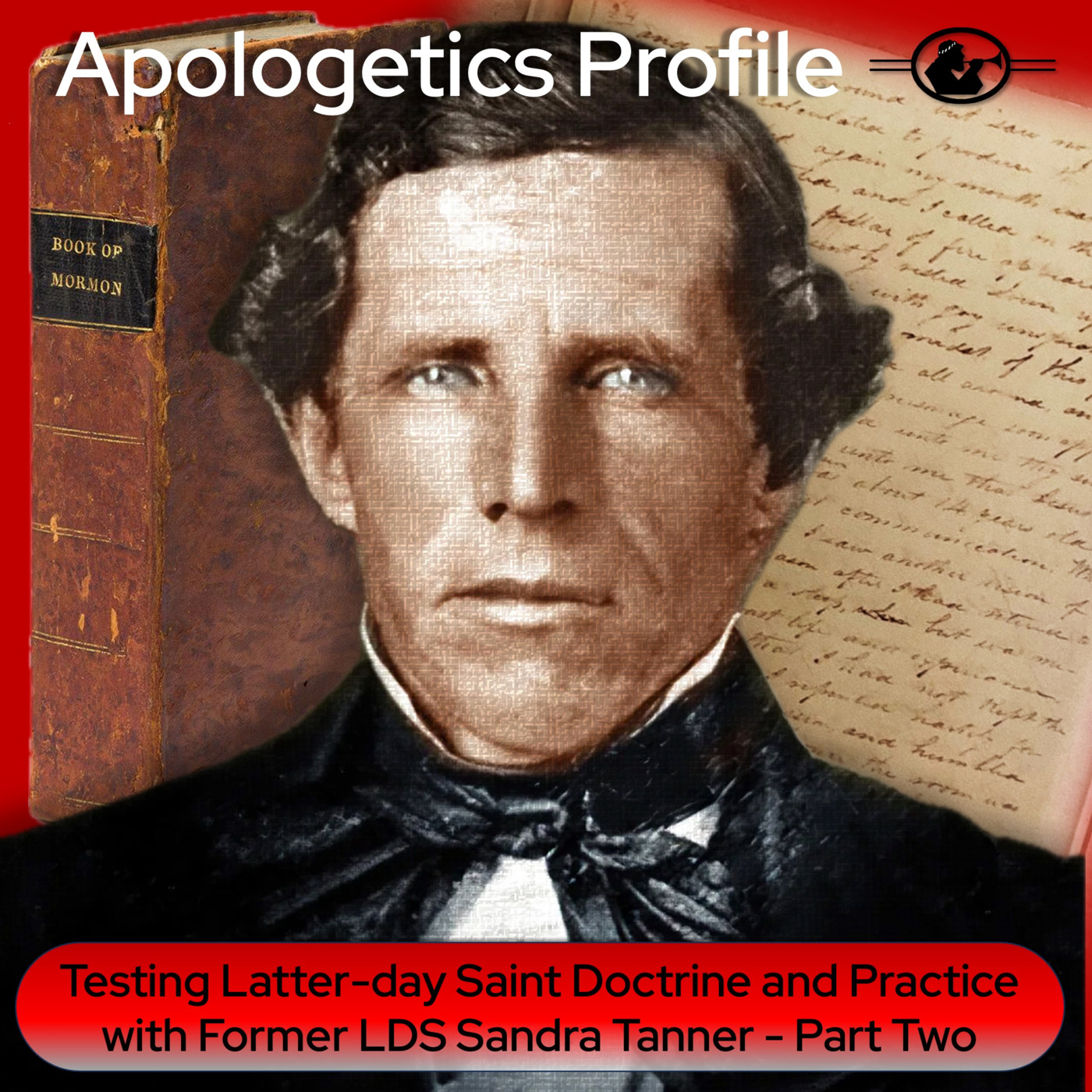
Apologetics Profile
Episode 330: Testing Latter-day Saint Doctrine and Practice with Sandra Tanner - Part Two
00:42:46
Are leaders of The Church of Jesus Christ of Latter-day Saints prophets and apostles in a true bi...
Loading summary
Transcript87 lines
- [00:14]
Podcast Host
Jesus said to him, I am the way, the truth, and the life. No one comes to the Father but through me. This is Apologetics Profile, a weekly podcast examining the ideas of our time through the truth of Scripture.
- [00:35]
Sandra Tanner
They want to use David Whitmer, one of the witnesses to the Book of Mormon. They want to use his statement, dying statement that the Book of Mormon is true. But they don't tell you that the rest of David Whitmer's statement was that Joseph Smith was a fallen prophet, that he brought in all kind of doctrinal changes into the church that weren't there at the beginning.
- [01:01]
Narrator/Commentator
Changes to doctor in the history of the Church of Jesus Christ of Latter Day Saints, the concept of ever changing doctrines of one prophet or apostle contradicting or refuting the teachings of past church prophets and apostles continues to be a challenge for the LDS Church today. Let's begin by examining the biblical definition of an apostle. I am relying here upon chapter 47 of Wayne Grudem's Systematic Theology titled Church Government for much of the following information. The first definition of an apostle is a general sense of the word a messenger, or apostolos, as the Greek language says. This general usage of apostle as a messenger is found in Philippians 2:25, 2 Corinthians 8, 23, and in John 13:16. There is also a more narrow and exclusive use of the word apostle, and it is to mean those who were eyewitnesses of Jesus resurrection. As Peter noted in Acts 1:22 when considering who would replace Judas Iscariot, the aspect of this exclusive definition of apostle includes individuals who were appointed personally and specifically by Jesus Himself. See 1 Corinthians 15:7, 9 Matthew 10:1 7, Acts 1, 24, 25, and 26, and Revelation 21:14 in the exclusive meaning of individuals who were eyewitnesses to Jesus resurrection and who were personally appointed to be apostles by Jesus himself. There are no more Apostles Today the apostles of the New Testament era are as unique in their calling and role as the 12 Apollo astronauts who are the only human beings to have ever walked on the moon. As Wayne Grudem puts it in this narrow sense of the term, there are no more apostles today, and we are to expect no more. This is because of what the New Testament says about the qualifications for being an apostle and about who the apostles were. The use of the word apostle today, however, is often confusedly misapplied. As Grudem continues, though some may use the word apostle in English today to refer to very effective church planters or evangelists it seems inappropriate and unhelpful to do so, for it simply confuses people who read the New Testament and see the high authority that is attributed to the office of apostle there. It is noteworthy that no major leader in the history of the Church, not Athanasius or Augustine, not Luther or Calvin, not Wesley or Whitefield, has taken to himself the title of Apostle or let himself be called an apostle. If any in modern times want to take the title apostle to themselves, they immediately raise the suspicion that they may be motivated by inappropriate pride and desires for self exaltation, along with excessive ambition and a desire for much more authority in the church than any one person should rightly have. The same goes for the office of a prophet. Biblically speaking, Jesus is the fulfillment of the law and the prophets. John the Baptist is believed to have been the last of the Old Testament prophets, the line of demarcation between the old and the new who points the way to Jesus. So how does Jesus fulfill the prophets? Luke 24:27 and Luke 24:44. Give us a summary example. In Luke 24:27 Luke tells us that Jesus spoke to two of his disciples on the road to Emmaus, and beginning with Moses and all the prophets, he explained to them what was said in all the Scriptures concerning himself. In Luke 24:44 Jesus himself says, these are my words that I spoke to you while I was still with you, that everything written about me in the law of Moses and the prophets and the Psalms must be fulfilled. Another example of Jesus prophetic fulfillment is in Matthew chapter one, where the angel announces to Joseph not to be afraid to take Mary as his wife, that Jesus birth is the fulfillment of what the prophet Isaiah spoke Matthew records quote now all this took place that what was spoken by the Lord through the prophet might be fulfilled, saying, behold, the virgin shall be with child and shall bear a son, and they shall call his name Immanuel. Which translated means or God with us. Also the opening chapter of Hebrews tells us that long ago, at many times, in many ways, God spoke to our fathers by the prophets. But in these last days he has spoken to us by his Son, whom he appointed the heir of all things, through whom also he created the world. Now of course, this does not mean that God cannot still speak to someone today through dreams or visions, or through the Bible itself. The apostle Paul tells us not to despise prophecy, for example in 1 Thessalonians 5:20 21. But Paul's use of prophecy here likely could be referring to Old Testament prophecies about Jesus which Jews did in fact reject, such as Isaiah 53, for example. Also see Matthew 2 and Luke 24. Paul's exhortation in 1 Thessalonians 5 was also given during the early decades of the Church before there existed the New Testament as we have today. In this sense there were those who did provide prophetic ministrations for the edification and building of Jesus church. See Matthew 16:18 and Ephesians 4. 11. What Paul's mention of prophecy here does not do is justify someone today claiming to hold the office, title and authority of a biblical prophet. In such instances, the person will often use the title of prophet to prohibit anyone from questioning their alleged revelations or authority. If someone claims to be speaking on God's behalf, their words must be in accordance with what has already been revealed in Scripture. Someone might claim to have a word from God to give for exhortation, rebuke or encouragement, but the Spirit behind the Word must be tested against what the Bible already says. Scripture exhorts us to test the spirits because many false Christs and false prophets have gone into the world. See Deuteronomy chapters 13 and 18, Matthew 24:24 and 1 John 4:1. 1 John 4:1 says, Beloved, do not believe every spirit, but test the spirits to see whether they are from God because many false prophets have gone out into the world. If, for example, someone claiming to be a prophet says they have a new revelation about what Jesus did after his resurrection that is nowhere mentioned in the pages of Scripture, such as Jesus visiting
- [08:10]
Interviewer
beings on another planet, Jesus coming to the Americas, or Jesus returning on such
- [08:15]
Narrator/Commentator
and such a date, you can confidently dismiss it. In short, God transferred the authoritative office of Old Testament prophets to the New Testament apostles who were eyewitnesses to Jesus resurrection, who were chosen by Jesus himself, and who guided and directed the church in all matters of sound doctrine and practice. Jesus, then is the fulfillment of all the Old Testament Testament prophets. He is both the high priest who administers the sacrifice and wondrously the sacrifice himself, the sacrifice for your sin and mine. Jesus is the prophet, priest, king, savior and Lord of all. The original and unique roles and offices of Old Testament prophet and New Testament apostle are thus closed today. The original apostles ultimately point believers to the greatest prophetic revelation given to us today, namely God revealing himself directly to us in and through the person of His Son, our Lord and Savior, Jesus Christ. Anyone today claiming to be a prophet with alleged new revelation from God which is not in accordance with the Bible as we already have, it is not. Finally, a prophet at all the revelation we have been given in Scripture, from Genesis to Revelation is all sufficient, authoritative, built on the foundation of apostles and prophets, with Jesus as the chief cornerstone, the one to whom Moses, the prophets, the psalms and all the scriptures point. Here on part two of my conversation with former Latter Day Saint and great great granddaughter of Brighamiel Sandra Tanner, we talk more about the difficulties in discerning when an LDS prophet speaks for God or is just offering their own personal opinions. We'll also touch on the highly controversial topic of polygamy and its place in the history of the LDS Church. And as we pick up here in part two, Sander explains in more detail the difficulties with Latter Day Saint belief in the burning in the bosom. Here again is Sandra Tank.
- [10:38]
Sandra Tanner
That one has to realize that there are deceiving spirits out there and that how do you then test the spirits? You can't just go on feeling, because there are people in every one of these splinter groups of Mormonism that will testify to visions that their particular angle is the only true one that God recognizes. Ones that claim angelic presence. I had a fellow that went back into Mormonism because he had a manifestation in his front room that his. I don't remember if it was his aunt or whoever was dead had called him to do temple work. And so because he had had this manifestation, he felt he had to go back into Mormonism to do temple. And he's still a Mormon today. I mean, he went back into it and stayed with it. So the Mormons know you can be led astray because they see it all the time. They see family and friends being persuaded by, for instance, the polygamous groups. And they would say, oh, well, they're being led by the devil. You can't trust that. And yet they can't see that they're using the same standard. And from an outsider, we're looking at it and we're saying, well, it looks like the two of you got exactly the same sorts of religious experiences.
- [12:05]
Interviewer
Yeah, yeah.
- [12:06]
Sandra Tanner
But if we're going to claim to be Christian, there's an earlier test.
- [12:10]
Interviewer
Yeah, yeah, right. If I or another angel preach a different gospel, let them be accursed, as Paul says. Yeah. So we're dealing with. And as I realized in my conversation, I mean, again, that woman was very gentle and very sweet, very kind and answering all my questions and not even suspecting that I was pushing her. And I didn't feel like I was pushing her. I was just really intrigued to see how she would handle these questions. And so at some point, though, you just for me. And when I have these conversations, I get to that point where it's well, I just have my testimony. You got to kind of recognize, I think the art of recognizing when you don't want to push it. I mean, I'm standing in the church history museum in the bookshop, talking to this woman, asking these questions. I better kind of be careful with it. But I wanted to talk about the transition from Joseph Smith. He dies in a gun battle in Carthage, Illinois, in a jail attacked by a mob. It was June 1844. His brother Hyrum dies as well. And the issue of succession is not. Smith didn't leave, didn't expect to die in prison. So there was no official Smith document leaving a successor in his wake. Brigham rises to that point in August. I think It's August of 1844, that same year that Smith dies. He gives a sermon, a speech to thousands of people and it's testified by a few people that saw it and heard it that he, Brigham takes on the appearance and the sound of Joseph Smith and convinces everybody that God had given him the mantle of taking over the church. And then three years later they're out west in Utah. Is there any validity to this, to this how Brigham wrested the authority and took the office of president and prophet after Smith?
- [13:58]
Sandra Tanner
Well, he didn't claim to be prophet and president at that time of that speech. He's Historians question how literal that claim of that experience is. But there are references and I couldn't tell you at the moment where that Brigham was a great mimic. And so I could see someone standing up if you've been around particular person for close contact and listening to them speak a lot, that you could get up and kind of mimic the sound, cadence, mannerisms or whatever of that person. We see it on TV all the time when the comedians get up and mimic some political leader or a preacher on someone mocks a preacher and does something in their style. So this isn't a talent that is that hard to come by. We see it all the time on tv. So he could get up and give some sort of feeling of the mantle of Joseph. But he was only claiming leadership for the 12, that he was the head of the apostles as the head apostle and then arguing that the apostles are with the head of the apostles were to lead the church.
- [15:29]
Interviewer
Now this is a lot of people don't know this, especially people new to the whole dialogue with Latter Day Saints, that in the official leadership of the church that there are contemporary modern day office of apostles that Smith began and chose and Brigham was among them. And in the early apostleship, in the early 12, I know there's stories of them not really getting along sometimes, but,
- [15:53]
Narrator/Commentator
but overall
- [15:56]
Interviewer
when the church says, when the LDS church today, Sandra says apostle, does that mean the same kind of New Testament apostle as we have in the Bible then? In other words, the people that Smith originally picked and the current office of the apostleship, do these people actually see Jesus? Is that what they mean by apostle? What does that mean for a Latter Day Saint today?
- [16:17]
Sandra Tanner
Well, that's a good question. The feeling that is out amongst the membership for the most part seems to be that apostles have actually seen Christ and they've been specially called to this office and they are truly apostles in every sense of the New Testament apostles. However, when you start quoting apostles to someone, then the argument seems to shift. Oh well, only one man can speak for God at a time. And so we only look to the president of the church today for authoritative words. And all the apostles are giving the best they can, but they're not the same authoritative voice as the president of the church. So they kind of want their cake and eat it too. That while they're holding them up as true apostles in the New Testament sense, yet wanting to be able to question the specifics of some of the doctrines they give. So it leaves you confused. When do we trust these guys?
- [17:32]
Narrator/Commentator
What's the authority of someone speaking in
- [17:34]
Interviewer
the office of an apostle as a Latter Day Saint in terms of doctrinal things? And so if it's something that seems to go counter, then the apostle is just sort of voicing his theological opinion. It's not solid. I've heard that a lot where there's the wiggle room where if you have a conversation, be prepared to hear, well, that's not canon, that's not scripture, that's not authoritative. Which brings me to this book. I know you're well familiar with it, Spencer W. Kimball's book the Miracle of Forgiveness. And I know you know Eric Johnson at Mormon Research Ministries goes to Downtown General Conference and he gives these books away. This is not what we would call an anti Mormon book. This is pro Mormon, written in 1969. Kimball was an apostle when he wrote this. Right?
- [18:21]
Sandra Tanner
Right.
- [18:21]
Interviewer
And so you bring this up. What is the problem is if you
- [18:25]
Narrator/Commentator
say, well, Spencer W. Kimball in the
- [18:27]
Interviewer
book the Miracle of Forgiveness says this, this and that and the other thing. But a savvy Latter Day Saint is going to go, well, he was just an apostle giving his opinion.
- [18:34]
Sandra Tanner
Right.
- [18:35]
Interviewer
So speak a little bit about that. Because that's a really controversial book right now in Latter Day Saint theology.
- [18:40]
Narrator/Commentator
Or is it.
- [18:41]
Interviewer
Are they downplaying it? Are they still holding it up as authoritative? Or how do they see this now?
- [18:45]
Sandra Tanner
No, the church today is trying to distance itself from Miracle of Forgiveness because the book makes it impossible to get forgiveness.
- [18:57]
Narrator/Commentator
It does
- [19:00]
Sandra Tanner
that. People have made the joke about the book that it's a miracle if you ever get forgiven because of the standard he puts in there. So the church today has changed how it speaks of the leaders. Whereas originally there was much more weight given to the different prophets. And I mean, when I was growing up, everyone had LeGrand Richards book, a marvelous work and a wonderful. And that was the big book you had to deal with in witnessing to Mormons, was dealing with what LeGrand Richards wrote. And then you move up a decade and then you get Miracle of Forgiveness with Kimball. And nowadays everyone is moving away from any quotes from dead prophets. They want to make it just. We're relying on the living prophets. So it'd be the living prophets.
- [20:00]
Interviewer
Gotcha.
- [20:01]
Sandra Tanner
And apostles, which is for a church that has kept records of everybody's sermons since the beginning. They're between a rock and a hard place of how you balance out. When is this man inspired of God and when is he speaking as a man? And so the litmus test for that is, does it agree with today's rhetoric?
- [20:25]
Interviewer
Okay.
- [20:26]
Sandra Tanner
Everything is judged by today's prophet.
- [20:28]
Interviewer
Gotcha. So President Nelson is now. Was it this year he turned 100?
- [20:32]
Sandra Tanner
101.
- [20:33]
Interviewer
It's 101. Wow. It's not really commonplace, Senator, as I understand it, that from Nelson. Let's just go back 25 years. There's not a lot of presidents who have made prophetic proclamations. Well, let me take that back. Nelson came out with this prophetic revelation that we should no longer call ourselves Mormons. That seems to be. Is that one of the most recent prophetic utterances of the last, say, you know, quarter century or so?
- [21:03]
Sandra Tanner
Well, it seems to be one of the momentous things that he.
- [21:06]
Narrator/Commentator
Yeah.
- [21:06]
Interviewer
Talk about that.
- [21:07]
Sandra Tanner
Proclaim.
- [21:07]
Interviewer
Yeah.
- [21:08]
Sandra Tanner
Well, if we go back to the president before him, we have President Hinckley who said, I'm proud to be a Mormon. We should relish the use of Mormon. And they had a whole advertising campaign. Campaign I'm a Mormon.
- [21:27]
Interviewer
Billboards everywhere, radio, tv.
- [21:28]
Sandra Tanner
And when the musical came out on Book of Mormon. Oh, well, we should embrace this. It'll help people know who we are. We're the Mormons. But then you come along with Nelson and he says, oh, using the word Mormons of victory for Satan. We don't want to use that. We need to use the full name of our church, Church of Jesus Christ of Latter Day Saints. But the funny thing is now it seems to be that they're trying to shorten the name and not talking about Latter Day Saints as the name of the church as much. You'll hear more reference to them saying Church of Jesus Christ, which almost goes
- [22:07]
Interviewer
back to the primitive days of Smith, when the first name of the church was the Church of Christ.
- [22:12]
Sandra Tanner
Right, right. Because of the Campbellite restoration movement of the day. They go a Church of Christ. And most Mormons don't know there were several years where the church didn't even have the name of Christ in it. In 1834, it was just the Church of the Latter Day Saints. And then it wasn't until 1838 that Joseph Smith got a revelation that the full name of the church should be the Church of Jesus Christ of Latter Day Saints. So there was a period where they didn't even have Christ's name in it.
- [22:44]
Interviewer
That's right.
- [22:44]
Narrator/Commentator
That's right.
- [22:45]
Interviewer
And so you begin to see, looking back historically, I mean, you and Gerald were brought up in an era where the stuff that is widely known and published by the church website in the gospel topic essays, you and Gerald helped bring to light. You didn't know about the seer stones growing up, right?
- [23:01]
Sandra Tanner
No, we never heard about seer stones. We didn't hear about that Joseph Smith wasn't really looking at the plates when he translated, that they were covered or in the other room. Things that are common in Mormon books and apologetics today were not known in our day. When we started studying and finding out about this, it was very confusing because we realized what the church was telling us was not the actual factual development of Mormonism. But the Mormon Church leaders always knew this. They want to speak about it now, like in the Gospel topics essays, like, oh, well, in the past we didn't know about all these things. And so now we're explaining it all. But they did know about it because, like, they want to use David Whitmer, one of the witnesses to the Book of Mormon. They want to use his statement, dying statement, that the Book of Mormon is true. But they don't tell you that the rest of David Whitmer's statement was that Joseph Smith was a fallen prophet, that he brought in all kind of changes, doctrinal changes into the church that weren't there at the beginning. So the church wants to craft how you know the church history today, but not take responsibility for the fact that we were raised on false information. They constructed it to hide how the process really worked. The church leaders that would have told you, David Wittmerstein testimony also knew. If they read his testimony, they also knew. He said Joseph used a rock in his hat and got this magic divine translation while he stared in his hat and read the words off the stone. And we were never told that. It's only as we started doing research and actually read David Whitmer's statement that we became aware of these things.
- [25:04]
Interviewer
Yeah, we were in the. Like I said, we were in the museum. We were in the museum yesterday, and we were talking to one of the docents who was at the exhibit where you have Hyrum's clothes that he was wearing the day he died. You have the death masks of Hyrum and Joseph there in the museum. You have the pistols that Joseph and Hyrum used. And I had asked the docent the question. I said, according to the history of the church, Joseph. I forgot what volume it's in. Joseph had actually killed two people in the attack at the Carthage jail. That's according to the history. In the display where the handgun is, it says there's a passing reference that Joseph wounded some. So I asked the gentleman, did Joseph kill anybody with that pistol or did he just wound people as what it says over here in the sign? And I made it clear that the history of the church says he killed two people. And this sign says he just wounded somebody. And the museum docent, with his name badge and obviously knew everything else about the display, would not commit to whether or not Joseph. And then went into the idea that, well, enemies of the church say that a martyr wouldn't die, wouldn't defend himself. What is your take on this? Seems to be one of those things that fits in the category of we're going to conceal this or downplay it. Did Joseph kill somebody in the Carthage jail? Is that widely known, or are they, or is that under the lid, too?
- [26:33]
Sandra Tanner
Well, it's something that's not clear in history. No. The men that got shot at did not die at the scene.
- [26:45]
Interviewer
Okay.
- [26:46]
Sandra Tanner
And the question is, did they die later from the gunshot wounds? So it gets a little, we don't really know, a little confusing on what really happened to the two guys that got wounded the church today. I mean, if you talk to a Mormon historian, they would concede, yeah, a couple guys got wounded, but that you can't prove that they died from the gunshot wounds.
- [27:09]
Interviewer
Gotcha, Gotcha. But this is what you were saying earlier. The bigger question is, why were all of these things hidden from your generation and now presented as like, well, we've always known this, and people, you know, there's no big deal here.
- [27:24]
Narrator/Commentator
Right.
- [27:28]
Interviewer
Was that a prophetic insight from God, that the leaders of the church, the apostles and the president and prophet should hide these things from you people?
- [27:38]
Sandra Tanner
They have always seemed to have taken the position of the membership only needs to know those things that promote testimony and promote faith. And so there is a careful construction of telling church history to lead to faith that you don't put in the things that would bring confusion. You just don't need to know those parts because we want to help you build faith.
- [28:07]
Interviewer
Yeah, yeah.
- [28:08]
Sandra Tanner
So they excuse all of those things by, well, it wasn't important to the narrative. Our goal was to bring you to faith. So the historians have been brought to the point of dealing directly with problematic church history, and the church leaders have been drugged to the point of having to admit they have problems in their history. So they are being more forthright about things. But even so, there is still a fog that they put over their history as much as possible.
- [28:48]
Interviewer
Sure, sure. One of the fog. Part of the fog of the history. Of course, as you know, when I tell people that we talk to you and you've been on our podcast and are a friend of our ministry, and I say, you're the great great granddaughter of Brigham Young. Sometimes I'm asked, who was your mom? Was she one of Brigham's multiple wives or. Before polygamy was a thing for. For Mr. Young, the issue of polygamy is a fog for LDS, especially if people that are not Mormons bring this topic up. And when it does come up with interfaith dialogue, LDS like to downplay it. I was at the Beehive a couple years ago when I first came to Utah. Asked the tour guide about this very specifically. It's really interesting to me, as an outsider, to see that, well, here's the house. Here's Brigham Young's house. It's downtown. It's a museum. I know it's going through some renovation right now, but we're being completely transparent. Brigham Young had multiple wives. And here's where they lived. Here's their bedroom, downstairs, upstairs. Here's where it all happened. And I asked him, I said, so God let polygamy happen for X amount of years. And then in 1890, something, when Utah was trying to vie for statehood, suddenly it was illegal, and God said, no more. What Is the current state of public affairs with the LDS Church and polygamy with Brigham and Joseph especially?
- [30:06]
Sandra Tanner
Well, they're a little more forthright on Brigham nowadays than they used to be. Like you say going to the Brigham Young Home, today's world, they will usually be more frank about how many wives he had. But you ask them about Joseph Smith's plural wives and then things start to get muddy. The church on their Gospel topics essays will concede that Joseph Smith had 30 to 40 wives. But there's no list. The official church does not tell you who these women were. If Joseph's practice of polygamy was countenance, directed, commanded by God, which is the way it was presented to the women he married, they all tell about a revelation for them to go into plural marriage, or that an angel came and said they had to go into marriage, or Joseph said an angel came to him and said he had to go into plural marriage.
- [31:19]
Interviewer
It's still in Doctrine and Covenants.
- [31:20]
Sandra Tanner
It's still in the Doctrine and Covenants. Yet the church does not honor these women with any kind of recognition. They are not given a name and a place in church history. For instance, their famous poet Eliza R. Snow, that most Mormons have heard about her, she's held up as a great early Mormon lady in the movement. They don't use her name Smith. She was Joseph Smith's plural wife. They don't say her last name, Eliza Snow Smith. And so all of these wives of Joseph Smith, when they refer to them, they don't use the last name Smith.
- [32:05]
Interviewer
Wow.
- [32:06]
Sandra Tanner
But they don't even list them out on an official source. So if you're going to say that section 132 was from God, Joseph Smith's practice of polygamy was from God, then these women should be honored for their bravery to go against society and live this divine principle.
- [32:29]
Interviewer
Well, in 132, just for our audience sake, you know this. It sounds more like Joseph's threatening Emma more than it is anything that resembles a revelation from God. This seems like God, the Lord will destroy you if you do not accept this doctrine. And historians seem to say, and tell me If I'm wrong, that 132 came out of the fact that Joseph was having a relationship with their live in maid at the time. What they consider to be some considered to be his first wife or his first where plural marriage begins for Joseph. Is that accurate?
- [33:02]
Sandra Tanner
Well, I'm not sure how you're meaning the revelation came out of that. No, the revelation comes years later.
- [33:10]
Interviewer
Oh, it's years later after the fact, he's been already doing that.
- [33:13]
Sandra Tanner
Right, Right. Joseph has at least 20 plural wives secretly behind Emma's back in Nauvoo, Illinois, before Section 132 is committed to paper. The whole point of Joseph's brother Hyrum getting Joseph to write it down in 1843 is to go to Emma to convince her to accept polygamy. He already has 20 to 22 wives at the time that he presents the revelation to her.
- [33:47]
Interviewer
Wow. Okay, that's amazing. That's incredible.
- [33:50]
Sandra Tanner
So then the Church has to argue. Well, actually, the doctrine of polygamy had been shown to him as early as 1831, but they don't have anything. They put forward as the evidence of showing the doctrine was that early. But they have to contend that there's an earlier revelation for it. Because we know in 1835 he has an affair with the girl in his home that you're making allusion to there. Fanny Algar. Fanny Algar, who was staying in the home. And Oliver Cowdery, witness to the Book of Mormon, accused Joseph of having an adulterous affair with her. So to get away from that, the church has to say, no, Fanny was a plural wife. But where's the revelation at that time for him to go into polygamy? Actually, in 1835, they put a section in their doctrine and covenants that said they didn't believe in polygamy, which I find really funny, because how many churches have to put a section in their doctrines of faith for their congregation that inasmuch as we've been accused of the crime of fornication and polygamy, we declare that we believe that one man should have one wife. Who else has to make a statement like that? But he's trying to cover up for the fact of his fornication with Fanny. So the whole history of polygamy is fraught with lies, cover up, deceit. Even when they claim to give it up in 1890, they don't really give it up. The top church leaders, 200 of them, take plural wives after 1890, after the manifesto, until finally, in the early 1900s, the church is brought to task by the government that you guys need to really show good faith that you're going to give this up. And they have to have a second manifesto and then start excommunicating people for polygamy. But the whole history of polygamy is very checkered. The Church wants to put it behind them as, oh, that was just something to help the widows in Utah or Something. No, Joseph's practicing it in Nauvoo. There's no shortage of men out there in Nauvoo. There's no reason for him to be marrying all these women. It kept young girls from finding husbands.
- [36:13]
Interviewer
Yeah, well, even some of his plural wives were already married.
- [36:18]
Sandra Tanner
Well, that's a bit of a problem. Yes, because the revelation specifically says if a man have 10 virgins, then he's not sinning.
- [36:29]
Interviewer
But that's not the case with Smith.
- [36:31]
Sandra Tanner
No. How do we factor in that? He's got about 12 women that already have living husbands.
- [36:37]
Interviewer
Yeah, that's a problem. That's a big problem. Well, Sandra, thank you so much for your time today. It is General Conference weekend. General Conference happens twice. General Conference happens twice a year in April and October. As we're wrapping this up, I thought I'd ask you to give you the opportunity to give some advice to Christians who are interested in engaging Mormons, especially the missionaries that come to the door. We've been talking about some pretty heady and difficult topics for Latter Day Saints for people just kind of getting into this for the first time. What's your advice about how to approach dialogue with Latter Day Saints? We don't want to just rush headlong with all these problems. Right. We want to kind of. What's a good way to begin conversations with Latter Day Saints?
- [37:22]
Sandra Tanner
Well, first off, I would encourage people to be really kind to the young boys that come to their door. They are sincerely out there wanting to serve God. They have just been deceived. They are not the enemy. And so a lot of them are feeling very isolated from their peer group, from their family. They're hurting in a lot of ways. So if you even just can be a friend to them and bring them in for dinner at some point and just show them the love of Christ and talk to them about what Christ means to you. And you can ask them to tell you what Christ means to them, just to try to feel out for them if they have a spiritual interest that you can share with them something of the grace of God. Now, the Mormons are trained these days to talk more about the grace of God, but if you try to encourage them into a more of a New Testament discussion, it's going to perkle up Mormon doctrine along the way. Important thing is that you're setting an example before them of a Christian, of what it means to love Christ, that they probably have not individually had that kind of an experience before. So your loving discussion with them is really important to set the tone for their openness to ever talk to Christians again. If they perceive you as angry and hostile to them, it might shut them down for any future witnesses.
- [39:10]
Interviewer
Right. Like a slammed door. If they come to your house and you're rude or you slam the door, that's a, almost a confirmation that they're in the right.
- [39:16]
Sandra Tanner
Right. So one of the things you can ask them about is how does one gain assurance that they have eternal life? Now you have to remember in Mormonism, eternal life, salvation, going to heaven are all different words. They have different meanings to a Mormon. So you're not asking him, what's your assurance of heaven or are you right with God? You want to know if, if they died today or if you died today. If I died today, would I be, as a Christian, would I be in the presence of Heavenly Father, not Jesus? You got to ask him about Heavenly Father because this is important in Mormon theology. What is your hope? That if you died today you would be in the presence of Heavenly Father? And then you can talk to about the assurance, like in first John, was it five that we know we have eternal life, but do they know that they have eternal life with the Father? How would I, as a Christian get this? Because I'll want to say, oh, we're Christians too. And then I want to ask them about, well, so would you consider me a Christian? So if I died today as a Christian as well as I know how I'm living a God fearing life, would I get the same eternal life that you hope to get as a Mormon to get them to discuss with you? Because the point is they have to have temple ritual. They have to go to that big new temple they built in your neighborhood. They have to have regular participation in that to have eternal life. So the question is, where is that in the New Testament? Where in the New Testament do I find this need for temples that you're building, that I need a marriage ceremony in that building in order to have eternal life?
- [41:15]
Interviewer
Yeah. Even Spencer Kimball in his book Miracle Forgiveness says you're not getting to the third heaven without a wife.
- [41:21]
Narrator/Commentator
Right.
- [41:22]
Interviewer
You know, and I, and I asked the young lady at the, at the museum yesterday, are you, do you, do you become a heavenly mother? And she was very shy in responding to that. And that was another topic. We could talk at some other time. But the idea was disconcerting to her. Like, how am I going to manage a universe when I'm, you know, juggling my kids? You know, how can I be in charge of a planet full of people? But those are the kind of questions Sandra with gentleness and reverence. You can just plant some seeds. You don't have to win the argument.
- [41:51]
Sandra Tanner
That's right.
- [41:52]
Interviewer
You just leave the door open, literally and figuratively.
- [41:54]
Sandra Tanner
Right.
- [41:55]
Interviewer
For future conversation.
- [41:56]
Narrator/Commentator
Right.
- [42:05]
Podcast Host
You have been listening to Apologetics Profile, a production of Watchman Fellowship Incorporated. To financially support the ministry of Watchmen Fellowship and Apologetics Profile, visit our secure online donations page at watchmen.org/give. That's watchmen with an A dot org give.