← Art of Dental Finance and Management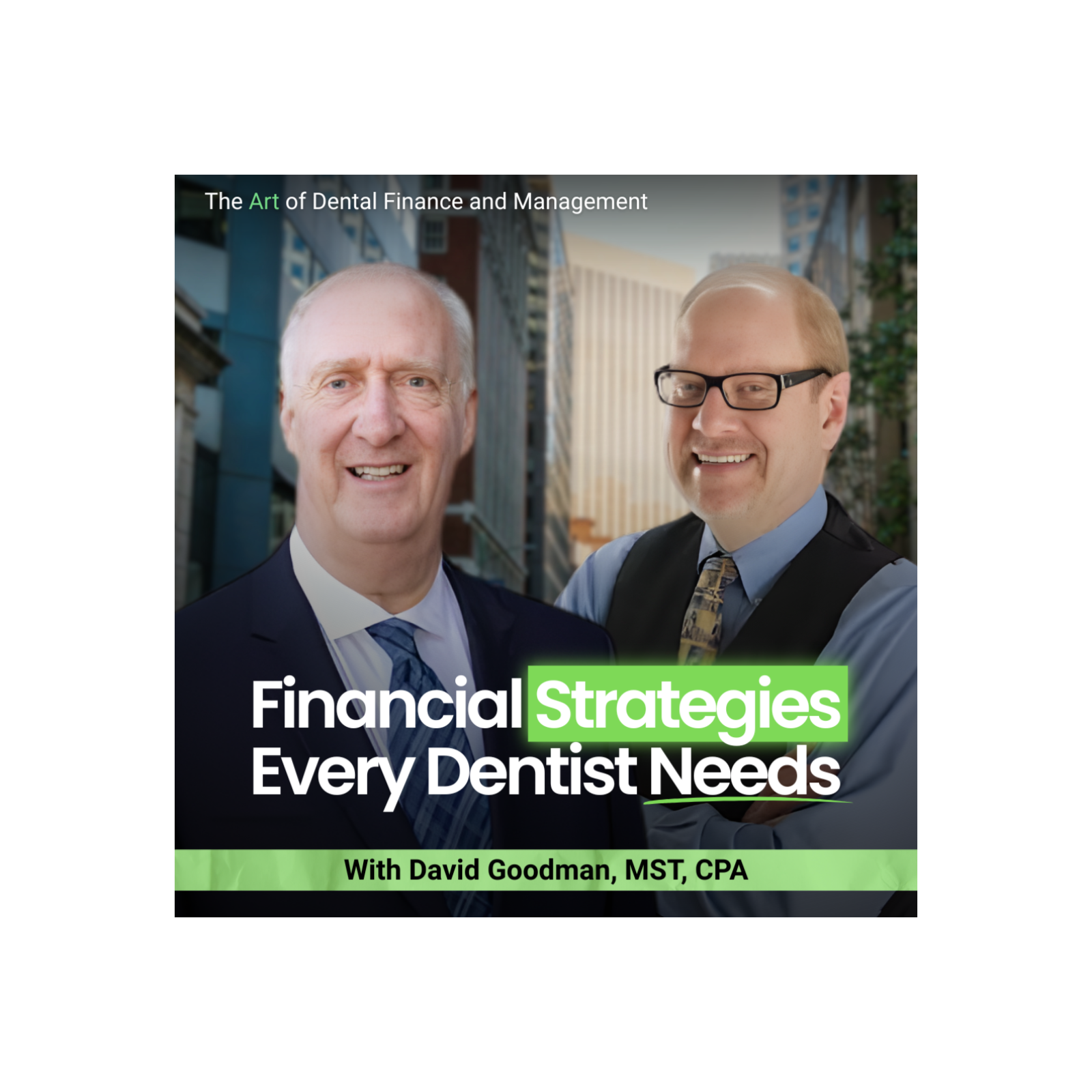
Loading summary
Transcript109 lines
- [00:00]
A
Are you a dentist who's striving to build a more thriving, profitable practice without feeling overwhelmed by the numbers?
- [00:07]
B
Hey, good news.
- [00:08]
A
There is a better way. The Academy of Dental CPA member firms know dentistry. In fact, it's all they do. Our members are experienced CPA firms who specialize exclusively in serving dentists across every stage of ownership. From startups to acquisitions to to optimizing associate income to advanced tax strategy, practice growth and transitions, we're here to support your financial success. When you work with an ADCPA member, you get more than a tax preparer, you get a strategic partner. Someone who understands dental industry benchmarks, overhead management, collections, dental insurance compensation models, and all the unique business challenges you face every single day. We bring clarity to the business side of dentistry. While you focus on clinical excellence, we ensure your financial foundation remains strong with advisory that turns data into confident decisions. Join over 11,000 dentists nationwide who have a financial expert in their corner. Visit adcpa.org to find a trusted dental CPA near you. That's adcpa.org because your numbers should work as hard as you do.
- [01:30]
B
This podcast is sponsored by bank of America Practice Solutions. When you need financing for your dental practice, you really want to work with someone who fully understands your industry. For over 25 years, bank of America Practice Solutions has helped dentists across the nation reach their goals through smart financial solutions and expert guidance. Whether you own a practice or are just getting started, bank of America Practice Solutions can provide customized financial help for your short term needs and long term aspirations. Email dg.connectofa.com to find expert guidance, personal attention and real solutions. That's dg.connectofa.com.
- [02:17]
C
Foreign.
- [02:33]
B
And hello everyone and welcome to another edition of the Art of Dental Finance and Management Podcast with Art Wiederman, cpa. I'm your host, Art Wiederman. Welcome to my podcast and I want to thank our wonderful sponsors of today's episode, bank of America Practice Solutions. The academy of dental CPAs and this is the official podcast of the academy of dental CPAs and interview today. I'm very excited we're going to be talking to one of my dear dear friends, a member of our academy of dental CPAs. One of the top dental CPAs in the country, David Goodman. We're going to be talking today about, you know, what should you be doing from a CPA's perspective, especially a dental CPA CPA's perspective to get ready for 2026. We're recording here in January and we want to make sure you get off a good start talking about budgeting and taxes and what you should be looking at your practice. So we'll get to David in a moment. I want to again encourage everybody to follow us on our Instagram page, artofdental finance, on Facebook, on LinkedIn, on our YouTube channel where you can see the whole podcast and all of its glory and also on TikTok. Wanted to let you also know that I will be lecturing at the Chicago Midwinter dental conference at McCormick Place. I am hoping for a three day heat wave February 17th, 18th and 19th. I'm speaking, I believe it's Friday the 19th on financial planning for Dentists and Metrics of a Dental Practice. So if you are going to be at the Chicago Midwinter meeting, please come to my lectures. Come say hi, tell me you're a podcast listener. I always love to meet my listeners and we'll do that too. And if you are in Southern California, please go ahead and register for our seminar on Transitions, Saturday, February 28th at Dave and Busters. If you would like us to send you more information, send me an email at artwederman. That's W I E D E r m a nmail.com okay. My guest today is my very, very good friend David Goodman. David is the Dental Practice Solution Teams Leader at PKF o' Connor Davies, which is a dental specific C. I mean the firm is a big firm, but David's division does nothing but dentists. David's been working with dentists for over 40 years. He's been invited to speak on tax related and dental practice and financial management topics all over the country and is a frequent contributor to Dental Economics magazine. David, welcome to the Art of Dental Finance and Management.
- [05:03]
C
Thank you Art. Thanks for having me. I'm so excited to be here to share my thoughts and to spend some time with you because I really enjoy doing that.
- [05:10]
B
It's always fun and one of the ways you and I have spent time together I want you to share with our audience. David is probably one of the most charitable humans I have ever met. David has made over 30 trips to New Orleans to help with Hurricane Katrina issues. I think that's been over a 20 year period and I was honored to join David actually in Asheville, North Carolina. My son Nathan and I flew out there and if you need any kind of drywall or hard sheetrock taken down from a ceiling, I'm now your guy. Cause I can do that. I use the machine. It's on video. So David, tell me a little bit about the charity Work you do well.
- [05:45]
C
Thanks, Art. I really appreciate it. It's a big part of who I am and giving back and helping. So I enjoy doing that not only for dentists, but also for my community. So I am a graduate of Tulane University Avery Freeman School of Business, and that's in New Orleans, Louisiana. And when Hurricane Katrina hit New Orleans and the pictures were coming out after the storm, I was crushed by what happened down there. And myself and two friends decided that we were going to head down there to lend a hand. So our first trip was actually the 15th anniversary of September 11th, and it was a really meaningful trip for people from the New York metro area to head down and help out in New Orleans. And we decided after that first trip that we were going to continue to return until the job was done and that New Orleans had been restored back to its beautiful, fun, exciting self. Historical, I should add as well. And so, as you noted, we've made 30 trips down to New Orleans, but we found out that we can respond to disaster wherever it might happen. And so our trips have taken us not only to the Jersey shore and Far Rockaway in New York, but also to Baton Rouge, Louisiana as well as Houston and most recently where you joined us. And I have the pictures to prove your work.
- [06:59]
B
Yeah, don't post them anywhere, please, please. Well, the good news is that I'm in all this, like, what? Bodysuit and headgear and I look like I'm doing a welding project on a hundred story skyscraper in Manhattan.
- [07:12]
D
Right.
- [07:12]
C
But the work that we did there was incredibly, incredibly meaningful to the woman who lived in that home. A tree had fallen on it and it was basically destroyed. They replaced the roof, but we came in and gutted the inside of the house so that it could be rebuilt and this woman could move back home.
- [07:27]
B
David, you're a dear friend. God bless you for all the work that you and Stu and all the other folks have done and are gonna probably continue to do for a long time. Tell me a little bit about your professional journey and how you became a dental cpa.
- [07:39]
C
Oh, I love telling this story because I'm actually second generation. My dad started working with dentists in the early, early 70s. And it's a fun story. My dad went to high school with somebody who became a lawyer. And the lawyer had gone to some local banks letting them know that if somebody came in and was looking for services from the attorney that he was available to help out. He also happened to had worked at the IRS for a couple of years before he went out on his own. Anyway, a dentist walked into one of the banks and basically shared that he had gotten into a little trouble with his wife and his receptionist and he needed some assistance. And so they recommended. And the lawyer said, you're gonna need a really good accountant. And I know just the guy. And so my dad jumped in to help out on the financial side. And it turns out that not only was his dentist thrilled with the outcome of the dissolution of the marriage, but he was also a professor at Fairleigh Dickinson University Dental School. It's closed many years ago, but during the time that this dentist was there, he referred my dad to not only his colleagues, but all of the students that were graduating from the dental. And my dad interest in working with dentists just grew from there. And I joined the practice in 1989 and continued that legacy. And, you know, here I am now at PKF o' Connor Davies with my team from my dad's firm, still working on helping dentists.
- [09:06]
B
Well, your dad, whose name was Larry Goodman, he passed about, I think, five years ago, was one of the most wonderful humans you would ever want to meet. Every time I saw him at a meeting, he would give me a hug. He took me to play golf at the Westchester Country Club. And it was just a wonderful, wonderful, wonderful date. Just a wonderful man. And, you know, it doesn't fall far from the tree, David, because you're the same. So let's get into our topic here. So I know, along with our 25 firms of the Academy of Dental CPAs, and we'll talk about the ADCPA a little bit later, you do spend a lot of time with your clients, talking about how to help them avoid working harder and making less money. Avoiding working harder and making less money, which means we want them to work less and make more money. How do you do that with your clients?
- [09:49]
C
Well, this time of year, I'm assuming most dentists have decided that they were going to give some cost of living or greater increases to their team. And so wages and salaries, benefits are going to be increasing in your dental practice. And then also maybe your rent is going up, and there are just other costs that are passed on to the dentist. So if you don't do something about your revenue, you could wind up working harder or making less. And so what I recommend, one of the things I recommend to my clients is increase your fees because you don't have to work harder. You'll make the same amount of money to cover hopefully, the increases and be.
- [10:26]
D
Able to take home maybe even more.
- [10:28]
C
Than what you typically earn. But the point here is that if you don't make changes to your revenue, you're going to have to work harder or you're going to make less because you're going to take those cost increases and the people who are getting those increases are going to benefit and not the doctor. And I also recommend for insurance practices as well that they also increase their fees in hopes that PPOs will reimburse them for the percentile that their fees are in for the area. And most PPOs are required or are contracted to pay a percentage or a percentile of the fees in the area. So if all the dentists submit increased ucr, usual and customary rates, then there's a pretty good chance that they might get an increased reimbursement rate. So I recommend that for all of my clients. The other thing is that comparing your overhead from one period to the next or comparing your overhead to benchmarking statistics. And our firm puts out a book called the Dental Practices by the Numbers. And we take the average overhead of our dental practices and share that with the dental community so that practices can look at their overhead and compare and how the average practice is doing in similar categories and by finding ways to be more efficient in your spending can also help with improving your income and revenue in your dental practice. And then there's lots of other things we look at in terms of, you know, what kind of procedures are being proposed provided in hygiene. Are there perio maintenance procedures going on? They have a higher value, not only a higher value to the practice, but a higher value to your patients. And we've heard that there is about a 68% of patients have some sort of periodontal disease. And if you're not treating periodontal disease in your practice, then you're doing your patients a disservice. But that's why there's a higher value procedure, because it creates a greater benefit for your patients.
- [12:16]
B
That's why I love talking to you and the other members of our academy is we speak this language. And I mean, a lot of things that you said just brought things to my mind. Like number one, you know, we know that insurance companies love to increase reimbursement fees, right, David? They did they call you on January 2nd. Hey, Dr. Goodman, we want to give you an additional 5% of your fees just because you're such a good guy. No, it doesn't work that way. You have to fight for them. There are companies out there that help you to do that, that have spoken to our group, looking at your overhead you know, David, one of the things that, that I've seen that's really interesting is when I look in our general ledger and folks, we're going to geek out a little bit on accounting. I'm sorry, it's a geek out day because I got another CPA friend of mine. The general ledger is a document that when you look at your profit and loss statement, it's got the detail of every single account, so every single charge. So let's say dental supplies. You know, you write 10 checks a month for dental supplies, it's going to have, you know, Patterson, Shine, Benco, whoever you write them to. And when we look at them, especially in the computer area, I don't know about you, David. I see lots of duplications of efforts. Doctors are spending money on two or three things and getting the same service. Do you see that sometimes?
- [13:25]
C
Yeah, I definitely see duplication and I see inefficiencies in spending. And I tell my doctors that they should be shopping around and looking for the best opportunities they can find out there.
- [13:37]
B
Yeah. And again, doctors, if you are looking at changing your relationship with insurance, insurance, that is not this podcast subject, but there's a whole group of people out there that can help you with that. And that is another way to grow your revenue. So there's lots of things you should be looking at at the beginning of the year. And when, David, I'm sure you, when you sit down with your clients, you point these things out to them and that's, you know, really important.
- [14:01]
C
Right. So I want to mention that some doctors think that they just go to see their CPA at the end of the year and they hand them over the shoebox and they say, do my taxes. And at that point in time, it's.
- [14:11]
D
Way too late to be able to.
- [14:14]
C
Get your overhead under control.
- [14:15]
D
Control.
- [14:16]
C
And so for me, I'm meeting with my clients multiple times per year, reviewing their overhead and sharing with them some ideas about how they might become more efficient in spending or different ways to look at other overhead items and try and trim those costs. One of the interesting things that we noticed after the pandemic was that doctors became very conscious of their overhead spending. And we noticed that spending is going down in terms of certain categories because doctors are starting to do the research and gotten a little smarter and can now pinch some additional percentages that are going to fall to the bottom line. So on average, we're seeing our practices, our general dental practices, usually generating about 38% of collections, are going to the owners and associates. But we Actually have some practices that have gotten really good at overhead efficiency and we're seeing now 40% and even 41, 42% on some practices that were not at that percentage profitability prior to the pandemic.
- [15:16]
B
And you know, David, just from a number standpoint, doctors, if you have a million dollar practice and you can cut 1% off your overhead, that could be in your credit card processing fees, that could be using a procurement platform or a buying group for dental supplies, every 1% in a million dollar practice is $10,000. And doctors, that goes right in your pocket, that can go to fund a retirement plan, that can go to fund your kids college education. And David, for you, that could buy probably two season tickets to the New York Giants. Right. I mean, it could do lots of things. David's a New York Giants fan. Yeah, there you go. So David, let's talk about, I know you've done this for lots of years. What are some common planning mistakes that you see doctors making as you go through what you do with your clients?
- [15:58]
C
This is a great topic that I don't think enough people are talking about. So I call it estate planning. And people automatically turn me off when I say estate planning because they think, oh, you know, my estate's not greater than $15 million. I don't have to worry about est taxes. And that's very true. But planning your estate has a lot of other elements to it that are really important. And I actually kind of couch this in planning for the unexpected. And I've unfortunately seen this. And Art, I bet you have too.
- [16:25]
B
Oh my goodness, yes.
- [16:26]
C
Where to just put it into, so to speak. A doctor is hit by a bus and nobody knows the passwords, Nobody knows how to get into the office, nobody is able to sign for bank accounts, nobody knows who the accountant is or.
- [16:41]
D
Who to turn to in an emergency or a lawyer.
- [16:43]
C
These are all things that I think are, are really important.
- [16:45]
B
Absolutely, absolutely.
- [16:47]
C
In terms of preparing for the unexpected. So it goes beyond having really important good insurance to cover the practice for any type of natural disaster. But also it goes to the point of, you know, who's going to be in charge, who is an additional signatory on the bank account, who has the.
- [17:07]
D
Passwords, who knows who to call to.
- [17:10]
C
Come and cover the practice. So I usually recommend that you have a little coverage group in your area.
- [17:15]
B
Exactly. That's what I was going to bring up. Yes. Disability coverage group.
- [17:19]
C
Yep, Disability. Or even if you're permanently unable to come back, it is so important. A dental practice that is not being operated by a doctor loses significant value every single day.
- [17:31]
B
Oh, my God. Yes.
- [17:32]
C
Right. And so your family is going to rely on a lot of the proceeds from the sale of your practice to be able to provide for them when you're no longer able to earn. And this is really important for you to make sure that you have a.
- [17:46]
D
Team in place who can come in.
- [17:47]
C
And maybe alternate a day a week and have that practice running two, three days a week until it can be transitioned. Very important.
- [17:55]
B
And dentists are such kind humans that I have found and we in our dental brokerage here in Southern California have put together two or three groups that have done that. And we've actually had to trigger it once or twice. And when it's done correctly and when the doctors are engaged, everybody knows what the rules. There's a written document. So yeah. The type of things. So lack of planning for an estate. Any other issues that you see when mistakes that dentists are making?
- [18:20]
C
Yeah, I think I kind of touched on this a little bit before, but I tell my clients taxes happen every single day and that they can be planned. Taxes should not be a surprise when it's time to write that check. It should have been planned all along so that you can actually either make adjustments to your tax planning to try and reduce the tax obligations that you have, or in the worst case case scenario, have a Runway a couple of months or even more to be able to save up money, to be able to make sure that you have the funds available to pay your taxes. The government will be your partner throughout your life and they want their fair share constantly and on time. And so you shouldn't be playing with tax money when the government wants it. So I really recommend that you meet with your CPA throughout the year, understanding not only the direction your practice is heading in, but also the tax implications of the income that you're earning to be prepared. And there are so many dentists that I work with that are just not prepared. And when they finally come and meet with me, they're like, so grateful. I hear so many times, where have you been all my life? And I'm like, I've been right here.
- [19:34]
B
Where have you been all my life? Why haven't you called me? Right. Yeah.
- [19:37]
C
Yeah, right. And so it's really important for planning to be done throughout the year so that you can set yourself up financially for success.
- [19:45]
D
Success.
- [19:45]
B
That's right. So let's get. We. That was the next topic we were going to talk about. David, you did a great segue. I didn't even have to prompt you with it. So let's talk about tax planning. What are some of the tax planning things? Especially we have this one big, beautiful bill act that was passed, signed by the president on July 4 to change a bunch of stuff. What are some of the things that we as dental CPAs do? I mean, I know the answer, but you know the answer to. I'm gonna let you give your thoughts and we can talk about what are the things that we can do to really make a difference in our dental clients, clients, tax liabilities. Because, doctors, you are legally allowed and encouraged to pay the minimum amount of income tax. Let me repeat that. The minimum amount of income tax allowed by law.
- [20:28]
D
Okay.
- [20:29]
B
And that is what our job, My job is to run up the federal deficit as much as I can. That's what we want to do by cutting your tax levi. So talk about some of the things that you work with on your clients, and we can get into some of them more deeply.
- [20:43]
D
So, Art, whenever my clients question me on something I'm recommending to them, I always tell them that my bag is packed under my desk and I'm ready to follow you right into the prison. So believe me, the stuff I talk about is on the up and up. And I have some really cool ideas to share. So maybe your audience hasn't heard it before, but let's talk about some of the more recent things, and then we can go into some of the things that have been out there for a while that some who don't work with dentists don't share with dentists. So I love it, Right? So one of the things that we've seen is the increase in the SALT deduction. SALT stands for state and local taxes and the ability to deduct them if you were itemizing your deductions was a cap of $10,000. Now, in high tax states, usually those that are along the coast, like New Jersey and New York and California and some other states in between, the real estate taxes alone for your home are greater than $10,000. So you basically could not get a deduction for your state taxes. Now, doctors who have income of less than $500,000, taxable income, I'm sorry, adjusted gross income of less than 500,000, can deduct possibly up to $40,000 of state and local taxes. So in the past couple of years, we've been telling our doctors you're subject to the 10,000. It doesn't matter when you pay your state taxes. And now this has turned around a little bit for these doctors who are under the $500,000 that they should consider now paying their state taxes by December 31st to take advantage of being able to deduct that now. Now the $500,000 adjusted gross income limit phases out at $600,000. And so the bottom is still $10,000. So even though you may be over $500,000, if you're below $600,000, you're still eligible for some deductions. And then, of course, for those of us who see incomes over $600,000, they can consider doing what's called the pass through entity tax if you are a partner in a partnership or a shareholder of an S corporation. And so most states have this pass through entity tax, which is basically paying your state and local tax through your partnership or your corporation and getting the deduction there. It would be the same deduction as if it was on your personal return and there was no limit. But since the limit is capped, we can use the pass through entity on your personal tax. So that's something that's kind of gotten a little different. I briefly want to mention the Trump Savings Account because the form was recently finalized. And so if you have a child who was born in 2025, you now are eligible for $1,000 savings account started by the federal government. This doesn't start until July 4th, 4th of 2026, but the form can be included in your 2025 tax return filing. So you should be asking your CPA, your tax preparer, about the Trump account and getting eligible for it. Another thing I want to share that came out of the one big beautiful bill is the 529 college savings account has some expanded use to it. And you can now use the 529 savings account to use it if you need to certify a credential. So as a dentist, you're required to take continuing education courses and other types of courses to keep your license active. Those expenses can now be used through a 529 account. So you might want to consider setting up one for yourself and letting it grow for future use, because you'll probably need to continue to get your certification and your dental license, or you can use that for additional education in pursuit of some sort of certificate. So if you wanted to be a dentist and a CPA and you needed to go back to school to get your accounting degree, great, you can use the 529 for that.
- [24:49]
B
So if I want to go to dental school at the age of 66 and do that, I can. Yeah, right. I don't think so. I've got enough trouble tying fly fishing knots, no less, going doing that. So we won't. I'm probably not going to dental school. What other. There's all kinds of cool stuff, David. Yeah, I got.
- [25:06]
C
I got more.
- [25:06]
B
Yeah, yeah, keep going.
- [25:08]
D
I'll bring it on. So you may have heard of section 179 or bonus depreciation. So these items allow you to be able to deduct the purchase of equipment in the year that you purchase it. Typically, under the IRS rules, anything that has a useful life of greater than one year has to be depreciated over a period of time. That period of time is established by the tax law. So we'll make it simple and we'll say if you bought yourself a computer and that computer has a useful life of greater than one year, which they typically do, then the depreciation life of that computer is five years. So if you bought a $5,000 computer under the depreciation rules, you get $1,000 deduction each year for five years. However, with these special expensing depreciation laws, you can take advantage of expensing the things that you bought that have a useful life of greater than one year in the year that you purchase. So there are two methodologies to follow. There's section 179, which I think is going to allow for over $2 million in purchases for.
- [26:13]
B
That's going to cover most of our doctors.
- [26:15]
D
Yeah, right. In starting up your practice, you know, that'll definitely be there. The other thing is, and this doesn't necessarily have to be in startup, this can be anytime you buy equipment. The other thing is, is that there is bonus depreciation as well, and there is a difference between the two of them. But bonus depreciation was supposed to be only 40% for the current year and it was supposed to phase out by 2027. Now, bonus depreciation is 100% of whatever you purchase and it has been made permanent. So you can take advantage of either one of those expensing methods. I do not recommend that you buy equipment for tax savings. I strongly recommend that you buy equipment because it will provide a better service for your patients. It will create efficiency in practice and make your practice generate more revenue. Because remember that the depreciation savings you get is only going to be a percentage of the cost of the item. So if you're buying, investing in equipment, really look for the return to your practice, not just the bottom line.
- [27:18]
B
Now, David, I want to make a point about that. And again, we're geeking out, guys. I'm initiating the geeking out here. Doctors, here is something that you need to talk to your CPA about. If you're a partnership or a sole proprietor, this is not an issue for you because you've got what's called partnership basis and you're allowed to do this. But let's say that many of our doctors are operating as an s Corporation. And December 15th, David, they walk into your office and they say, oh my God, I'm getting killed. I had a better year. What do I do? And you say, hey, there's this bonus depreciation. Why don't you go out and buy a cerec machine for 140,000? We can place it in service in their office before December 31st, 1st. And we can get $140,000 deduction and go to the bank and get a loan. But there's this little thing, David, that our doctors need to understand that a lot of CPAs don't. That's called S corporation basis. And for an S corporation, doctors, if you go to the bank and you get a loan through the bank and through the corporation for 140,000 on December 15th and you place it in service and you do everything we talk about, you probably won't have S corporation basically basis, and you won't get the deduction in that year. So the only thing I'll tell you, David, I'm sure you talk to your clients about this is ways to structure it to make sure if you're an S corporation that we get that deduction, right?
- [28:35]
D
Oh, yeah. We look for ways to make sure they can do that. So the basis can be built up by getting outside loans and loaning that money to the practice, whether it be you get that from a family member or a bank, or you use your home equity loan even to take advantage of it. But don't buy the CEREC machine unless you're really going to be using it and you have a need for it. So one of the things a dental CPA will be able to do for you is take a look at the procedures that are being done in your office and make a determination that you have enough volume in your practice to buy an in house milling machine. Very, very important. But once you see the benefits of having that type of equipment in your office, make sure you use it. Make sure you continue to train and learn because it's constantly improving. I will tell you about a doctor who bought the CEREC machine not on recommendation from me, and I came to his office One day, and it was sitting in his office inside the practice, and he had his white coat hanging from the machine. And I was crushed. Dart. I was like, you got this. You spent all this money on it. And then he was still paying the debt off on it. And he asked me if I could find somebody who was interested in buying it, which I did, because I knew a practice that trained doctors on using the CEREC machine, and they said we can always use another one in our training room. But, like, for pennies on the dollar, he sold the machine and he had to take money out of his pocket to pay the debt. But I was really disappointed. So, yeah, the CEREC machine is a great tool and make sure that you just don't get it and don't have enough use out of it, because it's an expensive machine and you need to get a return on that investment.
- [30:15]
B
My rule of thumb, David, is that if you're not doing at least 30 to 40 restorations a month, that it doesn't really pay for itself. Doctors buy CEREC machines, David, in my experience, because they like to control the product and the result. It's a great marketing tool. I don't sell CEREC machines, and I'm not promoting people that do. But it's a great marketing thing where you can say, hey, Dr. And Mrs. Smith, go sit over here. You can watch your crown being milled as it's being milled in, and they now can mill in six minutes. It's crazy. And. But it is a great. You can do inlays, you can do onlays. It's just a great tool. Okay. Anything else on the tax planning side, David? Because I want to move on to a couple other things.
- [30:54]
C
All right.
- [30:54]
D
Did you just do, use, like, dental procedure terms like.
- [30:59]
B
I did. I did, yeah. Well, I've looked, you know, after 41 years, you know, we just kind of make it up as we go along. But, yes, I did.
- [31:06]
D
So definitely.
- [31:07]
B
So I also know what a 4910 and an 1110 and a 2950 is. But that. But so do you. So there you go. We're going to geek out on all this stuff. So you're talking a little bit about what else is on your list.
- [31:18]
D
I got three more things I want to share, actually four, but I'll do only three, because I think these are.
- [31:22]
C
The most important ones.
- [31:24]
D
We've got so much to go through. I don't want to waste our time just on this. Hire your kids. I always recommend this for doctors. Now, just don't make up a salary and say that, you know, my kid's on payroll. It's really important for you to document, first of all, the job that your child is doing. Make sure that you have a job that is age acceptable for the child. So you can't have a 2 year old who is answering phones in the office or doing social media, but you can have a two year old who is modeling and is on your practice brochure on your website. And you cannot pay the child more than you would pay a third party to do the same work. So you have to be careful making sure that they're getting paid appropriately for the work that they're doing. And also they can't be working like 30 hours a week because we know that your kids have like after school activities.
- [32:17]
C
They're in school.
- [32:18]
D
But there are times when it's appropriate for them to do things like, like putting invoices in envelopes or stamps on envelopes, or sweeping the floor or doing some filing. Or even with kids who are like in their teens right now, they probably can do a lot better social media than you can. Let them do some social media stuff. And again, pay them not more than you would pay a third party to do this. Make sure you document their job description and that they actually keep a timesheet of the hours, hours that they work.
- [32:49]
B
Yep. Because if they get audited, they're going to ask for all that stuff.
- [32:51]
D
Correct.
- [32:52]
B
You said you got a couple more?
- [32:53]
D
Yes. So then, health savings accounts, we are.
- [32:56]
C
Going to be experiencing an increase in.
- [32:59]
D
The cost of health coverage and health insurance and hopefully this will get straightened out. But in the meantime, our premiums are rising and having a high deductible health plan will allow you to fund a health savings account. So a high deductible health plan is where you have high deductibles for your policy, which lowers your premium premiums because you've become more responsible for the insurance. However, with a health savings account, you can use this health savings account to pay with after tax dollars for those deductibles. But wait a second here because. Wait a second, wait a second here because not so fast, not so fast. Many dentists are probably not paying a lot of out of pocket expenses to begin with or can afford to pay that deductible portion. So what do you do with your hsa? You fund your hsa, I call it an ira for health expenses. And so you can put money into your HSA and you don't have to touch it. There's no requirement that you take the money out and you can actually invest this money. And when you retire, you can use now this money to help pay for supplemental health insurance or long term care or any other type of health need that you might have. And so it's a great time, especially if you're younger, to start to build this account. All right, I have a client who is just turned 65 and he has over $300,000 in his health savings account.
- [34:31]
B
Because I've not heard a number that big before. That's amazing.
- [34:34]
D
Apple helps a lot.
- [34:37]
B
Yeah, there you go. I will tell you, David, I just went on Medicare January 1st and folks, it is. I mean, you need to go to college and get a degree in Medicare and learn how this all works, especially if you have done a really good job and saving for retirement and have a pretty decent income in retirement. Your Medicare premiums, Part B are about, you know, $200 a month, but if your income is higher, it's going to be higher. And then you have to get a supplemental because Medicare only covers 80%. So that's the types of things that you can use an HSA for. I'm not shouting sheer numbers. I mean, you know, we're paying close to 15, 17 hundred dollars, I think $1700 a month for my wife Lynn and I on Medicare. Medicare. And you know, if your income is very low, it's going to be less, but it's. Yeah, if you have a $300,000 HSA, that's going to pay for all of that. Yep.
- [35:24]
C
So I love it.
- [35:25]
D
I use it myself and it's growing and it's great. So nice. Yeah, HSAs. Speak to your health insurance agent and figure out if the high deductible health plan is right for you. And my last item I want to talk about is the Roth ira. And a lot of people aren't aware of the changes in Roth 401ks. But let me explain briefly what a Roth is and then we'll talk about why I think it's a great opportunity. A Roth IRA is different from a traditional ira. The Roth IRA is a contribution that is not tax deductible, but the Roth IRA will grow tax free. And when you take the money out, it is tax free. So you do not have to pay tax on a Roth IRA distribution federally, some states still require it to be taxable, but only the earnings portion portion, but federally tax free. So the Roth IRA is a great way for you to save for retirement and not have to pay tax when you retire. And another thing about the Roth IRA is there is no required minimum distribution when you hit the retirement age of 73. So you don't actually need to touch that money. And if you die with a Roth ira, it gets passed on to a beneficiary. They don't have to pay tax on it either. And you can do the same thing actually with the eight. But there is also what's called a Roth 401. So it's the same thing as a traditional 401k except now you make contributions to a non deductible portion of your 401 and that is treated the same way as a traditional Roth IRA. Higher earners in 2026 will no longer be able to make a catch up contribution for being over the age of 50. They're going to be automatically enrol in the Roth 401k portion at their employer. So just be aware that you're already starting your Roth. Now. Why wouldn't anybody just go and open up a Roth? Well, for most dentists, their income is too high or they're already covered by a retirement plan that the Roth IRA is not an opportunity for them. But by using the Roth 401, this is a way for the them to create that Roth tax free in the future when you retire. You should also consider when your income is going down, maybe the year after you retire, to look at rolling over some of your retirement accounts that are taxable now into Roth accounts. Because in the year or two after you retire, before you start to take distributions from your IRAs that are taxable, you can move some money into the Roth and let that grow now tax free and it'll be a lower tax rate most likely than when you were actually working. And the other thing is, is by rolling money from your ira, your taxable IRA into a Roth, it lowers the amount of money in the account and therefore reduces your required minimum distribution.
- [38:28]
B
I mean there's just so much stuff. I helped a client who was 60 and they retired and for 10 years we just did Roth IRA conversions. And that's another thing we can do, David, is, you know, if you're in a very low tax bracket, doctors, and you have a big IRA situation sitting there, you can convert it. You've got to have the personal money to pay the taxes. But if you're in a low tax bracket because you, maybe you just sold your practice, maybe you're not working, maybe you're living off the proceeds. There's just so many things, David, I got so much to talk about. Let's talk a little bit about.
- [38:56]
D
I just want to share. I want to share a story because I think.
- [38:59]
B
Sure, sure, sure.
- [38:59]
D
Stories are great of how we use stories, how we use the Roth ira, and then we'll talk about the other things. But I will just say to you that I had a client who did cost segregation studies on five pieces of real estate. He's a dentist and he had multiple office offices. And in the year that he did the cost segregation, he had significantly decreased income. And we rolled hundreds of thousands of dollars from his 401k into a Roth IRA at like a tax rate less than 20%. It was huge for them. And in another situation, which I just did last year, I had a doctor who bought a practice. And by buying the practice he had significant write offs from the new equipment that he bought. And he did this in October. So he didn't have a lot of income from that practice to begin. And so what we did was we took the 401k he had from a prior employer and we rolled that over. We were able to roll over $55,000 into a Roth IRA for a doctor who was like 32 years old. So consider how much that will grow in the future.
- [40:02]
B
This episode is brought to you by bank of America Practice Solutions. If you are thinking about starting or growing your dental practice, we would love to help you today take the next step. Email us@dg.connectofa.com and we will send you a free business plan template that is perfect for starting the conversation about your future practice. Bank of America Practice Solutions has the expertise, the resources and the support for your success. Don't wait. Email dg.connectofa.com today. Hey, it's Art Wiederman here. You know I don't recommend products lightly. I only share solutions that can genuinely impact your practice's clinical outcomes and bottom line. That's why I really want to tell you about Interview. They've developed an FDA cleared technology that measures internal internal tooth mobility. Something that traditional methods just can't detect early enough. Here's what that means for your can identify cracks and loose restorations before they become emergencies. That means better treatment planning, fewer surprises for your patients, and more predictable case acceptance. Interview integrates right into your existing workflow. No complicated processes, just clever diagnostic information when you need it. If you've been looking for a way to elevate your diagnostic capabilities and strengthen patient trust, book a demo at Interview AI that's I N N E R V I E W A I mention my name and you'll get $250 off. That's interview A I I N N E R V I e w dot AI and the things like that we as dental CPAs know, like if you're an S corporation and you do this cost segregation study which allows you to, if you're building out a building and the inside of a building and you're a million, a million and a half is to take significant deductions. This thing called a grouping election that most CPAs don't understand. And if you don't do that, you can't get the dust. So we don't have time to get into all that. Today I want to talk, David, about our group. 25 years ago, there were nine of us at a table with two water pitchers and we formed the Academy of Dental CPAs. And now it's morphed into, you know, meetings that we have a hundred plus people and vendors and talk a little bit about the adcpa, what it's meant to you and how important it is to have a CPA who understands obviously what you and I, I like to say myself, understand.
- [42:37]
D
Well, I will tell you, I started this podcast by talking about how I love to give back. And the ADCPA is another place where I love to give back. But not only am I able to share with the ADCPA the things that I experience and the ways that I help our dental clients, but in return from this group, I have never met a more knowledgeable, trusting group of people.
- [43:02]
B
Oh my God.
- [43:03]
D
Who are willing to share, like, everything about their practices and about how they're helping dentists so that we as a group can help dentists throughout North America now, because we have a Canadian member and be better at what they do and having the income and quality of life that they desire. And that's what gets me motivated. I look forward to every meeting to learn with everybody there, to spend time with everybody there, sharing the knowledge that we have and working together to help our clients.
- [43:38]
C
It's just been an amazing experience for.
- [43:40]
D
Me and I bring that knowledge back to all the dentists that I work with and the community that I work in, just helping overall.
- [43:47]
B
So, doctors, if you're not happy with your CPA, if your CPA doesn't talk to you like this, go to www.adcpa.org. we have members in pretty much every geographic area in the country. Look up the state that you're in or closest to go to a member. These are some of the most wonderful, caring people. And I'm going to tell A story. Then we're going to start talking about KPIs. But before we do that, our members, we hold meetings twice a year. I've held it twice, David's held it once. I think, I think you're coming up here. So 20 years ago I went there and David said, why don't you come to my house? And I met his family and at the time, babies, and now they're all grown up. And we're driving down the New Jersey Turnpike right now. You have to understand, folks, I grew up in Brooklyn, New York, and my dad used to wake me up at 11:30 at night and take me to White Castle to get. Get burgers. So I was addicted. And I've been lived in California for 50 years. David, we're driving down 60, 65, 70 miles an hour on the New Jersey Turnpike, and we're in the fast line and I yell, david, David, pull over. Pull over. He thought I was having a heart attack, right? And I said, there's a. Get off the next exit, there's a White Castle. And we drove through the White Castle and I called my mother who lived in Brooklyn, and I said, ma, you're never going to believe where I am. Where are you, Arthur? I said, I'm driving through White Castle. Arthur, make sure you get extra pickles like you like them. I mean, that's the kind of stuff. And we had a great time that day, didn't we? Yeah, we did. We definitely did.
- [45:11]
C
It was fun.
- [45:12]
B
It has nothing to do with CPA or tax planning, but I thought it's a cute story. All right, so again, doctors, www.adcpa.org, look at our website, and many of the members are speaking at dental society meetings and at dental schools near you. So, all right, let's talk about emphasizing metrics. Let's talk about metrics. What are some of the. The metrics? Because again, a dental CPA doesn't only help save taxes, but we help you understand where you can make more money in your business. Talk about some of the metrics that you like to work with with your clients, and then we can talk about that for a little bit.
- [45:45]
C
Oh, yeah, we can talk about that.
- [45:46]
D
For a little bit.
- [45:47]
B
Yeah.
- [45:48]
D
So I actually help my clients by using metrics. Some of what we're looking at are actually metrics that come from the dental profession that we apply to practices, but also we use benchmarks. And some of those benchmarks are just comparisons one period to the next of how a practice is doing. So one of the profitable areas of A practice usually representing like 25 to 35% of practice collections is hygiene. And so we see so many practices where the hygiene is not making money. And so we do an analysis of the hygiene profitability and we're able to identify what the issue might be in terms of why it may not be making money. And it's not always the hygienist. Because what we have found is that sometimes the insurance reimbursement or the actual fee for service being charged in a practice is too low in relationship to what the hygienist is getting paid. Or we find that the practice software is not being used correctly and certain procedures are not being applied to the hygienist production, or extra procedures are being applied to the hygienist production. Sometimes it's scheduling that the schedule is not full and the hygienist is not performed profitable. So we look at the hygiene profitability and try and make some adjustments. Now, I'm not an expert on the clinical side of this. We do work with people that can help on the clinical side, but sometimes you need to look at the numbers before you understand that there's a clinical issue going on. So we've worked with a lot of different practices on trying to understand the hygiene profitability and looking at from one period to the next to make them aware that there may be a particular hygienist that's not actually doing as well as the other ones. And we need to find out, you know, what's going on there. So the schedule is usually the biggest issue. That there are holes in the schedule or that there are patients canceling last minute, these are not necessarily the hygienist's fault. You know, if a hygienist is getting a lot of complaints from a patient for pain, that I understand. But here's something that is really interesting that I did for a client just about two years ago. She called me up and she told me that her hygienist, who was getting paid $45 an hour, and people would go, oh my God, nobod makes that amount of money. Yes, they do. And she said that she had an opportunity to go to another practice for $55 an hour. And I said to her, well, let's take a look at the numbers. Now, she only participated with one insurance company, and we were able to do a calculation for her based on insurance reimbursements and her fee for service. And we told her that the most amount that your hygienist would be able to produce would give her a salary of $48 an hour. I said, anything after that, you're going to lose money. Now, she was already seeing a patient every 45 minutes and not every hour. And so they were able to squeeze in two extra patients. So instead of seeing eight, they were seeing 10 a day. But the amount of the fee that was commensurate for that area was not going to allow her to pay any more than $48 an hour. And she went back to the hygienist and she said, I spoke to my accountant and I've looked at my numbers, and best I can do for you is $48 an hour. The hygienist.
- [49:08]
B
And did she stay or did she go?
- [49:10]
D
The hygienist stayed. Because here's another thing that I will tell doctors about these hygienists who are asking for outrageous amounts of compensation. Compensation is a band aid. Most hygienists are looking for more money not because they want more money. They want to feel better about themselves. And working in an environment where they have the opportunity to grow and they have people who support support them, and they have a great culture and environment that they work in may not necessarily leave for the money because they want to come to a place where they like working and they have a purpose in the organization and they feel supported. And sometimes dollars don't take care of that.
- [49:51]
B
And doctors, this is why culture and leadership. And we're going to be doing a lot of episodes. My dear friend Katherine Eitel Belt is coming on in February, and we talk about leadership and we talk about culture and we talk about courageous convers. That's why it is so important that you create a culture where people look forward and are excited to come to work every day. Excited. Not just filling a chair, excited. Because if they're not excited, they'll leave for the $55 an hour. They absolutely will. David. We also look at case presentation. I mean, doctors say, oh, I have 90% acceptance. No, you don't. The national average is under 50, 50%. Do you talk to your clients about that, too?
- [50:32]
C
Yeah. So there's a couple of things that.
- [50:34]
D
I talk about in terms of case presentations. I like to see better than 60%. But I ask not only to measure how much they presented, how much was accepted from the presentation, and how much is accepted overall from the case presentations that are made. Remember that most of your accepted case presentations are going to be your production in the next month. So it's very important for you to make sure that you're doing enough case presentations to fill Your schedule for the coming month. And so that's really critical. So 60%, 70%. I love if you can get 70 to 75%, you're a rock star. And you should teach people how to talk to people, because you're doing a great job.
- [51:21]
B
Oh, no, that's great. And again, it's about building an environment of caring and trust. If your patients trust you and you say to them, you know, Mrs. Smith, we've been watching this too tooth. Now the cracks are getting to be to a point that we really need to do something about this. The majority of your patients are going to just dock whatever you recommend. And with new patients, you have to build trust and you have to build a relationship. And it's not about selling, it's not about you. And the one thing, David, that I tell my doctors is that the patients will be ready to accept treatment not when you, doctor, are ready for them, but when they're ready and when the treatment fits into their life. And that's what you got to understand. Understand, too. That's just so important. Well, you know, David, the hour has flown by. I know. Can you believe it? I mean, it's crazy. We could have talked football this whole time. But anyway, it's the beginning of a new year. How about some action steps to put this, put a bow on this thing for our doctors? You know, we're in January, February, if you're listening to this podcast now, of course there's people that, that will listen to this podcast two or three years from now. But let's say someone's listening to it now. Give me a list of action steps that they should be taking to start the new year off right and to do everything right.
- [52:35]
D
Well, doing everything right, quite a challenge. But to try and do everything right is the best thing you can do. So one of the things that I'm just going to carry over from our conversation about metrics and case presentations is go back and look at your charts. How much case presentation did you make last year that is still sitting in the charts that you can revisit and generate some production in the current year? So I call it leaving dentistry in the charts. It's worthless until you bring it out and take care of your patients. So that's one thing I recommend that kind of carries over from that conversation. But I like to talk about other things that you can do. So one of the things that I like to do in talking to my clients is planning their calendar out for the year. In other words, how many days are you going to work this year, and by figuring out the days that you're going to go to continue education, the days you're going to take vacation, the days that the office is going to be closed for holidays, now you figure out how many days you work. So you figure out out at home how much money you need to earn to accomplish the things that you want to do for the coming year.
- [53:37]
C
You may want to put money away.
- [53:38]
D
For retirement, you may need to start saving for education, you may want to plan for a vacation and you know, or going to figure out how much you want to spend on a budget that. So you take your income for the year and you figure out how much you want to spend, and then based on that, we'll tell you that's how much income you're going to have. And now using that number, we know that your practice has a percentage of collections that comes to you. And so we can take that number and figure out what your practice collections need to be, and we can figure out what your practice production needs to be based on collections. And then you can allocate that between yourself and hygiene and figure out how much hygiene needs to do every day and how much you need to do every day in order to reach your goal by the end of the year. And I think this is a great time to start doing that. It's never too late, but it's still early on in the year that you still have the opportunity to plan the year. And so this will be very helpful in making sure you get to your goals. Now, I'm going to tell you it's not going to happen every day that you're going to reach your goals, but you want to reach your goals more days than you don't. And there will be days where you're going to find out that you didn't make your goal, and then all of a sudden an emergency walks in or somebody in the chair can have a procedure done right after their exam and hygiene. And these things will help you to make up that production. But setting those goals gives you an idea of how you need to be scheduled, scheduling yourself, and how you need to be producing dentistry so that you can have the income and quality of life that you want. That's definitely one of the things that I talk about in terms of planning for the year. There are a whole bunch of tax planning ideas that we just shared, and I think implementing those would be a really good idea. Talking to your cpa. And if you don't have one, again, a dental CPA would be critical. The ADCPA is here for you to figure out what other things that you can do to make maximize your profitability. But planning the year is important and I think that creates the theme for the year and the direction that you want to go in your practice.
- [55:39]
B
Wow, David, that was amazing. Thank you so much. Hang out with me as I take the podcast out. David Goodman from wonderful member of the Academy of Dental CPAs, Team Leader at PKF O' Connor Davies. Again, hang with me as I take the podcast out. Your information is great. You're a dear, dear friend. I love doing charity work with you. I love talking football with you. It's all wonderful. Doctors, again, I want to thank our wonderful sponsors, bank of America, Practice Solutions, the academy of dental CPAs. And this is the official podcast of the academy of dental CPAs and interview. And again, doctors, I'm going to be at the Chicago Midwinter Meeting third week of February. I will if any of you want to lend me your gloves, I might need them because I can't find them right now. David, maybe you can. Maybe you can send me some gloves. I don't know. We'll figure it out. And I'll be there on February 19th speaking. That's Friday, as well as on February 28th at if you're in Southern California, we're doing a meeting on transitions with a bunch of experts at Dave and Busters in Orange. Email me@artweetermanmail.com and that is it for this episode of the Art of Dental Finance and Management podcast with Art Wiederman, cpa. Thank you for listening. Thank you for hanging with us and letting us geek through accounting and tax, but this is really, really important stuff. We'll see you next time. Bye. By.
- [57:05]
C
Sam.